Utah Birds, Utah Birding, and Utah Birders. Promoting the sharing of information, and the conservation of habitat for birds in Utah and elsewhere. We are a group of people who want to share what we know, and create a positive birding experience in Utah.

BIRDERS BLOG

a blog by and for Utah Birders

Birding Africa pt. 14 - The Bushbuck River House, Zambia

posted by Tim Avery at
on Monday, November 11, 2013 

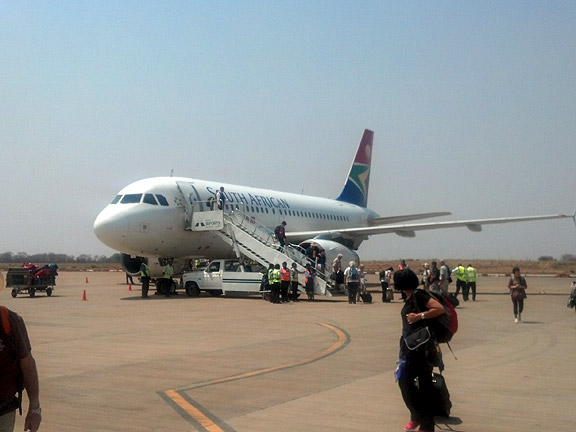
The alarm went off at 3:30am--it was pitch black in our room, and freezing.  We had a 6:30am flight to Johannesburg so we wanted to be at the airport by around 5am, and still had to pack a few items, get ready, and drive the 45 minutes to the airport.  The early morning drive through Cape Town went off without a hitch and we were soon at the airport in line waiting to check-in.  Everything went smooth at the airport and 2 hour flight went quickly, as did the 2 hour layover, before we boarded our flight to Livingstone, Zambia--we were headed to the heart of Africa.  Flying in Africa was actually a pleasure, the planes were nice and clean, and the attendants were polite, and helpful.  It beats flying in America and Europe any day.  The planes here also seemed to have more leg room, which for a 6'4" guy is really helpful.  Before we knew it we were over Zambia and could see the Zambezi River winding through the Savannah.  It was a bumpy couple of minutes while we circled waiting to land, and the landing was pretty jarring as well.  I enjoy flying into small airports like Livingstone, where you exit the plane on the single runway and have to walk into the terminal--for me it just makes for a fun experience.

Leaving the plane on the tarmac at Livingstone Airport

After making our way through customs, and exchanging some some currency for the local Kwacha we found our ride--Alan the owner of the bed and breakfast we we were staying at along the Zambezi River, the Bushbuck River House.  Alan and his wife Oriel were from the UK and had been guides in Africa for decades--in the last few years they opened Bushbuck and based off the reviews on Trip Advisor it seemed like THE place to stay in Livingstone.  We had to wait for 4 other guests to get through customs, before heading to the old-school Land Rover, for the 20 minute drive up the highway to the lodge.

Along the way we stopped briefly to enjoy a GIRAFFE right along the road.  While we were watching I looked up and a pair of MARABOU STORK were circling maybe 70-80’ above the car..  I didn’t have my telephoto lens on so was only able to snap a shot with the 55mm lens--enough to make out what the bird is at least.
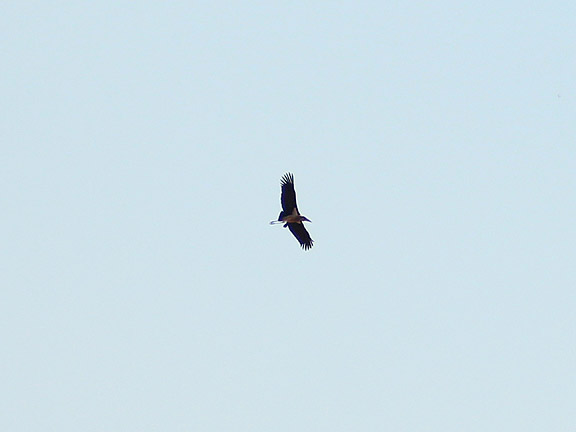
Marabou Stork soaring above the highway

A few minutes later and we were turning off the main road onto a dirt road headed towards the Zambezi.  After a short and bumpy drive we pulled through the gate at the Bushbuck River House and were parked, welcomed and given a short tour of the house and property.  Alan took us on a walk around the perimeter talking about the wildlife, warning us to watch out for Puff Adders, crocodiles, and hippos.  He also pointed out the trees where Verreaux’s Eagle-Owls typically roost, then spoke briefly about a special bird that nests on the island just out from us--the Pel’s Fishing Owl.
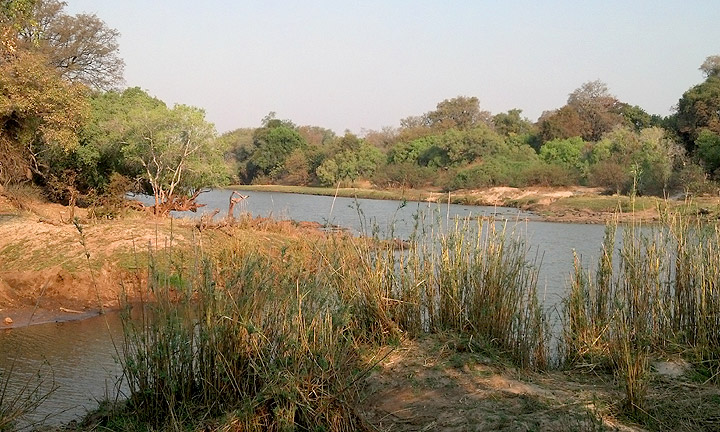
The Zambezi River from the Bushbuck River House

This was my number one target bird for Africa, and it was potentially just a few hundred feet from where I stood--I couldn’t wait to go look for it.  As Alan talked about the flora and fauna I noticed some WHITE-FRONTED BEE-EATERS flying out over the river above, and a pair of RED-EYED DOVES perched in the trees right above us.  An AFRICAN DARTER sat in the river--the mighty Zambezi, which wasn’t overly mighty at the moment.  Otherwise it was quiet on this hot  and humid spring afternoon.
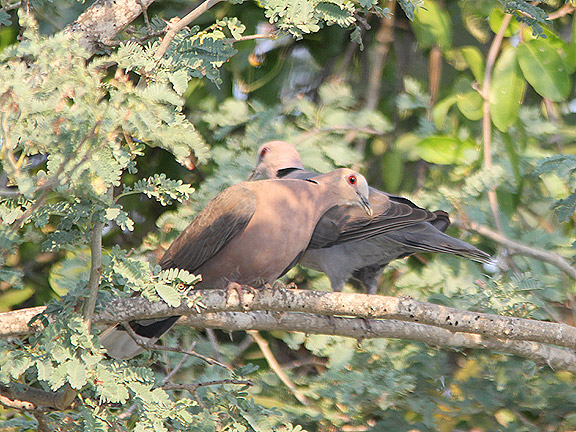
Red-eyed Doves along the river

After the tour we settled into our room and then relaxed at the pool for a little before Sam decided to take a nap--queue my chance to stroll the property for birds.  I walked a loop around the property--it was just too hot for anything to be overly active. I did find one really cool lizard though.
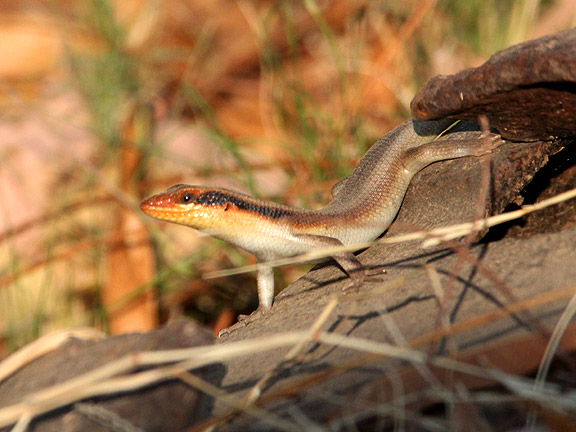
Beautiful lizard on the property

I ended up heading to the hide overlooking the river where I could sit in the shade and scan the water.  There was a herd of ELEPHANTS moving between the island and the shore to the northwest, and a few local fisherman coming in from the river.  Bird-wise there was a MARSH SANDPIPER foraging on the near shore, along with several COMMON SANDPIPER.  Further out among the rock were a half dozen or so CROWNED LAPWING.
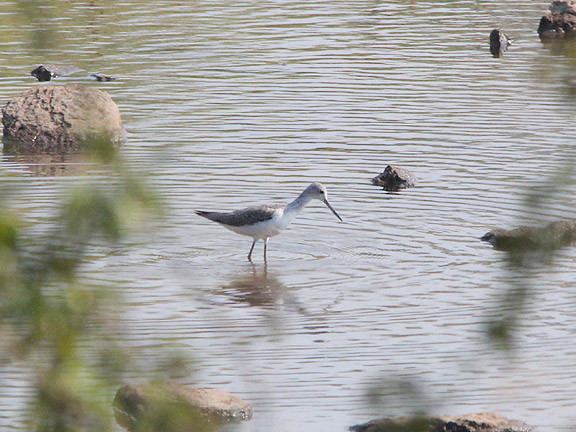
Marsh Sandpiper foraging in the river

Eventually a few song birds move past through the trees.  There were a both SCARLET-CHESTED and WHITE-BREASTED SUNBIRDS, as well as CHINSPOT BATIS, YELLOW-FRONTED CANARY, and BLUE CORDONBLEU.  I spotted a small flock of tiny finches that looked to be VILLAGE INDIGOBIRDS.  At least that's what I think they were!
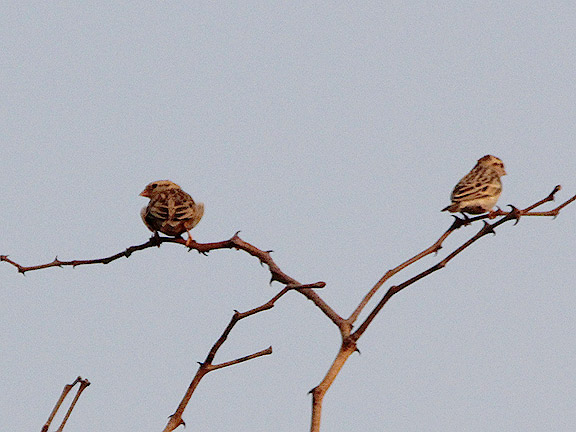
Pair of Village Indigobirds at the Bushbuck River House

After a while a BLACK-SHOULDERED KITE flew in and landed in a dead snag nearby.  At the same time a CRESTED BARBET flew into the tree and set off rattling.  Eventually the kite either got sick of the sound or just wanted to move and took off.  As I watched the kite fly off I noticed a large raptor circling the trees on the opposite edge of the property--it was a BANDED SNAKE-EAGLE.  When I finally got my camera on it, trees were obscuring the shot, and the bird circled out of view!  This had been my luck with the Snake-Eagles on this trip.  Looking back towards the river, a YELLOW-BELLIED GREENBUL came through stopping just long enough for a shot before it disappeared too.
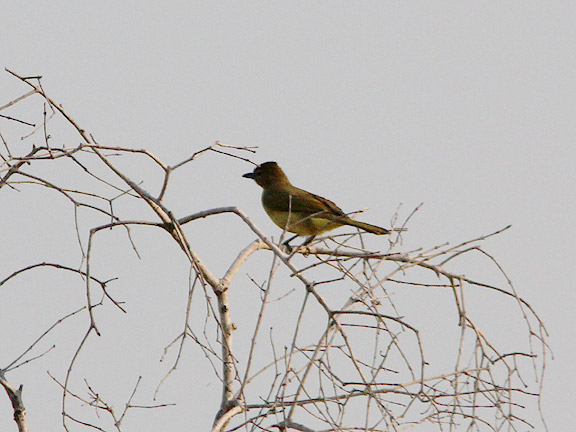
Yellow-bellied Greenbul passing the hide

I headed back to the lodge, where several BLACK-COLLARED BARBETS were making a raucous in the trees above.  Sam was still resting and it was getting near sunset--and Alan was going to take me and two other guests onto the island to look for wildlife--and specifically the owl!  I got my gear ready then headed back out to the yard where there were now 3 LITTLE BEE-EATERS flycatching from a small sapling in the middle of the grass.  The lighting was excellent, but the others were waiting on me so I only snapped a few shots before we headed out.

Little Bee-eaters posing in the yard

Alan led us through the bush to the rivers edge and then across what during high water would be under 3-6’ of water, but now was merely a trickle on the far north edge of the river.  We hopped across small pools, and stepped on rocks through the areas where water was still flowing--it was hard to imagine what it would be like in a few months.  Once on the island we started seeing some wildlife--first flushing a STRIATED HERON, and then another.  We then came across a BUSHBUCK--the namesake of the lodge, which stood broadside on a bank in perfect light before disappearing into the woods.
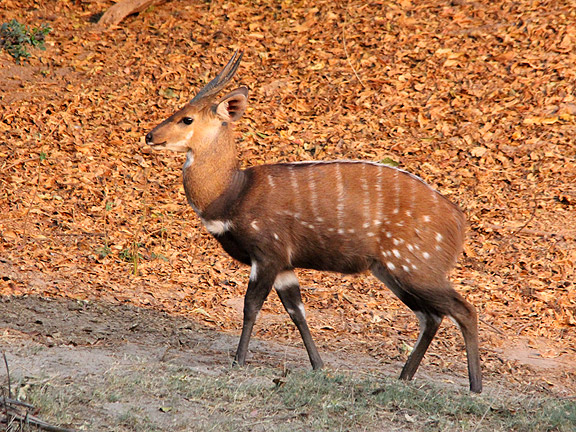
Bushbuck on the island on the Zambezi River

After the buck took off we headed towards the heart of the island, but not before spotting an AFRICAN OPENBILL on the shore facing the main channel of the river.  I had seen just one of these in South Africa at a great distance on the Olifants River, and now one was less than 100’ away.  It let us approach rather close, and unfortunately our path took us close enough that it flew as we walked by.  One of the more interesting storks--with the opening between the two bills…
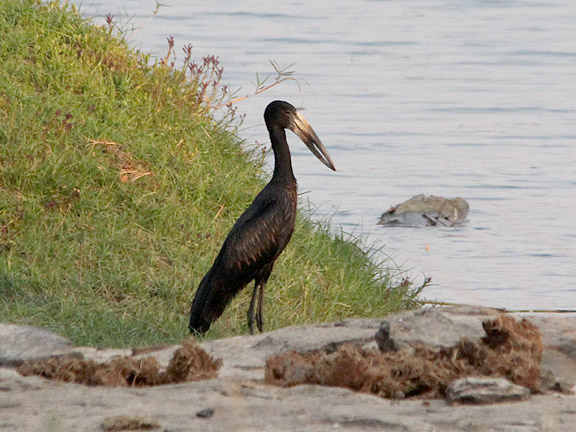
African Openbill on the Zambezi River

Alan told us where to look for the owls, and we started walking the perimeter of the island hoping to catch a glimpse.  He mentioned that several times he would miss the birds only to have them fly as he got near--which actually allowed him to watch where they land and then get better looks at them.  Just a few days before we arrived he had seen one, so we had high hopes.  Making our way east along the north shore we didn’t find any owls.  We worked around the east end and then slightly to the south--no owls.  It was tough searching through the enormous trees.

Trees on the island on the Zambezi River

After getting to a turn around point Alan told us there were trees along the north end where we still had a good chance to find them, so we headed that way.  As we walked I was looking up and spotted a pair of turacos flying through the trees--I asked Alan if they were Purple-crested Turacos, to which he told me no, they would be SCHALOW’S TURACOS!  Schalow’s was another target bird, that I had hoped to see--I put Knysna and it as an either/or, just hoping to see one species, and I already had the Knysna--so this would just be a bonus.  I didn’t think I would get to see this species as I had tried to get information on seeing them before my visit, and everyone I talked to said it was just a matter of luck if you had one fly by at Victoria Falls.  But here 20 miles up river, after a few minutes of searching I spotted them, high in the trees, hidden in the canopy.  I snapped 3 shots before the birds flew--and got lucky enough to get one of the birds sort of visible.
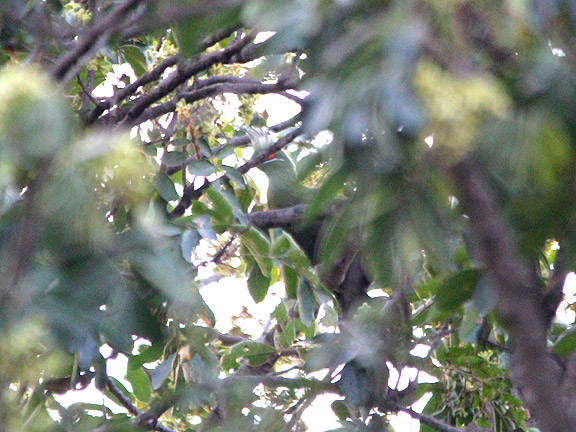
Lifer Schalow's Turaco hiding in the canopy

I tried to to follow them, but any time I got within 100’ they took flight.  I opted to leave them alone and get back to searching for the owls.  It was a great find, so I was stoked regardless of how the owl search turned out.  We made our way along the north edge, on the mud flats outside of the island looking back along a swampy area with a lot of overhangs over pools that were now disconnected from the river--perfect habitat for the owls.  No owls were to be found tonight, but a bull HIPPOPOTAMUS in the river was making a fuss about where we were.  We passed within about 40’ and he let us know he was unhappy about it.  Splashing and barking, while opening his mouth all the way and hitting the water, he showed his long teeth, and let us know who was boss.
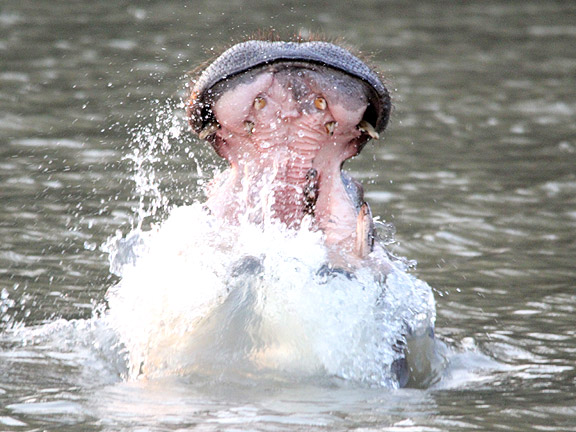
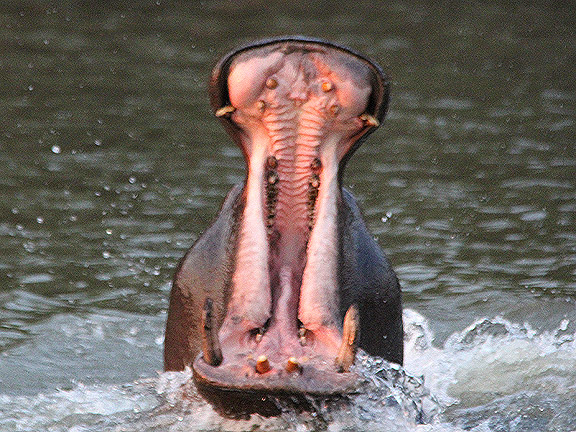
Mad Hippopotamus in the Zambezi River

As we headed back towards where we could cross the river the sunset--it was incredible.  The combination of the smoke, humidity and whatever other particulate was in the air made for a pink sky, with the sun so muted you could look right at it without any problems--it was a magenta and pink orb floating against gray as it neared the horizon.
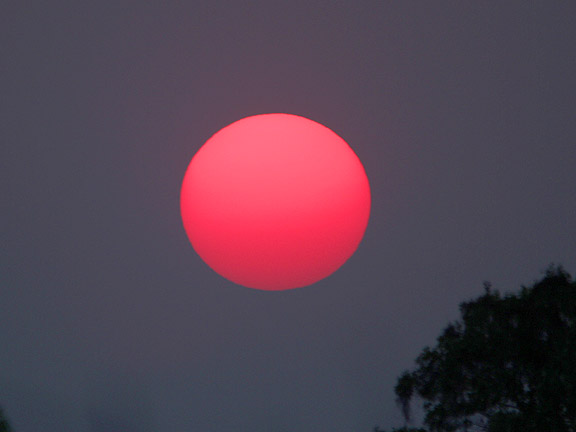
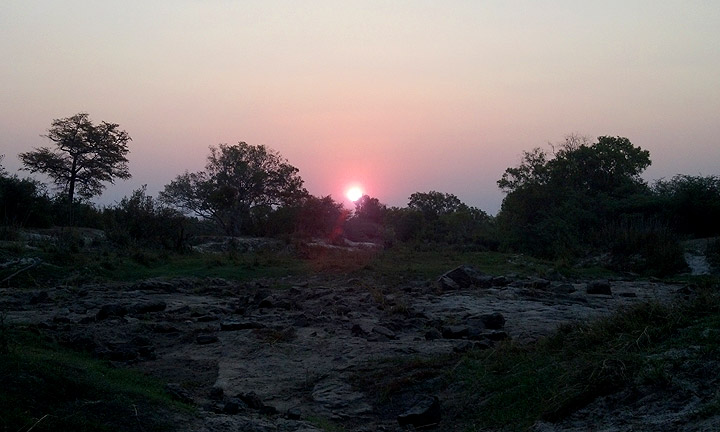
Sunset over the Zambezi River

With the sunset a few creatures emerged from the surrounding areas, including several bats of varying sizes and shapes--but more importantly a very cool bird--and one that I wouldn’t see again, the ROCK PRATINCOLE.  There might have been 10 of them flopping around over the river, they were like a mix between a nighthawk and gull and were fun to watch.  I stayed behind to try and get some photos while the others continued back to the house.

Rock Pratincole flying over the Zambezi River

It was getting pretty dark so I managed what I could before heading in myself.  It had been a long day, but had a few awesome sightings.  The day was capped with an excellent dinner prepared by the chef, a local who made incredible meals each night.  Soon after dinner we were in bed, getting a great night sleep.

7 life birds this day / 315 total trip life birds / 337 total trip species

photos from Bushbuck River House, Zambia:
http://www.timaverybirding.com/photos/thumbnails.php?album=1117

eBird Checklist for the afternoon and evening
http://ebird.org/ebird/view/checklist?subID=S15180529:

Labels: , , , , , ,

Birding Africa pt. 13 - Cape Point, Kirstenbosch, & Rondevlei

posted by Tim Avery at
on Sunday, November 10, 2013 

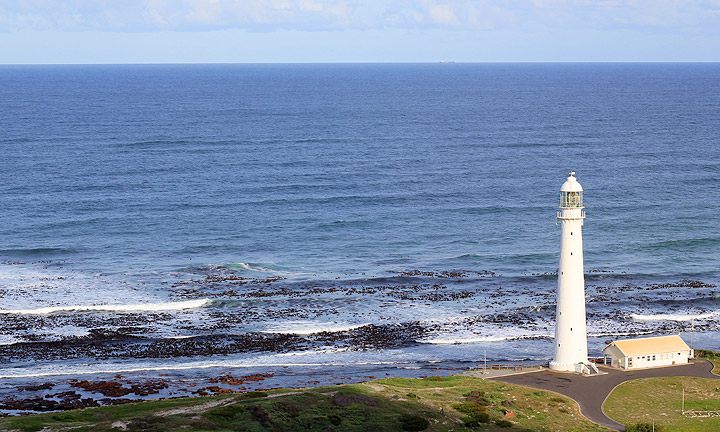
The morning following our shark diving trip we woke and had breakfast at the Makapa Lodge, enjoying the view of Noordhoek below and the Atlantic Ocean beyond.  After breakfast we hopped in the car and headed south, making our way towards Table Mountain (Cape Point) National Park.  From Capri we could basically make a loop down to the park, then back around the cape up to Simon's Town and back to the lodge.  It was a beautiful sunny morning and the views were amazing.  We made a quick stop to check out the Slangkop Point Lighthouse, from where I learned birders often conduct sea watches picking up some of the more common seabirds that range closer to the coast than others.

Slangkop Lighthouse on the Cape Penninsula

It's an amazing drive, and we saw very few people as we made our way to the gate of the park.  Once there we paid and headed in, stopping briefly at the visitors center to check things out.  CAPE FRANCOLIN could be heard calling here, and a PIED CROW was circling the parking lot when we got back to the car.

Pied Crow circling the visitor center at Cape Point

Driving down the road the occasional bird zipped across the road--occasionally landing long enough to get a quick look before disappearing into the Fynbos.  Fynbos is the natural shrubland or heathland vegetation occurring in a small belt of the Western Cape of South Africa, mainly in winter rainfall coastal and mountainous areas with a Mediterranean climate.  This is the predominant habitat on the Cape Peninsula and there are dozens of specialty birds associated with it--and it seemed like most were tiny and very fast.

The Fynobos along the Atlantic Coast of Cape Point

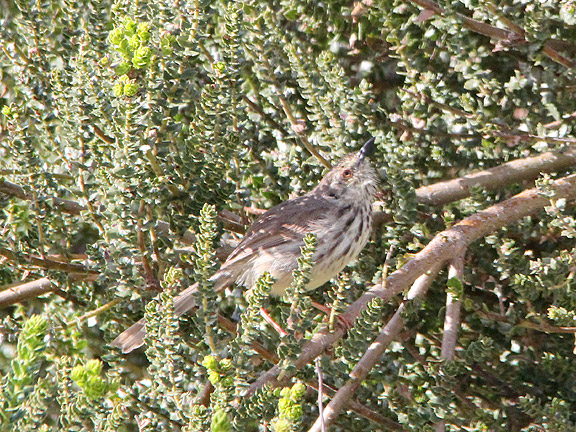
One of the first species I managed to get a good look at was a KAROO PRINIA--I’d already seen two other species of prinia in the east, so picking up this species was nice.  As it turned out this ended up being one of the most common birds I saw during the day, seeing it numerous times in the park, and at several other locations later.

Karoo Prinia skulking along the road
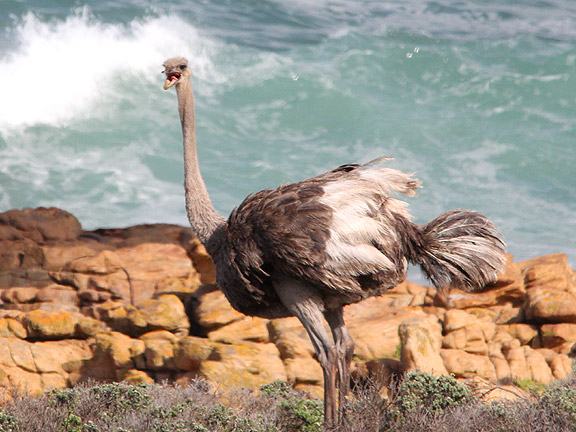
We stopped a couple times to take pictures and enjoy the nice weather.  Eventually we saw our first feral COMMON OSTRICHES--we ended with 3 in all along the way to the point.  They were all close to the road, and one was posing quite nicely with the ocean behind it--it was a stark contrast to the wild ostrich in the dry Savannah in Kruger.

Common Ostrich at Cape Point

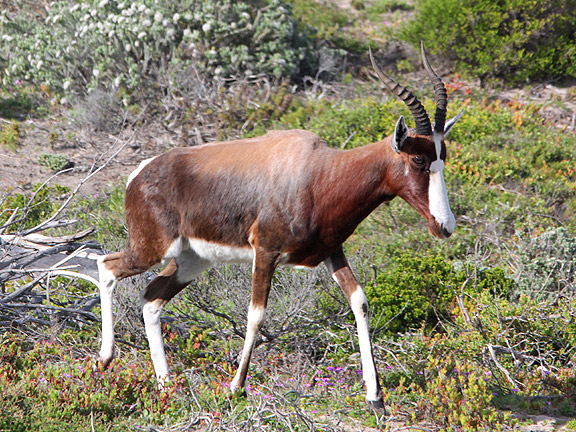
While we watched the ostrich we heard some commotion to our left, and saw a strange antelope running towards us.  I wasn’t sure which species it was but it was really cool looking.  Later I was able to figure it out pretty quickly since there are very few mammals on the cape--it was a BONTEBOK.

Bontebok running through the Fynbos

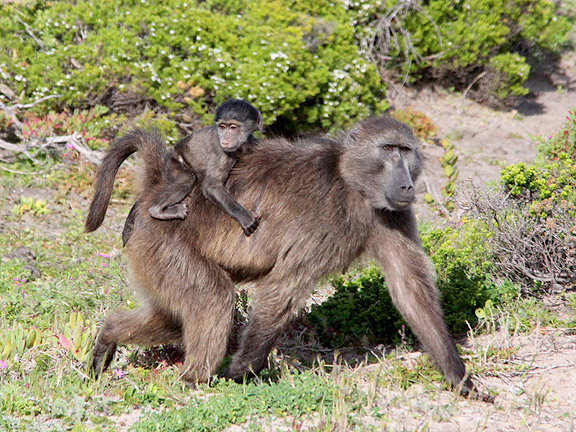
As it got closer I heard some yelling and saw why he was running--a large group of CHACMA BABOONS were running behind it.  At first I thought they might be chasing it but after a moment I saw 2 park employees walking through the brush behind them.  The park employees were actually chasing the baboons away from the point I guess--they try to corral them from the popular tourist stops so they don’t have bad encounters with visitors--which I guess is a problem quite regularly.

Chacma Baboon with a baby at Cape Point

Eventually the bok and the baboons passed and went right by the freaked out ostrich which puffed up and started hissing at them.  The park employees stopped to talk to us and warned that if we saw other baboons it was best to stay in the car with the windows up and doors locked, because the issues with them went as far as being able to open doors and actually get into the cars.

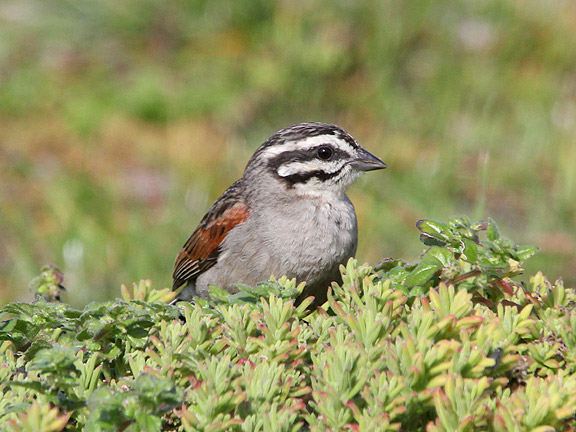
As we drove I spotted a few other birds zipping by.  A couple small flocks of CAPE CANARIES made their way by, while occasionally I spotted other species such as WHITE-THROATED CANARY and even a small group of YELLOW CANARY.  There were also a few CAPE BUNTING around, beautiful little sparrow that seemed to have no fear of people as each I saw posed nicely for photos.

Cape Bunting is a gorgeous little sparrow

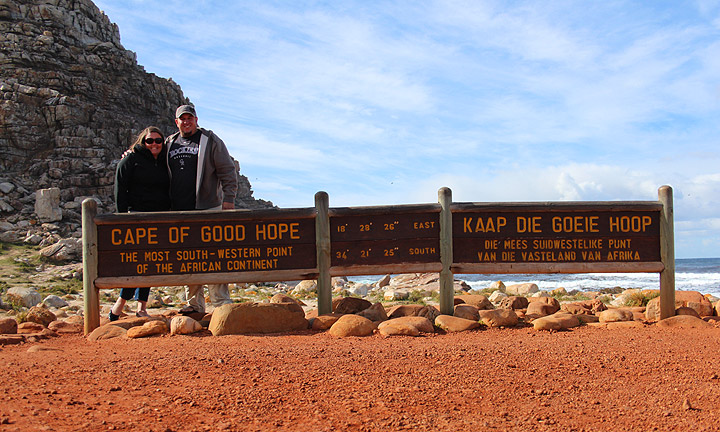
We finally pulled into the parking lot that marked the end of the road and the sign letting visitors know they were in the furthest southwest point of the African continent.  Many people think this is the southern tip of Africa, but it actually isn’t as far south as Cape Agulhas, 90 miles east-southeast of Good Hope.  It does however mark the meeting point of the Indian and the Atlantic Oceans.

Sam and I at the Cape of Good Hope

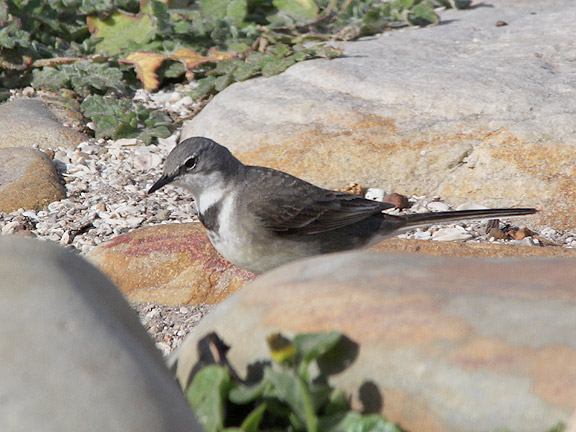
There were numerous PIED CROWS here, while a couple HADADA IBIS could be heard in the grassland nearby.  On the rocks near the shore were small groups of CAPE CORMORANT with several GREAT CORMORANT mixed in. KELP and HARTLAUB’S GULLS occasionally flew by, while CAPE WAGTAIL hopped along the edge of the parking lot and the shoreline.

Cape Wagtail doing its best to avoid my camera

We decided to stroll to the overlook above to see the view of the open oceans from a better vantage point.  In the rocks as we walked up we started to notice large rodents similar to marmots, but with more of a”mouse-like” face.  They started popping out of crevices, and were laying on the rocks sunning themselves everywhere.

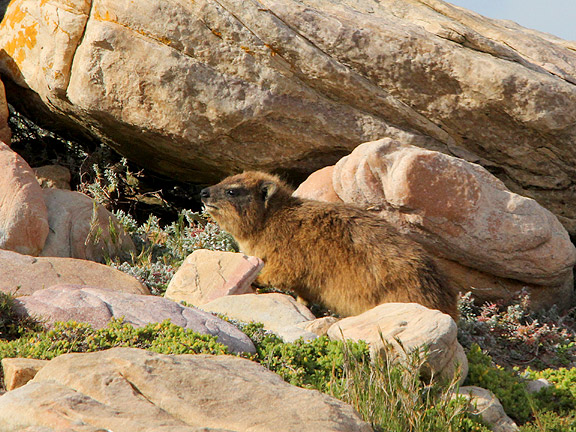
Rock Hyrax darting between rocks

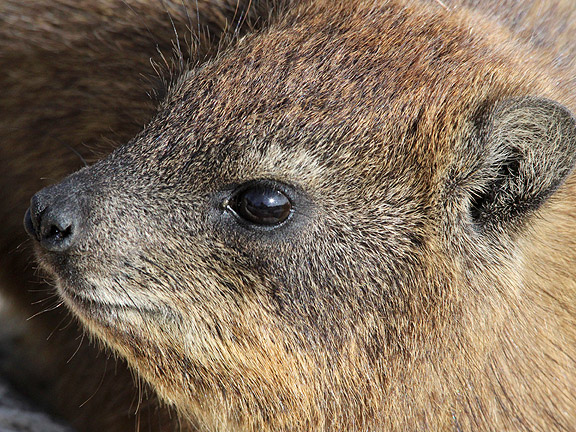
Later I learned these were ROCK HYRAX--interestingly the closest related species to this family are Elephants!!!  The locals called them Dassies, and they are quite adorable--and they seemed again to have very little fear of people as we often walked within a foot of them as we made our way to the view point.

Almost too close to fit in the frame!

The view up top was stunning.  There were also a few new trip birds around including the FAMILIAR CHAT which posed nicely for pictures.

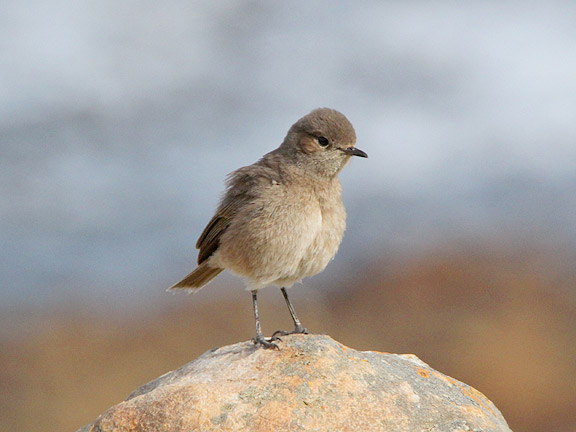
Familiar Chat on the rocks of the Cape Point Overlook

I noticed one other bird hopping around in brush--a CAPE PENDULINE-TIT, that was also a lifer.  Another bird that flew up out of the brushes was a surprise CAPE SISKIN--not a bird normally seen out in the Fynbos--unfortunately by the time I realized what it was it had flown.

Cape Penduline-Tit foraging in cliffs

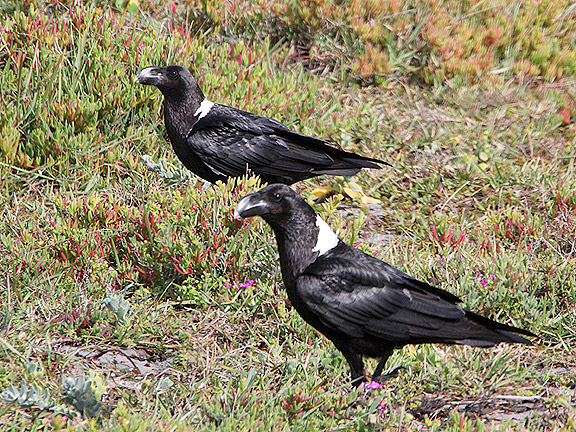
We headed back to the car and started making our way out of the park.  Along the way I spotted a couple of WHITE-NECKED RAVENS hopping along the ground near the road.  These birds are very cool, and make our ravens look a little boring.

White-necked Ravens along the road

From the park we headed to Simon’s Town and then back towards Capri and eventually Noordhoek.  We stopped in at a winery for lunch and some wine tasting--being a weekday we were the only people there, which made for a nice break--the timing was also perfect as rain clouds had started to develop and it rained while we snacked on gourmet cheeses, crackers, dates, nuts, and other fruits.

After the break we hopped back in the car and headed over the pass through Silver Mine Nature Area and to Kirstenbosch Gardens.  Along the way we saw one JACKAL BUZZARD soaring along the highway, which I wish I could have stopped to photograph--but alas there was nowhere to stop on the narrow winding road.  Both birders and non-birders alike had recommended this as a stop for birds and just a relaxing walk through the gardens.  Think Red Butte Gardens here in Utah--but bigger.  There were a few birds here, but most gave only fleeting glimpses.  One species that posed long enough for photos were a pair of stunning COMMON WAXBILLS.

Common Waxbills at Kirstenbosch Gardens

We didn’t spend a ton of time here as there were other places I wanted to go and see--plus it was mid-day so the bird activity dwindled.  I did see ALPINE SWIFTS soaring in the clouds above, and 1 ORANGE-BRASTED SUNBIRD appeared shortly for looks.  GRAY TITS made a racket from the brush while BRIMSTONE and CAPE CANARIES passed overhead from time to time.

Cape Canary posing just long enough for a picture

We made a quick stop at the gift shop then headed back towards the lowlands to check out Rondevlei Nature Reserve, a series of marshes along the coast.  I had figured based off other reports from eBird that I would get my chance to photograph flamingos here--but I was wrong.  Rondevlei is in a poorer area of Cape Town and getting there reminded me of driving through the areas near Tijuana Slough in San Diego.  It was just a couple bucks to get in, and we were soon walking the trails.  I headed to the top of a viewing tower and saw there were very few birds on the water--and no flamingos.

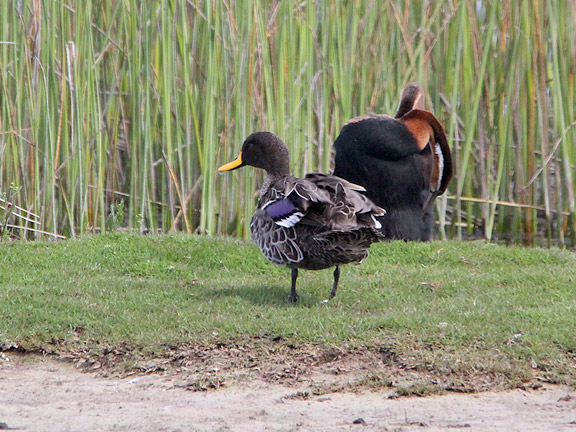
We made our way from pond to pond--one of the first species I picked up was a YELLOW-BILLED DUCK, a stunning species that is almost black, with the starkly contrasting yellow-bill.

Yellow-billed Duck with a African Darter

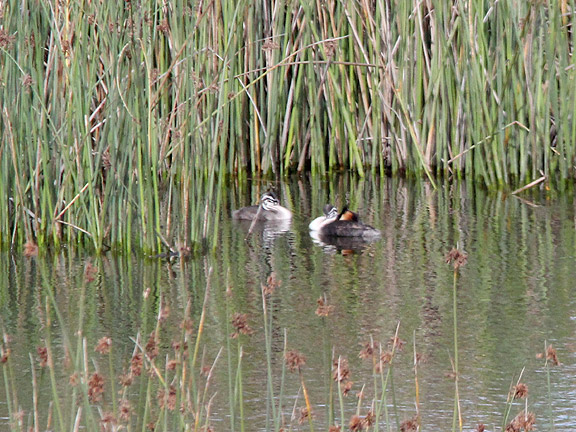
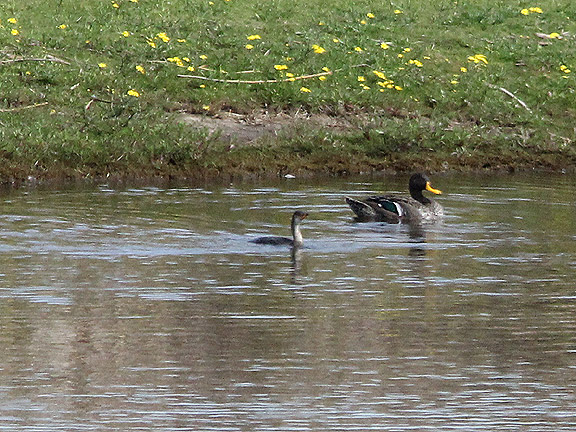
There were also a number of grebes on the water--in fact I picked up all three expected species--starting with EARED GREBE--to think I was 10,000 miles from home and picked up the most common grebe we see each year in Utah.  Soon I added GREAT-CRESTED GREBE and then the smaller LITTLE GREBE to round things out.  Both of the latter were lifers.

Adult with a couple young Great-crested Grebe

Little Grebe (a.k.a. Dabchick) with a Yellow-billed Duck

I got a quick look at a pair of MACCOA DUCKS as they darted into the reeds--all the while cormorants, spoonbills, ibis, and herons flew overhead.  At another viewing platform I scanned a number of birds hoping to pick out a pelican or something else new--unfortunately I couldn't.  Heading back towards the entrance I added CAPE WEAVER and RED BISHOP as well as two species of warbler--LESSER SWAMP-WARBLER, and LITTLE RUSH-WARBLER.  This place was super birdy even though there weren’t nearly as many waterbirds as expected.

Cape Weaver through the reeds at Rondevlei

Back in the car we headed south, making a stop at a gas station to get some snacks--it was in a very sketchy area--as was apparent when we walked in and found the cashiers behind bullet-proof glass.  When you went to pay you placed your goods into a metal drawer which slid into their guarded area--they then took your money before sliding your goods back.  We gladly paid and hurried back to the car and onto the beach that bordered the north end of False Bay.  We didn’t stay long as it was windy and a bit cold.

Kalk Bay and Fishhoek form Sunset Beach

We headed back along the coast through Kalk Bay and Fishhoek, and eventually back to the lodge as it was getting late in the day.  Sam made a few phone calls home while I wandered the property.  I got a good look at a bird I had seen a couple times earlier in the day--a BOKMAKIERIE--think a yellow shrike-like bird.  We eventually headed back out to see what was in Noordhoek.  We ended up on the beach there--which was covered in sea-weed.  There were a few CAPE WAGTAILS here as well, but the most interesting bird was a SPOTTED THICK-KNEE in the parking lot that must have had a nearby nest as it was making a racket.

Spotted Thick-knee at the south lot on Noordhoek Beach

We again headed back to the lodge to get ready for dinner, I decided to talk to the owner about what I had seen and had missed--talking about the flamingos he lamented that there were probably 100 or so at Noordhoek Beach--I was floored as I couldn’t imagine where.  He explained there was a tidal pond on the north end of the beach--where we hadn’t gone.  It was almost sunset but he told us we could make it there before dark if we hurried.  So we hopped in the car and headed there, making it just as the sun was hitting the clouds over the Atlantic.

Sunset over the Atlantic at Noordhoek Beach

It was an amazing sunset as we hurried down the trail towards the long stretch of water--when we got there looking south you could see about 80-100 GREATER FLAMINGOS, some 200+ yards in the distance.  Had I just asked earlier in the day we easily could have walked around the pool and made our way within 50 yards or closer--but because I failed to do so we only got these distant looks and photos.

Greater Flamingos at Noordhoek Beach

Lesson learned I guess.  It was great to see them again, but I really wanted better shots--I had just figured we would happen upon them by going to places where they were normally seen--oops.  We headed back to Capri then made our way to Kalk Bay for dinner at the Harbor House.  If you are staying in this area you must eat here--it sits right over the water and is the best restaurant in the area.

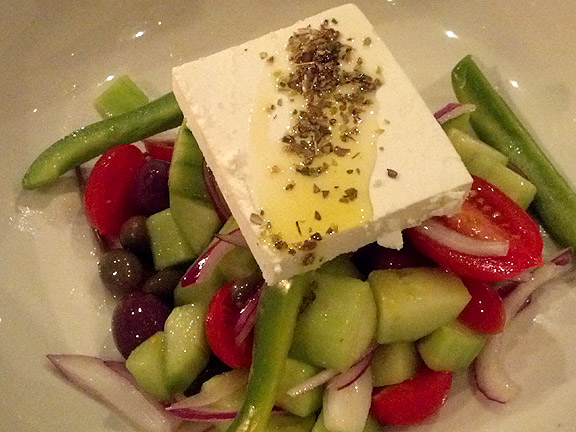
Salad with dinner at the Harbor House

And that was it for Cape Town.  We headed back to the lodge after dinner and got mostly packed to leave early the next morning for the airport.  We had a 45 minute drive, and a 6:00am flight the next day.

28 life birds around Cape Point / 308 total trip life birds / 330 total trip species

photos from the around Cape Point:
http://www.timaverybirding.com/photos/thumbnails.php?album=1116

eBird Checklists:
Cape Peninsula NP
Kirstenbosch Botanical Garden
Rondevlei Nature Reserve
Noordhoek Beach

Labels: , , , , ,

Birding Africa pt. 12 - Great Whites & Jackass Penguins

posted by Tim Avery at
on Tuesday, November 5, 2013 

After the pelagic from Hout Bay I rushed back to Sea Point and picked Sam up--2 hours late... Sorry.  We packed the car and headed back towards Hout Bay.  We had to drive south around Table Mountain then across the Cape Penninsula to Capri Village near the town of Fish Hoek.  The drive took us along Chapman's Peak Drive, which hugs the side of the mountain with a drop off to the ocean on the opposite side.  It's a scenic and amazing drive--plus it's a thrill for those of us used to the other side of the road.  I took pictures which I planned to put here--but for some reason the pictures from this day taken on my smart phone disappeared.

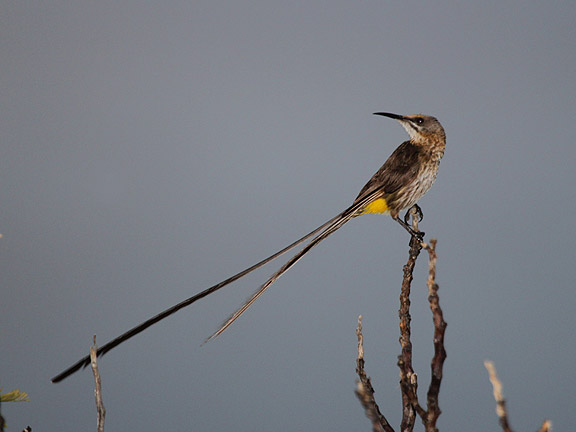
After you drive into the mainland from the edge of the sea its like driving through the rolling hills of the upper midwest.  We past farms, wineries, marshes, and homes.  We pulled into the neighborhood in Capri where the Makapa Lodge is located, and checked in for the night.  The sun had set but it was still light and as I walked to our room I spotted a CAPE SUGARBIRD perched in the trees just outside.  This long-tailed beauty was one of my top 25, so I took to shooting a few shots with the flash--since the lighting was awful.

Lifer Cape Sugarbird--what a tail...

We ate dinner at a seafood joint in Fish Hoek before calling it a night.  The next morning we were up by 5:00am and in the dark headed towards Simon's Town Harbor--today we were going diving with Great White Sharks.   We booked a trip on Apex Predators, one of two companies in Simon's town authorized to do shark diving in False Bay--they had stellar reviews and were known around the world for the specials on the discovery channel.  We were joined by 10 other American's, and the boats captain and crew--apparently about 95% of tourists who go shark diving are from America--go figure.

Me heading out of the harbor with the shark cage...

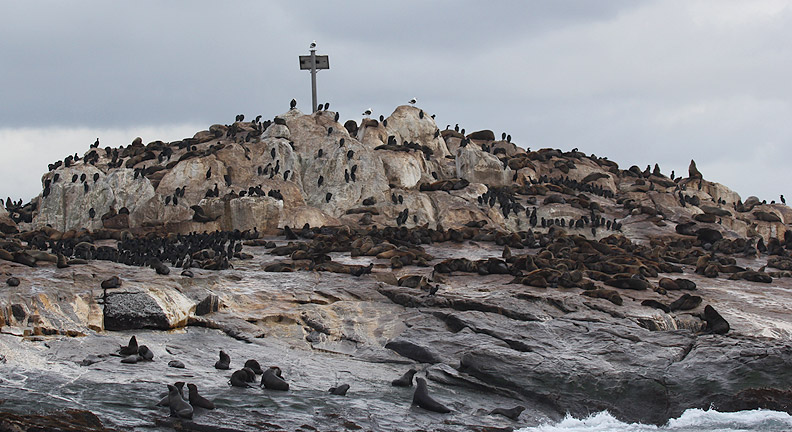
The ride out to Seal Island Preserve only takes about 35-40 minutes, and being still kind of dark there weren't a lot of birds--in the actual harbor there were dozens of SWIFT TERNS and a number of GREAT CORMORANTS though.  Once to the island you could see 1,000's of CAPE CORMORANTS on "the rock".  And of course CAPE FUR SEALS were there by the 100 as well.  The smell let you know that--it was god awful, seriously the worst smell I have ever smelled--but the sight of all the wildlife was incredible.

Seal Island at first light

After a quick look around the crew started looking for signs of shark attacks and it wasn't long before we started seeing it.  Usually a flock of KELP GULLS hovering over the water was a good sign that an attack was happening or had just happened--and when it did the boat would go that direction.

Great views of Kelp Gulls at the kill sites

Kelp Gulls with a Great White Shark at a seal kill

We went to the sites of 3 or 4 attacks but actually missed the initial attack on each one.  Aside from the gulls there was also a BROWN SKUA that came in and kept circling--it was nice to see one last skua for the trip.

Brown Skua in False Bay

 We did get to see one seal giving a great white a run for its money and actually escaping.  The little creature would jump out of the water right on the sharks back making it almost impossible for the shark to get them.

Cape Fur Seal flipping over a Great White Shark

Twice we ended up at the aftermath where seal remains were scattered in the water and the gulls were in a feeding frenzy.  At one of the stop one of the GREAT WHITE SHARKS was actually busy still eating and the water was stained red from the carnage.  It was incredible to watch.

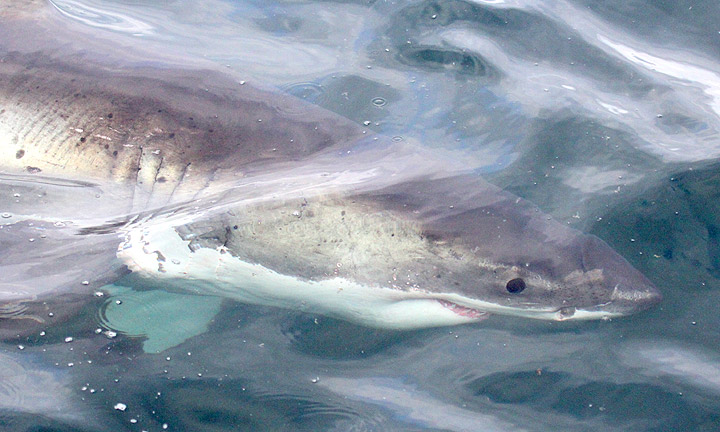
Great White Shark at a seal kill

After all of this, they try to see if they can get sharks to breach towing a dummy seal--unfortunately it was the wrong time of year for that, as we just missed the tail end of the breaching season--the best part about it was the dummy seal had been named "Beiber 3" (1 and 2 were destroyed by sharks).

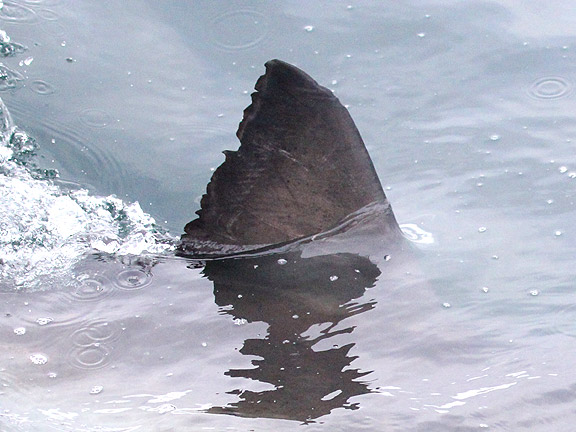
Classic "Jaws" shot of a Great White Shark

Finally came what I was most looking forward to, getting in a cage in the water with the sharks. Sam had previously decided she was not going to do it, because it was too scary.  Out of the 12 guests, only 5 of us were in, so that meant we would get longer in the cage--that was until some of the fearful guests changes their minds upon seeing what was happening--all in all they ended up sending 4 groups into the water and 9 people went--so we spent less time in that I would have liked--but it was worth it because Sam was one of those who changed her mind.

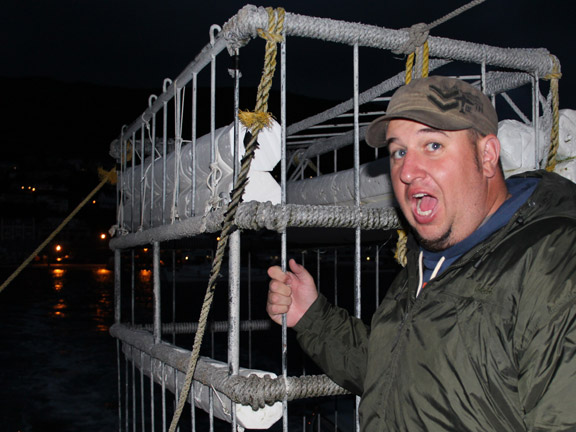
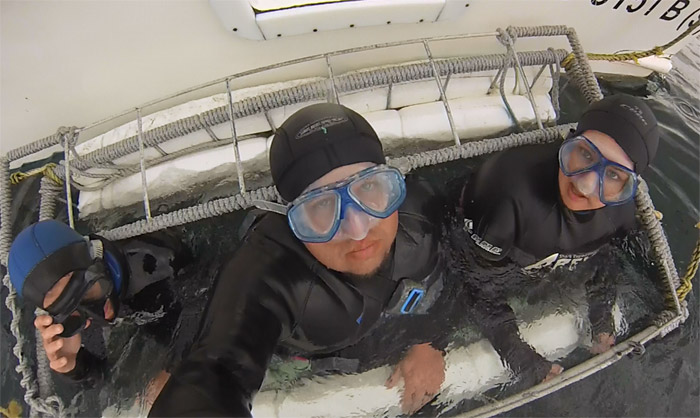
Us in the shark dive cage

We were in the 2nd group to get in, and didn't get to watch the 1st group as we were getting into wet suits--we could hear the commotion and knew there were sharks coming to the surface.  I had really wanted to get a picture of a shark coming out of the water and hoped I wouldn't miss out.  Finally, they called us to hop in so we did.  The water was brisk.  And at first there were no sharks coming in.  It felt like we were in the water forever before they yelled from the boat, "SHARK!!! LEFT!!!!".  That was our signal to dip under the surface and  look to the left.  They did this because they found that having people stay under water looking on their own, they were missing sharks--it helped get good looks, but made for an awful time trying to get a picture.

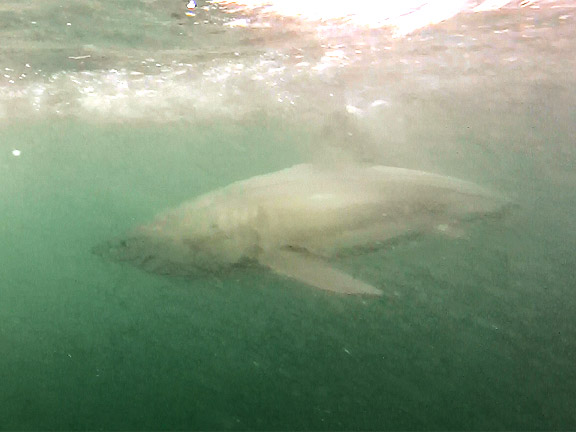
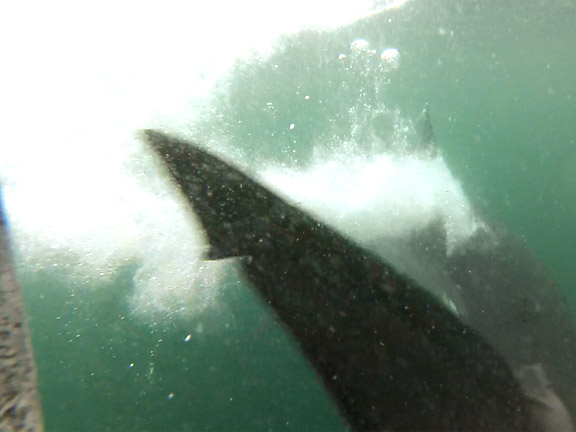
Great White Shark passing us

The first shark passed about 15' away but it was spectacular--after that things got really amazing.  In the 30 or so minutes we were in the water we had up to 6 GREAT WHITE pass the cage--the biggest was almost 4 meters long.  It truly was an incredible experience--being that close to such a deadly creature and seeing how easily it moves in and out out of sight.  The sightings were only for a couple of seconds each--and every once in a while the shark came close enough that if you were crazy--you could reach out and touch.

Great White Shark within a couple feet of us

Tail of a Great White Shark close enough to touch

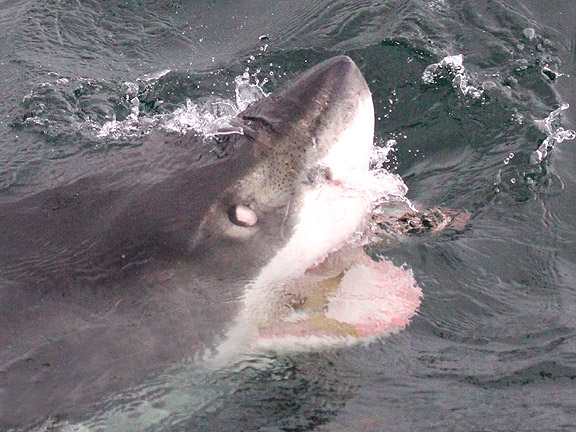
Once out of the cage, it was out of the wet suits and freezing--but that didn't stop me from making it to the top of the boat so I could try my hand at getting a shot of a shark coming out of the water.  While we were in at least 3 had stuck heads fully out of the water--after us several had for the 3rd group--but by the time we were dry and out looking it didn't happen again.  One shark did stick the tip of its mouth out of the water and I was able to catch it--but that was the best I got.

Great White Shark surfacing just a little

I also got a couple of shots of the sharks under water from the top that turned out pretty cool--I really want to go back during breaching season and go out for 3 or 4 days to try and photograph these creatures flying out of the water--because that is something even more incredible.

Great White Shark seen from the top of the boat

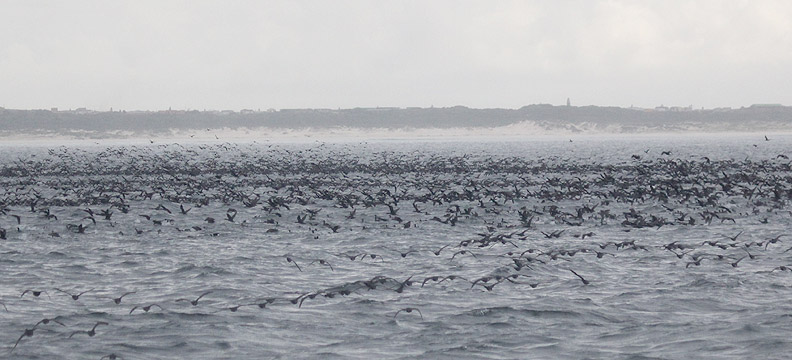
After everyone had their chance the boat circled Seal Island.  At this time the 1000's of CAPE CORMORANTS were starting to take off and fly to the east to feed on the open water of the bay.  Flock after endless flock streamed past the boat towards the open water.  I guess some call it the "other great migration" of Africa (even though its not really a migration).

1,000's of Cape Cormorants on False Bay

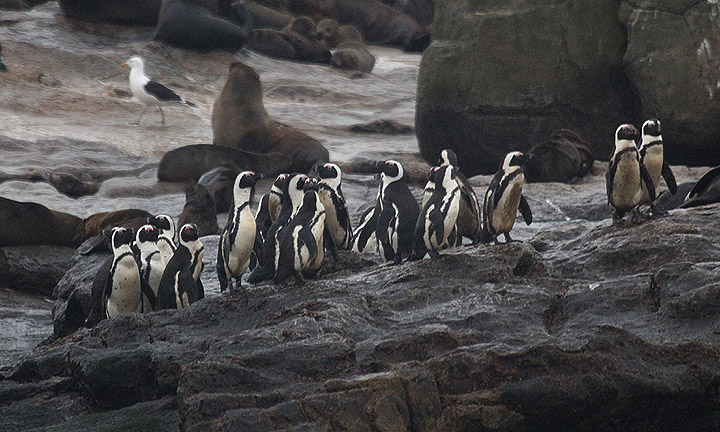
As we circled I spotted a decent sized flock of JACKASS PENGUINS on the rocks--this used to be one of the strongholds for this species, but Boulders Beach had become the safe haven where most in False Bay are now found, so the few on the rock were a nice treat.

Flock of Jackass Penguins on Seal Island

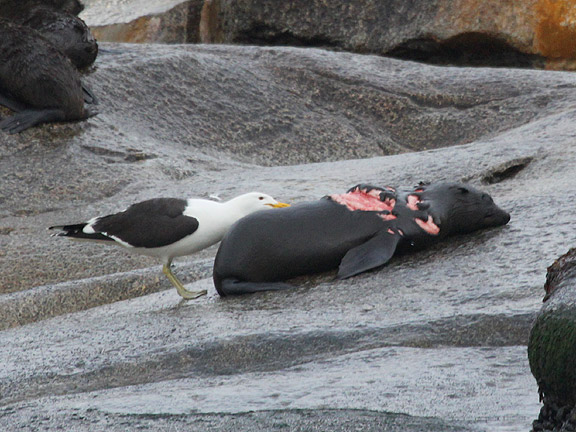
Coming back around the opposite side we saw an eerie scene--a few KELP GULLS were picking at a CAPE FUR SEAL that had been attacked and managed to make it out of the water.  There were large gashes and a flap of skin that had been torn apart by the greatest predators razor sharp teeth.  When the gulls would pick at it, the seal would move, obviously in pain.  It was heart-breaking for a number of people on the boat to see--but a part of the natural cycle of things, and something that was very interesting to see.

Kelp Gull picking at an injured Cape Fur Seal

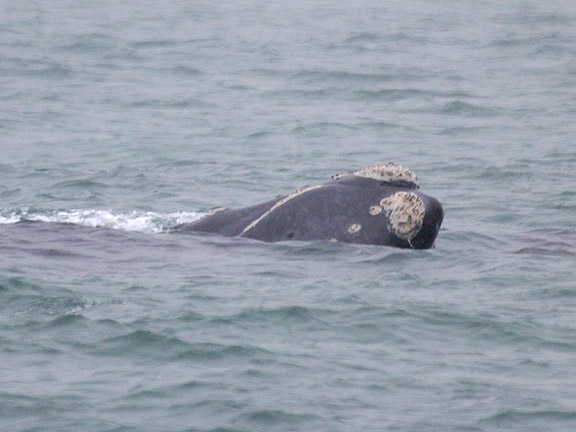
From the island we headed back towards Simon's Town stopping only for about 20 minutes to watch a pair of SOUTHERN RIGHT WHALES in the shallows.

Southern Right Whale in False Bay

Back at the harbor their was still one SWIFT TERN sitting on the buoys, so I was able to get a decent shot as we passed.

Swift Tern in the harbor at Simon's Town

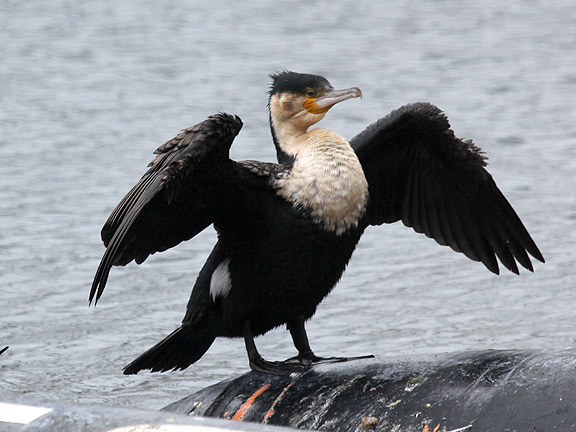
There was also one GREAT CORMORANT perched here that also let me get a nice shot with its wings out.  The lighting wasn't great but the birds were close enough that it didn't matter.

Great Cormorant in the harbor at Simon's Town

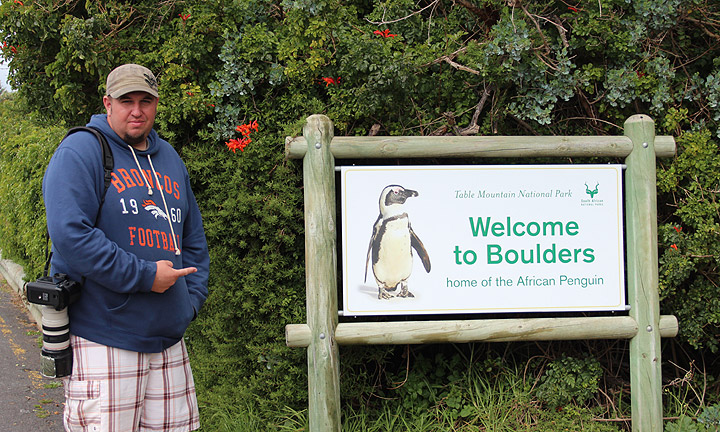
We grabbed a bite to eat right there at the Salty Sea Dog--supposedly the best fish and chips in the area--it was good because it was hot and we were freezing--but the fries were way too greasy to be called the best.  From here its a couple minutes drive south to Boulder's Beach, which is world famous for the large number of JACKASS PENGUINS that live there. Two pairs were introduced in 1982, and since the colony has grown to an estimated 3,000 birds (we didn't see that many, but there were plenty).

Me headed to Boulders Beach

From the parking area you take a short walk down a boardwalk--along the way you pass penguins on your left and right--eventually ending at an overlook you can see one of the protected bays where about 100 penguins littered the sand.

Large group of Jackass Penguins on Boulders Beach

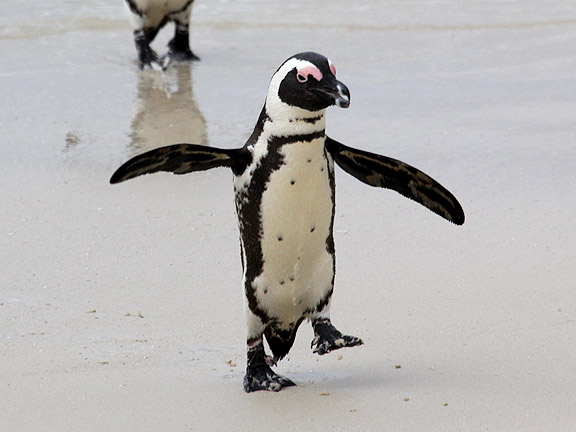
We spent about 30 minutes watching the escapades as they wattled, laid, played, swam, dove, and did their penguin thing just yards away.  There was a huge tourist draw here and the boardwalk had lots of people on it.  You definitely don't have the place to yourself for photography, but there are plenty of opportunities with all the birds.


Various shots of Jackass Penguins at Boulders Beach

I had now seen well over 100 penguins in the past 3 days--after missing horribly while in Peru in 2012 I was very excited to have finally seen wild penguins.  But all it made me want to do was go to Antarctica and see many more--one day :)

Jackass Penguin staring back at me

We headed back to Capri and cleaned up after our morning in the drink.  I walked around the Makapa Lodge grounds which is noted as a birder friendly establishment in South Africa.  The owners were very nice and helpful and I wished I had asked them specifics about birds before our last afternoon (next post) in Cape Town.  Ian who is an avid birder pointed out a few things like a SPOTTED THICK-KNEE on the hillside above the driveway, and let me know to listen for FIERY-NECKED NIGHTJAR later that night--which I did and was calling from somewhere along the driveway.

It had been a crazy day, and although I didn't see many new birds, the experiences were what really made it amazing.  The next day would be our last on the Cape, and would provide plenty of birds before we departed.

5 life birds around Fish Hoek / 280 total trip life birds / 300 total trip species

photos from the shark diving:
http://www.timaverybirding.com/photos/thumbnails.php?album=1115


eBird Checklists:
False Bay Seal Island Reserve
Boulders Beach NP
Makapa Lodge

Labels: , , , , , , ,


UTAH BIRDERS FLICKR POOL


    SEE MORE AND SHARE ON FLICKR