Utah Birds, Utah Birding, and Utah Birders. Promoting the sharing of information, and the conservation of habitat for birds in Utah and elsewhere. We are a group of people who want to share what we know, and create a positive birding experience in Utah.

BIRDERS BLOG

a blog by and for Utah Birders

Birding the Yucatán: Coba Lake & Ruins

posted by Tim Avery at
on Tuesday, February 11, 2014 

Part 3 of 3...
Destination Coba Ruins (where the bird icon is)

After arriving back in Playa Del Carmen I hadn’t quite decided what to do on Thursday--I could as planned bird the ruins in the morning and then go back to Cozumel in the afternoon.  I could even manage to go to Camino Vigia Chico if I really wanted.  Truth be told though, I was exhausted, and I kind of just wanted to relax.  So instead of birding on Thursday the 6th I didn’t do anything.  Looking back now, I wish I would have--as I would find out the following day, the birding in the Jungle was fantastic. I did get some terrible shots of WHITE-NOSED COATI on my phone in consolation...
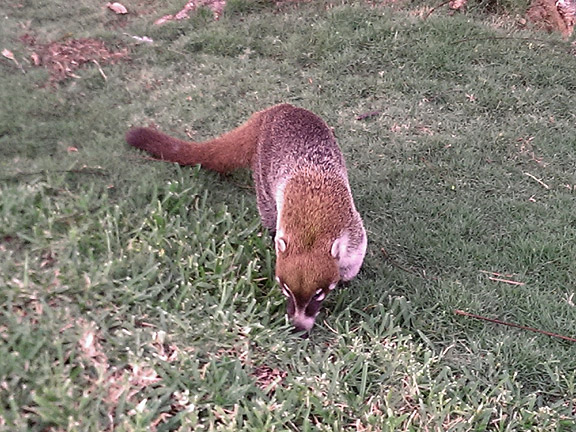
White-nosed Coati on the hotel grounds

I packed my bags the night of the 6th--one bag to take birding, and my other bag to head back to Salt Lake.  We had a 4pm flight to Phoenix, and a 1pm transfer from the resort to the airport.  I had to return my rental by noon, so figured 11am would be safer to give me time to get back to the hotel, shower, repack if needed and then go.  I didn’t end up going to bed till after midnight and I woke up wide awake at 4:45am.  Instead of waiting 45 minutes for my alarm, I got ready and took off.

The roads were empty along the coast so early. I didn’t really have a plan.  My first thought was to go to Tulum but when I got there, it was still closed for 2 hours.  There wasn’t much in the way of birding to be done outside the gate, which looks like a parking lot for an amusement park.  I decided to risk it and drive the 25 miles inland to Coba, meaning I had to leave a little earlier to come back.  Coba are Mayan Ruins in the heart of the Jungle, and if you have a ½ a day to go birding here, you should do it.

As I made my way up the highway towards the ruins, the sun started to hit the roadway.  I stopped when I saw a flock of YUCATAN JAYS fly across the road, so I could finally get a picture.
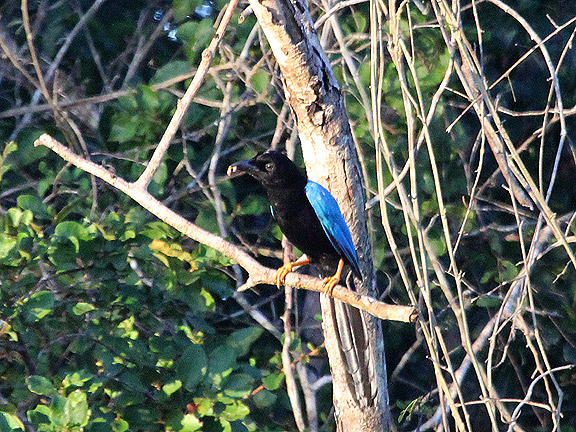
Yucatan Jay with some food in its bill

It was a party with the jays.  There was  alone GREEN JAY hanging out along with several COUCH’S KINGBIRDS, which I could finally hear singing to help separate from their Tropical cousins.  A WHITE-EYED VIREO was dancing along one of the tree branches in the sun.  A male and female ROSE-THROATED BECARD were flycatching in the early morning light along the road--it was the first time I had laid eyes on one since 1998 when I saw one at Patagonia Roadside Rest Stop in Arizona.  Seeing male and female together was a good sighting for me.
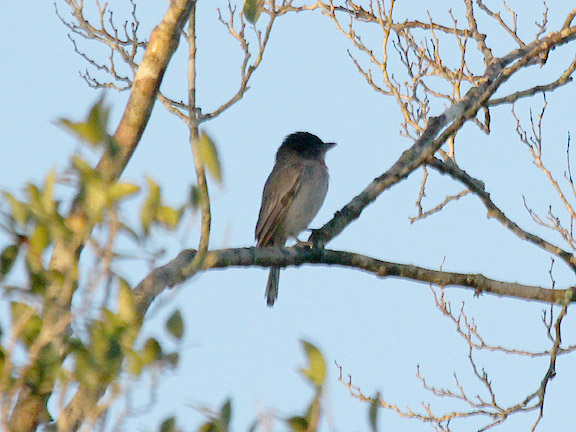
Male Rose-throated Becard

I wanted to stay and bird as there was lots of activity but figured I could do more at the ruins.  I drove the rest of the way to Coba where Laguna Coba (Coba Lake) broke the landscape of the jungle, reflecting the trees and sky creating a beautiful scene.
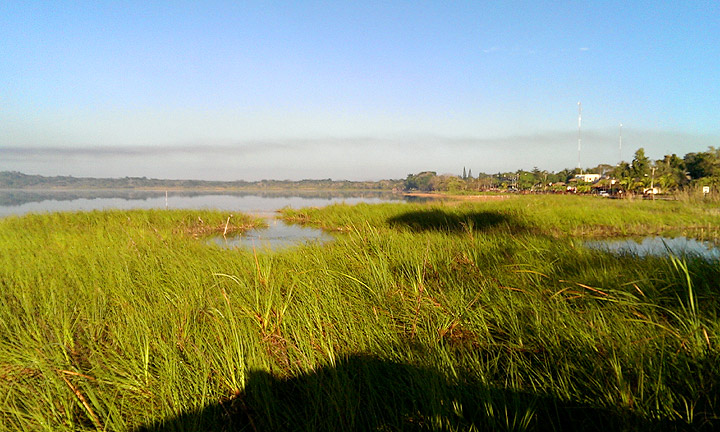
Coba Lake at Sunrise

There were also a few birds here like PIED-BILLED GREBE which each time I saw one got my heart racing in hope of a Least Grebe.  There were quite a few GREAT-TAILED GRACKLES along the edges, as well as one of the most odd waders around--the LIMPKIN.  One was relatively close for photos, albeit in poor light.
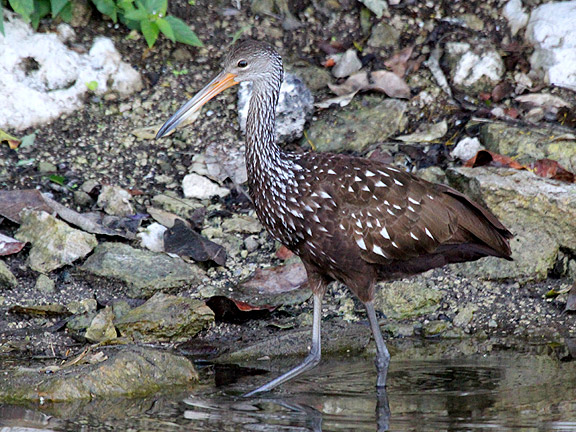
Limpkin on the side of the road

I parked my car near the entrance to the park which didn’t open till 8am as I would find out--I had an hour so decided I could look for some other birds.  I headed back to the lake and pulled out my phone to play the call for Ruddy Crake.  Almost instantly I had 2 RUDDY CRAKES responding to the playback from the reeds choking the shallows.  I then caught a glimpse of LEAST GREBE in a hurry to hide before I could get my camera on it for a shot.  After realizing there were no other birds on this side of the road, I headed back to the parking area and started imitating a pygmy-owl.  The birds started freaking out.  A  WHITE EYED VIREO came in to the call not happy at all.  A BANANAQUIT and a MAGNOLIA WARBLER were also quite unhappy.   A BUFF-BELLIED HUMMINGBIRD flew in to check out the commotion before realizing it was a goofy human.
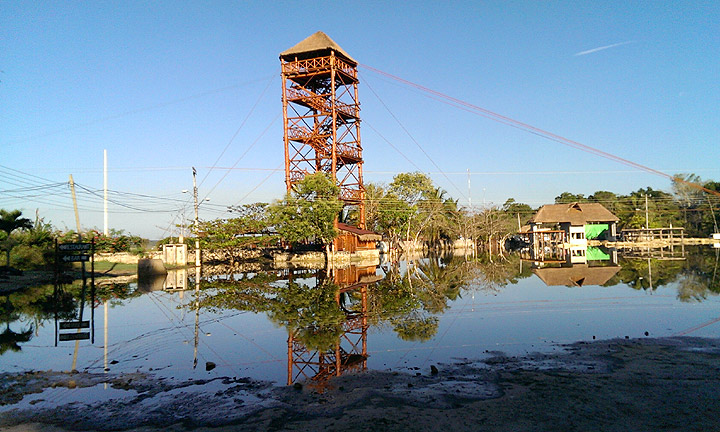
Flooded Parking lot at Coba Ruins

I headed over to the flooded and closed main parking area and walked the edge of it.  There were lots of birds, including a few from up north that included 3 ORCHARD ORIOLES. A KILLDEER seemed surprisingly in place on the edge of the flooded lot, despite being in the middle of the jungle.  A number of BRONZED COWBIRDS which happened to be a life bird as well were present in the general vicinity too.
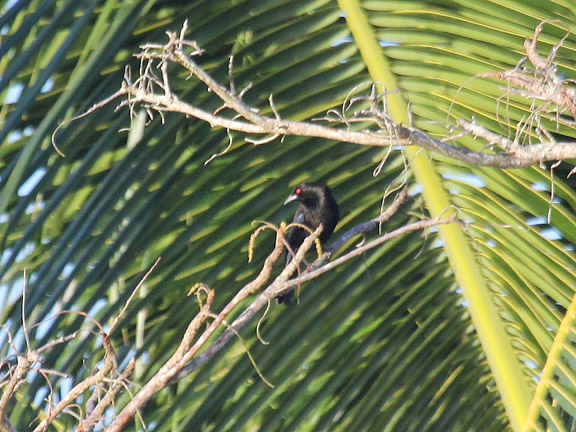
Bronzed Cowbird in the distance

On the south edge of the lot was some type of tree that had a lot of activity.  There was a pair of SOCIAL FLYCATCHERS along with a NORTHERN PARULA, a female SUMMER TANAGER, and a HOODED ORIOLE feeding here.  The best birds for me however were 2 GRAYISH SALTATOR--one of two species of Saltator I had hoped to see here.
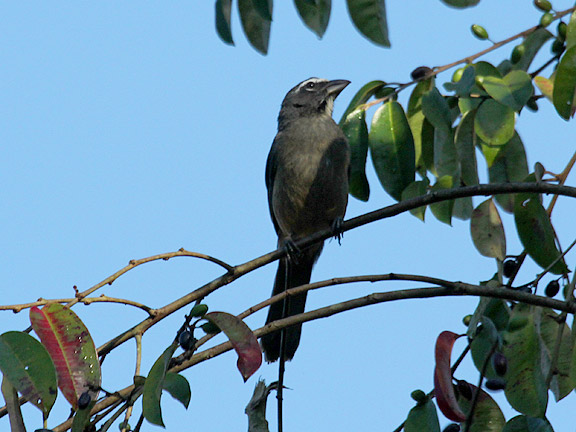
Lifer Grayish Saltator near the park entrance

After what seemed like ages the front gate looked like it was starting to open--despite the posted opening time of 8am, it was closer to 8:15 by the time they finally invited me to pay the meager entrance fee (about $3.50), and sent me on my merry way into the ruins.  There was mist in the jungle, creating a really cool scene as I walked towards the first opening where I could hear the activity buzzing.
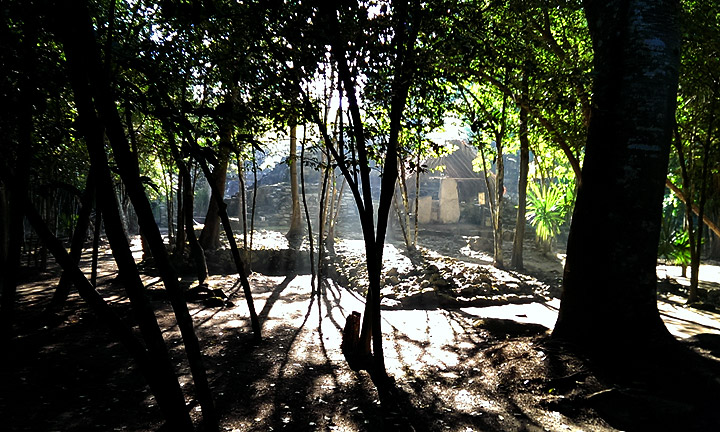
Ruins at Coba through the trees and mist

The actual grounds of Coba stretch several kilometers, and I realized that with only about 90 minutes to bird, I didn’t have enough time to really check things out.  I spent the majority of those 90 minutes right inside the entrance where the flurry of activity kept me busy.  The first lifer I spotted was a pair of YELLOW-WINGE TANAGERS.  I always enjoy adding tanagers to my life list.
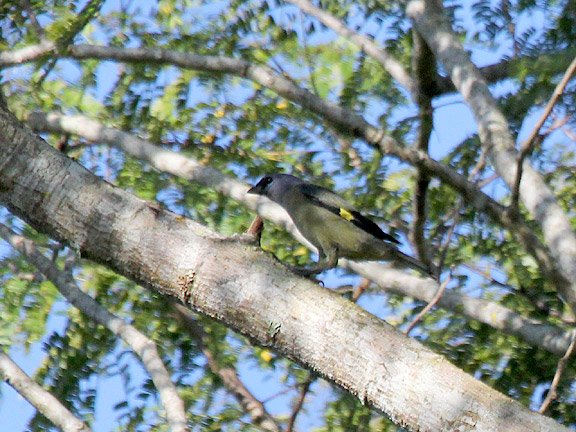
Yellow-winged Tanager high in the canopy

Above me I could hear drumming, it took a while to find the LINEATED WOODPECKER making the racket.  This was the 3rd individual of this species I’ve seen, while all the other larger tropical woodpeckers continue to elude me.  There were lots of birds singing that I couldn’t ID--one of the frustrations of the jungle.  I moved to an area where one large tree seemed to be the center of attention.  There were several warblers in the tree, as well as several of the aforementioned tanagers.  5 larger birds flew in, that I immediately recognized as the other Saltator, the BLACK-HEADED SALTATOR.

Black-headed Saltator have a stunning pattern

For the next 30 minutes while I watched this tree these birds made all sorts of racket.  They were joined by others, included YELLOW-BILLED CACIQUES calling from the trees lining the ruins.  Somewhere in the trees a GARTERED TROGON was calling, eventually flying into the large tree in the sun where it sat in several different spots, sort of allowing for photos, despite the hard angles to take actually capture pictures from.
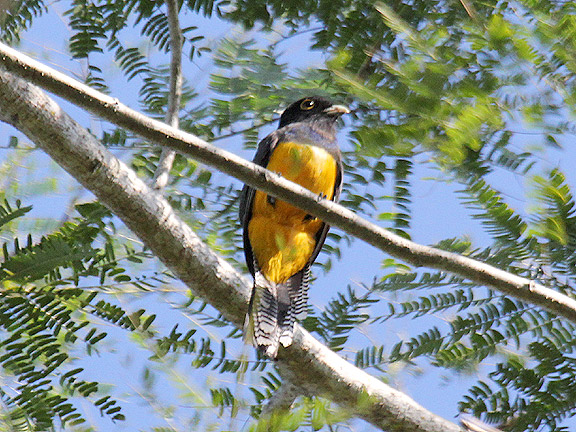
Gartered Trogon perching in the open

A YUCATAN WOODPECKER and pair of MASKED TITYRAS passed through, as well as some LESSER GREENLETS. Something flycatching in the woods caught my attention--when I finally found it I was excited that it was a GRAY-COLLARED BECARD, another lifer.  About the same time I heard a call I didn’t recognize and found my lifer RUFOUS-BROWED PEPPERSHRIKE.  This species had been a tropical nemesis since my first trip to central America 4 years ago.  After the excitement of a pair of lifers in 5 minutes I headed back to the big tree where a YELLOW-THROATED EUPHONIA pair had arrived--the female was far more cooperative for getting photos than the male.

Female Yellow-throated Euphonia

I checked my phone and saw it was fast approaching 9am and decided to check out the main road from the ruins I was at to the rest of the site.
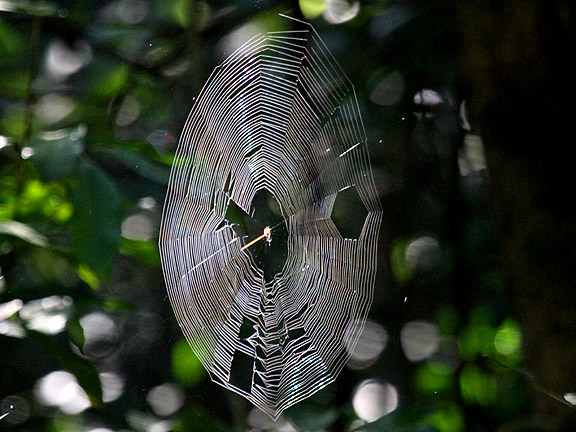
Spider Web in the morning light along the path
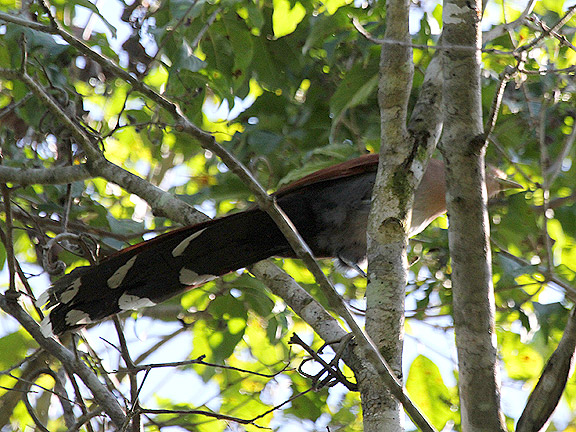
This area was extremely active to.  I spotted a SUMMER TANAGER that looked like it was flycatching in the distance.  I could hear more birds that I couldn’t ID--the BRONZED COWBIRDS were the only ones I recognized.  I heard one or two YELLOW-WINGED TANAGERS which have a really annoying trill.  A couple warblers from up north were feeding in the open as well--all the same stuff as elsewhere during my trip.  Eventually I spotted a SQUIRREL CUCKOO coming to the edge of one side of the path.  It was the best looks I’d had at one, but still wasn’t overly cooperative for photos.

Squirrel Cuckoo overhead along the trail

While watching the cuckoo I heard what sounded like a trogon, but wasn’t sure which kind.  I pulled out my phone and flipped to BLACK-HEADED TROGON which was the first one on my playlist.  It matched to a tee.  I walked a little ways into the trees and could hear at least 2 birds dueting or competing.  Eventually they both flew into view, but were too obstructed for photos.  Instead I put a mic on my SLR and recorded a few short snippets of the song--which I uploaded to Xeno-Canto given that it was a good recording.


I checked my phone and it was well after 9:30am--I had to go.  I was frustrated that I hadn’t come the day before--I easily could have spent several more hours here--at least.  I headed back to the entrance, bought some gifts from the shop and hit the road.  I made it back into Playa Del Carmen just before 11:00am and had to find the rental return the good old fashioned way of reading street signs, since the GPS just so happened to not have the address in it.  I eventually found the joint, dropped the car off and snagged a ride back to my hotel.   And that’s about it.

Looking back at the week, I regretted not taking full advantage of some of the birding opportunities I had.  Being alone in Mexico and not knowing the area, I was weary of stopping on the side of the road and wandering too far off the beaten path.  There were times when I said to myself, “If I were birding with friends I would totally stop here for 30 minutes…”.  Now that I’ve been, I would be less hesitant in the future, and also knowing where I had a lot of birds, it would like change how I did certain things.  Everything considered I actually did about 10 species better on lifers than I expected. I ended with 51 new life birds in the 4 days--7 of which were endemic or near endemic.  I did some major cleanup on common tropical birds I had missed in previous trips to the tropics, and I saw 11 of the 15 targets I really hoped for.  It was a great birding trip and really showed me what the Yucatan had to offer!

15 life birds at Coba / 51 total trip life birds / 170 total trip species

Photos from Coba Lake and Ruins
http://www.timaverybirding.com/photos/thumbnails.php?album=1147

eBird Checklists:
Carretera 109 south of Coba
Laguna Cobá
Ruinas Cobá

Labels: , , ,

Birding the Yucatán: Flamingos at Rio Lagartos

posted by Tim Avery at
on Monday, February 10, 2014 

Part 2 of 3...

Destination Rio Lagartos (Flamingo on the Map)

Cruising through the jungle north of Valladolid there weren’t many birds.   My lifer TURQUOISE-BROWED MOTMOT cruised across the road and landed exposed on a dead snag before disappearing into the jungle.  After about 40 kilometers the jungle opens up into heavily degraded forest--mostly now farmland used for corn, grazing, and in many cases--nothing.  After the city of Tizimin the forest becomes sparse and is mostly second growth or patches old jungle.  The land for grazing dominates the landscape--making it excellent for birds of prey that prefer this habitat.  My lifer LAUGHING FALCON was followed by my lifer WHITE-TAILED HAWK right along the road.

White-tailed Hawk in really bad lighting

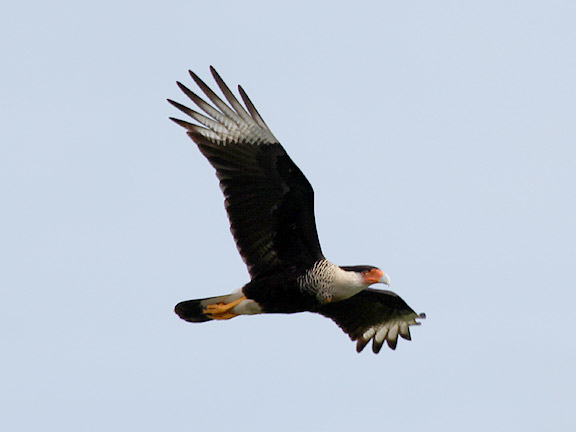
Red-tailed Hawk, SHORT-TAILED HAWK, CRESTED CARACARA, and several ROADSIDE HAWKS also showed up on power poles and in tree tops.  From Tizimin the 40 kilometers to Rio Lagartos go fast, and before you know it you are pulling into the city.  City is a loose term, for the village of 3,000 sitting on the north end of the Yucatan Peninsula, hugging the south edge of the Gulf of Mexico.  It’s a sleepy Mexican town, the kind of place where only a couple residents speak more than a few works of English, and everyone notices the 6’4” dude wearing board shorts carrying a camera.

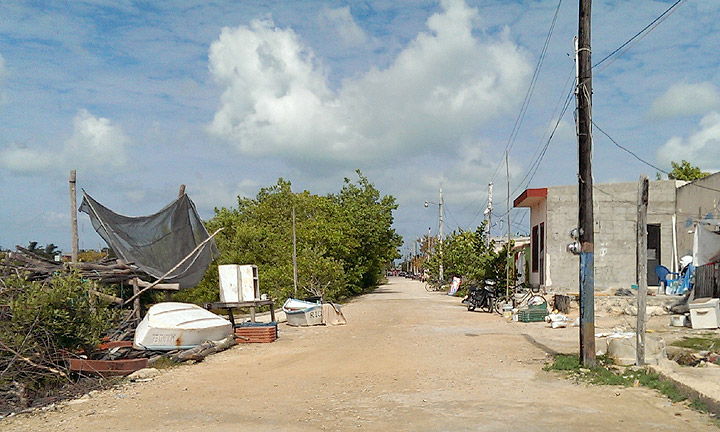
The main road in Rio Lagartos

There are fishermen waiting at the welcome sign to try and snag you for a boat ride to see Flamingos.  I would never say don’t hire them--some of my best birding has been spur of the moment hiring a fisherman to take me to look at some local specialty.  But odds are that if you are coming to Rio Lagartos to go birding, you have talked to Diego Nunez, local guide and businessman.

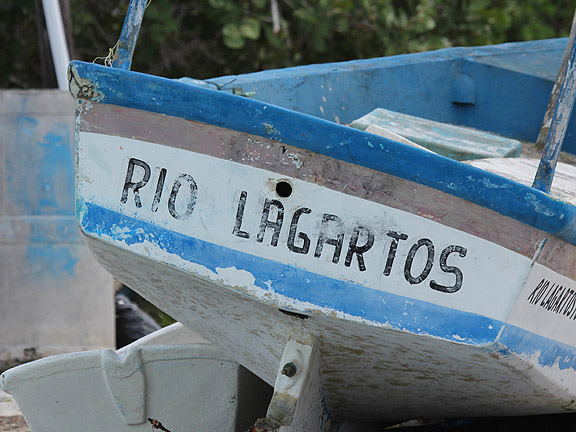
Lots of boats in the sleepy fishing village

I found Diego by doing a search on google for Rio Lagartos birding.  I wasn’t looking for a guide--I wanted to go photograph the Flamingos and that was really what I ended up contacting him for.  It is well worth paying someone a few bucks extra that knows where certain birds are so you can get good looks--or in this case photos.  However, you don’t need Diego if all you want is to see Flamingos--they are in the backwaters around town, and can be found with a little searching on your own, or for a bit cheaper hiring a fisherman to take you.  But if you want to see more than flamingos--HIRE Diego for a morning or the day--it will be worth it.

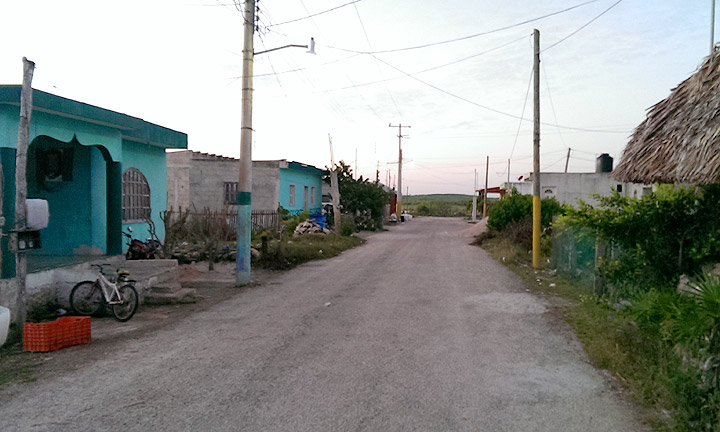
Most of the side streets are unpaved

Diego was busy guiding other folks on the 5th--the day I had open to go birding, but I told him I really just needed someone that knew the local roads and where some of the endemic and local specialities were.  I didn't need someone to point out birds or ID them for me.  His solution was ½ off the guiding price for his two sons who are apprentices in the business.  They could drive me around and take me to the places to look for birds--and knew where a few nests and other things that would be helpful were.  I thought this was an excellent plan.

It's a quiet place, with quiet folks

In any event once I rolled into town the fishermen descended on the gringo to try and get me to hire them to go see flamingos.  I gladly would have gone out for the last couple of hours just to get some extra birding in--but alas, I had no cash to do so--there were no ATM’s in Rio Lagartos.  Instead I headed to La Torreja--Diego’s restaurant on the waterfront, and as luck would have it he happened to be there right then.  He introduced me to his son’s who took me to his Posada, where I would spend the night.  The rooms are big, they have Fans and AC, and you are in a fishing village in the middle of nowhere.  For $45 its a good deal and I slept through the night without issues.  After getting settled, I took off and headed back to the waterfront--I should have driven out of town and birded side roads--but being my first time here, I didn’t know what was where and so on.  So instead I just watched the LAUGHING GULLS, BROWN PELICANS, COMMON TERNS, and MAGNIFICENT FRIGATEBIRDS pass.

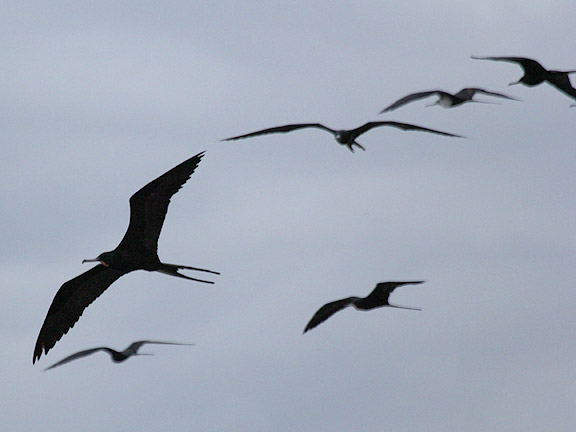
Swarm of Magnificent Frigatebirds

At one point dozens of frigatebirds circled overhead--it was a sight to be seen.  There weren’t a ton of species to be seen from the docks, but both Double-crested and NEOTROPIC CORMORANT, along with ROYAL TERN also flew by from time to time.  Eventually I headed to the restaurant and ordered a few drinks and fried shrimp.  About this time Diego returned with his guests from the afternoon birding--I asked if I could join them and we began to talk--they were Reid and Nancy Miller, and as things would have it they were from Moscow, Idaho, a short drive from Salt Lake.

Sunset on Rio Lagartos

The shrimp was fried to all hell and was the toughest I’ve ever ate--but being where I was I suppose that was better than the alternate of hugging a toilet for the rest of the week. After dinner they were going into the estuary to search for Yucatan Nightjar and Diego invited me to come--how could I not? Make sure you ask Diego if there is a cost when invited on something you didn’t plan--he hit me with a $35 charge for this even though there was no mention of it when he asked if I wanted to come--I would’ve paid regardless.  Shortly after it was pitch black we walked to the boat, and loaded in along with Paco, a young “guide in training” who steered the boat.  We headed east along the mangroves while Paco spotlighted the trees.  The first bird he found was a BLACK SKIMMER--skimming.  After a few minutes we hit eye-shine in the mangroves--our target bird had been spotted.  As we approached, something spooked the bird and it flew off.

We continued along and shortly after another eye-shine peered out of the mangroves.  This time the bird stayed put and in no time we were just 30’ away viewing a YUCATAN NIGHTJAR perched out in the open--a life for me and the other guests, and a bird I had not expected to see on this trip.

Lifer Yucatan Nightjar in the Mangroves

We spent a while watching the bird and taking pictures before heading back in.  Along the way we saw a couple Raccoon but nothing else.  Back at the dock Diego led me back to the Posada where I called it a night after editing a few photos.

Wednesday February 5th I woke, packed my gear and joined the Millers and Diego for coffee.  After breakfast, Diego’s sons and I headed out to bird on the mainland--I actually had specifically told him I wanted to go birding along the coast specifically to photograph the flamingos, but instead he sent us to an area where we could see many of the local songbirds, and harder to find species.  We headed to the south and then east of town towards Rancho San Salvador.  The main road exits onto a dirt road and 2-track that goes through mostly 2nd growth and degraded forest and farmland--the birding was exceptional. The first specialty bird was a MEXICAN SHEARTAIL perching nicely in the sun for great looks and photos.  All the sheartails I saw here strangely were females.

Female Mexican Sheartail in excellent light

GROOVE-BILLED ANIS flew across the road and called from various perches. INDIGO BUNTINGS could be heard singing and occasionally perched out in the open.  A NORTHERN CARDINAL almost made you think you were back north, but the screaming YUCATAN WRENS brought things back into perspective.

Yucatan Wren in between song bursts

In the distance SHORT-TAILED HAWKS soared, whilst HOODED and ORANGE ORIOLES lit atop various bushes.  Shortly after arriving here, Diego and the Millers pulled up and we started talking.  As we stood there, I looked over and in a tree a short distance off the road I spotted one of my major targets--I blurted out, “ROADRUNNER!!! There’s a LESSER ROADRUNNER right there!”  The bird was low in a tree, but hopped it’s way up through the branches before flying out of sight--an awesome bird I worried I wouldn’t get--but the whole group saw!

Lifer Lesser Roadrunner 

Diego headed onward as we walked the road--a short ways ahead I could see him waving for us to come forward--they had a Cuckoo, but it wasn’t the Mangrove expected here--it was a YELLOW-BILLED CUCKOO working the trees just off the road.  In eBird there is only 1 previous winter record for the Yucatan--a great find for this time of year.

Vagrant Yellow-billed Cuckoo at Rancho San Salvador

While we watched a pair of MANGROVE VIREOS popped into view and provided generous looks, while another visitor from up north flew into the picture--a LEAST FLYCATCHER.  Great-tailed Grackles came and went sporadically, and COMMON GROUND DOVES exploded from the bushes every once and a while.

Very bright Mangrove Vireo

Diego and his guests hurried ahead while we continued mostly walking and occasionally birding from the car--walking the road was far too productive.  We spotted both LADDER-BACKED and GOLDEN-FRONTED WOODPECKERS as well as several BLUE GROSBEAKS, SUMMER TANAGER, and a random assortment of warblers from up north.  I didn’t photograph any this time as I had snapped plenty of shots the day before.  I did however try to get shots of the occasional OLIVE-THROATED PARAKEETS that perched in the trees nearby.

Olive-throated Parakeets were common here

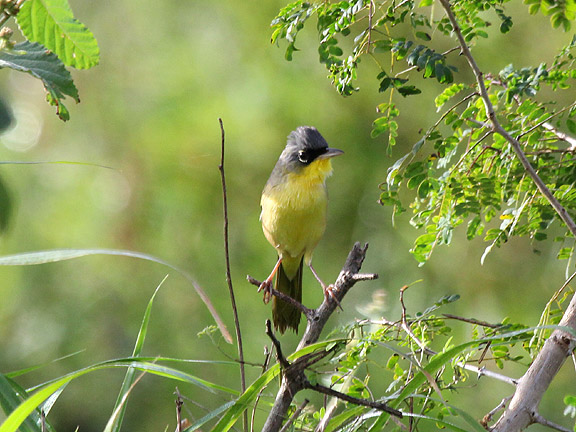
As I was walking one stretch I spotted another of my targets for a the trip, a GRAY-THROATED CHAT.  In my excitement to get the guides over to see it I didn’t get a picture--and as chats tend to do the bird disappeared into the tangles from where it appeared.  BLUE BUNTINGS also popped up from time to time, but along with many of the other birds, zipped out of sight quite fast.  I was surprised that a GRAY-CROWNED YELLOWTHROAT sat still long enough to snap a few pictures.

Gray-crowned Yellowthroat posing

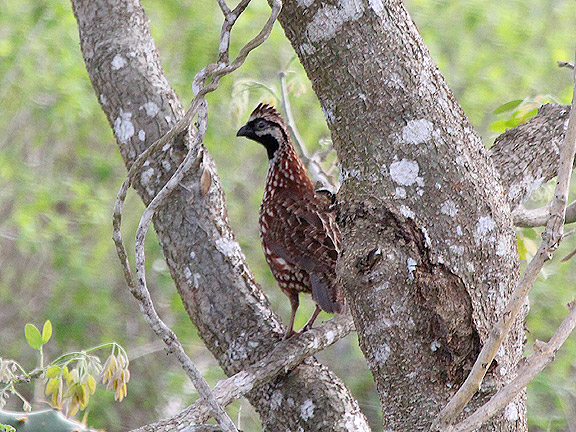
At one point three tanager sized birds with rufous wings followed each other across the road--the only bird that seemed to make sense was RUFOUS-BREASTED SPINETAIL, but like everything else they disappeared into the brush.  WHITE-LORED GNATCATCHER and BLUE-GRAY GNATCATCHER seemed equally common here, but both maintained their hiding places amongst the cover.  Taking a side road one of the brothers spotted another target and highlight for me, a BLACK-THROATED BOBWHITE!

Black-throated Bobwhite "hiding" in plain sight

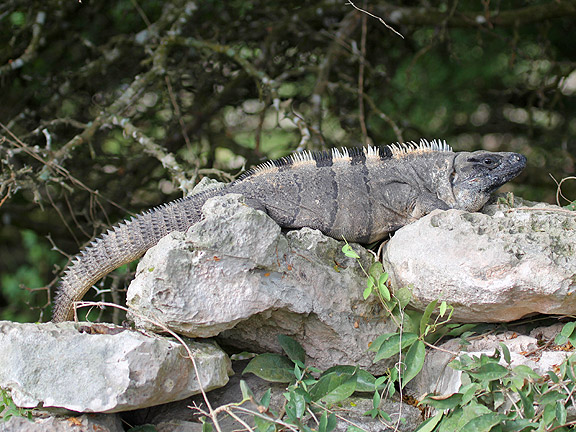
We also managed PLAIN CHACHALACA along the dirt road, and a small flock of RUDDY GROUND-DOVE in a muddy corral where several cows were kept company by a number of iguanas.

Iguana lounging on a rock wall

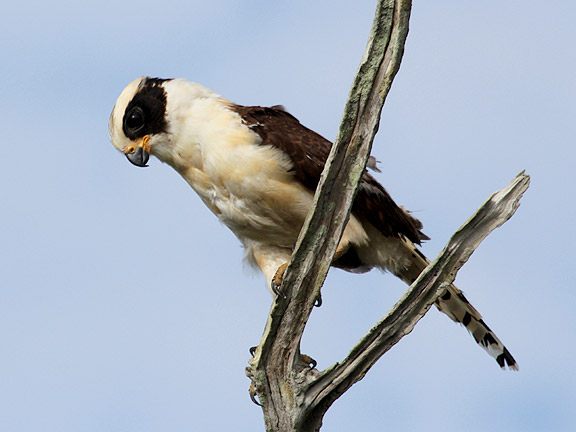
Heading back towards the highway we got great looks at the 2nd LAUGHING FALCON of the morning--this time I got pictures worth sharing.  In 24 hours I had seen 3, while I missed this species in almost 20 days birding the tropics in the past.

My 3rd Laughing Falcon in 24 hours

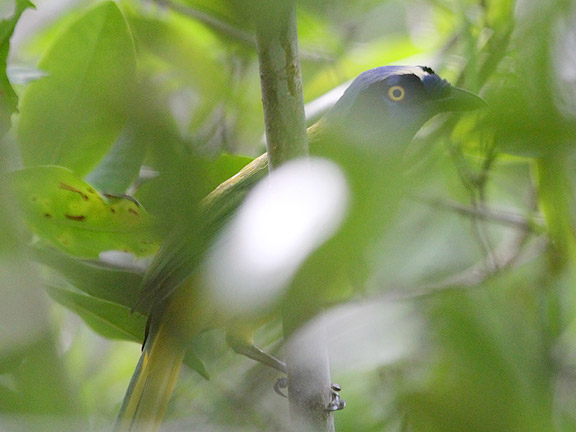
Pretty soon we were back on the black top and headed towards the Estuary.  We passed several shorebirds, Blue-winged Teal and a number of wading birds.  Driving through a patch of mangroves we had 2 MANGROVE CUCKOOS fly across the road and disappear into the cove.  While looking for them I spotted my lifer GREEN JAY also doing a good job at hiding.

Green Jay blending in with the green leaves

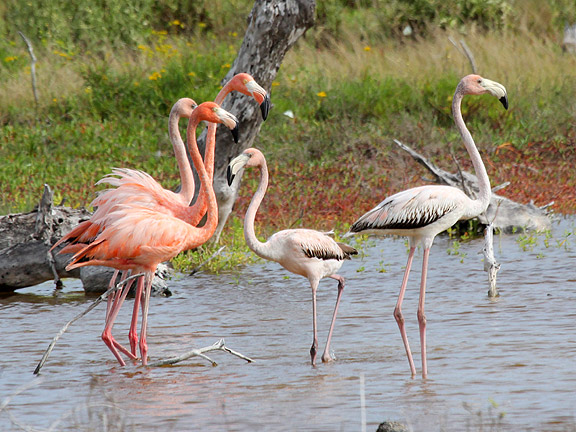
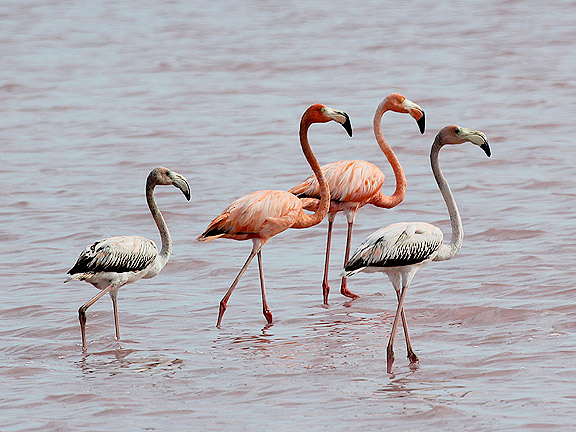
We came out of the mangroves to a river where both COMMON and GREAT BLACK HAWK were seen, as well as my life AMERICAN FLAMINGO--a flyover that quickly disappeared--not the satisfying views I hoped for. I queried the Nunez boys about seeing more, they told me not to worry, that we would see more.  We hopped back in the car and continued down the road, where the remaining mangroves opened up into large playas and what I assume were shrimp farms.  At the first curve on the road in a shallow pond there were 6 AMERICAN FLAMINGOS feeding--and this time they were very close and not moving!

Small flock of American Flamingos

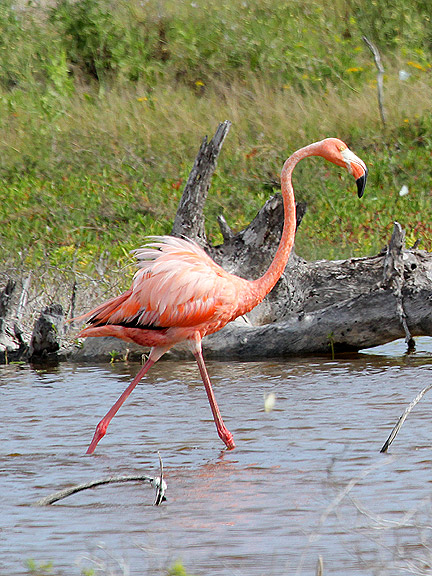
We got out of the car and worked our way to a better vantage point with the light at our backs.  The birds let us get fairly close with the aid of an abandoned building for cover.

Just stunning American Flamingo

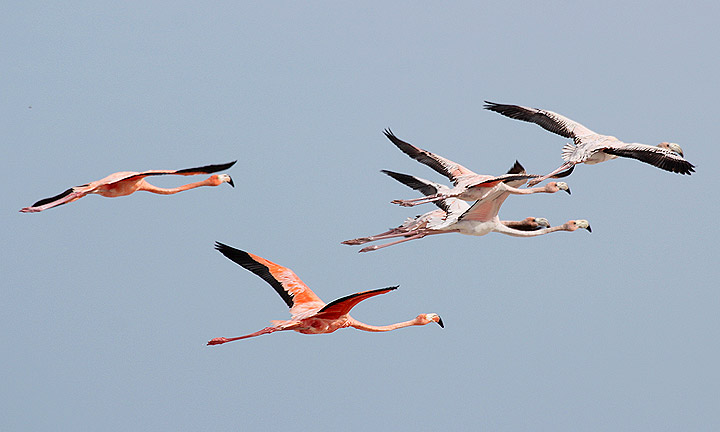
The birds eventually took flight and made a short hop over an embankment into one of the “shrimp ponds”.  We watched for a while longer before heading to look for some more birds.


Flock of American Flamingos dancing, flying, and posing

A quick drive back towards town and we were now headed west towards the city dump--here there were numerous BLACK VULTURE sitting on the trash and the walls surrounding it.  Just past the dump we pulled up to a small patch of mangroves in the middle of a flooded field--there were a few shorebirds and waders present but otherwise it looked like a quick stop.

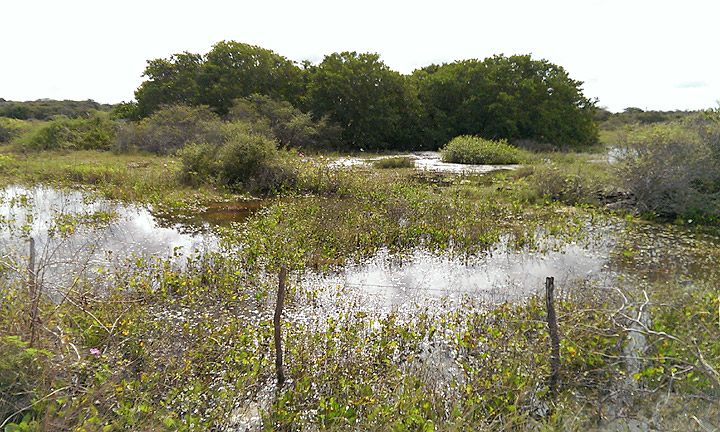
This Mangrove Patch had a nice surprise inside

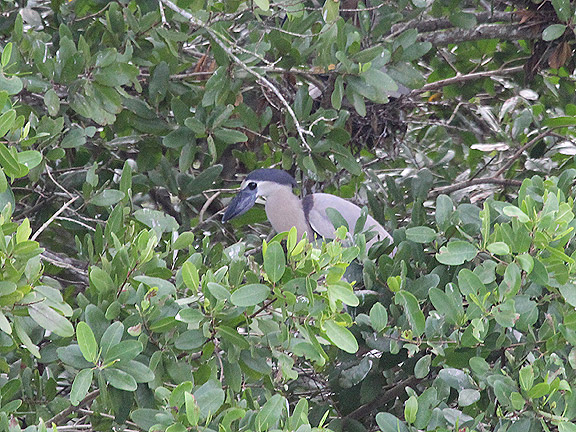
That was until one of the guides said BOAT-BILLED HERONS.  As I scanned with my binoculars I could see, 1, 2, 5, maybe even 10 herons perched in the cover, some on nests, while others preened.  This was a nest site and if you didn’t know it was there you would drive right by it without thinking twice.  After having been to Costa Rica and the Amazon and not seeing this species it was a relief to finally be looking at them!

Boat-billed Heron hiding in the Mangroves

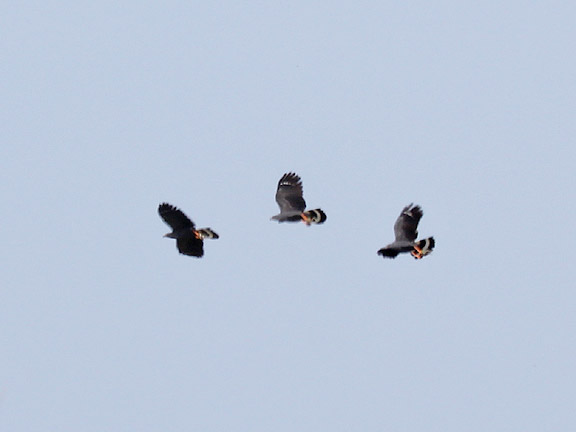
While we watched the herons other birds started popping out of the wood-works. My lifer CINNAMON HUMMINGBIRD flew into some flowers to feed briefly before moving on.  In the distance a CRANE HAWK glided along the the horizon, while much closer a CRESTED CARACARA flew right over us on the side of the road.

Composite of a Crane Hawk in flight

Crested Caracara in flight

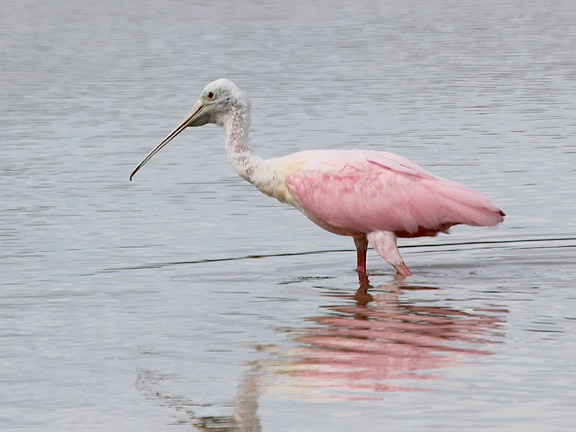
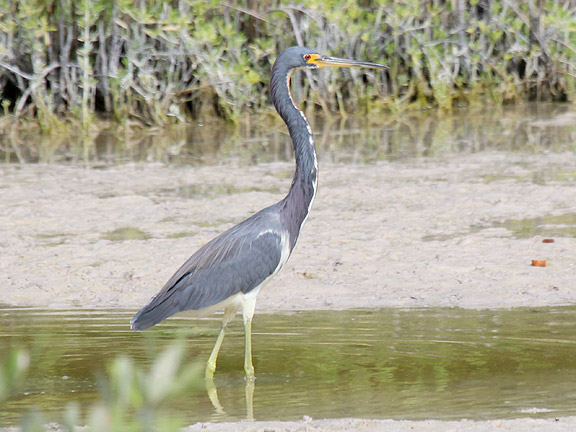
We headed back into town where more AMERICAN FLAMINGOS appeared in the backwaters around the city.  Drive to the end of a street where you can see a pond, and there were flamingos.  There were also lots of shorebirds like BLACK-NECKED STILTS, WESTERN, LEAST, and WHITE-RUMPED SANDPIPER, MARBLED GODWIT, WILLET, DUNLIN, and GREATER YELLOWLEGS.  The waders didn’t disappoint either with WHITE IBIS, ROSEATE SPOONBILL, and TRICOLORED HERON.


Roseate Spoonbill looking for lunch

Tricolored Heron striking a pose

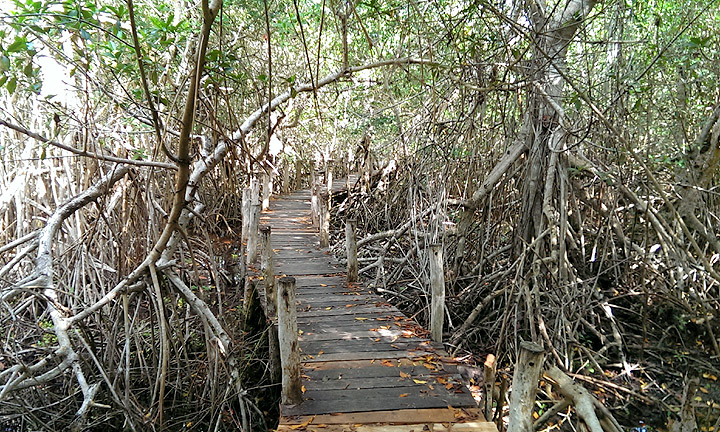
We saw our only MANGROVE SWALLOW of the day flying amongst some flamingos in  ponds on the east side of town.  On the far east edge of town there is a mangrove patch you can walk through on a dilapidated boardwalk.  It was a quiet and somewhat dangerous walk--some of the boards were missing, while other entire sections drooped into the water below.

The Boardwalk through the Mangroves

Imitating a pygmy-owl brought in AMERICAN REDSTART, NORTHERN PARULA, COMMON YELLOWTHROAT, and MAGNOLIA WARBLER.  As we walked back towards the car a GREAT HORNED OWL start bellowing from somewhere deep in the cover.  We drove the road along the waterfront where BLACK SKIMMER, LAUGHING GULL, and ROYAL TERN were common.  The highlight here was a LESSER YELLOW-HEADED VULTURE feeding on something just off the road.

Lesser Yellow-headed Vulture on the side of the road

I also added RING-BILLED GULL and RUDDY TURNSTONE, along with AMERICAN WHITE PELICAN as we drove past the lines of fishing boats anchored here.  Back at La Torreja, we hopped on a boat and headed out--I hoped this meant more Flamingos--it didn’t.  We motored through waterways lined with mangroves where we saw various egrets and herons, as well as CASPIAN and ROYAL TERNS.  We found a small flock of WHIMBREL and WILLETS in one inlet

Whimbrel with 2 Willet in the Estuary

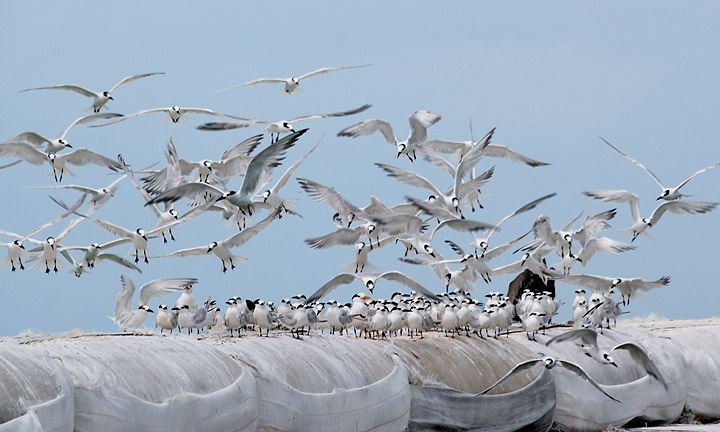
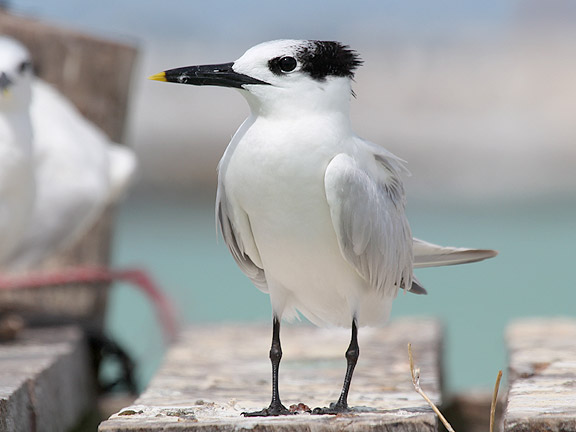
We took the boat out towards the Gulf of Mexico where two jetties had a handful of good birds.  On the east jetty was a single REDDISH EGRET that posed nicely.  On the west jetty were a lot more birds including a solo HERRING GULL along with bunches of Laughing Gulls and Brown Pelicans.  The real highlight here was a huge flock of SANDWICH TERNS perched on the jetty and a small dock.  They let us approach so close I couldn't fit birds in a single frame on my camera.


Sandwich Terns on the Jetty to the Gulf of Mexico

We were looking unsuccessfully for wood-rails when one of the guides spotted a YELLOW-CROWNED NIGHT-HERON perched in the cover.  I snapped a few shots, before we headed back to shore and called it a morning.

1st photo of a Yellow-crowned Night-Heron I've taken

I would lie if I didn’t say the birding was fantastic and that I was very pleased with the outcome.  However, I would also be lying if I didn’t say that what I paid for was not what I had expected.  I actually would have preferred spending more time looking for and photographing flamingos, so I could get some real stunning shots.  The lighting was perfect this morning, and the photos could have been truly amazing. This is probably my fault for not pressing the issue--as I believe Diego was interested in helping me get more of my target species which were mostly land based.  In the end I got most of my targets, as well as pretty good shots of flamingos, so I have no complaints--the plus is that now I know how incredible Rio Lagartos is for birding and want to go back.  If you want to go here, I highly recommend hiring Diego--he is the perfect guide for people who want to see the local specialties.  Just make sure to work out the specifics ahead of time so you don’t have any surprises.

After thanking Diego and his sons I hopped in my rental and hit the road back towards Playa del Carmen.  Since I had no money I couldn’t take the toll road, so instead I cut directly southeast across the peninsula towards Coba, and then Tulum which is 50 kilometers south of Playa Del Carmen.  In the end the drive back took less than 3 and ½ hours and there were no tolls.   This is definitely the ideal route anywhere to the west of the if you are staying in Playa.

Labels: , , ,


UTAH BIRDERS FLICKR POOL


    SEE MORE AND SHARE ON FLICKR