Utah Birds, Utah Birding, and Utah Birders. Promoting the sharing of information, and the conservation of habitat for birds in Utah and elsewhere. We are a group of people who want to share what we know, and create a positive birding experience in Utah.

BIRDERS BLOG

a blog by and for Utah Birders

Birding Peru Conclusion - The Sanctuary & Home

posted by Tim Avery at
on Thursday, November 1, 2012 

September 1 & 2, 2012 - From Sacred Valley, to Cusco, Lima, L.A., and Salt Lake...

Our final morning in Peru was a relaxed one.  We woke, finished packing, grabbed breakfast, and then our driver Charles took us back towards Cusco.

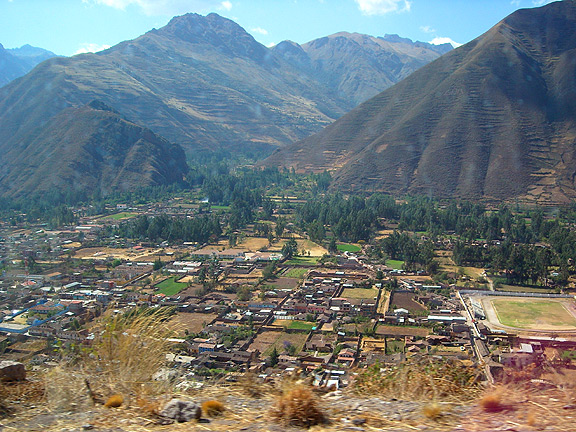
Sacred Valley overlook at KM 29

We made our way back on a different route as we wanted to stop and check out the Cochahuasi Animal Sanctuary where we could see a number of local animal species--mostly rare and endangered.  The animals here are rescue animals, and the highlight of the sanctuary are the Andean Condors which they rehab and release.  The government of Peru supports the effort of this non profit, but they do not provide funding so the sanctuary relies solely on donations, and sales from the store on property.  I was told that large tour providers do not stop here because the sanctuary can't pay a fee for them to stop--which speaks to the sad state of affairs for endangered wildlife in countries like Peru.  The locals don't realize how important that part of the tourism industry is, and it is definitely a miss for tourists who otherwise don't know its there.  Sam found out about it while looking for things to do in Sacred Valley--and we were very glad she did after we made our visit.

Charles knew the location, and walked around with us, helping translate some of what the volunteer at the sanctuary was trying to say--her English was okay, but not on par with most of the people in the tourism industry.  They had a number of wild cats, including 2 Mountain Lions--the lions were rescued from Lima where a night club owner had them kept for fighting one another--rather despicable--but an all to sad reality.  As we were walking I spotted a MOUNTAIN CARACARA up in the cliffs nearby--finally close enough for a picture.  But what followed was even more incredible--as it turns out there were two adults and a juvenile Caracara that hung out around the sanctuary, and as I came into an opening one of the adults put on a show, flying in and circling 3 or 4 times, coming within 10-15 feet of us on each pass.  It was incredible.
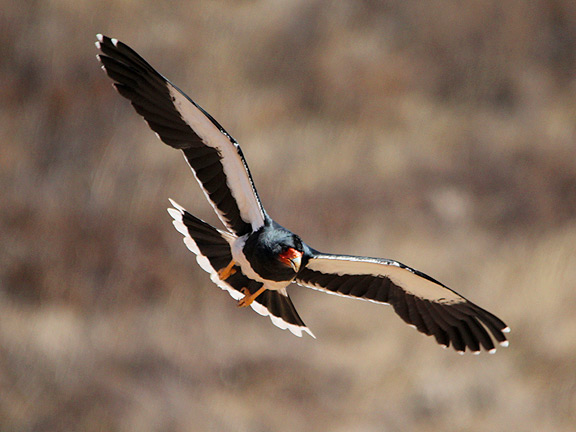
Mountain Caracara in flight

It had been a disappointment the previous 2 weeks with every opportunity to see this species coming at a distance or on a drive by--now I was looking at them just feet away.
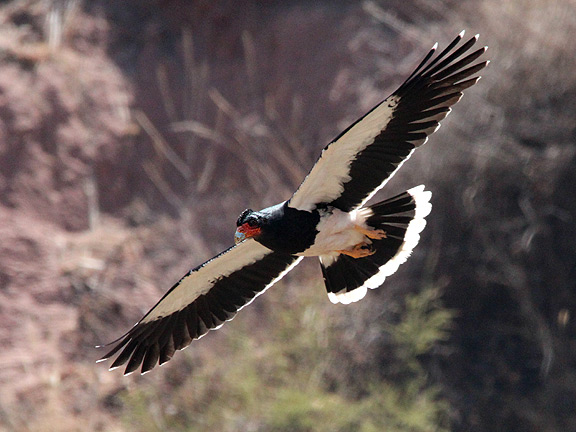
Mountain Caracara in flight

It was a great photo experience to end the trip on.  After the caracara experience we were led into a large enclosure where 3 condors sat perched.  Two adults and one younger bird.
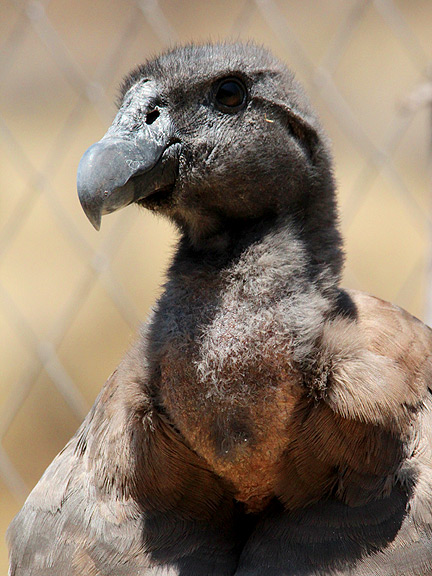
The 3 Andean Condors at the sanctuary

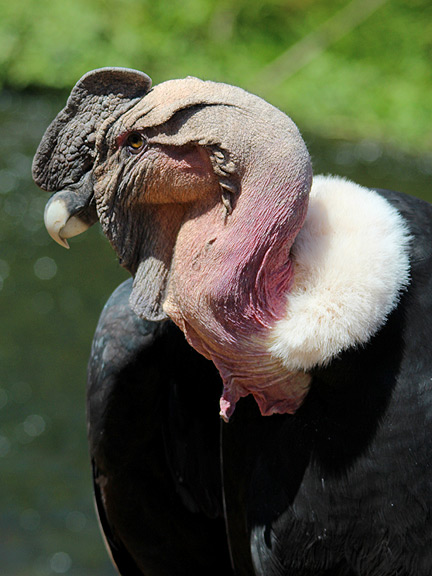
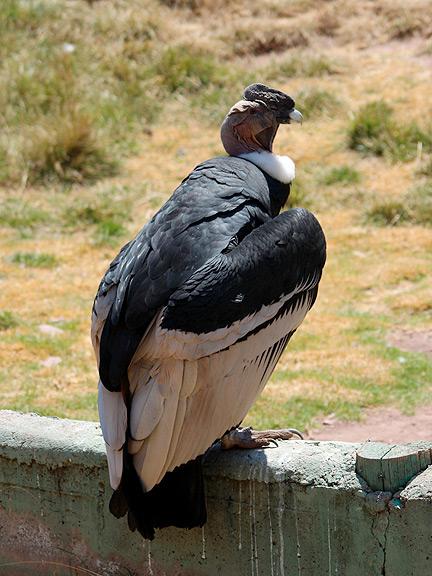
The ANDEAN CONDOR is a stunning bird, with an almost 11' wingspan.  The birds allowed people to walk right up to them, making me wonder if this is how they were in the wild--I know California Condors allowed for close approach back here in Utah, so it wouldn't surprise me if the same went for these creatures.
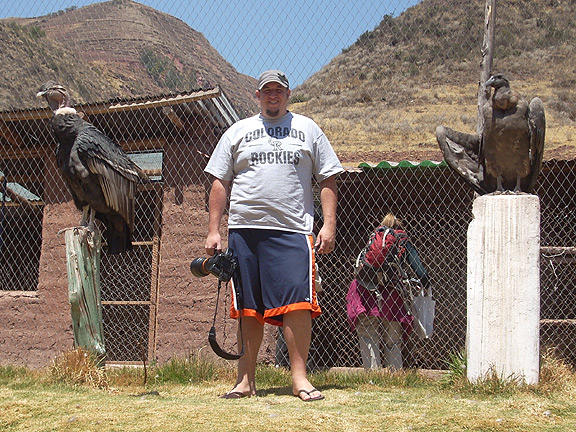
Me with a couple of Andean Condors

After spending a few minutes with the Condors and posing for a picture, they showed us the process of making and dying yarn from the alpacas, then led us into their store.  The prcies were rather high--but it is understandable given their financial situation.  We couldn't find anything we liked so instead dropped 100 soles (about $40 American) in the donation box. If you ever go to Cusco, or Machu Picchu, look into stopping by here--as a birder being able to see the Andean Condors so close was an unforgettable experience.
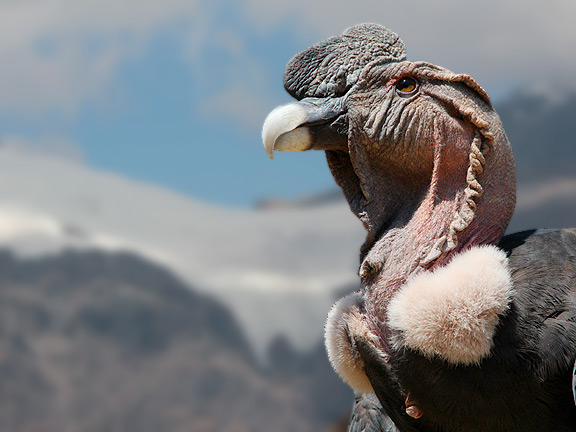
This photo isn't real--I combined one of the condors with
a shot I took of the Andes just for fun.

Back on the road Charles took us back into Cusco and the airport.  We thanked him and parted ways--given our previous travel issues we were nervous as this was the first of 3 legs back to Salt Lake.  Luckily everything in Cusco went smoothly, with us on an exit row and leaving on time.  As we flew west back over the Andes towards Lima I watched the mountains slipping through the clouds for the last time.
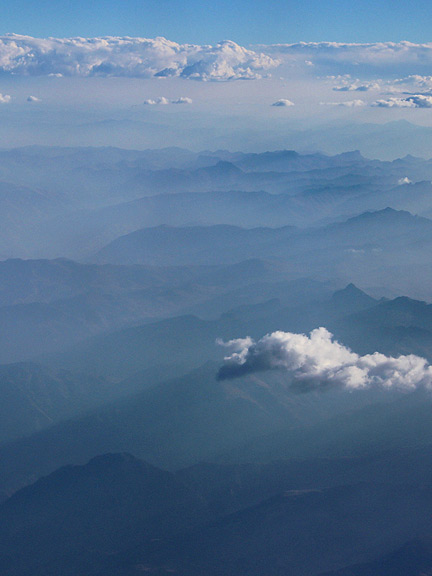
A view of The Andes from 33,000'

From Lima we had 6 hours of layover time, then a 9 hour flight back to Los Angeles.  After a short layover there we were on a plane headed back to Salt Lake--exit rows for every flight--AWESOME!  And 24 hours after our first flight left Cusco we were in our living room unpacking--our adventure was officially over.

0 life birds this day / 242 total trip life birds / 298 total trip birds

It really was an adventure, and overall it was an amazing experience.  There were the obvious highs (Machu Picchu, the parrots, and the caimans), and the defeating lows (the protests, canceled flight,  food poisoning, and the Explorers Inn situation).  But the lows don't even come close to ruining everything else.  I would have loved to see about 100 more species--I had believed 350-400 species should have been fairly easy given where we went.  The entire day missed in the Amazon--with no trip to an Oxbow Lake, and more time in a canopy tower, I undoubtedly missed a number of species.  I have no doubt that 25-50 more species would have been seen with that extra day.  But that's life, and the trip wasn't about the birds--it was about the experience.  Given who I am I will always make birds an important part of the trip, but focus more on the overall time had.  I was planning on recapping and letting some gripes out, but will save that for another day--because right now the good memories are the only ones worth talking about!
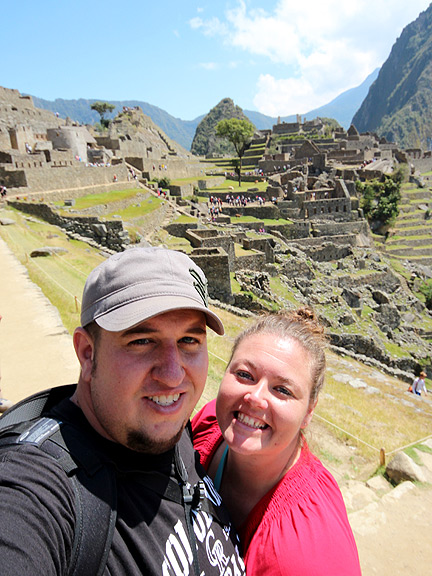
Sam and I at Machu Picchu--the highlight of the trip!

So if you stuck with me for the entirety of my 2 week long adventure--spanned out over 2 months as I post my recaps (we left Peru 2 months ago today)--I thank you, and I hope you found them somewhat entertaining, educational, and possibly useful for your own future endeavors to Peru.  As with the majority of the posts on the blog--these will undoubtedly fade into oblivion--I am still meaning to create an easy to view archive that lists out all of the 330+ posts from the past 2 years. So to at least put them all in one place I will link to the other 15 posts of my recap below:

Birding Peru part 1 - Lima & Miraflores
Birding Peru part 2 - Pantanos de Villa
Birding Peru part 3 - Pucusana Fishing Village
Birding Peru part 4 - Protests in Puno
Birding Peru part 5 - Lake Titicaca
Birding Peru part 6 - Sillustani & Lago Umayo
Birding Peru part 7 - Puno to Cusco Bus
Birding Peru part 8 - Huacarpay Lake
Birding Peru part 9 - Amazonia & Rio Tambopata
Birding Peru part 10 - Explorer's Inn & Caimans
Birding Peru part 11 - Explorer's Inn Colpa
Birding Peru part 12 - Explorer's Inn Trails
Birding Peru part 13 - Explorer's Inn and Out
Birding Peru part 14 - Machu Picchu
Birding Peru part 15 - Abra Malaga & Sacred Valley

And aside from those, here are links to my planning posts with more information, and some lists I made before hand:

Prepping for Peru
My Top 25 List - Peru Prepping Part 1
My Top 15 List - Peru Prepping Part 2
My Top 5 List - Peru Prepping Part 3
Endemics - Peru Prepping Part 4
Wait, those are different species? (none of which I saw or heard...)
Making Playlists with Xeno Canto

For Peru I decided to write about the trip much more than I did for Costa Rica.  I did this for several reasons--for me the most important was being able to look back in 20 years and remember everything that I saw and did while there.  But I also wanted to provide up to date trip reports from a number of areas that I simply could not find up to date information for.  The Explorer's Inn is a prime example, and I think a major reason why was apparent through my posts about the area.  In any event, that's it--I managed to get all of these up within 2 months of returning home--far better than almost a year later for my final Costa Rica recap.  And as for foreign birding--well let's just say the next trip will take us to another continent, and even further south on the globe...
Labels: , ,

Birding Peru part 15 - Abra Malaga & Sacred Valley

posted by Tim Avery at
on Monday, October 29, 2012 

August 30 and 31, 2012 - Birding in Sacred Valley and at Abra Malaga

I don't remember waking up once during the night following Machu Picchu.  The bed was extremely comfortable, and I hadn't gotten a full night sleep in some time.  We had been getting up between 4am and 6am for most of the past 2 weeks, so when we didn't set an alarm and didn't wake up till some time around 9am I was okay with that.  While Sam slept a little longer I took my binoculars and camera and headed out onto the grounds to take a look around.  From what I could tell there were very few people staying at the large property.  The grounds were immaculate--water features, trees, flowers, gardens, and a stretch of the river--plenty of habitat for "feeder" birds.  The trees right outside our room actually proved to be the most productive for birds both days we stayed here.  CINEREOUS CONEBILL were often seen high in the tree tops fumbling around for food.

Cinereous Conebill were common but this was the only photo I managed

Aside from the conebills there was almost always a BAND-TAILED SEEDEATER or two present.  I have no idea what the tree was, but it had something those two species really enjoyed.  EARED DOVES were everywhere on the property.  You couldn't walk 10 feet without flushing one, two , or a flock of ten even.  Second most abundant were CHIGUANCO THRUSHES often running ahead of you on paths as you made your way around.

Band-tailed Seedeater feeding in the trees outside our room

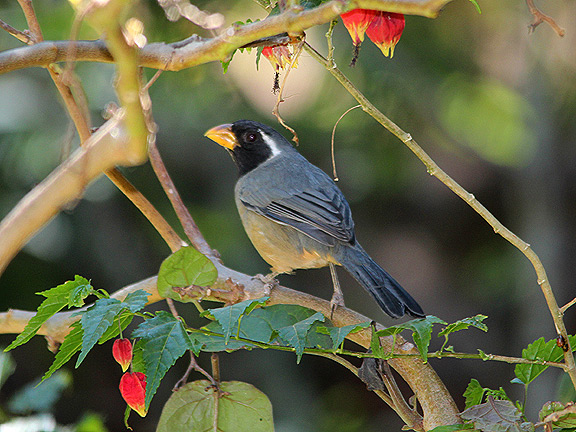
There were several Peacocks roaming the grounds, as well as a small menagerie of rescued parrots.  Scarlet, Blue-and-gold, and Red-and-green Macaw were all here and sat in the trees near the chapel at the center of the grounds.  A single Blue-headed Parrot without a tail was also present.  There were usually a dozen or so RUFOUS-COLLARED SPARROW here picking up seed form the food the parrots were eating.  While I was walking through the trees here I flushed a GOLDEN-BILLED SALTATOR, finally getting a good look at a bird I had seen the previous week for a fleeting second.

Golden-billed Saltator was one of my favorite common birds

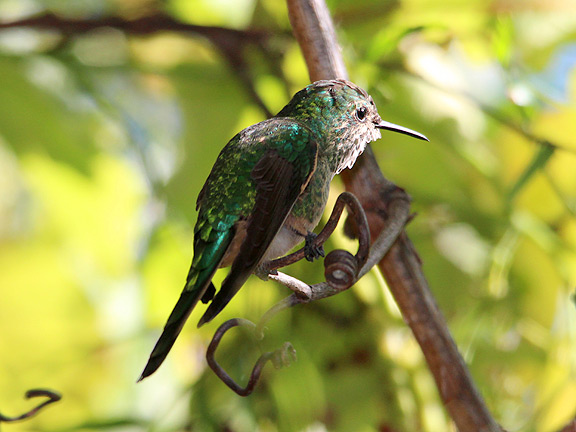
I walked all the paths trying to see if there was one location that was better than others, and always ended back near our room and the trees between there and the parrots.  Several times I wound up face to face with a GREEN-TAILED TRAINBEARER in trees at various locations.  Each time I was unable to get my camera off my shoulder in time to take a picture before it flew away.  While I was walking one of the alleys at the edge of the property, I heard the rattling buzz of one of the birds form a tree covered in flowers.  I saw it move and finally caught it out on a branch for a picture.

This Green-tailed Trainbearer was often seen flying by,
but rarely posed long enough for a photo!

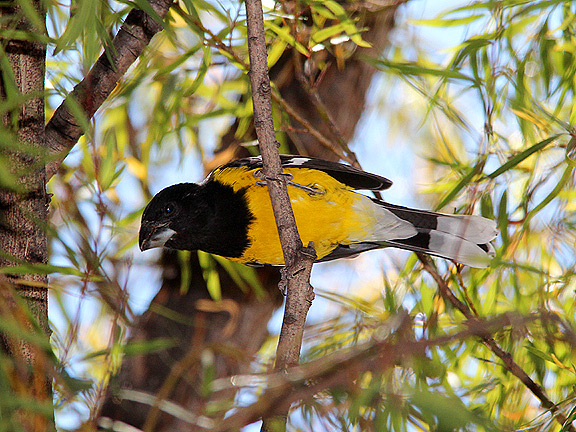
Ironically I had seen both trainbearers, and the mountaineer, but somehow missed the "common" Giant Hummingbird.  Even now 2 months later I still don't know how such a common bird managed to evade me, while I saw a number of rare, and  hard to find species.  That's just birding though.  Back by our rooms I saw what I considered the most stunning bird of the last couple days--and honestly, it's pretty hard to beat in overall flash anywhere in the highlands.  A pair of BLACK-BACKED GROSBEAKS were often seen moving about right outside our patio and the golden-yellow bodies were just striking in the trees.

A gorgeous Black-backed Grosbeak at our hotel

Walking around the property it wasn't uncommon to see flocks of MITRED PARAKEETS flying high above the valley, or ROCK PIGEONS crossing the grounds between fields and roosts.  Several times ANDEAN GULLS and PUNA IBIS could be seen making their way along the river, and a VARIABLE HAWK was seen soaring and sitting atop a power pole.  This made up the majority of the birds seen at the resort.  I did flush one other conebill species, a WHITE-BROWED CONEBILL, but didn't manage a photo. In the end the last few days were more just for relaxation before going home--I imagine I could have seen quite a few birds had I hired someone to take me into the hills--instead the only birding outside the gates I did was when we hired a driver to take us to Abra Malaga Pass the following day.

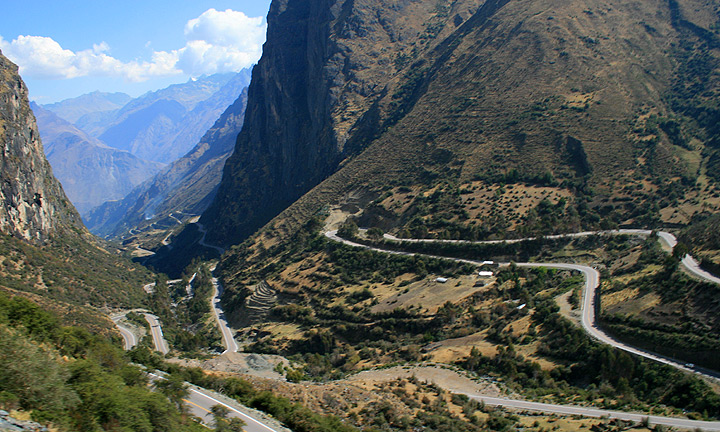
The dizzying switchbacks up to Abra Malaga

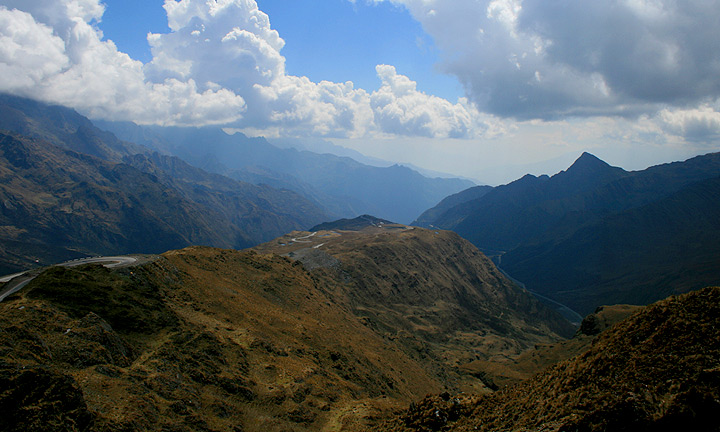
I'll admit I blew it with Abra Malaga.  I should have A. hired a professional birding guide, and/or B. done a little more research about birding there.  We had our hotel call us a driver and we sped off into the highlands to see what we could find.  The bird list for Abra Malaga and Penas is impressive and hosts a number of spectacular endemics.  I figured it would be a cinch.  We left around lunch which was another mistake--the birds just weren't out and active int eh afternoon as I hoped, and a nasty wind picked up and blew pretty much the entire time.  The drive up is a dizzying 4,000' climb from Sacred Valley on a winding road that hugs the sides of the mountains.  The view is spectacular, but you go up in elevation fast and that took its toll on Sam.

View of the East Slope from Abra Malaga

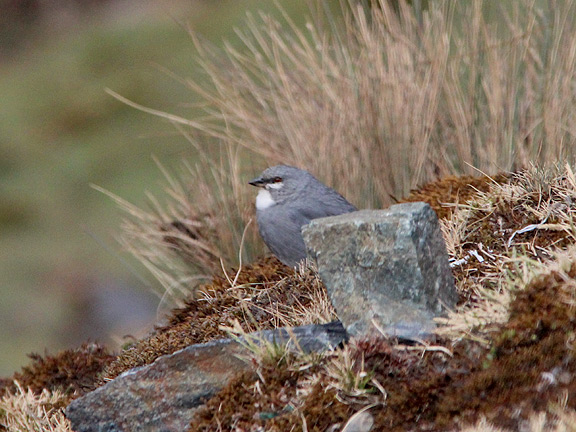
As we rose into the mountains clouds started to cover the sun, dropping the temperature.  Along with the wind it was pretty unfavorable to be outside.  We reached the pass and I thought to myself, this doesn't seem like a great birding spot. A couple of distant MOUNTAIN CARACARA were cool to see again, but way to far away to photograph.  In the rocks scrambling among the garbage just this side of the east slope there were a few birds.  The most abundant were the WHITE-WINGED DIUCA-FINCH--who appear awkwardly shaped in the field guide--really were that awkward looking in real life.

The White-winged Diuca-Finch is a drab but interesting bird

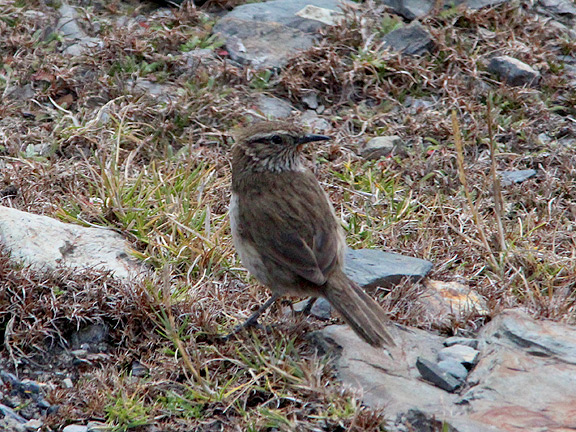
PLUMBEOUS SIERRA-FINCH and CREAM-WINGED CONCLODES were also quite common here and at several places below where we stopped to check out the streams.  Both CORDILLERAN and STREAK-THROATED CANASTERO were seen hopping around here as well.  ANDEAN LAPWINGS looked out of place on the high slopes, but added a dash of excitement when they flew squealing from one place to another.  And not to be missed we also added fly PARAMO PIPIT and PALE-FOOTED SWALLOW--a couple more lifers as the trip winded down.

Streak Throated Canastero posing for a moment

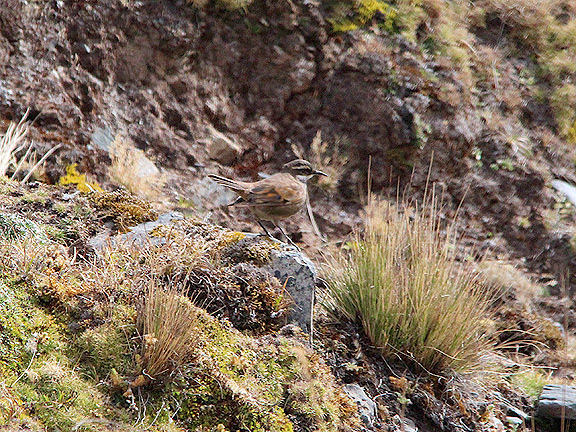
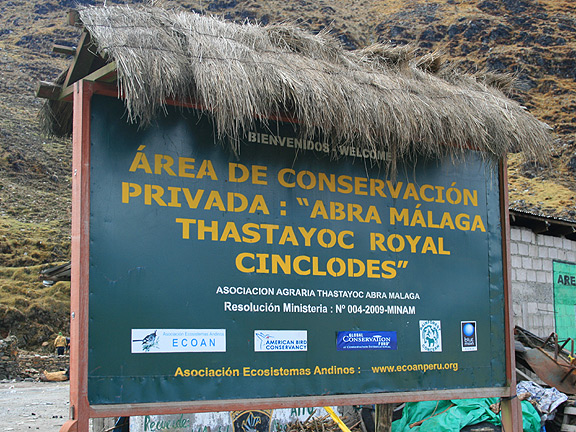
I kept reading about a habitat in the books called poleylips forest, which was the specialty habitat up here where I was supposed to find a bunch of birds--but I did not see this habitat anywhere.  I did however see countless signs boasting of how this area was protected for the endemic Royal Cinclodes.  Now the real shocker wasn't that I couldn't find the habitat--I later learned you have to hike up over a ridge to where the habitat is located out of view form any of the roads.  What was really shocking was the fact I photographed a ROYAL CINCLODES a couple hundred feet below the pass along a stream near numerous other CREAM-WINGED and WHITE-WINGED CINCLODES.  I don't know the exact habitat needs or restrictions, but thought it was typically found in the poleylips.

Royal Cinclodes in the rocks at Abra Malaga

It was a good bird to end my time at the pass, but one I figured I had no chance of seeing since I couldn't find the poleylips forest.  The entire time on top I was scanning the ridges in a last ditch effort for that elusive Andean Condor--but it just wasn't meant to be.

Royal Cinclodes Preserve at Abra Malaga

We headed back down the winding road and I had the driver stop whenever I saw a place where the wind wasn't bad and there was some habitat for birds.  I didn't really see anything of note.  We made a stop at Penas near the base of the canyon but the wind made it almost impossible to look for birds.  I pulled out the iPod in an attempt to track down a CREAMY-CRESTED SPINETAIL.  I played the tape several times, and after some chattering a single bird flew over me, across the road and into the brush out of sight.

A BLACK-THROATED FLOWERPIERCER also took offense to the playback and scolded me before flying off.  As we drove down I spotted one more bird perched on a  fence post that appeared to be a D'ORBINGNY'S CHAT-TYRANT--making up the last and final life bird of the trip.  We were back at the hotel by 4pm and say a TORRENT TYRANNULET playing in one of the ponds--by the time I unpacked my camera it flew back off towards the river.  We headed to the room to start getting packed, it was our last night in Peru.

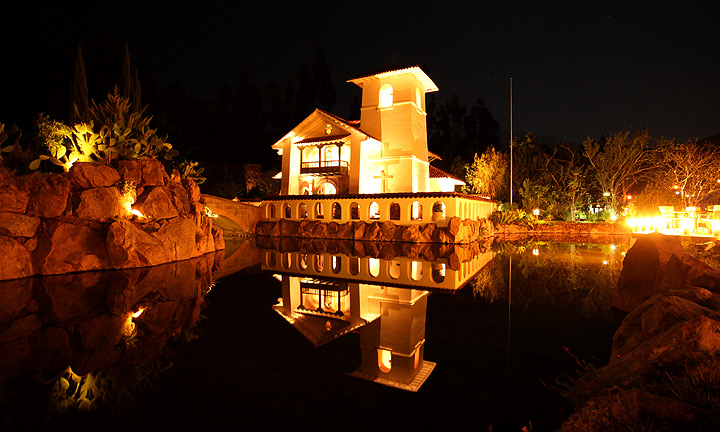
Aranwa Sacred Valley Resort at night

The following day we had to drive back to Cusco, and fly to Lima, where we had a 6 hour layover before taking the red eye back to Los Angeles.  By the time we would be back in Salt Lake it was almost 24 hours of travel--so tonight it was time for another good sleep!

I've still got one more post to recap the entire trip, and highlight our last day in the country--where despite no life birds, I managed some very cool pictures of one species I missed multiple photo ops for during the previous weeks--and got to pose with a couple very impressive birds.

16 life birds these two days / 242 total trip life birds / 298 total trip birds
Photos from Sacred Valley and Abra Malaga on TimAveryBirding.com

Labels: , ,

Birding Peru part 14 - Machu Picchu

posted by Tim Avery at
on Wednesday, October 17, 2012 

August 29, 2012 - A day at Machu Picchu

After our lunch in Cusco, we met up with our driver Charles again, at the Cusco Aranwa Boutique Hotel, where we stayed our first 2 nights in Cusco before the Amazon.  They also owned the resort we were staying at in Sacred Valley so Charles went there to wait for us.  As a side note, our entire trip to Peru was based around the 5 nights we booked at the Aranwa hotels.  We purchased a deal on Groupon that was about 50% off the 5 nights, and all the transfers between the two places and the airports.  Once we did that, everything else was planned around it.

Entry to Sacred Valley from the highway

The drive out of Cusco into Sacred Valley was surprisingly relaxing--and was the first leg of the trip to Machu Picchu.  Getting there is an adventure in itself, and in our case required two car rides, and a train ride--you can take one train form Cuzco that goes all the way there to simplify things.  In any event the scenery going into the Sacred Valley was amazing--the Andes rose straight to the skies above, some of the slopes from the valley floors seemed impossibly steep, and the mountains just towered over the tiny villages below.  It was only about 80 minutes driving to Huayllabamba along the Rio Vilcanota where our hotel was.  We were not staying here tonight but our train didn't leave for more than 4 hours, and the staff allowed us to hang out and relax on the grounds while we waited.

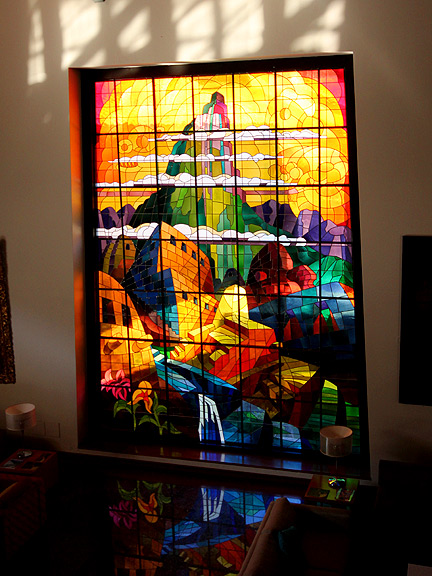
Stained Glass in the Aranwa Hotel Lobby, and Sam on the phone

We spent most of the time in their business center recharging cell phones, cameras, and iPads, as well as calling family to let them know we were alive and had survived the Amazon.  The time here flew by and we were soon on the road for a 45 minute drive up to the "end of the road" at Ollantaytambo.  Going to Machu Picchu this is the last train stop before the tracks follow the river  into the canyon and the tiny village of Aguas Calientes.  There is no road into Aguas Calientes, so the train is the quickest route there.  You can also hike in--but must hire a guide, and have a permit--I imagine this would be an amazing experience. Charles walked us to the station and where we needed to wait--he said goodbye and let us know he would meet us back here the following night.

We boarded the train for the 2 hour ride.  Sam slept most of the way while I stared out into the darkness--I had wanted to ride this in the day in hopes of seeing a few birds, but in the end just getting to Machu Picchu was more important.  The train arrived without issue, and we left with the masses of other tourists.  The scene when you leave the station is hectic.  Maybe 100 people standing outside the gates with signs for different hotels, and people arriving. It's a little overwhelming trying to find yours, but eventually we found a sign with our name. We followed the folks from the hotel on a 5 minute walk up through the streets of the town to our hotel.  After a few minutes we had our keys and retired to our room for the night.  Clean clothes, fresh showers, and a comfortable bed--it was like 5 stars compared to the Explorer's Inn.  We soon fell asleep, with a 4:30am wake up call to start our day at the ruins.

Sleep came easy and the phone ringing in the morning was an unwelcome sound--I could have slept all day.  We woke, packed our things for the day, and headed to the lobby for breakfast.  It was potentially one of the worst meals of the trip, and later in the day I didn't feel very good--attributing it to breakfast.  In the dark we left the hotel and made our way to a ticket station along the road for bus tickets.  As we stood waiting I heard a song I knew as a LYRE-TAILED NIGHTJAR wailed somewhere up in the canyon,  It was a bit away, but the distinct sound was hard to miss. Song below from Fabrice Schmitt on xeno-canto:
After getting our tickets we waited in a line with about 100 other people near the buses--finally they loaded, and we ended up in the 3rd bus. We were on our way up the mountain as it became light enough to appreciate the forest and cliffs surrounding us.  Up and up the buses climbed on switchbacks barely wide enough for one vehicle.  When another bus met us coming back form dropping off the first group, it was a game of back up and move over to make things work.  This happened coming down as well, and the drivers maneuvered like pros.

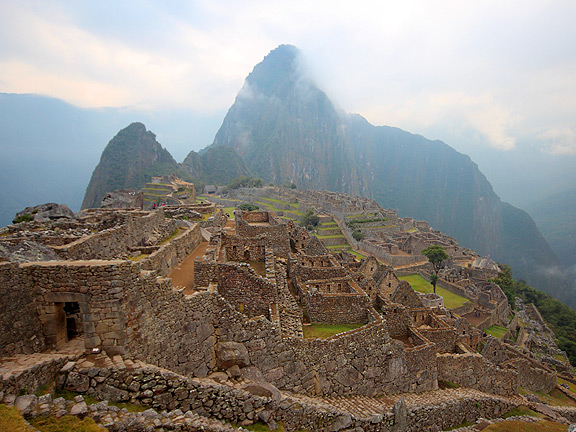
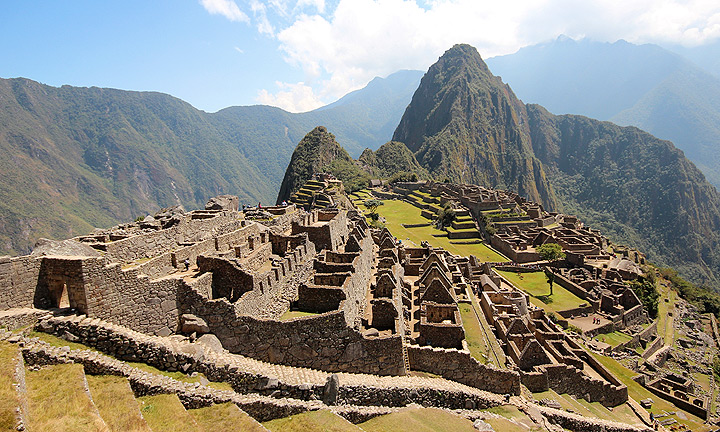
The drive up only takes about 30 minutes, and it goes by quickly.  We exited the bus and got in line with the others--this was it, we were here.  When they opened the gates the flood of early risers made their way in.  We were 2 of the first 100 people in this day, and after reading the plaques just inside the gates, we high tailed it up the trail towards the overlook of the ruins. It only takes about 10 minutes, and the view is unforgettable.  When you emerge from the trees onto the path below the guard house the view that awaits is awe inspiring--that is the only way to describe it...

Machu Picchu at first light

We probably spent the first hour up there taking pictures and just taking the whole scene in.  This was a once-in-a-lifetime trip, and we wanted to remember this forever.  It was overcast, but clouds were not covering the mountain.  The conditions were almost perfect for photography.  Of course I couldn't help but notice a few birds--the most obvious were the numerous BLUE-AND-WHITE SWALLOWS flying by and sitting on the tops of walls everywhere.  I spotted several GRAY-HOODED BUSH-TANAGERS and several times heard the raucous song of a SCARLET-BELLIED MOUNTAIN-TANAGER.  I am not sure how common that species is here--I know it is seen at quite a few locations in the mountains nearby.

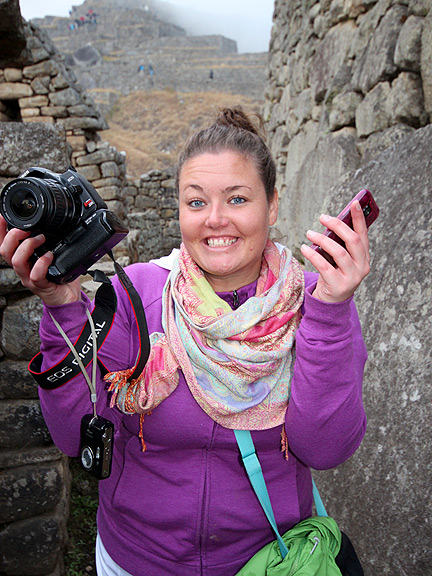
Sam was taking pictures with 3 different cameras... so was I...

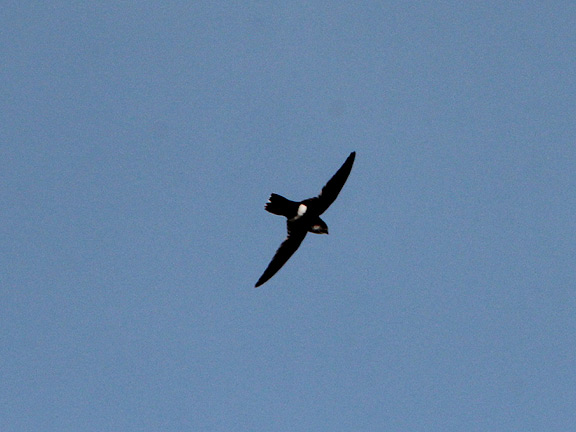
We started to make our way through the ruins, taking time to take pictures, and admire how perfect the cuts on the rocks were.  It was just spectacular, and took several hours to go room to room from area to area.  An AMERICAN KESTREL came zipping by along the cliffs--and despite continually checking the surrounding ridges and skies, I never did seen an Andean Condor.  Swifts were everywhere zipping over the tops of the ridges.  We picked up ANDEAN SWIFT and WHITE-TIPPED SWIFT among the numerous CHESTNUT-COLLARED and WHITE-COLLARED SWIFTS.


White-tipped Swift seen above Machu Picchu

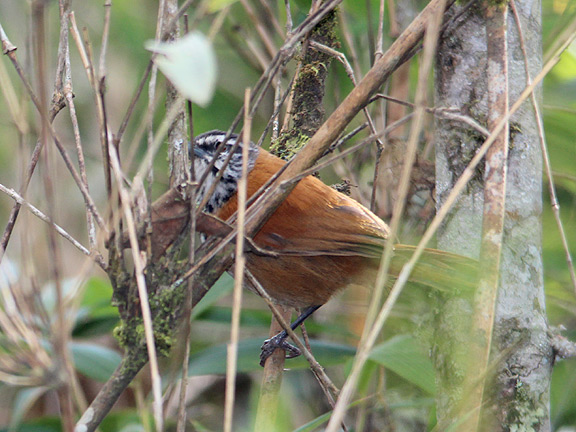
Eventually we made our way from the south end to the north  in a couple hours just as the clouds parted and the sun lit up everything.  I saw there were thick patches of Bamboo here so I pulled out my iPod.  This was the only time on the entire trip I used it, but knew it would make getting the endemic Inca Wren easy.  It only took about 20 seconds of playing the song and there were 3 or 4 INCA WRENS in the trees around me.  They moved quickly, but finally one popped out int he open.  My camera was giving me issues, but I managed to snap off one shot in manual and somehow it was in focus.

Bad photo I snapped of an endemic Inca Wren

I turned off my speaker and continued through the ruins.  We hiked back to the south to the exit and went to the small cafe to grab a drink and something to snack on.  We decided to head back in and up to the guard house for photos with the sun out.  It was well worth hiking back up as the sun made it even more scenic.

The ruins at Machu Picchu in mid-morning sun

A flock of SPECKLE-FACED PARROTS came flying along the ridge and through the trees, while an OCELLATED PICULET chattered from the forest.  I only saw one hummingbird up top--a GREEN-AND-WHITE HUMMINGBIRD that was a flyby.  By lunch time we had gone back through the ruins finding a couple things that we saw in the book that we missed earlier in the day.  By this point the place was swarming with tourists--probably 2,000-3,000 people were now here as the main tourist trains form Cusco arrived mid-morning.

Sam and I leaving Machu Picchu

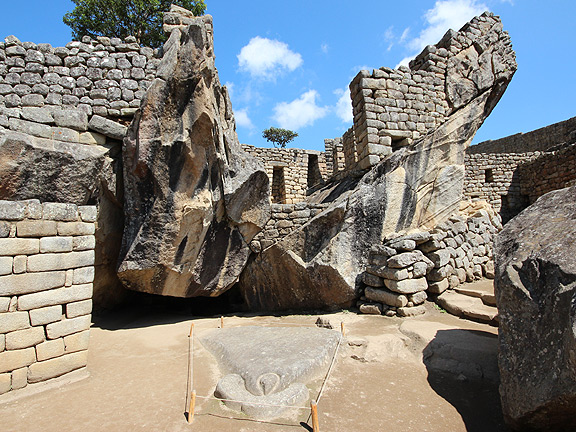
If you ever go to Machu Picchu, get there the night before and take the early buses up the mountain.  It's worth it to explore before the groups show up and make it impossible to take pictures without having dozens of people in your shots.  The last thing we checked out was the "condor" before we headed for the buses...

"The Condor" at Machu Picchu

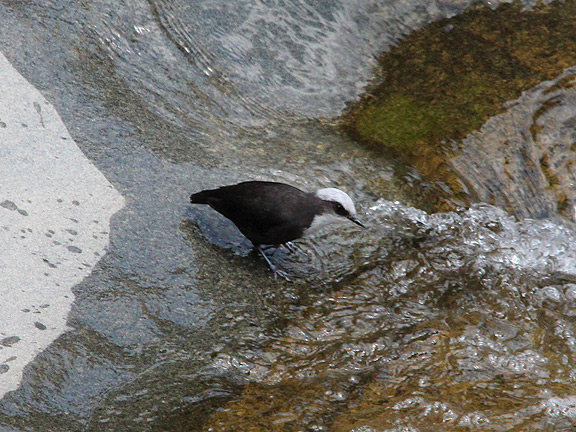
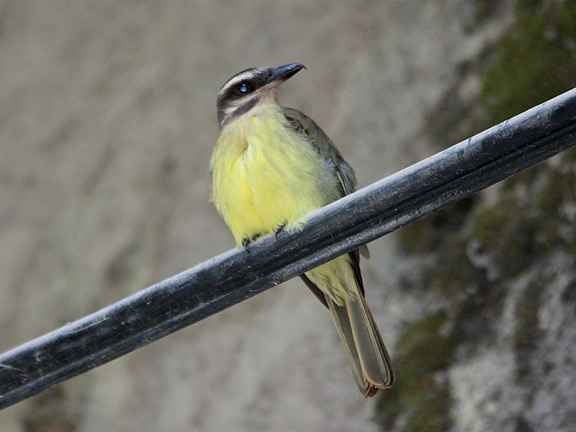
The bus ride down was quick and we were soon back in town.  We walked to a restaurant overlooking the Rio Urubamba and grabbed a table at the windows where we could see out while we ate.  Along with numerous BLACK PHOEBES we picked out several TORRENT TYRANNULETS, and a WHITE-THROATED TYRANNULET.  The swallows nested along the building here and came and went in swarms.  A TROPICAL KINGBIRD patrolled the other side of the river, and BLUE-AND-GRAY TANAGERS moved form tree to tree on the opposite hillside.  After eating we hiked the road back towards the ruins along the river and picked up WHITE-CAPPED DIPPER which was dwarfed by the boulders strewn in the river bed--some the size of small houses.

White-capped Dipper along the river on the Rio Urubamba

We kept looking for Torrent Ducks, Tiger-Herons, and anything else that might be along the river, but didn't see any on the hike out to the museum.  A pair of GOLDEN-CROWNED FLYCATCHER  did provide excellent looks along the railroad tracks though.

1/2 of a pair of Golden-crowned Flycatchers

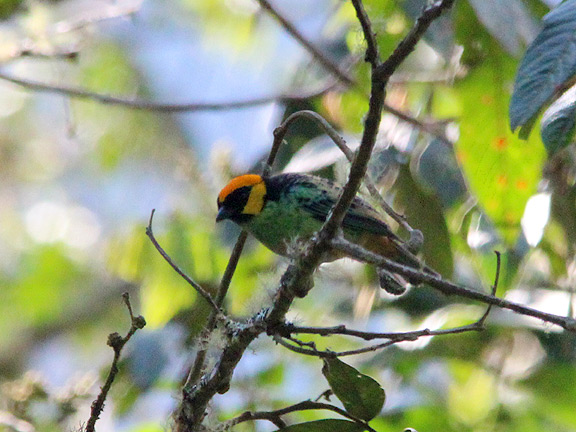
At the museum there were quite a few birds in the gardens.  Numerous hummingbirds worked their ways through the tree tops, including: GREEN HERMIT, COLLARED INCA, GREAT SAPPHIREWING, WHITE-BELLIED HUMMINBGBIRD, and CHESTNUT-BREASTED CORONET.  There weren't a ton of songbirds here but a CINNAMON FLYCATCHER called several times from somewhere in the canopy.  The highlight of the gardens was without a doubt the SAFFRON-CROWNED TANAGER that posed for several seconds before flying off.

A gorgeous Saffron-crowned Tanager

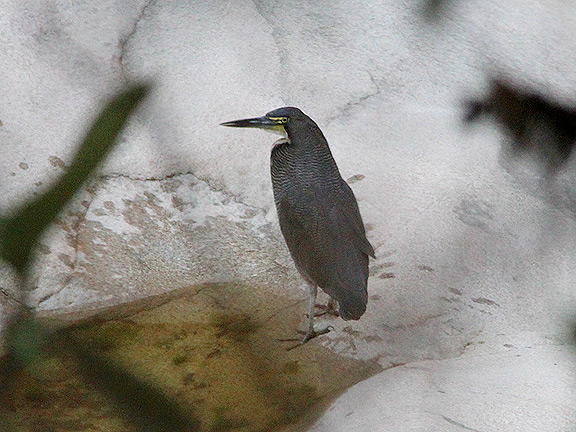
After touring the small museum, we headed back towards town.  In the first stretch of tree we got into a good number of warblers, that included both SLATE-THROATED and SPECTACLED REDSTARTS as well as TROPICAL PARULAS.  A GOLDEN-OLIVE WOODPECKER  flew across the road and called several times form somewhere across the river.  Every time we came to a good vantage point we would look up and down the river for the ducks, but still had no luck.  As we walked around a curve I was scanning the cliffs for Andean Cock-of-the-Rocks when Sam asked if the birds standing on the rocks in the river was the Torrent Duck.  She was peering through the trees that I wouldn't have even looked through--and instead of finding a duck she spotted a FASCIATED TIGER-HERON--what an awesome find!

Sam spotted this Fasciated Tiger-Heron I would have missed

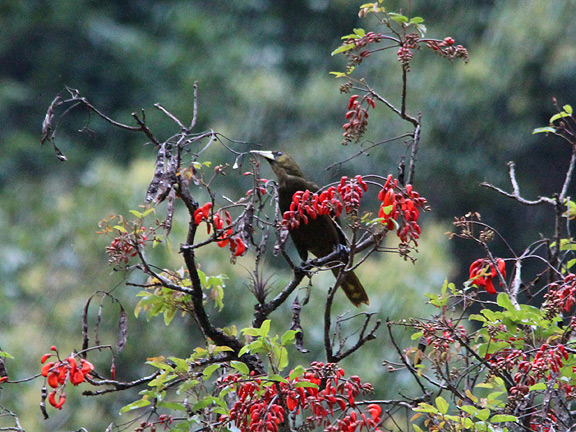
As we kept walking we added DUSKY-GREEN OROPENDOLA making a racket form a perch on the other side of the river.  We ran into several birders who didn't speak any English--bummer.  Then we ran into two more folks, one who clearly was decked out as an "American Bird Watcher".  Multi-pocket jacket, khaki pants and matching bucket hat, tall hiking boots, and of course binoculars.  I asked what she was looking at as she stared across the river into the trees.  She responded with the name of some type of Orchid--I was a little thrown off as she was clearly a birder.  So I asked, "are you a birder?".  To which I go the most ridiculous answer--I kid you not, "well no, I am a Biologist!" she said as if calling her a birder was an insult.  I mentioned that when you see someone looking in the trees with binoculars, the first thought is, bird watcher, to which she responded, "well I do watch birds."  I didn't even know what to say--talk about a round about way of getting to the point.

The only Dusky-green Oropendola we saw

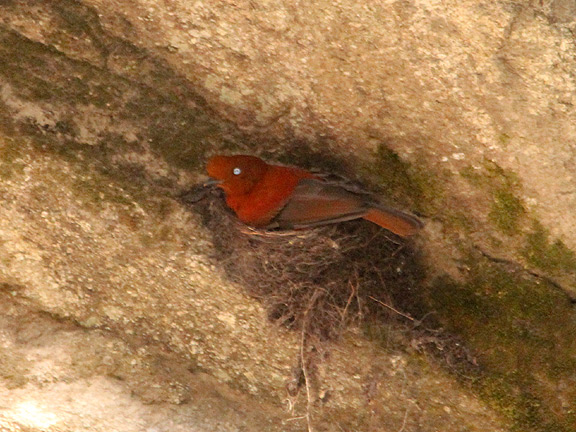
In any event I was glad I talked to her, because she mentioned having just seen a cock-of-the-rock nest shown to here just back up the road.  She told me that one of the bus drivers there pointed it out to her, so it would be worth asking him.  I thought it was kind of cool but seeing a nest didn't compare to seeing the bird.  We made our way to where the bus driver was and after realizing that he did not understand the term "cock-of-the-rock", we finally managed to get on the same page about a bird nest by the river.  He pointed and explained where it was on the cliffs.  I put my binoculars up and scanned--to my surprise I found 2 blue eyes from a ruddy-brown-orange ANDEAN-COCK-OF-THE-ROCK female staring back at me--she was on the nest!

The unofficial bird of Peru--the Andean Cock-of-the-Rock

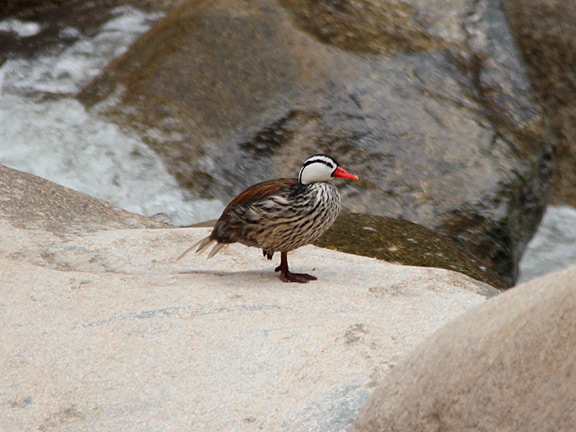
Sam couldn't believe I was freaking out about seeing a nest, when I offered her my binoculars to look.  She said she didn't care to see a nest and couldn't believe I thought it was so cool.  I about died laughing and said look, because the bird was there--ah, my goofy excitement was warranted.  I thanked the driver profusely, and we continued back towards town.  A HIGHLAND MOTMOT called from across the river, but I could never pick it out among the trees.  We walked out on an overlook to scan the water again and I spotted a speck up river on a rock.  I joked that it was probably the duck, but didn't think it was--I was pleasantly surprised when I brought my binoculars up and it was indeed a TORRENT DUCK.

Lifer Torrent Duck on the Rio Urubamba 

We had basically picked up every bird I had hoped for walking the river--with the exception of any other tanagers.  We made it back to town and headed to our hotel to get our bags.  We spent a couple hours relaxing, before it was time to catch our train back to Ollantaytambo.  We hit the shops on our way out of town, picking up a few souvenirs, and a couple water bottles to rehydrate. We boarded the train, and slept most of the way back.  Charles was waiting where he said he would be, and had us in the car on our way to the hotel again.  When we arrived we checked in, and then dove into bed--where we slept for almost 12 hours.

32 life birds today / 226 total trip life birds / 282 total trip birds
Photos from Machu Picchu and Aguas Calientes on TimAveryBirding.com

Labels: , ,

Birding Peru part 13 - Explorer's Inn and Out...

posted by Tim Avery at
on Friday, October 12, 2012 

August 27 & 28th, 2012 - Explorer's Inn Canopy Tower and Boat Ride back to Puerto Maldonado.

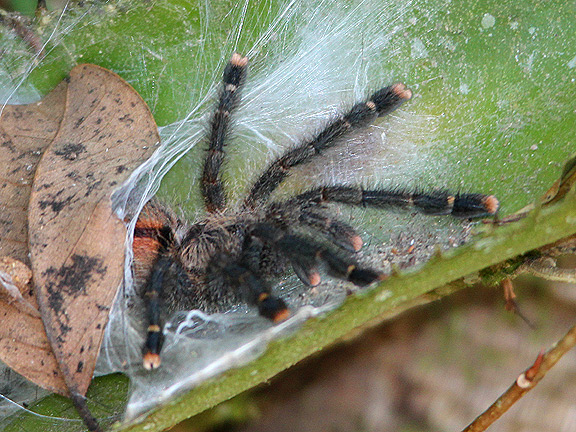
We met up with our original guide who was taking the group we arrived at the inn with to the canopy tower to watch the jungle til sunset or so--at least that's what we were told.  While we waited for everyone to arrive I took some time to try and get shots of a Pink-toed Tarantula at a nest near the trail.

Pink-toed Tarantula in the Jungle

There was also a Blue-toed Tarantula nest nearby, but that spider never came out into the open like the one above.  Several of the biologists mentioned there was a Paraque roost in the woods right off the trail, and they had flushed the bird several times.  I spent about 10 minutes looking but never saw the perfectly cryptic bird.

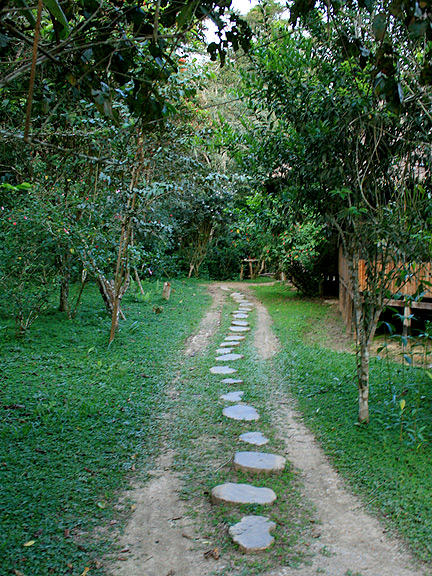
The path into the Jungle

We took off hiking through the jungle about 1 kilometer to the tower.  It was apparent that whoever measured these distances either did a terrible job, or had bad equipment.  I had felt the guide during the morning hike was definitely off in his distances and can say without a doubt it is no less than a mile to the canopy tower--which isn't a big deal, it would just have been nice to get some accurate numbers.  In any event the hike is easy--more of a stroll.  On the way out the SCREAMING PIHAS were at it screaming again.  I am pretty sure we passed the same lek as we had in the morning, and the birds were right off the trail again.  Such a cool song--and one of my all time favorites.

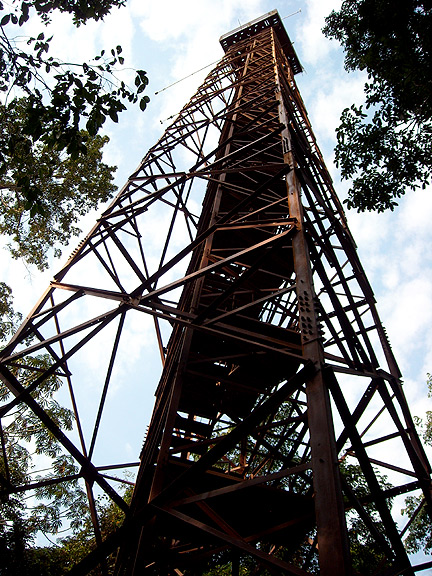
There wasn't a whole lot else on the hike out, I did hear some clicking that I thought was manakin-like, but I just wasn't sure it was actually a bird.  There are so many little noises in the jungle that sometimes its hard to tell what is an insect, and what is some ubiquitous jungle bird.  When we emerged to a small clearing we found ourselves looking up at a 140' tall canopy tower.  Finally, I could look the jungle birds in their eyes--I would be at their level and have a clear view to the tree tops.  This was it.

View from the base of the Canopy Tower

We started up the tower, waiting for the people in front to make their way up.  Up and and up we went--higher and higher.  And older pair from Spain was holding everyone up as they ended up at the front of the group--so the trek up the metal stairs took a bit longer than it should have.  As we rose the jungle roof began to appear around us--looking up I could see we were almost to the top where we could relax and enjoy the view.  Then everyone stopped.  I figured they were trying to open a gate or something but after a couple minutes I finally hollered, "hey what's the hold up?"  The guide responded, "this is as high as we go".

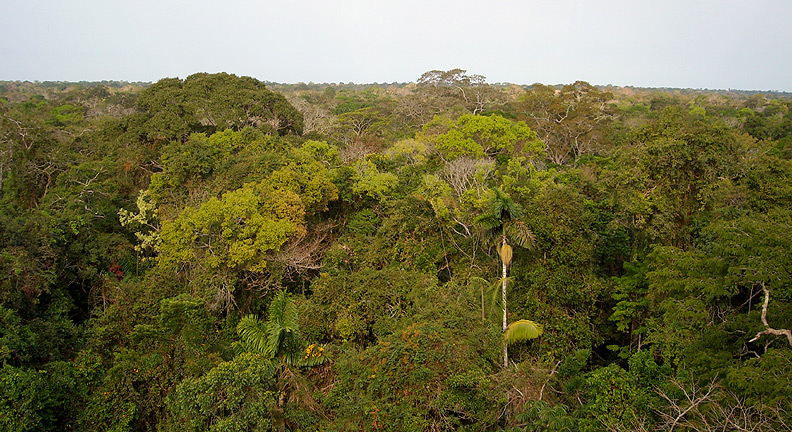
The Amazon Canopy from the tower

What?  This is as high as we go--crammed in a tiny stairway 130' above terra firme?  I had had it, "are you kidding me?" I yelled.  He responded that only the researchers were allowed on top of the tower, where they were conducting experiments.  We could not go on top because we may interfere with their research.  I was furious, yet another example of the complete LIES that the Explorer's Inn sold on their website.  How could they sit there and advertise a canopy tower on their site as, "an additional attraction for tourists visiting the lodge, since being able to climb up to canopy level, it offers the opportunity to spot different species of birds, monkeys, etc., and to appreciate the magical beauty and colorful sunrises and sunsets that characterize the Amazon jungle."

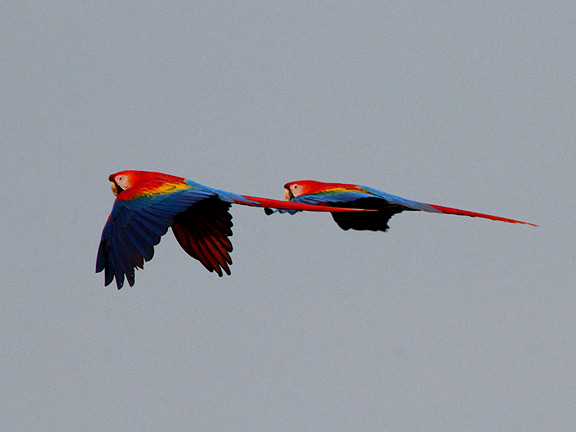
It was impossible to enjoy much with bars and metal strapping all around you--it was more like being in a cage looking out at the beautiful surroundings, knowing you can't fully enjoy them.  So many let downs when it came to the Amazon, and the tower pretty much put things over the top.  I had expected to kick back at the top and relax for a couple hours watching birds moving through the canopy.  Instead he told us we had 20 minutes to stand confined in the stairwell before heading back down.  Looking back it's even hard to get excited about the birds we did have here because it was all over so quick.  It started with several pairs of SCARLET MACAWS flying past--the lighting was beautiful, and the view of them passing couldn't have been better.

A pair of Scarlet Macaws gliding past

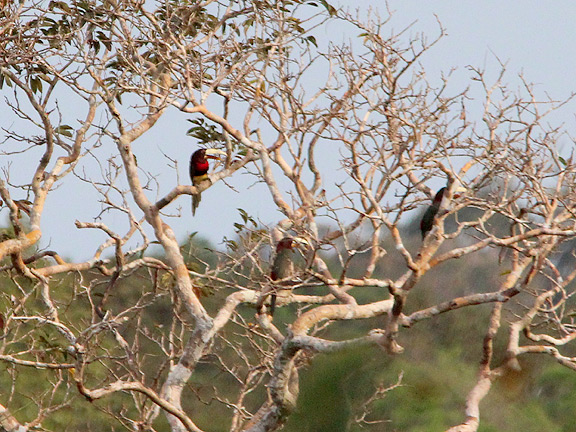
In a tree a couple hundred yards away a flock of IVORY-BILLED ARACARI were milling about.  The made several short flights but never came in close enough for a good look.

3 Ivory-billed Aracari in the distance

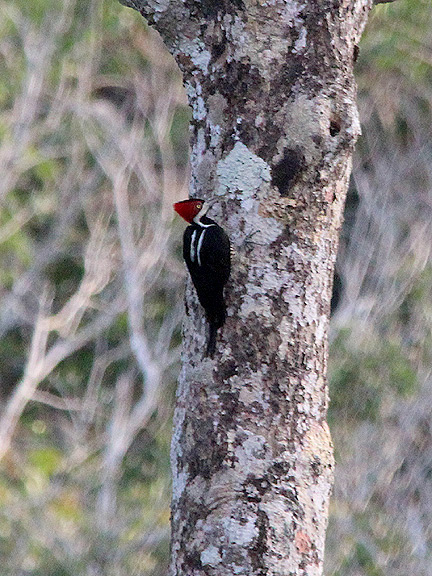
In a nearby tree a LINEATED WOODPECKER worked its way up almost 50' of open tree pecking away till it disappeared into the thick foliage at the top.  Several MASKED TITYRA flew into a nearby tee and then past.

This Lineated Woodpecker posed nicely for a moment

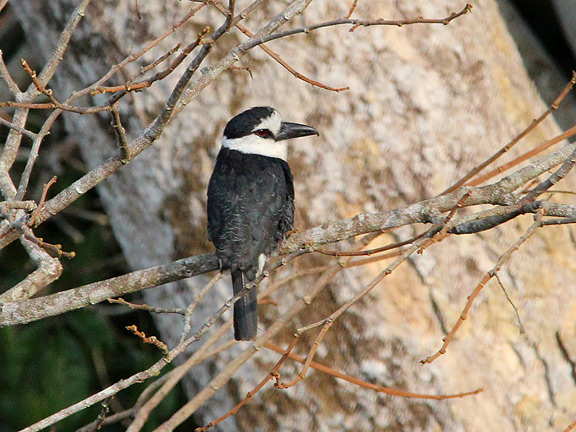
We didn't see any hawks or vultures from the tower, although I learned that the day before the group Sam and I were supposed to be with had a Harpy Eagle soaring and sitting in a tree for nearly 30 minutes.  The non-birders who really could have cared less about such an spectacular bird got to see one, while we got the common leftovers.  A small flock of AMAZONIAN PARROTLETS flew past, and finally we spotted a pair of WHITE-NECKED PUFFBIRDS that were visiting a nest and posing in the sun nearby.

My first ever puffbird--a White-necked Puffbird

The Puffbirds were a great sighting and I did enjoy watching them.  They are a cool family of birds and this was the first I had ever seen.  As the rest of the group started down the tower, I lingered a little longer, trying to soak in the experience, while hoping for a Paradise Tanager or a flock of them to come flying by at any moment.  It was my most sought after bird for the trip, and I couldn't even put in a decent search for them.  I snapped one last picture of the Amazon, then slowly made my way down the tower and back to the forest floor--dejected and upset about the way our trip into the jungle had ended.  The following morning we would board our boat in the dark to head back to Puerto Maldonado--for all purposes this was it for the Amazon.

A stunningly patterned Butterfly

As we started back towards the inn, Sam and I fell back from the group.  I voiced my disappointment to her, and she felt the same way.  This could after all be a once in a life time trip, and not having gone as expected, it was a bit of a let down.   Even the yelling of a BLACK CARACARA  and the chuckling of a CHANNEL-BILLED TOUCAN from the tree tops couldn't make up for let downs.  We passed the Piha's again, and I took a minute to record them.  It was just one of those sounds you can't help but appreciate.  A BAR-BREASTED PICULET let out a rattle nearby, and a suspected ORNATE ANTWREN trilled in the understory.  Several flocks of parakeets or parrots passed above the trees chattering--once they past I heard the rattling of a GILDED BARBET--one of my most sought after species.  It was great to hear--but one I wanted to see so much--and it was a possibility at the canopy.

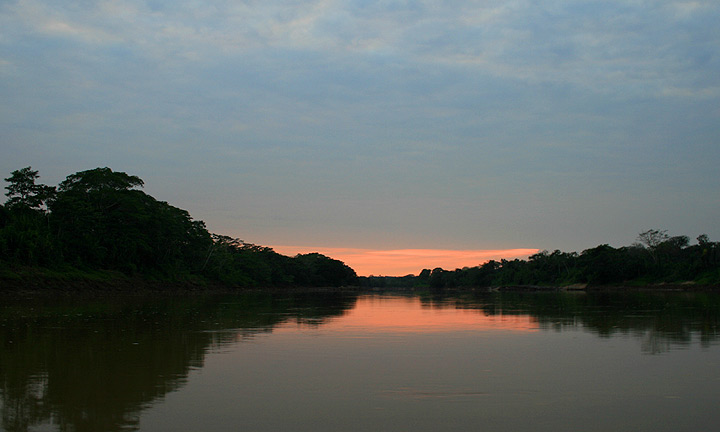
Several tanagers could be heard in the trees calling as we made our way--one pair sounded an awful lot like the Paradise Tanager--but I challenge anyone to go through and listen to the various chips, chirps and calls of the tanagers in the area and see if you can differentiate most...  Tanager sp. it was.  We emerged from the jungle to the housing area and headed back to our room. Diner came and went we packed our bags, and were off to sleep.  Our alarm actually went off the next morning, and we were up in the dark, and in the dining hall eating breakfast.  Afterwards we headed down to the river, loaded the boat and were off in the dark.  The highlight of the river trip back was the pink sky over the Rio Tambopata as daylight hit the jungle.

The Rio Tambopata at Sunrise

Birds were few and far between, but a striking SWALLOW TANAGER was hard to miss perched in a dead snag, and a flyover ORANGE-BACKED TROUPIAL added a little color to the gray morning.  After making it to the dock, we packed 12 people into the van, and headed down the bumpy dirt road back to Puerto Maldonado.  PLUMBEOUS PIGEON and VARIEGATED FLYCATCHER were both seen along the road when I had time to look around as we slowed down form time to time.  Back in town we dropped the rest of the group off at the Explorer's Inn office, while they took us to the airport for our 9:00am flight back to Cusco.  AS much as I wanted to spend weeks birding in the jungle, I was glad to get away from the Explorer's Inn.  This is one place I WOULD NEVER RECOMMEND for anyone to visit.  I know that some birders lover the area and speak very highly of it.  But s a tourist/birder I can honestly say you money would be well spent somewhere else--more on this in my final recap.

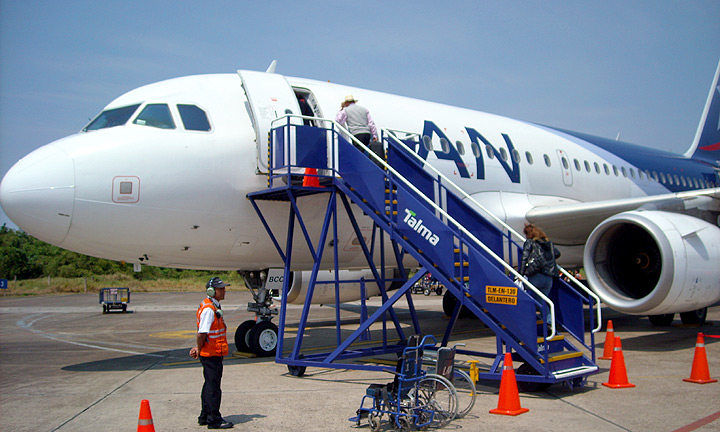
At the airport we had to wait forever in line to check our bags--but it gave us tie to waste some money at the gift shops--after all who doesn't need a stuffed Piranha to remember their trip to the Amazon?  After making it through security and taking a seat we just relaxed and waited--and waited--and waited.  Boarding time had passed and nothing--finally I asked one of the employees for LAN what was going on--the flight in from Cusco hadn't left yet--it would be at least an hour.  Apparently our woes with flying weren't over with.  What was originally an hour turned into over 2 before the plane arrived.  There was some speculation that the flight had been canceled, leaving a number of people at the airport frantically making phone calls form the pay phones--It was just like being in Cusco again!  After eventually boarding, we were on the runway and taking off.

A different kind of bird--our flight back to Cusco

I snapped a few pictures through a dirty window before we climbed into the clouds, leaving the Amazon behind.  I knew as I lost sight of the jungle that I had to come back--I hadn't gotten to do the birding I needed to.

The Rio Madre de Dios from the plane

We landed in Cusco without any issues--besides being hours behind schedule.  Why Sam waited for our bags, I headed to look for our driver and see if he had bothered to wait around, the almost 3 hours since we were supposed to arrive.  To my surprise there he was holding a sign with the name "Avery" scribbled on it.  Things were again on the up and up.  I introduced myself and again as a surprise he spoke English almost perfectly--then let me know that we were going to miss our train to Machu Picchu--so much for the up and up.  As it turns out the hotel had gone ahead and moved our train tickets up--unfortunately they did it an hour earlier than I had asked.  I went into the airport and spent about 30 minutes wheeling and dealing with the person at the Peru Rail counter and explained everything that had happened int eh past 72 hours.  I don't know if it was out of the kindness of her heart, or the fear of me freaking out about the situation--either way she changed our tickets back to our original train at no cost, giving us plenty of time to make our way to Sacred Valley.

Our driver Charles who was one of the nicest people we met in country asked what we wanted to do now that we had the afternoon--we had paid for the time so he would take us wherever we wanted.  After the last few days, we wanted to go somewhere comfortable, that reminded us of home, and had something to eat.  So we went to McDonald's in downtown Cusco where we enjoyed what was one of the best McDonald's visits we had ever had--it was the first time I dared touch a McDonald's burger in more than a year, telling of how hungry I personally was.  And almost instantly the stress of the previous days started to fade--we were out of the Amazon and headed to Machu Picchu.

22 life birds in the last 16 hours / 194 total trip life birds / 245 total trip birds
Photos from the Explorer's Inn on TimAveryBirding.com

Labels: , ,


UTAH BIRDERS FLICKR POOL


    SEE MORE AND SHARE ON FLICKR