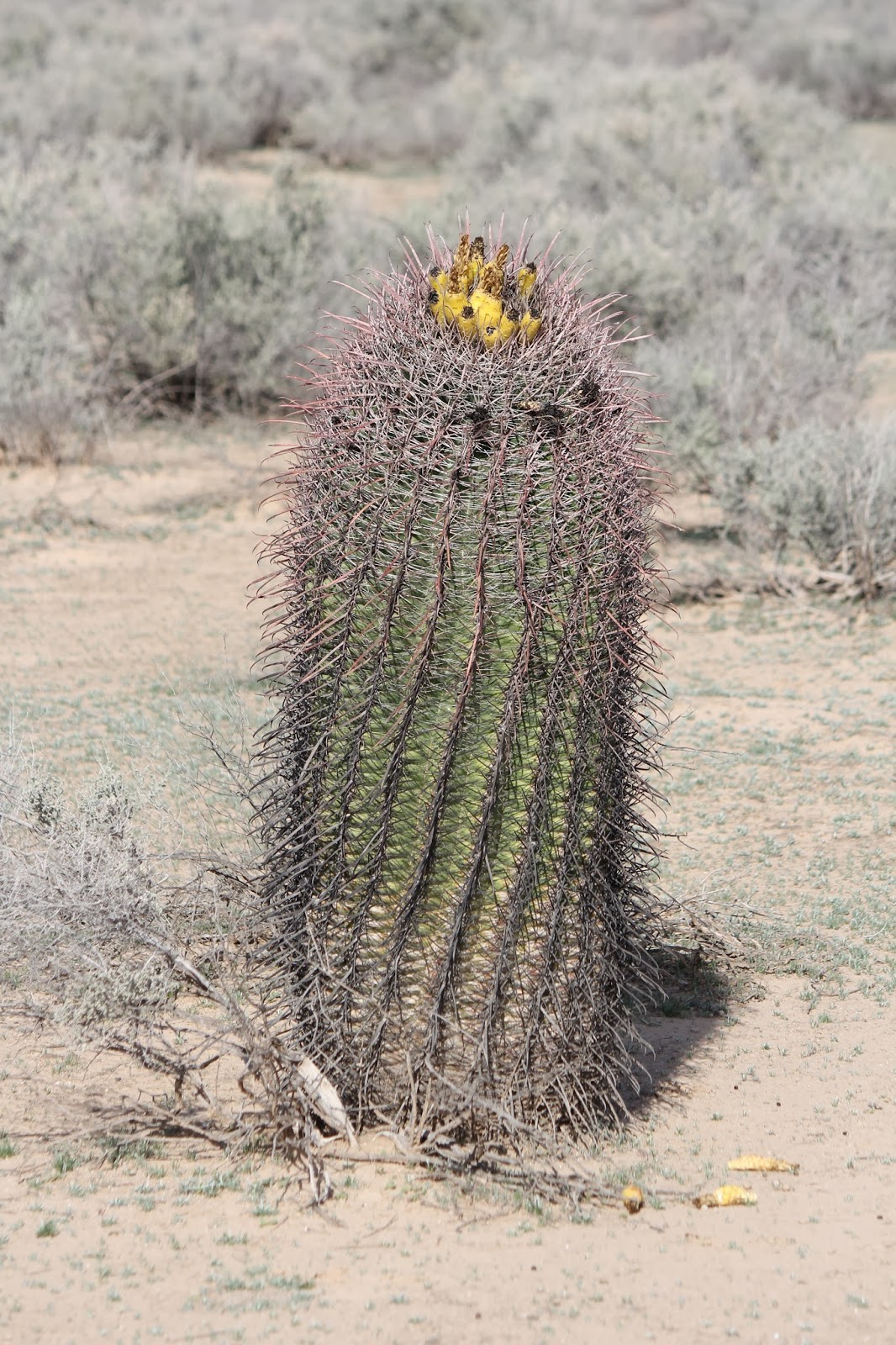
After spending a couple weeks looking at other options and pricing things out, I kept coming back to the Yucatan, and decided to just go for it. I booked a 5 night trip that would put us in the Playacar area I was familiar with, with day trips to Cozumel and Chichen Itza. This would mostly be a beach trip to relax in the sun--but if I played my cards right there were a few lifers I could pickup.
About 3 weeks before our trip I got a call that the resort we were staying at had a fire the previous day and they had to move us to another location--at first I was a little worried but it ended up being an upgrade and put us 1/2 way between Cancun and Playacar in the Playa Paraiso area which is surrounded by lush lowland jungle.
DAY 1

6 Days in the Yucatan!
We left Salt Lake on November 5th with an evening flight to Denver, then caught the red-eye for a short 3.5 hour flight to Cancun overnight. We arrived before sunrise to buckets of rain that slowly cleared as the sun came out and we arrived in Playa Paraiso. First bird of the trip as expected--GREAT-TAILED GRACKLE.
We were checking in early so our room wasn't ready--while we waited we walked the ground where the birds started popping out of the wood works. First was a small flock of YUCATAN JAYS visiting a tree where they were enjoying some type of food. While we watched out of nowhere a GREEN JAY flew in just 10' away providing the best looks I've had before disappearing into the Mangroves. SOCIAL FLYCATCHER and GREAT KISKADEE along with TROPICAL KINGBIRD and TROPICAL MOCKINGBIRD were all quick to appear and remained constants at the resort throughout the trip. After getting our room keys a surprise NORTHERN JACANA was a nice sight before we headed to the pools to enjoy a little relaxation. My eyes kept wandering to the skies where OSPREY, TURKEY and BLACK VULTURES, and MAGNIFICENT FRIGATEBIRDS appeared from time to time. It was easy birding and a nice change from the doldrums of the day to day around my home and office where I have spent most of the past few months.
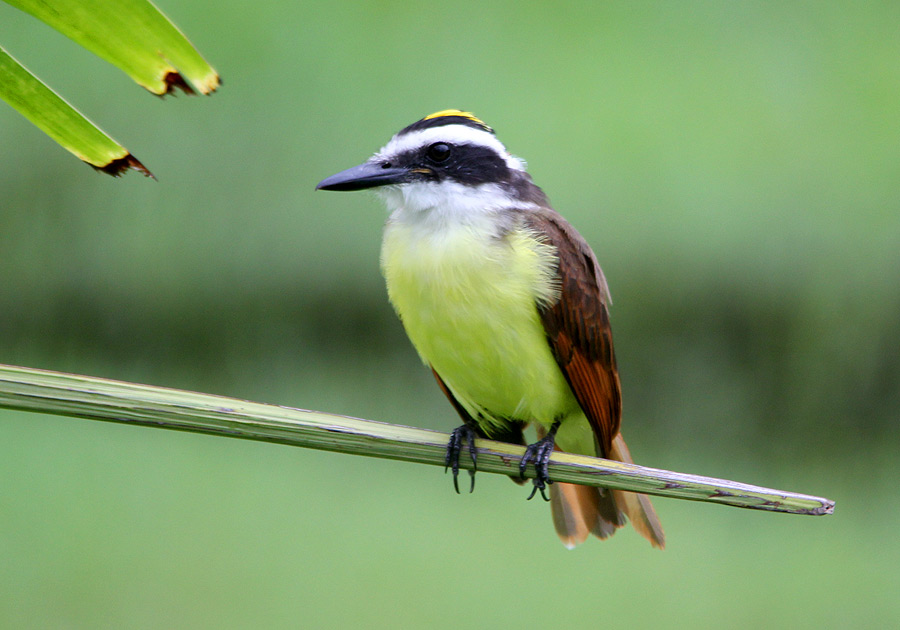
Great Kiskadee showing its gorgeous cap
The afternoon brought a flyover ROADSIDE HAWK and a pair of PLAIN CHACHALACAS near one of the pools. Flyover OLIVE-THROATED PARAKEET were seen through the trip, why MELODIOUS BLACKBIRDS were heard winging all day every day. The beach wasn't much for birds--too many people. LAUGHING GULLS were omnipresent, while both ROYAL and CASPIAN TERN made flybys constantly. The occasional NEOTROPIC and DOUBLE-CRESTED CORMORANT as well as BROWN PELICAN would fly past, but nothing in great numbers.
Todays eBird Checklists:
Playa Paraiso - Morning
Playa Paraiso - Mid Day
Playa Paraiso - Afternoon
DAY 2
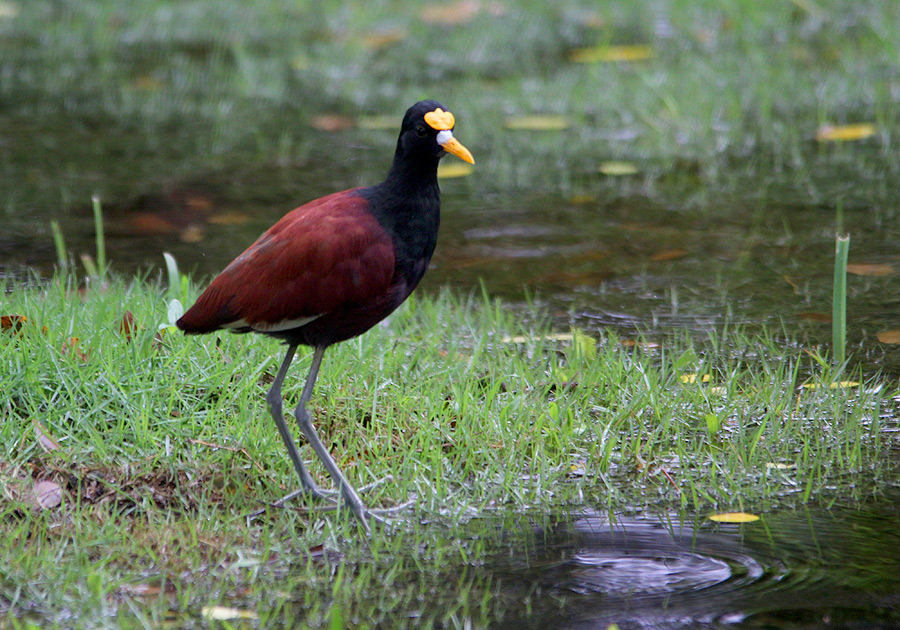
Northern Jacana on a flooded lawn
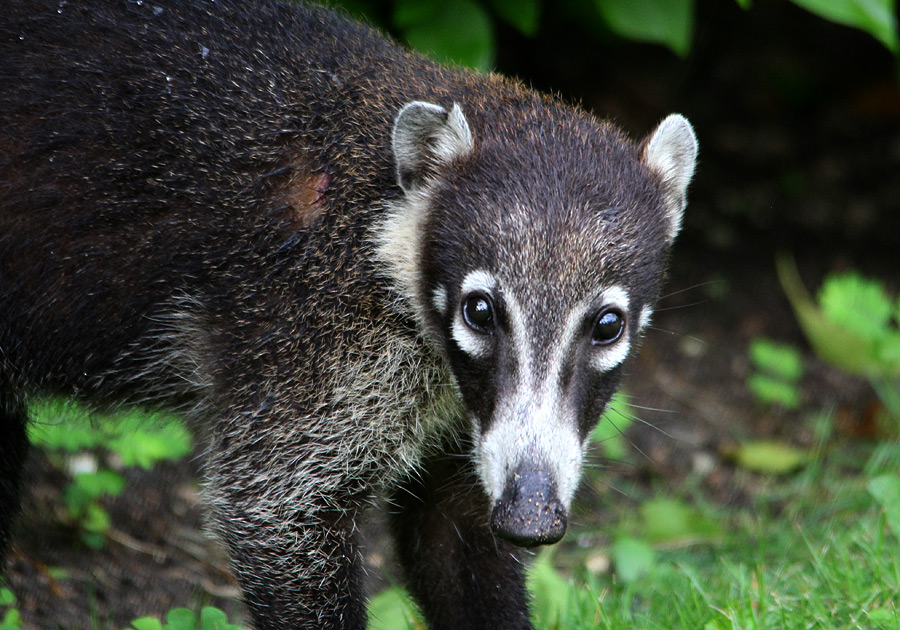
White-nosed Coati on a lawn edge
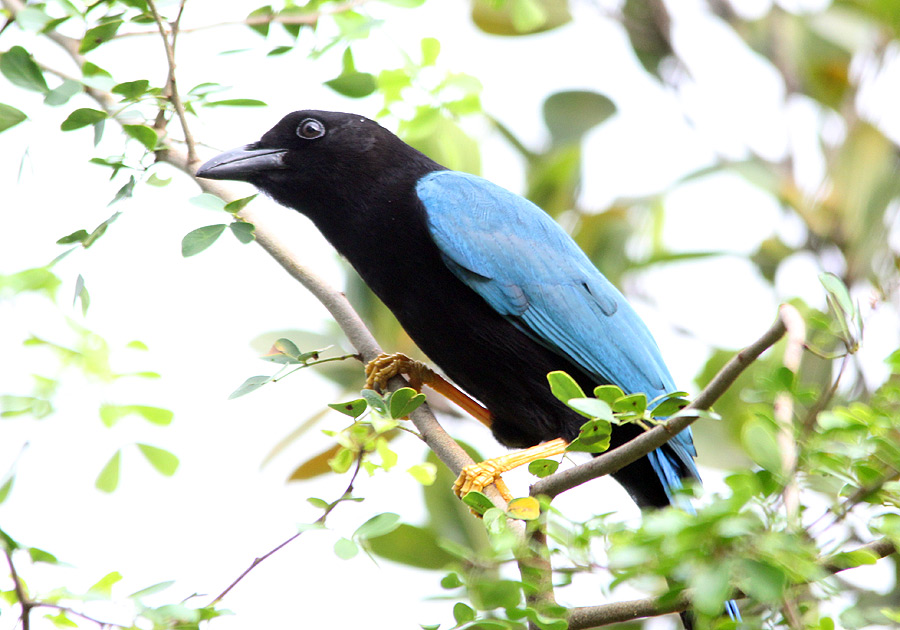
Yucatan Jay posing briefly
The rest of the day was spent relaxing which was the point of the 1st couple days. The most interesting thing I saw today and a couple other times was a YELLOW-THROATED WARBLER eating table scraps in the out door eating areas on the grounds. One was picking bread crumbs while the other was eating ice cream cone leftovers. It was odd but allowed really close looks!
Todays eBird Checklists:
Playa Paraiso - Morning
Playa Paraiso - Afternoon
DAY 3
Today the plan was to hit Cozumel and pick up our rental car to drive to Chichen Itza on Monday--but Sam didn't feel well and we decided the boat ride wasn't the best way to spend a morning. I again decided to hit the grounds and see what I turned up--today the sun was out and that made all the difference in the world. I headed to the mangroves along the beach first thing where a few birds were already active. YELLOW WARBLER, YELLOW-THROATED WARBLER, and AMERICAN REDSTART were all feeding in the open. My favorite find were a pair of CINNAMON HUMMINGBIRDS that sat on exposed limbs allowing photos--a species I hadn't taken picture of on my last trip.
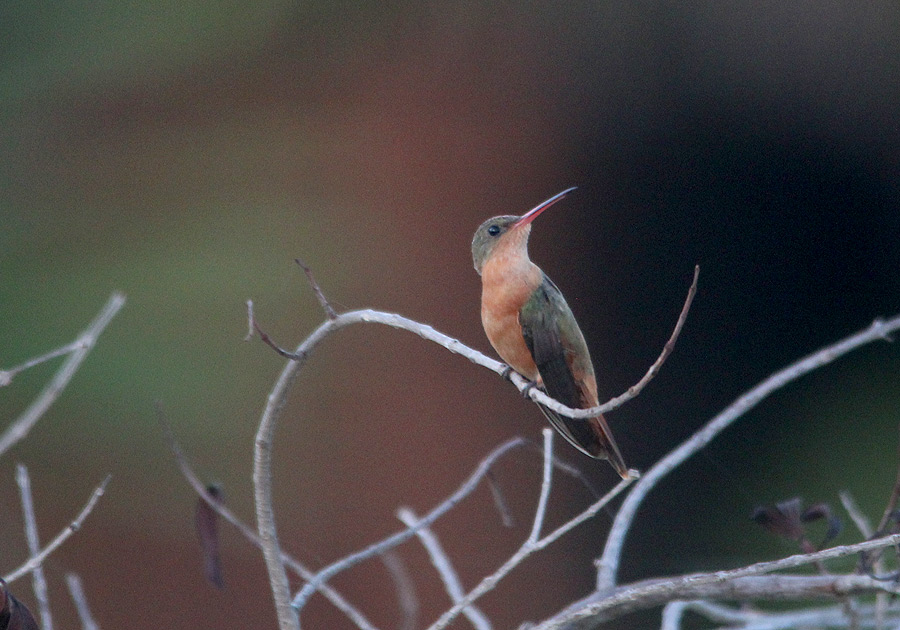
Cinnamon Hummingbird before sunrise
After exhausting the mangroves and beach I moved inland until I eventually came across a cooperative HOODED ORIOLE that allowed me to take photos and watch it for about 20 minutes.
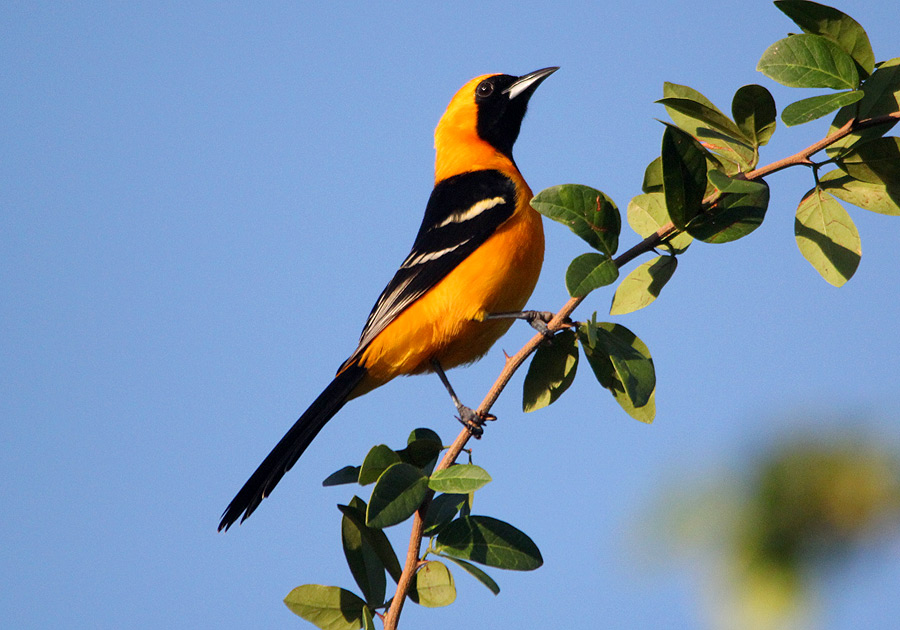
Stunning Hooded Oriole
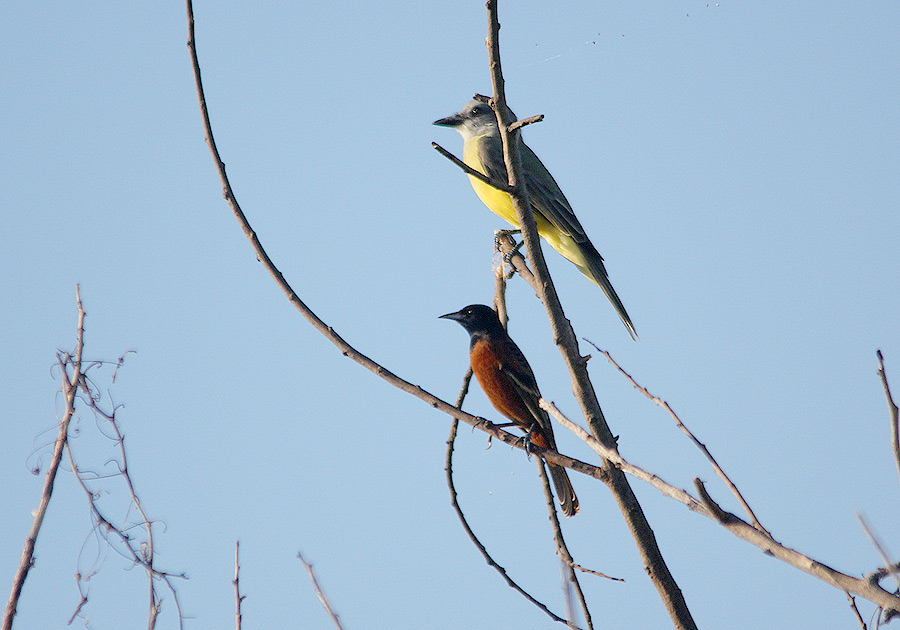
Orchard Oriole accompanied by a Tropical Kingbird
As I made my way around a patch of tree there stood a PLAIN CHACHALACA standing on the lawn nearby. I was ecstatic as the lighting was perfect--pretty soon I noticed 2 more in the trees and the 3 birds eventually walked right at me, passing within an arms length and making their way to better cover.
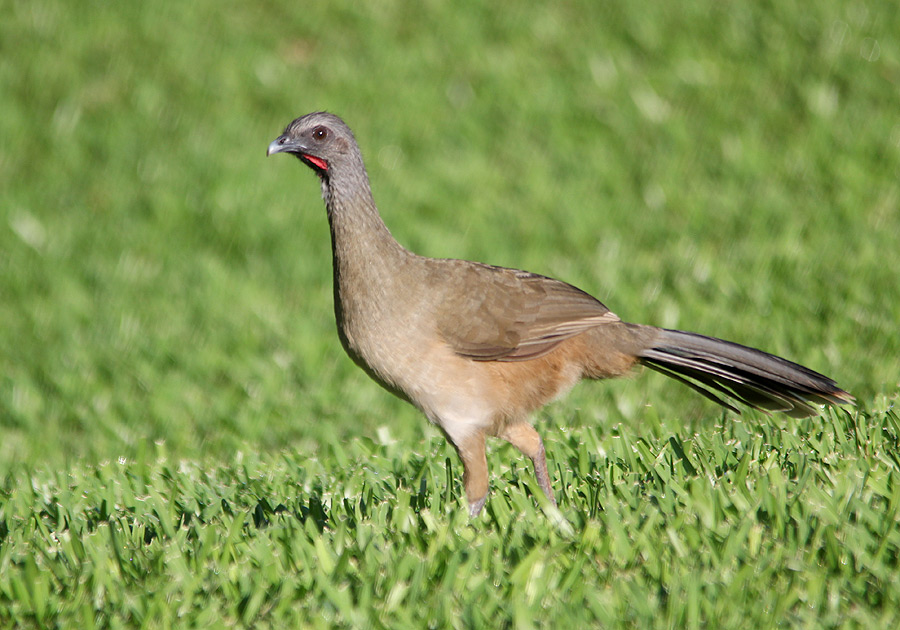
Why did the Plain Chachalaca cross the lawn?
While I watched the goofy groundbirds pass out the corner of my eye a GREEN HERON moved through a nearby pond. The bird was quite accomodating and let me watch it closely for 15 or 20 minutes.
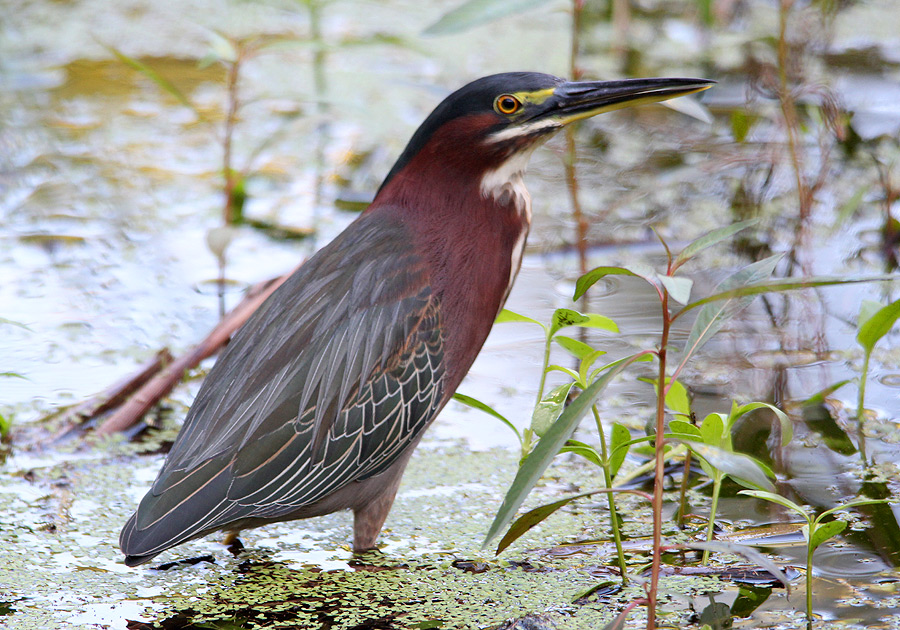
Green Heron pretending to be a plant
After I felt like I'd exhausted the trees, I made my way back towards our room when a flock of OLIVE-THROATED PARAKEET flew by and landed in a tree long enough for me to fire off one shot. A truck drove by and scared all the birds into the air. I was a little peeved as there hadn't been a vehicle anywhere near for about 20 minutes--such is life.
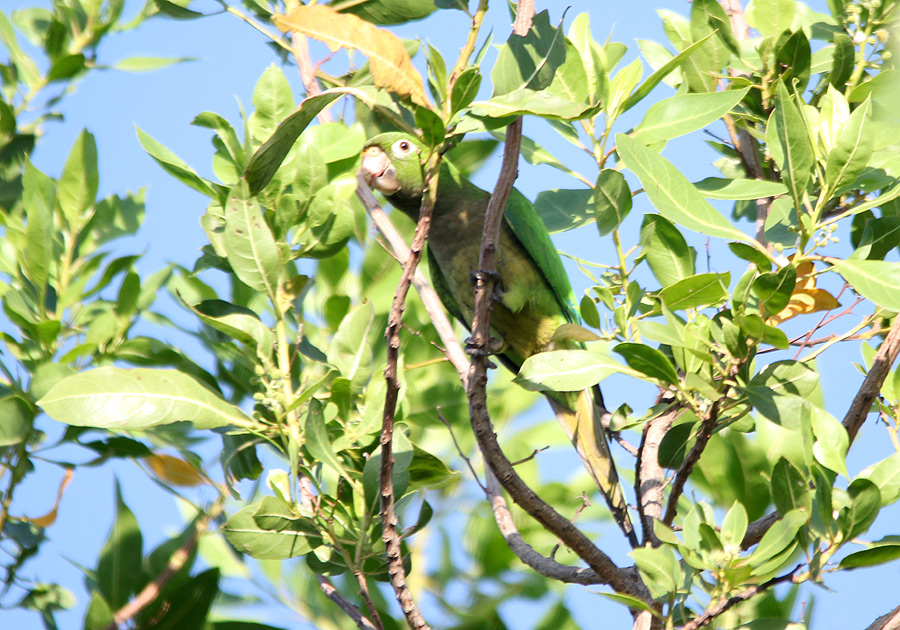
Olive-throated Parakeet
It wasn't a bad morning with almost 40 species seen within a mile of my room. The rest of the day was spent at the pool, beach, and a quick trip to Playa del Carmen to pick up the rental for the rest of our trip.
Todays eBird Checklists:
Playa Paraiso - Morning
Playa Paraiso - Late Morning
DAY 4
We finally made our way out of the city and away from the coast as we headed inland to Coba. I'd only been able to spend about 90 minutes here previously, and wouldn't get much more time today. In the future I wouldn't mind spending a couple days in the area, and really checking things out. The birding is great and you can get amazing looks and photo ops with some patience. But with a 15 month old in tow we kept to a pretty steady pace to see the ruins, and get back to the car before nap time. It didn't help that it was extremely hot and very humid making for a sticky time in the jungle--I personally love it!

The family at Coba
We arrived a couple hours after sunrise so activity had peaked and things were waning. In the first big clearing with ruins where last time the bird activity was plentiful, the birds were sticking to the edges and there weren't nearly as many out in the open. I did spot a SUMMER TANAGER, and a few GREAT KISKADEES which were visiting an ant line. RUDDY GROUND-DOVE and RED-EYED VIREO were two of the only birds out in the open, while I could hear YELLOW-WNIGED TANAGER and GARTERED TROGON calling from the forest.
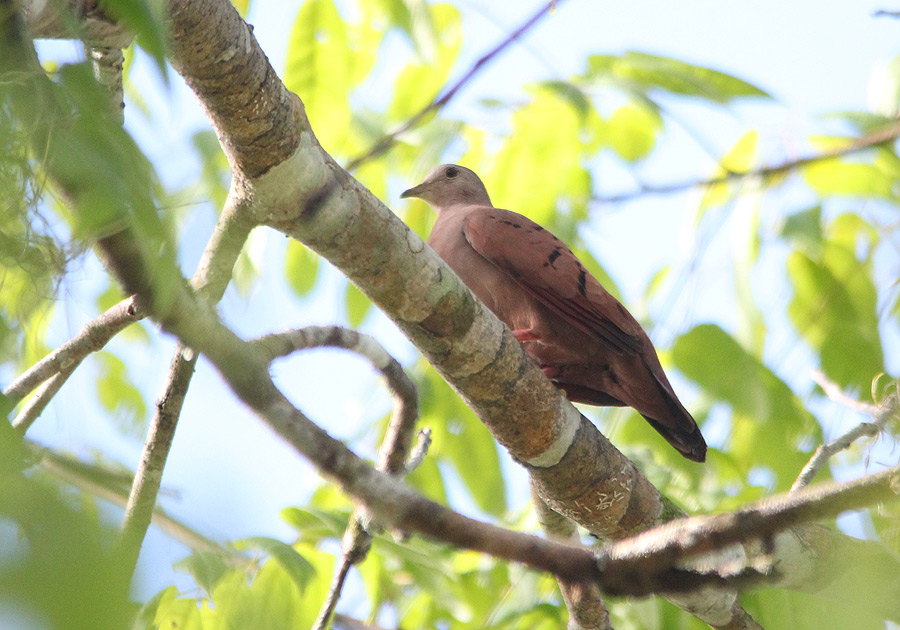
Ruddy Ground-Dove... Not on the ground.
Walking the main trail through the jungle we came across a pair of RED-THROATED ANT-TANAGER hopping around near the trail. The lighting was abysmal and I wasn't able to get a photo of this species yet again. The forest was mostly quiet-accept for the seemingly abundant WHITE-EYED VIREO that kept appearing overhead. These visitors form up north were only outnumbered by BLACK-THROATED GREEN-WARBLER and MELODIOUS BLACKBIRD. And to dull things out I did spy a pair of TENNESSEE WARBLERS reminding me that not every warbler comes in bright and yellow!
Near one out of the way ruin I could hear the BLACK-HEADED TROGON calling from the forest--as I approached I could make out at least 3 different birds calling--then when I got to the edge and saw a few the birds started moving--5 trogons all within about 60' of one another. This species is all but guaranteed at Coba.
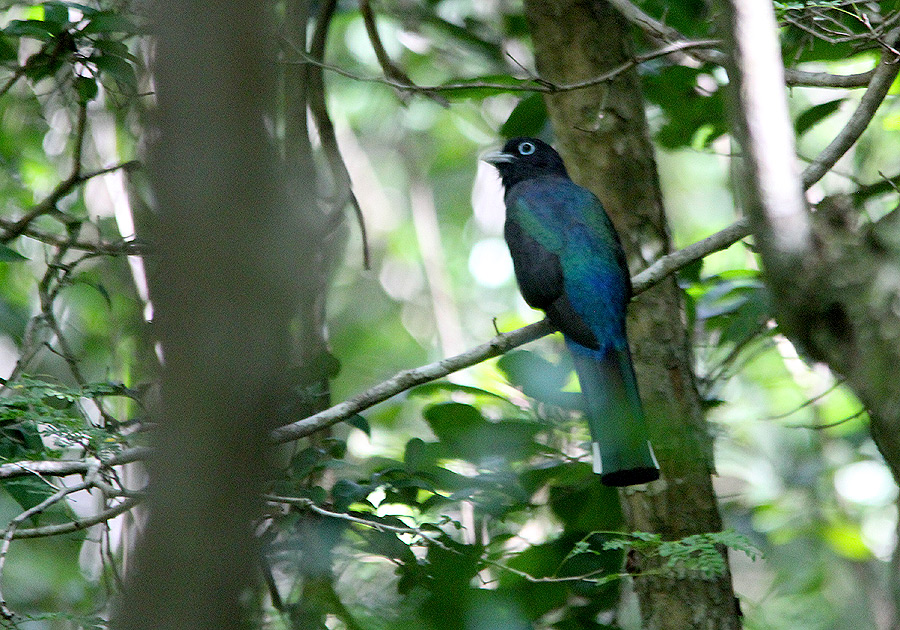
Bad shot of a Black-headed Trogon in the Jungle
We eventually made our way to the The Ixmoja Pyramid--the tallest such structure in the Yucatan at 137'. The Coba complex was apparently home to some 50,000 Mayans at one point--incredible given its remote location in the jungle today. As we walked up the path towards the pyramid, we came across a thick ant line crossing the road--about 3" to 10" wide in various places--it was a swarm and nearby in the trees I could see more RED-THROATED ANT-TANAGERS on the ground--but there were other birds including my lifer RUDDY WOODCREEPER of which several zipped form snag, to limb, to root, and branch. Despite the crappy lighting, I managed to make one pretty good shot!
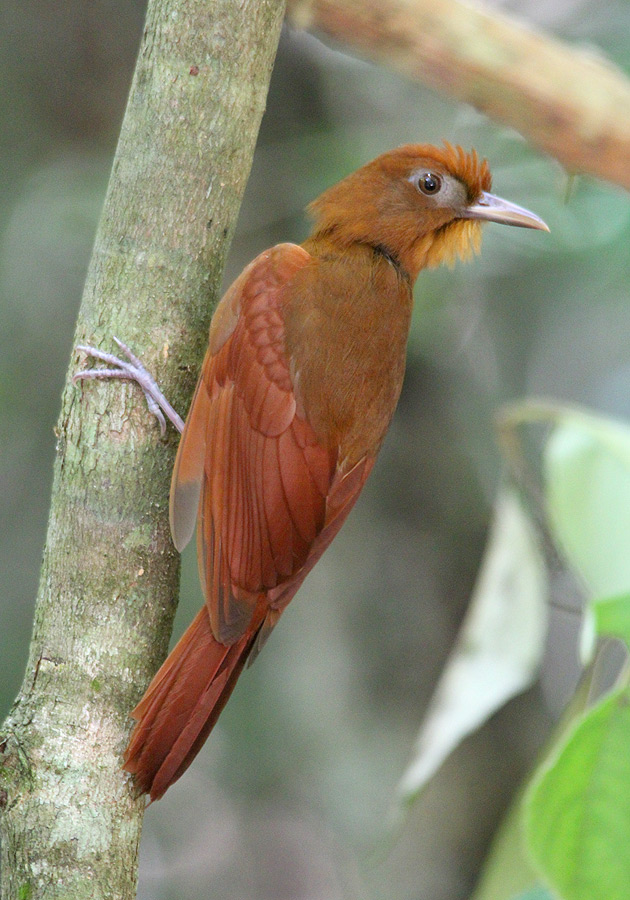
Lifer Ruddy Woodcreeper
GRAY-HEADED TANAGER accompanied the other birds, as well as YUCATAN JAYS. I spent some time scanning the understory trying to find other birds, but there wasn't much else--I caught up to the rest of the family at the pyramid which we took in as the sun beat down upon the opening in the jungle.
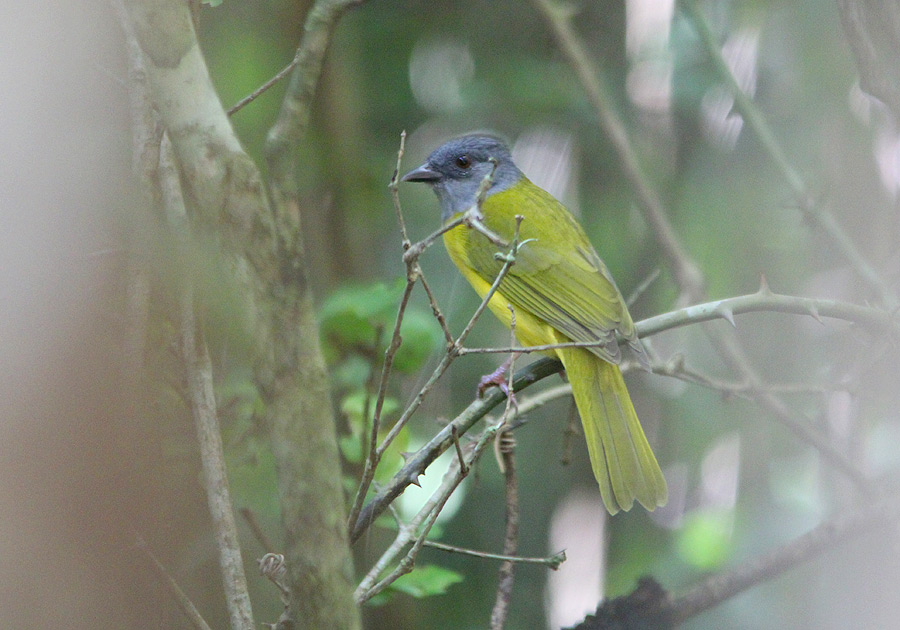
Gray-headed Tanager following an ant line
It was hot--and the kiddo was getting grumpy, so we turned around an made our way back towards the entrance. I was able to snag one more lifer in a WEDGE-TAILED SABREWING--a rather plain species of hummingbird easily identified by its unique tail shape! We bought a few trinkets and snacks then hit the road and made our way back to the coast and our resort in time for lunch--Delicious tacos made fresh while we watched. The rest of the day was spent soaking in the sun, and enjoying the beautiful beach!
Todays eBird Checklists:
Zona Arqueológica Cobá
Playa Paraiso
DAY 5
With our last full day in Mexico, I started early and headed just a few miles up the coast to Yaax Che Jardín Botánico del Dr. Alfredo Barrera Marín--a botanical garden. I had found this place on my last visit but didn't manage to make it there to look for birds--big mistake as this might be the best birding location along the coast between Cancun and Playa... I had a few hours, but when I got there the gate was shut--I was a couple minutes early and there was no where to park outside the gate which was right off the highway. So I did a loop and came back a few minutes later--STILL CLOSED! But there was a guy behind the gate. I hollered and asked why the gate was closed--he responded that it didn't open for another 30 minutes! This is always an issue when you bird in other countries--gardens, parks, and various places you may find yourself birding often go by their own schedule. If online it says 8am somewhere, they may open at 8--or 8:30, or whenever they decide to. After pleading with the guy, he let me in to park and I spent the next 20 minutes birding around the parking area. A flock of YUCATAN JAYS came through accompanied with my first stellar look at a BROWN JAY.
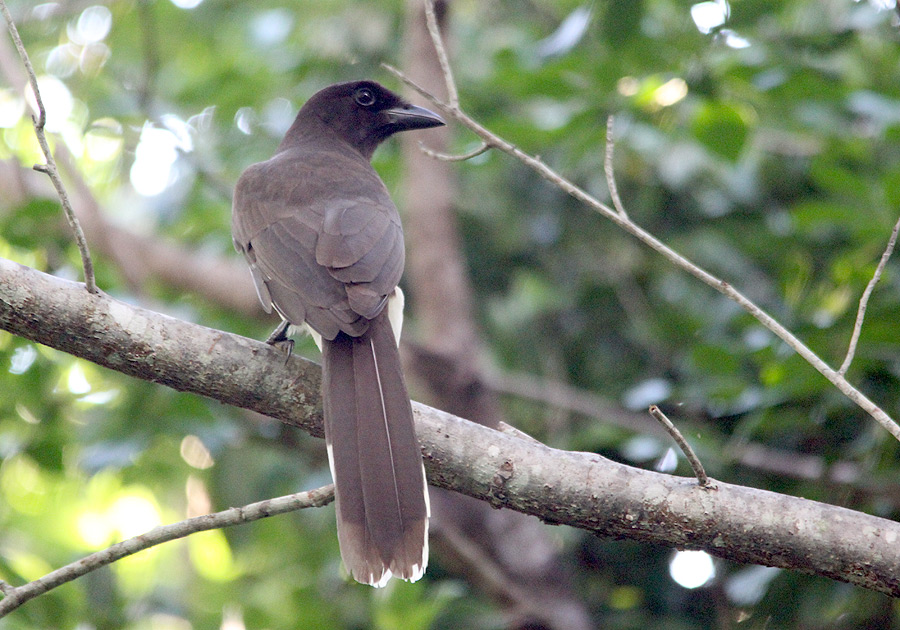
Brown Jay pausing before disappearing in the jungle
The park "manager" soon arrived and after talking for a few minutes he told me I was free to walk the grounds and as I only had about 75 minutes now I busted my tail down the trail. It was quiet but at the first pull out into an "exhibit" I whipped out my best pygmy-owl imitation and the birds came a flying. Various warblers from the states came in followed by a surprise GRAY CATBIRD, and finally a lifer--a WHITE-BELLIED WREN, who provided excellent looks.
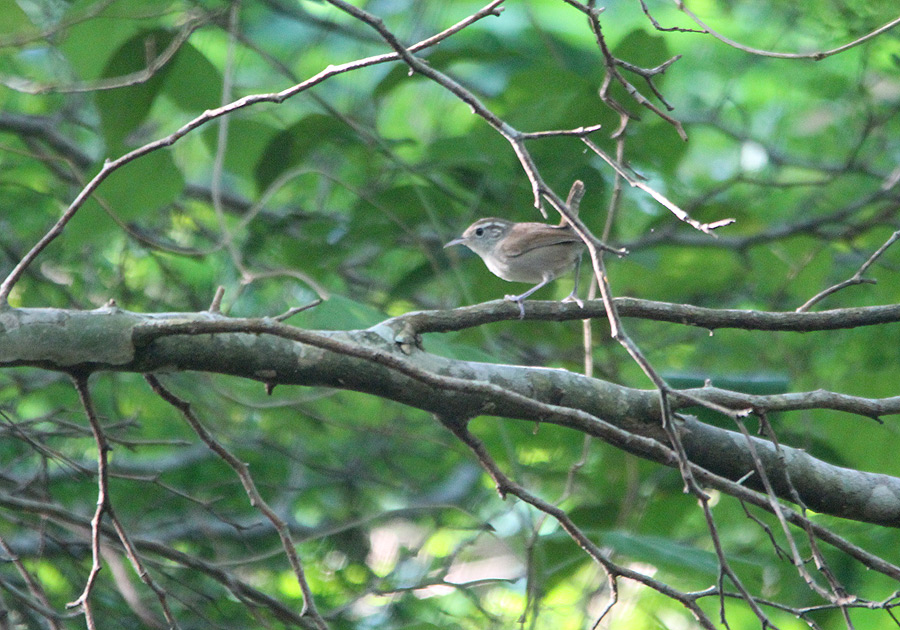
Lifer White-bellied Wren
I kept on down the trail where a NORTHERN WATERTHRUSH bobbed up and down in the middle of the road. Then form just off trail came the bellowing of a THICKET TINAMOU. It sounded like there may have been two and I made my way closer to the noise where eventually I had to be within 25'. But despite the scanning the undergrowth, I could never pick out the beast. My Tinamou list continues to grow, without having ever actually seen one...
At the next exhibit--a medicinal plants exhibit I spent a couple minutes unsuccessfully trying to coax birds form the forest. I made my way back to the trail passing a cactus garden and eventually coming around a corner and flushing a GREAT BLACK HAWK from the edge of the road. I saw where it landed and started sneaking towards it, when I heard a squeal form above--another one was perched staring down at me!
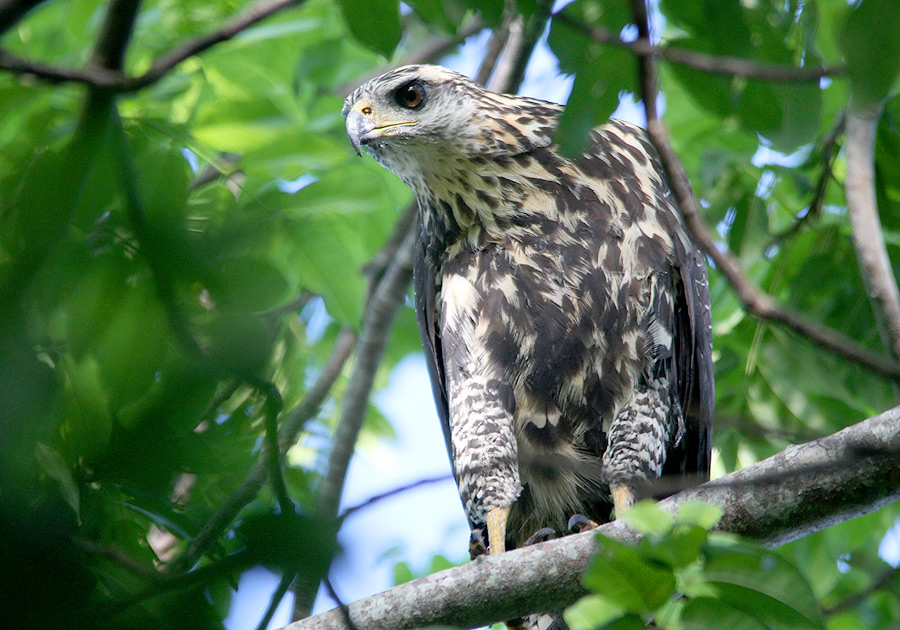
Great Black Hawk staring me down
It was an amazing look and I basked in the opportunity. All the while I could hear birds calling nearby and there was one call could never figure out. Looking into the forest I soon found a pair of RUDDY WOODCREEPERS, as well as a flock of YUCATAN JAYS. A MANGROVE VIREO passed by along with several warblers, and a GROOVE-BILLED ANI. As I walked up the path I noticed a few ants streaming across the road--I guess that explained the birds! I came around a bend to where I saw the other hawk land, and it flew as soon as it saw me--then out of the forest a voice hollered at me asking what I was seeing--it was another birder--from Canada.
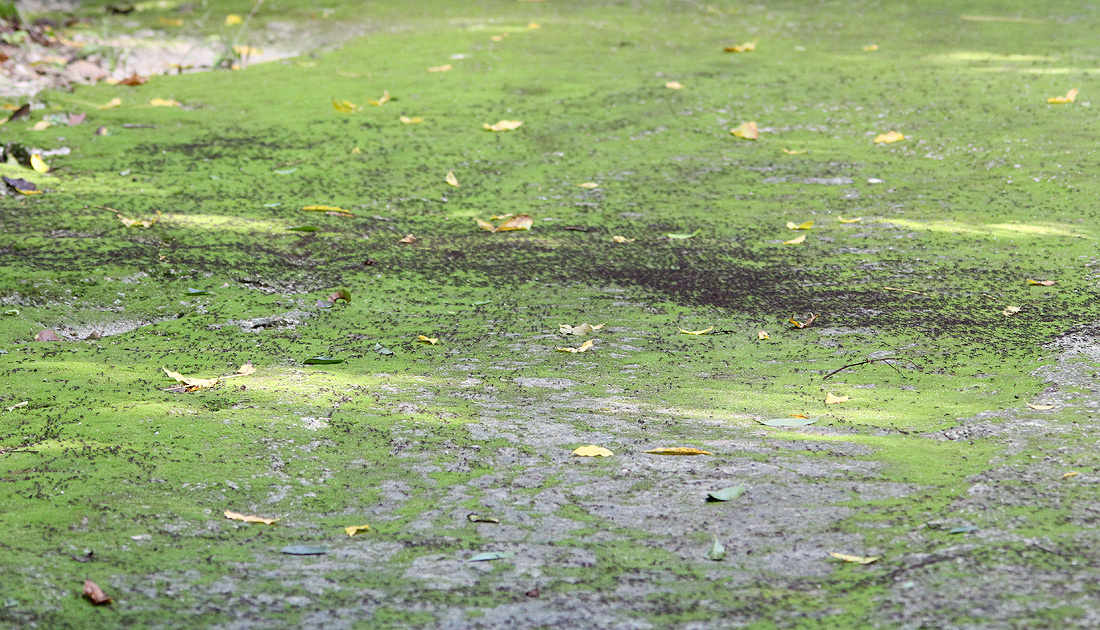
Ant Swarm crossing the road
We started talking and I found out it was his first trip here--and he was with his non-birding wife. We started walking and talking birds when all the sudden we noticed the ant swarm had literally taken over the road--our path was blocked by 30' wide swath of ants rolling across the road--it was my first real ant swarm--and the birds were following. RUDDY WOODCREEPER, the jays, anis, and a few RED-THROATED ANT-TANAGERS. I finally managed a picture of the tanager, as there weren't many birds in tow to look at besides the above mentioned.
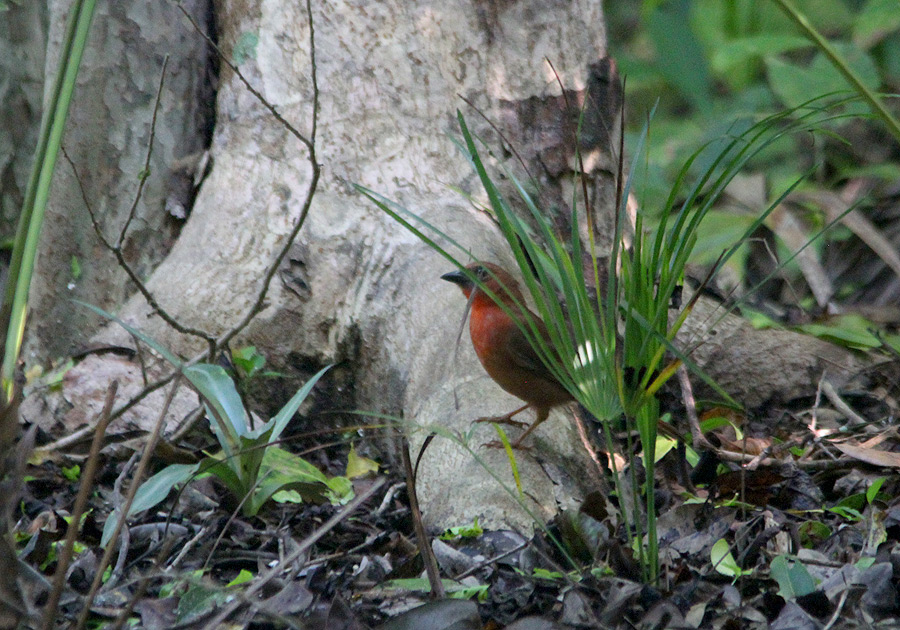
Red-throated Ant-Tanager following an ant swarm
It was great to see, but the number of birds following were a tad disappointing. We walked back aways to look for the hawk which had moved by now, but quickly found a small family of SPIDER MONKEYS! A great treat! We followed the troupe for a few minutes until they moved out of sight into the forest!
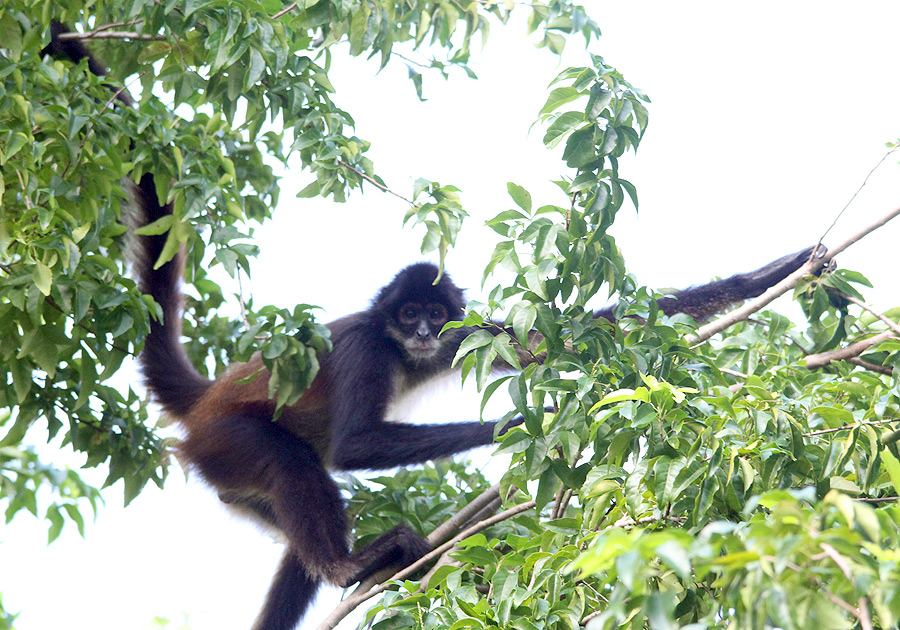
Spider Monkey swinging through the trees
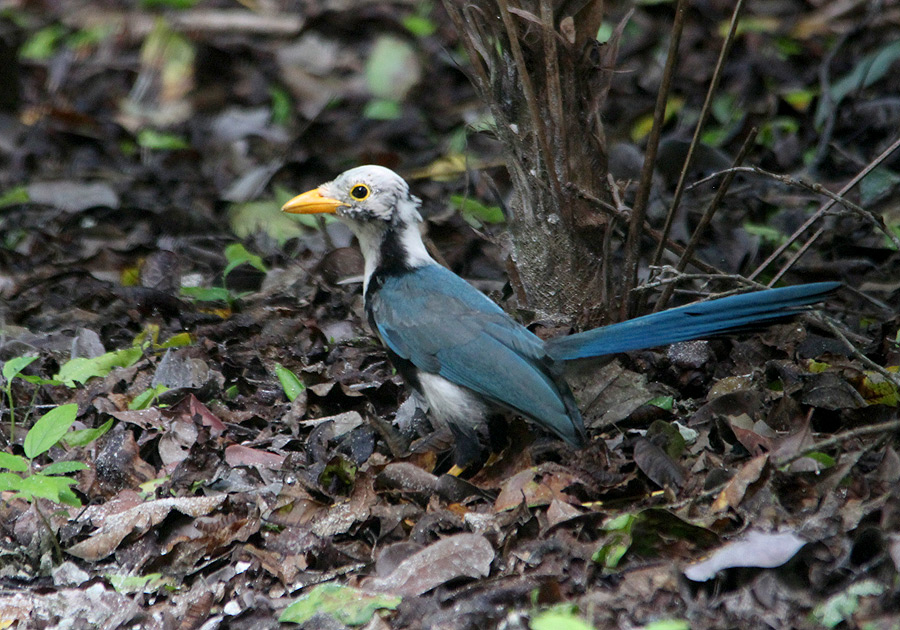
Stunning young Yucatan Jay
One thing I learned from a post on eBird that I will likely try to use in the future is swing by the afternoon before and talk to the manager to see if you can come in early and bird before the gates open. It's light just after 6:00am and that means 2.5 hours of light before the park opens. I read several reports from others who tried this and got permission. I may very well try this in the future--as it would have given me almost 4 hours here which would have been awesome. I ticked just over 40 species in my brief stop and made my way back to my hotel. I had to take the rental back and the rest of the day was spent on the beach and pool enjoying my last moments of the tropics before heading back north.
Todays eBird Checklists:
Botanical Garden
Playa Paraiso
DAY 6
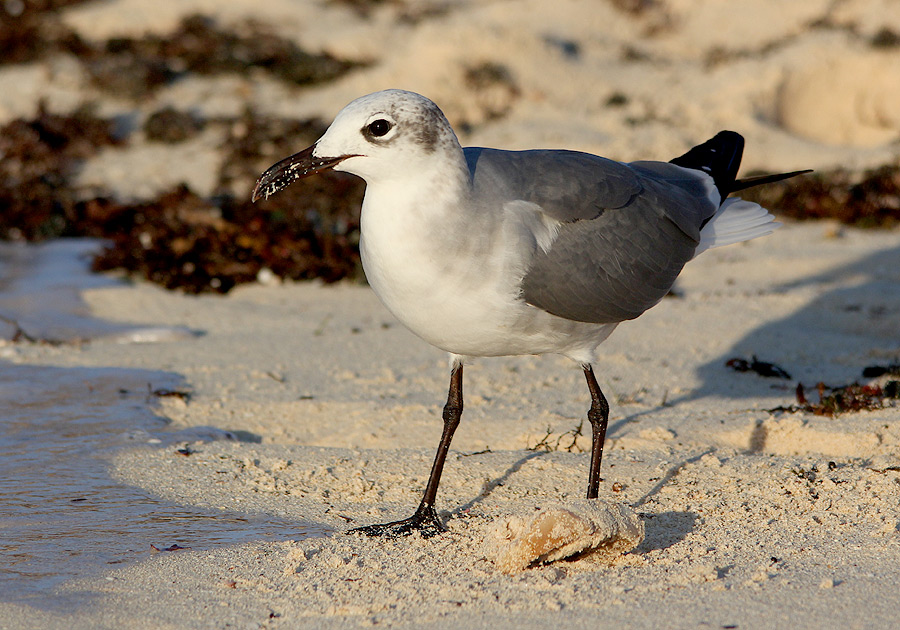
Laughing Gull on the beach
We packed our bags grabbed breakfast, then headed to the airport. Before we knew it we were on the ground in Salt Lake--50 degrees cooler than it had been 12 hours earlier... And the ever yearning for the tropics already coursing through my veins again.
Todays eBird Checklists:
Playa Paraiso
I'd be lying if I said, I killed it birding this trip--just 89 total species tallied over the week. Of those 5 were lifers, while 21 were new for my Mexico list. Most of the birding was down from a lazy river, on the beach, or walking to and from meals. A departure from my usual trips, but a nice easing back into international travel with an infant. I still have a handful of endemics I need, and I have only grown fonder of this area with my 2nd installment.
PHOTOS FROM THIS TRIP
Photos from Playa Paraiso
Photos from Coba
Photos from Yaax Che Jardín Botánico del Dr. Alfredo Barrera Marín
Labels: eBird, life birds, lifers, Mexico, Travel, trip reports



 A
A