Utah Birds, Utah Birding, and Utah Birders. Promoting the sharing of information, and the conservation of habitat for birds in Utah and elsewhere. We are a group of people who want to share what we know, and create a positive birding experience in Utah.

BIRDERS BLOG

a blog by and for Utah Birders

Birding Mexico: Back to the Yucatan

posted by Tim Avery at
on Tuesday, December 1, 2015 

Early in 2014 I had the good fortune to secure a short trip to the Yucatan Peninsula in Mexico at basically no cost to me.  With a little quick planning and a few bucks out of my own pocket I turned the trip into 3 packed days of birding at 3 awesome locations (Coba, Cozumel, Rio Lagartos).  I ended up seeing 170 species including 51 life birds, picking up the majority of the endemics and a few personal favorites along the way.  It was a great trip and I left with a deep appreciation for the area and its birds.  Shortly after that trip my wife Sam and I took a trip to Panama, our last foreign adventure for nearly 18 months.  Since then we had our first child, watched his first year of life fly by, and I birded quite a bit less than usual with the changes around the house.  We were both itching to get out of the country for a few days, and decided this summer that we would take a November trip someplace warm, fairly close, and that we could do without breaking the bank.  The Yucatan immediately jumped to the top of my list of places that met this criteria.

After spending a couple weeks looking at other options and pricing things out, I kept coming back to the Yucatan, and decided to just go for it.  I booked a 5 night trip that would put us in the Playacar area I was familiar with, with day trips to Cozumel and Chichen Itza. This would mostly be a beach trip to relax in the sun--but if I played my cards right there were a few lifers I could pickup.

About 3 weeks before our trip I got a call that the resort we were staying at had a fire the previous day and they had to move us to another location--at first I was a little worried but it ended up being an upgrade and put us 1/2 way between Cancun and Playacar in the Playa Paraiso area which is surrounded by lush lowland jungle.


DAY 1

6 Days in the Yucatan!

We left Salt Lake on November 5th with an evening flight to Denver, then caught the red-eye for a short 3.5 hour flight to Cancun overnight.  We arrived before sunrise to buckets of rain that slowly cleared as the sun came out and we arrived in Playa Paraiso.  First bird of the trip as expected--GREAT-TAILED GRACKLE.

We were checking in early so our room wasn't ready--while we waited we walked the ground where the birds started popping out of the wood works.  First was a small flock of YUCATAN JAYS visiting a tree where they were enjoying some type of food.  While we watched out of nowhere a GREEN JAY flew in just 10' away providing the best looks I've had before disappearing into the Mangroves.  SOCIAL FLYCATCHER and GREAT KISKADEE along with TROPICAL KINGBIRD and TROPICAL MOCKINGBIRD were all quick to appear and remained constants at the resort throughout the trip.  After getting our room keys a surprise NORTHERN JACANA was a nice sight before we headed to the pools to enjoy a little relaxation.  My eyes kept wandering to the skies where OSPREY, TURKEY and BLACK VULTURES, and MAGNIFICENT FRIGATEBIRDS appeared from time to time.  It was easy birding and a nice change from the doldrums of the day to day around my home and office where I have spent most of the past few months.
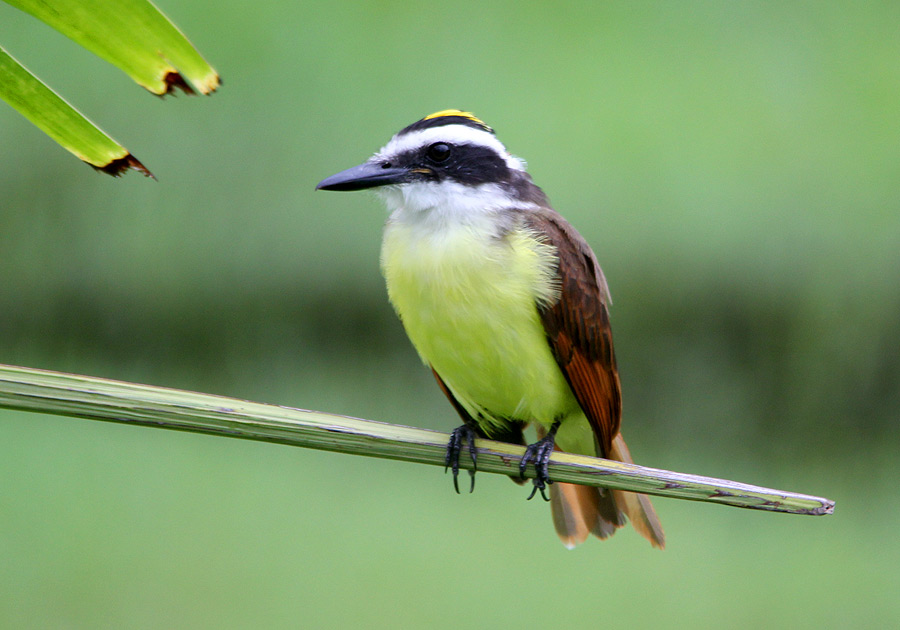
Great Kiskadee showing its gorgeous cap

The afternoon brought a flyover ROADSIDE HAWK and a pair of PLAIN CHACHALACAS near one of the pools.  Flyover OLIVE-THROATED PARAKEET were seen through the trip, why MELODIOUS BLACKBIRDS were heard winging all day every day. The beach wasn't much for birds--too many people. LAUGHING GULLS were omnipresent, while both ROYAL and CASPIAN TERN made flybys constantly.  The occasional NEOTROPIC and DOUBLE-CRESTED CORMORANT as well as BROWN PELICAN would fly past, but nothing in great numbers.

Todays eBird Checklists:
Playa Paraiso - Morning
Playa Paraiso - Mid Day
Playa Paraiso - Afternoon


DAY 2
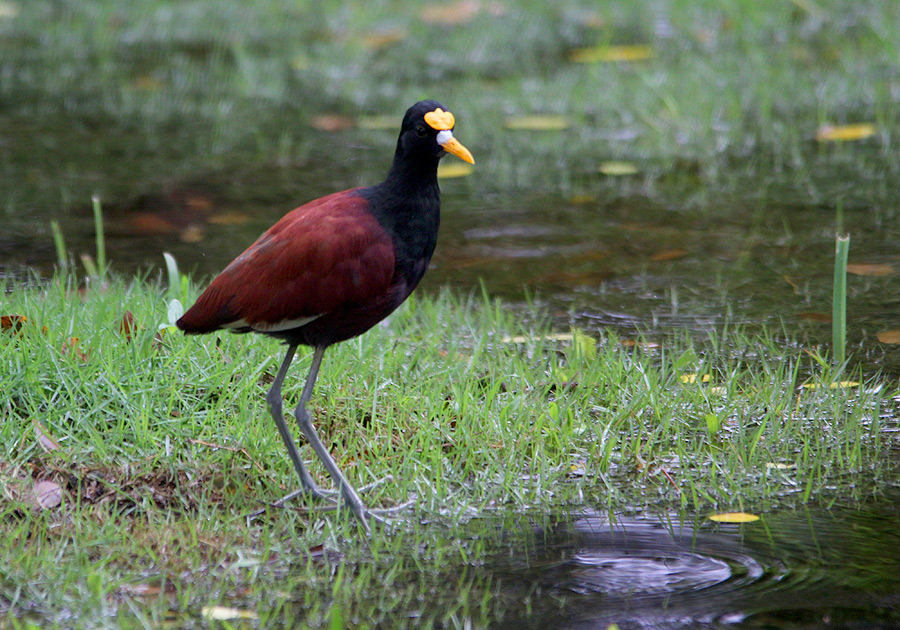

Northern Jacana on a flooded lawn
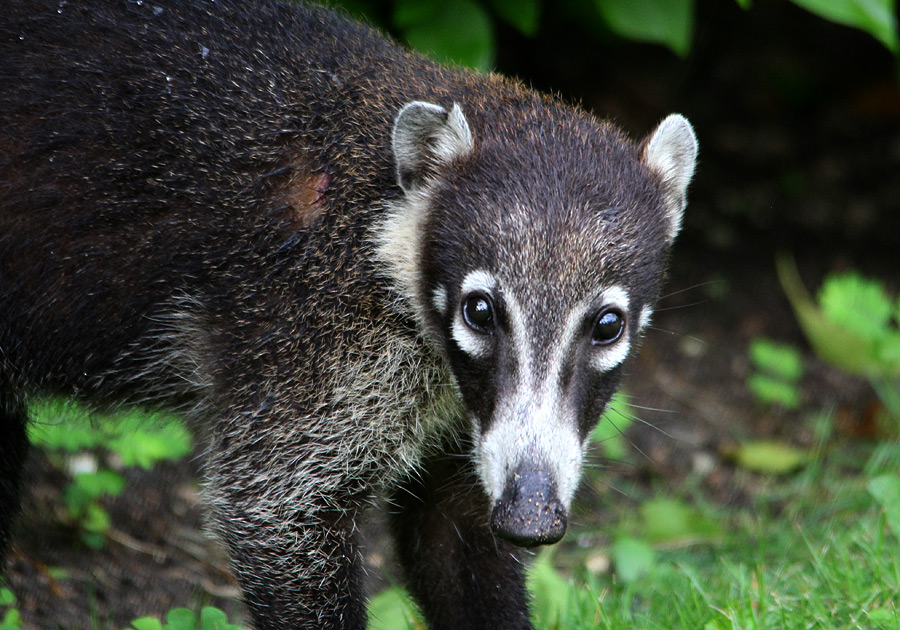
On our 2nd morning I took an early walk while the wife and kid slept.  Bird life was scant as thunderheads were on the move and rain came and went.  I managed to track down the NORTHERN JACANA from the previous day for horribly lit photos. I think one of the things I was most excited about was a White-nosed Coati hanging out by itself that let me get a pretty good shot...

White-nosed Coati on a lawn edge

I also turned up a pair of YUCATAN JAYS that allowed for better photos than my previous trip, but nothing worth writing home about.  The only other new bird of the morning was a GROOVE-BILLED ANI hunting from a shrub patch along a side road.

Yucatan Jay posing briefly

The rest of the day was spent relaxing which was the point of the 1st couple days. The most interesting thing I saw today and a couple other times was a YELLOW-THROATED WARBLER eating table scraps in the out door eating areas on the grounds.  One was picking bread crumbs while the other was eating ice cream cone leftovers.  It was odd but allowed really close looks!

Todays eBird Checklists:
Playa Paraiso - Morning
Playa Paraiso - Afternoon

DAY 3

Today the plan was to hit Cozumel and pick up our rental car to drive to Chichen Itza on Monday--but Sam didn't feel well and we decided the boat ride wasn't the best way to spend a morning.  I again decided to hit the grounds and see what I turned up--today the sun was out and that made all the difference in the world. I headed to the mangroves along the beach first thing where a few birds were already active.  YELLOW WARBLER, YELLOW-THROATED WARBLER, and AMERICAN REDSTART were all feeding in the open.  My favorite find were a pair of CINNAMON HUMMINGBIRDS that sat on exposed limbs allowing photos--a species I hadn't taken picture of on my last trip.
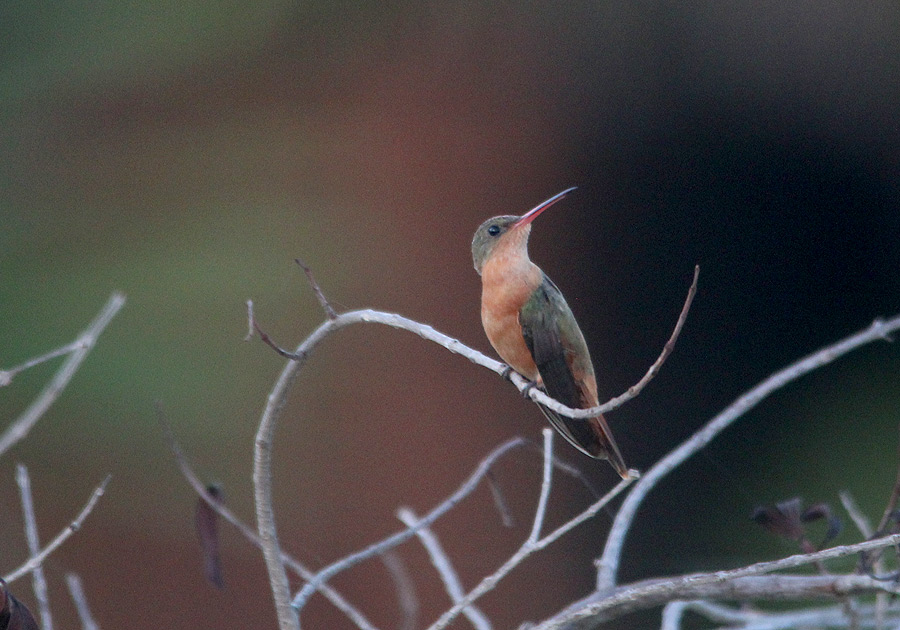
Cinnamon Hummingbird before sunrise

After exhausting the mangroves and beach I moved inland until I eventually came across a cooperative HOODED ORIOLE that allowed me to take photos and watch it for about 20 minutes.
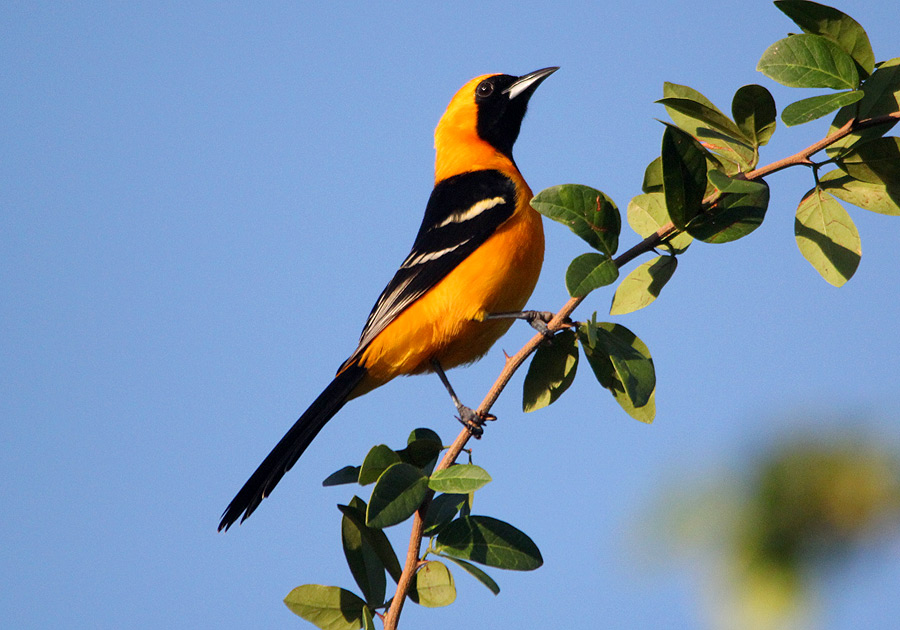
Stunning Hooded Oriole 
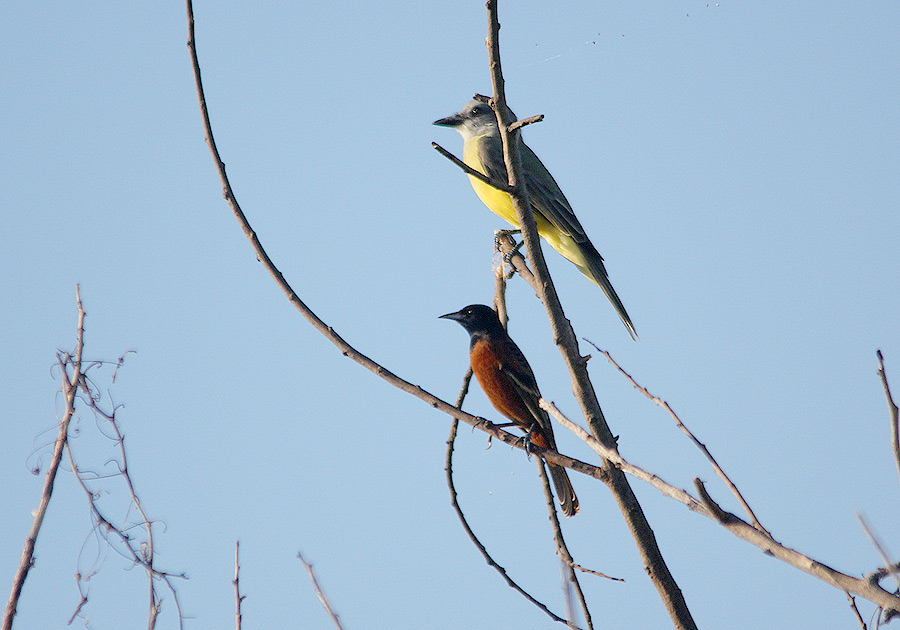
I headed to a stretch of road along the resort golf course where I had birded the previous morning--this area seemed the most active and this morning it was action packed.  I tallied 9 species of warbler including HOODED, PRAIRIE, BAY-BREASTED, and MAGNOLIA.  The orioles were out in force with the highlight being 5 different species visiting the flowering bushes along the golf course. BALTIMORE, ORCHARD, HOODED, ORANGE, and ALTAMIRA ORIOLE made for a colorful morning.

Orchard Oriole accompanied by a Tropical Kingbird

As I made my way around a patch of tree there stood a PLAIN CHACHALACA standing on the lawn nearby.  I was ecstatic as the lighting was perfect--pretty soon I noticed 2 more in the trees and the 3 birds eventually walked right at me, passing within an arms length and making their way to better cover.
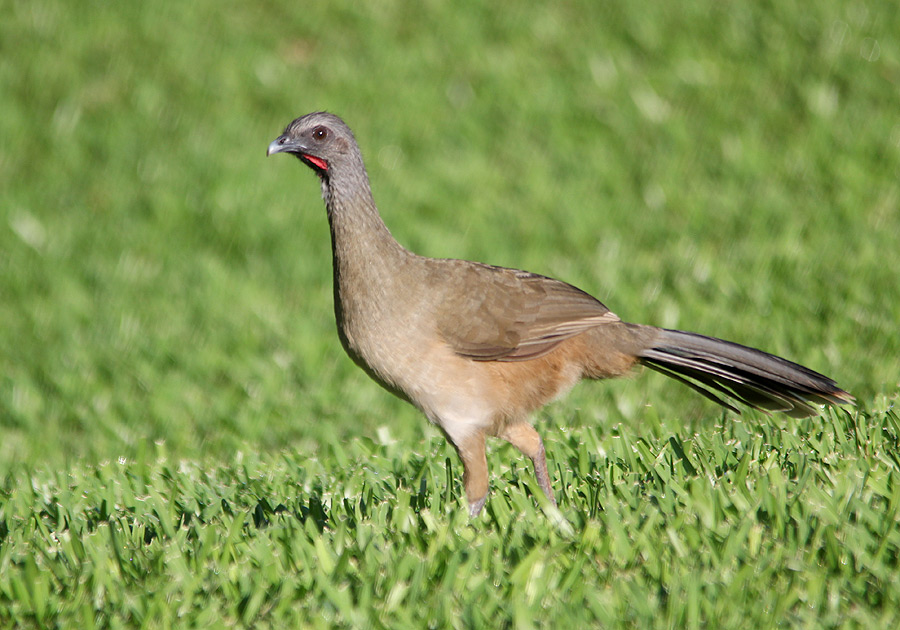
Why did the Plain Chachalaca cross the lawn?

While I watched the goofy groundbirds pass out the corner of my eye a GREEN HERON moved through a nearby pond.  The bird was quite accomodating and let me watch it closely for 15 or 20 minutes.  
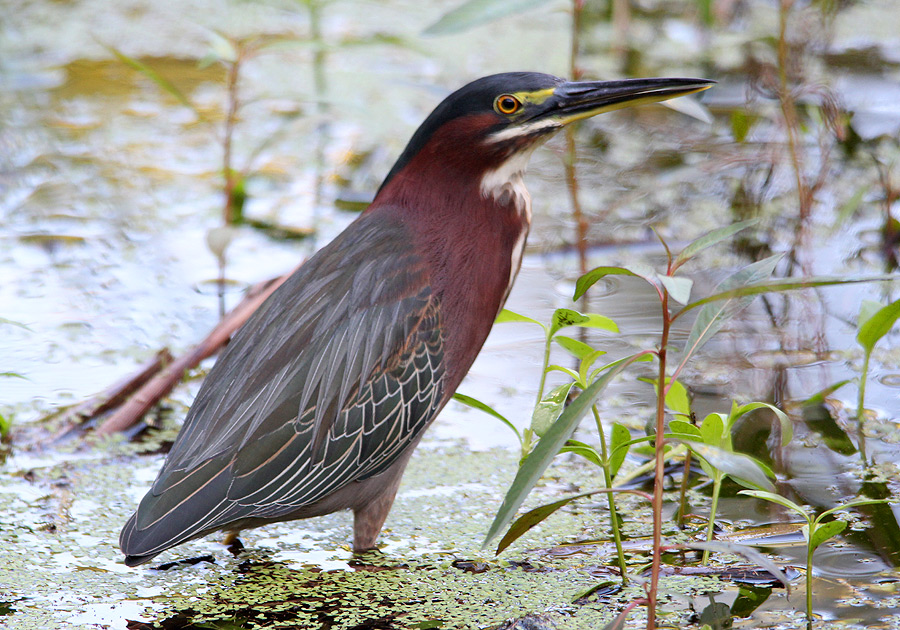
Green Heron pretending to be a plant

After I felt like I'd exhausted the trees, I made my way back towards our room when a flock of OLIVE-THROATED PARAKEET flew by and landed in a tree long enough for me to fire off one shot.  A truck drove by and scared all the birds into the air. I was a little peeved as there hadn't been a vehicle anywhere near for about 20 minutes--such is life.
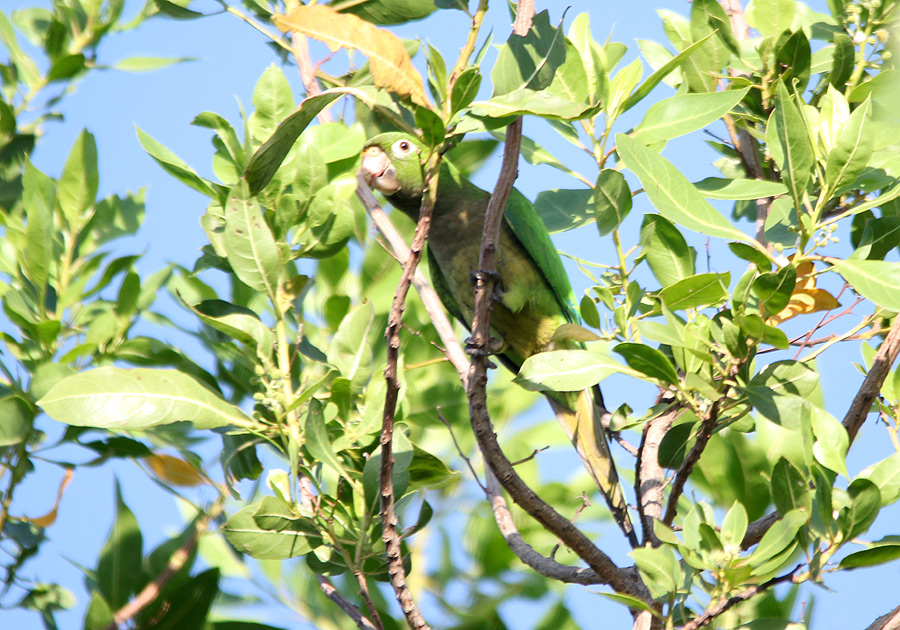
Olive-throated Parakeet

It wasn't a bad morning with almost 40 species seen within a mile of my room.  The rest of the day was spent at the pool, beach, and a quick trip to Playa del Carmen to pick up the rental for the rest of our trip.

Todays eBird Checklists:
Playa Paraiso - Morning
Playa Paraiso - Late Morning

DAY 4

We finally made our way out of the city and away from the coast as we headed inland to Coba. I'd only been able to spend about 90 minutes here previously, and wouldn't get much more time today.  In the future I wouldn't mind spending a couple days in the area, and really checking things out.  The birding is great and you can get amazing looks and photo ops with some patience.  But with a 15 month old in tow we kept to a pretty steady pace to see the ruins, and get back to the car before nap time.  It didn't help that it was extremely hot and very humid making for a sticky time in the jungle--I personally love it!

The family at Coba

We arrived a couple hours after sunrise so activity had peaked and things were waning.  In the first big clearing with ruins where last time the bird activity was plentiful, the birds were sticking to the edges and there weren't nearly as many out in the open. I did spot a SUMMER TANAGER, and a few GREAT KISKADEES which were visiting an ant line. RUDDY GROUND-DOVE and RED-EYED VIREO were two of the only birds out in the open, while I could hear YELLOW-WNIGED TANAGER and GARTERED TROGON calling from the forest.
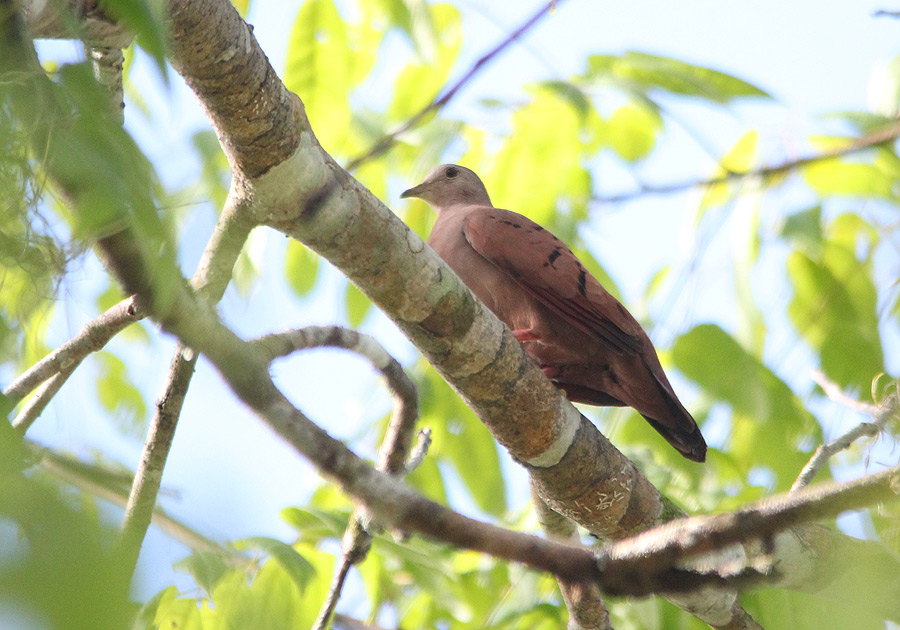
Ruddy Ground-Dove... Not on the ground.

Walking the main trail through the jungle we came across a pair of RED-THROATED ANT-TANAGER hopping around near the trail. The lighting was abysmal and I wasn't able to get a photo of this species yet again.  The forest was mostly quiet-accept for the seemingly abundant WHITE-EYED VIREO that kept appearing overhead. These visitors form up north were only outnumbered by BLACK-THROATED GREEN-WARBLER and MELODIOUS BLACKBIRD.  And to dull things out I did spy a pair of TENNESSEE WARBLERS reminding me that not every warbler comes in bright and yellow!

Near one out of the way ruin I could hear the BLACK-HEADED TROGON calling from the forest--as I approached I could make out at least 3 different birds calling--then when I got to the edge and saw a few the birds started moving--5 trogons all within about 60' of one another.  This species is all but guaranteed at Coba.
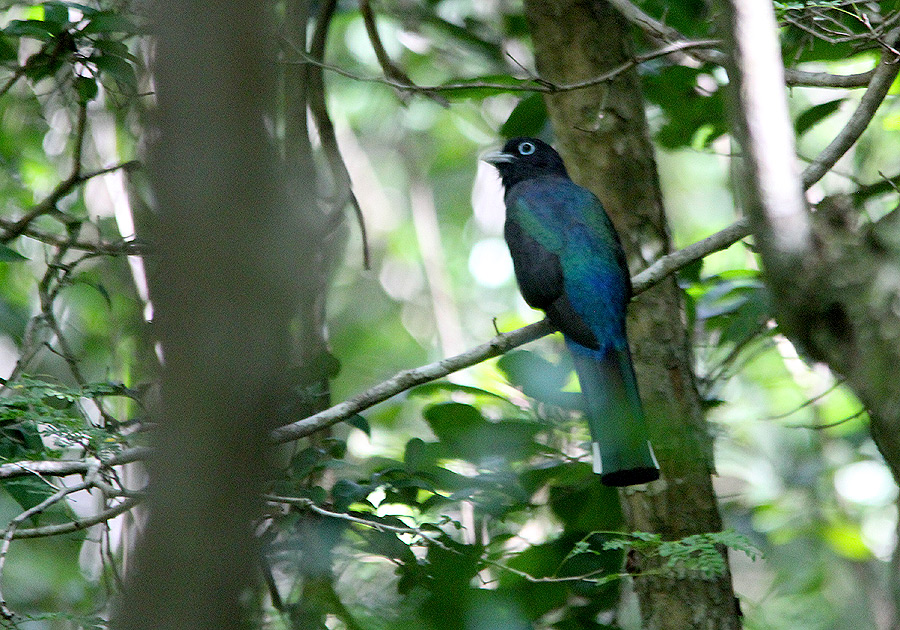
Bad shot of a Black-headed Trogon in the Jungle

We eventually made our way to the The Ixmoja Pyramid--the tallest such structure in the Yucatan at 137'.  The Coba complex was apparently home to some 50,000 Mayans at one point--incredible given its remote location in the jungle today.  As we walked up the path towards the pyramid, we came across a thick ant line crossing the road--about 3" to 10" wide in various places--it was a swarm and nearby in the trees I could see more RED-THROATED ANT-TANAGERS on the ground--but there were other birds including my lifer RUDDY WOODCREEPER of which several zipped form snag, to limb, to root, and branch. Despite the crappy lighting, I managed to make one pretty good shot!
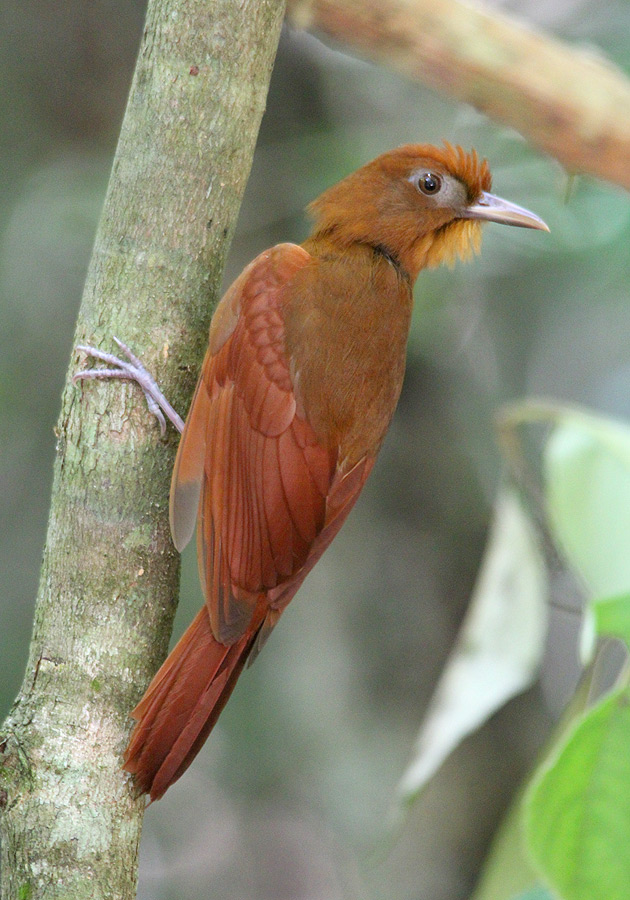
Lifer Ruddy Woodcreeper

GRAY-HEADED TANAGER accompanied the other birds, as well as YUCATAN JAYS.  I spent some time scanning the understory trying to find other birds, but there wasn't much else--I caught up to the rest of the family at the pyramid which we took in as the sun beat down upon the opening in the jungle.
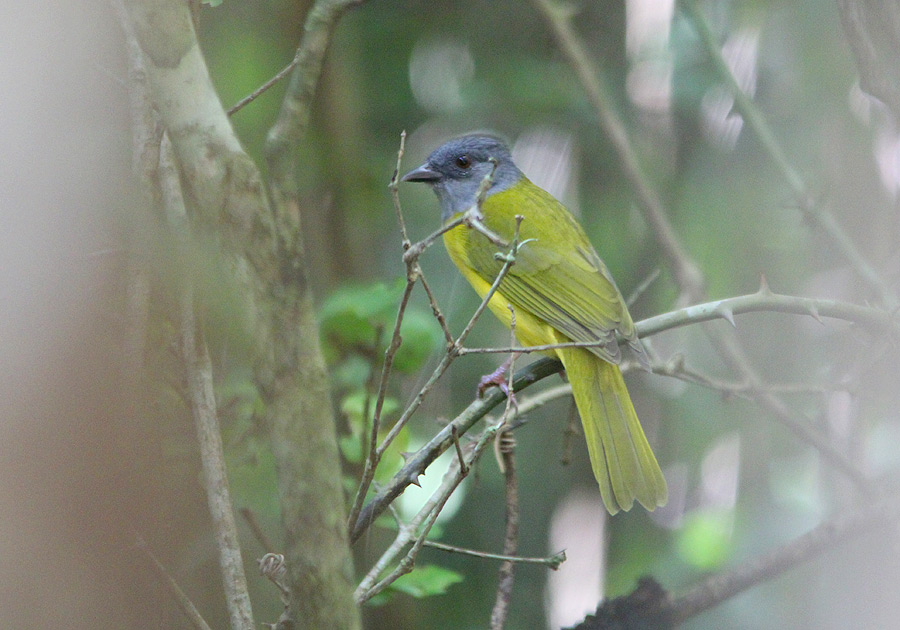
Gray-headed Tanager following an ant line

It was hot--and the kiddo was getting grumpy, so we turned around an made our way back towards the entrance.  I was able to snag one more lifer in a WEDGE-TAILED SABREWING--a rather plain species of hummingbird easily identified by its unique tail shape!  We bought a few trinkets and snacks then hit the road and made our way back to the coast and our resort in time for lunch--Delicious tacos made fresh while we watched.  The rest of the day was spent soaking in the sun, and enjoying the beautiful beach!

Todays eBird Checklists:
Zona Arqueológica Cobá
Playa Paraiso

DAY 5

With our last full day in Mexico, I started early and headed just a few miles up the coast to Yaax Che Jardín Botánico del Dr. Alfredo Barrera Marín--a botanical garden.  I had found this place on my last visit but didn't manage to make it there to look for birds--big mistake as this might be the best birding location along the coast between Cancun and Playa...  I had a few hours, but when I got there the gate was shut--I was a couple minutes early and there was no where to park outside the gate which was right off the highway.  So I did a loop and came back a few minutes later--STILL CLOSED!  But there was a guy behind the gate.  I hollered and asked why the gate was closed--he responded that it didn't open for another 30 minutes!  This is always an issue when you bird in other countries--gardens, parks, and various places you may find yourself birding often go by their own schedule.  If online it says 8am somewhere, they may open at 8--or 8:30, or whenever they decide to.  After pleading with the guy, he let me in to park and I spent the next 20 minutes birding around the parking area.  A flock of  YUCATAN JAYS came through accompanied with my first stellar look at a BROWN JAY.
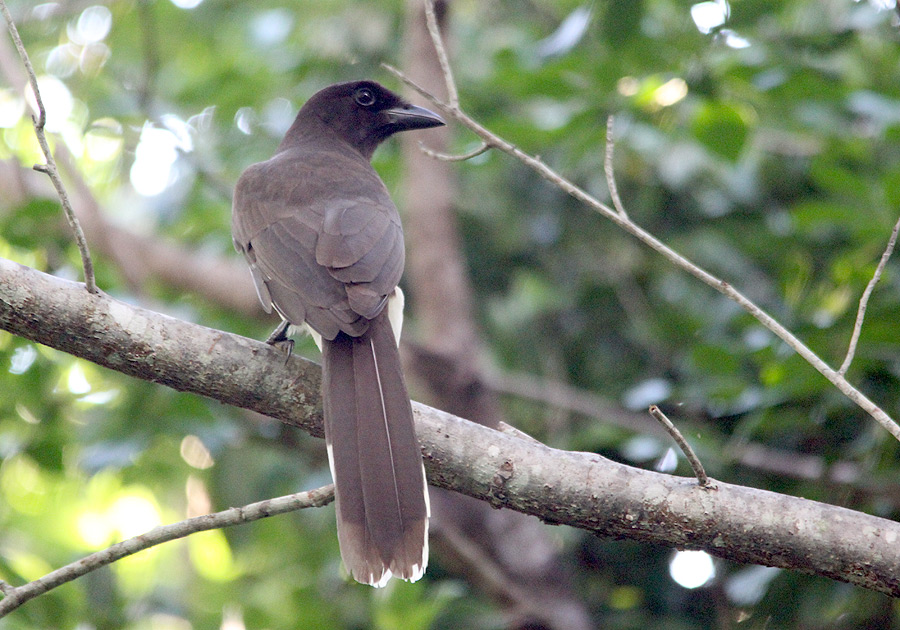
Brown Jay pausing before disappearing in the jungle

The park "manager" soon arrived and after talking for a few minutes he told me I was free to walk the grounds and as I only had about 75 minutes now I busted my tail down the trail.  It was quiet but at the first pull out into an "exhibit" I whipped out my best pygmy-owl imitation and the birds came a flying.  Various warblers from the states came in followed by a surprise GRAY CATBIRD, and finally a lifer--a WHITE-BELLIED WREN, who provided excellent looks.
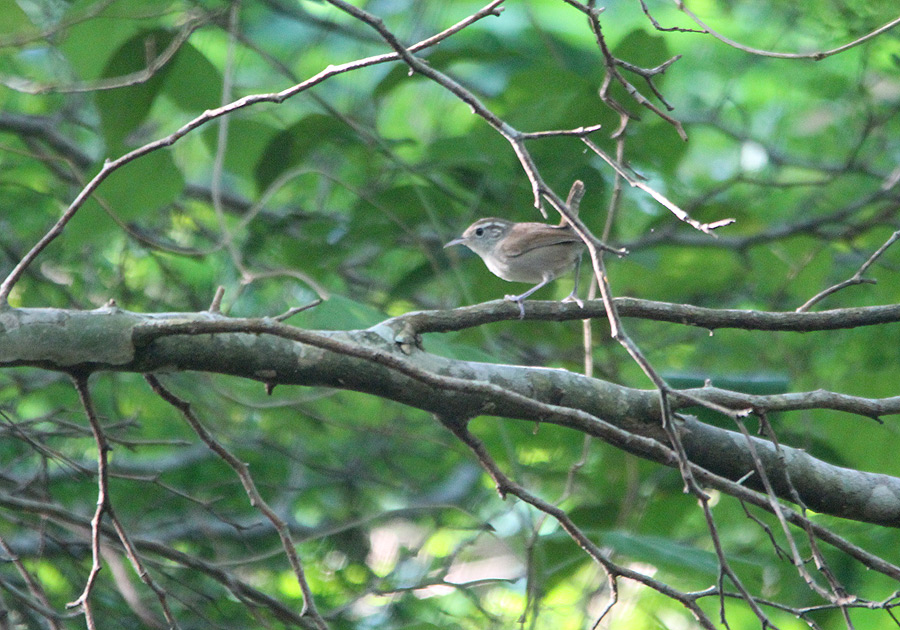
Lifer White-bellied Wren

I kept on down the trail where a NORTHERN WATERTHRUSH bobbed up and down in the middle of the road.  Then form just off trail came the bellowing of a THICKET TINAMOU.  It sounded like there may have been two and I made my way closer to the noise where eventually I had to be within 25'. But despite the scanning the undergrowth, I could never pick out the beast.  My Tinamou list continues to grow, without having ever actually seen one...

At the next exhibit--a medicinal plants exhibit I spent a couple minutes unsuccessfully trying to coax birds form the forest.  I made my way back to the trail passing a cactus garden and eventually coming around a corner and flushing a GREAT BLACK HAWK from the edge of the road.  I saw where it landed and started sneaking towards it, when I heard a squeal form above--another one was perched staring down at me!
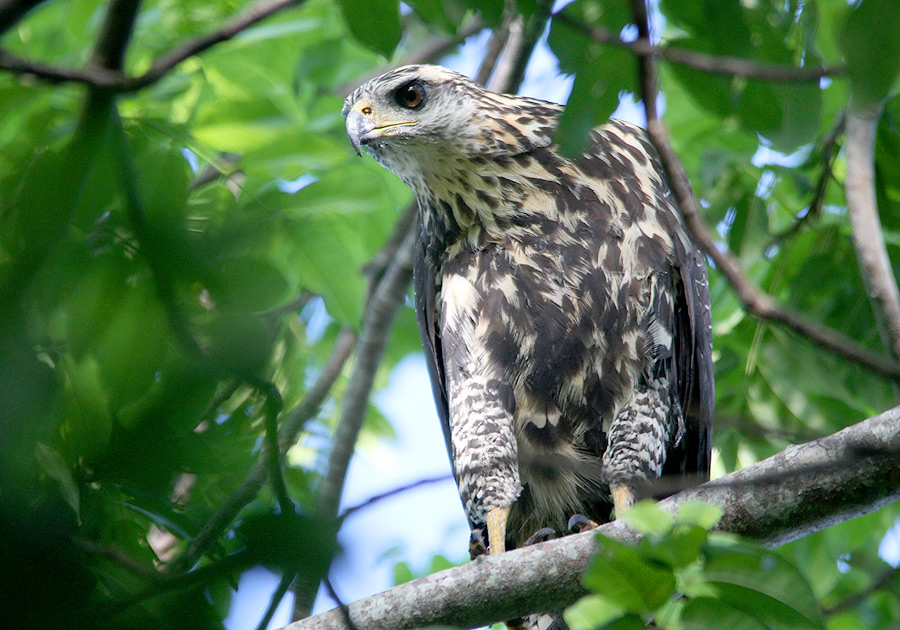
Great Black Hawk staring me down

It was an amazing look and I basked in the opportunity.  All the while I could hear birds calling nearby and there was one call could never figure out.  Looking into the forest I soon found a pair of RUDDY WOODCREEPERS, as well as a flock of YUCATAN JAYS.  A MANGROVE VIREO passed by along with several warblers, and a GROOVE-BILLED ANI.  As I walked up the path I noticed a few ants streaming across the road--I guess that explained the birds!  I came around a bend to where I saw the other hawk land, and it flew as soon as it saw me--then out of the forest a voice hollered at me asking what I was seeing--it was another birder--from Canada.
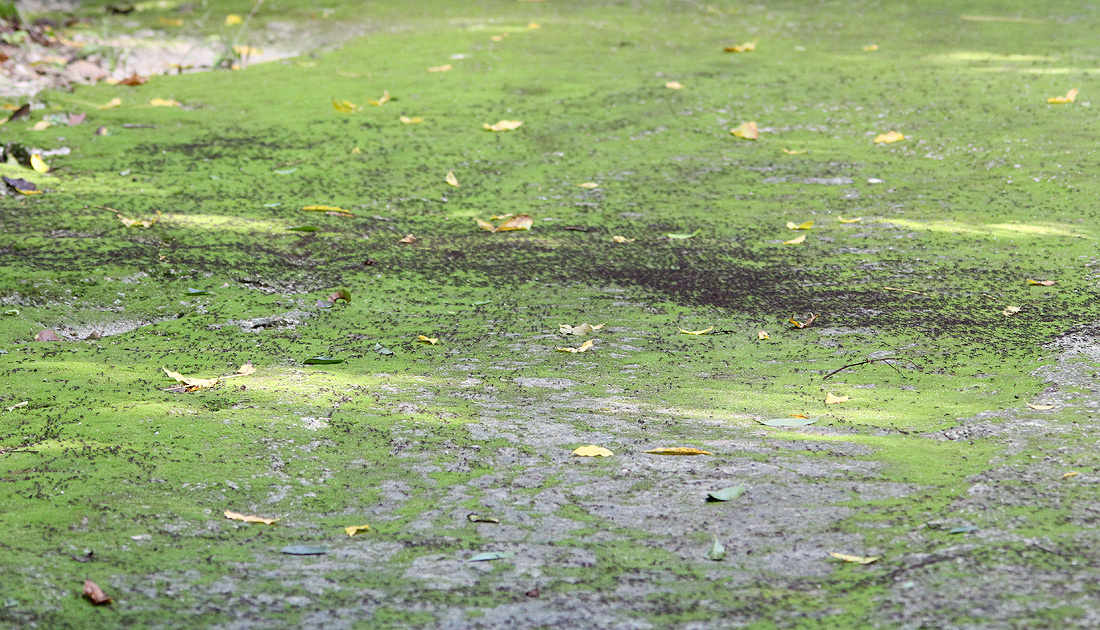
Ant Swarm crossing the road

We started talking and I found out it was his first trip here--and he was with his non-birding wife.  We started walking and talking birds when all the sudden we noticed the ant swarm had literally taken over the road--our path was blocked by 30' wide swath of ants rolling across the road--it was my first real ant swarm--and the birds were following.  RUDDY WOODCREEPER, the jays, anis, and a few RED-THROATED ANT-TANAGERS.  I finally managed a picture of the tanager, as there weren't many birds in tow to look at besides the above mentioned.
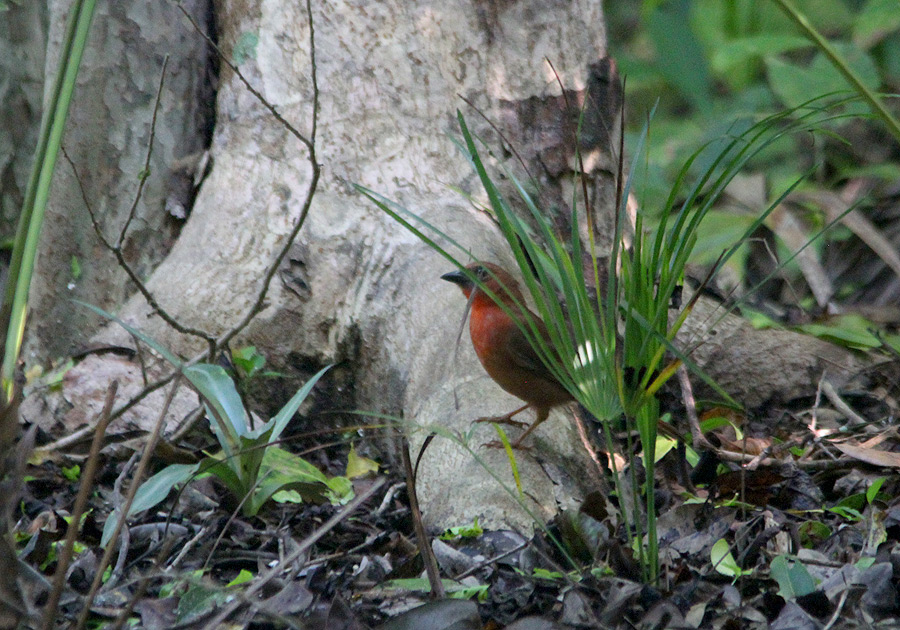
Red-throated Ant-Tanager following an ant swarm

It was great to see, but the number of birds following were a tad disappointing.  We walked back aways to look for the hawk which had moved by now, but quickly found a small family of SPIDER MONKEYS! A great treat!  We followed the troupe for a few minutes until they moved out of sight into the forest!
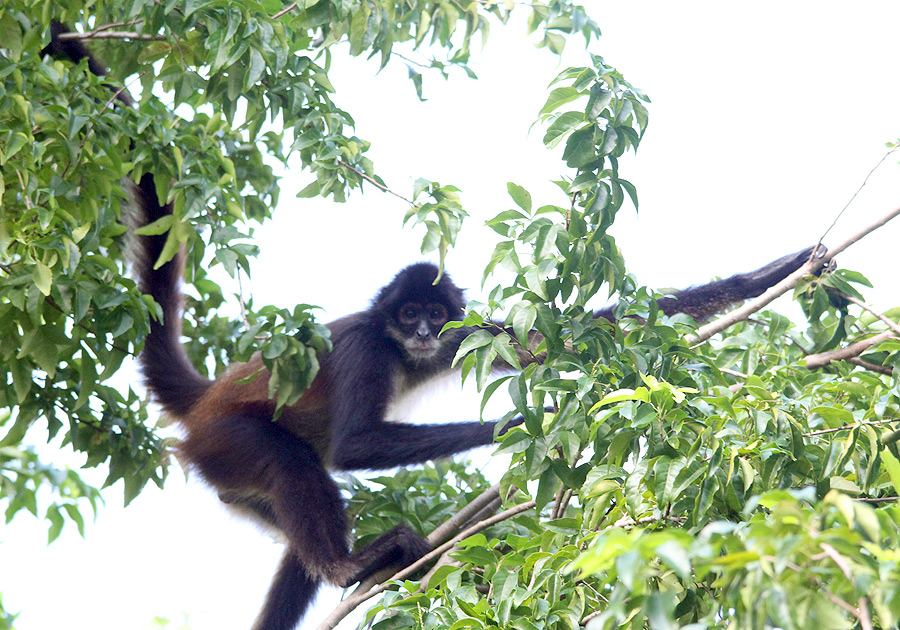
Spider Monkey swinging through the trees
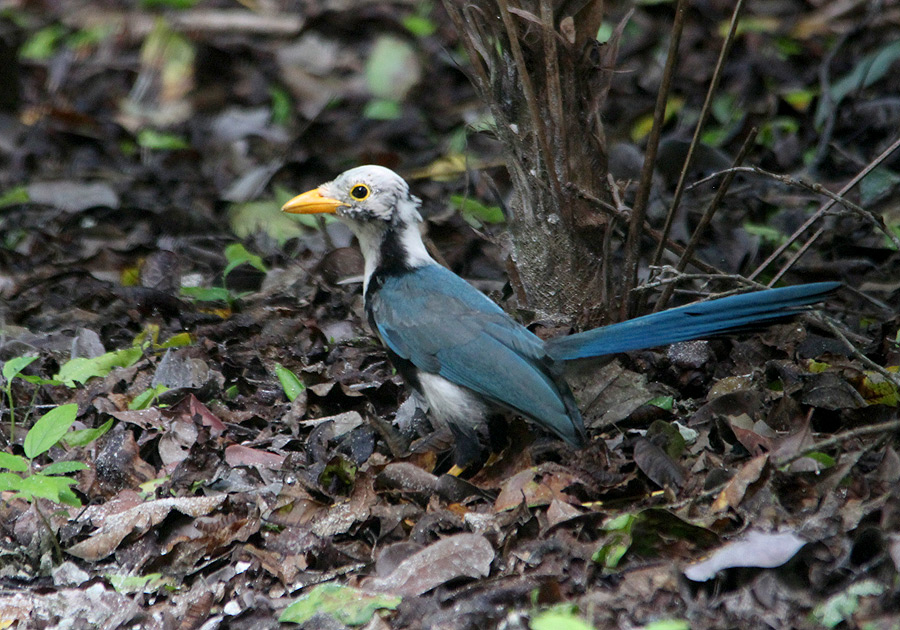
My time had wound down and I needed to run, so we bid adieu and I headed back toward the entrance--but not before I heard a squeaking of tanagers above me--ROSE-THROATED TANAGERS--a small flock moving through the tree tops! Ah, one of my top wants from the area previously, and just fleeting glimpses before they were gone and the forest was quiet again.  I made my way to the entrance and talked briefly with the manager and paid my entrance fee--I think it was like 150 pesos--or about $10.

Stunning young Yucatan Jay

One thing I learned from a post on eBird that I will likely try to use in the future is swing by the afternoon before and talk to the manager to see if you can come in early and bird before the gates open.  It's light just after 6:00am and that means 2.5 hours of light before the park opens.  I read several reports from others who tried this and got permission.  I may very well try this in the future--as it would have given me almost 4 hours here which would have been awesome.  I ticked just over 40 species in my brief stop and made my way back to my hotel.  I had to take the rental back and the rest of the day was spent on the beach and pool enjoying my last moments of the tropics before heading back north.

Todays eBird Checklists:
Botanical Garden
Playa Paraiso

DAY 6
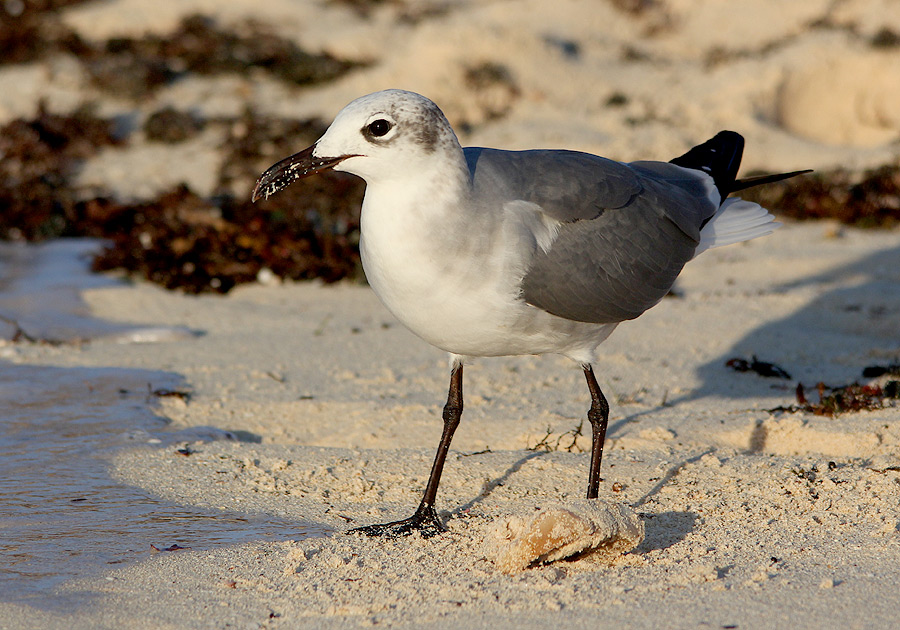
We made a quick loop to the beach first thing in the morning--I hoped there might be a few birds on the sand.  There wasn't much--just a few grackles and LAUGHING GULLS.

Laughing Gull on the beach

We packed our bags grabbed breakfast, then headed to the airport.  Before we knew it we were on the ground in Salt Lake--50 degrees cooler than it had been 12 hours earlier... And the ever yearning for the tropics already coursing through my veins again.

Todays eBird Checklists:
Playa Paraiso

I'd be lying if I said, I killed it birding this trip--just 89 total species tallied over the week.  Of those 5 were lifers, while 21 were new for my Mexico list.  Most of the birding was down from a lazy river, on the beach, or walking to and from meals.  A departure from my usual trips, but a nice easing back into international travel with an infant.  I still have a handful of endemics I need, and I have only grown fonder of this area with my 2nd installment.

PHOTOS FROM THIS TRIP

Photos from Playa Paraiso
Photos from Coba
Photos from Yaax Che Jardín Botánico del Dr. Alfredo Barrera Marín


Labels: , , , , ,

eBird Mobile iOS Beta Release First Look

posted by Tim Avery at
on Wednesday, May 20, 2015 

For those who don't have an iOs device, or just want to see what it looks like without downloading, here are the first looks at eBirds new mobile app called, "eBird Mobile" from the beta release going on right now.  The following is in the release from Team eBird:

Regular users of BirdLog will find that this app works much the same, with a few key improvements. The goal of the eBird app is to make a single, global data entry app for eBird. Using the former BirdLog code as a base, we transferred the existing functionality into the Lab’s development environment, solidified and consolidated the code, rebranded the app, performed some basic bug fixes, and made it free. Subsequent iterations of the app will focus on reworking the user interface, translations, and improving data out functionality. We have also begun development work for Android, and eBird Mobile should be available on that platform in the coming months.

What’s new with eBird Mobile?

  • Free – eBird Mobile is free.
  • Single global version – The eBird mobile app is available in a single consolidated version that works anywhere on earth.
  • Expanded languages – Offers species common names in many local language options, in parallel with the eBird web site. Four-letter quick entry based on common name and scientific name for all taxa globally, as on eBird.
  • Show rarities – Rare species are now indicated on the checklist view, prompting observers to provide more detail.
  • Refined start up screen – The ‘home page’ of the app has been reworked from a usability standpoint, making it clear how to get started entering data.
  • Continuity – App updates don’t cause you to lose existing unsubmitted lists or personal locations and startup is not delayed by taxonomic updates.
  • Data quality improvements – The app more closely matches functionality of eBird web for protocols, and prompts users to be more precise about location plotting.
  • Trip summary – Improved trip summary functionality makes keeping track of your trip list and day list fast and simple.
So here are the screenshots--I'll post a review of the app after I've tinkered with it a bit... The only thing I will say is I expected a better UI and experience right off the bat, hopefully performance is there to make up for the above...


Labels: , , , ,

When Subspecies Matter in eBird or in general

posted by Tim Avery at
on Friday, February 27, 2015 

So I've grappled with this for some time. When do subspecies matter in eBird?  You're going to hear a lot of people say that being as specific as possible is always going to be better than generalizing.  There are numerous users whose lists are filled with subspecies--even when the subspecies is the only form present of a species at the given location. Team eBirds official stance is this:

At eBird we believe it is important to allow birders to collect as much information as specifically as possible. 

Pretty vague, but they also say this a few lines later in their help document about subspecies:

For this reason, we try to allow this possibility for those that feel comfortable making these identifications. If you are not comfortable, or do not understand what the subspecies group refers to, please enter your sightings at the species level.

This is going to be the average eBird user; and in 99% of subspecies cases, the species level is going to be enough information to cover the local taxa. But Team eBird does end with this:

A final benefit for entering subspecies groups is that if they are ever split, we will automatically update your lists as appropriate... We encourage you to try to learn more about the eBird subspecies groups in your area and identify them when possible.

So their stance does actually appear to be use them if you feel comfortable, it will benefit you and us.  But I think they are overselling it a bit.  There are a few species here in Utah I have a bad habit of "subspecielizing" (yeah I just made that up) birds when I create a checklist.  Namely these are "Audubon's" Yellow-rumped Warbler, and "Red-shafted" Northern Flicker.  These are 2 cases where I got in the habit of doing it a long time ago, but I am going to stop.  The reason is simple--in both these cases the subspecies I am naming is the default species found here.  This is common knowledge and from a database perspective if this species ever does spilt they will be able to generalize in the east and the west which form was being reported.  There are several states where this will be problematic, but in those states the solution should be to note either subspecies.  In Utah it really only would matter to note the "Myrtle" subpsecies of Yellow-rumped Warbler as it is going to have far fewer reports and since its not the nominate subspecies it is worth noting.  Same for Yellow-shafted Flicker--reports on a yearly basis can be counted on our hands.  This can be taken into account if a split occurs.

"Myrtle" Yellow-rumped Warbler is not the expected species in Utah

I also have stopped noting "Western" Red-tailed Hawk. I do always make note of "Harlan's", and if any others ever showed up here, I would note them as well.

Composite shot of a "Harlan's" Red-tailed Hawk in Lehi, Utah

There are also a number of subspecies that I would never take the time to report.  "Northern" Mallard, "Blue form" Great Blue Heron--I mean come on these are redundant.  These are again the default subspecies here, and the average birder isn't looking to identify forms of Great Blue Heron.  Obviously, if a "White form" GBHE shows up I think most birders would take the time to note it... but in general this seems ridiculous.  Mallards even more so--99.99% of Mallards in Utah are "Northern".  Taking the time to note this in a checklist isn't adding value at the subspecies level.  The .01% of times you see a "Mexican" taxa it is well worth noting.

The not rare or notable "Northern" Mallard--it's just a Mallard, come on.

Green-winged Teal is another one I don't note--obviously "American" is going to be the typical one here--if I ever saw a "Eurasian" I would take note immediately--that happens quite rarely here in Utah. Western Scrub-Jay is another one folks--if by some miracle a "Coastal" or "Sumichrast's" showed up here definitely worth noting.  But the "Woodhouse's" form is the only species known to occur here--so we probably don't need to note it. Let's not even talk about the subspecies within these subspecies.  The list goes on, Steller's Jay, Marsh Wren, and Spotted Towhee.

It is indeed a "Woodhouse's" Western Scrub-Jay--but it's the only subspecies in Utah.

But then there are birds I "subspecielize" (I really like this term) that I see the real value in.  These are one where multiple subspecies occur in the same area at certain times of year and worth noting.  Dark-eyed Juncos anyone?  This is the obvious case where noting a subspecies has a value.  It is not uncommon to have 4 subspecies at once during migration, when the local and migrant populations are both found--or even during the winter months.  This is one of the rare cases where a common species really does need it.  I also note subspecies within "Merlin" as we seem to get a good mix of "Taiga" and "Prairie"--obviously "Pacific/Black" is well worth noting.

It is worth noting your "Pink-sided" Dark-eyed Junco... or any subspecies for that matter

On the flip side we leave A LOT of these subspecies that are generally the expected subspecies off the checklists.  This is the way I like it and the way I am going to do my listing going forward to keep things clean, succinct, and obvious.  As a birder I challenge you to know subspecies and recognize them--that is something well worth doing.  But for checklists in eBird I don't much see the point of noting the obvious ones.  If splits ever do occur on most of these, the team at eBird will probably write an algorithm (if they haven't already) to correctly filter the split subspecies into their categorically correct species bucket in a given region, time of year etc.

But to each their own right?  Thsi post is not to tell you NOT to use subspecies.  It is one persons opinion on the need for it i ncertai cases.  Do what you feel comfortable doing and what you want to do to track your sightings.  I'm just one dude doing things one way! What are your thoughts on subspecies in eBird.

Labels: ,

eBirding Your Home Town

posted by Tim Avery at
on Friday, February 20, 2015 

I've been tied a lot closer to home the past 6 months with the addition of a son to our family.  It's meant I don't manage to go birding for as long, or as far from home as usual.  I've still managed to do a lot of birding, but really changed my pattern.  One thing I have decided to work on is building out locations in and around Sandy, Utah creating a patchwork of personal birding location in eBird to micro list as I go about my day to day.  It's actually really simple and ends up keeping me in tune with what birds are where around my current home town.

My personal locations in blue--hotspots in red.

It started rather simply a couple years ago.  I had my house as a personal location, my neighborhood as another, and then I created a spot for a woodlot along my drive home from work.  There are two hot spots along my routes to and from work--the Sandy City Cemetery and Dimple Dell Park. I also created a location a few years ago at La Caille for the trail down to Quail Hollow Park, that is now listed as Little Cottonwood Canyon -- Mouth (incl. La Caille). Larkin Sunset Gardens also has a hotspot but I rarely make it up the road to this location.  East of I-15 and in Sandy City these are the only hot spots.  There are a couple spots long the Jordan River, and of Course the Sandy Urban Fishery.  But you get the idea, there just aren't a ton of birding spots on the map.  So I changed that.

Sandy -- Porter Rockwell Trail at 10600 South

I started by creating two spots along the Rail Trail (Trax)--one at 9000 South and another at 10600 South.  The locations were named accordingly Sandy -- Porter Rockwell Trail and Sandy -- Expo Station @ 9000 S 146 E. I decided to use the eBird naming schema for locations in a given area.  Since these were all personal I used Sandy as the location with each sub location following dashes.  Next I added Lake Hills Cemetery on State Street, and then another location along 10600 south at about 1050 East just past the Dimple Dell Rec Center.  I also had a location that I rarely used listed at the Sandy Amphitheatre, which I adjusted to Sandy -- Quarry Bend and Amphitheatre.  From here I branched out and while out and about in the past week I created 3 location along the I-15 corridor just east of the freeway.  One near 9000 south at the old Classic Fun Center where a small ditch has a marsh habitat.  I also created two locations around the Southe Town Mall.  One north of the mall along Centennial Parkway  where a tiny pond is surrounded by marsh.  And another along the freeway the length of the west side of the mall where these is an expansive marsh.

Sandy -- South Towne Center Marsh

Deciding I needed to break Sandy down even more I decided to create locations at a number of local parks: Storm Mountain Park, Lone Peak Park, Bell Canyon Park, Pebble Brook GC, Falcon Park, Flat Iron Mesa Park, and Quail Hollow Park.

Sandy -- Flat Iron Mesa Park

I didn't create spots for every park, but ones I pass or spend some amount of time at on a monthly basis.  My goal going forward is to submit at least 1 list per month at each location in Sandy, and eventually work on getting a list for every week of the year to create a full data set for these locations.  It won't be comprehensive but will give me a good overlay of the entire city!

Generally the lists contain a lot of Rock Pigeons and European Starlings--a realistic look at what most urban birding looks like.  But the lists get sprinkled with Mourning and Eurasian Collared-Doves, Americn Robins, Western Scrub-Jays, Black-billed Magpie, American Kestrel, House Finches and Sparrows, California Gulls, etc.  Just for laughs I have submitted 61 Checklists for the Sandy Ciy Cemetery--comprising exactly 14 species! With this micro birding there are far more checklists than species generally.

American Kestrel

On a daily basis I try to enter lists when I stop at lights or keep an eye out for birds while driving.  I also usually stop at one or two locations on the way home for a just a couple minutes to listen to what's calling. It gives me the opportunity to fit in a little birding every day away from my home and office.  It has also made me really aware of specific birds that have set up territories along the route. I have 2 spots where I know American Kestrel are on territory; 1 Red-tailed Hawk that frequents a certain woodlot; and of course the specific locations where you almost always find American Crow in the city.

American Crow

So if you can't get away from home as much as you'd like, or you prefer birding locally, without a car, on foot, bike, or scooter I suggest creating your own patchwork of local birding locations and working on micro listing your area. Not only will you provide valuable data for citizen science, but you'll really get to know the birds around you.

If you'd like me to share any of my personal locations with you just let me know--I don't suspect a lot of folks go birding at many of these places, but if more than one were interested I would certainly love to add more data from more birders!

Labels: , , , ,

Status and Distribution of "Western" Flycatcher in Utah?

posted by Tim Avery at
on Wednesday, February 11, 2015 

Sorry to get scientific with the post title--but this post will delve a little or a lot bit in to the realm of science--depending on how you want to look at things. I am not a scientist or a biologist, but on a daily basis I analyze data, and use that data to make predictions, hypotheses, and come up with solutions to problems.  Today I'm not solving a problem, but more or less looking at a problem and proposing some ideas.  These ideas came to fruition after a phone call with Rick Fridell about a number of reports in eBird of Pacific-slope Flycatcher.  Back in 2006 Rick and I found 2 empids at Red Hills Golf Course in January.  Both birds represented the first winter records of empids in southwestern Utah--and the only in eBird for Utah during the winter months.  Historical information about empids in Utah is quite lacking so there may be some from pre-2000, but the data just isn't there to look at.


One of the birds was rather straight forward and was a DUSKY FLYCATCHER.  The other bird was a bit more troubling as it was a "WESTERN" FLYCATCHER, so either a Cordilleran or a Pacific-slope Flycatcher.  At the time the general though was--it's winter, it's a Western-type Flycatcher, it's not calling, so it's best left to just "Western" Flycatcher species.  However, conventional wisdom at the time suggested that ONLY Pacific-slope Flycatchers over-wintered in the interior southwest, with a handful of reports annually in southern California and Arizona along the Colorado River.

Dusky Flycatcher in St. George from January 2006

But I'll digress, at the time I left it as just a spuh and moved on.  Later that same week, Rick found another "Western" Flycatcher in Washington County, making it 3 empids in one week in winter.  Fast forward to this week and the phone call I had with Rick.  I am for the time being helping review sightings in Washington County on eBird--Rick will be taking over in the near future, but I was doing some cleanup and noticed he had submitted a handful of reports for PSFL. In all 11 reportfrom the spring and fall. This was unexpected for me; even more so was that one checklist from May 27, 2012 had 5 PSFL included on the report. Unprecedented in Utah.

If you don't know Rick, quite frankly he's probably the best birder in Utah hands down.  He's been responsible for numerous state first records, and finds great birds on an almost weekly basis down in Washington County.  So when Rick added these birds to his lists, he immediately had my attention.  Basically what Rick shared with me, was that birders in Arizona and Nevada birding at lowland habitats during migration were not finding Cordilleran Flycatchers, ONLY Pacific-slopes.  During the spring calling birds were identified by their audibles, and based off banding projects it was basically assumed that all Western's at these sites were actually PSFL's.  What?

This one really through me for a loop.  Although I was sure this species migrated through Utah, I thought that it was impossible to say for sure which species we were actually seeing during migration. De-facto I called everything in Utah a Cordilleran--even birds not calling.  Have we been doing this wrong for years? Is it only safe to identify on territory or calling Cordilleran Flycatchers? Were we actually seeing Pacific-slope as the majority of valley and lowland Western Flycatchers during migration?  Was this a Pacific-slope Flycatcher?

Migrant "Western" Flycatcher at Fontenelle, Wyoming in May 2005
Due to inland location and overall elevation it was ID'd as a Cordilleran.
However, Fontenelle, is a "lowland" trap by Wyoming standards.

The assumption that the lowland birds are all Pacific-slope seems to go hand in hand with the idea that Cordilleran Flycatchers migrate through the mountains and highlands to their wintering sites, predominately in the mountains and pacific slopes of south central Mexico.  Parallel ideas are that of birds like Cassin's Vireo, Townsend's, Nashville, and Hermit Warbler, and Rufous Hummingbird.  All  of these species are rare and some non-existant in spring in Utah.  Some do show up occasionally, but these are predominantly only fall migrants in Utah  None-the-less they are only found during migration--like the speculation of PSFL and its occurence here.

Hermit Warbler interestingly are rarely if almost never found away from high elevation sites with a coniferous component in the interior southwest during the fall.  While all the others tend to show up at various elevations and habitats.

So I've droned on--but lets actually look at some maps I generated via eBird and customized to show information about Cordilleran and Pacific-slope Flycatchers.


This first map shows the year round range (via actual detections in eBird) of both COFL and PSFL.  COFL is shown in blue; strictly in the mountain west through central Mexico.  PSFL is show in red from Alaska to southern Mexico on of all things the Pacific coast and slopes.  The purple blocks represent overlap where both species have been or are reported.  Much of this is migration and winter grounds.  Note the interior range of PSFL into Washington State and Canada almost directly north of Utah.

Do we assume these birds migrate "around" the Great Basin, following the Sierra Nevada slopes and the coast, north and south during migration, or is it more likely they shoot straight over one or both directions?  Looking at this map is seems almost impossible that this species misses Utah, and that in all likelihood a large number pass through at least during the fall; but presumably also during the spring.


The map above shows year round Cordilleran Flycatcher reports from eBird specifically in southwest Utah. The light green spots represent breeding reports from what mostly appear to be high elevation sites as they should.  The blue and orange dots represent migrant reports  You'll notive that while there are numerous locations around the light green dots, there are alos some out in low laying areas; notably around Las Vegas and St. George.  The dark green spots represent overlap where birds have been reported at a minimum of at least spring and/or fall migration and the breeding season.  Again the majority of these dark dreesn show up at the high elevation sites.  ONe thing to note is that there are no winter records from this region.

Well what about Pacific-slope Flycatcher reports? Below shows the map of reports year round from the same region as above. Take a look...


There are obvioulsy much fewer reports on this map; and that is expected. Afterall a large portion of the map is high elevation coniferous forest around Flagstaff, the North Rim of the Grand Canyon, and throughout southern Utah.  This is the breeding habitat of COFL.  Of note there are no breeding season reports from this area; there were several reports from the first week of June at lowland sites around Las Vegas which presumably are late northbound migrants.

The interesting thing about this map is the clear data points to the west, southwest, and south of Utah, basically everything around our fair state.  Yet in Utah; nada. There is something wrong with this picture, and had Rick not brought this to my attention, I don't know how long I would have gone before actually looking at these maps.  I think its a fair assumption that the lack of reports in Utah is not due to the fact that they don't occur here; but instead is due to the fact that physically they look the same as our Cordilleran Flycatchers.  How many Pacific Slope Flycatchers have been right underneath our noses? I pulled up the list of Cordilleran Flycatcher sightings just from Lytle Ranch.  Every record occurs in spring or fall migration and in all there are only 22 individual birds reported from 17 dates. That's actaully very slim numbers in comparison to let's say Dusky Flycatcher where there are over 50 indicvidaul reports.

The last figure I created below is of the winter reports of both species of "Western" Flycatcher.  In pink you can see PSFL, and in blue is COFL.  The purple dots along the Pacific slope in Mexico represent overlapping reports.


Aside from 4 or 5 wintter reports in America for COFL--all east of El Paso, Texas; all other reports in the lower 48 in winter are of PSFL.  Notably in the desert southwest in rizona, California and along the Colorado River.  So what does this mean?

I went into eBird and changed all my spring/fall lowland sightings in Washington county to Cordilleran/Pacific-slope Flycatcher. There are now 16 reports in queue to be reviewed for PSFL in Washingtong County during the spring or fall with an additiaonl 7 or 8 Pac-slope/Cordilleran already approved.  I used that nomenclature for the time being as it is safest.  However, where Rick has heard the vocalizations it can likely be said his birds were indeed PSFL.

But what is the true extnet of this species in Utah?  Does it extend beyond the reaches of Washington County?  Realistically how mnay Western Flycatchers submitted to eBird from lowland sites around the state were heard vocalizing? And what is the typical migration pattern for Cordilleran Flycatcher?  I for one will be taking more time to listen and make sure I know this vocaliztion this spring whne I hit the field:

Labels: , , , , ,

eBird and the Issue with Domestics

posted by Tim Avery at
on Thursday, February 5, 2015 

So I love eBird--you know this if you've read my posts in the past.  I have a few gripes with some things they do wrong--its a fact that the software is pretty amazing, but there are some very easy ways to make improvements that will give users much more control over how they view data.  One such improvement that I haven't spoken about in the past is the ability to filter out DOMESTICS.  Love them or hate them (I'm in the latter camp) I've never seen the point in having the ability to add domestic birds into checklists; and then display that data in search results and lists for locations.  Simply put the birds ARE NOT WILD!  They are not recognized as wild species, and in my opinion they clutter things up in the data.  Some people really seem to enjoy putting them on their checklists though.  As birders we know they occur and in general know where they occur.  So why put them on checklists?

I am having trouble finding eBirds official reasoning for this, although I suspect on some level it is because they do have an impact on native wildlife; and perhaps there is some interest in local populations of domestic fowl, etc.  So I can be okay with these being available as inputs on checklists and outputs in data.  But what I would love to see is the ability at a user level to either HIDE ALL domestics in submission forms and in output data as a setting.  If I could go in and switch a toggle that says I don't want to see this; for me personally it would be an improved experience.  There could also be the ability to filter them out in data outputs.  This is actually still my biggest gripe with species maps, lists, and other data outputs.  The general lack of filtering ability.  The filters they have set in place are location, season, and year based. All great tools. But more complex filters to hide or show "spuhs", domestics, hybrids, etc would be really useful when looking at output data.  Here is an example...


I pulled up the bar chart for the Salt Lake International Center.  Right at the top of the list we have2 domestics, then a either/or (that's like Ross's/Snow Goose). A few more down is another domestic, then a spuh.  All said the list has the 197 wild species + 22 "other taxa".  These others are the domestics, the hybrids, the spuhs, and the either/ors.  It's all valuable data, but maybe I am a purist and only truly care about actual wild occurring species.

Now to be honest this isn't a bad list by any means--197 to 22 is a okay ratio.  Let's look at a bigger less manageable list--the Utah statewide bar chart. 458 Species and 168 other taxa.


Out of the first 15 "species" line items, 8 are OTHER TAXA.  Now waterfowl in general is like this since there are lots of hybrids and domestics.  But going down the list, almost every section of 15 species has 1 of these other taxa. Gulls are particularly ugly as well!


Okay so how do we take care of this.  Much like my suggestion to add the ability to toggle on or off invalid sightings on the maps page; there would be a simple filter on the bar charts or any page that has output data that would allow us to filter this other junk out. A quick redesign of the top of each table and it would be easier to read, and create a nice placement for a filter button.


I already feel better jsut cleaning up the table header :)  So lets see what would happen when you click the "Filter This Checklist" button.


You would be able to filter by time of year, date, a number of toggles for what species types you want to see, and hell, lets even throw in the ability to show invalidated reports--this will eb my life long goal with eBird I think.  So if we were to go through and turn all the species filters off except for wild like so:


The output would change and we would see the following, removing all the spuhs, hybrids and such--giving us a real total for the wild species in Utah:


And of course just for laughs if we were to go in and adjust the toggle for invalid reports the screen would change ever so slightly to now show invalid species in a red (the abundance marker would be red as well), and next to the species total would list the invalid species as well, keeping thisngs clean.


Maybe its just me, but this tool can be used in so many ways, and make eBird even better for its users.  I've seen some crazy stuff put on checklists in the past.  Park ducks and gees from an aviary. Emu and Ostrich from what are obviously farms.  Guineafowl on private property; a number of exotic ducks again on private property, or public ponds operated by private entitities.  I am a birder, and I really only have an interest in teh free flying wild stuff.  Don't get me wrong there are some free flying escapees--and I think that is a hole other classification of birds that we could add into the database--the ability to mark something as a free flying escapee on a checklist would add a new dyanamic.  Mandarin Ducks, Bar-headed Geese, Pochards, Budgies, etc.

Free Flying Escaped Bar-headed Goose in Provo

What I am getting at is I don't really care what they allow people to put into the system.  I get the importance of tracking domestics (to a certain extent); but that's not something I will ever do.  Adding more rich features to enhance the user experience of the data output will only make eBird more valuable to its users, researchers, and team eBird.

Labels: , , , ,


UTAH BIRDERS FLICKR POOL


    SEE MORE AND SHARE ON FLICKR