Utah Birds, Utah Birding, and Utah Birders. Promoting the sharing of information, and the conservation of habitat for birds in Utah and elsewhere. We are a group of people who want to share what we know, and create a positive birding experience in Utah.

BIRDERS BLOG

a blog by and for Utah Birders

eBird Mobile iOS Beta Release First Look

posted by Tim Avery at
on Wednesday, May 20, 2015 

For those who don't have an iOs device, or just want to see what it looks like without downloading, here are the first looks at eBirds new mobile app called, "eBird Mobile" from the beta release going on right now.  The following is in the release from Team eBird:

Regular users of BirdLog will find that this app works much the same, with a few key improvements. The goal of the eBird app is to make a single, global data entry app for eBird. Using the former BirdLog code as a base, we transferred the existing functionality into the Lab’s development environment, solidified and consolidated the code, rebranded the app, performed some basic bug fixes, and made it free. Subsequent iterations of the app will focus on reworking the user interface, translations, and improving data out functionality. We have also begun development work for Android, and eBird Mobile should be available on that platform in the coming months.

What’s new with eBird Mobile?

  • Free – eBird Mobile is free.
  • Single global version – The eBird mobile app is available in a single consolidated version that works anywhere on earth.
  • Expanded languages – Offers species common names in many local language options, in parallel with the eBird web site. Four-letter quick entry based on common name and scientific name for all taxa globally, as on eBird.
  • Show rarities – Rare species are now indicated on the checklist view, prompting observers to provide more detail.
  • Refined start up screen – The ‘home page’ of the app has been reworked from a usability standpoint, making it clear how to get started entering data.
  • Continuity – App updates don’t cause you to lose existing unsubmitted lists or personal locations and startup is not delayed by taxonomic updates.
  • Data quality improvements – The app more closely matches functionality of eBird web for protocols, and prompts users to be more precise about location plotting.
  • Trip summary – Improved trip summary functionality makes keeping track of your trip list and day list fast and simple.
So here are the screenshots--I'll post a review of the app after I've tinkered with it a bit... The only thing I will say is I expected a better UI and experience right off the bat, hopefully performance is there to make up for the above...


Labels: , , , ,

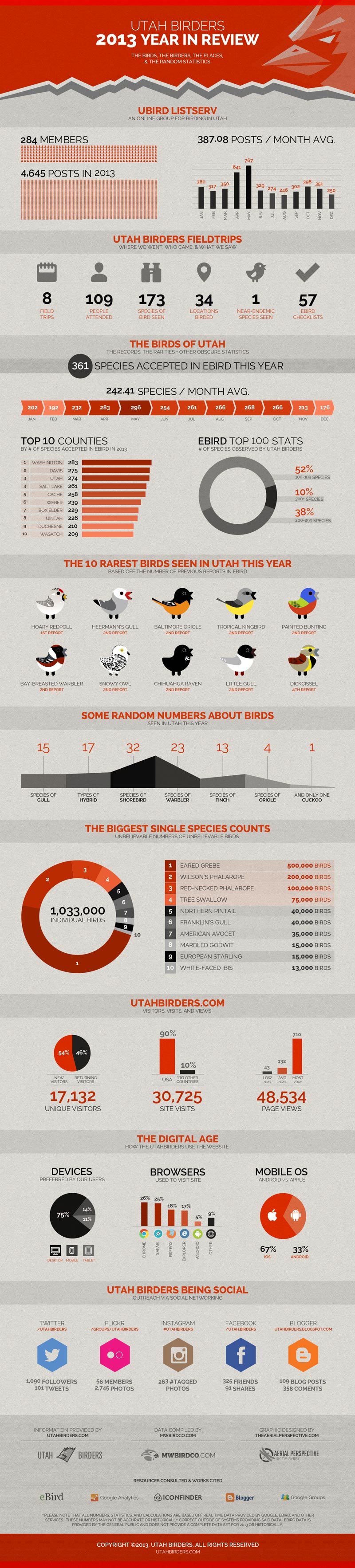
Utah Birders 2013 Year in Review

posted by Tim Avery at
on Tuesday, December 31, 2013 

Without further ado, here it is! Click to view full size!


Labels: , , , , , ,

When My Lens Got Foggy

posted by Tim Avery at
on Thursday, July 26, 2012 

My senior year of college I asked and my dad agreed to help me buy a a Canon 100-400 IS lens so I could work on wildlife photography.  I was graduating with a degree in Studio Art and had concentrated on photography and graphic design and wanted to do wildlife photography.  I remember the week I got the lens, taking it out on campus right as spring migration was heating up.  I took what is still my best photo of a Yellow-bellied Sapsucker, along with a handful of shots of species I haven't photographed since that spring in Wisconsin 7  years ago.  It was a spectacular lens, especially for someone who had used cheap plastic lenses the previous couple years.  Night and day as they say.

Yellow-bellied Sapsucker taken with the
Canon 100-400mm lens in 2005.

I had agreed to pay my dad back for the lens, but after it became apparent that I wasn't going to make it as a wildlife photographer, and that the stiff job market at the time kept me working in retail for a year--he just told, "don't worry about it.".  But a year after that I finally had a job, and some money in my pocket--so being a ripe young 24 year old, I went out and made a lofty purchase of a Sigma 50-500 lens to accompany the Canon.  I thought the 500mm would bring me closer, and better pictures--but part of my inexperience was that I didn't realize the lenses were in different leagues.  The 500 took pretty good images--but I never loved the colors I got and it just didn't produce the same quality.  It was a cheaper lens, but occasionally it found it very useful, and it became a staple in my camera bag.  It was a useful backup lens for years, and the range form 50-500 made it worthwhile to use when I was in a location where the birds and the scenery were both on my mind for photos.

Me with the old (new at the time) Sigma 50-500mm lens in 2006.

Early in 2011 I started noticing that quite a few pictures through my Canon were coming out soft.  I could see dust inside the lens, there were blurred shots because the image stabilization didn't appear to be working all that great, and in general unless a bird was within 20 feet, the pictures were just okay.  I made it work most of the time, and despite being worried about how the lens would perform in Costa Rica last summer, I failed to get it repaired because I didn't want to spend the money at the time.  And I will admit I likely paid for it in terms of quality of a lot of what I photographed while there.  Afterwards I kept at it, until this winter when I was photographing hawks and took a lot of bad photos.  I switched too the 50-500, which in contrast seemed to be taking better pictures.  Looking back I now realize how bad the Canon had gotten, while the seldom used Sigma was still like new.

Harlan's Hawk photo taken with the old 50-500mm Sigma 
this past winter.

I recently did the math and guess that I shot anywhere from 150,000-250,000 shots through the Canon.  Shooting anywhere from 20,000-40,000 shots a year (mostly wildlife) I would say I probably got the lenses worth out of it.  As the winter wore on I was using the Sigma everyday, taking around 200 shots a day for several weeks as I spent my lunch hours watching wintering raptors.  Then one day my camera was on my desk at work, half in it's back, but unzipped, when I turned and my chair arm snagged the backpack pulling it off the desk, only a couple feet high.  But when I looked down I could see the lens was separated from the camera body, and the damage was severe.  The bracket was still attached to the camera, and all the screws that held it to the lens had pulled loose.  The digital ribbon inside the lens was torn in half, and a number of gaskets were bent.  It was a mess.

I put the 100-400 back on the camera and put the Sigma back in its boxes figuring, I would take it to a repair shop sooner or later to see what they could do.  since then the 100-400 has been my staple.  I have seen the same quality issues, but as with the previous year made it work.  As we have been planning for Peru, photography has been heavy on my mind.  This is likely to be a trip I won't be repeating any time soon--so I wanted to make sure everything I photograph is as good as I can make it.  And the Canon lens had me worried.  So after weeks of deliberating on what to do--I finally bought a new backup lens.  I honestly wasn't sure what to do--I thought about getting another Canon 100-400 to have a new crisp clean lens.  I would send mine back to be repaired and then sell it.  Or would I spend a 3rd less and get something like a Tokina that had descent reviews, but was noted as being "no Canon" in various reviews.  It was a true backup lens.  Then there was of course Sigma.  I had always been keen on them, but the same lens no cost more than the Canon.  It had been major league upgraded, but I couldn't see myself spending more on a lens that if it had similar glass to the last one, wasn't worth the price tag.  That left the Sigma 150-500 lens.  An image stabilized lens but about 1/2 the price of the 50-500.

Reading reviews they were highly positive and it seemed like a right choice.  With less of a zoom factor I imagined the distortion may be less, and with image stabilization it had something the last lens didn't that made it all the better.  So I went ahead and ordered it.  I got my Canon ready to ship back, but decided I would wait to test the Sigma out to see if I had mad ea good decision, or if I would be instead sending it back, and trying something else.  Yesterday afternoon the package arrived at my house, and when I got home, I unpacked it, gave it the once over, and hooked it up to the camera.

The new Sigma 150-500mm lens

The first bird to come in was a female black-chinned Hummingbird, and in a volley of shots, not one came out crisp and clear.  I had forgot to change the settings, and still had the ISO at 1600 from the night before.  Everything got washed out with the flash and it wasn't a good test. I decided to wait till the sun dipped behind the Ponderosas in my neighbors yard so the lighting would be more adequate for the flash.  After 7:00pm I was back at the window, and the male Rufous Hummingbird that has been King of the Mountain all week started his routine.  After toying with the settings a little bit, I started to get the pictures I had been hoping for--but even better.

Rufous Hummingbird with the new Sigma Lens

It was a start contrast to the quality I had come to know with the beaten up Canon lens--the Canon that was a far cry from its once top of the line zoom self.  It was also night and day between the old Sigma in terms of clarity, color and quality.  I was getting the shots I never got with the previous Sigma.  The hummingbird only came in 2 or 3 times, so I made the best of it and was able to unleash a flurry of shots each time it stopped by.  Below are two shots, the one on the left taken today with the Sigma, and the one on the right taken a few days ago with the Canon.  Same time of day and location, very similar settings, but very different results.

Left photographed with Sigma, Right with Canon

This of course was just one test with one bird coming to feeders. I will need to take it up in the mountains and out to the lake to see how it performs in other settings.  But for a first glimpse into what it can do I am very happy with this lens.  I have a feeling that this will be the primary lens I use in Peru and after.

Closeup of the New Sigma Lens

Now talking about the actual lens there are some major differences from the predecessor worth noting.  First is the 150-500mm range, which I do think I will appreciate more in the long run.  The lens hood has been updated to a similar style as the canon instead of a 1/3 hood like many short lenses use--this provides more protection for that front element which is never a bad thing.  Image stabilization!  This might be the single best improvement made to the lens.  At 500mm it is a big lens, and heavy, and when hand held it's sometimes hard to keep things crisp.  The IS should help with that, and overall improve the quality of the shots.  The weight of the lens is also less than the previous version.  I don't know the exact amount, but it seems like a pound or more of weight was cut out of this lens.  The flip side is the reason.  The outer body now appears to mostly be of a resin, and/or plastic instead of the metal body of the previous version.  Internal parts till appear to be high quality, but the the casing does have a"cheaper" feel about it.  That is probably the only concern I have, but the lighter weight may be worth it.

One more of a beautiful Rufous Hummingbird

All in all I can say I am happy with the update, and having a new lens is always a nice feeling.  The true test will be how it performs for the 2 weeks in South America. Until then it's all just practice I guess!

Labels: , , , ,

Nikon, Always Top Notch

posted by Tim Avery at
on Thursday, April 12, 2012 

It all ended with a smash!

What was left of my Nikon Sky & Earth after the fall

But let's rewind to May 2005 where it all began.  I had just graduated from college and was headed to Wyoming for my 3rd summer of field work with Rocky Mountain Bird Observatory.  For the previous 4 years I had fumbled around Wisconsin, Utah, Wyoming, Oregon, New Hampshire, Colorado, and various other states with a spotting scope that left a lot to be desired.  I don't remember the brand, but I remember the 20-40X50 power scope was a piece of junk--but a piece of junk a kid in college working part time on minimum wage could afford.  And that scope saw lots of birds.

Great Gray, Northern Hawk, and Snowy Owl had been viewed through that scope. Scarlet Tanagers, Blackburnian Warblers, and Veery had graced me with views through the glass.  For the $100 or so dollars I paid for that scope I got my moneys worth--but every opportunity I had to look through better scopes left me envious of what I didn't have.  So with college behind me, and an entire summer to spend hoofing around Wyoming I decided I needed to drop a little bit of money on a better scope.  I actually spent about a month trying to decide what to do.  I could afford something in the $300-500 range.  I wanted something in the $2000 range.  What I found at the time is there wasn't a whole lot in between those two that I saw value in--and there was no way I was going $2000 in to debt for a spotting scope.

So after going to Sportsman's Warehouse a 1/2 dozen times and looking through every scope under a grand, I chose a reliable brand that I had been using since I started birding a decade earlier--Nikon.  The 20-60x80 Nikon Sky & Earth was a beefy scope.  It came in a $549 and although a little bit out of my price range, it was well worth the price to move up from the scopes around $200.  When I got it into the field it made all the difference in the world.  Shorebirds, Gulls, Lark flocks, distant Waterfowl, Grebes, and Loons all were brought in much closer and clearer than previously.  It still wasn't anywhere near top of the line, but man was it an improvement, and it got some serious usage.

The Old Faithful Sky & Earth looking at Gulls

Fast Forward to the winter of 2011-2012 and you would still find me lugging the same Nikon Sky & Earth with me along the dikes at Farmington, across the landfill in Salt Lake looking at Gulls at Lee Kay, at the south shore hoping to turn up a Snowy Owl, and various other places.  This scope had like my previous scope seen a lot of birds.  During the Park City CBC the mounting bracket came off.  I "fixed" it with Super Glue, but it wasn't long before it came loose again--this time in the middle of a country road in Lehi, Utah.  I had turned my back to grab my camera when I heard the crash.  Turning back around I already knew what lay in wait.  The scope on the ground, obviously misshapen inside the scope case.  Picking it up I could tell it was in 3 or 4 pieces--The Sky & Earth had met it's maker.

But it wasn't the end of the road for my scope.  See Nikon has this wonderful 25 Year No Fault Warranty.  That is, Nikon will repair or replace any binocular or scope regardless of how it became damaged and all you have to do is cover shipping and handling plus a $10 fee.  It's a philosophy that has won over many customers, and one that many other optics companies have followed suit with.  Most of the top end companies already had a similar warranty, but Nikon was the first with affordable optics that I had heard of with such a deal.

In any event, I packed my scope back in it's original box, paid the $26 for shipping with insurance, and sent the scope back to Nikon.  10 days later, and $13 for shipping plus the $10 fee and I arrived home to a brand new spotting scope on my porch.  But there is a twist.  As with most optics, and a variety of other products on the planet, most years companies come out with new and better versions of the previous models.  The Sky & Earth had been abandoned just about the time I picked mine up--and Nikon was now into their 2nd version of the new line called the Prostaff.  They didn't send me the newest, but I did pick up the first version of a the Prostaff, a 20-60x82 scope with superior optics to the Sky & Earth, a more rugged build, and a very nice case.

New Nikon Prostaff 20-60x82

And just like that I should be set for another 7 or 8 years hopefully.  I gave the scope a quick test in my yard, scoping out the mountains about 2 miles to the east.

Looking east to the mountains

The view was amazing.  Clear, bright, and crisp.  I snapped a shot with my phone at 20x to show how nice the 2 mile distant peak looked through the scope.

Not a bad view at all

Today I plan on getting out in the field and actually trying it on some birds.  I can't praise Nikon enough for their customer service.  The level of quality provided, along with the coverage of products has made me a Nikon user for life.  The fact that $49 eight years later got me a new $549 scope seems unbelievable.  There just aren't that many business like that anymore

I would still love to go out and pick up a $4000 Nikon Edg Scope, but I don't see the benefit in it for me when I've got a great scope that gets the job done.  In birding it's not about having the best optics and the most expensive equipment.  It's about having the best optics that you can afford and make sense for you.  If you can afford the top of the line stuff, then absolutely go for it.  IF you can't there are a plethora of brands with great warranties that will get the job done and keep you happy for a long time.

So thank you Nikon for always being Top Notch.

Labels: , , ,

Book review: Petrels, Albatrosses & Storm-Petrels of North America

posted by Jerry Liguori at
on Saturday, February 4, 2012 


Petrels, Albatrosses & Storm-Petrels of North America -- by Steve N.G. Howell

I'm going to keep this review short and sweet...there is no reason to go on and on. First, I'm not an expert on seabirds, and second, the following is all you need to know:

This latest endeavor by Steve Howell: Petrels, Albatrosses & Storm-Petrels of North America (Princeton University Press) is amazing!!!! The guide is as comprehensive and thorough as it can be. It takes years and years (a lifetime) of study and work to gain the knowledge and photographs to complete a work such as this, and we are lucky to have Steve Howell around to share this insight. Mr. Howell treats each species status, flight style, distribution, plumage, molt, etc. clearly and concisely. The captions fit nicely with the chosen photos and, even though I am not as well versed in the groups of birds covered in this guide as I am with others, I can see and figure out for myself that the information is spot-on. The choice of photos is excellent, Most are beautiful plumage and shape representations, and the selected photos that show birds in fog, poor light, or at odd angles are necessary for the reasons described.

This book is fairly large, but it has to be to cover the extent of variation among species and related information discussed within. Quite frankly, Mr. Howell did a wonderful job by not presenting even more information. I'm sure he edited several things to keep the book digestable and keep it from overwhelming readers...a "necessary evil" in publishing. It would be difficult to use a general book this size as a field guide, but this book is very doable on a pelagic trip, and even more valuable as a reference guide.

The Introduction is valuable in itself, don't miss out on reading it before delving into the book. In short, I have only good things to say about this book, and feel it is critical to own for anyone who studies birds and petrels, albatrosses, and storm-petrels in particular.

Labels: , ,

My 2011 Birding Year in Review

posted by Tim Avery at
on Friday, December 30, 2011 

So 2011 is over in less than an hour.  Looking back I decided to talk about some of the highlights for the Utah Birders and for me this year.

January


The Utah Birders hosted the first official “Gullstravaganza”.  24 Utah Birders turned out and saw 6 species of gull.  we’d hoped for 8 or 9, but couldn’t complete with one of the 6 being an ICELAND GULL.  A life bird for many on the trip--David Wheeler ticked it off for his state leading 392nd species in Utah, and the world traveled Barbara Watkins added it to her impressive 6,000+ species life list.

February


February was a huge month for the Utah Birders. We officially launched our own listserv--UBIRD.  The listserv is open to the general public and allowed for and open forum to discuss everything bird related.  Birding is about sharing and UBIRD allows for a friendly place for Utah Birders to share information, knowledge, and sightings with other like-minded individuals. In just 10 and ½ months almost 2600 messages came through UBIRD to the birding community.  I think those numbers speak a lot for what a great resource the Utah Birding community is to one another.


March


In March, Utah Birder Jerry Liguori saw his second field guide published with the acclaimed Hawks at a Distance.  The book received positive reviews around the blogosphere and was a welcome edition to many birders libraries.

April

In April John James Audubon turned 226 years old--Google celebrates him with his very own Google Doodle.


I used April to try an add a few species to my yard list with some “extreme backyard birding”.  From my deck I scanned the mountains about 2 miles away for migrating raptors.  In turn I picked up a few closer Violet-green Swallows and White-throated Swifts that I wouldn’t have seen had I not been looking skyward.  Finding new ways to see new birds for they places you spend the most time can be very rewarding.

May


Let just say the great fallout of Memorial Day 2011 will be a hard one to top.  As a storm thrashed across most of Utah 1,000’s of migrants were forced from the sky into any kind of habitat available.  Notable find included Blackpoll Warbler and Scarlet Tanager.  But the show stoppers were close to 1,000 Western Tanager foraging in the Phragmites on the Provo Airport Dike.  The birds were literally dripping from everywhere they could cling to.  Dozens of Olive-sided Flycatchers were also present and allowed for the kind of viewing and study not normally found in Utah.  Just 48 hours later I recorded less than 50 total birds in a 20 minute drive up and down the road.

June


For me nothing topped getting married in 2011.  Sorry birds but you take a backseat to a much bigger picture in my life.  And god bless my lovely wife Sam for putting up with teh amoutn of birds and birding in my life--she’s truly a trooper and I am very lucky.


What came along with getting married was 10 days in Costa Rica where I fit in a little birding every day.  I saw about 240 species and recorded just over 200 lifers, including my 750th life bird--the Golden-browed Chlorophonia.

July


It was hot.   It was down right muggy at some points as well.  But high up in the mountains it was cool, and many high elevation lakes still had ice on them in July.  Not a typical summer in Utah by any means.  The Utah Birders threw together and impromptu end of season owling trip where we got to put faces to the names of several Utah Birders who we hadn’t met yet.  The night capped off with perfect looks at a singing Flammulated Owl for the entire group.

August

If July was an atypical summer month in Utah, then August was the wierdest on record.  Wilson’s Warblers were almost non-existent from the migrant traps they normally frequent.  Rare shorebirds didn’t show up as expected--darn winged creatures, and it was still really hot!  August began to shape the picture for what would be a slow and prolonged fall migration.  Things never really took off like expected and lots of birds stayed later or showed up and left later than we are used to.

September

If there is one place I have to go birding in mid-September it’s the Salt Lake International Center.  On September 17th Jeff Bilsky and I had an epic day of birding and coined a new term with “smallout”--it’s not quite a fallout, but definitely a smallout.  The epic birds included a CAPE MAY WARBLER, a lovely CLAY-COLORED SPARROW, and a TENNESSEE WARBLER to make for one of the best days of birding during fall migration.


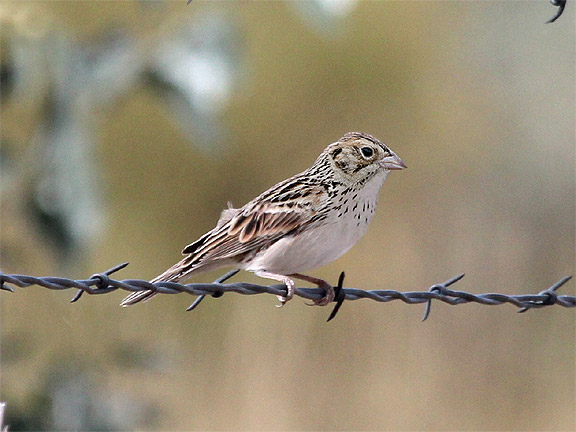
I also celebrated September by finding and photographing a Baird's Sparrow on Swede Lane in Utah County.  The first of its kind photographed in Utah!

October


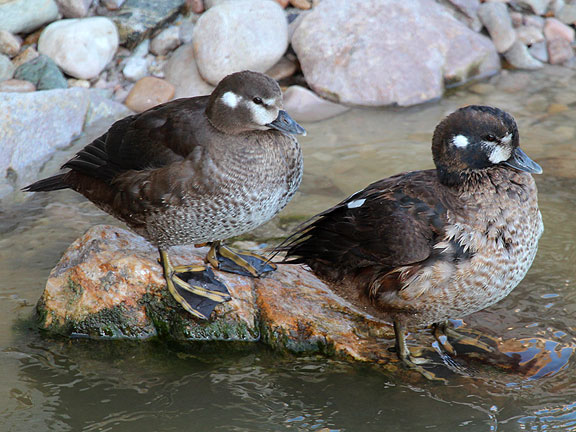
In October there were Harlequin Ducks.  The last week of September one Harlequin Duck showed up at the Antelope Island Causeway.  Mid-October and it was joined by a second bird.  In November shockingly a 3rd bird joined the troop.  Then just after Thanksgiving all 3 disappeared--and were presumed shot based off information from several hunters and birders.  But October was high time for these birds and provided most Utah Birders with ample opportunities to enjoy, study, and ogle these beautiful ducks.  We were truly lucky to have them and likely won’t encounter them in Utah in such a way ever again.

October also saw the launch of the comedy “The Big Year”--birdings first foray onto the big screen.  You can check out one birds review of the movie here.

November


Harlan’s Hawks!  No words sound sweeter than those two together when talking about dark buteos--at least in my opinion.  In November I had the chance to watch 4 or 5 different Harlan’s that were using the fields near my office in Lehi to feed.  Photographing them proved to be a difficult task and it took several weeks to finally get some beautiful shots of the beautiful birds.  In the end I saw 10 species of raptor at this location, and had some great hawk watching during my lunch hour for most of the month.

December

The Utah Birders Blog turned one year old and announced the new guest blogging feature.  It was an amazing first year and we hope it can only get better going forward.

We also had our first ever Park City Christmas Bird Count which 14 people turned out for and helped find just over 50 species on what was an awesome day of birding places that most of us never go in December.

2011 was a great year for sure.  Hopefully it is a precursor to 2012 and for the Utah Birders and the birding community some more great things are on the way.  I guess you’ll just have to stay tuned to see what happens next!

Good Birding
Tim

Labels: , ,

The Big Year—My Take

posted by Tim Avery at
on Wednesday, October 19, 2011 

I consider myself a movie buff.  I have been known to go to midnight openings for highly anticipated movies.  I generally like most movies as well.  I am not a tough critic, and for the most part enjoy movies for the art, the acting (good or bad), and the subtle things that others may not care about (music, set design, things going on in the background).  Truth be told I didn’t have the highest hopes for this movie, from the first previews, to the teasers, and the blog post reviews after opening night.  I had read the book some years ago and found it enjoyable.  I figured with the movie Hollywood would take some liberties, and try to make it interesting to the mainstream.  So this was what I went into the theatre in my head—but with an open mind to what it may actually end up being.

Now having seen the movie I can say two things. First, I see why birders have for the most part raved about it, and enjoyed it—I for one enjoyed it as well.  Secondly, the producers, writers, and directors missed a chance to make something big, and make something memorable.  Let’s talk about the second part first.


A movie about birders competing to see the most birds in a year in North America.  To your average Joe this has no appeal—I mean come on think about how absurd that sounds to someone who doesn’t watch birds.  SO Hollywood tries.  They take a book, change a bunch of facts, come up with a story that works based off the original facts, and make a movie.  They get three huge stars to play the main roles, and a supporting cast that has some pretty big names as well.  Regardless of the story, this thing should be gold.  Then opening weekend comes and the movie comes in #9 at the box office with just over $3,000,000 gross.  IT will be a miracle if it stays in the big theatres more than a week.

So what would have worked?  Does anyone remember Best in Show?  The parody of the Westminster Kennel Club’s top dog competition?  What about Dodgeball? The movie that made the “sport” more than just a playground game.  These movies were vividly different, but both immensely hilarious in their own ways.  They made fun of their subjects, but at the same time took the serious nature of the characters as a juxtaposition that made for comedy gold.  They were funny, entertaining, and successful.  They were everything the Big Year could have and should have been.


Imagine a docu-comedy about birders, where the characters are the extremes, and so serious about what they do, that you can’t help but laugh.  It’s okay to be made fun of—especially if it spreads awareness and gains popularity because of that.  Or a comedy that is just laugh after laugh after laugh at our expense.  Those types of movies would have been more geared at your average watcher, and may have been more successful.

Now some will say I am being too tough on the flick.  But thus far the sugar coated blog reviews are not an honest look at the movie.  They are reviews from the eyes of birders and that makes them lopsided.  And don’t get me wrong, I liked the movie—I found it entertaining, and I enjoyed the fun it poked.  Having done my own big year I felt some of the joy, the frustration, the pain, and excitement of the characters as they went about their journeys.  I laughed when I saw a bit of myself in each of them.  My wife by my side smirking at me from time to time as we both thought, “Man they nailed that portrayal”.  And yes in some instances they were over the top in their portrayals, but for the most part, it was pretty spot on and as hard as it may be for some of us to admit, we know some of those characters in real life.  We see those actions when we interact with other birders, and we have been through the same experiences as those in the movie. 


Perhaps the thing I found most enjoyable was the computer animated birds—some of them were stunning.  A certain woodpecker and hummingbird come to mind.  Some were equally bad, and others just ridiculous (High Island comes to mind).   Some of the actions of the birders were equally ridiculous, while others were just slight exaggerations.  At one point I saw Owen Wilson assuming the Jeff Bilsky birding stance—all rights reserved (I joke).  All in all like I have said, before, I enjoyed the movie.

The soundtrack wasn’t bad either, and the song by the Eels is a classic!  You can check it out here.

My wife, god bless her sat through it with me.  She saw the movie from the other side.  The wives of the characters, the people who deal with that craziness that ensues when birding is in full swing and the experiences we have had together and could relate to what was happening on screen.  She even told me afterwards that I had qualities of all the characters, and she had seen me do some of the ridiculous things they do. 


With that being said, if you are a birder (and I imagine if you are reading this you are), GO SEE THIS MOVIE.  Go see it before it is out of theatres and all you can do is pick it up at Redbox or on Netflix.  You should enjoy it, and you will probably have some of the same thoughts that I had.  You may even want to do a big year yourself!

Labels: , , ,

Book Reviews

posted by Jerry Liguori at
on Wednesday, June 8, 2011 


A few quick book recommendations....not detailed reviews.

ANTARCTIC WILDLIFE: A Visitor’s Guide

As I flipped through the newly released ANTARCTIC WILDLIFE: A Visitor’s Guide (Princeton Univ. Press) by James Lowen, I was immediately impressed by the layout, format, and content. But, I wanted to give the book a good look to make sure my first impression was accurate. I’m glad to say the book is spectacular. It covers all wildlife within Antarctica, not just birds. But for the birders reading this, the section on birds is done well…with beautiful composite photos, and comparisons of similar species. I especially like the petrel, albatross, and dolphin plates, and the silhouetted runners along the bottom of the dolphin and whale pages depicting behavior and structure traits! Even though this guide will not be as popular as a guide to North America due to a more restricted audience…I want to make a statement that may seem grand, but is honest: “anyone authoring a field guide in the future should pick up a copy of this book and use it as a model”. It is simply and nicely laid out, easy to digest, and appealing in every way.

The photography is professional, and the photoshop work is well done. The only criticism I have is that some of the photos “pasted” into certain backgrounds have obvious sharp lines, and could have been slightly blurred on the edges to blend in more naturally. But that does not detract from the book, and I admit that I am more critical than most in regards to Photoshop work.

THE BIRDS OF NEW JERSEY: Status and Distribution

Many Utahns will probably never visit New Jersey, having heard of its reputation as the “arm-pit state”, or if their only visual of New Jersey is a TV clip of Newark Airport, or an episode of The Sopranos” or “The Jersey Shore” (which I have never watched). But, I have ties to New Jersey that I reluctantly admit. I lived and birded in New Jersey for a long time.

After looking through THE BIRDS OF NEW JERSEY: Status and Distribution by William J. Boyle, I was reminded of what a great state New Jersey is for birds. Hey, its not all concrete, airports, and smog...there are lots of great forest, grassland, marsh, and coastal habitat that hold an amazing diversity of bird species. Bill Boyle knows the state as well as anybody, and his other book "A Guide to Bird Finding in New Jersey" has been a popular book in the East for many years. THE BIRDS OF NEW JERSEY covers the status and distribution of the entire list of birds seen in New Jersey (including rarities) with a map for all species and a photo for most. This book is not a field guide, but rather an atlas type guide and the sub-title clearly states that. The book is likely the best of its kind in presenting the birding locales, prevalence, and status of birds for a single state. It is easy to navigate and concise. For any birder living in, near, or visiting New Jersey, this is one book to have!

Most of the photos are by Kevin Karlson, and they are brilliant. The rare bird photos are the actual birds that appeared in New Jersey (many of which I was lucky enough to see), Some of these are not stunning portraits, but I prefer to see the actual rare bird that showed up in New Jersey rather than a portrait from somewhere else…it lets the readers see for themselves the documented sightings. Also, I love that the cover photo is an American Kestrel, sadly though, they are difficult to find breeding there these days. I have many good things to say about this guide….but the only thing I would have liked to see differently is habitat preferences included for all the species (although most are included).

Labels: ,

Hawks at a Distance: A Review

posted by Tim Avery at
on Saturday, March 26, 2011 

In book stores today...

“The ultimate must-have guide for identifying raptors”… I think that line from the back cover pretty much sums up how I feel about Jerry Liguori’s new book, Hawks at a Distance. It is a reference, it is a field guide, and it is as David Sibley calls it, “a gold mine of information”. If you have any interest in hawk watching you need this book.

Just picking up a copy of the book and from the front cover you are already entranced. A beautiful full frame shot of a Red-shouldered Hawk graces 2/3 of the front cover. Down the right hand side, the other 1/3 are thumbnails of 6 other wide ranging hawks and falcons. That Red-shouldered Hawk is the money-shot though. It is crisp, colorful, and makes you want to open up and see what Jerry has to say.


Pete Dunne’s foreword covers over 100 years of birding history and speaks to the advances in birding and identification over the years. He ends by saying, “Now that Hawks at a Distance is available to today’s ‘students of birds,’ the world beyond the horizon is about the only place that a raptor that aspires to remain anonymous can hope to hide.” How Poignant!

Jerry himself will tell you that you can not identify every bird you see. It is just about impossible. I agree with that. At the same time this book is providing a tool to help identify a number of distant birds that you otherwise may not have been able to identify. This leaves only the birds “beyond the horizon” from your ability to ID. But thus far these are just praises about words and the cover. What about the meat and potatoes? What about the content—the plates and the copy?

In the introduction Jerry gives some helpful hints, talks about terminology, optics, photography, and a number of other hawk watching related topics. He wraps up with a table showing the timetable of raptor migration by species in the spring and fall. It’s a helpful start for even seasoned birders—a nice refresher and a perspective specifically related to hawks. One of the key points that Jerry mentions is that in this book is that the plates are presented in a way that shows the hawks at a distance (like the title wasn’t enough). This is important because when you open to p.18 and see the first set of Sharp-shinned Hawk images you are going to see specks.

Most plates show the birds at about ¼” height or smaller. Each plate has 6 images from various angles and lighting. Each is accompanied by a paragraph explaining how these images will be helpful in identifying these birds in the field. It’s simple, it’s to the point, and it’s just about perfect. The images are like what you would see peering through your binoculars from Bountiful Peak on a crisp fall morning.

Despite the small size of this guide (just under 200 pages), it is packed with more than 500 color photos in the plates. The sheer volume of these images is impressive and gives such varying images that it covers most possibilities for what you might see hawk watching (in terms of species, angles, and variants).

Every set of plates is accompanied by an intro to the species with a full color image and up to a couple pages of species specific information. Read these! This book has a wealth of knowledge and these pages contain some great information.

After the plates there are 19 pages of “shapes”. Almost 900 black-and-white silhouettes were used to create what is perhaps one of the coolest features of the book. I can’t even describe how cool it is—only a sneak peak will do:

Now times that by 19 and you get the idea.

Some critics will complain that the book doesn’t cover every species of raptor in the United States. Those critics failed to read the introduction, and understand what this book is for. Others will complain about the size of the images—again the point will have been missed.

For what this book was created for I do not have anything bad to say about it. I don’t have critiques, I don’t have complaints, and I don’t see a way to improve the topic at hand. It truly is a revolutionary guide and will certainly be a tool for teaching many a hawk watcher in the coming years. I would tell even the most seasoned of birders to add this to their collection. I can’t count the times I have seen a hawk far out that I have been unsure of the ID because I didn’t understand some of the specifics of that species shape. This book is the answer.

Thank you Jerry for putting out another fantastic book, and a guide that will surely be one of, if not the most influential hawk watching guide ever. I look forward to putting it to use, and hope others follow suit!

If you didn't pre-order your copy, you can pick one up on Amazon today, and have it as soon as Monday: Hawks at a Distance

Labels: , , ,

The Wild Within

posted by Jeff Bilsky at
on Monday, February 14, 2011 

I recently tuned in to a television program called The Wild Within. It airs on The Travel Channel with new episodes showing on Sunday nights. The host, Steven Rinella, is an outdoorsman who claims his goal is to reawaken the spirt of hunting and gathering. Here's a video that explains it.


I was almost immediately captured by it. Listening to him speak about hunting for survival and understanding the enormity of taking an animal's life offers a great perspective. I highly recommend checking it out. Some of the scenes are quite graphic but I admire the authenticity of it and of the host.

I know this strays a bit from the usual sharing of bird related topics, but I figured a lot of you might be interested nonetheless!

Labels: ,

The Crossley ID Guide: A Review

posted by Tim Avery at
 

There is a new birding guide on the market this week and it is certainly making waves on listservs, blogs, and review sites around the U.S. The guide is The Crossley ID Guide: Eastern Birds. The author has said that the book is revolutionary. Some critics have said that is hogwash. Many people have praised it; thus far it is definitely causing a stir both ways. I have to admit when I first heard about this guide a year or so ago I was skeptical. Some of the initial plates I saw left me shaking my head. As more hype was built I thought it was a little messy. Each plate was filled with lots of pictures of the birds. It seemed hectic, and in some cases crowded. I didn’t see the positive in it, it was just too overwhelming.


Then this past week when the book launched I saw a video the Crossley put out to speak about the book, and it finally made sense to me. This book is not geared for the seasoned birder. It isn’t a "field guide" so much as an at home reference, or a learning guide. Looking more into it and thinking back to my early days I realized this is the perfect guide to give someone that is going to get into birding. It is trial by fire so to speak. When you look at a plate like the one below you see multiple images of the bird, in a somewhat natural setting (the background have all been photoshopped into the pictures):

Lesser Scaup

These plates show the bird in different poses, in different plumages, at different angles, and in flight. It gives an idea of what the bird might actually look like in the field from different distances, and vantage points. I still think some work could have been done to improve on the quality of the plates and the organization, but the idea is there and as a first try it truly is somewhat revolutionary and here is why.

Guides with a single pose, or single drawing of a bird, with no reference to where the bird is and how it fits into its habitat are missing something. They are great for looking at field marks—however field marks are something that we as birders have come up with. How many birders in the field see something and say, well based off that field mark that bird is a so and so bird. Most advanced and intermediate birders don’t do that, and I haven’t met a lot of beginners that do that either. When it comes to learning birds and what they look like this guide hits it on the head. Give this bird to any 10 or 11 year old that is just getting into the hobby and they will be able to learn species quickly and have a good idea what to look for when they go into the field. It’s a learning tool and in my opinion might be the single best for learning birds before ever stepping foot into the wild to look for them.

The downside is that I do not see this as a field guide. It isn’t right for a field guide, as it shouldn’t be dragged into the field with you. In general I will always say look at the bird first, look at the guide later. Seeing the bird in real life and being able to study it will be very helpful in IDing it later if you are unsure. Trying to use any book in the field often leads to more confusion than confirmation when you are trying to identify something. Peterson and Sibley are far better field guides, and are what you should take with you if you feel the need to have a guide in the field. That is when those subtle details that these guides show come in handy.

As for the Crossley ID Guide, a western version is on the way in the future, and it will be interesting to see what happens with it. If you are a pro, then this book probably isn’t for you, but if you feel you are still learning or have a ways to go it may be worth picking up just to help with learning birds before you go afield. Seeing pictures and poses that you will actually see of these birds adds a new dimension to the bird guide book, and I am sure innovations will be on the way. It does need some work, but I like the idea, and even in this first try I feel it has something great to offer.

Blackburnian Warbler

So pick up a copy of the eastern version today, so you can be ready for those eastern warblers when they start coming through on their way north in May!

Labels: , ,


UTAH BIRDERS FLICKR POOL


    SEE MORE AND SHARE ON FLICKR