Utah Birds, Utah Birding, and Utah Birders. Promoting the sharing of information, and the conservation of habitat for birds in Utah and elsewhere. We are a group of people who want to share what we know, and create a positive birding experience in Utah.

BIRDERS BLOG

a blog by and for Utah Birders

2015 Gunnison Sage-Grouse Days Recap

posted by Tim Avery at
on Friday, May 22, 2015 

Sometimes nothing works out in your favor :)  This years Gunnison Sage-Grouse Days looked like it was going to be a stellar weekend.  The weather report a week out showed good weather with highs in the 70's--and with a lot of early migrants we could have a big weekend in San Juan County.  But as the week progressed the weather changed, and by Friday it looked like Monticello was going to get slammed with wet and cold weather that may linger into Saturday.  But we decided to give it a go regardless; after all the weather might miss, and we didn't have a backup plan.

On Friday the 17th, Chris Monahan, Kenny Frisch, and I left Salt Lake to bird our way down to Monticello taking in numerous stops at out of the way and underbirded locations in Carbon, Emery, and Grand Counties. Our first stop at Soldier Summit wasn't too promising with no birds... Hopefully, not a sign of things to come.  As we headed down Price Canyon near the Castle Gate we saw an OSPREY--the first of 4 for the day and my first of the year.
A stop in Bear Canyon at the mouth of the canyon and we heard the first singing LAZULI BUNTING of the year, while in Helper on 1000 North east of US-6 we had 2 VESPER SPARROW. In the parking lot at the Carbon Country Club an early COMMON YELLOWTHROAT was a nice surprise. Driving through Wellington we snagged the 2nd OSPREY of the day.  At the Wellington Cemetery we were treated to a TOWNSEND'S SOLITAIRE, a LARK SPARROW, and an ORANGE-CROWNED WARBLER. The cemetery sits on a high spot north of town and might be a really good check in May and September when migration is in full swing.

We checked out the East Carbon WTP where 2 COMMON LOON, 16 FRANKLIN'S GULL, 6 WHITE-FACED IBIS, 1 LONG-BILLED CURLEW, and Yellow-headed Blackbird provided some good desert birds.  WE had passed through some great shrubsteppe on the way out where we snagged SAGE THRASHER for the trip.  The habitat looked good for Sagebrush Sparrow and I figured on Sunday coming home we might try for it on a side road.
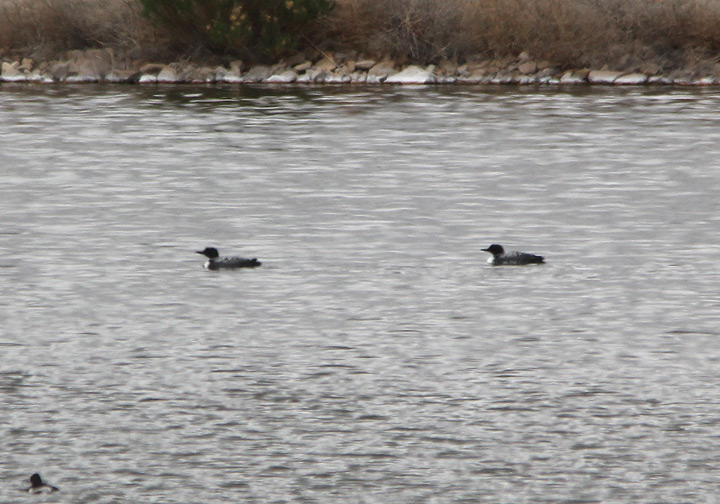
Common Loons at East Carbon WTP

We drove along the base of the Book Cliffs going south--at Water Canyon a WESTERN KINGBIRD was one of just a few birds present. Further south at the mouth of Horse Canyon a huge mixed flock of mostly Gray-headed Juncos with a few Pink-sided provided good looks. A BLACK-THROATED SPARROW here gave some great looks.  Horse Canyon looks like it could be an awesome locations to visit later in the year when warmer.  The Book Cliffs in general may be one of the most underbirded areas in the state.

In Woodside at the Price River, several SAY'S PHOEBE and a flock of BREWER'S SPARROW were the bulk of the birds present. Our next stop at the Green River WTP had a lot of good waterbirds including: 2 BLUE-WINGED TEAL, 4 LESSER YELLOWLEGS, WHITE-FACED IBIS, a hybrid GADWALL x MALLARD, and around 100 FRANKLIN'S GULLS. At Green River State Park a SNOWY EGRET was hanging out near the boat launch. After Green River we hit rain and the birding was pretty slow to Moab--the rain was coming down hard, and we mad ea side trip up the Colorado River to watch the water cascading off the cliffs. There were waterfalls everywhere.
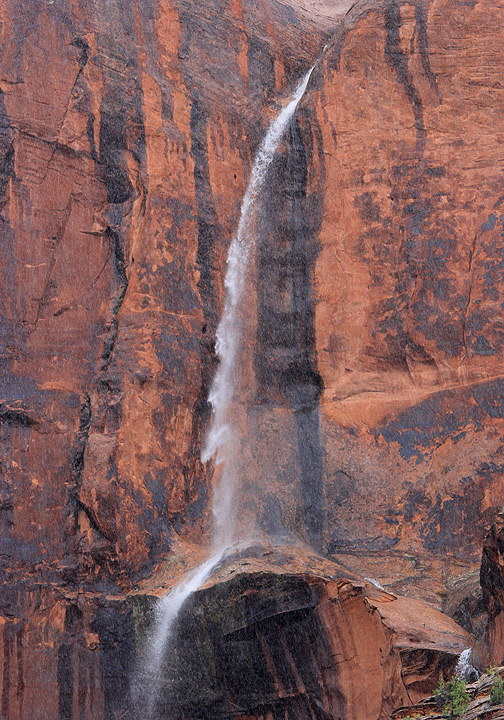
When Red Rocks become Waterfalls
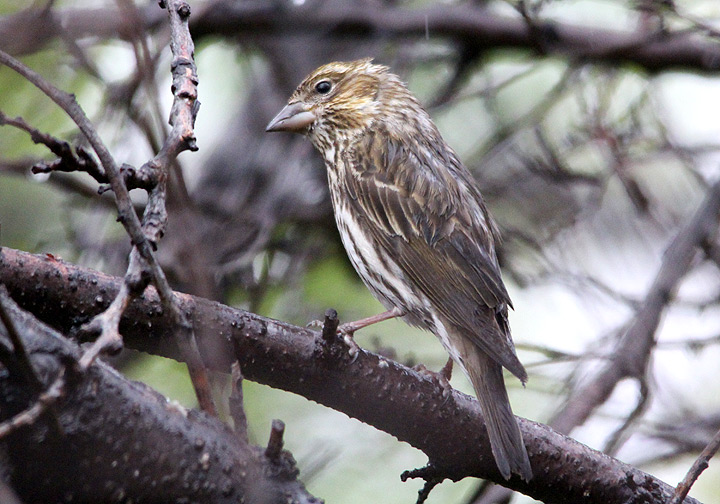
In Moab we did have 7 CASSIN'S FINCH at Gail Lea's feeders where we had hoped to pick up Blue Jay, Brown Thrasher, or White-winged Dove (but didn't); and the wettest COOPER'S HAWK I've ever seen waiting out the rain.

Female-type Cassin's Finch in the rain

Our last birding stop of the day was at Ken's Lake where we had 2 more OSPREY for the day, as well as 13 WHITE-FACED IBIS, a MARBLED GODWIT, and lots of FRANKLIN'S GULLS. Near the dam there were quite a few SAVANNAH SPARROW in the grass. As we drove into Monticello the temps dropped and it started to snow. We met up with the rest of the group for dinner at Wagon Wheel Pizza and had a good time talking birds, the weather, and the area.  We cancelled the owling for the night given the weather--and in a rare moment opted to get a hotel instead of set up and then take down camp in the snow in just a few hours.  I think we were all glad to do this and get a comfortable and warm nights sleep before going for grouse.

In the morning we woke to apparently clear skies, and temps hovering in the low 30's.  The group met and we headed off towards the lek.  Once on the dirt roads it became apparent things might turn south quickly--and they did on the first patch of clay we hit, with my truck sinking several inches into the road.  We stopped and backed the group up--there was no way we would reach the lek today.  I realized I had never been down here after a torrential down pour and despite having driven on the road when wet before, I had never seen it like this.  It would likely need a warm day with lots of wind--or several days to dry out.  This was a total bummer and threw us into recovery mode.  Heading back to town and trying to clean some of the mud off our boots and vehicles, we formulated a different plan.  Head south to Bluff, then spend the day birding back to Monticello. It wasn't grouse, but it was birding.

Heading south through Blanding we hit thick fog, before descending lower into the desert, and 50 degree weather and sun in Bluff.  We headed west to Comb Wash to bird on the Lime Ridge where the open shrubby desert was green from the recent weather.  Against the red rocks and distant Blue Mountains it was a gorgeous scene.  A WILD HORSE provided a nice surprise, while the birding was slow and limited to just a few species.  BLACK-THROATED SPARROW and HORNED LARK dominated the habitat--while SAGE THRASHER and BREWER'S SPARROW were also present in small numbers.
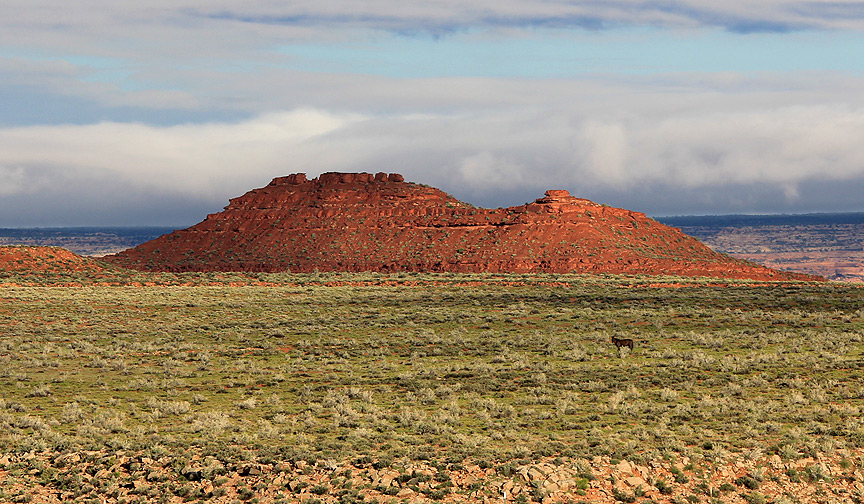
Lime Ridge and a Wild Horse

Back towards Bluff we stopped to check out Sand Island Campground, and the riparian habitat west of US-191 along the San Juan River.  Here we were treated to our first LUCY'S WARBLERS of the trip as well as gobbling WILD TURKEY, a LINCOLN'S SPARROW along the river, and a surprise WHITE-THROATED SPARROW singing from across the river in the same patch of trees where we had one 2 years ago on this same trip.
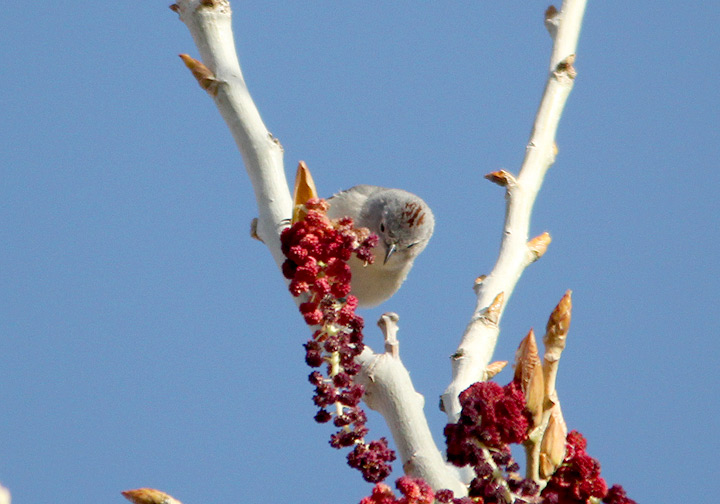
Lucy's Warbler showing its crown

At the campground we had great looks at CANYON WREN and relaxed enjoying the morning sun.  A quick stop at Navajo Twins Ponds in Cottonwood Wash was a little disappointing as the ponds were almost completely empty.  There were a few birds but most of the usual suspects were missed.  No waterbirds of any kind--but Mike Hearell and Taylor Abbott flushed a WHITE-WINGED DOVE from the west side of the ponds where one has been seen in the past. We stopped along Mission Road heading east out of town where we had Chihuahuan Raven last year.  There were no ravens, but a large flock of WHITE-FACED IBIS, were accompanied by 3 MARBLED GODWIT, and a few FRANKLIN'S GULLS in a flooded field. Very cooperative WHITE-CROWNED SPARROWS allowed for a nice photo op as well.
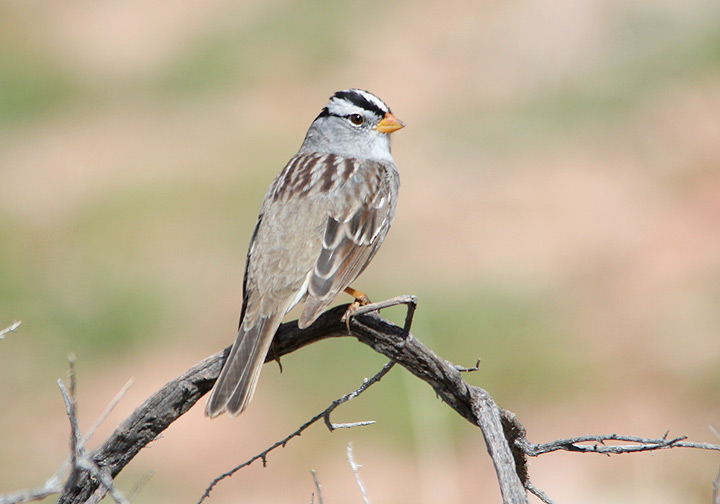
Posing White-crowned Sparrow in Bluff

Making our way back north and up in elevation we headed to Blanding to check out the waste water treatment ponds south of town--always one of the best stops of the trip. And things were no different this year. 13 species of waterfowl graced the glassy water. 6 BLUE-WINGED TEAL highlighted the mix which had a whopping 61 CINNAMON TEAL as well.  LONG-BILLED CURLEW, WHITE-FACED IBIS, FRANKLIN'S GULL, and EARED GREBE rounded out the notable waterbirds, while 2 GOLDEN EAGLES circle overhead.  These ponds have been a stable source for GREAT-TAILED GRACKLE in San Juan County, with 3 present on our visit.

Keeping with the northward pattern we stopped at Recapture Reservoir, which seems to be lower and lower every year.  This year it was only maybe 3 football fields long.  That didn't stop the birds from using it--as usual a good assortment of waterfowl, grebes, ibis, gulls, and shorebirds were present.  Of note were MARBLED GODWIT, WILSON'S PHALAROPE, and FRANKLIN'S GULL.  Along the surrounding hillsides we added RED-NAPED SAPSUCKER,  all 6 swallow species, BLACK-THROATED GRAY-WARBLER, and CASSIN'S FINCH.
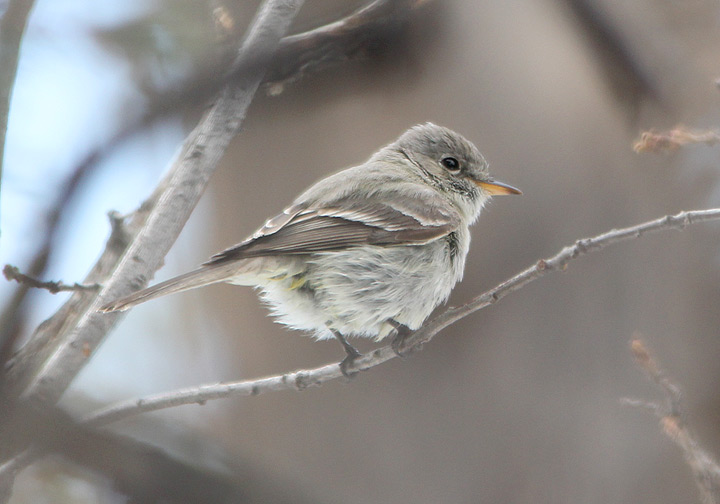
Gray Flycatcher at Devils Canyon

Just a few miles up the road is Devil's Canyon Campground which is usually very birdy--but on this trip it was mostly quiet.  We only tallied 12 species in almost an hour--but most were new for the trip like GRAY FLYCATCHER, PYGMY NUTHATCH, WESTERN BLUEBIRD, and MOUNTAIN CHICKADEE.  Notably absent this year were finches and woodpeckers that usually keep us busy here.
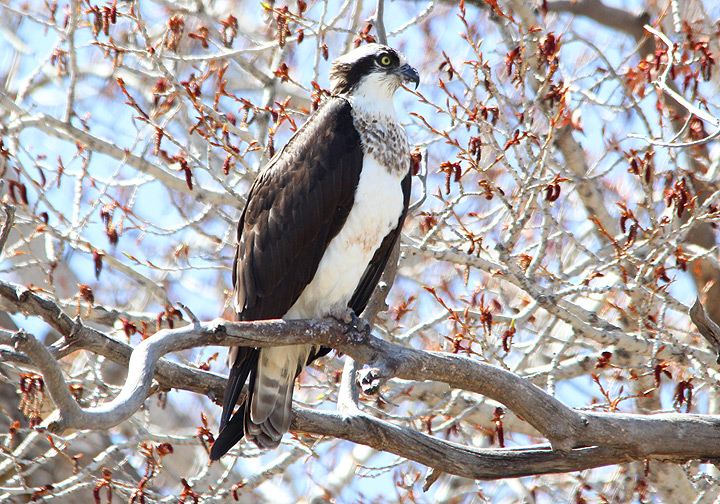
Super cooperative Osprey

We made our way into Monticello and to Lloyd's Lake on the west side of town. The lake wasn't uber-birdy, but we had great looks at an OSPREY that was perched low in a tree over the road--a local alerted us to the cooperative "Red-tailed Hawk" as he put it--and we quickly enjoyed a calling all Ospreys for the remainder of the trip Red-tails! We also picked up WHITE-BREASTED NUTHATCH for the day with great looks before continuing into the Abajo's for some mountain birding.
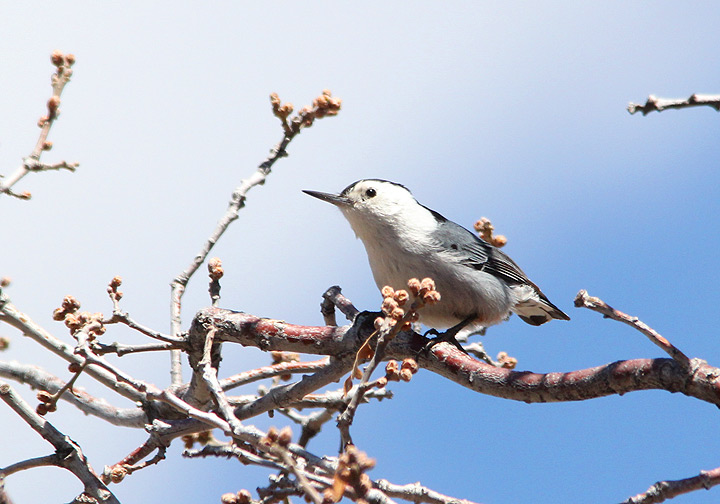
White-breasted Nuthatch on the move

It was windy on the east slope and at Dalton Springs Campground there were few birds--6 species might have been the smallest checklist we've put together here. Driving around the north slope we had decent looks at WILD TURKEY, WESTERN BLUEBIRDS, and great views of Canyonlands below to the north. We ended up at Foy Lake where we had never birded before, and had a REDHEAD and PIED-BILLED GREBE on the water. Nearby in the trees we added STELLER'S JAY, WESTERN SCRUB-JAY, and TOWNSEND'S SOLITAIRE.

We jetted back across the mountains to town and eventually Clay Hill Road and the Monticello Waste Water Treatment Ponds.  Again, the waterfowl numbers were impressive, with 13 species including COMMON MERGANSER, BUFFLEHEAD, and 2 BLUE-WINGED TEAL.  We added PEREGRINE FALCON to the trip list as well as VESPER SPARROW before bring an official end to what was one of the strangest grouse days trips we've had.  First and foremost, we had no grouse--and the weather had made for odd choices in how we birded.  We saw some great birds but it was a little disappointing none-the-less.  While most of the group headed northwards, we decided to see if we could make it to the lek, to possibly try again in the morning. The road out was still a muddy mess and a no go; but we tried another route in and made it fairly easy. It could be done. Then came the rains... It poured, and poured, and continued to pour. We headed south to Devils Canyon to camp the night and the rain only got worse.  Eventually it broke long enough to set up camp, and turn in for the night--but the rains returned after dark for a couple hours.
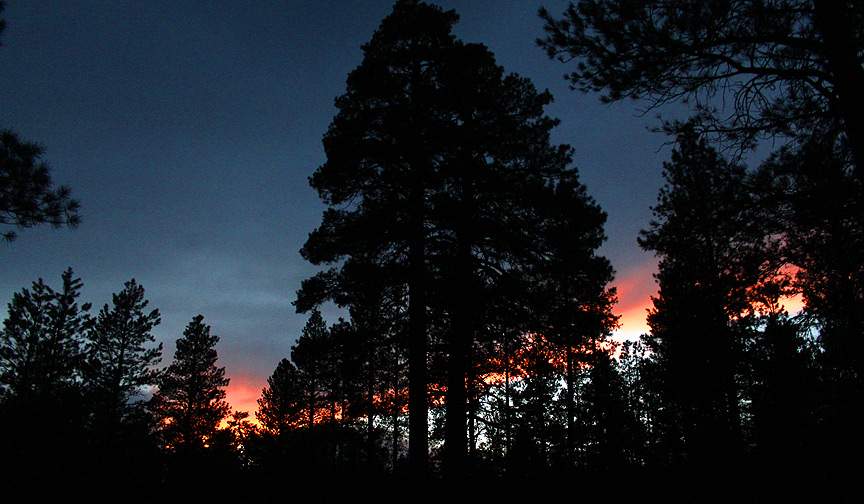
Sunset at Devils Canyon

Luckily, by midnight it waned and was calm the remainder of the night. Early Sunday we headed to town and picked up Craig and Dale Provost who opted to stay behind and try again.  We made our way back towards the lek on the back up road but the rain overnight must have come down in buckets as it was a muddy mess in places.  I decided not to risk getting us stuck and called a stop to things. A Sunday morning in Monticello was not an ideal place to get stuck, especially when we can come back next year and so on.
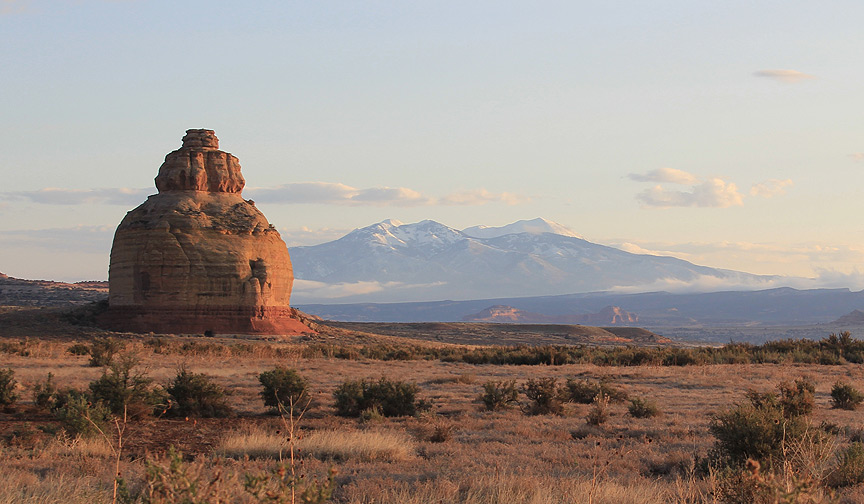
Church Rock at Sunrise

We split with the Provost's and started making our way north, stopping to admire Churh Rock along 191 in the early morning light. Next at Ken's Lake we added RED-BREASTED MERGANSER for the trip and had great looks at flyover OSPREY. We made it into Moab and back to Gail Lea's yard where we were greeted upon arrival by a singing BROWN THRASHER, and then shortly after a calling BLUE JAY, and WHITE-WINGED DOVE. The hat trick in less than 15 minutes!  The thrasher provided some great looks, and being only my second in Utah, I enjoyed taking some time to soak it in.
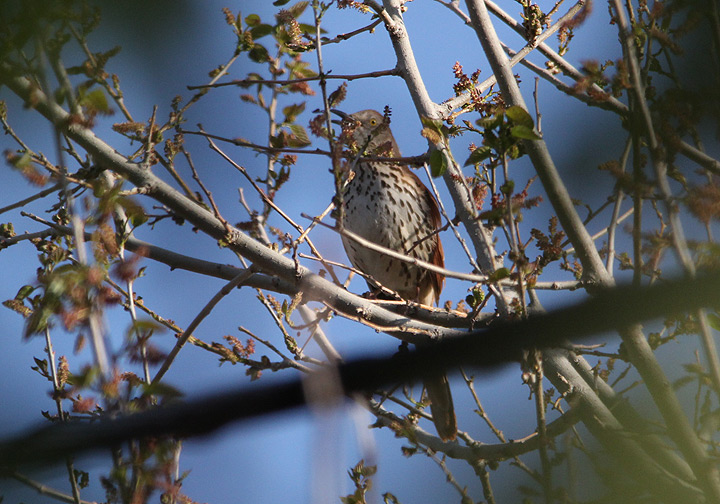
Only my 2nd Utah Brown Thrasher

We ventured across town to the Matheson Wetlands Preserve, which in all honesty, I had never birded despite the amount of time I have spent in this area of the state. Mistake on my part. We walked the boardwalk along the south end at the "main entrance" where there weren't a ton of birds. We seemingly eked out every species there, getting LUCY'S WARBLER here, then a BLUE-GRAY GNATCATCHER there, followed by a singing ROCK WREN in the distance, and a NORTHERN MOCKINGBIRD from a nearby shrub. We decided to take a jaunt out towards the river and came into a small flock of WHITE-CROWNED SPARROWS. We started pishing, and 20 feet in front of us a GOLDEN-CROWNED SPARROW popped up and posed for several minutes.  I had never had such good long looks at one--and a alternate plumage adult to boot.
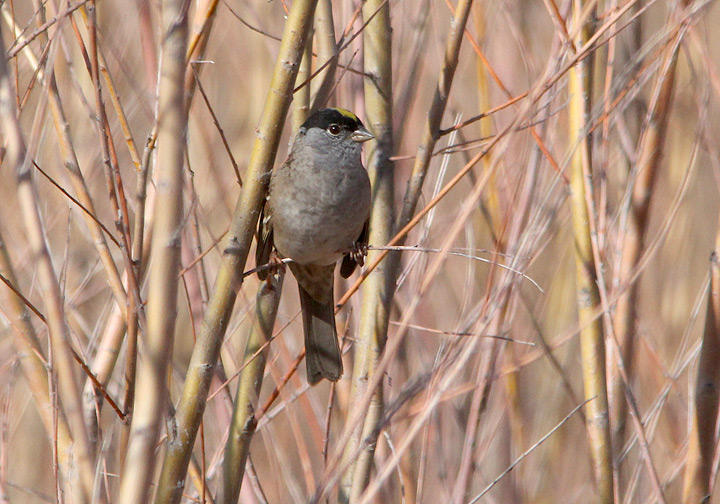
Golden-crowned Sparrow in Moab

While we watched the sparrow the unmistakable song of a WHITE-THROATED SPARROW came from trees directly behind the Golden-crowned.  We about lost it--the only thing that could have made it a better day was if a Harrid's Sparrow had popped up for a 4 Zonatrichia day--that didn't happen. The White-throated provided great looks as well, and we enjoyed the great birds before moving on.
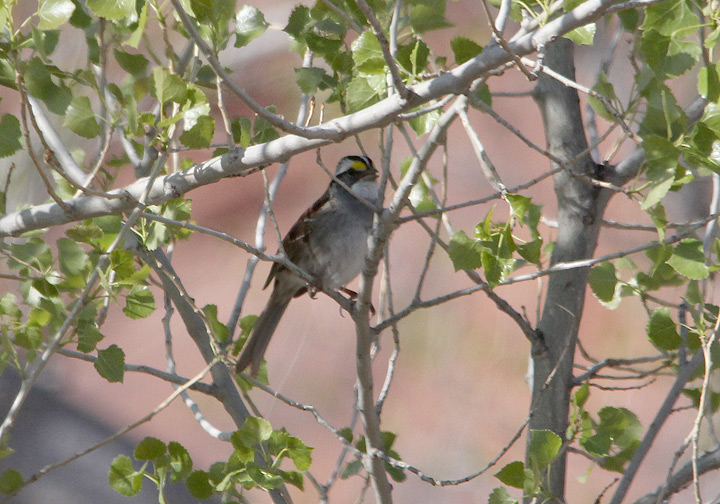
White-throated Sparrow in Moab

We made a few more stops heading north eventually making it to Green River for lunch, and birding Silliman Lane and the Waste Water Treatment Ponds again. MARBLED GODWIT, and BONAPARTE'S GULL highlighted the waterbirds, while 350 FRANKLIN'S GULLS were a big count for here. We ended up driving the Woodside Lower Price River Road towards the Book Cliffs, and had a nice variety of desert birds including BREWER'S, VESPER, and BLACK-THROATED SPARROW along with SAYS PHOEBE and ROCK WREN. This is one location I would like to visit later in the spring for migrants and breeders.
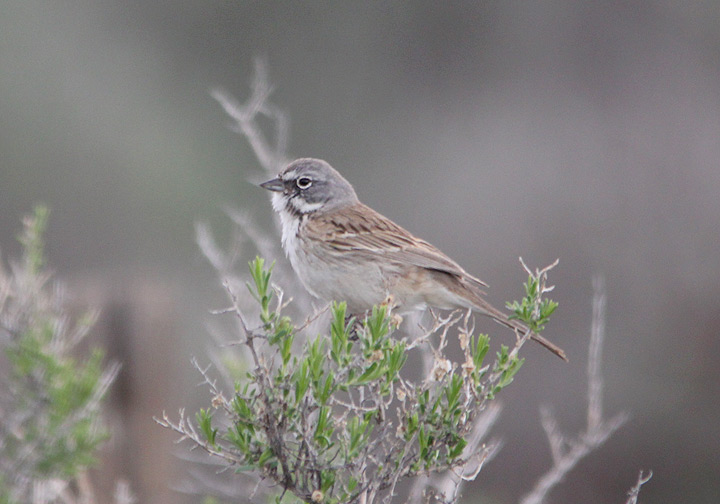
Sagebrush Sparrow near East Carbon

We checked the East Carbon WTP again, but there weren't any real treats this time around.  We did find a couple SAGEBRUSH SPARROWS a little to the west and got great looks before speeding through Price, and back to Utah County. We made one last stop to show our buddy Chris a WESTERN SCREECH-OWL for a life bird.
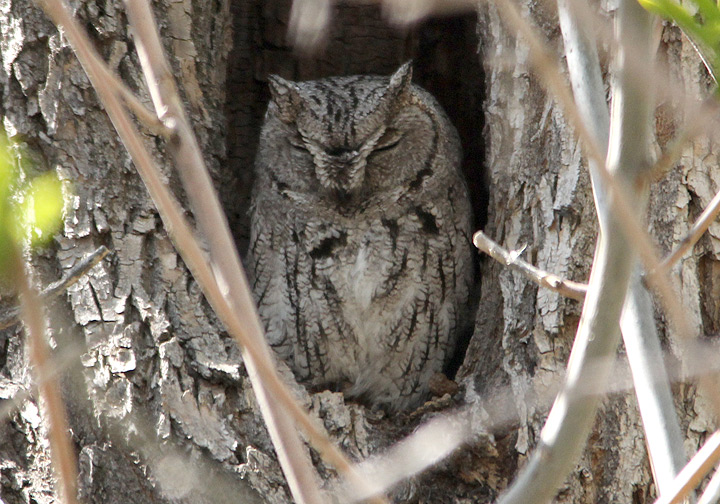
Western Screech-Owl in Pleasant Grove

On our way back to the freeway we added one last lifer for his trip list with a gorgeous pair of SWAINSON'S HAWKS at a nest site.
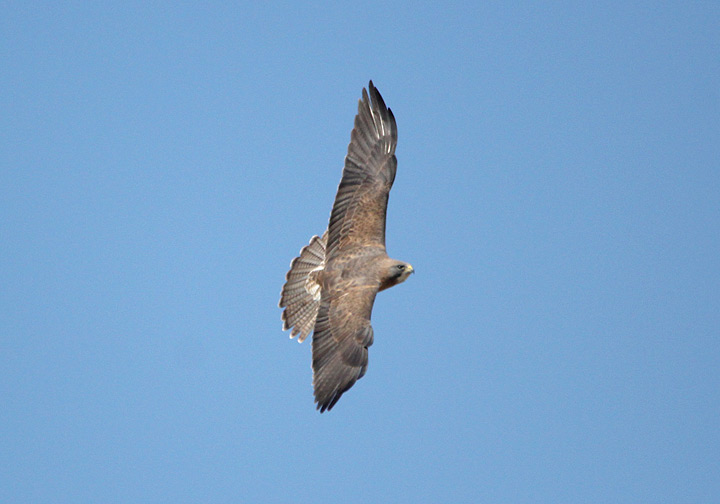
Swainson's Hawk top-side view

And just like that our 3rd Gunnison Sage-Grouse Days trip came to an end back in Salt Lake almost 900 miles later. Our group of 3 tallied 123 species for the weekend, while the field trip on Saturday netted about 100 just for the day.  Not a bad weekend, and despite things not working out for us several times the overall weekend was a success--and next year will only be better!

Labels: , , , , , , , , ,

Fledgling Hawks

posted by Jerry Liguori at
on Friday, August 8, 2014 

Check out a new blog post about hawks nesting in neighborhoods if interested:
http://hawkwatch.org/blog/item/735-fledgling-hawks


Labels: ,

New HWI Blog posts

posted by Jerry Liguori at
on Friday, June 27, 2014 

I posted a few new blogs on the HawkWatch International page @

http://hawkwatch.org/blog/item/715-juvenile-cooper-s-hawks-yikes 
http://hawkwatch.org/blog/item/714-counting-hawks

Labels: ,

Some New Hawks To Review

posted by Jerry Liguori at
on Monday, June 16, 2014 

Originally posted @ http://hawkwatch.org/blog

The four birds ('click' on image to enlarge) were sent to me at various times and I can't remember who sent them (except the last hawk sent by Bill Schmoker). There was a question on their ID's so I thought I'd post them to hear some suggestions and thoughts on them. The first bird was from Texas in spring, the second was from either Utah or Colorado in winter, the third was from Georgia (not quite sure of the time of year), and the last was from Colorado in Winter. Can you help me with these ID's? I'll write a summary in a few days on what they are and why...

Labels: ,

Female Harrier in Adult Male Plumage?

posted by Jerry Liguori at
on Wednesday, June 11, 2014 

Originally posted @ http://hawkwatch.org/blog

This post is an interesting subject to explore. I was curious about an adult male Northern Harrier Peter Pyle published in Birding Jan/Feb 2014. He suggests that a male-plumaged specimen is actually an adult female in this caption: "...Although the specimen was labeled a male, it had a wing chord of 362 millimeters, indicating a small female; the label included no data on gonads, suggesting that it may have been (mis?)sexed based solely on plumage." He states in the article that he had studied this specimen before but did not mention he thought it to be a female at that time. Must be an interesting bird, right? Looking at this particular specimen (image #1), one question arises: does it make more sense to sex this bird as a male based on the fact that it has typical adult male plumage, or is it better to assume it's a female with male plumage based on a single measurement that has an overlap zone between male and female? Let's explore this a bit more and see what we can find out.

Because there has never been a known female Harrier showing adult male plumage banded in North America, housed in a museum, or reported in historical data or literature regarding nesting birds in North America, Brian Sullivan and I were very curious to explore Pyle's theory. So Brian went to the Museum of Vertebrate Zoology at Berkeley to review the specimen. We can say for sure that the bird appears it was labeled correctly as a male all along. This is good thing. Now, new birders won't be confused and wonder whether every adult male Harrier could be a female...it's hard enough to identify all the raptors out when you first start birding, so I'm glad it seems we were able to eliminate one potentially confusing ID issue! There is considerable size variation in both sexes of Harrier, and overlap occurs. Brian measured the wing chord of the male in question multiple times and the largest measurement he recorded was 352mm, which is towards the larger end for a male. Truth be told, it is more difficult to measure a "frozen" study skin than a live bird, and that could be the reason for Pyle's higher measurement. Brian had to have one of the museum staff assist him in order to measure the specimen and take a photograph of the measurement (image #2). I reviewed the literature Pyle cites in his article and found an adult male Harrier with a wing chord of 362mm in one study (JFO. K. Bildstein, F. Hamerstrom). I also reviewed measurement data on nearly 1,000 Harriers throughout North America (576 Harriers in the HawkWatch International database) and found overlap in wing chord between the sexes, and several additional males with wing chords of 362mm. In Pyle's 2008 reference alone, the wing chord range for male Harrier is listed as 322 - 360mm, female is listed as 362 - 400mm, a mere 2mm separation.

The specimen tag had some very relevant information. The weight of the bird the day it was shot was 382.5gms, easily within the male range. Brian's tarsus width measurement was on the small end for a male (right leg = 5.58, left leg = 5.84), but the legs of specimens can be slightly slimmer than live birds. A smaller looking male Harrier in the same tray as the specimen in question had a larger tarsus width: right leg = 6.35, left leg = 6.35.

Hawks From Every Angle (Princeton, 2005) states "some females show grayish remiges." However, they are not known to have remiges as gray as adult males, and Lack solid black wing tips, a black trailing edge to the wings, and white underparts. This specimen has distinct black wing tips typical of adult males. Pyle didn't show the wing tips in his article, so here is an image of the bird for clarification (see image #1) and a nice addition to the story. And, here's an example of a typical adult female that has grayish remiges (image #3), check out the banded wing tips. Interestingly, the eye is still brownish-yellow on this adult female suggesting it is only a few years old.

Pyle also says "...it is possible that adult males show some sort of polymorphism as older birds..." meaning males can be "browner" on the back or face as they age, but then he finishes by saying "...but I can't think of another example among species with delayed plumage maturation (gulls, albatrosses, boobies, etc.) in which plumage does not progress through early cycles toward a universally definitive plumage state, let alone showing sexual dimorphism as well." Several issues arise from the second part of this quote. Pyle previously stated: "browner adult males were "2nd-years" or "sub-adults." He also stated: "older females can look like males." As well as stating previously: "adult Harriers reach a definitive plumage." So, if older females (specimen Pyle refers to) look identical to what Pyle (2008, 2014) refers to as sub-adult males, how are we to know which is which in the future? And, what % of "browner males" are actually older females? If the classic brown adult female plumage is not now the definitive plumage, is the definitive plumage of every female ultimately a male plumage? Can grayer males change to browner plumage or even female plumage as they age? All of this would mean the only way to sex Harriers at all is by measurements (of which there is some overlap), unless of course it is mated pair. But, these questions are irrelevant for the time being. I credit Pyle for agreeing with Brian and I in saying "...it is possible that adult males show some sort of polymorphism as older birds..."

An interesting point to note: One might figure a bird old enough to change out of its definitive plumage might show 2 generations of feathers (as many adult females do), but this specimen only shows one, which unfortunately means there is no way to age the bird past after-hatch-year. The eyes are not present on skins of course, so we can't determine by eye color if it were a younger (brown eye) or older (yellow eye) adult female if it were a female anyway. For new birders or researchers, beware that study skins may look overstuffed, elongated (as the discussed specimen), or plumper, etc. than normal depending on who prepared it. I noticed this since I was taught taxidermy in 1988 and prepared skins for several years after. Check out these male Harriers (image #4) and male Merlins (image #5) (sexed by measurements, gonads, and plumage) that vary considerably in size due to preparation bias.

Having said all this, I am still open to the possibility of the bird being a female, since I don't know everything there is to know about raptors (not even close), and for anyone to say that have "seen it all" would be just plain silly. I would just like more evidence to point that way, and for now I don't think it does, but may very well one day…and that would be just fine with me!

Labels: ,

Assessing bird shapes in photos

posted by Jerry Liguori at
on Wednesday, June 4, 2014 

Originally potsed @ http://hawkwatch.org/blog

Something Peter Pyle wrote recently in Birding magazine gave me a good idea for a blog post. Actually, a few posts will follow on the subject, which I think will make neat lessons. Pyle was wondering if this adult male Harrier (image #1) could be sexed as a female based on wing shape [quote: "...could be an anomalous male or perhaps an older female, as also suggested by its broader wings and bulky appearance; females are larger than males in most hawks."]. This particular Harrier is in typical adult male plumage and is a breeding male (as the caption stated) paired with a typical female, so I can't find anything anomalous about this bird, and I can't find a reason to think this male would be a female (maybe the caption should have stated it was the bird on top when they copulated). I don't see this bird as "bulky" either, so I was quite puzzled by that quote alone. "Hawks From Every Angle" focuses on distinguishing the shapes of raptors in flight from all the angles, and "Hawks at a Distance" shows how to identify more distant raptors based on these principles. In these books, it states that male Harriers are shorter-winged and shorter-tailed than females, and hold their wings in a shallower dihedral, but Pyle's suggestion that females having broader-looking wings because they are larger birds is misleading, especially when looking at birds in photos. Be careful: males of several species have broader-looking wings than females, and all raptors appear stockier when seen from a side view (HFEA). Males and females of some species differ in wing beat, juveniles differ slightly from adults in shape on other species, and a so on...but accurately judging any of these differences takes years and years of field experience. For example: I categorized a distant melanistic (an extremely rare type) Harrier in flight in winter 2008 in northern Utah as a male based on shape and flight style (and banded primary tips identified it as a juvenile and not adult male). A melanistic adult male Harrier was found wintering south of Boise, ID four years later, and I believe it was the same bird as the UT bird. So did my experience pay off, or was it a different bird?

It is easy for anyone to make an error judging shape from a single photo. Photos can be deceiving since they are only a split-second snap shot in time. Often, a bird looks stockier, lankier, or more pointed-winged than normal in certain poses, and this is even exaggerated at times in photos. Here is an example: (http://jerryliguori.blogspot.com/2013/10/pointed-wings.html), and there are other examples of this topic on my blog. A bird such as a Harrier that is known for its narrow wings, can look stocky wing-on or change shape as it changes angles (images #2-7). In fact, the male (image #6) and female (image #7) look as stocky or stockier than almost any raptor in North America from these angles, but that doesn't make them Red-tailed Hawks (as an example) in Harrier plumage. Also, check out this Broad-winged Hawk (image #8), a species known for its stocky appearance that looks quite lanky in this instance. I just posted a quiz bird from CA with a similar theme: (www.hawkwatch.org/blog). So, be careful of judging single photos based on shape -- even well known birders such as Peter Pyle have made this mistake. With experience though, it becomes easier.

Labels: ,

Bald Eagle Trick

posted by Jerry Liguori at
on Friday, May 30, 2014 

Instead of reposting, thought I would share a link to a Bald Eagle ageing trick. Check it out @: http://hawkwatch.org/blog


Labels: ,

Raptor Secondary Pattern

posted by Jerry Liguori at
on Saturday, May 24, 2014 


I have been posting on the HawkWatch blog for a while but wanted to share my posts with this site, if interested in a tid-bit about secondary patterns on raptors, check out the link below:

http://hawkwatch.org/blog/item/689-raptors-pale-inner-secondaries

Labels: ,

Juvenile Harlan's Tails

posted by Jerry Liguori at
on Monday, January 20, 2014 

Originally posted on www.jerryliguori.com

I just wanted to post a few tails of JUVENILE Harlan's Red-tailed Hawks since the tail can be the clinching trait for identifying juvenile Red-tails as Harlan's. However, they are not always as distinct from the other races as adults are, and can cause a bit of confusion, especially the light-morph juveniles!

What makes a Harlan's tail? Well, often the dark bands on the tail are thicker than on other races, the dark and light bands are more contrasting (but sometimes just the opposite), sometimes the banding is wavy, and each tail feather has pale blobs on the inner part of the tips creating a "spiked" look. This is not to be confused with a thin line at the tail tip, which can look like a spike of sorts that many Westerns show. Also, some juvenile Harlan's have mottling throughout the tail similar to that of adults. This is more common on light-morph juveniles, which are often different that dark-morph tail patterns in NOT showing the white blobs. Be aware that the tails of some juvenile Harlan's are nearly indistinguishable from other races, which makes ID tricky. Another trait to look for is the uppertail covert pattern. The uppertail coverts on light-morph juveniles is often mottled unlike the barred, spotted, or plain upper tails of most juvenile dark Harlan's (and most juveniles of other races).

Here are some examples -- a picture is definitely worth a thousand words. I have hundreds of examples, but these photos are a good cross section, showing every one is a bit of overkill. I was going to write an article on the subject, but it's just easier to show it here, and I think this post stands alone as a good reference for birders.

Dark-morph

Dark-morph

Dark-morph
Dark-morph

Intermediate-morph

Intermediate-morph

Dark-morph

Dark-morph


 Dark-morph

Intermediate-morph

Light-morph

Light-morph

Light-morph

Light-morph
Light-morph

 Light-morph

 Light-morph

Light-morph

 Light-morph

Labels: ,


UTAH BIRDERS FLICKR POOL


    SEE MORE AND SHARE ON FLICKR