Utah Birds, Utah Birding, and Utah Birders. Promoting the sharing of information, and the conservation of habitat for birds in Utah and elsewhere. We are a group of people who want to share what we know, and create a positive birding experience in Utah.

BIRDERS BLOG

a blog by and for Utah Birders

2015 Gunnison Sage-Grouse Days Recap

posted by Tim Avery at
on Friday, May 22, 2015 

Sometimes nothing works out in your favor :)  This years Gunnison Sage-Grouse Days looked like it was going to be a stellar weekend.  The weather report a week out showed good weather with highs in the 70's--and with a lot of early migrants we could have a big weekend in San Juan County.  But as the week progressed the weather changed, and by Friday it looked like Monticello was going to get slammed with wet and cold weather that may linger into Saturday.  But we decided to give it a go regardless; after all the weather might miss, and we didn't have a backup plan.

On Friday the 17th, Chris Monahan, Kenny Frisch, and I left Salt Lake to bird our way down to Monticello taking in numerous stops at out of the way and underbirded locations in Carbon, Emery, and Grand Counties. Our first stop at Soldier Summit wasn't too promising with no birds... Hopefully, not a sign of things to come.  As we headed down Price Canyon near the Castle Gate we saw an OSPREY--the first of 4 for the day and my first of the year.
A stop in Bear Canyon at the mouth of the canyon and we heard the first singing LAZULI BUNTING of the year, while in Helper on 1000 North east of US-6 we had 2 VESPER SPARROW. In the parking lot at the Carbon Country Club an early COMMON YELLOWTHROAT was a nice surprise. Driving through Wellington we snagged the 2nd OSPREY of the day.  At the Wellington Cemetery we were treated to a TOWNSEND'S SOLITAIRE, a LARK SPARROW, and an ORANGE-CROWNED WARBLER. The cemetery sits on a high spot north of town and might be a really good check in May and September when migration is in full swing.

We checked out the East Carbon WTP where 2 COMMON LOON, 16 FRANKLIN'S GULL, 6 WHITE-FACED IBIS, 1 LONG-BILLED CURLEW, and Yellow-headed Blackbird provided some good desert birds.  WE had passed through some great shrubsteppe on the way out where we snagged SAGE THRASHER for the trip.  The habitat looked good for Sagebrush Sparrow and I figured on Sunday coming home we might try for it on a side road.
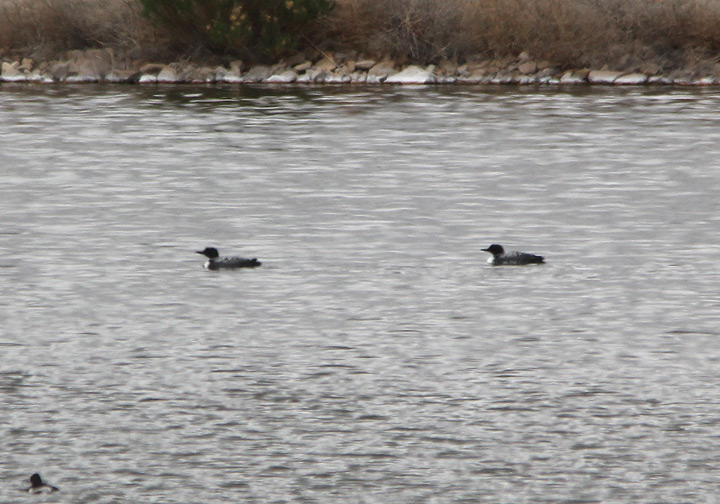
Common Loons at East Carbon WTP

We drove along the base of the Book Cliffs going south--at Water Canyon a WESTERN KINGBIRD was one of just a few birds present. Further south at the mouth of Horse Canyon a huge mixed flock of mostly Gray-headed Juncos with a few Pink-sided provided good looks. A BLACK-THROATED SPARROW here gave some great looks.  Horse Canyon looks like it could be an awesome locations to visit later in the year when warmer.  The Book Cliffs in general may be one of the most underbirded areas in the state.

In Woodside at the Price River, several SAY'S PHOEBE and a flock of BREWER'S SPARROW were the bulk of the birds present. Our next stop at the Green River WTP had a lot of good waterbirds including: 2 BLUE-WINGED TEAL, 4 LESSER YELLOWLEGS, WHITE-FACED IBIS, a hybrid GADWALL x MALLARD, and around 100 FRANKLIN'S GULLS. At Green River State Park a SNOWY EGRET was hanging out near the boat launch. After Green River we hit rain and the birding was pretty slow to Moab--the rain was coming down hard, and we mad ea side trip up the Colorado River to watch the water cascading off the cliffs. There were waterfalls everywhere.
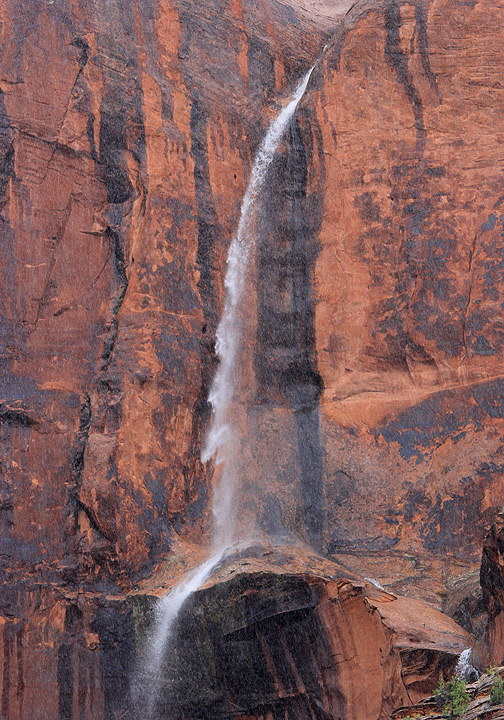
When Red Rocks become Waterfalls
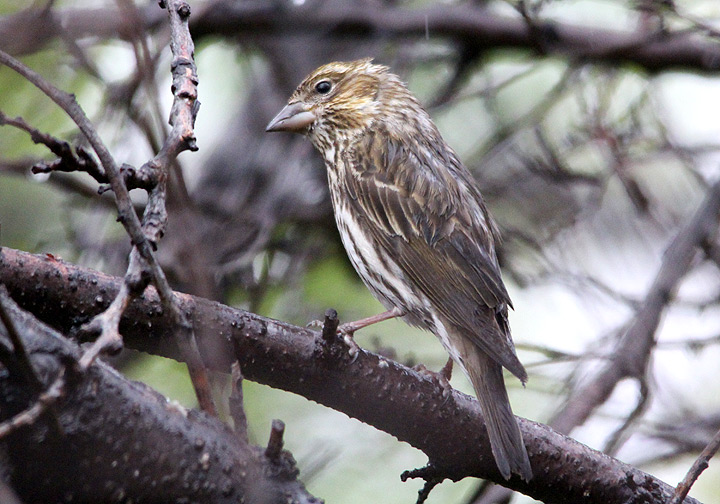
In Moab we did have 7 CASSIN'S FINCH at Gail Lea's feeders where we had hoped to pick up Blue Jay, Brown Thrasher, or White-winged Dove (but didn't); and the wettest COOPER'S HAWK I've ever seen waiting out the rain.

Female-type Cassin's Finch in the rain

Our last birding stop of the day was at Ken's Lake where we had 2 more OSPREY for the day, as well as 13 WHITE-FACED IBIS, a MARBLED GODWIT, and lots of FRANKLIN'S GULLS. Near the dam there were quite a few SAVANNAH SPARROW in the grass. As we drove into Monticello the temps dropped and it started to snow. We met up with the rest of the group for dinner at Wagon Wheel Pizza and had a good time talking birds, the weather, and the area.  We cancelled the owling for the night given the weather--and in a rare moment opted to get a hotel instead of set up and then take down camp in the snow in just a few hours.  I think we were all glad to do this and get a comfortable and warm nights sleep before going for grouse.

In the morning we woke to apparently clear skies, and temps hovering in the low 30's.  The group met and we headed off towards the lek.  Once on the dirt roads it became apparent things might turn south quickly--and they did on the first patch of clay we hit, with my truck sinking several inches into the road.  We stopped and backed the group up--there was no way we would reach the lek today.  I realized I had never been down here after a torrential down pour and despite having driven on the road when wet before, I had never seen it like this.  It would likely need a warm day with lots of wind--or several days to dry out.  This was a total bummer and threw us into recovery mode.  Heading back to town and trying to clean some of the mud off our boots and vehicles, we formulated a different plan.  Head south to Bluff, then spend the day birding back to Monticello. It wasn't grouse, but it was birding.

Heading south through Blanding we hit thick fog, before descending lower into the desert, and 50 degree weather and sun in Bluff.  We headed west to Comb Wash to bird on the Lime Ridge where the open shrubby desert was green from the recent weather.  Against the red rocks and distant Blue Mountains it was a gorgeous scene.  A WILD HORSE provided a nice surprise, while the birding was slow and limited to just a few species.  BLACK-THROATED SPARROW and HORNED LARK dominated the habitat--while SAGE THRASHER and BREWER'S SPARROW were also present in small numbers.
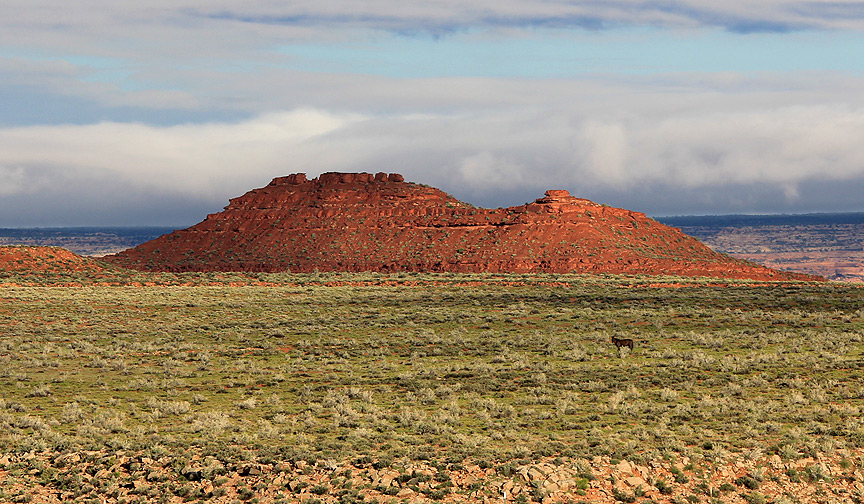
Lime Ridge and a Wild Horse

Back towards Bluff we stopped to check out Sand Island Campground, and the riparian habitat west of US-191 along the San Juan River.  Here we were treated to our first LUCY'S WARBLERS of the trip as well as gobbling WILD TURKEY, a LINCOLN'S SPARROW along the river, and a surprise WHITE-THROATED SPARROW singing from across the river in the same patch of trees where we had one 2 years ago on this same trip.
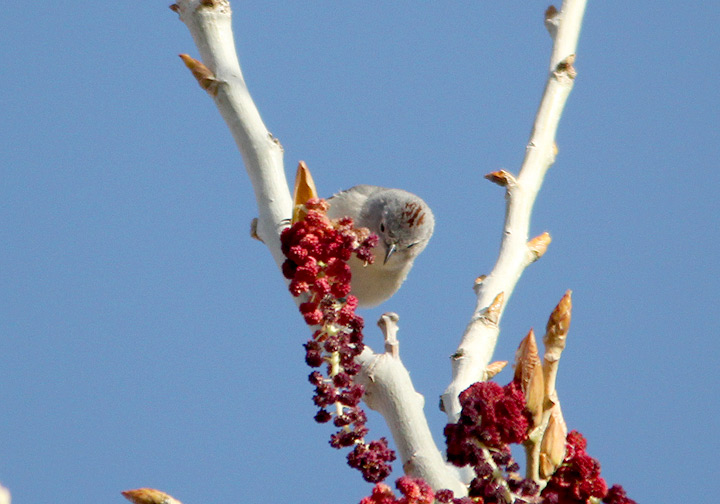
Lucy's Warbler showing its crown

At the campground we had great looks at CANYON WREN and relaxed enjoying the morning sun.  A quick stop at Navajo Twins Ponds in Cottonwood Wash was a little disappointing as the ponds were almost completely empty.  There were a few birds but most of the usual suspects were missed.  No waterbirds of any kind--but Mike Hearell and Taylor Abbott flushed a WHITE-WINGED DOVE from the west side of the ponds where one has been seen in the past. We stopped along Mission Road heading east out of town where we had Chihuahuan Raven last year.  There were no ravens, but a large flock of WHITE-FACED IBIS, were accompanied by 3 MARBLED GODWIT, and a few FRANKLIN'S GULLS in a flooded field. Very cooperative WHITE-CROWNED SPARROWS allowed for a nice photo op as well.
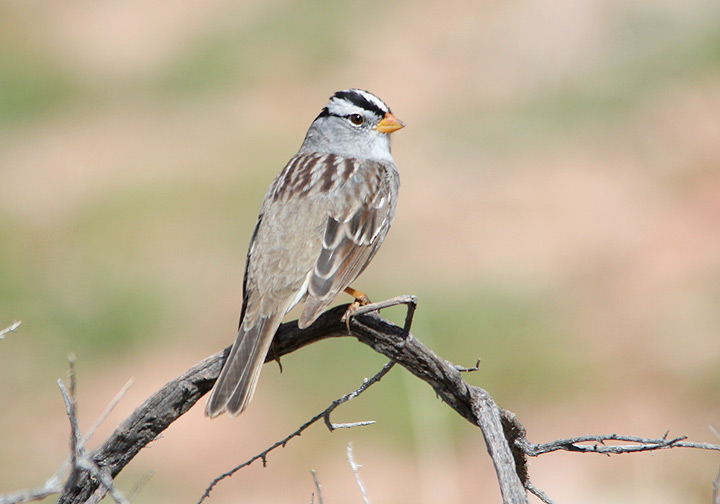
Posing White-crowned Sparrow in Bluff

Making our way back north and up in elevation we headed to Blanding to check out the waste water treatment ponds south of town--always one of the best stops of the trip. And things were no different this year. 13 species of waterfowl graced the glassy water. 6 BLUE-WINGED TEAL highlighted the mix which had a whopping 61 CINNAMON TEAL as well.  LONG-BILLED CURLEW, WHITE-FACED IBIS, FRANKLIN'S GULL, and EARED GREBE rounded out the notable waterbirds, while 2 GOLDEN EAGLES circle overhead.  These ponds have been a stable source for GREAT-TAILED GRACKLE in San Juan County, with 3 present on our visit.

Keeping with the northward pattern we stopped at Recapture Reservoir, which seems to be lower and lower every year.  This year it was only maybe 3 football fields long.  That didn't stop the birds from using it--as usual a good assortment of waterfowl, grebes, ibis, gulls, and shorebirds were present.  Of note were MARBLED GODWIT, WILSON'S PHALAROPE, and FRANKLIN'S GULL.  Along the surrounding hillsides we added RED-NAPED SAPSUCKER,  all 6 swallow species, BLACK-THROATED GRAY-WARBLER, and CASSIN'S FINCH.
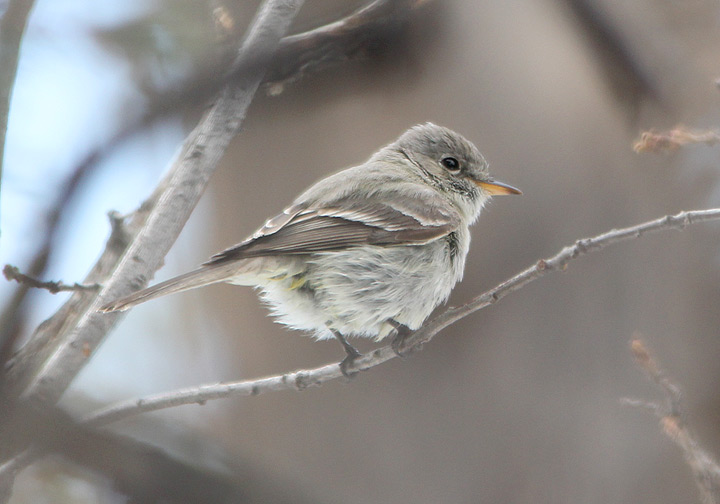
Gray Flycatcher at Devils Canyon

Just a few miles up the road is Devil's Canyon Campground which is usually very birdy--but on this trip it was mostly quiet.  We only tallied 12 species in almost an hour--but most were new for the trip like GRAY FLYCATCHER, PYGMY NUTHATCH, WESTERN BLUEBIRD, and MOUNTAIN CHICKADEE.  Notably absent this year were finches and woodpeckers that usually keep us busy here.
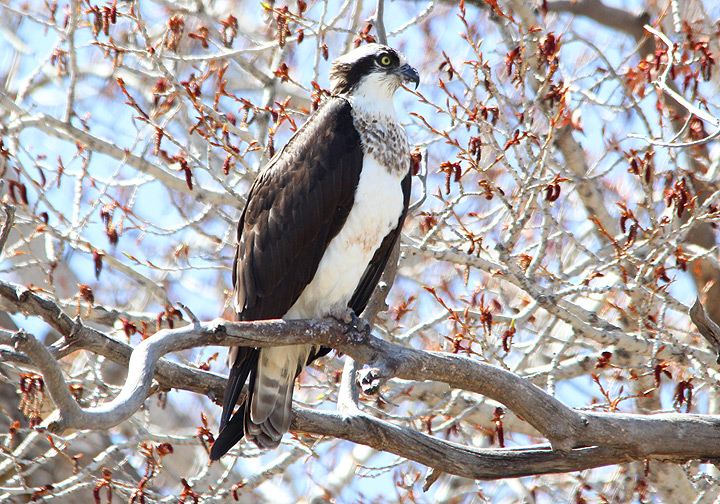
Super cooperative Osprey

We made our way into Monticello and to Lloyd's Lake on the west side of town. The lake wasn't uber-birdy, but we had great looks at an OSPREY that was perched low in a tree over the road--a local alerted us to the cooperative "Red-tailed Hawk" as he put it--and we quickly enjoyed a calling all Ospreys for the remainder of the trip Red-tails! We also picked up WHITE-BREASTED NUTHATCH for the day with great looks before continuing into the Abajo's for some mountain birding.
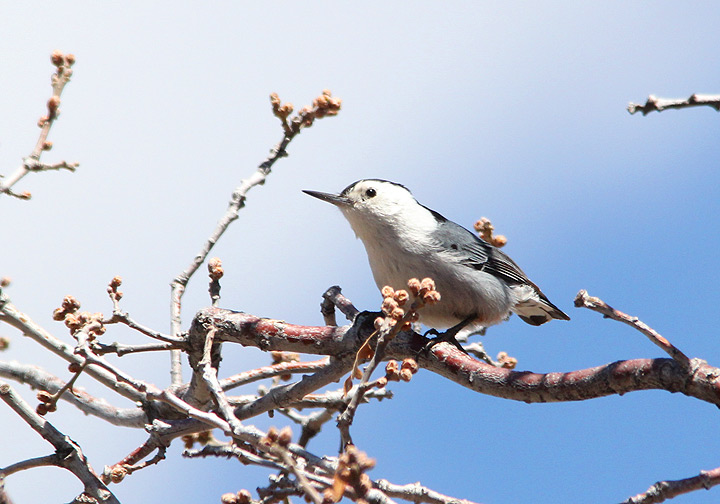
White-breasted Nuthatch on the move

It was windy on the east slope and at Dalton Springs Campground there were few birds--6 species might have been the smallest checklist we've put together here. Driving around the north slope we had decent looks at WILD TURKEY, WESTERN BLUEBIRDS, and great views of Canyonlands below to the north. We ended up at Foy Lake where we had never birded before, and had a REDHEAD and PIED-BILLED GREBE on the water. Nearby in the trees we added STELLER'S JAY, WESTERN SCRUB-JAY, and TOWNSEND'S SOLITAIRE.

We jetted back across the mountains to town and eventually Clay Hill Road and the Monticello Waste Water Treatment Ponds.  Again, the waterfowl numbers were impressive, with 13 species including COMMON MERGANSER, BUFFLEHEAD, and 2 BLUE-WINGED TEAL.  We added PEREGRINE FALCON to the trip list as well as VESPER SPARROW before bring an official end to what was one of the strangest grouse days trips we've had.  First and foremost, we had no grouse--and the weather had made for odd choices in how we birded.  We saw some great birds but it was a little disappointing none-the-less.  While most of the group headed northwards, we decided to see if we could make it to the lek, to possibly try again in the morning. The road out was still a muddy mess and a no go; but we tried another route in and made it fairly easy. It could be done. Then came the rains... It poured, and poured, and continued to pour. We headed south to Devils Canyon to camp the night and the rain only got worse.  Eventually it broke long enough to set up camp, and turn in for the night--but the rains returned after dark for a couple hours.
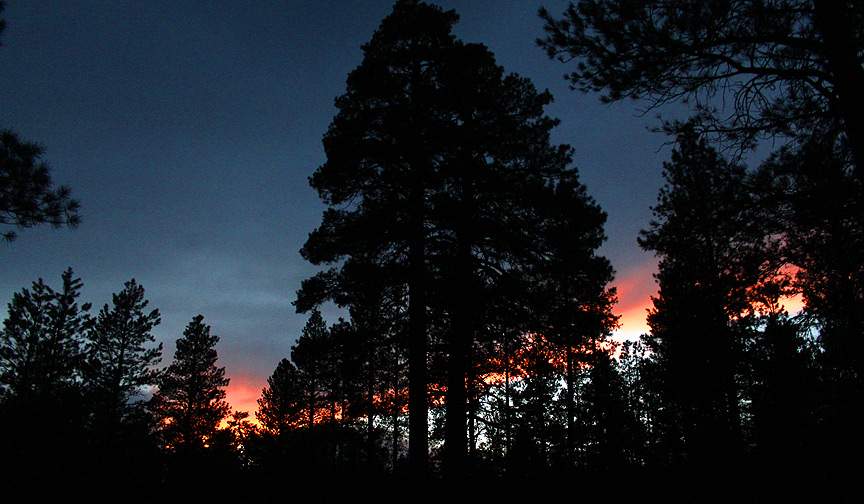
Sunset at Devils Canyon

Luckily, by midnight it waned and was calm the remainder of the night. Early Sunday we headed to town and picked up Craig and Dale Provost who opted to stay behind and try again.  We made our way back towards the lek on the back up road but the rain overnight must have come down in buckets as it was a muddy mess in places.  I decided not to risk getting us stuck and called a stop to things. A Sunday morning in Monticello was not an ideal place to get stuck, especially when we can come back next year and so on.
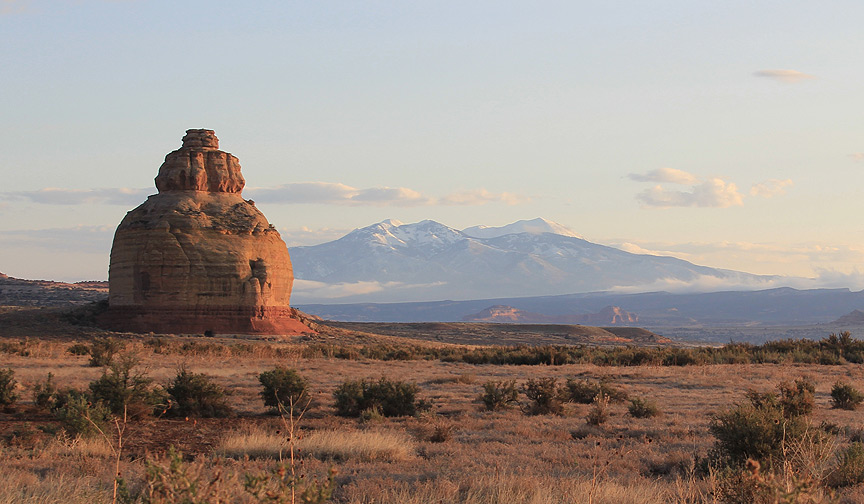
Church Rock at Sunrise

We split with the Provost's and started making our way north, stopping to admire Churh Rock along 191 in the early morning light. Next at Ken's Lake we added RED-BREASTED MERGANSER for the trip and had great looks at flyover OSPREY. We made it into Moab and back to Gail Lea's yard where we were greeted upon arrival by a singing BROWN THRASHER, and then shortly after a calling BLUE JAY, and WHITE-WINGED DOVE. The hat trick in less than 15 minutes!  The thrasher provided some great looks, and being only my second in Utah, I enjoyed taking some time to soak it in.
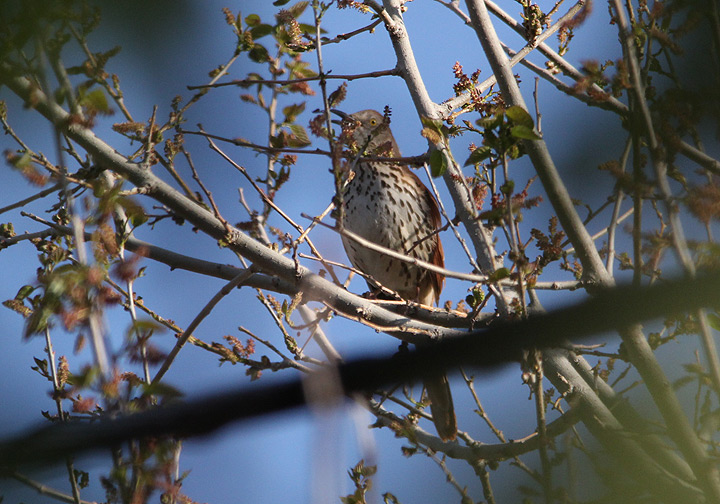
Only my 2nd Utah Brown Thrasher

We ventured across town to the Matheson Wetlands Preserve, which in all honesty, I had never birded despite the amount of time I have spent in this area of the state. Mistake on my part. We walked the boardwalk along the south end at the "main entrance" where there weren't a ton of birds. We seemingly eked out every species there, getting LUCY'S WARBLER here, then a BLUE-GRAY GNATCATCHER there, followed by a singing ROCK WREN in the distance, and a NORTHERN MOCKINGBIRD from a nearby shrub. We decided to take a jaunt out towards the river and came into a small flock of WHITE-CROWNED SPARROWS. We started pishing, and 20 feet in front of us a GOLDEN-CROWNED SPARROW popped up and posed for several minutes.  I had never had such good long looks at one--and a alternate plumage adult to boot.
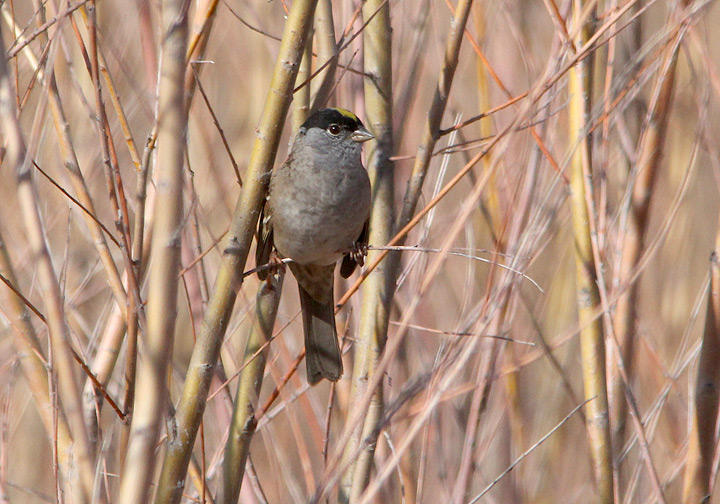
Golden-crowned Sparrow in Moab

While we watched the sparrow the unmistakable song of a WHITE-THROATED SPARROW came from trees directly behind the Golden-crowned.  We about lost it--the only thing that could have made it a better day was if a Harrid's Sparrow had popped up for a 4 Zonatrichia day--that didn't happen. The White-throated provided great looks as well, and we enjoyed the great birds before moving on.
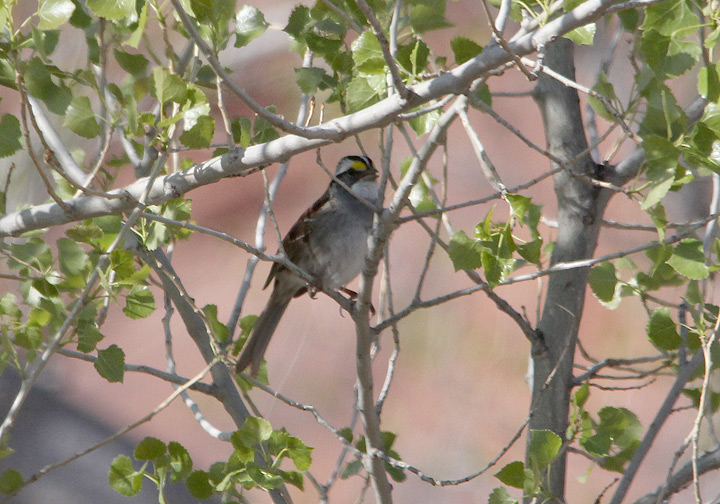
White-throated Sparrow in Moab

We made a few more stops heading north eventually making it to Green River for lunch, and birding Silliman Lane and the Waste Water Treatment Ponds again. MARBLED GODWIT, and BONAPARTE'S GULL highlighted the waterbirds, while 350 FRANKLIN'S GULLS were a big count for here. We ended up driving the Woodside Lower Price River Road towards the Book Cliffs, and had a nice variety of desert birds including BREWER'S, VESPER, and BLACK-THROATED SPARROW along with SAYS PHOEBE and ROCK WREN. This is one location I would like to visit later in the spring for migrants and breeders.
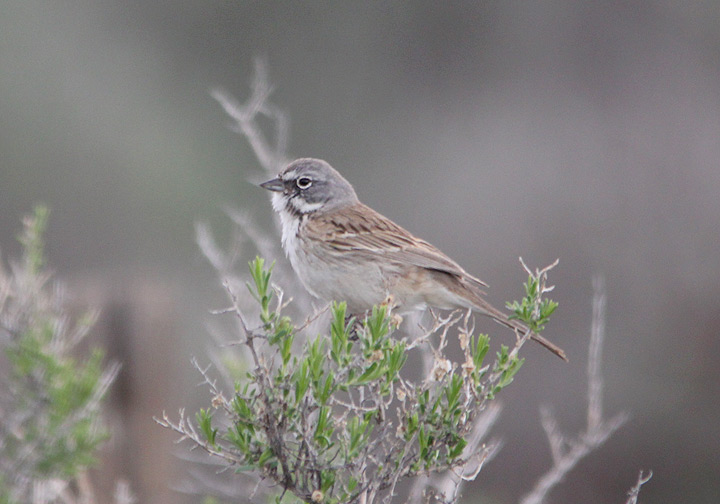
Sagebrush Sparrow near East Carbon

We checked the East Carbon WTP again, but there weren't any real treats this time around.  We did find a couple SAGEBRUSH SPARROWS a little to the west and got great looks before speeding through Price, and back to Utah County. We made one last stop to show our buddy Chris a WESTERN SCREECH-OWL for a life bird.
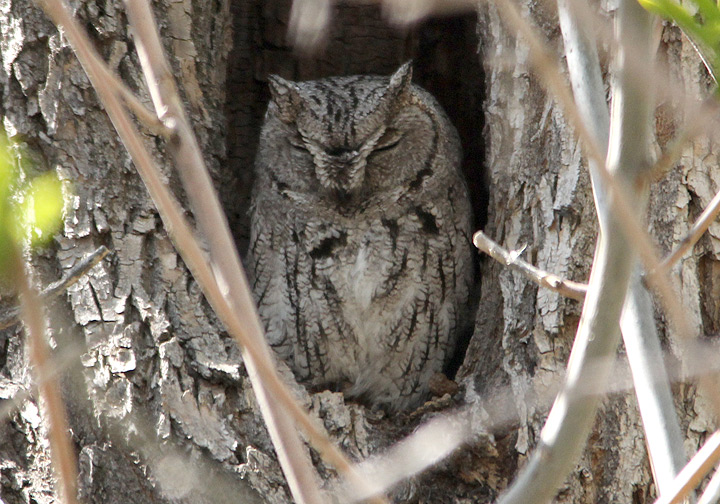
Western Screech-Owl in Pleasant Grove

On our way back to the freeway we added one last lifer for his trip list with a gorgeous pair of SWAINSON'S HAWKS at a nest site.
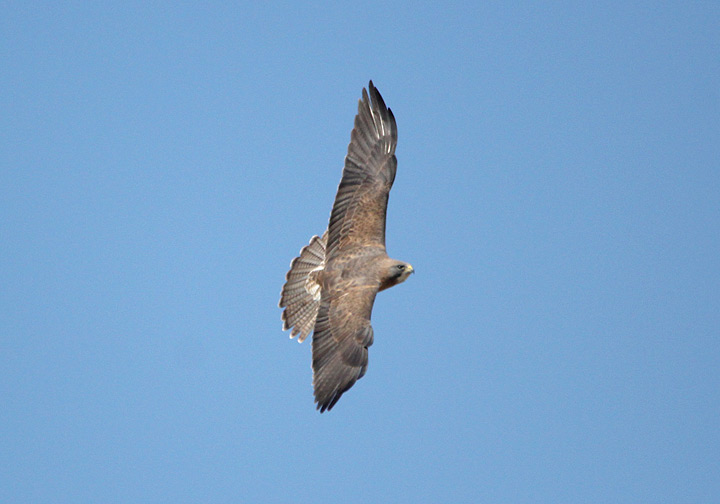
Swainson's Hawk top-side view

And just like that our 3rd Gunnison Sage-Grouse Days trip came to an end back in Salt Lake almost 900 miles later. Our group of 3 tallied 123 species for the weekend, while the field trip on Saturday netted about 100 just for the day.  Not a bad weekend, and despite things not working out for us several times the overall weekend was a success--and next year will only be better!

Labels: , , , , , , , , ,

Practice Photography

posted by Tim Avery at
on Thursday, June 28, 2012 

Every now and again I get an itchy trigger finger for some good shooting--we're talking photos here, not guns.  Usually it happens when I haven't been out birding much, or haven't taken my camera out for a spin in some time.  This summer I haven't been too ardent of a birder, it has been hot, and I have been lazy.  So tonight Sam and I decided to remedy that just a little.  We ended up at Sugarhouse Park so she could feed the ducks--and I could get a little "practice photography" in.

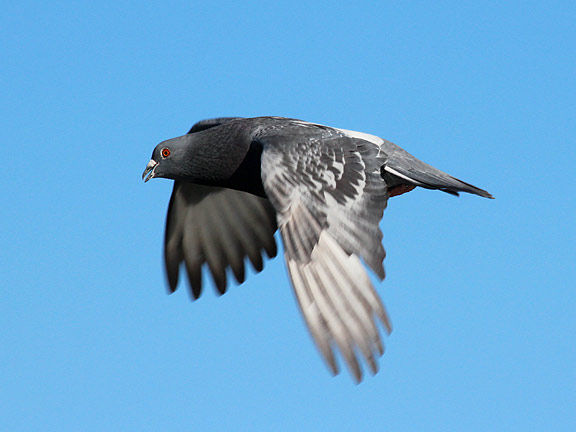
Rock Pigeon in Flight at Sugarhouse Park

Even though I have been photographing birds for over a decade I still enjoy going to the park where I learned to photograph ducks, geese, and gulls and get some easy shooting in.  It's like shooting fish in a barrel--or birds on a pond in this case.  There is no better place to practice taking pictures, or to learn the settings of your camera, than at a local park.  For starters the birds are fairly tame and easy to approach. They are used to people so you don't have to work to hard to setup decent shots.  Aside from being accustomed to people, ducks, geese, pigeons, sparrows, and blackbirds all tend to be pretty easy to photograph even in wild places--we'll call them easy targets.

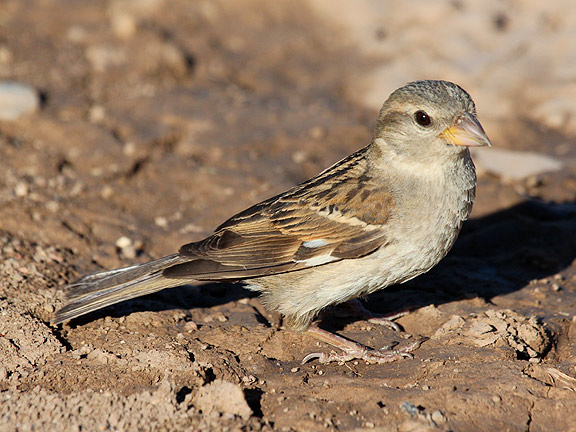
 House Sparrow at Sugarhouse Park

If you live in the city, there is probably a park nearby, maybe one with a pond where you can practice shooting these easy targets.  If it's close you can time it to be there when the light is just right.  I prefer evenings any time of the year at Sugarhouse.  It puts the sun to the west of the pond, and gives you some really powerful lighting to work with.  Every time I have gotten a new camera body, one of the first things I would do would be to head over to Sugarhouse late in the day and photograph the waterfowl and gulls.  I have gotten some killer shots this way over the years.

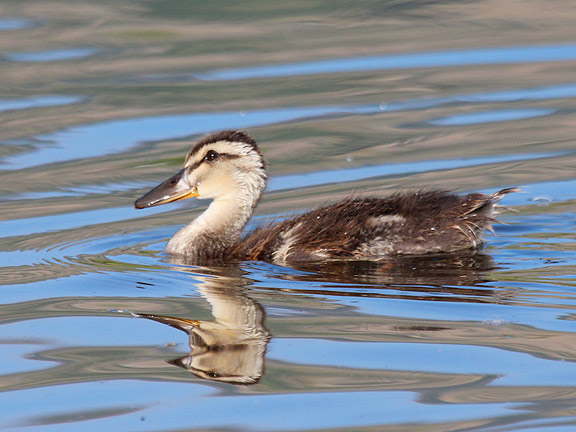
Young Mallard at Sugarhouse Park

Here in Utah one of the cool things is that you can spend a great deal of time studying California Gulls in all states of plumage most of the fall, winter, and spring.  In the summer there are usually a few around, but the real spectacle is in the spring.  The best way to find rare gulls when looking through a flock is to learn the most common ones--if you can nail down the California Gull at any age or state of wear that's a good start.  Plus the photo ops are pretty amazing.

California Gull face detail at Sugarhouse Park, April 21, 2008

So next time you just want to get some good photos, and practice working on your skills, take a trip to a nearby park and do some "practice photography".

Labels: , ,

Identifying White-crowned Sparrow Subspecies in Utah

posted by Ryan O'Donnell at
on Sunday, January 15, 2012 

One of the things that I love about birding is that the challenges never stop coming; there's always more to learn.  Once a birder has a pretty good handle on the species found in his or her area, they often move on to trying to tell subspecies apart.  This might sound quite intimidating at first, but for some subspecies, it can be pretty easy.

There are two subspecies of White-crowned Sparrow that regularly occur in Utah.  Mountain White-crowned Sparrows (Zonotrichia leucophrys oriantha; also called "Interior West White-crowned Sparrows") breed here, as you might expect, mostly in the mountains.  Gambel's White-crowned Sparrows (Z. l. gambelii) winter here, having migrated down from their breeding range in the western taiga of northern Canada.  Around the same time Gambel's are arriving from the north, the Mountains are heading south, leaving the state to winter in southern Arizona and northern Mexico.  There are a few eBird records of Mountain subspecies wintering in Utah, but I've never actually seen one documented here in Utah: I suspect it is very rare if it occurs at all in Utah in winter, but please comment below if you've documented Z. l. oriantha in Utah in winter.

Telling these two subspecies apart is relatively easy.  Gambel's have a yellowish bill and pale lores; Mountains have a pinkish bill and dark lores.  (The lores are the area between the eye and the bill.  Look to see whether the dark line that both subspecies have behind the eye continues in front of the eye to connect with the stripe on the side of the crown.)  Bill color is a little less reliable in young birds, but even the young ones usually have the appropriate color lores.

It is always possible that one of the other three subspecies of White-crowned Sparrows could show up in Utah, but this would be very unlikely.  Start by practicing telling these two subspecies apart, and you'll be more prepared for a vagrant of another subspecies.  For more on distinguishing subspecies of White-crowned Sparrows apart, see this and this post from David Sibley; for the VERY interested, see this extensive treatment, also by Sibley.

Adult Mountain White-crowned Sparrow, Z. l. oriantha,  Logan, Cache County, Utah.  11 May 2011.

Adult Mountain White-crowned Sparrow, Z. l. oriantha, Antelope Island, Davis County, Utah.  7 May 2011.

Adult Gambel's White-crowned Sparrow, Z. l. gambelii, Washington County, Utah.  19 Mar 2011.

Immature Gambel's White-crowned Sparrow, Z. l. gambelii, Cache County, Utah.  20 Feb 2011.
Immature Gambel's White-crowned Sparrow, Z. l. gambelii.  Gunlock Reservoir, Washington County, Utah.  16 Mar 2007.


Probably an adult Gambel's White-crowned Sparrow, Z. l. gambelii, Beaver Dam Wash, Washington County, Utah.  28 Nov 2009.  This individual appears to have an unusually dark bill relative to most Gambel's.  Are those brownish sides?  Are the white stripes dingier than expected for Gambel's?  This might be worth looking at again when I get more experience: is this possibly a vagrant of a Pacific Northwest subspecies?


(All photos copyright Ryan O'Donnell)

Labels: , ,

Baird's Sparrow in Salt Lake Tribune

posted by Tim Avery at
on Saturday, October 1, 2011 

This weeks bird sighting in the Salt Lake Tribune is of the Baird's Sparrow I found a couple weeks ago at Swede Lane in Utah County. So yes this is shameless self promotion (but informational shameless self promotion).

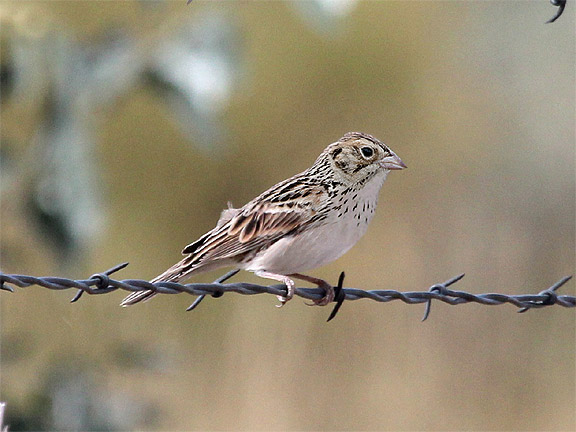
Baird's Sparrow at Swede Lane, Utah

This species is rarely reported in Utah, but likely passes through in very small numbers each year during spring and fall migration. The southeast corner of the state would be in the general migration route, and given how little coverage the area receives, this is only one of a number of birds that probably occur more than reported passing through this vast remote region.

There have been about 7 reports of the species in Utah, although there is only one "officially accepted record"--but you know my thoughts on that. This secretive sparrow can be very hard to detect as it is--secretive. On the occasions I have come across this bird they have always been seen briefly as they moved through low brushes and grass. This individual gave me about 10 seconds perched up on the wire, after hopping from the edge of a dirt road--and before disappearing into a field with lots of low shrubs and grasses.

It's been a great year thus far with some really good birds showing up around the state. Here is a link to the article in the tribune:

Bird Sighting: Baird's Sparrow | Salt Lake Tribune

Labels: , , ,

Let’s Call It a Smallout

posted by Tim Avery at
on Saturday, September 17, 2011 

As birders we hear the word fallout and immediately start drooling about the possibilities.  It’s an event for birders, like the Kentucky Derby for Horse Racing enthusiasts.  Like a meteor shower to amateur astronomers.  Or like Halloween for Trick or Treaters.  Okay enough with the stupid comparisons.  A fallout is something that once experienced makes all other days of birding seem somewhat mundane.  Expectations of migration can become too much, turning the most avid birder into a Grinch when they find their local trap not producing the way a fallout does.  For most of us though, they provide some of the most exciting migration birding around. Over Memorial Day weekend Utah experienced what I would call the single greatest fallout of the last decade.  I can’t recall one that was more productive, turned up more rare birds, and left many of us in awe of the sheer number of birds seen.  I have a post for that coming soon.  But when it comes to fallouts there are different levels and this morning I came up with a term to describe a mild or very location specific fallout—the “smallout”.

Western Tanagers dripping from the fence at the Provo Airport
during the epic Memorial Day 2011 Fallout.

Like many other September weekend mornings I started the day at the Salt Lake International Center.   Looking at the radar last night there seemed to be an interesting migration happening. A storm front passed through northern Utah during the night, and as it did migrants took to the sky right on its tail.  There were not a ton of birds over Utah, but Idaho and Nevada seemed to be getting quite a bit of activity in the skies, so I hoped that might be a good sign. Since 2007 the International Center has been one of the most dynamic and interesting migratory hot spots in the state of Utah.  Few birders tackle this beast as it isn’t the typical birding locale.  It takes some patience to go birding there, and you have more than a few disappointing outings.  But what it lacks in consistency from week to week, it makes for in what have been some amazing finds, and a list of over 150 species recorded in just these past 5 years.  Well anyways, the day started with Jeff Bilsky and I making a stop in the southeast corner where we saw exactly zero migrants.  A few starlings, ravens, and finches were there, leaving us thinking it was going to be another miss day.  Our second stop was at the far south end of the complex on Charles Lindbergh Drive.  This area has been a fairly productive location in past years, including a large flock of warblers here last year that was accompanied by a YELLOW-BELLIED FLYCATCHER.  But alas, today we had no such luck.  4 Western Tanagers and a Wood-Pewee were nice to see, but pocket change for this locale.

 Yellow-bellied Flycatcher at the IC, 09/18/10

Our third stop took us to the heart of the IC (short for International Center), the T-intersection of Lindbergh, and the main east west thoroughfare—Amelia Earhart Drive.  This is typically the best place to look around.  Usually you will find something here even when the rest of the place is dead.  Today, it was well… dead.  We found one Cassin’s Vireo, my first for the year, and an appreciated late comer to the migration party (most have passed through by this point). We saw a few Yellow-rumps flitting ins some trees a ways down the road to the west, so we hopped in the car and drove to the KJZZ building on the edge of the north pond—when the “smallout” hit us.  It went from zero to 60 in a matter of minutes; there were more birds than eyes, more species than fingers to count them on.  The movement made it almost impossible to keep track of what you had seen, what you were seeing, and what you might have just missed.  It was chaos… It was pleasure… It was the “smallout” of the year.

What was supposed to be an hour or so at the IC turned into madness.  Following roaming flocks of warblers trying to pick everything else from the majority Yellow-rumps. Right off the bat I saw the bird of the day for me; a first winter CAPE MAY WARLER.  When I first saw it all I knew is it was slightly smaller, and sleeker than the nearby Yellow-rumps, and Cape May was what I was hoping for.  But the pesky bird didn’t want to hold still.  It was in a foraging frenzy.  This was life or death for that bird; 1000’s of miles from its traditional migration path (even though this is its first trip south, it sounds better that way), in a barren desert (freshly wet from the deluge the previous night), it was on a mission to restock its energy supply, and it didn’t care who was trying to see it.  Meanwhile Jeff had wandered around the corner out of sight.  My yells were not prompting his appearance and I was beginning to worry the bird would disappear.  I wild flung my camera up at the trees and started shooting every bit of movement I saw.  I needed a photo if it was what I thought it was.  Several times I caught glimpses of the bird as it darted form conifer, to Russian Olive, to Cottonwood, but never long enough for the look I wanted.   Later pouring through 50 or 60 blurry, poorly lit shots, I found the golden goose egg—the shot of the bird in its pretty plain and drab glory.  It isn’t a beauty, but it sure is a fantastic bird for Utah.

Cape May Warbler at the IC

From there we made our way west along Earhart through a line of trees.  It was crazy birding.  We quickly lost count of what we were seeing, 6 species of warbler, maybe 7, or was it 8… It was hard to keep track.  A Nashville here, two Townsend’s there, a flock of 6 Wilson’s in that tree.  There goes a Warbling Vireo, a couple of Yellow Warblers chipping from nearby, and Orange-crowned Warbler here and there—what’s that, it’s a Sparrow, but what kind!  Is it a Brewer’s?  Maybe a Chipping?  Wait, it’s a CLAY-COLORED SPARROW!  This species has turned into an annual find here in September, and this year would be no different.  For Jeff it was a lifer, which gave us beautiful looks for a few minutes while it fed in a Russian Olive.  The birding continued…

 Clay-colored Sparrow at the IC

Across the street more warblers, another mixed flock, this one made up of all the previous species (minus the Cape May). Then a streak of yellow through the tree in front of me, I catch a glimpse of white undertail coverts and I reach for the camera.  I snap a couple shots not sure if I got anything, the bird was moving quickly through the trees in front of me.  I hollered to Jeff that I thought a TENNESSEE WARBLER was in the tree.  He thought he’d seen the same.  Frantically looking we couldn’t find the bird.  Later a photo would confirm the sighting, white undertail covers and all!
Tennessee Warbler at the IC

We were back to where we started but not anywhere near done, we started the whole loop over again and spent the next hour pouring through the birds again, adding more individuals but not new species.  A few nighthawks flushed from a tree we passed a couple times previously, and a pewee popped up for good measure.  Before we knew it 2 hours had passed and we had been in the same 100 yard stretch of trees.  This was by all definition a fallout, but it was so localized I felt a “smallout” was a better fit for the occasion.  Elsewhere at the IC we didn’t encounter anymore flocks, or anymore great finds.  It was rather dead as with the first couple stops we made.  It made me wonder what would have happened had we skipped that street today, or birded elsewhere first.  Would the results have been the same, would the birding have been so incredible? It’s hard to say, but I sure won’t forget the great smallout of September 2011 at the IC, it was a good day to go birding.

Pictures from today's trip will be available for a couple months at the following link:
Click Here

Labels: , , , , , ,

September 7th to 14th - Rarity Week in Utah?

posted by Tim Avery at
on Saturday, September 10, 2011 

The 2nd week in September is a good week to go birding in Utah.  The same can pretty much be said across the United States--this is the height of migration. With the best week of birding come so great birds and I have had a string of good luck past years during this time.  This year was no exception.

 Baird's Sparrow at Swede Lane - 09/09/11

On Friday the 9th I found a Baird's Sparrow at Swede Lane in Utah County.  Today I had a Ruby-throated Hummingbird at my feeder (ironically a year to the day from a sighting of the same thing at my house).  With rarities on my mind I decided to take a look into eBird and see what I personally had recorded during this week over the past few years.  Here's the list:

2011:
09/10/11 - Ruby-throated Hummingbird (Sandy, SL County)
09/09/11 - Baird's Sparrow (Sweded Lane, Utah County)


2010:
09/10/10 - Ruby-throated Hummingbird (Sandy,SL County)


2009:
09/07/09 - Scarlet Tanager (International Center, SL County)


2008:
09/12/08 - Magnolia Warbler (Magna, SL County)


2007:
09/09/07 - Black-and-white Warbler (Garr Ranch, Davis County)
09/08/07 - Prothonotary Warbler (International Center, SL County)


2006: I was out of state

2005:
09/11/05 - Wandering Tattler (AIC, Davis County)
09/11/05 - Parasitic Jaeger (Willard Bay, Box Elder County)


And those are just sightings by me.  I am sure if I ran the report in eBird that list would be 25 times as long.  I could probably pull similar information for other weeks, but the 2nd week in particular seems to be the winner.

Ruby-throated Hummingbird, Sandy, Utah - 09/10/11

So even though the birding in general hasn't been too hot this month, it is still a great time to find something incredible.  Keep you eyes to the skies and you may see something great!

Labels: , ,

Possible Dark-eyed Junco x Song Sparrow Hybrid

posted by Ryan O'Donnell at
on Tuesday, March 8, 2011 


This afternoon I photographed an interesting DARK-EYED JUNCO in my yard in Logan, Cache County, Utah. The bird had most of the basic traits of a female Oregon subspecies Dark-eyed Junco, except for a few anomalies. Most obvious was a soft-edged buffy malar ("mustache") stripe that matched the flanks in color. I grabbed a few quick photographs through the window, but could not relocate the bird when I went outside to try for better photos. In the photographs, I noticed that the bird also has a hint of a pale supercilium ("eyebrow"), a slightly more striped back than expected (although perhaps not entirely outside the range of variation for a pure DEJU), and the white in the outer tail feathers appears to not reach the tip of the tail, instead fading to black.

The combination of anomalous traits make me think this is not just an aberration, but more likely a hybrid of some kind. Hybrids between DEJU and sparrows of the Zonotrichia and Melospiza genera have been previously reported. It seems to me like the best match for this bird would be a Dark-eyed Junco x Song Sparrow hybrid, a combination which has been reported before. (For example, here is a link to a possible photo of another DEJU x SOSP hybrid, and here is a link to an article describing another.) It is my opinion that the only way to be 100% certain of any hybrid parentage is with genetics, but I think this is the most likely explanation for this bird based on the traits observed, the frequency and range overlap between the species in question, and the fact that hybridization between these two has been documented previously. The Song Sparrow-like traits are pretty weak on this bird, so a backcross (the offspring of a mating between a pure DEJU and a DEJU x SOSP hybrid) also may be likely. Any thoughts or comments on this bird are welcome.

Labels: , ,

The View from Up North

posted by Ryan O'Donnell at
on Friday, December 10, 2010 

I've got to admit it, I get jealous sometimes. It's bad enough that birders in southern Utah can find show-stopping species like Vermillion Flycatchers, California Condors, and Phainopeplas almost any day they like. Add to that the propensity for rare birds to show up down there, like the recent Purple Sandpiper, and I can get downright green when I think of my southern neighbors. (Certainly a part of the abundance of rare bird discoveries in southern Utah is due to the great birders that live there.) It is times like these when it pays to remind myself of the good birds of northern Utah, some of which are tough to find elsewhere in the state.

Some species reach the southern edge of their breeding range in Cache County. One example of this is the Grasshopper Sparrow, which was on the state review list until 2002. The only breeding records in eBird for this species are north of Salt Lake City, and the species is pretty easy to find in Cache County. Another example is the Common Grackle. They are a pest bird in the east, hogging seed from feeders and keeping other birds away, but in most of Utah they can be difficult to locate. We have a few reliable spots for them here in the north.


But this time of year, winter, is when northern Utah really shines. Many of the species that breed in the arctic barely make it this far south in the winter, and so northern Utah is the place to be if you want to see northern birds. We get Snow Buntings and Lapland Longspurs almost every winter, for example.


Common Redpolls are more likely to be found here than elsewhere in the state. Winter owls are also more likely here: Cache and Rich Counties together have had four of the five Great Grey Owl records in the state, and Cache County has the only record of a Boreal Owl outside of the Uinta Mountains. Last year, Cache County was the winter residence of the first accepted Utah record of an Iceland Gull, and has hosted at least 11 other species of gulls. These are the things I remind myself of as I long for the bright, exotic birds of the southern reaches of the state; I've got plenty to look forward to up here, too.

Labels: , , , , ,


UTAH BIRDERS FLICKR POOL


    SEE MORE AND SHARE ON FLICKR