Utah Birds, Utah Birding, and Utah Birders. Promoting the sharing of information, and the conservation of habitat for birds in Utah and elsewhere. We are a group of people who want to share what we know, and create a positive birding experience in Utah.

BIRDERS BLOG

a blog by and for Utah Birders

Black Friday... Birding!

posted by Tim Avery at
on Monday, December 2, 2013 

The day after Thanksgiving is a great time to get out and shop till you drop.  Spend lots of money, help boost companies end of year revenue, and stimulate the economy... It's also a nightmare to those of us who look at the whole things as the epitome of American gluttony--its sadly disgusting in many respects and speaks volumes about our society.  So this year we decided instead of joining other in our community partaking in this "Event", we would do a sort of anti-Black Friday--where instead of trying to trample our neighbors for that flat screen, we would go birding and be as far away from the commotion as possible.

As a disclaimer I will note that I did go to Home Depot and Shopko before making my way to the field trip--my haul: 2 four-mode headlamps and 4 strings of Christmas lights.  Hardly stuff worth fighting over, which is why I waited till the crowds dispersed.  In any event the trip began with 12 of us meeting up at the Wal-Mart on Foothill and Parley's Way--of all places we thought it a tad bit ironic, but also a bit clever. The group was quite varied and included several young Utah birders, including Kendall Watkins and Brenton Reyner, as well one of Utah's youngest and brightest birders, Ivan Richardson, 10, from St. George, along with his dad Tom.

Utah Birders scanning the ducks at the Jordan River

To get started we headed to the Jordan River, Redwood Trailhead at about 2300 South.  Here the group got great looks at both species of Goldeneye, with an exceptional count of 25 BARROW'S GOLDENEYE.  Other waterfowl included, Bufflehead, Green-winged Teal, Mallard, Gadwall, Ruddy Duck, and Canada Goose.

eBird Checklist:
http://ebird.org/ebird/view/checklist?subID=S15799637

From the river we hopped a short drive over to Decker Lake where we picked up a COMMON MERGANSER along with the usual California and Ring-billed Gulls, as well as plenty of Mallards and domestic Geese.  There were about 100 CANADA GEESE on the grass near the parking area, including the hybrid Canada X Grayleg that has been around at least the past 2 winters.  As we were getting ready to leave geese started pouring in, and as we watched them we picked out a couple CACKLING GEESE in the air.  We waited till the landed and found 2--while we were watching them 3 more came in for a count of 5 CACKLING GEESE.
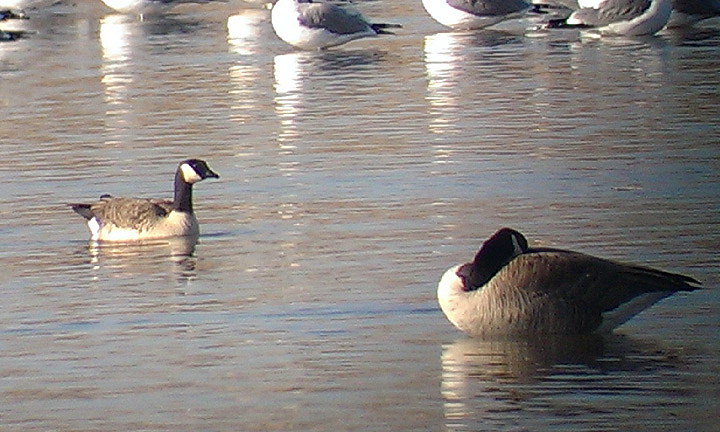
Cackling Goose (left) with Canada Goose at Decker Lake

eBird Checklist:
http://ebird.org/ebird/view/checklist?subID=S15799687

After getting our fill of these geese it was onward to Lake Park in hope of more geese, perhaps some gulls, and maybe, just maybe the Pacific Loon that had been present the week before.  Well there were few geese (by Lake Park standards), almost no gulls, and the loon I would say its safe to assume is gone.  We did however pick up a pair of HOODED MERGANSERS on the river behind the IHC building.  They were accompanied by a handful of Common Mergansers.  We also watched a PRAIRIE FALCON hunting in a large field to the west of there, providing great looks for the group.

Prairie Falcon coming in for a landing at Lake Park

At the west pond we did add a lone RED-BREASTED MERGANSER for the 3 species sweep for the day.  The only other thing of note was an enormous flock of EUROPEAN STARLINGS, perhaps 5,000 birds that came form the west and flew over us, murmurating, as they headed east.
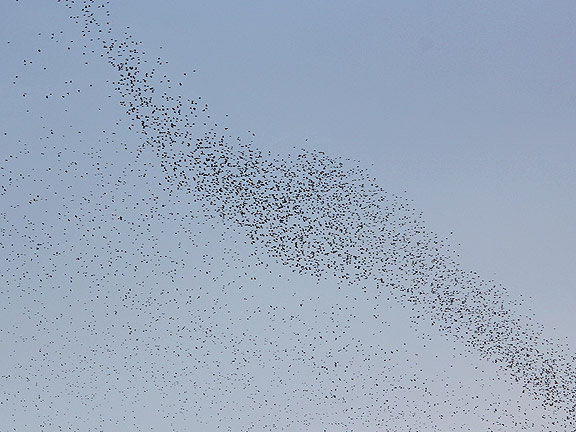
Just a portion of the European Starling flock over Lake Park

eBird Checklist:
http://ebird.org/ebird/view/checklist?subID=S15799725

The next stop was Lee Kay Pond which was inundated with Gulls, approximately 2,500~ mostly on the west pond--the best viewing was from the east, but it put us at an extreme distance.  From the entrance to the middle pond we scoped the birds and picked out a couple HERRING and THAYER'S GULLS form a distance.  The Thayer's was a lifer for Ivan so that was quite exciting.  
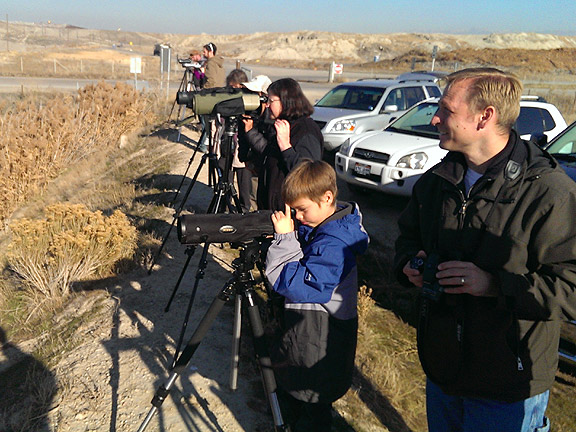
Utah Birders Ivan and Tom Richardson scanning the gulls at Lee Kay Ponds

After giving it a good while we drove the road along the middle pond where we spotted more HOODED MERGANSERS.  We looped back to the west pond, closer to the flock to try scanning a little closer while we still had some good light.  We weren't out of the car 5 minutes when Kenny shouted that he had an ICELAND GULL.  I took a quick look through his scope and excitedly hollered for everyone to come over.  That's when we went into crisis mode--no one could get the bird in a scope, besides Kenny's and trying to get everyone on the bird was like a nightmare.  Finally, as a stroke of luck would have it the bird emerged form the throngs of gulls and sat in the open for everyone to see nicely--a life for many on the trip, including Ivan who had now picked up one of Utah's hardest to get gull species.
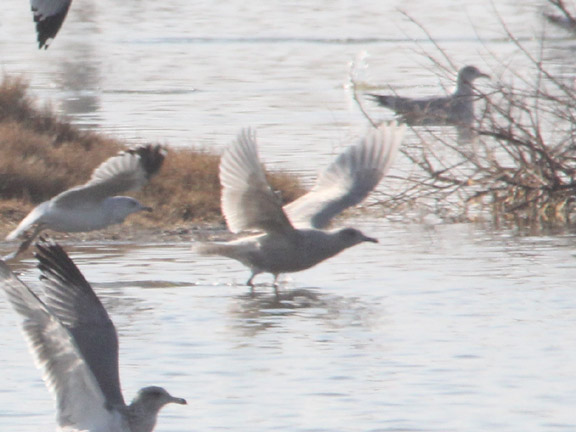
Iceland Gull taking flight--the highlight of the day and lifer for many.

Eventually a THAYER'S GULL flew right over us proving excellent looks for the entire group.  This was followed by the Iceland Gull taking off and flying to the west beach where it landed and began preening.  We drove down and spent a few more minutes watching it before continuing on our way.
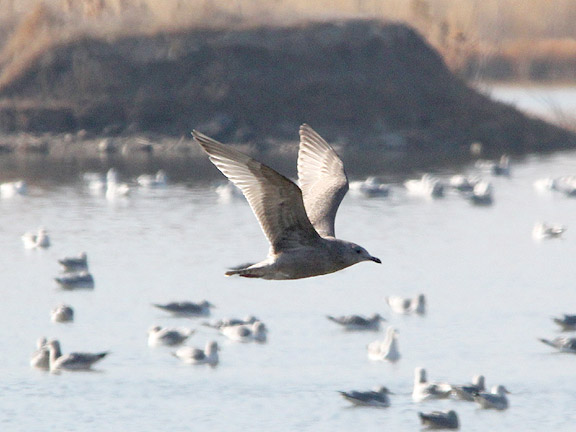
Thayer's Gull flyby at Lee Kay Ponds

eBird Checklist:

We made a quick drive up 7200 West with nothing of note--bird wise and otherwise.  We made a quick stop at the International Center to refuel and grab snacks.  A quick check of the ponds there revealed a few gulls, ducks, and geese, but nothing of note.

7200 West eBird Checklist:

SLIC eBird Checklist:

After our short break we drove the frontage road along I-80 towards Saltair.  Our stop here was at Kennecott's Inland Sea Shorebird Reserve--a private mitigation wetland that provides much needed protection to both habitat and birds on the south shore of the Great Salt Lake. The target bird here was Tundra Swan (among others), which this time of year can number in the thousands.  As our luck would have it there were about 1,000 TUNDRA SWANS present, and we spent the better part of an hour watching them from various distances, with different lighting and back drops.  It was a highlight for many on the trip.
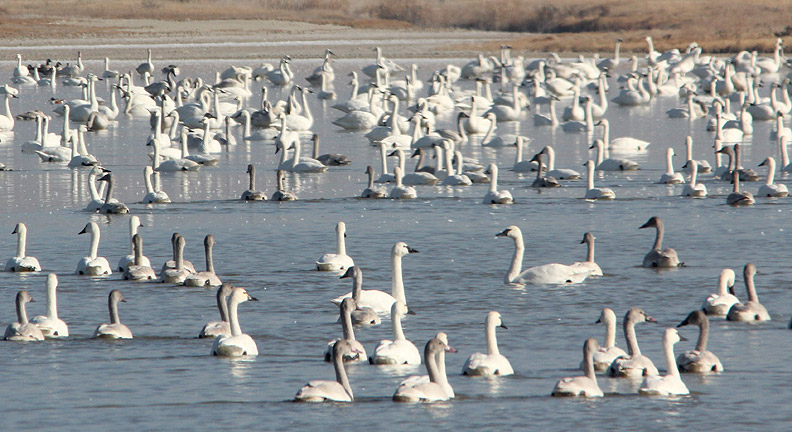
Small portion of the Tundra Swans at the ISSR

We also added both GOLDEN and BALD EAGLE and had NORTHERN HARRIER and several ROUGH-LEGGED HAWKS.  No shrikes, but several in the group did get short looks at a small flock of AMERICAN TREE SPARROWS that passed by the vehicles.

eBird Checklist:

Our final stop of the trip was at the Great Salt Lake State Park marina to scan the gulls along the shoreline.  We hoped the Heermann's Gull from the previous week was still present but with great lighting we quickly found that it was not.  We spent some time just relaxing and talking while scanning, bring the trip to a quiet end.

eBird Checklist:

We did however have one more sighting of note, as we made our way back to the Wal-Mart we passed Parley's Gulch where form the interstate were able to pick out 2 LEWIS'S WOODPECKERS remaining on the poles along the bike path.  A great end to a great trip.  

eBird Checklist:

Thanks to everyone who took part and made for a great day of birding some of the lesser visited places in the county--the south shore is often overlooked as a a birding hot spot but it definitely is one of the best places along the lake to look for waterbirds.  

Labels: , , , , ,

Winter Wonderland

posted by Unknown at
on Friday, March 15, 2013 


This past winter was by many standards a cold miserable one here in Utah. The air was bad, people were sick, and it was bitter out there. Though this is all true, there were a few individuals crazy enough to brave it on a regular basis. These crazy people did it with the end game of enjoying one of the finest winter birding experiences nature will ever provide in Utah. I have come to this consensus by hearing this same conclusion from the mouth of other nutty birders like myself. If those reading do not mind indulging me, I would like to share the highlight of what was for me, a great winter.
It all started with the realization that the often visited south and west sides of Farmington Bay would be amazing places to bird if people were allowed to drive out there. A large expansive wetland area exists that the common birder has no access to. The idea of walking out there was planted in my head and grew until I finally decided to act on this inclination. I was rewarded well beyond my expectations. I parked my car at the four way stop and ventured out on what would be a three and a half mile walk into nature.
 
Here is a map showing the area birded.


I was engulfed by God’s creations. It was a spiritual experience to say the least. To be out there with not a single discernible human sound. Replaced by a chorus of Tundra Swans and waterfowl. Winter bird life flying all around you. Nature being aware of your presence and allowing you, as an intruder, to enjoy its majesty.


Tundra Swans in flight illustrate the beauty savored that day and capturing a runing swan, fighting to achieves lift is a treat.


There were at least 1500 swans on the ice, on the water, and in the air. They were aware of this lone human intruder.  I thanked them for doing nothing more than cautiously walking away from me as I approached.


I almost tripped over this Black-crowned Night-Heron as it yelped at me and flew off. My attempt at being one with nature in this instance was a major failure.


I saw my first of the year American White Pelicans in big numbers (44) out in the middle of all the swans.


It was a treat to see my first Sandhill Cranes of the year flying right over my head as they made there distinct calls. If they hadn’t been announcing their presence I easily could have missed them. The challenge here was deciding what to focus on when you are overwhelmed with bird life.


After walking for about three miles and being a little worn out from tracking through the mud and snow for hours, I found a great spot next to the road where the ice was more open. The highlight of the bounteous duck life and this singular day of birding was this rare Eurasian Wigeon, which put a smile on my face for days.


Though not in their beautiful breading plumage, these Ruddy Ducks are still a handsome bird and it was fun to see about 300 of them. This male Buffelhead and this female Lesser Scaup did not seem to mind that I was there.


I expected to see Bald Eagles but Fifty two! Wow!


I may not be a professional photographer but I love to capture and freeze in time a moment enjoyed looking at a bird or group of birds. A singular moment can be shared and reflected upon.


Below is a list and counts for species seen on my winter birding adventure.
Canada Goose 50
Trumpeter Swan 1
Tundra Swan 1500
Eurasian Wigeon 1
Gadwall 2
American Wigeon 40
Mallard 300
Cinnamon Teal 35
Northern Shoveler 200
Northern Pintail 500
Green-winged Teal 20
Canvasback 45
Redhead 240
Ring-necked Duck 50
Lesser Scaup 200
Bufflehead 25
Common Goldeneye 30
Common Merganser 100
Ruddy Duck 300
Ring-necked Pheasant 1
American White Pelican 44
Great Blue Heron 2
Black-crowned Night-Heron 1
Northern Harrier 2
Bald Eagle 52
Rough-legged Hawk 2
American Coot 25
Sandhill Crane 3
Ring-billed Gull 1
California Gull 800
Herring Gull 50
Loggerhead Shrike 1
Common Raven 5
Song Sparrow 1
Red-winged Blackbird 20
Western Meadowlark 1

36 species and 4,500+ individuals.

Labels: , ,

Waterfowl Photo Quiz

posted by Kenny Frisch at
on Monday, January 14, 2013 

I took this picture December 28th at Lee Kay Ponds. As you can see the birds are extremely backlit, but this gives a good view of most of their silhouettes. It may be impossible to ID all of the ducks here based on this photo but give it your best shot.

Good luck!


Labels: ,

Flight of the Heron

posted by Tim Avery at
on Wednesday, November 14, 2012 

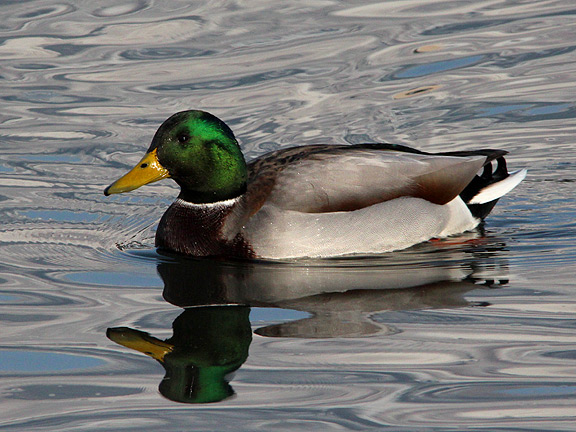
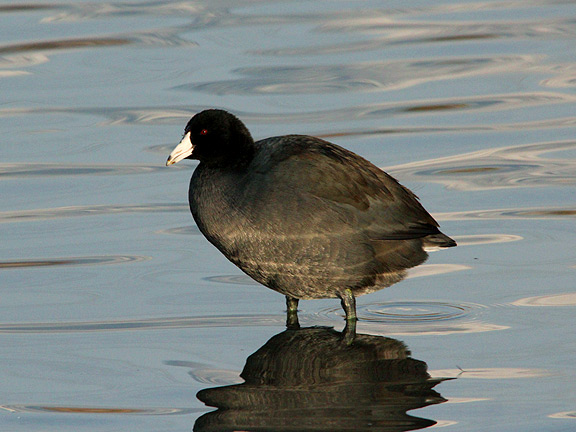
Yesterday I took off from work a little early.  I didn't feel great and needed to pick Sam up form work to go get her car from the shop.  Traffic was light and I got to here work about 30 minutes early--so instead of waiting in the parking lot I drove 5 blocks to the Sand Fishing Pond to see what was on the water.  The lighting was great so I figured I would snap some shots of the Mallards and the Coots to make the best of it:

  
Drake Mallard and an American Coot at the Sand Pond

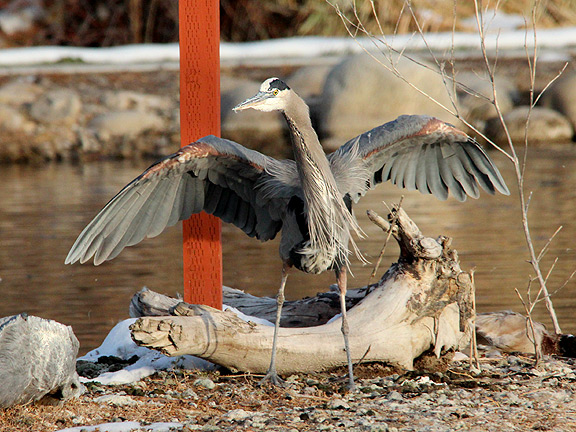
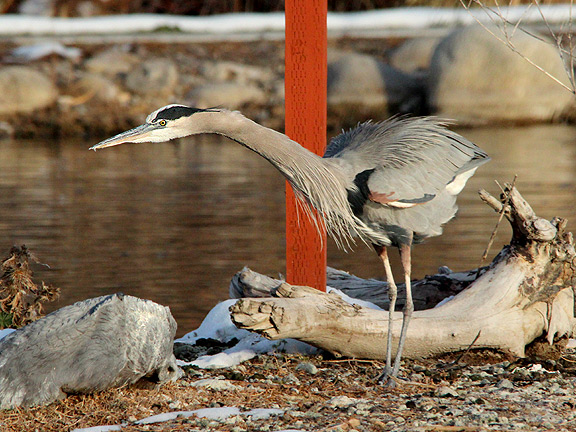
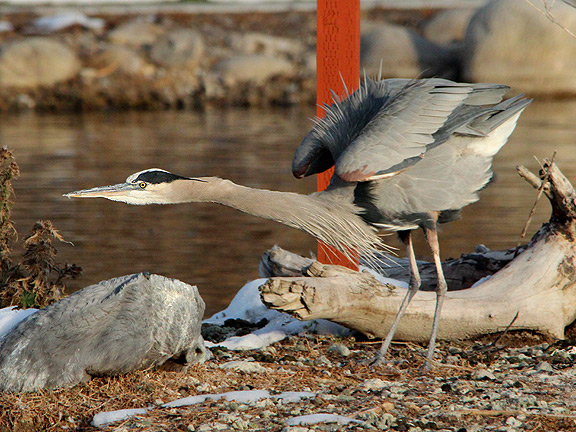
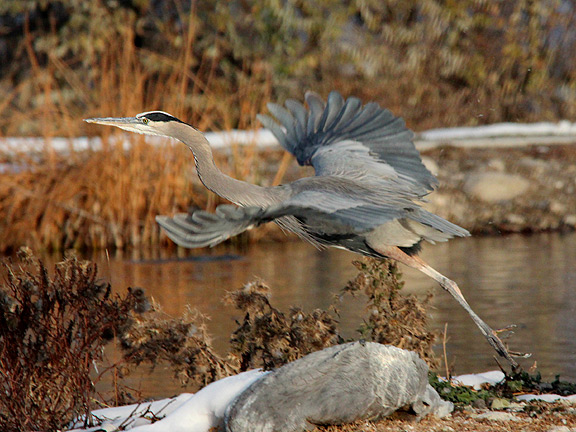
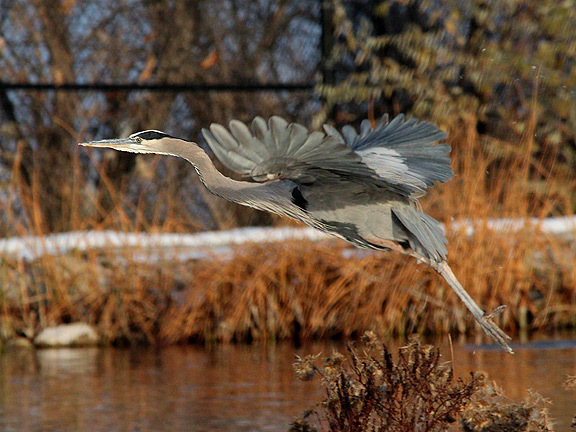
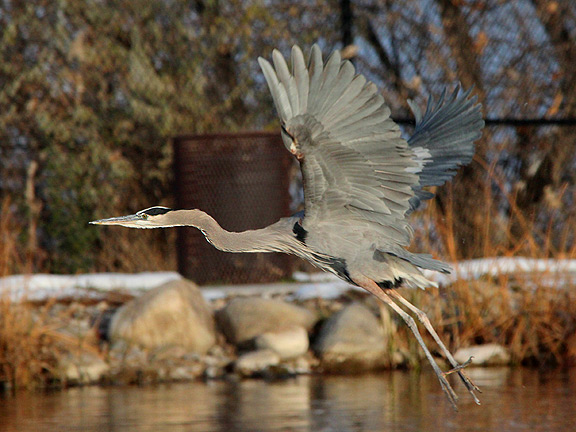
There was a Great Blue Heron sitting on the island when I arrived with its head tucked.  I didn't pay much attention but figured I would get to a nice angle before I left to get a few shots.  After a few minutes with the waterfowl I headed to a little spit of land that juts out into the pond, and the following shots are what happened...


It started with a little dance:


Which progressed into a pose:


And then into a stretch and fluff (my favorite shot):


This was followed by a take off
(note the creature to scare the birds placed there by DNR):


And flight across the pond:


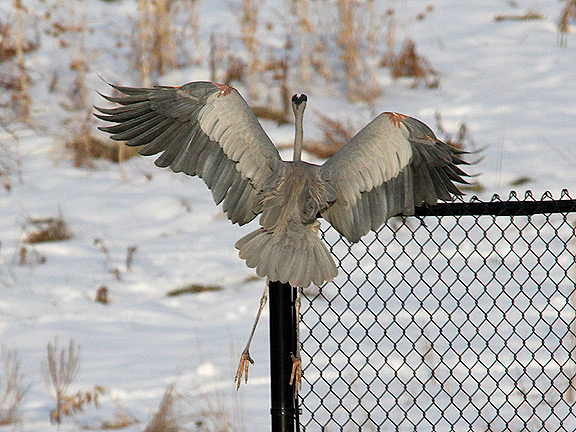
where the bird promptly landed on a fence:


Sometimes you just end up in the right place at the right time for whatever reason and get to capture something cool on film--er .jpg--whatever you want to call it.  Now if only that damn red post hadn't been there it would have been perfect!

Labels: , , ,

It's Official

posted by Anonymous eBirder at
on Thursday, August 16, 2012 

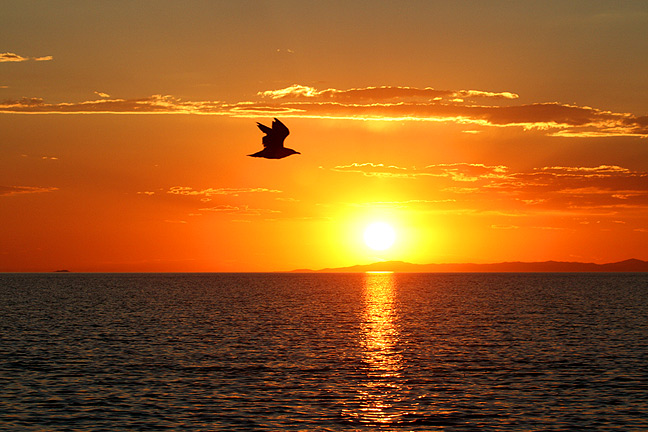
Sunset from the Causeway, where a new 200 yard
hunting buffer was approved by the state today.

The 2012-2013 Waterfowl Guidebook recommendations, which included the 200 yard buffer along Antelope Island, were passed unanimously this morning.

 I guess we can all celebrate now, and what better way to do so than taking a trip to the Antelope Island causeway.  I'll be leading a field trip with the Great Salt Lake Audubon to the causeway this Sunday; talk about good timing.  More details about the field trip can be found here.

Labels: , , , ,

Tonight's RAC meeting.

posted by Anonymous eBirder at
on Wednesday, August 8, 2012 

The RAC meeting this evening went very well, and I didn't have to do that much speaking.

Brittany Badger, Shyloh Robinson and I arrived at 6 PM.  When we got there, we found that Kris Purdy and Paul Higgins were already there waiting for the meeting to start (Thanks for coming, everyone!).  I filled out a comment card, we did some minor catching up with Kris and Paul, and we patiently waited for the meeting to begin. 

The Antelope Island Buffer was discussed when the RAC discussed the new 2012/2013 waterfowl guidebook.  Our proposal for a no-shooting buffer was a new rule that was introduced into the new guidebook.  After the changes to the guidebook were introduced, the RAC asked for public comment concerning the issue.  I stood up to the microphone and stated that the Utah Birders were in support of the new guidelines proposed, and most notably we agreed with the 600 foot buffer proposed along the Antelope Island Causeway. 

After the guidelines were introduced, and comments were made by the public and by the RAC, and the issue was then voted on by the RAC; they voted unanimously to approve the guidelines, which included our proposed 200 yard buffer along the causeway.  Members of the RAC were then asked to comment on the vote, and one member stated that he was very happy that hunters and birders worked together to solve a complex issue concerning both parties. 

I am still in shock.  I'm overjoyed that we worked together to come to a compromise that will work out for all parties concerned.  I'm happy with the help and support I received from the birding community, and the hunting community as well.  This really wouldn't have been accomplished without teamwork and compromise. 

It's a humbling experience to feel like you've made a difference in the world, and that you've done something positive for conservation.  This has been a great learning experience and I'm glad that I had the chance to experience it. 

I forgot to thank many of those that have worked with me.  In addition to those I thanked on the previous post, I'd like to thank:  Jeff Richards and the Utah Waterfowl association, the Utah Airboat Association, Jay Banta and the Backcountry Hunters and Anglers, Kris Purdy, Paul Higgins, Don Paul, and another HUGE thank you to Jeff Gordon and the American Birding Association.

Labels: , , , ,

Causeway Shooting Buffer: An 8 Month Process

posted by Anonymous eBirder at
 

Tonight the DWR's RAC will be voting on rules to be added to the 2012/13 Waterfowl Guidebook. One of those rules is a rule that we proposed last December, which would place a 200 yard no-shooting buffer along the Antelope Island Causeway.

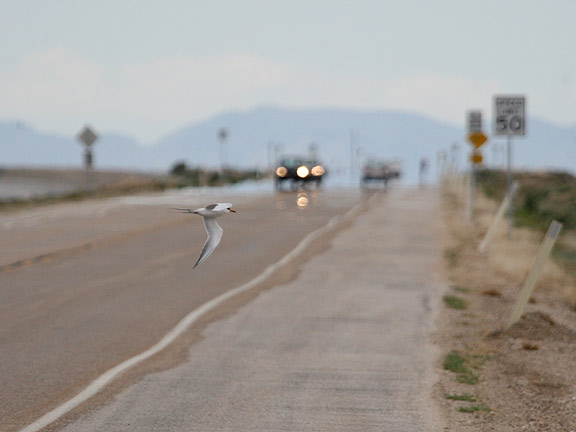
Forster's Tern flying over the Cuaseway.

I will be in attendence at the RAC meeting, and also at the Utah Wildlife Board meeting next Thursday discussing this rule, and why we are in support of it. I'm a little nervous. I know that there is a great amount of support for this proposed rule, and hunters seem to be mostly on board, but I can't say how the vote will go. I hope that the buffer rule will be enforced along the causeway to preserve the integrity of one of Utah's most beautiful state parks, and to protect the wintering waterfowl that so desperately need the causeway for their survival.

I'll keep everyone posted on how the vote goes. No matter what happens tonight, I'd like to thank Jeff Gordon of the ABA, Corey and Jessica Stokes, Jeff Bilsky, Tim Avery, Shyloh Robinson, and Kenn Kaufmann, and all the Utah Birders for all the help they gave me along the way. I couldn't have done this without your help and support.

Here is a link to the blog post from last December that states why we feel that this is a concern.

Labels: , , , ,

Practice Photography

posted by Tim Avery at
on Thursday, June 28, 2012 

Every now and again I get an itchy trigger finger for some good shooting--we're talking photos here, not guns.  Usually it happens when I haven't been out birding much, or haven't taken my camera out for a spin in some time.  This summer I haven't been too ardent of a birder, it has been hot, and I have been lazy.  So tonight Sam and I decided to remedy that just a little.  We ended up at Sugarhouse Park so she could feed the ducks--and I could get a little "practice photography" in.

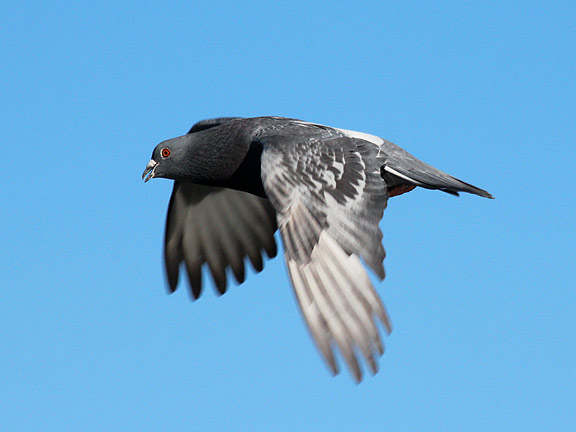
Rock Pigeon in Flight at Sugarhouse Park

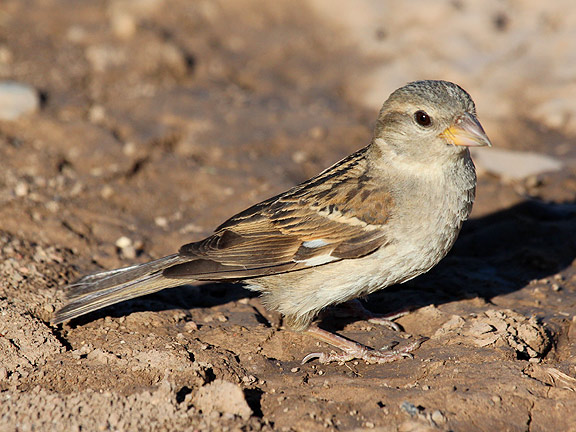
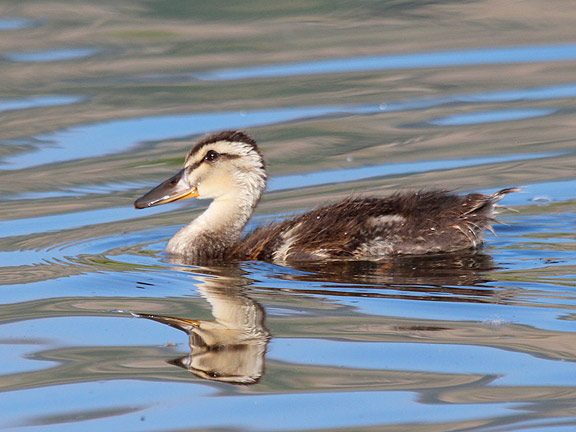
Even though I have been photographing birds for over a decade I still enjoy going to the park where I learned to photograph ducks, geese, and gulls and get some easy shooting in.  It's like shooting fish in a barrel--or birds on a pond in this case.  There is no better place to practice taking pictures, or to learn the settings of your camera, than at a local park.  For starters the birds are fairly tame and easy to approach. They are used to people so you don't have to work to hard to setup decent shots.  Aside from being accustomed to people, ducks, geese, pigeons, sparrows, and blackbirds all tend to be pretty easy to photograph even in wild places--we'll call them easy targets.

 House Sparrow at Sugarhouse Park

If you live in the city, there is probably a park nearby, maybe one with a pond where you can practice shooting these easy targets.  If it's close you can time it to be there when the light is just right.  I prefer evenings any time of the year at Sugarhouse.  It puts the sun to the west of the pond, and gives you some really powerful lighting to work with.  Every time I have gotten a new camera body, one of the first things I would do would be to head over to Sugarhouse late in the day and photograph the waterfowl and gulls.  I have gotten some killer shots this way over the years.

Young Mallard at Sugarhouse Park

Here in Utah one of the cool things is that you can spend a great deal of time studying California Gulls in all states of plumage most of the fall, winter, and spring.  In the summer there are usually a few around, but the real spectacle is in the spring.  The best way to find rare gulls when looking through a flock is to learn the most common ones--if you can nail down the California Gull at any age or state of wear that's a good start.  Plus the photo ops are pretty amazing.

California Gull face detail at Sugarhouse Park, April 21, 2008

So next time you just want to get some good photos, and practice working on your skills, take a trip to a nearby park and do some "practice photography".

Labels: , ,

March Means Migration

posted by Tim Avery at
on Friday, March 2, 2012 

It's March--and that means migration.  If you live in northern Utah you are probably saying to yourself, "Migration? It snowed a foot in the last 24 hours!!!".  True, this late season system dumped along the Wasatch Front the past two days, and I am sure quite a few people are thinking more about skiing than birding right now--but migration is here, and that's a fact.

Snow storm that hit Salt Lake City Last Night--March 1st.

The Snow and Ross's Geese are moving through the state right now.  The first shorebirds are showing up in small numbers. Sandhill Cranes are being reported as small groups pass through.  Waterfowl are heading back and soon enough raptors , swallows, and sparrows will be on the move.  March isn't a powerhouse month for migration but it does kick things off.  And once the ball is rolling, the birds just keep coming.  April and May will be here in no time, and before you know it the end of June will arrive and Fall Migration will have kicked back off.

Scott's Orioles arrive in southern Utah as early as March.

If you head to southern Utah during the latter half of the month quite a few southern specialties will be arriving and starting to look for nest sites.  Lucy's Warblers, Bell's Vireos, Scott's Orioles, Common Black-Hawks, and more are all early arrivals.

Cassin's Finch in March in my yard in Sandy.

If you're not quite ready for winter to be over, it's a great time to head into the mountains looking for winter finch flocks.  Rosy-Finches were abound at Powder Mountain last week--while Crossiblls, Cassin's Finches, and Siskin tend to start showing up at valley feeders just about now. There are still some gulls around, as well as 1,000's of Tundra Swans, and other winter waterfowl.  Winter Raptors are still here to--Merlins, Rough-legged, and Harlan's Hawks, as well as Bald Eagles.

Tundra Swans by the 1,000's during Migration.

But it's the month of change and many of the birds we are seeing right now will be long gone in a few weeks--replaced by their breeding counterparts.  Make it a helluva March and let us know what you're seeing!

Labels: , , , ,

Mexican Duck in Utah

posted by Ryan O'Donnell at
on Monday, February 20, 2012 

Mexican Duck, Anas (platyrhynchos) diazi, at First Dam, Logan, Utah.  Copyright Ryan P. O'Donnell.  
If you follow Utah Birdtalk/Birdnet, you already know that on February 5th, about two weeks ago, my friend Craig Fosdick found a very interesting duck at First Dam in Logan, Utah.  It was a Mexican Duck; probably the northernmost record of the species, and only the third from Utah.  Mexican Ducks are easy to overlook, and many readers of this blog might have never heard of one before.  Even the experienced birders Craig was with at the time hardly gave this unique vagrant a second look.

First, what is a Mexican Duck?  That question is not easy to answer.  According to the American Birding Association and the American Ornithologists Union, it is a subspecies of Mallard.  But that view is considered by some to be antiquated and inaccurate.  Recent genetic work has shown that the Mexican Duck may actually be its own species, and it is at least as unique as several other species such as the Laysan Duck and the Mottled Duck.  The picture is complicated, however, because Mallards contain several genetic lineages, and thus to have species boundaries that reflect mitochondrial gene phylogenies, one would either have to split Mallards based on strictly genetics, or else consider "Mallards" to include Laysan Ducks, American Black Ducks, Mottled Ducks, and many others, which obviously does not reflect biology well.  This is an area that is in need of additional research, particularly in generating phylogenies and assessing hybridization with nuclear molecular markers.

Phylogeny of Mallard-group ducks, modified from Johnson and Sorenson 1999, based on mitochondrial DNA sequences.  Note that Mallards appear twice here, having (at least) two different mitochondrial sequences.  Also note that Mexican Ducks are as distinct from Mallards as many other groups that we know of as species.

The definition of species within the Mallard group is confusing, but perhaps even more so in the case of Mexican Ducks, because our understanding of this species is clouded by hybridization with Mallards in Arizona and New Mexico.  A classic study of morphology in Mexican Ducks found that there are virtually no pure Mexican Ducks anywhere in the species range, according to a numerical scale of morphology that ranges from pure Mexican Duck to pure Mallard.  However, an alternative interpretation of the same dataset is that our definition of what identifies a pure Mexican Duck is too narrow, and that pure Mexican Ducks can show traits that have once been taken to be indicative of Mallards.

With respect to the duck seen recently in Logan, this appears about as close to a pure Mexican Duck as one can expect at the northern part of the range of the (sub)species.  There is very little green on the head.  The bill is bright yellow.  The tail shows no patches of white.  The speculum has green iridescence, and is bordered only thinly by white.  The rump and undertail coverts match the flanks well in color, showing no obvious indication of the black that a male Mallard has in these areas.  The belly is dark, matching the color of the rest of the bird well.  The only part that seems to show some obvious Mallard ancestry is that the central retrices (tail feathers) curl up slightly off the plane of the tail, hinting at the curled central tail feathers of an adult male Mallard.  But, with how little we know of "pure" Mexican Ducks, perhaps this is not outside the range of variation shown by them?  Only an extensive study of morphological variation and nuclear DNA across the range of the Mexican Duck and Mallard can really address this question well.

The Mexican Duck looks a lot like a female Mallard, but darker and (in a male, such as this one) with a bright yellow bill.  Copyright Ryan P. O'Donnell.
The Mexican Duck's speculum has more of a green iridiscence, compared to the purple of a Mallard's, although the color varies somewhat with the angle of view.  Also note here how, unlike a male Mallard, the rump is about the same color as the flanks and the tail is dark, without white.  Copyright Ryan P. O'Donnell.

Unlike a Mallard, the lower belly is not noticeably paler than the flanks or breast.  The bright white underwing coverts are a trait shared by male Mexican Ducks and male Mallards.  Copyright Ryan P. O'Donnell.

This angle can be tough to see in the field, but it shows how the back of the Mexican Duck is generally dark, and the speculum is only thinly bordered by white, not boldly bordered by white like a Mallard's speculum.  Note that at this angle the speculum looks more purple than green, like a Mallard's.  Copyright Ryan P. O'Donnell.
As rare birds go, this individual might be pretty easy to find.  It has been seen over the last two weeks at First Dam in Logan.  Watch for a duck that looks a bit like a female Mallard, but is darker and has a bright yellow bill.  While I don't advocate feeding park ducks, it is a common practice at this park, and if you happen to time your visit when a local is feeding them, this duck might come right out in the open and fight with the other local domestic breeds for bread.  Otherwise, you might get lucky and see it swimming around on the water, or it might be sleeping on the far shore of the lake.  If it's not out in the open when you get there, try patiently scanning the sleeping ducks along the shoreline.

The Mexican Duck being seen at Logan's First Dam seems to have paired up with a female Mallard.  Note in this view how this Mexican Duck's central retrices lift slightly off the others, perhaps indicating a small amount of Mallard heritage.  Copyright Ryan P. O'Donnell.

Labels: , , , ,


UTAH BIRDERS FLICKR POOL


    SEE MORE AND SHARE ON FLICKR