Utah Birds, Utah Birding, and Utah Birders. Promoting the sharing of information, and the conservation of habitat for birds in Utah and elsewhere. We are a group of people who want to share what we know, and create a positive birding experience in Utah.

BIRDERS BLOG

a blog by and for Utah Birders

Flight of the Heron

posted by Tim Avery at
on Wednesday, November 14, 2012 

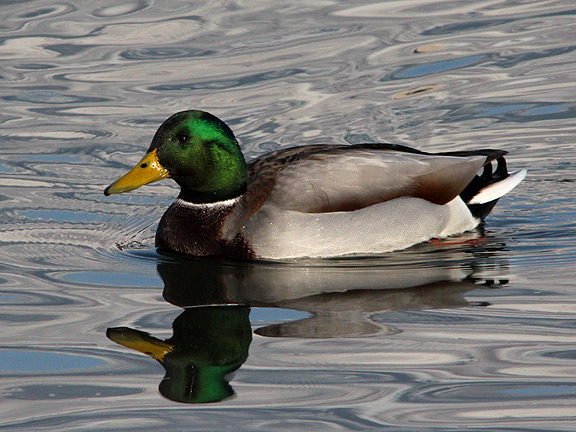
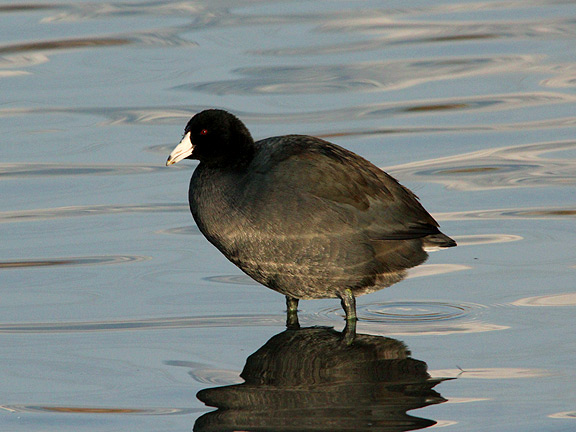
Yesterday I took off from work a little early.  I didn't feel great and needed to pick Sam up form work to go get her car from the shop.  Traffic was light and I got to here work about 30 minutes early--so instead of waiting in the parking lot I drove 5 blocks to the Sand Fishing Pond to see what was on the water.  The lighting was great so I figured I would snap some shots of the Mallards and the Coots to make the best of it:

  
Drake Mallard and an American Coot at the Sand Pond

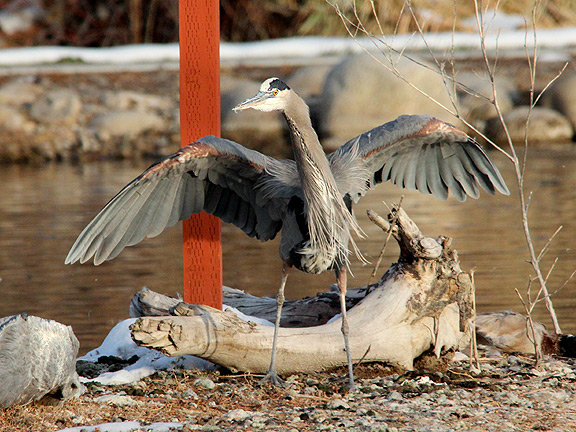
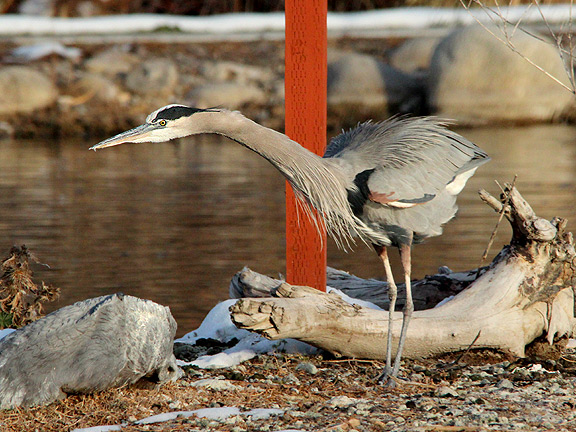
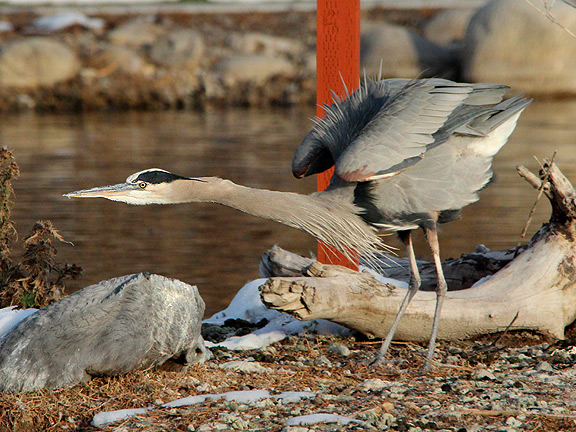
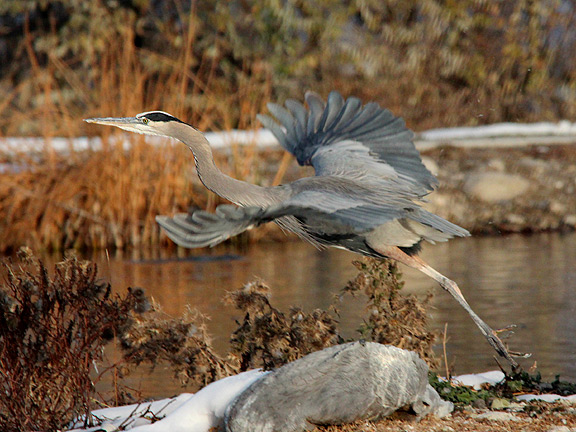
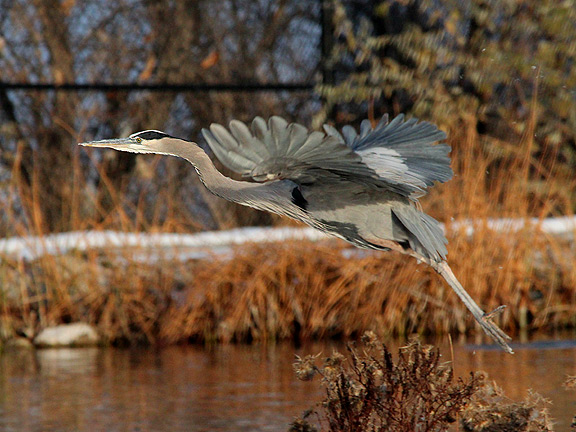
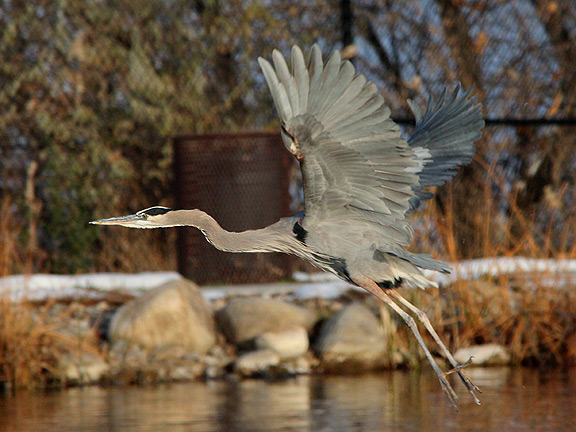
There was a Great Blue Heron sitting on the island when I arrived with its head tucked.  I didn't pay much attention but figured I would get to a nice angle before I left to get a few shots.  After a few minutes with the waterfowl I headed to a little spit of land that juts out into the pond, and the following shots are what happened...


It started with a little dance:


Which progressed into a pose:


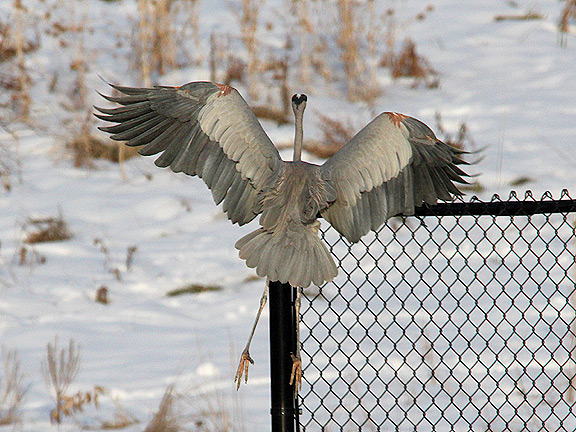
And then into a stretch and fluff (my favorite shot):


This was followed by a take off
(note the creature to scare the birds placed there by DNR):


And flight across the pond:


where the bird promptly landed on a fence:


Sometimes you just end up in the right place at the right time for whatever reason and get to capture something cool on film--er .jpg--whatever you want to call it.  Now if only that damn red post hadn't been there it would have been perfect!

Labels: , , ,

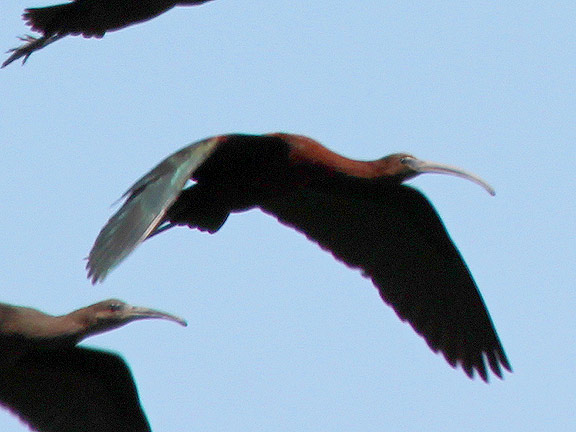
A History of Glossy Ibis in Utah

posted by Tim Avery at
on Tuesday, July 31, 2012 

Let's go back to 2004 and play a little game.  If you were a birder in Utah at that time, or for that case any number of western states, it is very likely that you had never seen a Glossy Ibis on your home turf.  I can't independently verify dates, but here is what I found for first records:  Wyoming (July 2005), Nevada (May 2009), Idaho (June 2005), and Arizona (April 2008).

My first Utah Glossy Ibis, April 2007

The dates above are from information available on the Internet, but may not represent first reports.  Colorado and New Mexico had already recorded Glossy Ibis more than a decade earlier from the east side of the Rockies so I did not include them above.  Montana appears to have a single report from 2004, and Washington from 2005.  Oregon is seemingly the only Pacific state without a record.  California is of course the anomaly, as with many other sightings of eastern species they had numerous prior to 2004.

Most Utah birders probably didn't have Glossy Ibis on their radar in 2004, it was a species associated with the east, and even with some westward expansion, a giant mountain range was separating them from our fair state. I know a lot of birders keep wish lists of birds they hope will eventually show up in state, or that might be here and have gone undetected for years due to small populations, or hard to reach habitat, or a general lack of scientific understanding of distribution.  But I personally didn't have Glossy Ibis on my list, I had seen them on the east coast, and associated them that way.

Glossy Ibis in Salt Lake County, 2008

Fast forward to 2006 and out of nowhere the dam broke.  Overnight Utah went from 0 reports of this species to at least 3 separate sightings in the month of June.  And then again in 2007, 2008, 2009... To the point that now this species that less than a decade ago had not been reported in Utah, was now almost expected annually.  So what happened?

Glossy Ibis at Bear Lake, 2010

Did the numbers of Glossy Ibis across the nation rise?  Did the populations expand their ranges further west? Were the birds always there, but due to conventional wisdom went overlooked for years?  Were birders better?  Were birders paying more attention or even looking for these birds?  Maybe a combination of factors?  Something changed in 2006 in Utah, which of the states mentioned above has seen more reports since these initial finds, than the rest of the states around us (Colorado is about par with us).

Glossy Ibis in Lehi, 2012

Looking back through my own reports, I have had Glossy Ibis every year back to 2007, with the exception of 2009.  I will be the first to admit that prior to the first report in 2006, I hadn't spent very much time scanning flocks of ibis in hopes of turning up a Glossy.  But since then, rarely do I see a flock that I don't give the twice over just to make sure one is sandwiched into the group.  How many birders fall into that category?  I would imagine quite a few are in the same boat. What about being better birders?  We all get better each year, without a doubt skills improve as we hone them in.  And that may play into finding rare birds--in that if you are looking, or know what, and when to look for certain things, you are more likely to find them.

Utah's first ever Western Gull, Farmington Bay 2007

I have my doubts that the birds were always there, just mixed in unnoticed.  It is possible, but I would guess that it more has to do with some type of expansion than just being overlooked for so long.  Combine that with more ardent observers and the increase in sightings makes sense.  The same could be said for a number of other species.  Dare I suggest Western Gull?  A bird that before 2006 had never been confirmed away from the coastal states, and now is expected during the winter on the Great Salt Lake.  What about Lesser Black-backed Gull?  Their expansion may be one of the most dramatic from east to west, and as with the above it is now expected every winter.  How about Neotropic Cormorant?  Why is a bird that 5 short years ago never showed up away from the the southern borders is now popping up all over the country, and in some places even apparently breeding?

Count them--6 Neotropic Cormorants
in Salt Lake County in May 2010

The list could go on.  The reasons may be varying, and truthfully, I don't think anyone can pinpoint the exact reason for many of these presumed "expansions".  I think the one thing the majority of birders can agree on is that the sharing of information is far more extensive now than a decade ago.  This makes learning about birds, patterns, migration, distribution, etc, easier than it used to be, and with more people armed with knowledge about these subjects it can only help in making us better and more informed birders.  It's not just a hobby where retirees (no offense intended) spend their morning walking around the parks admiring the ducks.  Birding has become more scientific and more mainstream than it was when I was growing up.  The leaps and bounds of the last decade will probably seem minuscule with what happens in the next ten years.  I guess I'll have to look back then and see how things have changed even more.  The only question is,what birds will I be using as examples then?

Labels: , , , , , ,

Flocking up for Migration

posted by Tim Avery at
on Friday, August 19, 2011 


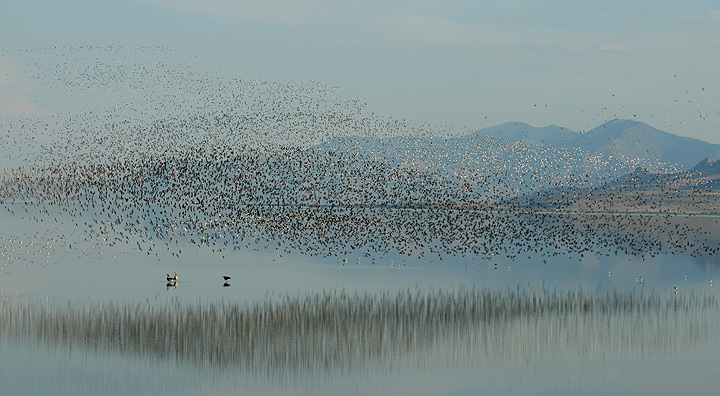
It's the middle of August and if you have been out birding lately, you may have noticed a number of species "flocking up" for fall migration. In particular some very easy to see and abundant species found along the Wasatch Front and the Great Salt Lake are gathering in somewhat staggering numbers. This ritual takes place each fall as the birds prepare, or are on their way south for the winter.


Wilson's Phalarope flocking up on the Great Salt Lake

Wilson's Phalarope can be found right now along the Antelope Island Causeway in what could be described as unimaginable numbers. So many birds, as far as the eye can see that it almost doesn't seem real. 500,000; maybe a million birds all within viewing distance of the road does seem unimaginable, but it's real, and happens each year.

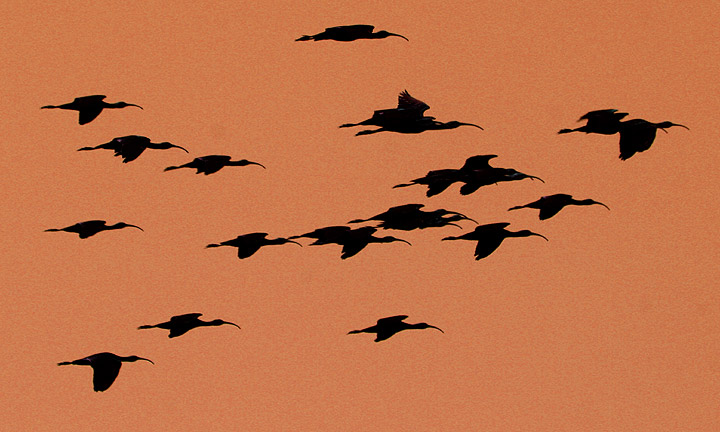
White-faced Ibis flocking up on the south shore of the Great Salt Lake

White-faced Ibis are typically found around the edges of fresh water marshes this time of year, anywhere with food will suffice. If you were to drop by the south end of Utah Lake you might see hundreds or thousands in flocks devouring everything in sight, getting ready to lift off and head south. Often this time of year, one can visit the Salt Lake International Center in the evening, and see flock after flock of ibis leaving the Great Salt Lake area and heading south out over the Salt Lake Valley. It's kind of a cool experience to watch.

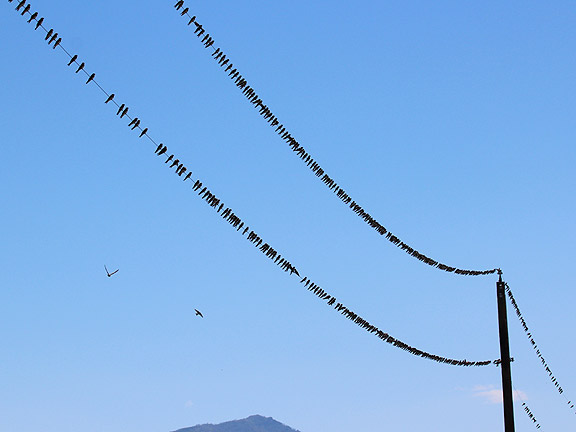
Bank Swallows flocking up in Utah County

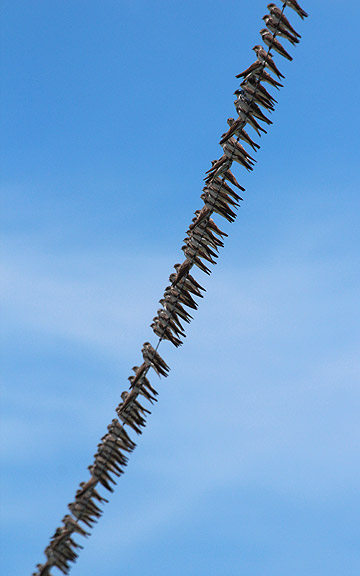
Bank Swallows are very particular about where they nest. During the breeding season, unless you visit a colony, this species can be hard to find in Utah. During migration they are far more common and often seen in flocks of 1,000's of birds. Along the Antelope Island Causeway and other roads with a high density of insects for the taking you may see fences, power lines, and road barriers covered in swallows as they rest between forays to feed. Just yesterday I saw close to a 1,000 on a random side road in Utah county where most of the year any swallow would be hard to find.

Bank Swallows flocking up in Utah County

So why do these birds flock up? There are a couple of theories that are widely believed to be true. For starters some believe that when in flight, the shape a flock makes may make be more aerodynamic than a single bird in flight, saving energy for individuals as the mass moves together. Another common belief is that safety comes in numbers. It is true that if you are alone on a journey you may be a far easier target, than 1 in a 1000 traveling together. Yet a third theory is that it may be easier for a larger group of birds to find food than an individual. With more mouths and eyes in search of food, it could make it easier to find the energy filled fuel these birds are in need of for their trips.

What are some of your favorite "flocking" experiences with birds?

Labels: , , ,

The Greatest Blue Heron

posted by Jerry Liguori at
on Thursday, January 13, 2011 


Time -- October 1994. Place -- Cape May Hawk Watch, NJ. Let me tell you about Pat Sutton, she was a Naturalist/Program Director for CMBO (Cape May Bird Observatory) for years and years…best there was! I always knew this, but one incident sums it up. I was the official Hawk Counter at Cape May for several seasons and Pat would visit regularly with (and without) groups she was leading. Pat was always enthusiastic, got people involved, and had a wealth of knowledge about all wildlife. I loved when her groups would visit the hawk watch, I could scan for hawks and eavesdrop on what they were discussing at the same time.

Apparently a Great Blue Heron took flight from out of the reeds and began to fly across the pond in front of the hawk watch. Pat immediately points it out to her group "Great Blue Heron flying to the right, ooh, look at its blue-gray color, long neck, long pointy bill…gorgeous!" "OK everyone, now it’s turning back to the left, heavy wing beats, astonishing coloration, boy will you look at that…beautiful." As Pat was describing this bird with the same enthusiasm one would describe the Grand Canyon, I felt myself tempted to look over.

Let me be honest, here I am, a 20-something, intense, fanatical, obsessive, crazy hawk watcher and above me was a sky littered with hawks. I blew off chasing mega-rarities even on slow days because I wouldn’t leave the hawk watch ‘til dark in the chance that I would miss a hawk. I put in 1,023 hours on the platform that year! I had counted the largest one-day flight of Great Blue Herons ever recorded (3,200), and have seen thousands otherwise...we're talking just another Great Blue Heron...booooring in my eyes. But I was compelled to look at this heron or I would miss perhaps the greatest Great Blue Heron I would ever see. I did it, I dropped my binoculars to watch this Great Blue Heron, and saw that every single person there was watching it too. Funny thing, I noticed how gorgeous that heron really was, loping over the pond with it’s impossibly long neck sticking out before it had settled into a normal flight posture. No one else could have gotten me to take my eyes off a hawk to look at a heron except Pat Sutton. There is no better teacher of the natural world, and Pat’s husband Clay -- an amazing naturalist himself -- would agree!

Labels: ,


UTAH BIRDERS FLICKR POOL


    SEE MORE AND SHARE ON FLICKR