Utah Birds, Utah Birding, and Utah Birders. Promoting the sharing of information, and the conservation of habitat for birds in Utah and elsewhere. We are a group of people who want to share what we know, and create a positive birding experience in Utah.

BIRDERS BLOG

a blog by and for Utah Birders

Gullstravaganza 2017 Recap

posted by Tim Avery at
on Monday, February 13, 2017 

Another year and another Gullstravaganza in the books.  This year we had a first in that we actually canceled the initial event due to weather.  In the past we've gone full tilt regardless of conditions, but this year heavy snow put the kibosh on the initial offering.  We weren't
 too worried as we had offered the trip a little earlier than normal this year, giving us plenty of time for a make up date.  The only problem was our actual lack of availability through the end of the winter gulling season.  With only  few options, we settled on February 11, 2017--unfortunately the same day as Utah Bald Eagle Day, but it was out best option.

The Utah State Bird--the California Gull...

In the week leading up to the event we had high hopes with at least 8 species of gull reported so far in the month of February.  But the weather, int he opposite end of the spectrum had different ideas.  A major warm front passed and dropped 5-6 days of 50-60 degree weather on the valleys across northern Utah.  What this meant was all that frozen water that helped concentrate the gulls in a handful of places was now open.  There was no frozen water around the southeast edge of the Great Salt Lake.

The morning of the trip Kenny Frisch and I set out to do a quick scouting run.  First stop Decker Lake... No gulls.  Next was the Lake Park Facility... No gulls.  Okay then Lee Kay Ponds... No gulls.  This pattern wasn't very welcoming...  We drove 7200 West along the west end of the landfill where luckily the overflowing playas had a small flock of gulls with 4 species--the regular 3 (California, Ring-billed, and Herring), and a Thayer's Gull to give us at least some variety.

Ring-billed Gull in the shallows

So with this in mind, we headed to meet the group.  Although 37 people signed up a handful didn't show up.  There seemed to be some confusion because apparently the Utah County Birders had a gull field trip on Saturday as well.  But they cancelled theirs, and we got several emails from people asking if the trip was still on since they received an email saying it wasn't.  It would have been cool if they would have sent their members an email saying their trip was off, but we were still offering one.

Part of the group looking at our main flock at 7200 West

We set out with a line of cars in tow and found ourselves at Lee Kay Ponds, where there were still no gulls.  But a NEOTROPIC CORMORANT, provided nice looks perched and in flight with a Double-crested Cormorant.  On to 7200 West where had we known our fortunes for the rest of the day, we would've remained for the entirety of the field trip.  The flock here grew to around 500 gulls, still with the majority of the 3 species mentioned above.  Eventually we relocated the THAYER'S GULL for the group, and added an adult LESSER BLACK-BACKED GULL to make it 5 species on the year, at least besting our worst count by one!

Lesser Black-backed Gull in front of a Herring Gull

WE did find one bird that initially caused a stir.  It was a large dark-backed gull with a thick bill.  It had an essence of a darker Western x Glaucous-winged hybrid, but seemed too dark, with a  bill that wasn't quite bulbous enough, and wings that were perhaps too long.  After some discussion amongst others we settled on HERRING x LESSER BLACK-BACKED GULL which is a new hybrid for the trip.  Truthfully it may very well even be a Herring X Great Black-backed Gull, but with our distant looks, and lack of experience with those mixes it really is impossible to say with certainty.

The big, nasty, dark-backed, big-billed presumed hybrid, Lesser Black-backed X Herring Gull

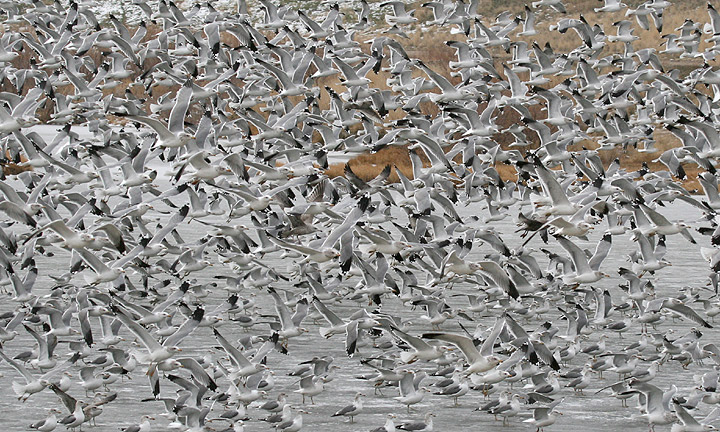
There actually were lots of gulls in the area, but they were on the landfill, almost a mile away and showed no signs of leaving the trash pile in favor of the water. I shot a little video through my spotting scope to show the mass in the air...

A video posted by Tim Avery (@piranga) on

After an hour we headed up to Farmington Bay where there were hundreds of gulls scattered on the open water.  Mostly Ring-billed with a few California and Herring mixed in, we didn't find anything else of note.  Aside from the gulls there were a handful of WHITE-FACED IBIS around, as well as a huge flock of AMERICAN AVOCET that had arrived in the last week.

Flock of White-faced Ibis passing at Farmington Bay

We called the trip a day a little early since there weren't anymore gulls to be seen.  Although we would have like some frozen water, and concentrations of gulls it's always a fun trip.  Next year we may shoot for an even earlier date to make sure we can get it in before all the ice opens.  That in combination with the fact DNR no longer does a carp kill will probably keep us doing an earlier trip in the future to make sure we see lots of gulls, and a great variety of species!  Thanks to everyone who joined us this year and made for a great time!

Part of the group wrapping up the afternoon at Farmington Bay

Labels: , ,

Gullstravaganza 2016 Recap

posted by Tim Avery at
on Sunday, February 21, 2016 

Another winter and another Utah Birders Gullstravaganza in the books.  It comes and goes so quickly every year, to the point that I am already thinking about 2017 and our next event.  Every year we seem to learn something new--some years it contradicts with things we've learned in the past, and makes this even ever changing to fit the year.  This year we learned that when you have an early thaw, it can really throw things into turmoil if you keep a late February date for the event.  Last year on the same weekend there was ice, wind, and snow.  This year it was sun, mud and water.  Anyways let's talk shop and get to it.

An impressive line of Gullers at the bay!

We had an absolutely great turnout for the event with 36 intrepid larus enthusiasts congregating at Farmington Bay for our annual gull trip.  The group was a great mix of old and new faces and names, and ranged in age from little kids, to well seasoned birders.  The weather was truly beautiful--sunny, and right around 50 degrees--something that isn't normal for this date.  After the group was mostly there, we carpooled up and headed down west dike to see what we could find...

And what we found were RING-BILLED GULLS.  Lots and lots of Ring-billed Gulls.  In fact, at 1,200 individuals this was the most common species we encountered of the day.  To be fair there were an estimated 2,500 gulls too far away to identify.  Large rafts of gulls sat in distant corners of the bay, obscured by heat waves and distance.  Notably there was no ice on the water, and the gulls were spread far and thin.  Like a evenly buttered piece of toast, it seemed like the birds had been laid out evenly across the bay, making it difficult to scan and compare shapes and sizes, as often there weren't birds "nearby" to compare to.

Utah's State Bird...The errr, California Gull

But this did not matter--we came for gulls so we looked for gulls!  We started to pick out our second species, the Utah state bird, the CALIFORNIA GULL in small numbers mixed in with the Ring-billed.  Eventually we came across a distant HERRING GULL, and finally a stop turned up 4 more Herrings close enough for everyone to get good looks.  We might just be able to pull out enough gull species to make the day a "stravaganza".

Adult Herring Gull on what little ice remained...

Eventually we made it to the 4-way at the end of the road and scanned for gulls here.  Notably present--much of the same from the drive in--except more California Gulls entered the fray.  To the southeast there was a nice mix of the 3 species and the movement of gulls in and out out was promising.  Eventually we turned up a 1st winter LESSER BLACK-BACKED GULL.  Then a second, and before the day was over Mike Hearell and Taylor Abbot picked out an adult that joined the raucous.

A small part of the group got looks at a THAYER'S GULL, but this usually common enough species was quite difficult to track down.  After most of the party had left for the day we were able to find an adult in the area.  5 species of gulls for the day.  Surprisingly this isn't the least amount of species we've had on this trip, and its only 1 less that what I would call "average".  Still comparing this to last year where we had 7 species as well as hybrids, it seems tame.  The three main reasons this years event didn't have the species count I always dream of, was due to the open water (lack of ice congregating birds), the fact DNR didn't do a carp kill here (still shaking my head on that one), and luck.  In the previous couple days both Mew and Glaucous-winged Gull had been see here.  Luck goes a long ways...

As the group parted, Mike, Taylor, and I made our way up west dike, and spotted an interesting Herring/Thayer's Type bird.  The smallish (for a Herring) bird had a rounded head, smallish bill, large window on P10 underside--but had a yellow eye, and apparently quite a bit of black on the underside of the primaries.  So is this a tiny Herring, or an abberant Thayer's Gull?  Gotta love gulls!

Herring or Thayer's? You be the Judge!

I love this field trip though.  Getting a large group of birders together to hang out for a couple hours, and just talk birds--gulls none-the-less!  We did see a few other birds as well--I tallied 43 species on the afternoon.  A small flock of WESTERN GREBES had arrived on the bay, while small flocks of WHITE-FACED IBIS and SANDHILL CRANE were present too.  The TUNDRA SWANS were present in small numbers and at a distance as well.  Near the entrance a flock of a dozen or so HOODED MERGANSERS were lounging on the water,  And on Glovers Lane a CACKLING GOOSE was hanging with a flock of Canada Geese as I took off for the day.

Tundra Swans against the Wasatch

In all we raised $150 for Great Salt Lake Audubon with this event this year--and we learned some things to help plan next years event.  The truth is you never know what you're going to get till the trip happens. Weather, food, and so many other things have to fall into place just right.  At the end of the day though, it was a great day spent looking at gulls with a fun group of Utah Birders!

eBird Checklist

Labels: , , , ,

Gullstravaganza 2015 Recap

posted by Tim Avery at
on Monday, February 23, 2015 

It seems like just yesterday we were wrapping up the 2014 Gullstravaganza. The crazy thing is that was 13 months ago.  2014 was one of our best gulling events--the best up till that point in variety of gulls and number of participants.  This year we decided to put all our eggs in one basket and finally just move the event to Farmington Bay WMA for its entirety instead of moving form location to location,  This likely had some advantages and disadvantages, but it made for a more relaxed event and much easier planning.

As has become the norm, we had a good number of sign ups with 33 people signing up for the event, despite a competing field trip led by Jerry Liguori and Hawkwatch International... Queue a little Seinfeld humor... "Hello Jerry!!!"


Okay, so that was ridiculous... :) In the past we have tried to plan this even when nothing else is going on, but this year we knew there were conflicts ahead of time--luckily the one we expected to cut in to ours--Snow Goose Festival--was actually a week later than expected (good for us and likely very bad for them as the geese have already started moving on...eek.).

So anyways, to the event.  After a slow start with gullers arriving we quickly realized Jerry was trying to poach our trip attendees by having his trip block the road to look at some boring BALD EAGLES.  He even went so far as to "accidentally take" one of our gullers in his car until the chap realized he'd been duped into the wrong group.  We straightened things out and eventually 23 birders were rallied to head out for the gulls! 4 more joined us shortly after for a total of 27 attendees this year.  Down from what we expected but the weather report likely caused some last minute dropouts--and those who Jerry promised photo-ops with ;)  None-the-less we were here to gull and gull we did.

Heading into the marsh we stopped briefly to look at an adult LESSER BLACK-BACKED GULL that was hanging out at the air boat launch on Dike Road at the carp pile.  Due the the unseasonably warm weather we've had the eagles have mostly moved out, leaving the piles of fish for the gulls to take advantage of without any competition.

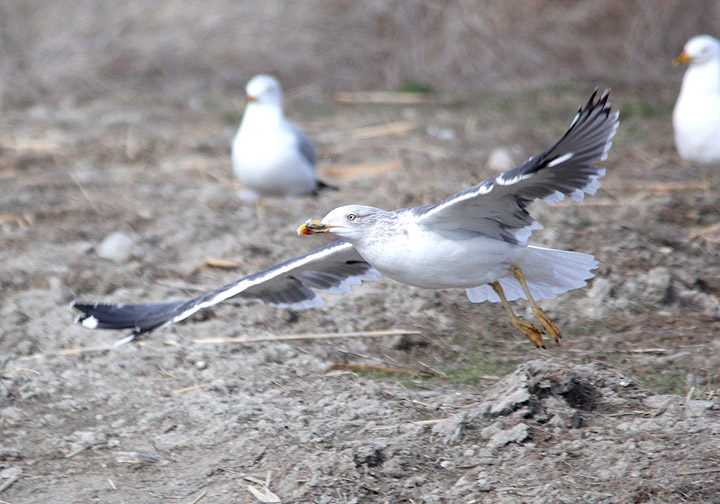
Adult Lesser Black-backed Gull taking flight

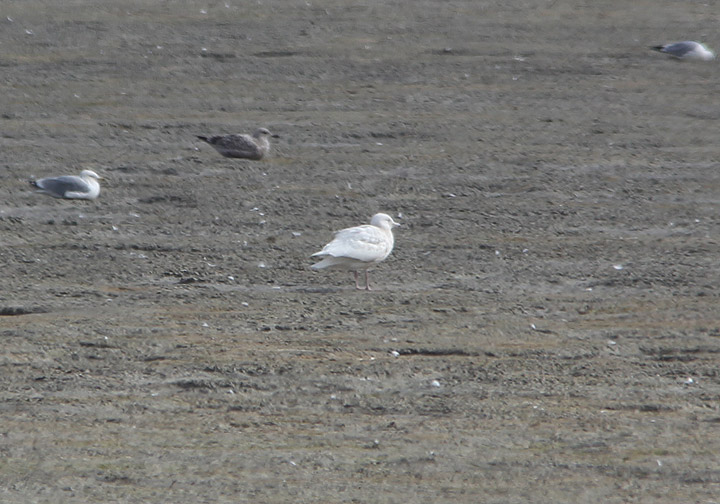
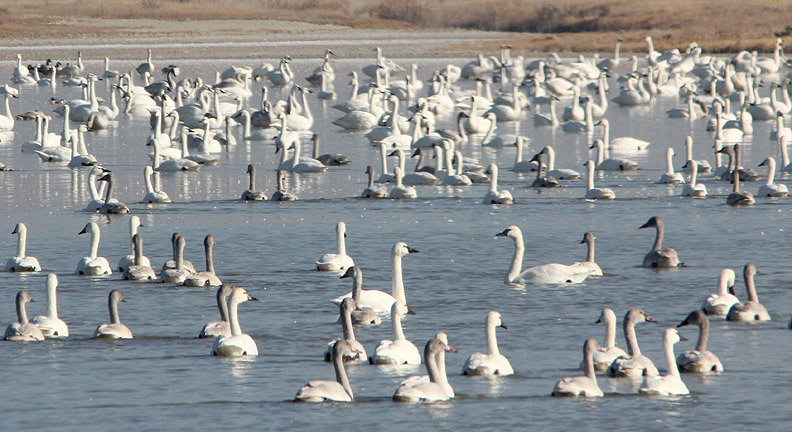
We scanned the water to the east as well where around 1250 TUNDRA SWANS were on the water, and hundreds of ducks including a few CANVASBACK were present.  Most of the winter divers were all together gone with just a few BUFFLEHEAD and COMMON GOLDENENEYE in the mix. To the end of the road we wandered setting up shop to scan a flock sitting on the mud a couple hundred yards out.  The prize in this group was a gorgeously white GLAUCOUS GULL that stood right out amongst the other gulls.

Glaucous Gull

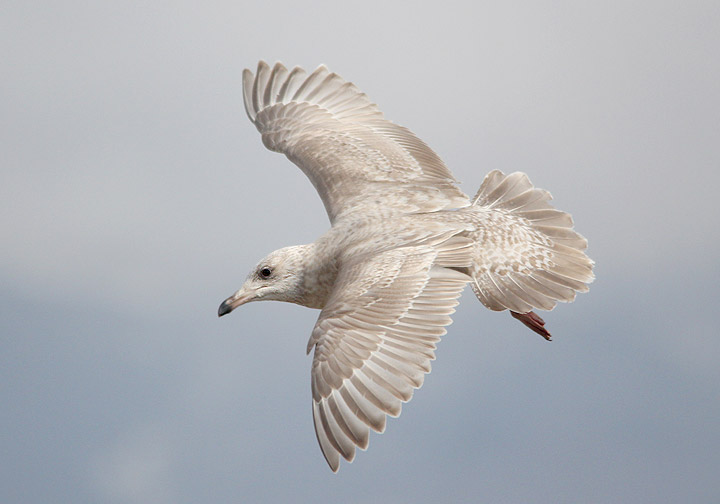
As we watched and tallied more LESSER BLACK-BACKED GULLS, a couple THAYER'S GULLS, and numerous HERRING GULLS things were looking good.  Along with just a couple CALIFORNIA GULLS and plenty of RING-BILLED GULLS we had 6 species of gulls in 30 minutes.  That's how to start a Gullstravaganza!  As we were about to pack up and head to another spot to set up for a bit, a very pale gull flew i and landed. I caught it running across the flats before it sat down and immediately ran for my scope.  This had to be an ICELAND GULL!

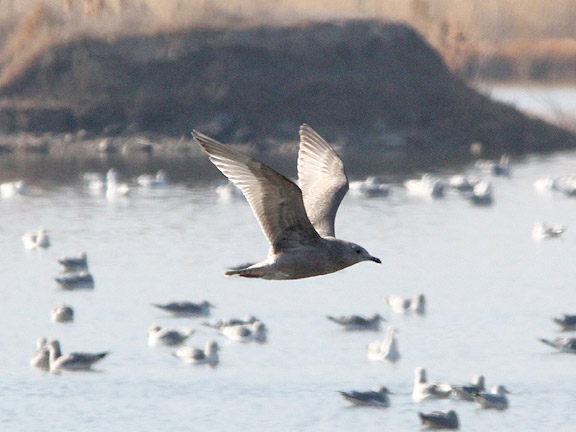
"Kumlien's" Iceland Gull

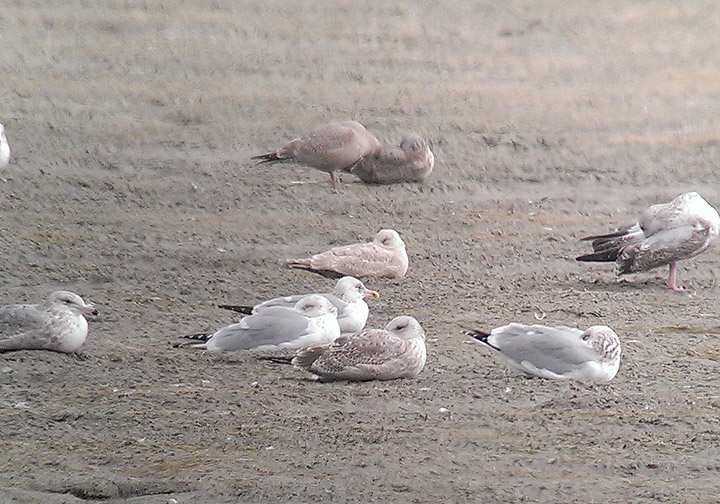
After a few minutes trying to get a good look at the wing tips I was 99% certain it was a Kumlien's Gull.  The bird had sat down and quickly tucked its head but it was sitting next to several Herring Gulls with a Thayer's nearby for comparison.  I assumed this had been the same bird Kenny Frisch and I found a month ago and it gave everyone long looks as it sat there until we moved on.  Everyone's scopes were trained on the bird--gull species #7 for the day in less than an hour.  The bird was a lifer for a handful of attendees--as was the Glaucous Gull.

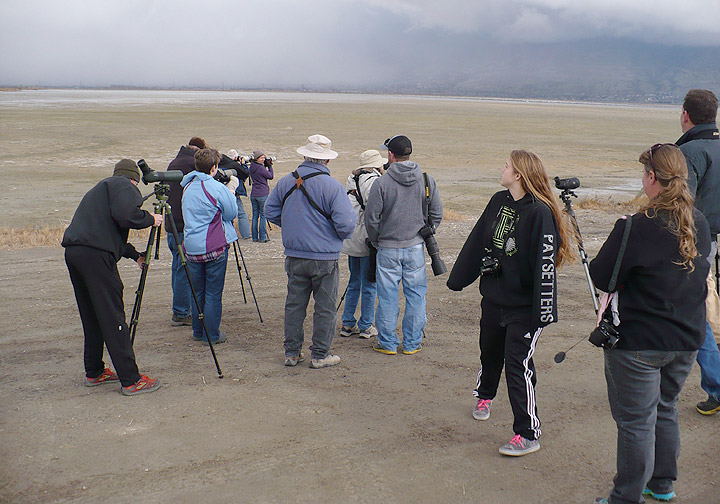
Entrepid Gullers!

About this time a squall was making its way across the lake and had ht Farmington.  The wind picked up out of the north and headed towards us, bring wind, rain, and finally snow. We convened the vehicles in the parking lot on the west side of the 4-way where I told the group it was up to them whether they stayed or left.  I didn't know what the weather was going to do, but it didn't look pretty.  What I did know is we were here to look at gulls and not going to leave quite yet.  About 10-15 birders stayed or birded around Farmington for the next hour.  We set up about 60' from the carp  pile where HERRING GULLS were starting to filter in.

Herring Gull in Flight

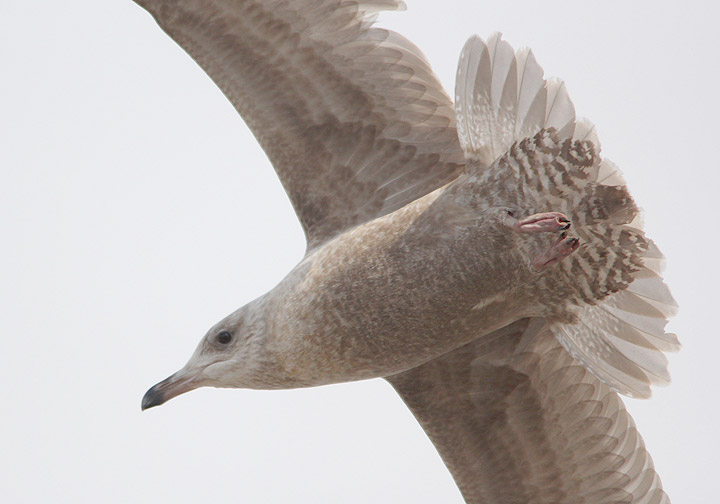
The light was fantastic as the sun kept mostly out even though it was bitterly cold.  The snow passed quickly and the birds didn't seem to mind our presence as they fed.  More birds joined the fray and eventually a couple 1st winter THAYER'S GULLS made an appearance allowing for some great up close study.

Thayer's Gull

One of the biggest surprises for the day was actually the lack of gull abundance.  In fact on the day I counted just 23 CALIFORNIA GULLS.  That is an astonishingly low count for the event, and even for Farmington Bay this time of year.  The few that were present did provide some great opportunities to study next to the massive Herring's.

California Gull

The other surprise was that by my count the Herring Gulls actually outnumbered all other gulls combined--that includes RING-BILLED GULL which typically follows California in numbers.  Herring Gulls outnumbered the others 280 to 259.  Those numbers are also a low count for the event in terms of total gulls.  Now there were several hundred (maybe even 1,000) over the dump a couple miles east that you could see swirling with binoculars.  But I didn't count them for the list since they were unidentifiable, and outside Farmington's boundary.

Ring-billed Gull

As the day wore on the group dwindled to about 10 die hard gull watchers, braving the cold, snapping photos, and talking gulls, cameras, and other things bird and birding related. This was a Utah Birders event to a tee!

We did have a bit of excitement i the afternoon watching the carp pile as a very pale gull came flying in from the east.  Initially I thought it was the Iceland Gull and was stoked I would be getting killer flight shots.  And killer shots I did get--only the bird wasn't the Iceland Gull!


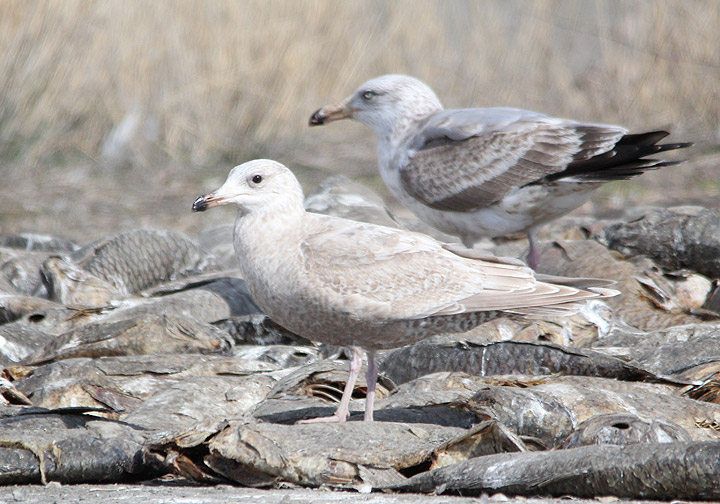
So what is it?

After it landed it was apparent the primaries were too dark and the bird seemed odd.  I thought about Thayer's Gull, but it was very pale, and was a hefty looking bird with a bulkier than normal bill.  Hybrids came to mind with the obvious choice for a bird this pale with a bi-colored bill being a Glaucous x Herring Gull hybrid--also known as a Nelson's Gull.

Certainly has a Herring-ish face...

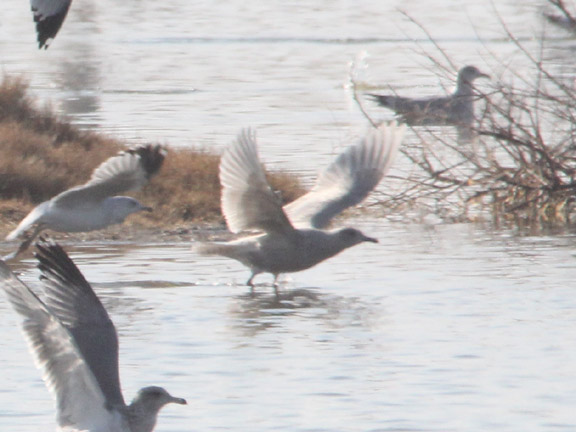
I stuck to that as the name until I got home when I started to wonder if I was looking at this thing all wrong.  One of the major issues with late season gulling is that birds get bleached losing some of their color making them appear "whiter" than usual.  The bird was on the small size for the hybrid in question, but not too small. Looking at it I could see some Herring features which is why I clung to the idea of a hybrid.  I have had several others look at it and the opinions are varied.  From very bleached out Thayer's Gull, to Something with some "Herring in it", to Glaucous-winged x Herring.  Glaucous x Herring has been ruled out but the jury is out on what this bird is.  I could certainly be swayed to Thayer's Gull, albeit the lightest I've ever seen--but I feel reservatons based off seeing it next to Thayer's and Herring in the field. Regardless, it was a very cool bird.

A gorgeous gull regardless the species!

Mid-way through the afternoon we wrapped things up and called it a day!  The 5th annual Gullstravaganza was in the books with 7 species of Gull!  As always this is my favorite trip of the year, as many birders still overlook gulls, and they continually provide us with unique individuals that can make for a difficult time ID'ing.  And as usual I was stoked with the excellent turn out.  As with years in the past my mind is already turning with ideas for making next years event even better.

A big thanks to Kenny Frisch for co-leading the trip this year.  And of course a big thanks to everyone who attended, from Salt Lake, Davis, Utah, Summit, and other surrounding counties.  There were attendees from Millard County as well as Wyoming; and even one guest from Scotland (although he currently lives here).

eBird Checklist for this years event:
http://ebird.org/ebird/view/checklist?subID=S22009728

Labels: , , , , , ,

Utah Winter Gulls Matrix Part 1

posted by Tim Avery at
on Thursday, February 20, 2014 


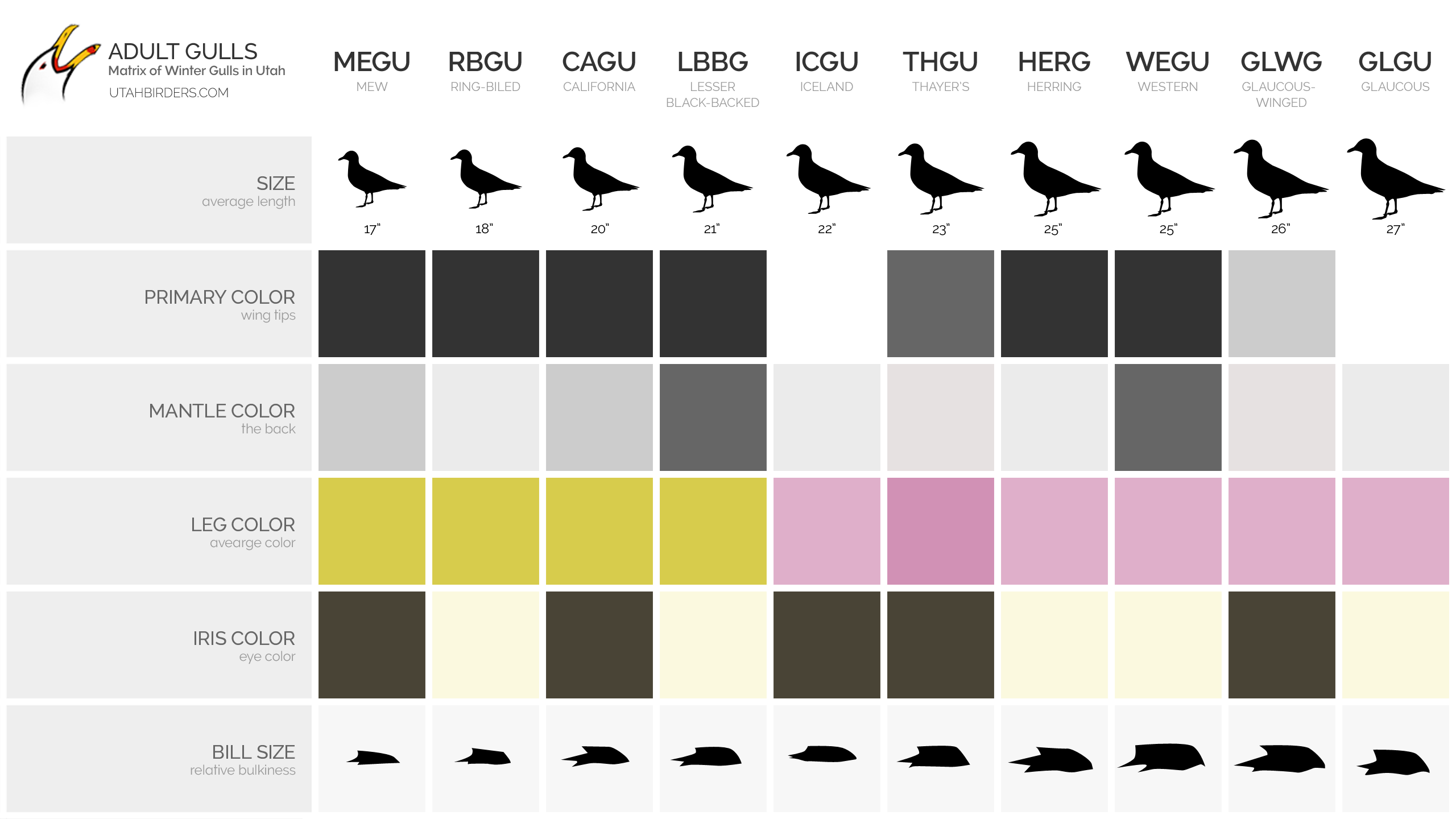
As we near the end of gulling season here in Utah, it often becomes the best time of year to find rare and uncommon gull species.  With water starting to open up and more food available, the large ocean-favoring gulls show up with more frequency, or at least become noticed more.  In a short month from now, the vast majority of these birds will be gone, and we won't seem them again till November.  There have been a few identification requests for gulls lately, so I thought I would take a second and give a crash course on the basics for helping narrow down the possibilities when you see a gull you don't recognize using a matrix.

This is only for Adult Gulls however, so I will be working on similar matrices for each other age as well.  As a disclaimer this is NOT 100% accurate in all cases.  Measurements, relative sizes, colors, eyes, bills, etc are all somewhat averages.  If you think something is drastically off or could be improved please contact me to talk about it.  I would like these to be as useful as possible.  With that said I wanted to throw some numbers around.

The best way to recognize the not so common stuff is to really know the common stuff well.  This means getting to know our State Bird--the California Gull, and its smaller relative the Ring-billed Gull very well.  I went into eBird and did some quick data compilations to show how common these two are in relation to everything else.
  
Between November and February there have been 711,265 total reported gulls in the database (rough estimate).  

This is not total number of actual birds, this is total number of birds reported--so multiple people may have submitted checklists for the same birds.  Of those, 14,643 were hooded gull species (Sabine's, Franklin's, Bonaparte's, and Little) so I removed them from the total to end up at 696,622 total white headed gulls reported during the gulling season into eBird (all time). 

California and Ring-billed account for about 680,000 of these individuals, or roughly 97.3% of all gulls reported in eBird in Utah between November and February.  

That means the other 8 species that you might encounter make up just 2.7% of all the gulls reported--roughly 16,600 individuals--still a pretty hefty number, but at least you know the odds are in the favor for the 2 most common birds.

So let's break it down a little more--aside from those two species, the other 8 most likely species you can encounter in Utah in the winter from most common to least:

Herring Gull -- 15,000 reported
Thayer's Gull -- 780 reported
Lesser Black-backed Gull -- 299 reported
Glaucous Gull -- 183 reported
Western Gull -- 176 reported
Mew Gull -- 96 reported
Glaucous-winged Gull -- 56 reported
Iceland Gull -- 29  reported

Using the matrix above, with a little practice, you can learn to narrow down the possibility of the species you are seeing based on the included attributes.  The colors in the matrix may not be exact but for most adult birds its a good starting point.  click on the above image or link below to download a high resolution version to your smart phone or iPad.

Check back soon for the matrices for 1st, 2nd, and 3rd winter birds, as well as another for hybrids.

Labels: ,

Gullstravaganza 2014 Recap

posted by Tim Avery at
on Sunday, January 12, 2014 

Two months ago we started looking at dates for this years Gullstravaganza.  Needless to say it was a busy winter and there were a limited number of dates open or that seemed like they would work best for our now annual outing--in it’s 4th official year.  We wanted to shoot for the latter half of February, after the carp-kill at Farmington Bay--it makes gulling easy and brings the birds in close.  But with other commitments and a lack of available dates we settled to have it in early January this year, not knowing how well we would do, we just hoped for the best.

A week before the trip 7 species of gull were reported at the usual Salt Lake County gulling hotspots--a good sign for us.  The bad part was only about a ⅓ as many people had signed up as the previous year--the early January date might have been a crowd killer.  But as the week went on the list grew and by 1:00am Saturday morning there were 36 names on the sign up--and we officially had “the crowd” we were hoping for.  And with such a group we decided to break out a special edition sticker for the trip as well as a new, 2014 Utah Birders Sticker!

The 1st Utah Birders Stickers of 2014

Early on the the 11th, I met up with fellow trip leaders Jeff Bilsky, and Kenny Frisch to do our usual day-of pre-scouting.  We changed the format of the trip in 2014 following the lead of Colorado and their “Gullapalooza” trip, which happens in the afternoon.  Gulls after all are pretty lethargic, and don’t tend to move around too much, especially when feeding--so afternoons would be ideal.  Plus asking folks to stomp around in the snow and ice in the middle of January on a cold morning for gulls often seemed a stretch in my mind--if its even a few degrees warmer and people can get their day going the afternoon might work out a little better.

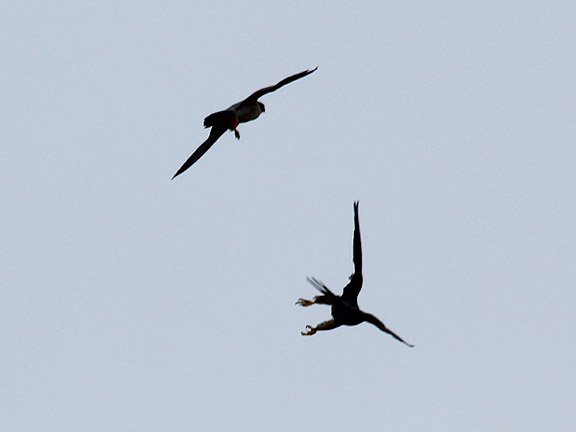
In any event we started our day with a stop at Decker Lake where there were few gulls and nothing noteworthy--we found a dead 1st winter Thayer’s Gull on the shore, not the best signs for a trip that looks for birds like this.  At Decker Lake we were shocked to find less than 100 gulls, making us wonder, “where were the birds?”.  As expected Lee Kay Ponds was frozen solid, and the although there was a HERRING GULL guarding a dead carp on the ice, the only other gulls were about 1,000 birds out over the dump.  A pair of PEREGRINE FALCONS were hunting the starlings over the dump as well, providing quite a show.

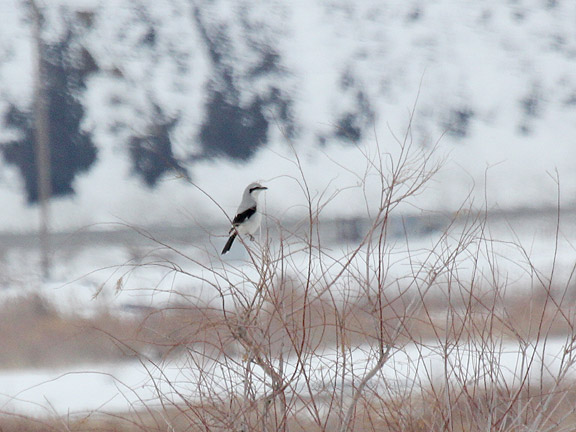
We made one last stop at Saltair, where again there was an obvious lack of gulls and anything noteworthy.  A NORTHERN SHRIKE near the entrance to the park was a nice consolation, but we were gearing up for Gullstravaganza--and there were NO GULLS!

Northern Shrike at Saltair

We decided to drive to the International Center to see if there were birds there, but there weren’t--so we looped back to Decker Lake for one last pass.  Luckily some gulls had showed up here and a live THAYER’S GULL was present.  At Lake Park it looked like gulls were starting to filter into the main pond so things appeared on the up-and-up.  And Stephanie Greenwood was a big help, stopping by Farmington Bay to let us know that if all else failed there were a “few” gulls there, including some first year birds, which always make for a good time.

To the trip…

The group started rolling into the meeting location at Lake Park just before noon.  By 12:20pm we had 35 people and decided we had to move out so we headed to the main pond at Lake Park to see what gulls were there.  I guess the “pouring in” we saw a little earlier ended at about 200 birds, and by the time we got there, they were far out on the ice. We had to trek it to the west side of the pond and in the process lost 3 of our group to the cold and wind--I’ll be honest it was pretty miserable right off the bat.  Once in a great spot to scan from we quickly found a 1st winter THAYER’S GULL in the small flock.  Mike Hearell spotted a LESSER BLACK-BACKED GULL, and I picked out a 3rd winter WESTERN GULL, unfortunately the birds were sitting mostly and hard to pick out.  Every once in a while the birds would pick up and resettle further out, losing a few birds that flew off.  The Thayer’s flew right over, giving everyone a great look.

1st winter Thayer's Gull photo by Jonathan Wilkinson

Checklist for Lake Park
http://ebird.org/ebird/view/checklist?subID=S16338032

Aside from Gulls Jeff found 3 CACKLING GEESE here for an added bonus.  Back at the cars the three that left had their spots filled by 6 that showed up a few minutes late.  We packed back into the cars and headed towards Decker Lake where it looked like we might be spending most of our trip at this point.  Once there we scuttled everyone to the hill overlooking the east leg--on the north shore there was a guy with a pickup truck and the bed was full of loaves of bread.  He was feeding the ducks and gulls and the flurry of birds made for tough scanning.  That combined with a pair of PEREGRINE FALCONS that showed up and were putting on a show!

Pair of Peregrine's photo by Tim Avery

Peregrine Falcon photo by Jonathon Wilkinson

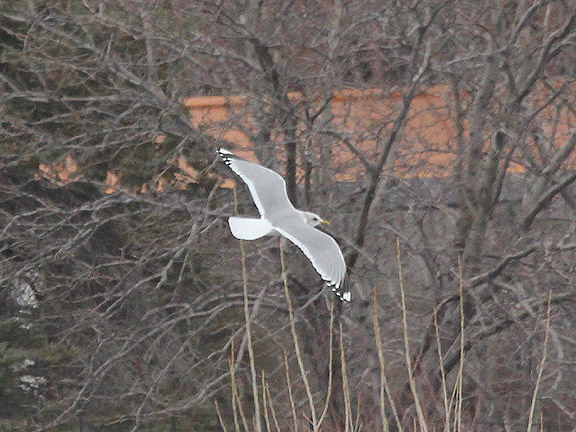
Eventually things calmed down a little and Kenny found an adult MEW GULL sitting relatively close to shore and we set up scopes for everyone in the group to see.  It was a lifer for a quite a few so that was exciting.  A couple times it flew and gave everyone great views in the air as well.


Mew Gull in flight taken by Tim Avery

Mew Gull taken by Jeff Cooper

After a while our group who added one more with Jeff Cooper had exhausted the gulls here--despite around 1,000 gulls, there just wasn’t much mixed in.

Utah Birders scanning for Gulls at Decker Lake

We decided to offer to go up to Farmington Bay for those who wanted, as that gave us our best chance for more gulls.  Some of the group split off here and headed home--while about 25 continued on to Farmington to see what we could find there.

Checklist for Decker Lake
http://ebird.org/ebird/view/checklist?subID=S16338059

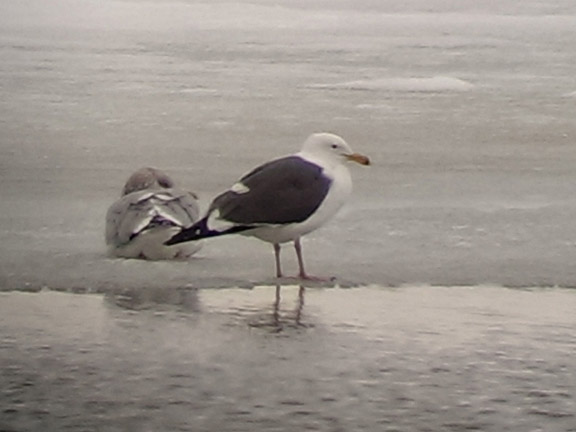
At the 4-way parking area at the end of the road we could see gulls to the south and east--but the “heat waves” coming off the water were distorting everything pretty bad.  What we could see is an adult THAYER’S GULL pretty close in, and to the east what looked to be an adult WESTERN GULL and perhaps an adult LESSER BLACK-BACKED GULL--but maybe it was just the lighting…

We started hiking to the east and pretty soon it was apparent that the bird in the distance was an adult WESTERN GULL and it was super cooperative.

Western Gull digiscope at Farmington Bay

We also verified the LESSER BLACK-BACKED GULL, but it wasn’t quite as close in.

Lesser Black-backed Gull digiscope at Farmington Bay

Another adult THAYER’S GULL sat very close and allowed for great viewing as well.

Thayer's Gull taken by Jeff Cooper

Further east we could see there were hundreds of gulls on a canal/stream where there was some open water.  We had to hoof it a ways but eventually got within 300~ yards and could scan fairly easily.  Some in the group had spotted another LESSER BLACK-BACKED GULL in the water which I found after a minute of scanning.  AS I kept going, I spotted another, and then another, and then another!!! There were 4 adult LESSER BLACK-BACKED GULLS on the stream!  Incredible.  But we weren’t done yet--on the other side of the road where the stream flowed to the other side there were more gulls.  Kendall Watkins spotted our second adult MEW GULL of the day, lounging with a few HERRING GULLS.  And just a hundred or so feet from it was yet another Lesser Black-backed Gull--6 at Farmington Bay at once, and 7 on the day!

Utah Birders ending the day at Farmington Bay, photo by Janice Gardner

We spent a couple hours scanning birds until the cold started to get the most of us so we headed back in.  It was getting close to dark and the group had whittled to about a dozen of the craziest and die hard birders out there.  I applaud the entire group that came today--all 42 folks for putting up with the cold, the wind, and this big dude from Salt Lake who for some reason just can’t get enough of these gulls.

Farmington Bay photo by Brenton Reyner

Checklist for Farmington Bay
http://ebird.org/ebird/view/checklist?subID=S16338113

Just like that another Gullstravaganza is in the books.  This year beat our previous best of 36 birders by 6--something we still have a hard time contemplating, given its the middle of winter and we’re looking at gulls!  But it’s awesome and I thank those who came out to support this much underrated family of birds!  We had people from all over the state here this year.  The Allan’s joined us form Millard County while Kevin (I believe) from Torrey came a short 200 miles to take part in the trip.  There were birders from Cache, Weber, Box Elder, Summit, Davis, Salt Lake, and Utah Counties as well.  And there may have been other places represented as well.

In 2013 our 36 participants tallied just 4 species during the trip, and 4,500 individual gulls--and impressive number of birds, but depressing showing of species. After that trip, other birders added 2 more species at Farmington Bay where we didn’t go--so an unofficial 6 for the day of.
http://utahbirders.blogspot.com/2013/02/gullstravaganza-2013-recap.html

In 2012 weather put a damper on our trip, and only 11 people (of 27 expected) braved the miserable icy and rainy conditions, for 6 species of gull--the highlight being a Glaucous-winged and Lesser Black-backed.
http://utahbirders.blogspot.com/2012/01/gullstravaganza-2012-recap.html

In 2011 during our first official Gullstravaganza we ticked off 6 species of gull, when 24 birders joined us--the highlight was a 1st winter Iceland Gull which the entire group got to see.
http://utahbirders.blogspot.com/2011/01/call-is-gullstravaganza.html

Prior to when we called it Gullstravaganza, I led a trip in December 2009 where we had 7 species + 1 hybrid.  Before that we did 2 more gull trips, but I can’t find the lists for them or any reports.  What I can say is that since 2008 between 6 or 7 gulling trips in the winter we have tallied an impressive 10 species of gull in Utah.  The list would be stellar anywhere in the United States, but in landlocked Utah it’s even more impressive.  In all we also raised $150 in donations for Great Salt Lake Audubon.

For next years event we are going to revamp thinks a little more--as we do each year, and hopefully then we can finally have an 8 gull species event!

Here is a complete list of this years gulls:

2 Mew Gull
2 Western Gull
7 Lesser Black-backed Gull
6 Thayer’s Gull
28 Herring Gull
220 Ring-billed Gulls
1,450 Californa Gulls
1 Hybrid Western X Glaucous-winged Gull

Labels: , , , , , ,

Black Friday... Birding!

posted by Tim Avery at
on Monday, December 2, 2013 

The day after Thanksgiving is a great time to get out and shop till you drop.  Spend lots of money, help boost companies end of year revenue, and stimulate the economy... It's also a nightmare to those of us who look at the whole things as the epitome of American gluttony--its sadly disgusting in many respects and speaks volumes about our society.  So this year we decided instead of joining other in our community partaking in this "Event", we would do a sort of anti-Black Friday--where instead of trying to trample our neighbors for that flat screen, we would go birding and be as far away from the commotion as possible.

As a disclaimer I will note that I did go to Home Depot and Shopko before making my way to the field trip--my haul: 2 four-mode headlamps and 4 strings of Christmas lights.  Hardly stuff worth fighting over, which is why I waited till the crowds dispersed.  In any event the trip began with 12 of us meeting up at the Wal-Mart on Foothill and Parley's Way--of all places we thought it a tad bit ironic, but also a bit clever. The group was quite varied and included several young Utah birders, including Kendall Watkins and Brenton Reyner, as well one of Utah's youngest and brightest birders, Ivan Richardson, 10, from St. George, along with his dad Tom.

Utah Birders scanning the ducks at the Jordan River

To get started we headed to the Jordan River, Redwood Trailhead at about 2300 South.  Here the group got great looks at both species of Goldeneye, with an exceptional count of 25 BARROW'S GOLDENEYE.  Other waterfowl included, Bufflehead, Green-winged Teal, Mallard, Gadwall, Ruddy Duck, and Canada Goose.

eBird Checklist:
http://ebird.org/ebird/view/checklist?subID=S15799637

From the river we hopped a short drive over to Decker Lake where we picked up a COMMON MERGANSER along with the usual California and Ring-billed Gulls, as well as plenty of Mallards and domestic Geese.  There were about 100 CANADA GEESE on the grass near the parking area, including the hybrid Canada X Grayleg that has been around at least the past 2 winters.  As we were getting ready to leave geese started pouring in, and as we watched them we picked out a couple CACKLING GEESE in the air.  We waited till the landed and found 2--while we were watching them 3 more came in for a count of 5 CACKLING GEESE.

Cackling Goose (left) with Canada Goose at Decker Lake

eBird Checklist:
http://ebird.org/ebird/view/checklist?subID=S15799687

After getting our fill of these geese it was onward to Lake Park in hope of more geese, perhaps some gulls, and maybe, just maybe the Pacific Loon that had been present the week before.  Well there were few geese (by Lake Park standards), almost no gulls, and the loon I would say its safe to assume is gone.  We did however pick up a pair of HOODED MERGANSERS on the river behind the IHC building.  They were accompanied by a handful of Common Mergansers.  We also watched a PRAIRIE FALCON hunting in a large field to the west of there, providing great looks for the group.

Prairie Falcon coming in for a landing at Lake Park

At the west pond we did add a lone RED-BREASTED MERGANSER for the 3 species sweep for the day.  The only other thing of note was an enormous flock of EUROPEAN STARLINGS, perhaps 5,000 birds that came form the west and flew over us, murmurating, as they headed east.

Just a portion of the European Starling flock over Lake Park

eBird Checklist:
http://ebird.org/ebird/view/checklist?subID=S15799725

The next stop was Lee Kay Pond which was inundated with Gulls, approximately 2,500~ mostly on the west pond--the best viewing was from the east, but it put us at an extreme distance.  From the entrance to the middle pond we scoped the birds and picked out a couple HERRING and THAYER'S GULLS form a distance.  The Thayer's was a lifer for Ivan so that was quite exciting.  

Utah Birders Ivan and Tom Richardson scanning the gulls at Lee Kay Ponds

After giving it a good while we drove the road along the middle pond where we spotted more HOODED MERGANSERS.  We looped back to the west pond, closer to the flock to try scanning a little closer while we still had some good light.  We weren't out of the car 5 minutes when Kenny shouted that he had an ICELAND GULL.  I took a quick look through his scope and excitedly hollered for everyone to come over.  That's when we went into crisis mode--no one could get the bird in a scope, besides Kenny's and trying to get everyone on the bird was like a nightmare.  Finally, as a stroke of luck would have it the bird emerged form the throngs of gulls and sat in the open for everyone to see nicely--a life for many on the trip, including Ivan who had now picked up one of Utah's hardest to get gull species.

Iceland Gull taking flight--the highlight of the day and lifer for many.

Eventually a THAYER'S GULL flew right over us proving excellent looks for the entire group.  This was followed by the Iceland Gull taking off and flying to the west beach where it landed and began preening.  We drove down and spent a few more minutes watching it before continuing on our way.

Thayer's Gull flyby at Lee Kay Ponds

eBird Checklist:

We made a quick drive up 7200 West with nothing of note--bird wise and otherwise.  We made a quick stop at the International Center to refuel and grab snacks.  A quick check of the ponds there revealed a few gulls, ducks, and geese, but nothing of note.

7200 West eBird Checklist:

SLIC eBird Checklist:

After our short break we drove the frontage road along I-80 towards Saltair.  Our stop here was at Kennecott's Inland Sea Shorebird Reserve--a private mitigation wetland that provides much needed protection to both habitat and birds on the south shore of the Great Salt Lake. The target bird here was Tundra Swan (among others), which this time of year can number in the thousands.  As our luck would have it there were about 1,000 TUNDRA SWANS present, and we spent the better part of an hour watching them from various distances, with different lighting and back drops.  It was a highlight for many on the trip.

Small portion of the Tundra Swans at the ISSR

We also added both GOLDEN and BALD EAGLE and had NORTHERN HARRIER and several ROUGH-LEGGED HAWKS.  No shrikes, but several in the group did get short looks at a small flock of AMERICAN TREE SPARROWS that passed by the vehicles.

eBird Checklist:

Our final stop of the trip was at the Great Salt Lake State Park marina to scan the gulls along the shoreline.  We hoped the Heermann's Gull from the previous week was still present but with great lighting we quickly found that it was not.  We spent some time just relaxing and talking while scanning, bring the trip to a quiet end.

eBird Checklist:

We did however have one more sighting of note, as we made our way back to the Wal-Mart we passed Parley's Gulch where form the interstate were able to pick out 2 LEWIS'S WOODPECKERS remaining on the poles along the bike path.  A great end to a great trip.  

eBird Checklist:

Thanks to everyone who took part and made for a great day of birding some of the lesser visited places in the county--the south shore is often overlooked as a a birding hot spot but it definitely is one of the best places along the lake to look for waterbirds.  

Labels: , , , , ,

The California Gull

posted by Utah Birders Guest Blogger at
on Wednesday, July 24, 2013 


Guest Post Written by Ernie Allison

California Gull photo by Tim Avery

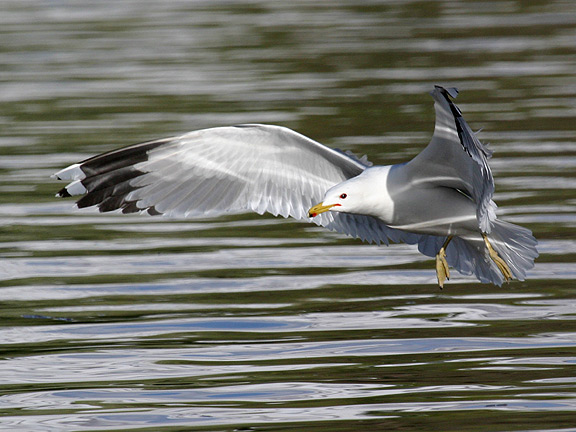
Known as the state bird of Utah, the California Gull can be spotted anywhere from the coast of California to Colorado. This seemingly run-of-the-mill gull came to prominent status when it came to the aid of Mormon settlers in Utah in 1848. There was an “enormous plague” of grasshoppers destroying the settlers’ crops and with no method of getting rid of them, the settlers faced possible starvation. The story, the “Miracle of the Gulls” tells of a massive horde of gulls appearing on June 9, 1848 and proceeding to devour mass quantities of crickets. Most ornithologists did not see this as all that unusual because the gulls around Salt Lake were known to feast on insects in the adjacent valleys. But the pioneers were so grateful of the gulls assistance that the story was recounted by notable Church leaders such as Orson Pratt and George A. Smith to the masses that came to settle in the future. The traditional story passed down by those in Utah is that the gulls came and devoured all of the insects and ensured the survival of over 4,000 settlers. A Gull Monument was built to commemorate the events of 1848 and thus the California Gull became known as the state bird of Utah.

Description (Adult)

  • Medium-Large size gull
  • Yellow Bill with red spot on the lower mandible and black ring near the tip.
  • White head and underbelly
  • Back is darker gray
  • Wing tips are black with white spots
  • Length: 18-22 inches
  • Wingspan: 48-54 inches
  • Lifespan: upto 24 years
  • Weight: 1-2.3 lbs


Migration
A well-travelled bird that typically makes its way to the Pacific coast for the winter, the California Gull is actually only found regularly in western California during this time. Outside of winter they can be spotted as far inland as Minnesota and as far north as Manitoba, Canada.    In Utah they may be found year round.

Mass of California Gulls in Utah photo by Tim Avery

Habitat
The ideal breeding habitat for these birds is marshes and lakes throughout western United States and southwestern Canada. They nest in colonies and are known to share them with other birds. The nest is generally a shallow in the ground lined with feathers and local vegetation. They usually lay 2 or 3 eggs at a time but can range up to 4. Both the male and the female share responsibility in incubating the eggs as they take turns at 3-4 hour intervals throughout the day. They signal when it is time to rotate nesting duties through “Long Calls” as the non-nesting mate returns. Sometimes the incubator does not get off the nest so quickly when presented with nesting material as a sign that it is time to rotate and has to be physically nudged off.

Copulation feeding photo by Tim Avery

Diet and Feeding
Known to hunt in a variety of places such as lakes, farm fields, pastures, sagebrush, garbage dumps, parking lots, ocean beaches, and open ocean. These gulls are opportunistic scavengers that will eat anything they can catch. Their diet mostly consists of fish, garbage, insects, fruit, grain, and sometimes small mammals. They typically dip for fish in bodies of water and follow plows for insects. Both parents share responsibility in feeding the young ones.

Flock of California Gulls photo by Tim Avery

Population
Estimated anywhere from 600,000-1,000,000 individual birds. Population in the U.S. is estimated to have doubled since the 1930s. They are marked in the lowest category of “Least Concern” on the Conservation Status scale.

Written by Ernie Allison

Ernie Allison is passionate bird watcher who loves to travelling and writing. He enjoys photographing our friends of the sky whether at his bird feeder in the backyard or in their natural habitat.

Labels: , ,


UTAH BIRDERS FLICKR POOL


    SEE MORE AND SHARE ON FLICKR