Utah Birds, Utah Birding, and Utah Birders. Promoting the sharing of information, and the conservation of habitat for birds in Utah and elsewhere. We are a group of people who want to share what we know, and create a positive birding experience in Utah.

BIRDERS BLOG

a blog by and for Utah Birders

Northern Pygmy-Owl: The Death Blow

posted by Tim Avery at
on Tuesday, February 3, 2015 

Sorry that it's a little shaky.  I didn't grab my tripod and trying to hand hold for video usually doesn't work out to great.  Needless to say the last 3-4 seconds of this video show how fierce this tiny little owl is:


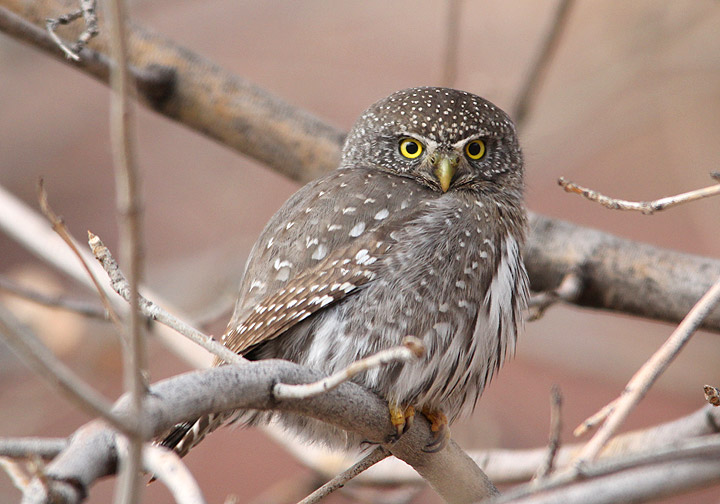
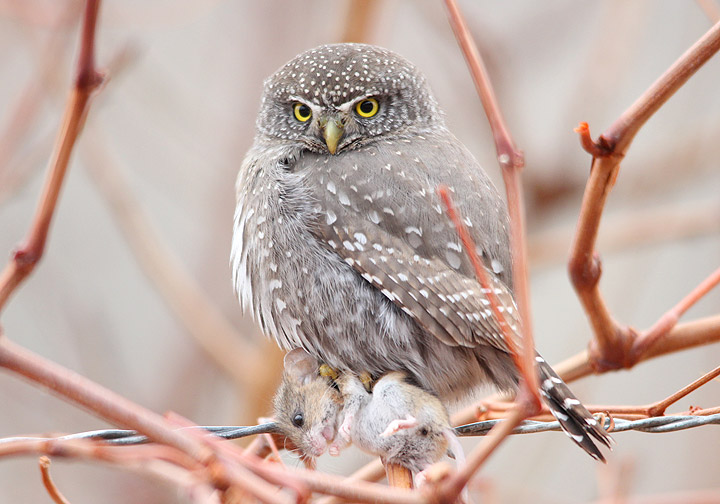
This winter has seen a higher than usual number of detections of Northern Pygmy-Owls.  Winter is usually the best time to observe these owls in Utah but this year it seems to be a banner year. This individual was seen in the town of Rockville, Utah right along the busy Highway leading into Zion National Park.


We watched it drop and take the mouse out, before finally putting it out of its misery, and after a few minutes starting to dig into its catch.


Of all the pygmy-owls I've seen this was by far the coolest interaction I've had! What are some of the experiences others have had with this species this winter, and in winters past?

Labels: , , , ,

January 2015 Review, February Preview

posted by Tim Avery at
on Monday, February 2, 2015 

Wow, what a January!  Looking back in all the years I've lived in Utah I can't remember a year starting off with such a bang.  For starters I don't think anyone can help but notice the big month Kenny Frisch had.  Just check out the eBird Top 100... He destroyed the biggest January record which was 158 species in 2013 by Dennis Shirley. That 158 was impressive, but Kenny topped the charts at 177 species for the month! I personally had my biggest January ever, so there must have been something in the water.  In comparison, in 2007 when I did my Utah Big Year I got 122 which seemed like a lot of work... In fact I didn't hit 170 till March 31st! I guess I have some competition this year!

Kenny's month is actually the biggest winter month ever in Utah--that's November, December, January, February, and March! So congrats Kenny!
January was a big month in general with 177 verified eBird reports and a handful of sightings that have yet been reviewed--the month total will likely be somewhere in the mid 180's.  That's a big January!

Some of the birds were down right impressive.  How about:

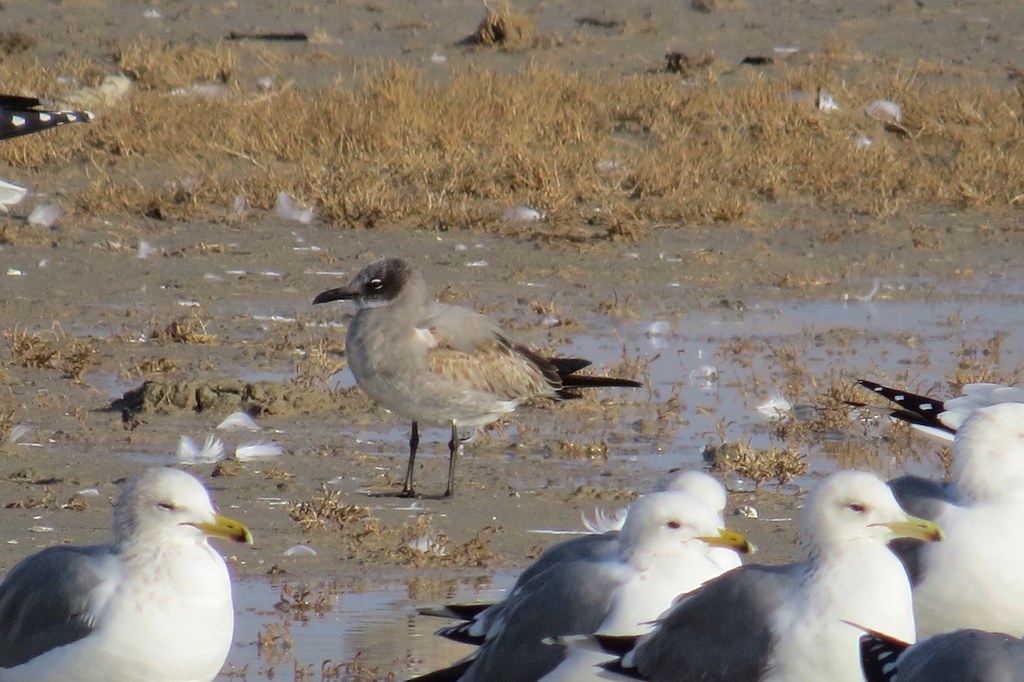
Laughing Gull (2nd report ever)
photo by Mike Hearell

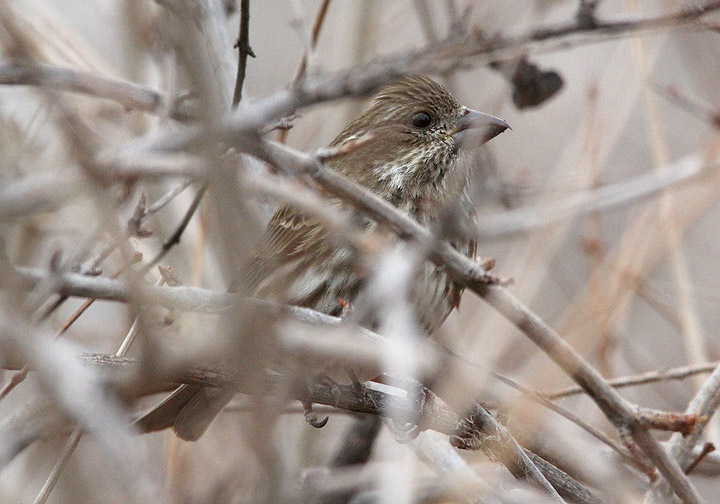
Purple Finch (2nd or 3rd report)
photo by Tim Avery

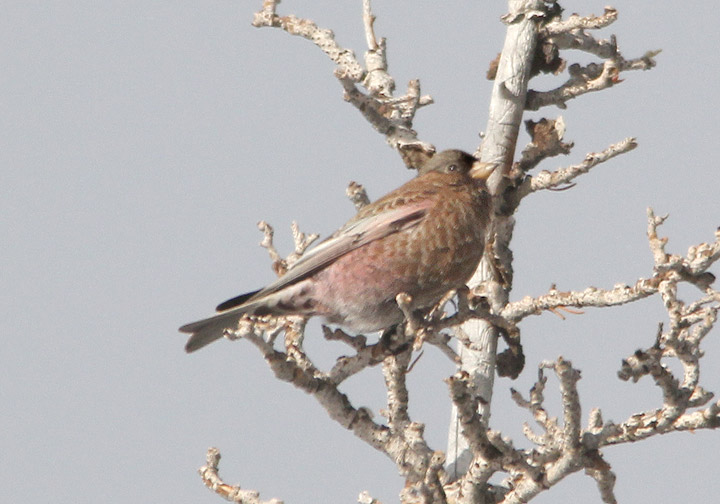
Brown-capped Rosy-Finch (2nd report)
photo by Tim Avery

Brown Pelican (between 5-10 reports)
photo by Stephanie Greenwood

Red-headed Woodpecker (3rd non historical)
photo by Tim Avery

Iceland Gull (5-10 reports)
photo by Tim Avery

Those are some great birds! The weather this January was very un-January-like and that could have impacted things.  Although the expected snows and winter storms that often bring in great birds from the north never materialized, great birds still showed up.  Southern Utah saw handfuls of great stuff, and most of the birds were long staying so lots of people got to see them.  Is this type of January the new normal in Utah?  It would drastically change birding going forward, seeming more Arizona-like than what we're used too.


How's February looking so far?  Well Punxsutawney Phil saw his shadow this morning, so 6 more weeks of winter... I hope not.  Or I guess if today's forecast is how those 6 weeks will go I am okay with that.  What does that mean for birding?  IF it continues to be mild the birding should be much like it was throughout January.  Expect some early northbound migrants, or earlier than normal arrivals and departures for the month.  This includes geese, gulls, and swans.  February albeit being typically a slow month in Utah for birding, has a few notable events this month.

Bald Eagle Day - Sat, Feb 14th

The ever-popular Bald Eagle Day will be on Saturday, February 14, 2015. Viewing times will vary depending on which site you'll be visiting: Salt Creek Waterfowl Management Area from 10 a.m. to 3 p.m., Farmington Bay Waterfowl Management Area from 9 a.m. to 4 p.m., Fountain Green State Fish Hatchery from 9 a.m. to 3 p.m., Split Mountain/Green River from 9 a.m. to 3 p.m., Rush Lake Ranch from 9 a.m. to 2 p.m.


Every winter as California Gulls congregate on the edges of the Great Salt Lake to search for food at nearby landfills, parks, wildlife management areas, and anywhere that may have open fresh water--other gulls that stray from their normal winter ranges end up mixed in.This creates one of most unique inland gulling hot spots in the nation. Along with the thousands of California Gulls are smaller numbers of Ring-billed Gulls, and decent numbers of Herring Gulls. Mixed in with those you are likely to find a few Thayer's Gulls. Aside from those 4 species a handful of others show up every year including: Glaucous, Glaucous-winged, Mew, Lesser Black-backed, Western, and Iceland.
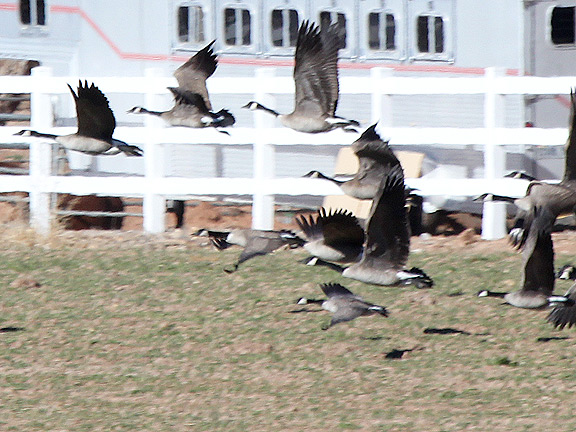

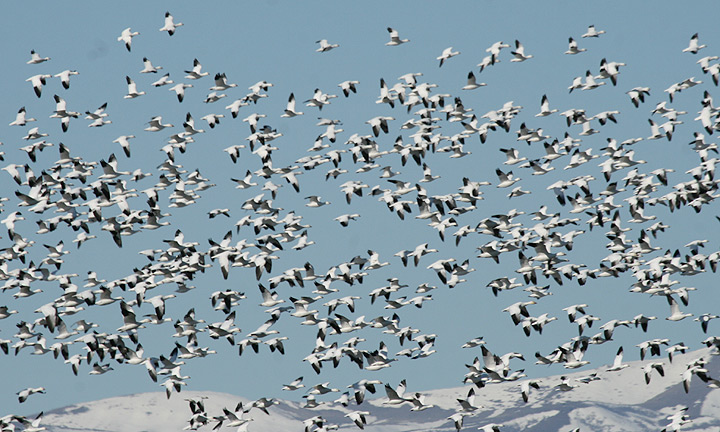
Early each spring, thousands of Snow Geese begin their 3,000 mile voyage home to Canada's northwest territories. Starting from where they winter in Southern California & Mexico, these travelers navigate their way home with amazing precision and faithfulness. Delta, Utah is privileged to be situated along their annual migration route. Come join us for this year's annual Delta Snow Goose Festival! Bring your camera and be ready to join the fun.

2015 is off to a great start, an this should be a great February for birding in Utah!

Labels: , , ,

Red-headed Woodpecker in Utah a.k.a. Lightning Strikes Twice

posted by Tim Avery at
on Friday, January 16, 2015 

On December 27, 2004 I was one of the lucky few who were able to see a Red-headed Woodpecker at Wilson's Peach and Pecan Orchard in Hurricane, Utah.  The bird was found by Merrill Webb and although I was on my way back to Salt Lake and almost to Cedar City, I returned to Hurricane for this once in a birders lifetime rarity in Utah--or so I thought.


I saw the bird and a number of others did over the following weeks.  Fast forward almost 10 years and jump 5 miles to the east at another Pecan orchard and lo and behold what shows up but another Red-headed Woodpecker, this time found by Rick Fridell.  I didn't think I would make it down to see this bird, but no biggie since I'd seen the one 10 years ago.  But last week I was able to make it down and saw the bird--my 2nd Utah Red-headed Woodpecker.


As you can see, I only captured the finest images possible of RHWO here in Utah... Okay that might be a little bit of an exaggeration... Or just a lie. These photos sucked, but I wasn't after award winning shots--just documentation!

So what are the odds that this species would show up again, in such close proximity to where one showed up 10 years ago?  The birds were definitely different--the 1st one was an adult, and this years bird was a juvenile.  Let's think of southern Utah as a haystack.  There are likely dozens of pecan orchards around the Southwest part of the state, and plenty of other fruit trees as well.  The southwest is plentiful in both these respects, so if we were to include Arizona, Nevada, and Southern California the number of orchards would explode and the haystack would be enormous.

Google Map of the current Orchards in Hurricane and La Verkin. There are actually way more nut trees in what used to be orchards but are now neighborhoods. The green dots represent the 2 locations of the RHWO sightings in the area.

As per eBird including the 2 Utah sightings, there are 8 previous reports of Red-headed Woodpecker int he desert southwest.  The number of actual historical sightings is likely higher, but for brevity lets use eBird for our sample.

All records are from the winter, and they are:

1) 12/22/1988 to 01/02/1989
Winchester Canyon Rd. at Cathedral Oaks Rd. field, Santa Barbara, California

2) 10/20/1990 to 10/28/1990
Portal, Cochise, Arizona

3) 11/04/1991
Pahranagat NWR, Lincoln, Nevada

4) 11/29/1991 to 05/02/1992
Continental Maintenance Yard, Pima, Arizona

5) 08/03/1996
Flagstaff - Highway 89 near Silver Saddle Road, Coconino, Arizona

6) 11/02/1997 to 05/05/1998
Marana Pecan Grove, Pima, Arizona

7) 12/27/2004 to 01/29/2005
Wilson's Peach and Pecan Orchard, Washington, Utah

8) 12/14/2014 to Today
Hurricane, Washington, Utah

There are also 5 outlying records from western Colorado and New Mexico:

08/14/1982
South Fork, Rio Grande, Colorado

04/23/2006
Durango, La Plata, Colorado

11/09/2007
Kirtland, San Juan, New Mexico

06/14/2011
Escalante Forks, Mesa, Colorado

06/27/2012
South Fork, Rio Grande, Colorado

East of these area the species has more outlying records, but becomes more common along the Rio Grande in New Mexico, and on the front range in Colorado.

The yellow shows the extant of "typical range, with the white border represeneting the limit. on the west in Colorado and New Mexico.

All together told there are just 13 reports in 30 years in the southwest.  The proverbial haystack.

Of the 13 records there are 2 from the same location in Colorado 30 years apart.  I'm not sure if this is the "exact" same location or a general area, so where the birds were seen could actually be a wider berth than the hot spot on eBird.  But none-the-less its still pretty impressive.  The only other location with 2 reports form the "Same" location is the 2 birds from Hurricane, Utah.  In Utah the exact distance was 5.9 miles from one orchard to the other, across rather barren desert.

There are 2 ways of looking at this. 1 is that its sheer coincidence that both birds were found at pecan orchards 5 miles apart. The other is to say its not a coincidence but the habitat is very specific and for a vagrant to show up at such a location is such proximity to another is a pattern.  No matter how you look at it, its still a needle in a haystack.  And with only 2 variables for a sample size there is no way we can realistically look at it as a pattern.  We can assert that Pecan Groves provide an ideal wintering ground for this species, based off the Utah reports and the one from Arizona.  I would wonder if some of these other locations also had pecan trees or were nearby pecan or nut orchards.

Red-headed Woodpeckers mostly eat nuts such as acorns, beech nuts, and pecans during the winter months, caching food for later use. So the attraction to nut orchards has some legitimacy.We also know that this species is migratory and winters across the southern United States. So it is most likely to show up in the winter months at a nut orchard in the southwest.  As per the previous reports 8 of the 13 are from winter months, and 7 of these were from the extreme south and west of the reports.  4 summer reports from western Colorado could be remnants of historical breeding sites, or even extralimital "non-breeding breeding" individuals.

The overall lack of sightings in the desert southwest shows that this species is essentially a vagrant to the area.  With its penchant for nuts, if it does show up an orchard is the ideal location to find one.  But the odds of it being the same location or a nearby location have to be astronomical.

Labels: , , , , ,

2014 Utah Birders Park City Christmas Bird Count

posted by Tim Avery at
on Monday, December 1, 2014 

When: Sunday, December 14, 2014
Time: 8am - 6pm
Sign Up at: utahbirders.com/cbc


We are pleased to announce the 4th annual Utah Birders Park City Christmas Bird Count and invite you to participate!  The Christmas Bird Count (CBC) is a census of birds performed annually in December and January by volunteer birders. The purpose is to provide population data for use in science, especially conservation biology--though many people participate just for fun.

The 2014 Park City CBC will take place on Sunday, December 14, 2014 starting at 8am and going until 5:00 PM (It's dark by then up here).  We will split up into several teams to cover areas from Jordanelle north to Jeremy Ranch and from Summit Park east to Rockport and Peoa.

For more information and to sign up visit utahbirders.com/cbc

We will begin meeting at 7:30am at the Park City Bread & Bagel:
http://bagels.adamfehr.com/pcbb-area-map/

The CBC is a free event, but we encourage anyone who participates to donate $5 to our ongoing conservation effort for birds here in Utah.

If you have any questions feel free to visit us at utahbirders.com/cbc, or contact us at utah.birders@gmail.com or call Tim at 801-440-3035 or Nate at 970-978-1804 natebrown3@hotmail.com.


Labels: , , ,

Flat Tires and Rare Orioles

posted by Tim Avery at
on Saturday, January 25, 2014 

As I stared at the spare tire under my pickup, laying in the dirt in the middle of the Joshua Tree lined road leading to our campsite on the Beaver Dam Slope , I really was regretting the decision to return to this camp.  Kenny shined the flashlight on wheel as I tried to figure out how to get the tire off the lowering bracket.  It was pitch black, starting to get cold, and we were less than a ¼ mile from the inconspicuous pull off where we would throw our sleeping bags on the ground for the night.  I hadn’t yet decided if this was just my bad luck, or the price for the good luck we had birding.

27 hours earlier…

We had left Salt Lake around lunch time on Friday the 17th to get to St. George with about 90 minutes of light left to look for the bird.  The trip down went quickly and before we knew it we were parked just off Green Springs Drive looking for Utah’s 1st ever STREAK-BACKED ORIOLE.  Kenny Frisch and I had waited a couple weeks since the bird had started being reported regularly--and luckily it had been seen that morning.  We had high hopes.  Spending the following hour and half wandering up and down the streets, scanning the trees, bushes, and birds we began to wonder if there had been an accident.  The flyover SHARP-SHINNED and RED-TAILED HAWKS didn’t alleviate those feelings.  Keeli Marvel was looking as well but even with 3 set of eyes there was no oriole.

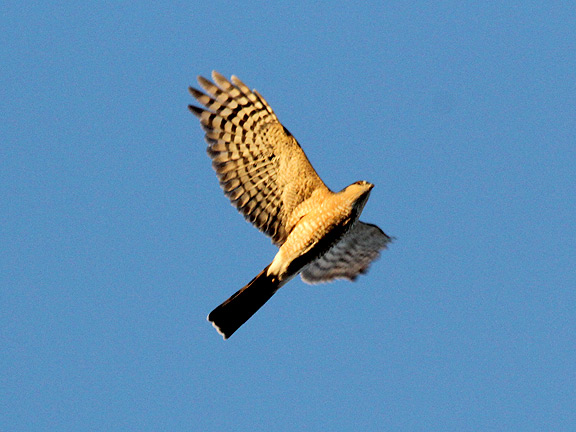
Flyover Sharp-shinned Hawk at Green Springs

As we left Merrill Webb and his wife arrived finding they had the right area--we talked about returning the next morning, when hopefully our luck would have turned.  Kenny and I headed off towards the Beaver Dam Slope as darkness fell over Washington County.  By the time we turned off the truck it was 20 degrees cooler than when we were looking for the oriole, and you couldn’t see 10’ in front of you in the dark. Being early I threw The Big Year on my iPad and we watched how ridiculous birders are before finally calling it a night.  Sometime in the middle of the night a GREAT HORNED OWL started calling from one of the trees nearby--my first owl of the year. It was one of the coldest nights I remember camping in the open air--and by 4:45am I was wide awake and ready to go birding.

Some time around 6:00am we decided to pack up and head back towards St. George so we could be at the oriole spot by 8:00am.  We made it in about an hour and found a birder named Matt Orsie from back east just starting to look around. A short time later Merrill Webb and his wife arrived, and shortly after that Rachel LeBlanc, Vivian Schneggenburger, and Heather Dove showed up.  While the first 5 of us that showed up were in front of the Chaparral Subdivision scanning and waiting, the 3 ladies from up north were about a block away when all of the sudden we saw arms waving to come their way--they had found the bird!

Utah's 1st Streak-backed Oriole at Green Springs

I always enjoy seeing the different degrees of individuals urgency in regards to seeing a new and/or rare bird.  There are several different types of birders.  The “jog-sprinters”--those who rush to get there ASAP--its not a full on sprint, but long and swift strides where the birder must keep their optics from banging into their face as they bound towards the bird, for worry that it may fly away or be eaten by a predator any second.  Then there are the true “speed-walkers”, who briskly walk towards the bird--they understand the magnitude of the sighting and want to get there quickly, but also carefully.  The 3rd type is the “it’s not going anywhere” birder, that walks at a normal or slightly accelerated pace, scanning intently knowing they will get the bird even if a fraction of a minute slower than the others.

Utah's 1st Streak-backed Oriole at Green Springs

Well on this occasion I saw all three types.  I followed the jog-sprinters, and the speed-walkers, arriving at the tree a few seconds later--and there the bird was in all its rare-splendor, 20’ away, still alive and eating something in the trees.  My lifer and the Utah first STREAK-BACKED ORIOLE.

Utah's 1st Streak-backed Oriole at Green Springs

As we watched the bird flew right over us towards the other side of the street and the trees right in front of the Chaparral Subdivision where we had expected it.  For the next 45 minutes we watched as it worked the trees here, then flew back across the street to the tree where it originally was, then repeating the route.  We figured out shortly thereafter that it was coming to the trees on the opposite side of the street for jelly that someone had put on the limbs of a couple branches in the trees.

Utah's 1st Streak-backed Oriole at Green Springs

After getting our fill of the bird, everyone split up and headed out for their own birding for the day.  Kenny and I headed over to Quail Creek to try for a previously reported Winter Wren.  We didn’t find the wren but did have a NEOTROPIC CORMORANT and 75 or so Common Mergansers.  A handful of HOODED MERGANSER rounded out the birds of note.

From here we checked Berry Springs Marsh but didn’t see anything of note.  Stratton Pond had the usual flock of GREATER SCAUP, as well as a few Canvasback, Redhead, Ring-necked Duck, and other ducks.  We spent about an hour wandering around the neighborhoods nearby for Inca Dove but had no luck.

We checked for wigeon at Sky Mountain Golf Course.  The flock wasn’t on either of the ponds they usually are at, but were in the pond that is usually surrounded by tall reeds and trees and not visible on the southeast edge of the course.  There were a few hundred AMERICAN WIGEON but nothing of note.

Our next stop was the Hurricane Fields which weren’t overly birdy--a beautiful dark FERRUGINOUS HAWK was a pleasure to see.

Dark Ferruginous Hawk in the Hurricane Fields

Along the south edge of the fields heading towards Sand Hollow we stopped in the Cholla Patch where 3 CACTUS WREN provided excellent looks and photo ops.

Cactus Wren on Cholla Cactus in Hurricane Fields

Dropping down towards the reservoir we stopped in the sage flats and picked up 3 SAGEBRUSH SPARROW--the local variety of the recently split Sage Sparrow.  There is some chance that the Bell’s Sparrow may occur in southwest Utah in the winter but I’m not sure that without vocalizations it would be possible to verify given the subtle differences in plumage.

Sagebrush Sparrow in the sage at Sand Hollow State Park

At the reservoir we started scanning and quickly located the RED-NECKED GREBE that has been overwintering.  There were also 3 COMMON LOON on the water along with 1,000’s of waterfowl that included all 3 species of Merganser, and gobs of Ruddy Ducks.

Record shot of the overwintering Red-necked Grebe at Sand Hollow

Leaving the lake we swung over to Wilson’s Peach and Pecan Orchard.  There was a RED-NAPED SAPSUCKER but not much else.  Cutting across Washington Dam Road it was a shock when we hit a highway that wasn’t there last May.  The dirt road that used to cut through the back country was gone, and replaced with 4 lanes of high speed cement--after all the folks from Washington City and St. George, need to get to Sand Hollow 5 minutes sooner than they would taking the interstate and SR-9.  I was stunned at how fast this road went in and how one of my favorite drives along a less-birded stretch of the Virgin River is now basically destroyed.  After finally getting back to Sand Hollow we opted not to take the new road and instead check out the SR-9 Sewage Ponds where Kenny spotted a LEAST SANDPIPER and a nice winter find for Utah, a DUNLIN!

We then scanned the hundreds of RING-NECKED DUCKS on the lowest pond in hopes of finding something mixed in--no luck there.  We wanted to make it out to Lytle before dark to do some birding, but also wanted to grab a bite at Irmita’s Mexican joint on St George Blvd.  Kenny won a free Torta his last visit for finishing their mega-Torta sandwich in less than 15 minutes, so he cashed his ticket in and devoured one in less than 5 minutes.

Kenny devouring the giant Torta in under 5 minutes...

If you go birding in St. Geroge you need to stop into Irmita's on St. George Boulevard and give their authentic Mexican street food a shot.  My personal favorite is the Mulita!

Meanwhile I enjoyed my Carnitas Tacos and Carne Asada Mulita, before we jetted off towards Ivins Reservoir where there were plenty of waterfowl.  We made it to the slope with a couple of hours of sunlight left.  A GREATER ROADRUNNER sprinted across the road while we drove towards Lytle Ranch--the only other birds we saw were House Finches.

My favorite view of Lytle Ranch from the Bluffs Above

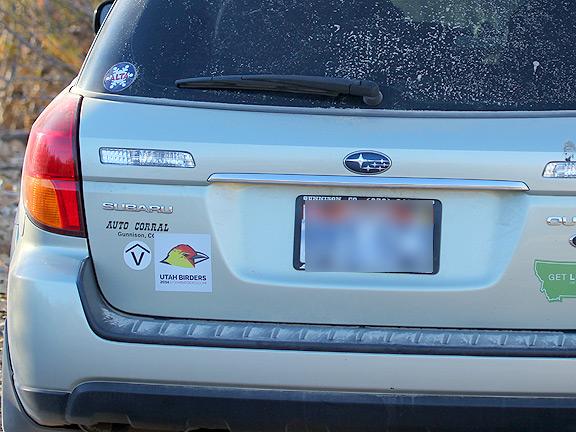
At the ranch we saw Vivian. Heather, and Rachel’s vehicle--with one of our newest stickers on board--Thanks Ladies!

Utah Birders 2014 Western Tanager Sticker!

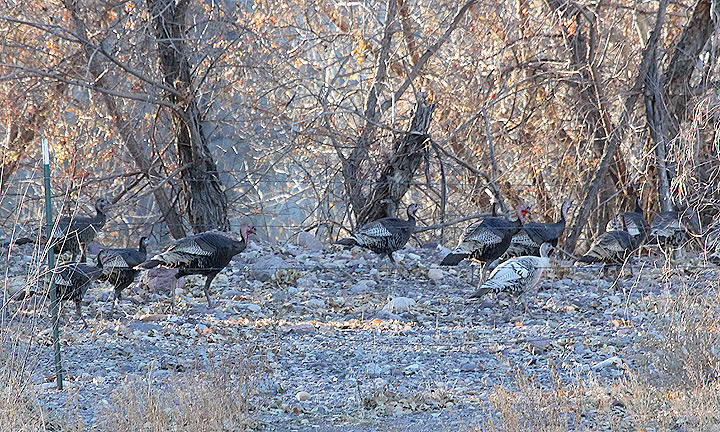
The ranch was pretty active with the usual suspects.  We had an interesting sparrow in the orchard but didn’t get great looks before it disappeared--initial thoughts were something Ammodramus…  A small flock of WILD TURKEY with a partially leucistic bird ran along the river.  The milo fields were filled with sparrows but we couldn’t turn up anything unusual.  There were 3 random birds at the ranch though--a WESTERN SCRUB-JAY, which I think was my first here.  There was also a TOWNSEND’S SOLITAIRE, and a MOUNTAIN CHICKADEE--both fairly uncommon in the Mojave.

Wild Turkey flock heading to the river at Lytle Ranch

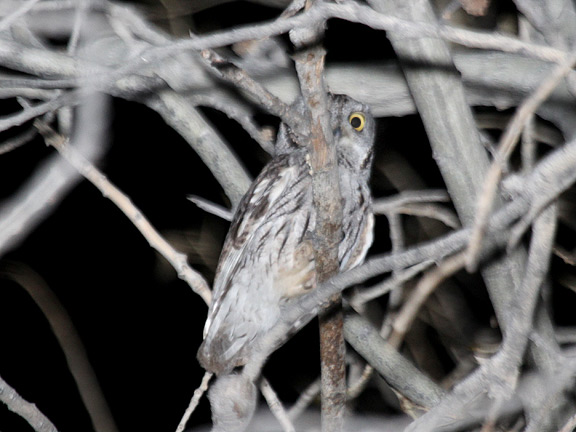
We stayed till dark when a GREAT HORNED OWL started calling from the river.  As it began to get dark 2 LONG-EARED OWLS emerged from the campground area and flew off to hunt.  Finally we called in a couple WESTERN SCREECH-OWLS before we headed towards camp for the night.

This Western Screech-Owl did its best to avoid being seen high in the trees

And that’s where this story started off.  Almost to our camp I heard the front passenger tire blow.  I stopped the truck on as flat a spot as possible and threw on the parking break--the tire went completely flat in seconds with a ¾” long gash in the treads.  In pretty quick time we got the truck jacked, tire off and then replaced and rolled into our camp.  We planned on going back to Lytle in the morning but because of the flat I didn’t want to risk driving on any more dirt roads that we had too.  So we decided to relax and made a fire to chill out by and figure out what to do the next day.  The night was much like the night before--except no owl.  We woke a little later when it was lighter and headed back into town, stopping 1st at Entrada for the ROSS’S GOOSE that has become a staple here the last 3 winters.

The now "resident" Ross's Goose at Entrada

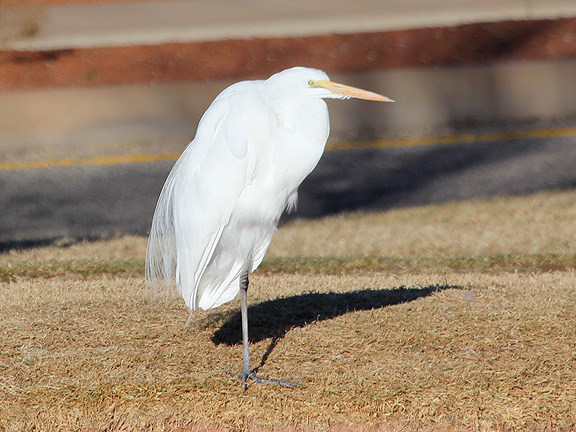
There were also 2 GREAT EGRET, a few Hooded Mergansers and a number of other waterbirds here.

Great Egret posing in the Sun at Entrada

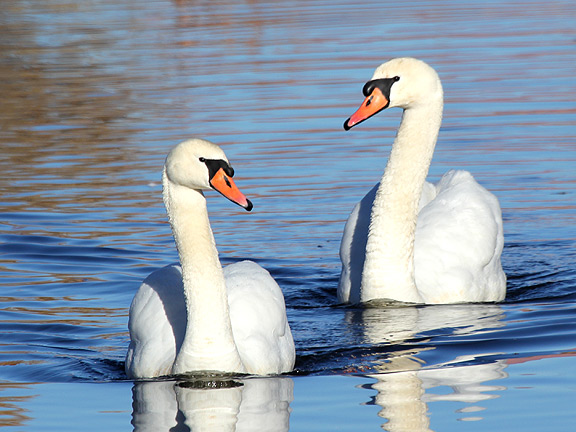
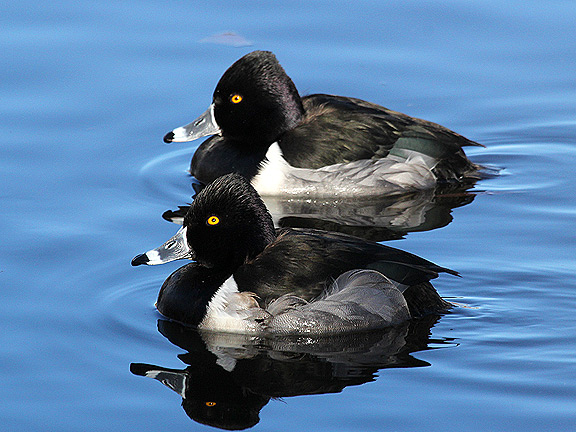
Since we still had time till any tire places were open we went to Tonaquint Pond where an ABERT’S TOWHEE was calling, and 2 MUTE SWANS were joined by a handful of RING-NECKED DUCKS on the pond.

Pair of Mute Swan at Tonaquint Park

2 of a handful of cooperative Ring-necked Ducks at Tonaquint Park

Springs Estate pond had a couple of ABERT’S TOWHEES as well.  The SNOW GOOSE that has been here the last 3 winters was also present, but otherwise the pond was rather empty.  Kenny managed to pick up CRISSAL THRASHER near the river on the far side of the pond.

Abert's Towhee in the trees at Springs Estate Pond

In the Washington Fields we saw a number of AMERICAN PIPITS hanging out on the power lines--something I don’t recall seeing before.  There were a few Red-tailed Hawks, Northern Harriers, and American Kestrels.  We saw at least 2 CACKLING GEESE with a large flock on the north edge near the 2 ward houses in Washington City.

Cackling Goose at center very bottom--Washington Fields

At this point it was time to see about getting a tire to replace the one that was shredded.  The tie place was closed on Sunday’s so we headed towards Wal-Mart when the tire monitor bleeped on again and I could see the back passenger tire losing pressure--are you freaking kidding me.

As we pulled into the automotive area I could see the puncture, and that this tire was also going to be unrepairable.  The store only had one tire to fit my truck so after replacing one, we left the spare on and headed back to Salt Lake--with anymore birding being a wash.  These blowouts were number 2 dn 3 in the past 12 months, and the 4th and 5th flats in the last 15 months with my truck.  It’s amazing the money you spend on a truck and the manufacturer doesn’t bother to put tires on that can take the beating a truck puts on them.

Denver Broncos Running Back Montee Ball . Photo by Rick Wilking/Reuters

On the way home we listened to the Broncos beat the Patriots in the AFC Championship--Kenny lamented that maybe I had to sacrifice my tires so the team I cheer for could make it back to the Super Bowl… I guess I can buy that.  A week later I took my truck in and put a brand new set of Big-O Big Foots on--and hopefully my tire woes will go away for a few years.

Big-O Big Foots are made for all terrain and can take a beating on Utah's Dirt Roads...

The trip was a great success bird wise--we nailed our target, and picked up a bunch of other great birds during our Saturday birding around Washington County.  And of course a great story to go along with the birds!

Labels: , , , , , ,

Gullstravaganza 2014 Recap

posted by Tim Avery at
on Sunday, January 12, 2014 

Two months ago we started looking at dates for this years Gullstravaganza.  Needless to say it was a busy winter and there were a limited number of dates open or that seemed like they would work best for our now annual outing--in it’s 4th official year.  We wanted to shoot for the latter half of February, after the carp-kill at Farmington Bay--it makes gulling easy and brings the birds in close.  But with other commitments and a lack of available dates we settled to have it in early January this year, not knowing how well we would do, we just hoped for the best.

A week before the trip 7 species of gull were reported at the usual Salt Lake County gulling hotspots--a good sign for us.  The bad part was only about a ⅓ as many people had signed up as the previous year--the early January date might have been a crowd killer.  But as the week went on the list grew and by 1:00am Saturday morning there were 36 names on the sign up--and we officially had “the crowd” we were hoping for.  And with such a group we decided to break out a special edition sticker for the trip as well as a new, 2014 Utah Birders Sticker!

The 1st Utah Birders Stickers of 2014

Early on the the 11th, I met up with fellow trip leaders Jeff Bilsky, and Kenny Frisch to do our usual day-of pre-scouting.  We changed the format of the trip in 2014 following the lead of Colorado and their “Gullapalooza” trip, which happens in the afternoon.  Gulls after all are pretty lethargic, and don’t tend to move around too much, especially when feeding--so afternoons would be ideal.  Plus asking folks to stomp around in the snow and ice in the middle of January on a cold morning for gulls often seemed a stretch in my mind--if its even a few degrees warmer and people can get their day going the afternoon might work out a little better.

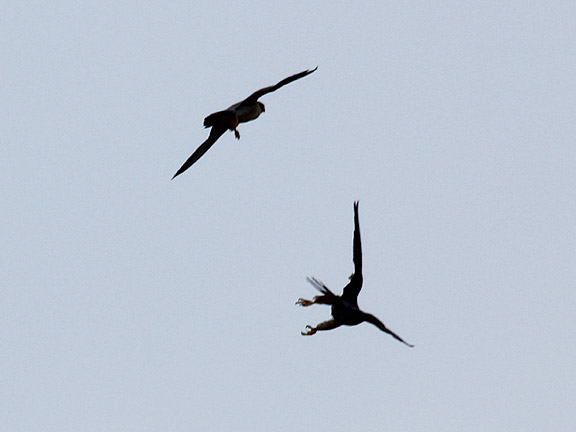
In any event we started our day with a stop at Decker Lake where there were few gulls and nothing noteworthy--we found a dead 1st winter Thayer’s Gull on the shore, not the best signs for a trip that looks for birds like this.  At Decker Lake we were shocked to find less than 100 gulls, making us wonder, “where were the birds?”.  As expected Lee Kay Ponds was frozen solid, and the although there was a HERRING GULL guarding a dead carp on the ice, the only other gulls were about 1,000 birds out over the dump.  A pair of PEREGRINE FALCONS were hunting the starlings over the dump as well, providing quite a show.

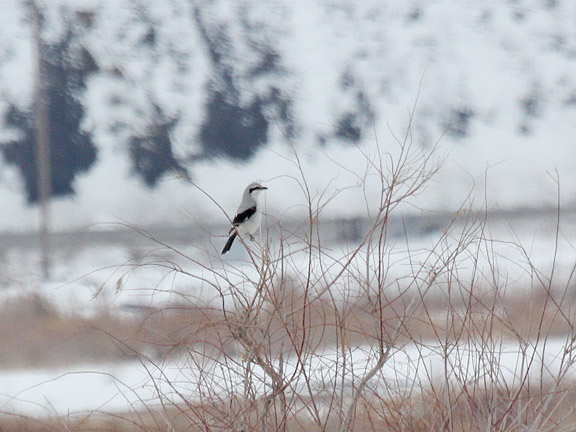
We made one last stop at Saltair, where again there was an obvious lack of gulls and anything noteworthy.  A NORTHERN SHRIKE near the entrance to the park was a nice consolation, but we were gearing up for Gullstravaganza--and there were NO GULLS!

Northern Shrike at Saltair

We decided to drive to the International Center to see if there were birds there, but there weren’t--so we looped back to Decker Lake for one last pass.  Luckily some gulls had showed up here and a live THAYER’S GULL was present.  At Lake Park it looked like gulls were starting to filter into the main pond so things appeared on the up-and-up.  And Stephanie Greenwood was a big help, stopping by Farmington Bay to let us know that if all else failed there were a “few” gulls there, including some first year birds, which always make for a good time.

To the trip…

The group started rolling into the meeting location at Lake Park just before noon.  By 12:20pm we had 35 people and decided we had to move out so we headed to the main pond at Lake Park to see what gulls were there.  I guess the “pouring in” we saw a little earlier ended at about 200 birds, and by the time we got there, they were far out on the ice. We had to trek it to the west side of the pond and in the process lost 3 of our group to the cold and wind--I’ll be honest it was pretty miserable right off the bat.  Once in a great spot to scan from we quickly found a 1st winter THAYER’S GULL in the small flock.  Mike Hearell spotted a LESSER BLACK-BACKED GULL, and I picked out a 3rd winter WESTERN GULL, unfortunately the birds were sitting mostly and hard to pick out.  Every once in a while the birds would pick up and resettle further out, losing a few birds that flew off.  The Thayer’s flew right over, giving everyone a great look.

1st winter Thayer's Gull photo by Jonathan Wilkinson

Checklist for Lake Park
http://ebird.org/ebird/view/checklist?subID=S16338032

Aside from Gulls Jeff found 3 CACKLING GEESE here for an added bonus.  Back at the cars the three that left had their spots filled by 6 that showed up a few minutes late.  We packed back into the cars and headed towards Decker Lake where it looked like we might be spending most of our trip at this point.  Once there we scuttled everyone to the hill overlooking the east leg--on the north shore there was a guy with a pickup truck and the bed was full of loaves of bread.  He was feeding the ducks and gulls and the flurry of birds made for tough scanning.  That combined with a pair of PEREGRINE FALCONS that showed up and were putting on a show!

Pair of Peregrine's photo by Tim Avery

Peregrine Falcon photo by Jonathon Wilkinson

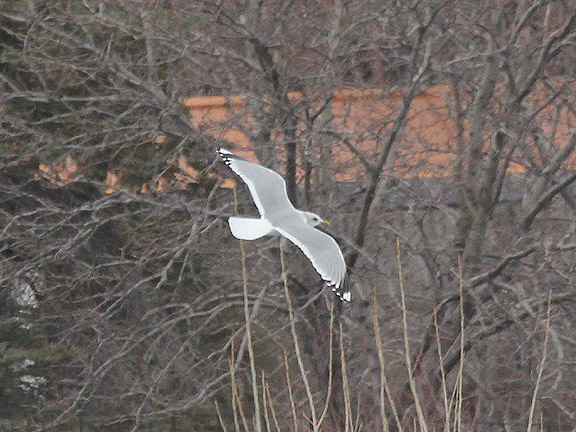
Eventually things calmed down a little and Kenny found an adult MEW GULL sitting relatively close to shore and we set up scopes for everyone in the group to see.  It was a lifer for a quite a few so that was exciting.  A couple times it flew and gave everyone great views in the air as well.


Mew Gull in flight taken by Tim Avery

Mew Gull taken by Jeff Cooper

After a while our group who added one more with Jeff Cooper had exhausted the gulls here--despite around 1,000 gulls, there just wasn’t much mixed in.

Utah Birders scanning for Gulls at Decker Lake

We decided to offer to go up to Farmington Bay for those who wanted, as that gave us our best chance for more gulls.  Some of the group split off here and headed home--while about 25 continued on to Farmington to see what we could find there.

Checklist for Decker Lake
http://ebird.org/ebird/view/checklist?subID=S16338059

At the 4-way parking area at the end of the road we could see gulls to the south and east--but the “heat waves” coming off the water were distorting everything pretty bad.  What we could see is an adult THAYER’S GULL pretty close in, and to the east what looked to be an adult WESTERN GULL and perhaps an adult LESSER BLACK-BACKED GULL--but maybe it was just the lighting…

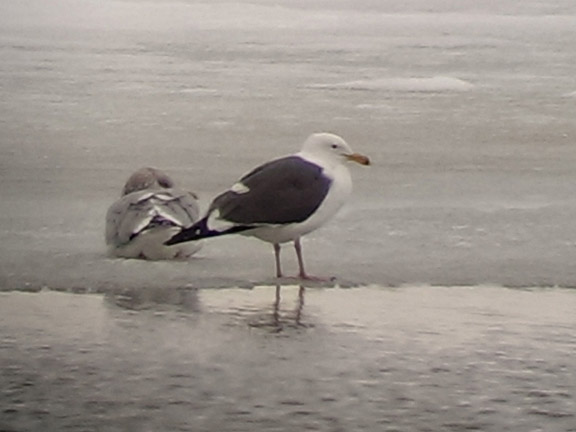
We started hiking to the east and pretty soon it was apparent that the bird in the distance was an adult WESTERN GULL and it was super cooperative.

Western Gull digiscope at Farmington Bay

We also verified the LESSER BLACK-BACKED GULL, but it wasn’t quite as close in.

Lesser Black-backed Gull digiscope at Farmington Bay

Another adult THAYER’S GULL sat very close and allowed for great viewing as well.

Thayer's Gull taken by Jeff Cooper

Further east we could see there were hundreds of gulls on a canal/stream where there was some open water.  We had to hoof it a ways but eventually got within 300~ yards and could scan fairly easily.  Some in the group had spotted another LESSER BLACK-BACKED GULL in the water which I found after a minute of scanning.  AS I kept going, I spotted another, and then another, and then another!!! There were 4 adult LESSER BLACK-BACKED GULLS on the stream!  Incredible.  But we weren’t done yet--on the other side of the road where the stream flowed to the other side there were more gulls.  Kendall Watkins spotted our second adult MEW GULL of the day, lounging with a few HERRING GULLS.  And just a hundred or so feet from it was yet another Lesser Black-backed Gull--6 at Farmington Bay at once, and 7 on the day!

Utah Birders ending the day at Farmington Bay, photo by Janice Gardner

We spent a couple hours scanning birds until the cold started to get the most of us so we headed back in.  It was getting close to dark and the group had whittled to about a dozen of the craziest and die hard birders out there.  I applaud the entire group that came today--all 42 folks for putting up with the cold, the wind, and this big dude from Salt Lake who for some reason just can’t get enough of these gulls.

Farmington Bay photo by Brenton Reyner

Checklist for Farmington Bay
http://ebird.org/ebird/view/checklist?subID=S16338113

Just like that another Gullstravaganza is in the books.  This year beat our previous best of 36 birders by 6--something we still have a hard time contemplating, given its the middle of winter and we’re looking at gulls!  But it’s awesome and I thank those who came out to support this much underrated family of birds!  We had people from all over the state here this year.  The Allan’s joined us form Millard County while Kevin (I believe) from Torrey came a short 200 miles to take part in the trip.  There were birders from Cache, Weber, Box Elder, Summit, Davis, Salt Lake, and Utah Counties as well.  And there may have been other places represented as well.

In 2013 our 36 participants tallied just 4 species during the trip, and 4,500 individual gulls--and impressive number of birds, but depressing showing of species. After that trip, other birders added 2 more species at Farmington Bay where we didn’t go--so an unofficial 6 for the day of.
http://utahbirders.blogspot.com/2013/02/gullstravaganza-2013-recap.html

In 2012 weather put a damper on our trip, and only 11 people (of 27 expected) braved the miserable icy and rainy conditions, for 6 species of gull--the highlight being a Glaucous-winged and Lesser Black-backed.
http://utahbirders.blogspot.com/2012/01/gullstravaganza-2012-recap.html

In 2011 during our first official Gullstravaganza we ticked off 6 species of gull, when 24 birders joined us--the highlight was a 1st winter Iceland Gull which the entire group got to see.
http://utahbirders.blogspot.com/2011/01/call-is-gullstravaganza.html

Prior to when we called it Gullstravaganza, I led a trip in December 2009 where we had 7 species + 1 hybrid.  Before that we did 2 more gull trips, but I can’t find the lists for them or any reports.  What I can say is that since 2008 between 6 or 7 gulling trips in the winter we have tallied an impressive 10 species of gull in Utah.  The list would be stellar anywhere in the United States, but in landlocked Utah it’s even more impressive.  In all we also raised $150 in donations for Great Salt Lake Audubon.

For next years event we are going to revamp thinks a little more--as we do each year, and hopefully then we can finally have an 8 gull species event!

Here is a complete list of this years gulls:

2 Mew Gull
2 Western Gull
7 Lesser Black-backed Gull
6 Thayer’s Gull
28 Herring Gull
220 Ring-billed Gulls
1,450 Californa Gulls
1 Hybrid Western X Glaucous-winged Gull

Labels: , , , , , ,


UTAH BIRDERS FLICKR POOL


    SEE MORE AND SHARE ON FLICKR