Utah Birds, Utah Birding, and Utah Birders. Promoting the sharing of information, and the conservation of habitat for birds in Utah and elsewhere. We are a group of people who want to share what we know, and create a positive birding experience in Utah.

BIRDERS BLOG

a blog by and for Utah Birders

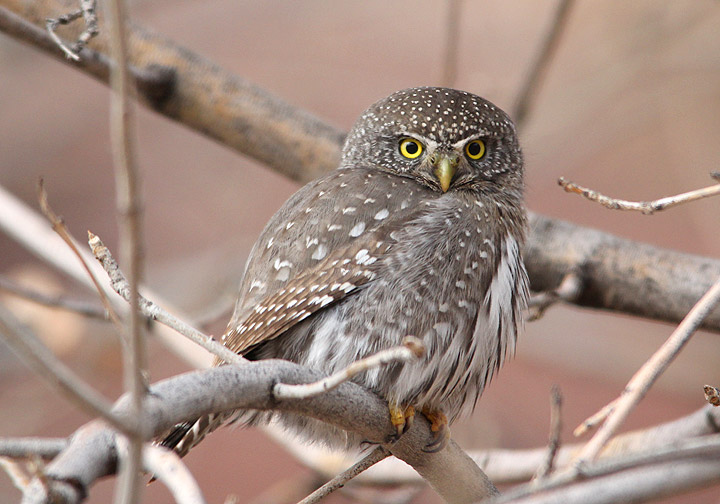
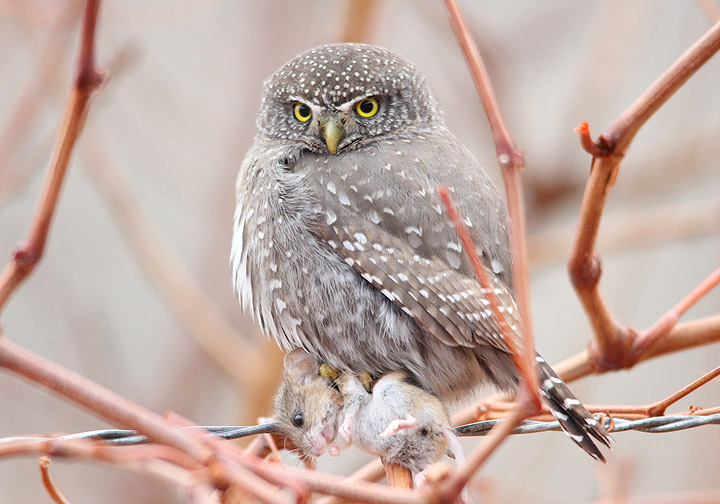
Northern Pygmy-Owl: The Death Blow

posted by Tim Avery at
on Tuesday, February 3, 2015 

Sorry that it's a little shaky.  I didn't grab my tripod and trying to hand hold for video usually doesn't work out to great.  Needless to say the last 3-4 seconds of this video show how fierce this tiny little owl is:


This winter has seen a higher than usual number of detections of Northern Pygmy-Owls.  Winter is usually the best time to observe these owls in Utah but this year it seems to be a banner year. This individual was seen in the town of Rockville, Utah right along the busy Highway leading into Zion National Park.


We watched it drop and take the mouse out, before finally putting it out of its misery, and after a few minutes starting to dig into its catch.


Of all the pygmy-owls I've seen this was by far the coolest interaction I've had! What are some of the experiences others have had with this species this winter, and in winters past?

Labels: , , , ,

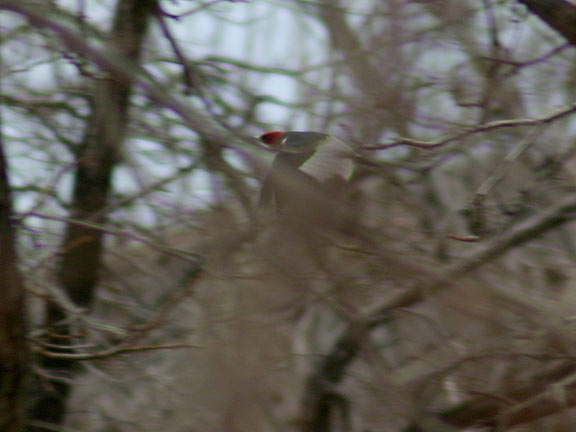
Red-headed Woodpecker in Utah a.k.a. Lightning Strikes Twice

posted by Tim Avery at
on Friday, January 16, 2015 

On December 27, 2004 I was one of the lucky few who were able to see a Red-headed Woodpecker at Wilson's Peach and Pecan Orchard in Hurricane, Utah.  The bird was found by Merrill Webb and although I was on my way back to Salt Lake and almost to Cedar City, I returned to Hurricane for this once in a birders lifetime rarity in Utah--or so I thought.


I saw the bird and a number of others did over the following weeks.  Fast forward almost 10 years and jump 5 miles to the east at another Pecan orchard and lo and behold what shows up but another Red-headed Woodpecker, this time found by Rick Fridell.  I didn't think I would make it down to see this bird, but no biggie since I'd seen the one 10 years ago.  But last week I was able to make it down and saw the bird--my 2nd Utah Red-headed Woodpecker.


As you can see, I only captured the finest images possible of RHWO here in Utah... Okay that might be a little bit of an exaggeration... Or just a lie. These photos sucked, but I wasn't after award winning shots--just documentation!

So what are the odds that this species would show up again, in such close proximity to where one showed up 10 years ago?  The birds were definitely different--the 1st one was an adult, and this years bird was a juvenile.  Let's think of southern Utah as a haystack.  There are likely dozens of pecan orchards around the Southwest part of the state, and plenty of other fruit trees as well.  The southwest is plentiful in both these respects, so if we were to include Arizona, Nevada, and Southern California the number of orchards would explode and the haystack would be enormous.

Google Map of the current Orchards in Hurricane and La Verkin. There are actually way more nut trees in what used to be orchards but are now neighborhoods. The green dots represent the 2 locations of the RHWO sightings in the area.

As per eBird including the 2 Utah sightings, there are 8 previous reports of Red-headed Woodpecker int he desert southwest.  The number of actual historical sightings is likely higher, but for brevity lets use eBird for our sample.

All records are from the winter, and they are:

1) 12/22/1988 to 01/02/1989
Winchester Canyon Rd. at Cathedral Oaks Rd. field, Santa Barbara, California

2) 10/20/1990 to 10/28/1990
Portal, Cochise, Arizona

3) 11/04/1991
Pahranagat NWR, Lincoln, Nevada

4) 11/29/1991 to 05/02/1992
Continental Maintenance Yard, Pima, Arizona

5) 08/03/1996
Flagstaff - Highway 89 near Silver Saddle Road, Coconino, Arizona

6) 11/02/1997 to 05/05/1998
Marana Pecan Grove, Pima, Arizona

7) 12/27/2004 to 01/29/2005
Wilson's Peach and Pecan Orchard, Washington, Utah

8) 12/14/2014 to Today
Hurricane, Washington, Utah

There are also 5 outlying records from western Colorado and New Mexico:

08/14/1982
South Fork, Rio Grande, Colorado

04/23/2006
Durango, La Plata, Colorado

11/09/2007
Kirtland, San Juan, New Mexico

06/14/2011
Escalante Forks, Mesa, Colorado

06/27/2012
South Fork, Rio Grande, Colorado

East of these area the species has more outlying records, but becomes more common along the Rio Grande in New Mexico, and on the front range in Colorado.

The yellow shows the extant of "typical range, with the white border represeneting the limit. on the west in Colorado and New Mexico.

All together told there are just 13 reports in 30 years in the southwest.  The proverbial haystack.

Of the 13 records there are 2 from the same location in Colorado 30 years apart.  I'm not sure if this is the "exact" same location or a general area, so where the birds were seen could actually be a wider berth than the hot spot on eBird.  But none-the-less its still pretty impressive.  The only other location with 2 reports form the "Same" location is the 2 birds from Hurricane, Utah.  In Utah the exact distance was 5.9 miles from one orchard to the other, across rather barren desert.

There are 2 ways of looking at this. 1 is that its sheer coincidence that both birds were found at pecan orchards 5 miles apart. The other is to say its not a coincidence but the habitat is very specific and for a vagrant to show up at such a location is such proximity to another is a pattern.  No matter how you look at it, its still a needle in a haystack.  And with only 2 variables for a sample size there is no way we can realistically look at it as a pattern.  We can assert that Pecan Groves provide an ideal wintering ground for this species, based off the Utah reports and the one from Arizona.  I would wonder if some of these other locations also had pecan trees or were nearby pecan or nut orchards.

Red-headed Woodpeckers mostly eat nuts such as acorns, beech nuts, and pecans during the winter months, caching food for later use. So the attraction to nut orchards has some legitimacy.We also know that this species is migratory and winters across the southern United States. So it is most likely to show up in the winter months at a nut orchard in the southwest.  As per the previous reports 8 of the 13 are from winter months, and 7 of these were from the extreme south and west of the reports.  4 summer reports from western Colorado could be remnants of historical breeding sites, or even extralimital "non-breeding breeding" individuals.

The overall lack of sightings in the desert southwest shows that this species is essentially a vagrant to the area.  With its penchant for nuts, if it does show up an orchard is the ideal location to find one.  But the odds of it being the same location or a nearby location have to be astronomical.

Labels: , , , , ,

Flat Tires and Rare Orioles

posted by Tim Avery at
on Saturday, January 25, 2014 

As I stared at the spare tire under my pickup, laying in the dirt in the middle of the Joshua Tree lined road leading to our campsite on the Beaver Dam Slope , I really was regretting the decision to return to this camp.  Kenny shined the flashlight on wheel as I tried to figure out how to get the tire off the lowering bracket.  It was pitch black, starting to get cold, and we were less than a ¼ mile from the inconspicuous pull off where we would throw our sleeping bags on the ground for the night.  I hadn’t yet decided if this was just my bad luck, or the price for the good luck we had birding.

27 hours earlier…

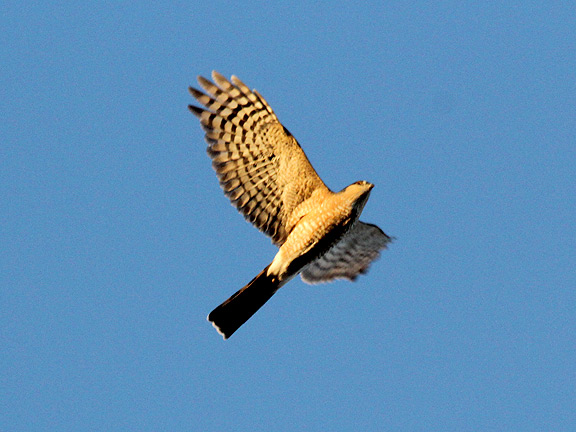
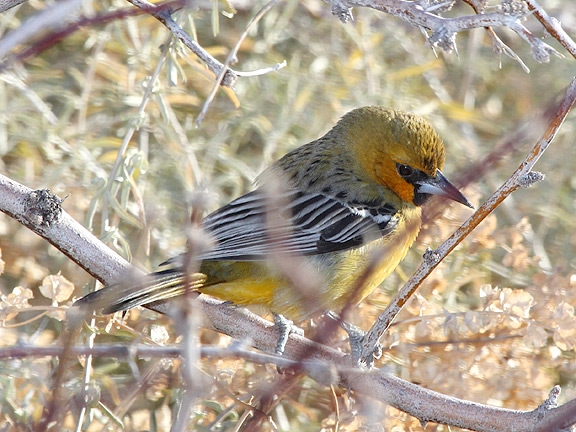
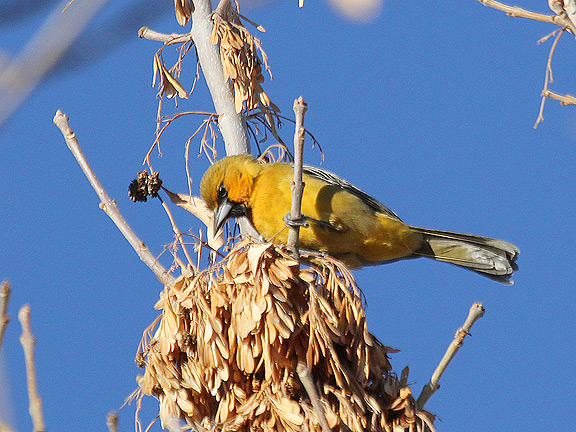
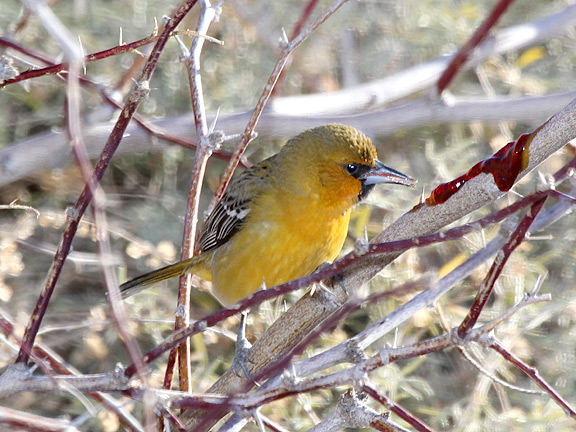
We had left Salt Lake around lunch time on Friday the 17th to get to St. George with about 90 minutes of light left to look for the bird.  The trip down went quickly and before we knew it we were parked just off Green Springs Drive looking for Utah’s 1st ever STREAK-BACKED ORIOLE.  Kenny Frisch and I had waited a couple weeks since the bird had started being reported regularly--and luckily it had been seen that morning.  We had high hopes.  Spending the following hour and half wandering up and down the streets, scanning the trees, bushes, and birds we began to wonder if there had been an accident.  The flyover SHARP-SHINNED and RED-TAILED HAWKS didn’t alleviate those feelings.  Keeli Marvel was looking as well but even with 3 set of eyes there was no oriole.

Flyover Sharp-shinned Hawk at Green Springs

As we left Merrill Webb and his wife arrived finding they had the right area--we talked about returning the next morning, when hopefully our luck would have turned.  Kenny and I headed off towards the Beaver Dam Slope as darkness fell over Washington County.  By the time we turned off the truck it was 20 degrees cooler than when we were looking for the oriole, and you couldn’t see 10’ in front of you in the dark. Being early I threw The Big Year on my iPad and we watched how ridiculous birders are before finally calling it a night.  Sometime in the middle of the night a GREAT HORNED OWL started calling from one of the trees nearby--my first owl of the year. It was one of the coldest nights I remember camping in the open air--and by 4:45am I was wide awake and ready to go birding.

Some time around 6:00am we decided to pack up and head back towards St. George so we could be at the oriole spot by 8:00am.  We made it in about an hour and found a birder named Matt Orsie from back east just starting to look around. A short time later Merrill Webb and his wife arrived, and shortly after that Rachel LeBlanc, Vivian Schneggenburger, and Heather Dove showed up.  While the first 5 of us that showed up were in front of the Chaparral Subdivision scanning and waiting, the 3 ladies from up north were about a block away when all of the sudden we saw arms waving to come their way--they had found the bird!

Utah's 1st Streak-backed Oriole at Green Springs

I always enjoy seeing the different degrees of individuals urgency in regards to seeing a new and/or rare bird.  There are several different types of birders.  The “jog-sprinters”--those who rush to get there ASAP--its not a full on sprint, but long and swift strides where the birder must keep their optics from banging into their face as they bound towards the bird, for worry that it may fly away or be eaten by a predator any second.  Then there are the true “speed-walkers”, who briskly walk towards the bird--they understand the magnitude of the sighting and want to get there quickly, but also carefully.  The 3rd type is the “it’s not going anywhere” birder, that walks at a normal or slightly accelerated pace, scanning intently knowing they will get the bird even if a fraction of a minute slower than the others.

Utah's 1st Streak-backed Oriole at Green Springs

Well on this occasion I saw all three types.  I followed the jog-sprinters, and the speed-walkers, arriving at the tree a few seconds later--and there the bird was in all its rare-splendor, 20’ away, still alive and eating something in the trees.  My lifer and the Utah first STREAK-BACKED ORIOLE.

Utah's 1st Streak-backed Oriole at Green Springs

As we watched the bird flew right over us towards the other side of the street and the trees right in front of the Chaparral Subdivision where we had expected it.  For the next 45 minutes we watched as it worked the trees here, then flew back across the street to the tree where it originally was, then repeating the route.  We figured out shortly thereafter that it was coming to the trees on the opposite side of the street for jelly that someone had put on the limbs of a couple branches in the trees.

Utah's 1st Streak-backed Oriole at Green Springs

After getting our fill of the bird, everyone split up and headed out for their own birding for the day.  Kenny and I headed over to Quail Creek to try for a previously reported Winter Wren.  We didn’t find the wren but did have a NEOTROPIC CORMORANT and 75 or so Common Mergansers.  A handful of HOODED MERGANSER rounded out the birds of note.

From here we checked Berry Springs Marsh but didn’t see anything of note.  Stratton Pond had the usual flock of GREATER SCAUP, as well as a few Canvasback, Redhead, Ring-necked Duck, and other ducks.  We spent about an hour wandering around the neighborhoods nearby for Inca Dove but had no luck.

We checked for wigeon at Sky Mountain Golf Course.  The flock wasn’t on either of the ponds they usually are at, but were in the pond that is usually surrounded by tall reeds and trees and not visible on the southeast edge of the course.  There were a few hundred AMERICAN WIGEON but nothing of note.

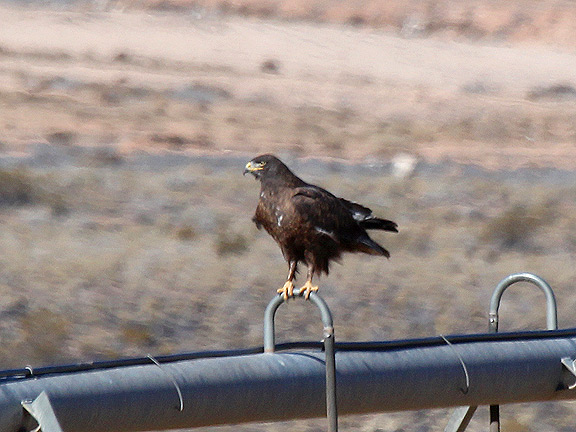
Our next stop was the Hurricane Fields which weren’t overly birdy--a beautiful dark FERRUGINOUS HAWK was a pleasure to see.

Dark Ferruginous Hawk in the Hurricane Fields

Along the south edge of the fields heading towards Sand Hollow we stopped in the Cholla Patch where 3 CACTUS WREN provided excellent looks and photo ops.

Cactus Wren on Cholla Cactus in Hurricane Fields

Dropping down towards the reservoir we stopped in the sage flats and picked up 3 SAGEBRUSH SPARROW--the local variety of the recently split Sage Sparrow.  There is some chance that the Bell’s Sparrow may occur in southwest Utah in the winter but I’m not sure that without vocalizations it would be possible to verify given the subtle differences in plumage.

Sagebrush Sparrow in the sage at Sand Hollow State Park

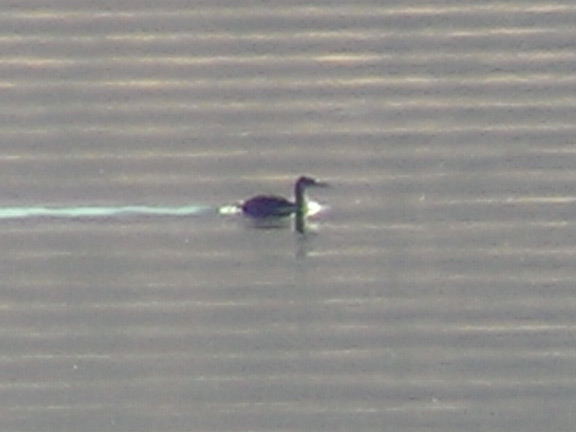
At the reservoir we started scanning and quickly located the RED-NECKED GREBE that has been overwintering.  There were also 3 COMMON LOON on the water along with 1,000’s of waterfowl that included all 3 species of Merganser, and gobs of Ruddy Ducks.

Record shot of the overwintering Red-necked Grebe at Sand Hollow

Leaving the lake we swung over to Wilson’s Peach and Pecan Orchard.  There was a RED-NAPED SAPSUCKER but not much else.  Cutting across Washington Dam Road it was a shock when we hit a highway that wasn’t there last May.  The dirt road that used to cut through the back country was gone, and replaced with 4 lanes of high speed cement--after all the folks from Washington City and St. George, need to get to Sand Hollow 5 minutes sooner than they would taking the interstate and SR-9.  I was stunned at how fast this road went in and how one of my favorite drives along a less-birded stretch of the Virgin River is now basically destroyed.  After finally getting back to Sand Hollow we opted not to take the new road and instead check out the SR-9 Sewage Ponds where Kenny spotted a LEAST SANDPIPER and a nice winter find for Utah, a DUNLIN!

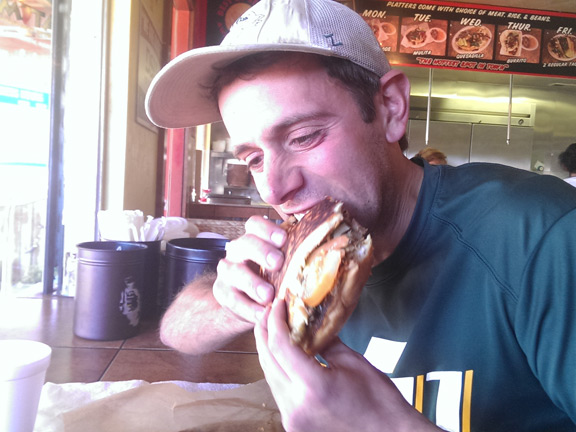
We then scanned the hundreds of RING-NECKED DUCKS on the lowest pond in hopes of finding something mixed in--no luck there.  We wanted to make it out to Lytle before dark to do some birding, but also wanted to grab a bite at Irmita’s Mexican joint on St George Blvd.  Kenny won a free Torta his last visit for finishing their mega-Torta sandwich in less than 15 minutes, so he cashed his ticket in and devoured one in less than 5 minutes.

Kenny devouring the giant Torta in under 5 minutes...

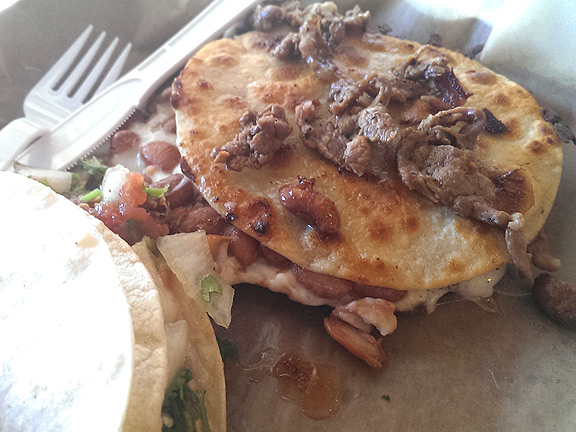
If you go birding in St. Geroge you need to stop into Irmita's on St. George Boulevard and give their authentic Mexican street food a shot.  My personal favorite is the Mulita!

Meanwhile I enjoyed my Carnitas Tacos and Carne Asada Mulita, before we jetted off towards Ivins Reservoir where there were plenty of waterfowl.  We made it to the slope with a couple of hours of sunlight left.  A GREATER ROADRUNNER sprinted across the road while we drove towards Lytle Ranch--the only other birds we saw were House Finches.

My favorite view of Lytle Ranch from the Bluffs Above

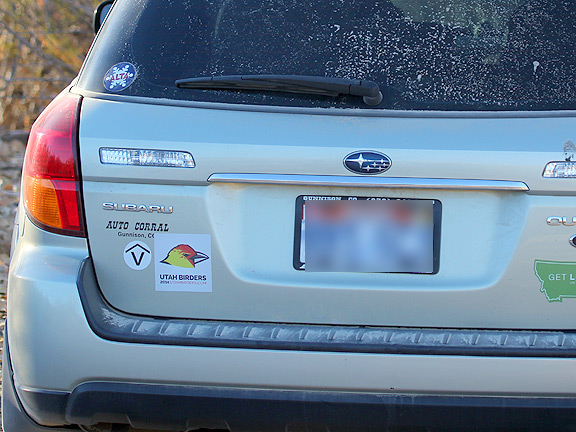
At the ranch we saw Vivian. Heather, and Rachel’s vehicle--with one of our newest stickers on board--Thanks Ladies!

Utah Birders 2014 Western Tanager Sticker!

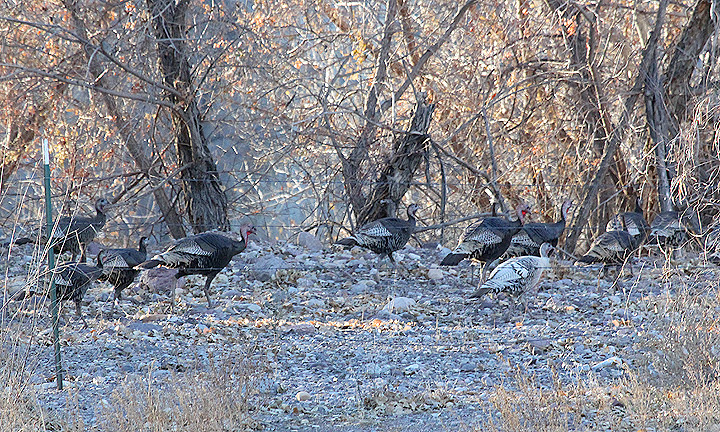
The ranch was pretty active with the usual suspects.  We had an interesting sparrow in the orchard but didn’t get great looks before it disappeared--initial thoughts were something Ammodramus…  A small flock of WILD TURKEY with a partially leucistic bird ran along the river.  The milo fields were filled with sparrows but we couldn’t turn up anything unusual.  There were 3 random birds at the ranch though--a WESTERN SCRUB-JAY, which I think was my first here.  There was also a TOWNSEND’S SOLITAIRE, and a MOUNTAIN CHICKADEE--both fairly uncommon in the Mojave.

Wild Turkey flock heading to the river at Lytle Ranch

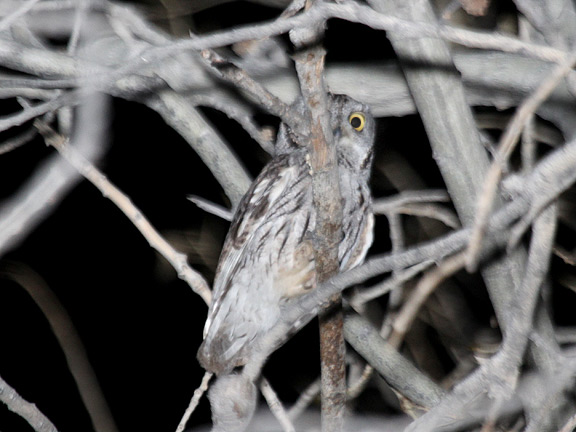
We stayed till dark when a GREAT HORNED OWL started calling from the river.  As it began to get dark 2 LONG-EARED OWLS emerged from the campground area and flew off to hunt.  Finally we called in a couple WESTERN SCREECH-OWLS before we headed towards camp for the night.

This Western Screech-Owl did its best to avoid being seen high in the trees

And that’s where this story started off.  Almost to our camp I heard the front passenger tire blow.  I stopped the truck on as flat a spot as possible and threw on the parking break--the tire went completely flat in seconds with a ¾” long gash in the treads.  In pretty quick time we got the truck jacked, tire off and then replaced and rolled into our camp.  We planned on going back to Lytle in the morning but because of the flat I didn’t want to risk driving on any more dirt roads that we had too.  So we decided to relax and made a fire to chill out by and figure out what to do the next day.  The night was much like the night before--except no owl.  We woke a little later when it was lighter and headed back into town, stopping 1st at Entrada for the ROSS’S GOOSE that has become a staple here the last 3 winters.

The now "resident" Ross's Goose at Entrada

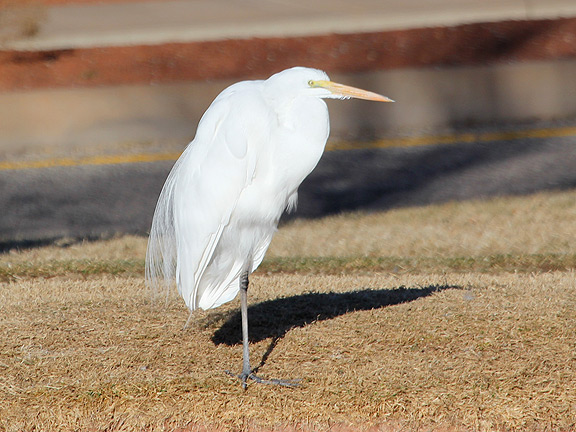
There were also 2 GREAT EGRET, a few Hooded Mergansers and a number of other waterbirds here.

Great Egret posing in the Sun at Entrada

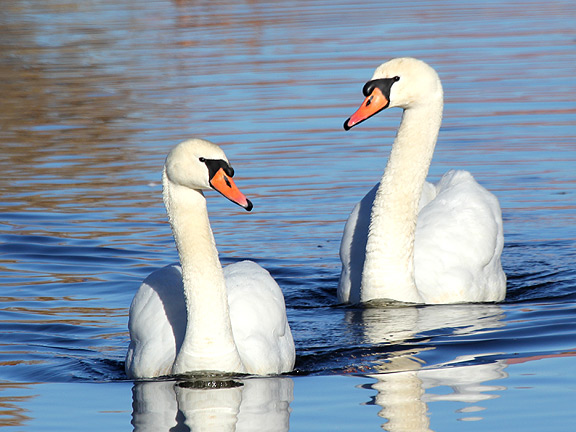
Since we still had time till any tire places were open we went to Tonaquint Pond where an ABERT’S TOWHEE was calling, and 2 MUTE SWANS were joined by a handful of RING-NECKED DUCKS on the pond.

Pair of Mute Swan at Tonaquint Park

2 of a handful of cooperative Ring-necked Ducks at Tonaquint Park

Springs Estate pond had a couple of ABERT’S TOWHEES as well.  The SNOW GOOSE that has been here the last 3 winters was also present, but otherwise the pond was rather empty.  Kenny managed to pick up CRISSAL THRASHER near the river on the far side of the pond.

Abert's Towhee in the trees at Springs Estate Pond

In the Washington Fields we saw a number of AMERICAN PIPITS hanging out on the power lines--something I don’t recall seeing before.  There were a few Red-tailed Hawks, Northern Harriers, and American Kestrels.  We saw at least 2 CACKLING GEESE with a large flock on the north edge near the 2 ward houses in Washington City.

Cackling Goose at center very bottom--Washington Fields

At this point it was time to see about getting a tire to replace the one that was shredded.  The tie place was closed on Sunday’s so we headed towards Wal-Mart when the tire monitor bleeped on again and I could see the back passenger tire losing pressure--are you freaking kidding me.

As we pulled into the automotive area I could see the puncture, and that this tire was also going to be unrepairable.  The store only had one tire to fit my truck so after replacing one, we left the spare on and headed back to Salt Lake--with anymore birding being a wash.  These blowouts were number 2 dn 3 in the past 12 months, and the 4th and 5th flats in the last 15 months with my truck.  It’s amazing the money you spend on a truck and the manufacturer doesn’t bother to put tires on that can take the beating a truck puts on them.

Denver Broncos Running Back Montee Ball . Photo by Rick Wilking/Reuters

On the way home we listened to the Broncos beat the Patriots in the AFC Championship--Kenny lamented that maybe I had to sacrifice my tires so the team I cheer for could make it back to the Super Bowl… I guess I can buy that.  A week later I took my truck in and put a brand new set of Big-O Big Foots on--and hopefully my tire woes will go away for a few years.

Big-O Big Foots are made for all terrain and can take a beating on Utah's Dirt Roads...

The trip was a great success bird wise--we nailed our target, and picked up a bunch of other great birds during our Saturday birding around Washington County.  And of course a great story to go along with the birds!

Labels: , , , , , ,

Western Screech-Owl Video

posted by Tim Avery at
on Wednesday, June 5, 2013 

On Saturday June 1st I wanted to search for Elf owls at Lytle Ranch Preserve in Utah's Mojave Desert, but had to give up because the ranch dogs wouldn't stop barking.  I ended up heading back to my car which was a few hundred yards away so the dogs weren't as loud.  AS I arrived back at my parking spot I heard a Western Screech-Owl singing from the trees nearby.  After a pathetic imitation whistle I was surrounded by at least 5 of these little owls.  One landed on a dead snag hanging out over the road which gave me the opportunity to try filming at night--something I had not tried before.  Below is the final product:


The video clips were shot using my Canon t3i camera body and a my Sigma 150-500mm lens, set at somewhere between 300-400mm.  The picture at the beginning used my Canon 580 ex II flash at 1/200 second.  The videos were lit up by a Surefire halogen lens shined from near the camera at the snag near the owls feet.  I shot video in 30 second increments followed by a few minutes of leaving the bird alone, hoping not to cause to much distress.  In all I shot 5 clips of this bird to make this video, before leaving the bird alone and looking for the others in the trees nearby.

A young Western Screech-Owl


Labels: , ,

A Big Utah Weekend

posted by Tim Avery at
on Wednesday, May 15, 2013 

This past weekend Jeff Bilsky, Kenny Frisch, and I headed to southern Utah to do a little birding, and possibly take another run at a big day.  We ended up scrapping the big day idea rather quickly given a number of birds we had trouble pinning down this year, along with the fact there was no moon at all, and migration was on the slow side in the south.  Instead we birded a number of major habitat zones, and tracked down a number of new birds for the year, and lifers for Jeff and Kenny.

Common Grackle in Provo

We left Salt Lake on Thursday evening, stopping in Provo to track down the COMMON GRACKLES on the corner of Center and Geneva (eBird checklist)--we had one perched in the pines to the northwest of the intersection.  We continued to Skipper Bay (eBird checklist) where the NORTHERN WATERTHRUSH was still near the entrance--then birded Utah Lake State Park (eBird checklist) where nothing out of the ordinary presented itself. As we drove back to the interstate, a pair of SANDHILL CRANES was flying parallel to us, and as they made their way to pass over the road, I caught one shot form the moving car--love a little luck!

Sandhill Crane taken from a moving vehicle!

Our next stop on the way down was Chicken Creek Reservoir (eBird checklist) just off I-15 at the Mills/Levan Exit #207.  Waterfowl numbers were down dramatically compared to last year on the same weekend, but we still picked up most of the expected species, as well as GREATER SCAUP, BUFFLEHEAD, and RING-NECKED DUCK.  One of the bigger surprises was 8 BLUE-WINGED TEAL which is one of the larger spring groups I've seen in Utah.  Aside from the ducks, a serious scan of the opposite shore provided a few new shorebirds for me in Juab County, including a lone SANDERLING, 2 BAIRD'S SANDPIPERS, and SNOWY PLOVER.  A handful of SEMIPALMATED PLOVERS along with both Wilson's and Red-necked Phalarope, rounded out the more interesting shorebirds. A VIRGINIA'S WARBLER along the road was also a nice find.

Chicken Creek Reservoir at Sunset

We made it to St. George after dark, but skipped out on any additional nocturnal birding and instead headed out to the Beaver Dam Slope to camp for the night.  No owls, or poorwills calling this or any of the 3 nights we camped--but NORTHERN MOCKINGBIRDS were a constant pretty much all night every night.  Friday we woke around 6:00am and headed across the slope towards Lytle Ranch.  Along the way across the Beaver Dam Slope (eBird checklist) we had fantastic looks at a SCOTT'S ORIOLE that fidgeted from bush to bush just off the road.

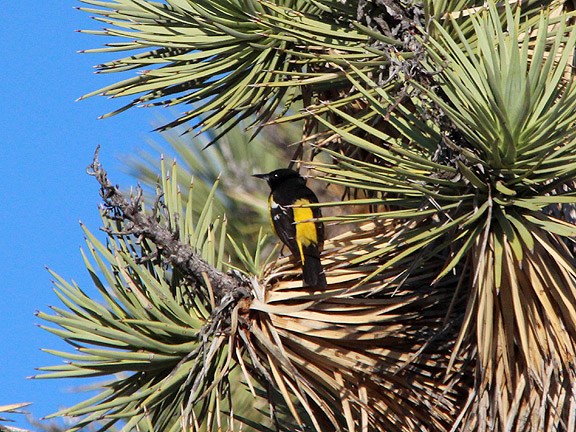
Scott's Oriole in a Joshua Tree

At Lytle Ranch (eBird checklist) we were the only birders and scoured the parking area, campground, housing area, and orchard before walking up the wash about a mile past the end of the ranch property.  It was definitely not as birdy as past May trips--but about on par with last year.  One major difference last year this weekend was the activity in the orchard was phenomenal--this year it was non-existent.  We picked up all of the expected species, but migrants were sparse.  Directly west of the 2nd pond north from the parking area Jeff spotted a male VERMILION FLYCATCHER off in the riverbed.  We ditched the road and cut across the wash to the river and relocated the bird.

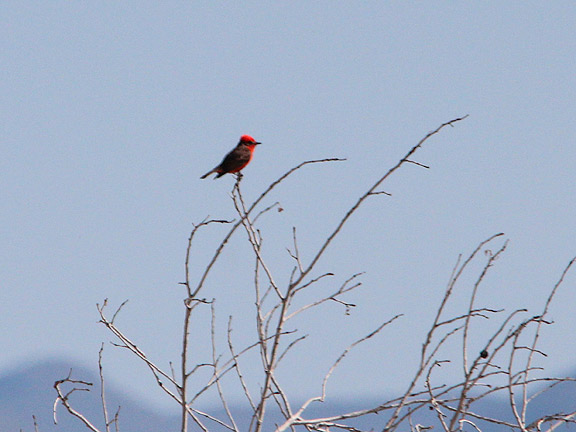
Vermilion Flycatcher at Lytle Ranch 

We continued along the creek where there was definitely "more" bird activity, but nothing unusual.  Numerous Yellow and Lucy's Warblers, several Black-headed Grosbeaks, Verdin, and the ever present Ash-throated Flycatcher provided most of the birds in this stretch.  As the creek met up with the fence-line at the end of the ranch property we heard a BLUE GROSBEAK singing and finally managed to get some decent looks at it after it flushed across the creek into the open.  The stretch of trees in the mile after the ranch property didn't add many species.  A Lazuli Bunting on the way up, and a GRAY FLYCATCHER on the way back down.  The highlight was when Jeff and Kenny spotted a soaring GOLDEN EAGLE--that just so happened to be accompanied by my favorite Utah raptor--a COMMON BLACK-HAWK.

Common Black-Hawk in the Beaver Dam Wash

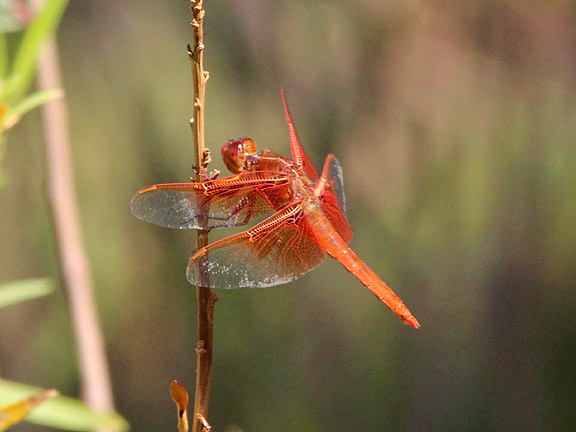
The walk back down was mostly uneventful--in the orchard we snagged a WESTERN WOOD-PEWEE, and back near the housing area we got great looks at SUMMER TANAGER and BROWN-CRESTED FLYCATCHER.  The feeders at the campground had 4 species of hummingbird, including ANNA'S, COSTA'S, BROAD-TAILED, and majority Black-chinned.  Other Lytle Ranch tidbits--the ranch caretaker Eriberto has a new dog, a 2 month old Chocolate Lab puppy name "Choco".  Butterflies were out in force, mostly Desert Swallowtails, and a few Common Buckeye.  And the Flame Skimmers (dragonflies) were busy along the creeks, which were full of fish, tadpoles, and several Spadefoot Toads.

Flame Skimmer on Beaver Dam Creek

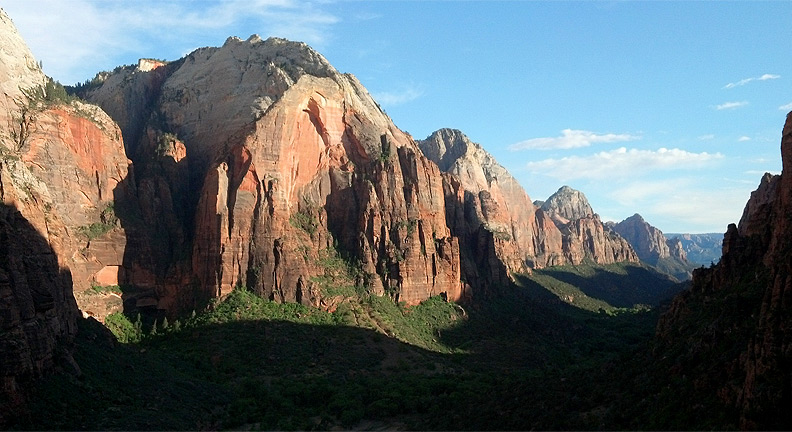
We made a few stops as we headed across the slope, back through St. George, and to Zion National Park (eBird checklist), but didn't spend too much time as we had a few targets to find in the park.  On the drive across there were a few isolated patches of rain--it cooled things down a bit, which was nice, plus by the time we got to Zion late in the afternoon most of the crowds had subsided.  The bus ride up canyon was quick and there were very few people wandering around the Temple of Sinawava.  We hoped to relocate the Painted Redstart I saw last month that has been a constant in the area for birders this spring (and most years).  We spent almost 90 minutes traversing the road and hillside above the parking area, but never heard or saw the rare warbler.  We did however get pretty much every other possible species you can get in the canyon, including Yellow, Lucy's, Yellow-rumped, BLACK-THROATED GRAY, and VIRGINIA'S WARBLER, BUSHTITS, PLUMBEOUS VIREO, WARBLING VIREO, Blue-gray Gnatcatcher, Hairy Woodpecker, and House Wren.

Zion Canyon from Refrigerator Canyon at Dusk

We headed back down canyon for our next target, getting off at the Angel's Landing Trailhead, we hiked the 2 miles to Refrigerator Canyon to look for Spotted Owl which have been present here the last few years.  The birding along the way produced similar species to what we had at the Temple of Sinawava.  Once in Refrigerator Canyon we played the waiting game--hoping that after it got dark we might hear one belting out its marvelous tune.  The chattering of White-throated Swifts overhead, was accompanied by a CANYON WREN that kept singing just above us on the trail.  LAZULI BUNTINGS could be heard buzzing from time to time, and both CHIPPING SPARROW and PINE SISKIN moved through while we were there.  After the sun set the HERMIT THRUSHES started belting out their songs, adding to the interesting mix of sounds in the narrow side canyon. It wasn't long after sundown that we all froze as a series of notes were belted out from the cliffs above us--WHOOO, HOO, HOO, HOO, HOO, HOO, HOO, HOO, HOO, HOO, HOOA!  It was the SPOTTED OWL!


We decided to see if we could record the call and flipped on video on our cameras, waiting.  Nothing happened.  We decided to walk through the canyon and see if we could find the bird, hopefully perched out on a cliff or tree now.  We didn't get far when I looked up and saw the bird perched on a rock outcrop--success, and a lifer for Jeff and Kenny.

Spotted Owl in Refrigerator Canyon

While we watched the owl, it would occasionally start calling--and awesome and eerie sound so close.  After a bit the bird took flight and we watched it glide and land on a tree further up the canyon, even higher than before.  Here we watched and listened while it called some more.  Then the coolest thing happened, when another SPOTTED OWL came flying in and landed on the tree right next to the other owl, with what looked to be a large rodent in its beak.  Eventually one of the birds flew off with the food, although I wasn't sure if it was the same one, or the bird that was sitting there originally.

After watching them for a bit we decided to head down the trail to get back to the bus stop before the last bus--I usually check but figured the last bus was sometime after 10pm.  In Refrigerator Canyon it was no surprise that I could see my breath in my headlamp beam--it was chilly.  But as soon as we emerged to the switchbacks on the open slope things warmed right back up.  We walked at a moderate pace but didn't hear any nocturnal birds on the way back.  Several Arizona Toads had come out onto the path though and we stopped to admire a couple.

Arizona Toads like this dot the trails after dark in Zion

As we made our way down, I never saw a bus going up or down canyon so I was a little worried that we might have missed the bus.  As we got to the parking lot I saw a handful of headlamps from other hikers, so figured we were okay.  Sure enough we made it 10 minutes before the last bus was heading down canyon.  Two people could be seen, headlamps bobbing as they ran along the trail to catch the bus. Lesson learned for the future--always check the bus schedule just in case! The drive back to the visitors center went quick and we were soon in the car headed back across the desert.  We stopped to get some food then checked out a couple marshes and ponds, but surprisingly missed every nocturnal marsh dwelling bird we were looking for. So back to the slope for another night sleeping in the desert--again the mockingbirds provided the nocturnal chorus.

We slept in Saturday morning...  We hiked about 10 miles on Friday and saw some great birds--but I was more interested in some relaxed birding this day.  We eventually packed up camp and rolled back to Lytle Ranch (eBird checklist)--seeing both YELLOW and BLACK-THROATED GRAY WARBLER on the slope.  At the ranch there were already 3 cars there, but we never saw the other birders.  We didn't spend as much time this go around, only checking the lower stretches of the property, not going past the orchard.  2 WILD TURKEYS were running from the orchard back towards the creek when we got there.

Summer Tanager at Lytle Ranch

The birding was basically the same, but with fewer species because we didn't cover the ground we did on Friday. We added GREEN-TAILED TOWHEE and MACGILLIVRAY'S WARBLER before finally heading out.  We stopped on Utah Hill (eBird checklist) and picked up GRAY VIREO and BLACK-CHINNED SPARROW for the weekend.  We never had Cassin's Kingbird, or Juniper Titmouse however, which were two big misses.  We skipped most of the places in town and headed straight back to Virgin, to head up to Kolob Terrace and Lava Point.  Stopping at the pond on Lower Kolob Road (eBird checklist) we got great looks at a BLUE GROSBEAK and good recording of a singing YELLOW-BREASTED CHAT.


Blue Grosbeak along the lower Kolob Terrace Road

On Kolob Terrace (eBird checklist) the birding was as usual--excellent.  We cleaned up on the mountain birds, getting Red-breasted Sapsucker, and both Hairy & Downy Woodpecker right off the bat.  RED CROSSBILLS, VIOLET-GREEN SWALLOWS, and DUSKY FLYCATCHER were all easy adds.  We saw at least a half dozen LEWIS'S WOODPECKERS in various locations.  2 WILLIAMSON'S SAPSUCKERS on the road to Lava Point were a new county bird for me.  The most exciting moment of the afternoon came when we were driving and what looked like a Golden Eagle through the trees banked, showing it was actually a CALIFORNIA CONDOR, a lifer for Kenny.  By the time we got out of the car the bird was flying away and the only pictures I managed were crap--which is okay since I have a pretty good set from the summer I worked down there :)

Kolob Terrace taken from Lava Point

We spent some time relaxing at Kolob Falls crossing, hoping one of the beasts would come soaring by--no luck, but there were plenty of the very common TURKEY VULTURES.  Further up the road we were stunned to hear 3 SORAS calling like crazy form a marshy field--and surprised again when we spotted two BLUE-WINGED TEAL in a small pond near the reservoir.  At Kolob Reservoir (eBird checklist) there were hundreds of grebes, while waterfowl numbers were down.  A COMMON LOON was still hanging out in the middle of the reservoir as well.  Coming back down the road we joked about how many times we have tried to get Jeff ACORN WOODPECKER here and been unsuccessful. It must have been an omen, because we spotted one up in a tree just then--bringing Jeff's grand total to two Acorn's in Utah in two months--with 0 in the previous 5 years.

Acorn Woodpecker on the Kolob Terrace

We headed out of the mountains, but not before stopping to add a very accommodating pair of GRACE'S WARBLERS to the trip list.  The only major misses in the mountains were Pygmy Nuthatch and Clark's Nutcracker.

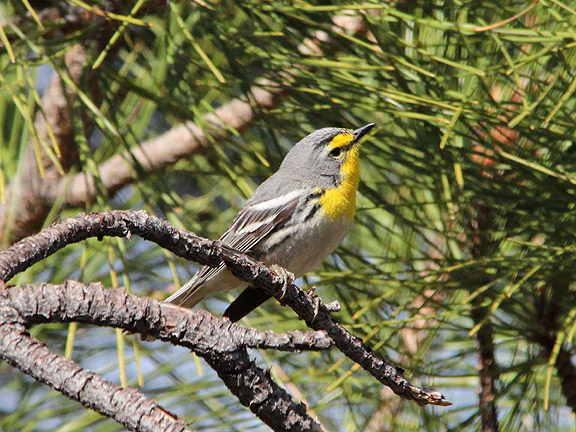
Cooperative Grace's Warbler on Kolob Terrace Road

Back in the desert we stopped in Hurricane to look for a few birds--namely Inca Doves which we missed.  We did however get excellent looks at HOODED ORIOLE.

A stunning Hooded Oriole in Hurricane

We headed into St. George and enjoyed some delicious Mexican "cuisine" at Irmita's on St. George Boulevard.  It's cheap and tasty--I highly recommend the Molita with Carne Asada.  After filling our tanks, we went over to Springs Pond and Seegmiller Marsh (eBird checklist), where an ABERT'S TOWHEE was the only of the trip, as was a lone LESSER NIGHTHAWK that came out just at sunset.  We spent 15 minutes watching the fields after dark but no more were seen. And again we rallied back across the desert to our camp on the Beaver Dam Slope. This night we relaxed, and talked about some of the great birding we'd had thus far the weekend--and how the Sunday drive home wouldn't be a stressful race to 200 species on a big day--but a leisurely trip stopping to enjoy spring migration when and for as long as we wanted.

Kenny (left), and Jeff scanning SR-9 Marsh for Gallinules

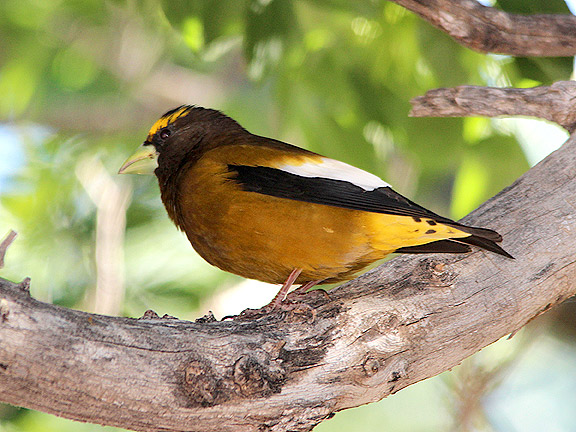
Sunday morning we followed the same routine as the previous 2 days, and headed across the slope towards the ranch (eBird checklist). Sunday like Friday found us alone birding.  And like Saturday the birding was slower than normal.  Several YELLOW-BREASTED CHATS were working the shrubs near the parking area, and the SUMMER TANAGERS were busy singing from the tree tops over the housing area.  The best bird of the morning was a male EVENING GROSBEAK that flew in from the west and landed in the parking area.

Evening Grosbeak at Lytle Ranch

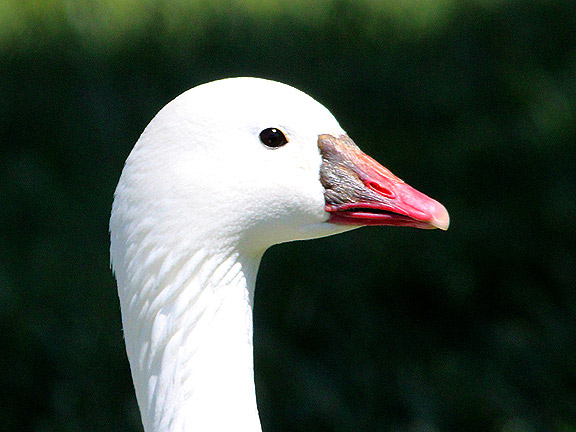
After the ranch we slowly drove over Utah Hill (eBird checklist) checking several spots for Cassin’s Kingbird unsuccessfully.  We did pick up a second SCOTT’S ORIOLE for the trip, and added CHUKAR on the north slope going towards Shivwits.  We headed into St. George and made a quick stop at Tawa Ponds (eBird checklist) along Snow Canyon Parkway and added the continuing ROSS’S GOOSE--basically domesticated at this point having spent the last 2 winters and springs here (not sure about summer and fall).

Ross's Goose at Tawa Ponds

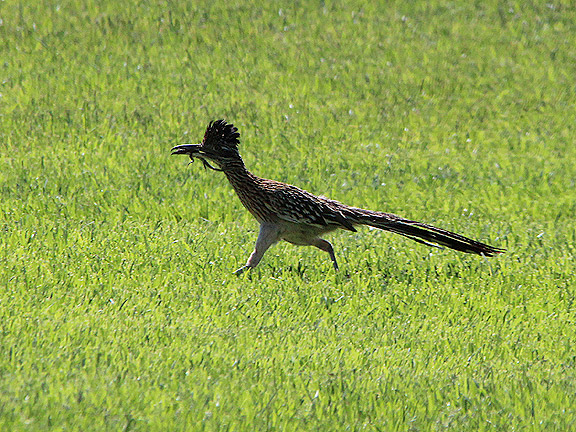
While there a GREATER ROADRUNNER took off across the lawn nearby with a lizard in his mouth.  Jeff hopped out to go take a picture and caught a great image of the bird silhouetted with the lizard dangling from his mouth.  The best shot I got was of the bird bolting across the lawn...

Greater Roadrunner with a lizard in its beak at Tawa Ponds

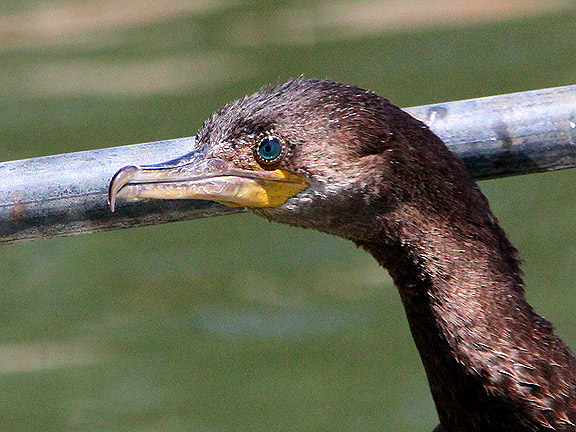
We swung into town and checked out Skyline Pond (eBird checklist) where a NEOTROPIC CORMORANT was hanging out.  It provided excellent looks and allowed for very close approach while preening on a perch in the water.  After taking some pictures we were on our way.

Neotropic Cormorant up close at Skyline Pond

We made a side trip through Leeds to see if we might scare something up on our way out of town, but added nothing new.  From here it was back on the highway and we headed north.  Once we got to Scipio we took the side roads out to Yuba Lake State Park (eBird checklist) picking up VESPER SPARROW, SAGE THRASHER, and HORNED LARK for the trip.  In the Junipers approaching the lake we didn’t add any new birds but had BEWICK’S WREN, PLUMBEOUS VIREO, BLUE-GRAY GNATCATCHER, ROCK WREN, and LAZULI BUNTING among others.

Common Loon at Yuba Lake State Park

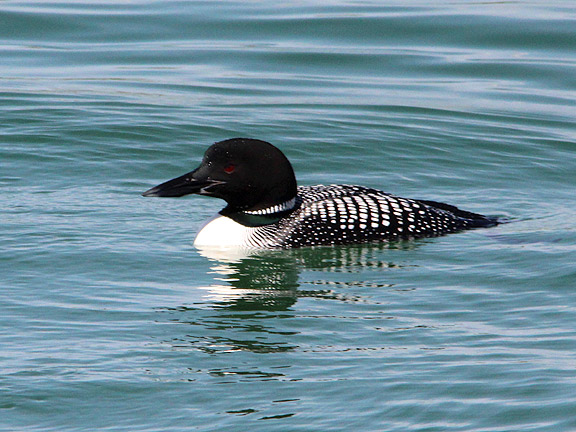
At the reservoir we got great looks at a COMMON LOON within 50’ of the dam.  On the water were large rafts of EARED GREBES mixed with WESTERN GREBES, and California, Ring-billed, and Franklin’s Gulls.  We checked the campground for migrants but it was pretty dead, so we continued on to Chicken Creek Reservoir (eBird checklist) for our last stop of the trip. We had similar birds here as we did Thursday night with the exception of several shorebirds.  We made up for it with a single BONAPARTE’S GULL out on the opposite shore.
Yellow-headed Blackbird at Chicken Creek Reservoir

At trips end we tallied 183 species.in 72 hours at just over 1,000 miles in the car--I added another 9 on Thursday before we left for 192 on my weekend.  Last year we had 179 species on our Big Day, and 193 on the weekend.  Although we didn’t make a run at the Big Day record this year we learned more, and might have a new plan to put into action in the future.  Big Days are stressful, and although they come with some amount of “personal glory”, they aren’t as much fun as a good weekend of birding--and it was another great weekend of birding.

Labels: , , , , ,


UTAH BIRDERS FLICKR POOL


    SEE MORE AND SHARE ON FLICKR