Utah Birds, Utah Birding, and Utah Birders. Promoting the sharing of information, and the conservation of habitat for birds in Utah and elsewhere. We are a group of people who want to share what we know, and create a positive birding experience in Utah.

BIRDERS BLOG

a blog by and for Utah Birders

2015 Marathon Birding Recap

posted by Tim Avery at
on Tuesday, May 19, 2015 

As I left my house at 5:00am it was in a down pour... Things were not looking good.  As I picked up my cohort Jeff in downtown Salt Lake, it was a torrential down pour... things could only get better.  The drive into Davis County was wet wet wet.  And as we got breakfast it seemed to get even wetter. Finally arriving at the Legacy Events Center to meet out group the rain was still coming down; but it seemed to have lightened a little--and to the west there was a shimmer of hope that the clouds would part and the weather might turn for the better. We kept our expectations reasonable--the rain could definitely damper our efforts--it was probably snowing above 8,000' so our mountain birding could definitely be rough.  This was going to be a wet and wild Marathon Birding Trip.

Everyone that ended up going on the trip was on time and in the vehicles; but 2 participants didn't show up, and we wasted 15 minutes waiting and trying to get a hold of them--in the end we left late, and without the 2 no-shows.  In the parking lot the first birds of the day were a flyover flock of WHITE-FACED IBIS; and singing AMERICAN ROBIN, HOUSE FINCH, and RED-WINGED BLACKBIRD. We wasted no time making our way to Glover Lane, where birds were singing as if it were sunny and warm. COMMON YELLOWTHROAT and YELLOW WARBLER were heard quickly. Sitting in the middle of a wet field was an easy to watch BLACK-CROWNED NIGHT-HERON, while the ponds at the end of the lane provided the usual share of waterfowl and waterbirds--we were underway and I personally didn't mind the rain since the birding was off to a good start.

At Farmington Bay the gates were locked as usual and it took a few minutes to get in.  We were greeted by a GREAT EGRET in the pond to the east, as well as COMMON GOLDENEYE, and 100's of VIOLET-GREEN SWALLOWS.  Behind the restrooms 2 WOOD DUCKS were nice to get out of the way.  We snagged both SORA and VIRGINIA RAIL calling from the reeds, and CASPIAN and FORSTER's TERNS overhead. At Egg Island Overlook a very wet SWAINSON'S HAWK posed  for the group int he small trees. Scoping form here we picked out a small group of 7 RED KNOTS to the southwest--a fortuitous find as we would have none at the causeway later.  We quickly nabbed our waterfowl needs and got a bonus PEREGRINE FALCON before turning around and heading out.  Along the way we added LONG-BILLED DOWITCHER, WILSON'S PHALAROPE, and SANDHILL CRANE. We were glad to get both NORTHERN SHOVELER and AMERICAN WIGEON which have been surprisingly difficult in the past. As we left a singing LINCOLN'S SPARROW at the restrooms was a bonus that eventually gave everyone great looks--and for the first year in many we struck out on Blue-winged Teal.

Red Knots at Farmington Bay

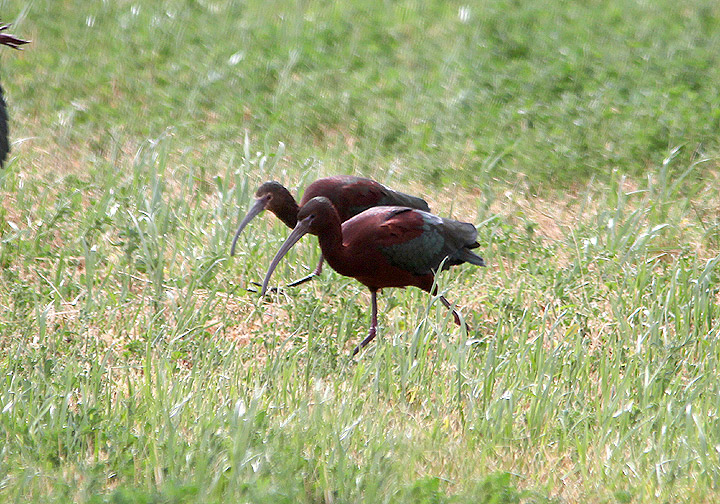
Heading towards the freeway we snagged CALIFORNIA QUAIL, which is never a sure thing so was technically a bonus bird for the day.  Like every year adjusting our route, this year we threw in a loop the opposite direction of our trip--heading to Bountiful Pond, we hoped to maximize our migrant lists by hitting 2 migrant traps instead of just.  It was rewarding as we were able to also add CATTLE EGRETS along Legacy Parkway--where 1,000's of WHITE-FACED IBIS filled every field. The group only had to scan one flock to get lucky enough to pick out a GLOSSY IBIS for the day.

Glossy Ibis photo by Rachel LeBlanc

At Bountiful Pond we waded in ankle deep water through the flooded orchard hoping for migrants. There wasn't as much as expected but we did star to pick things out slowly. YELLOW-RUMPED WARBLER, BULLOCK'S ORIOLE, WILSON's, & MACGILLIVRAY'S WARBLERS were found. Several GREEN-TAILED TOWHEES were seen along the path around the west side of the pond. A BARN OWL flushed from the trees, while overhead swallows twittered about.  On the water we snagged COMMON MERGANSER and CLARK'S GREBE.  Feeling we'd exhausted the trees we left 15 minutes behind schedule for the day--but on time given we left 15 minutes late at the onset.

Bobolink at Shick Lane

The drive to Kaysville went quick, and we netted 2 BOBOLINK and WILSON'S SNIPE at Schick Lane, before adding GREAT-TAILED GRACKLE at Jensen Nature Park. And just like that the rain subsided--the clouds parted and the sun graced us with its presence. The rest of the morning would be spent at Antelope Island, birding in ideal conditions.  On the causeway we quickly pinned down 2 AMERICAN GOLDEN-PLOVER, 4 WHIMBREL and a SNOWY PLOVER amongst the 1,000's of BLACK-BELLIED PLOVER and SANDERLINGS. 10's of 1,000's of RED-NECKED PHALAROPE dotted the water. We couldn't find any turnstones or dunlins; and not a peep in the whole bunch. But a 3rd cycle LESSER BLACK-BACKED GULL was a bonus--as was an AMERICAN PIPIT along the beach. We plowed through our needs and headed to the end of the causeway where 2 PURPLE MARTIN were drifting over the last bridge.  At the marina we had 5 more including several gorgeous males that flew past at eye level.

Female Purple Martin at AIC

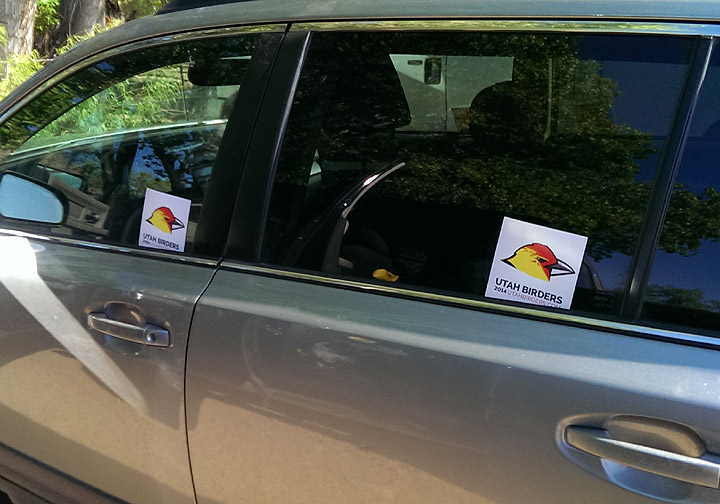
Tim's Car photo by Rachel LeBlanc

On the island CHUKAR, ROCK WREN, and LOGGERHEAD SHRIKE came quickly. At Lady Finger Point we flushed a CANYON WREN from the rocks, and a singing NORTHERN MOCKINGBIRD were nice additions. Another flyby PURPLE MARTIN made 8 for the day. Along the loop road we added SAGE THRASHER, GRAY FLYCATCHER, and a surprise BLACK-THROATED SPARROW. That was followed by BURROWING OWL and BLUE-GRAY GNATCATCHER as well as the usual LARK and BREWER'S SPARROW. And yet another flyby PURPLE MARTIN made 9 for the day.  We finished up the north arm of the island with HORNED LARK and SAY'S PHOEBE, as well as the usual GREAT HORNED and BARN OWLS at the corrals.

Great Horned Owls at Antelope Island

The drive to Garr Ranch was punctuated with a quick stop for GRASSHOPPER SPARROW which was perched up and singing on arrival. At Garr Ranch we ran into a fallout--kicked off with PURPLE MARTIN number 10 for the day. WILSON'S WARBLERS were dripping form the understory.

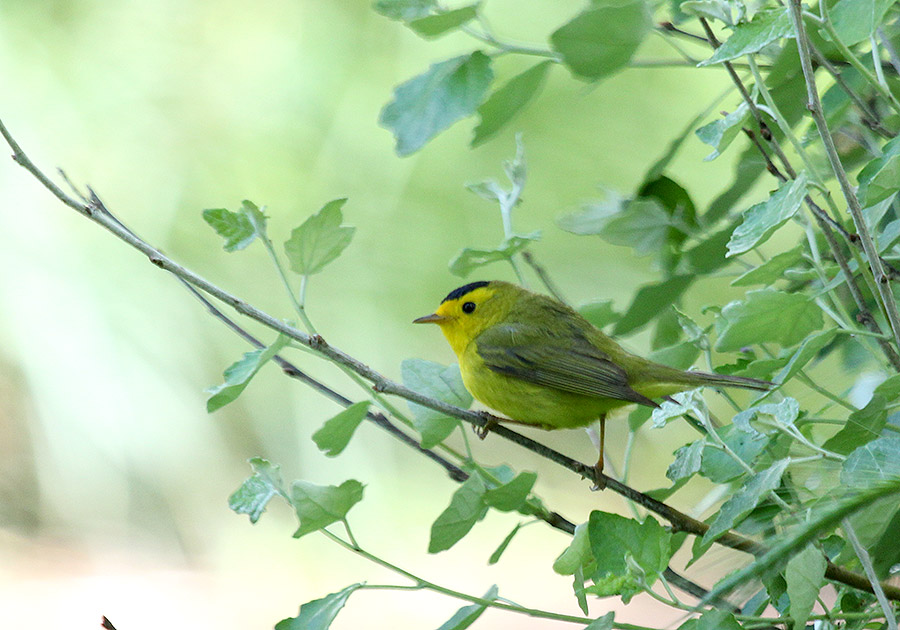
Wilson's Warbler at Garr Ranch

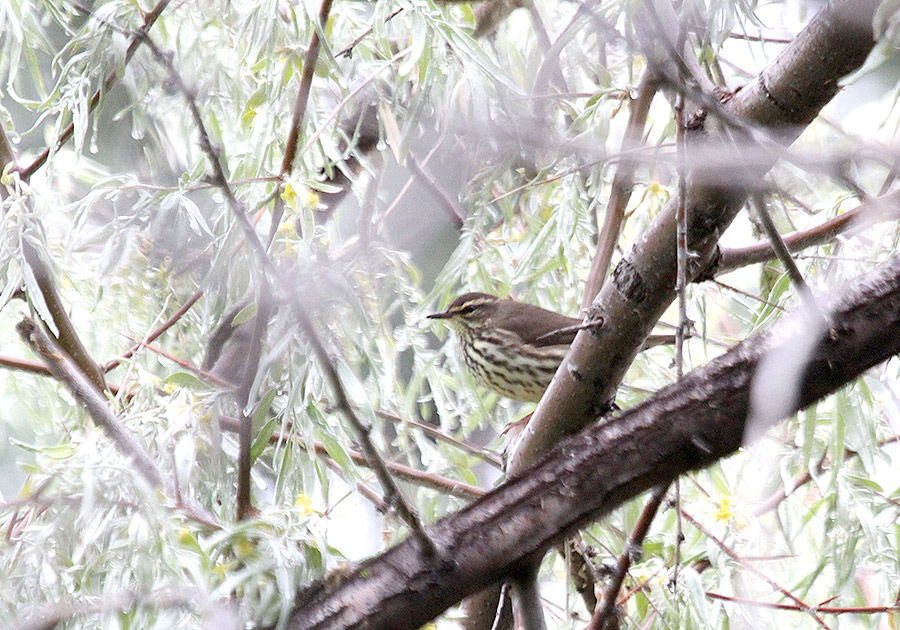
Various other warblers flitted about, and we were fortunate to find the NORTHERN WATERTHRUSH along the fence line at the east end of the spring. Our only RED-BREASTED NUTHATCH of the day would be here--PINE SISKIN, WESTERN TANAGER, LAZULI BUNTING and WARBLING VIREO were also nice additions. We did a clean sweep of the Utah empids with all 5 regularly occurring species found around the ranch grounds. After making the rounds we opted to head out knowing we'd done very well at the ranch and were already past 130 species for the day. The drive out netted our NORTHERN HARRIER for the day, and in Layton we saw plenty of AMERICAN CROWS.

Northern Waterthrush at Garr Ranch

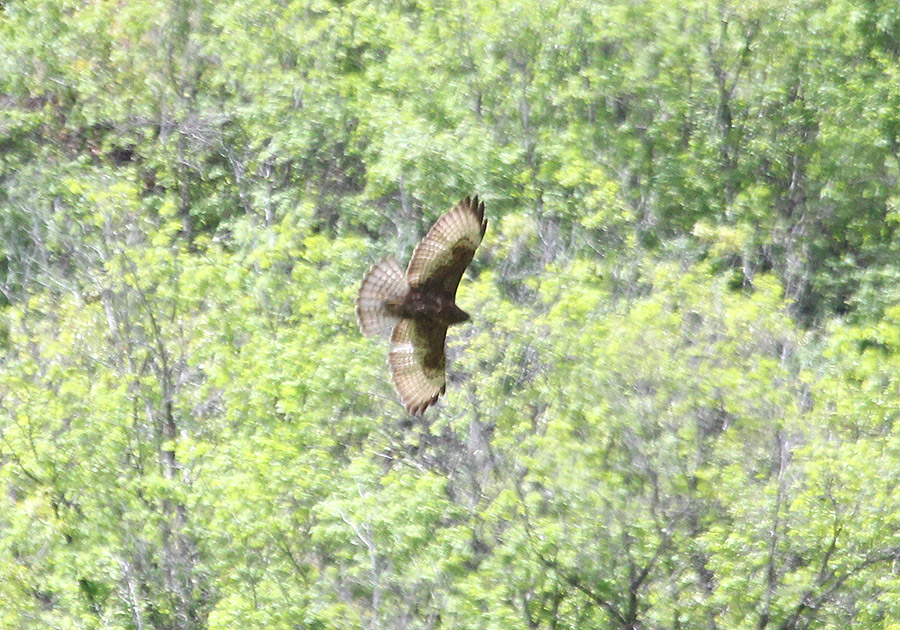
On our way to get lunch in Ogden we added a pair of WESTERN SCRUB-JAY which is usually a miss for us--and after a short lunch stop we headed to Birdsong Trail at the mouth of Ogden Canyon.  Here with a little coaxing we picked up YELLOW-BREASTED CHAT and FOX SPARROW for the day as well as BLACK-HEADED GROSBEAK and BLACK-CHINNED HUMMINGBIRD. Overhead our first TURKEY VULTURES were a pleasant sight. Heading into the canyon, Mike suggested stopping at "The Oaks" to see if we could get a catbird and Calliope Hummingbird at their feeders. We had no such luck with those birds, but as we were getting ready to leave a small buteo emerged form the trees across the road and circled.  Everyone looked and someone quickly yelled out Swainson's Hawk! But that wasn't right, the dark bird was very "broad-winged", and the pattern was just off.  I fumbled to grab my camera as I stuttered that I thought it looked like a BROAD-WINGED HAWK.  All eyes were back on the bird as it circled overhead.  After getting my camera and finally focusing the bird made its way up up up eventually being dive bombed by a SHARP-SHINNED HAWK, as they both circled amongst the WHITE-THROATED SWIFTS overhead. A quick check of the field guide and it sunk in that we really did have a dark-morph Broad-winged Hawk.  To gloat just a little (and for comfort confirmation) I sent the picture to Jerry Liguori with no text--his response was to excitedly ask WHERE??? This was definitely the bird of the day for me.

Dark morph Broad-winged Hawk in Ogden Canyon

Getting our wits about us we continued. At Pineview we added a BLACK-THROATED GRAY WARBLER before hitting Jefferson Hunt Campground. Here CEDAR WAXWING were added and finally OSPREY as we headed eastward towards Monte Cristo.  This was the first year SR-39 had been open so we took advantage of a new route through the mountains. As I tallied the birds from the day we sat at 149.  The car started guessing what 150 would be.  Mike was confident that it would Mountain Bluebird, while a few of us ventured that Northern Flicker would be next.  The radio from Jeff's car crackled, "NORTHERN FLICKER". We cheered and eventually saw one ourselves. The next bird to follow--MOUNTAIN BLUEBIRD.

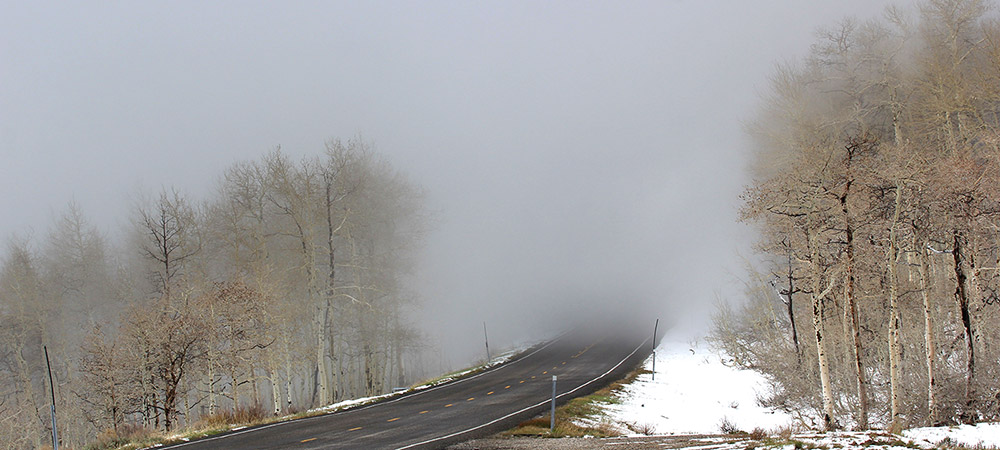
The road to Monte Cristo

Making our was up the mountains we eventually hit gray skies, then thicker clouds. We picked up DARK-EYED JUNCO, followed by DOWNY WOODPECKER and RED-NAPED SAPSUCKER in the same tree!  Then we hit the clouds--literally, we drove into the fog and were greeted with snow and hail as we continued on.  This could make things difficult. We had a small but reliable list of birds we needed to get up here--and with this weather it would be difficult. As we parked across from the entrance to Monte Cristo Campground the fog lifted enough to see around us--but all was quiet.  I reluctantly ditched my flip-flops for hikers as it was even cold for my taste.  We did pick up a calling MOUNTAIN CHICKADEE, but not much else.  I heard what sounded like a chortling Pine Grosbeak; and a couple times it sounded like American Three-toed Woodpeckers called.  But we couldn't pin anything down.  Eventually a few people did hear CLARK'S NUTCRACKER (and we'd all see one 10 minutes later as we drove off the mountain); but the birding left a lot to be desired.

Jeff's Car 12 hours in to the day

Back in the cars we descended to the east and out of the clouds. We added CASSIN'S FINCH on the way down, but no other montane species.  Monte Cristo was a bust and cost us a few species.  Had the weather been different it probably would have been a great addition to the trip. We stopped in Woodruff briefly to look for Common Grackle to no avail.  Driving along SR-16 south towards the Wyoming border through Deseret Ranch we picked up CANVASBACK for the day. We decided to cross the border and check out Woodruff Narrows Reservoir. VESPER SPARROW was picked up along the road in and at the lake we had RING-NECKED DUCK. Our other targets in the sage and on the water were missed, and we slowly made our way back towards Utah, stopping briefly in Evanston to pick up food for our last few hours on the move. Back in Utah we checked an old Ferruginous Hawk nest but there were none present.  All in all our big loop to the east had been a waste.  A few years ago we changed the route to leave the long drive up Logan Canyon, and down through Wyoming out.  It was too much driving--too little birding--and in the end we could get more species spending more time int eh field closer to home. I think that holds true with this years experiment; its hard to say how much different things would have been on a sunny day; but on this day it was a miss.

Common Loon at Echo Reservoir

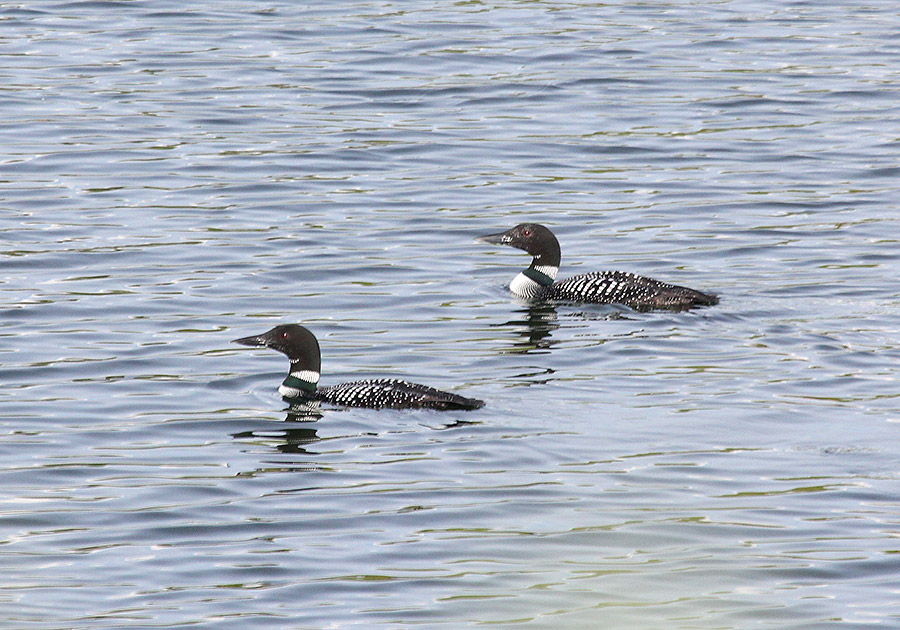
Down Echo Canyon we decided to stop at Echo Reservoir. Here we picked up COMMON LOON and PLUMBEOUS VIREO for the day, before making our way towards Henefer adding both GOLDEN and BALD EAGLES along I-84. We were getting short on daylight and I knew we could add at least one more songbird for the day with AMERICAN DIPPER at Jeremy Ranch Road.  That was it though--we exhausted our last spot for Gray Catbird for the day without seeing one--and Swainson's Thrush really aren't back yet so that was another miss. Looking at our list we sat comfortably at 165 species for the day--we would have no problem at least tying our previous best.

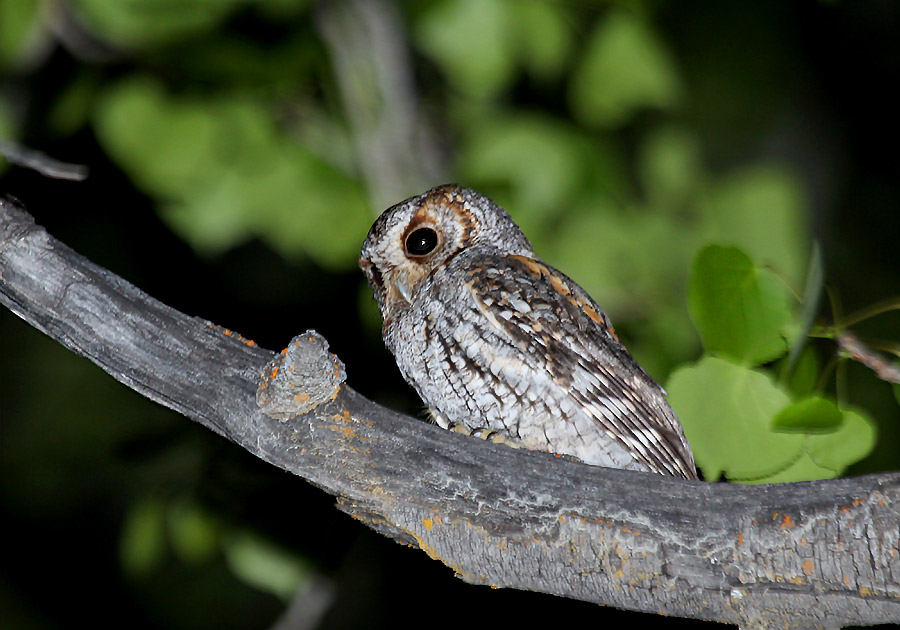
Heading up East Canyon to look for nocturnal birds several in the group had a BLACK-CAPPED CHICKADEE for the day. I was a little worried when Ruffed Grouse wasn't on its usually booming log--it took a short hike but eventually we flushed a RUFFED GROUSE from some high grass making it 167 for the day, what we ended with last year.  A few minutes later we called in a FLAMMULATED OWL for 168 and a new Marathon Birding record.  Try as we might we couldn't get another Flammy to come in nearby; and no poorwills were heard calling.  We might end up stalling with +1.  At our next stop there were flammy's calling but we tried for other owls which we needed for the day.  I heard a couple of screeches from the woods after doing a NORTHERN SAW-WHET OWL whistle for a bit--and it was a couple minutes later when one finally whistled back making it 169.

Flammulated Owl from East Canyon

At Big Mountain Pass it took a little coaxing to get a COMMON POORWILL to respond making it 170 species on the day--and we still had time to burn.  But given the long day, and great numbers we opted not to stop and try for screech-owl and instead head back to Farmington.  We forgot to check the odometer, but the trip should have covered 305 miles or there abouts for the day. We got back right at 11:00pm for 16 hours and 45 minutes of Marathon Birding through 7 counties (+1 in Wyoming). I was honestly shocked what we were able to see given the weather--it actually helped keep a lot of birds down probably which made picking up migrants easier than in the past.

It always amazes me how this trip transforms every year.  After 10 years looking back its crazy to think that in the past we struggled to get 130 species on this trip. Each of the last 3 years we have topped 160 and as we keep refining 175 or 180 doesn't seem that far off.  We never know how the trip will go, or what we really will see ad the unpredictability of migration, due to the rising and falling water levels of the GSL, the hit or miss nature of passerine migration in mid-May, and what routes will be open to drive. Every year we talk about adjusting the route a little bit and making subtle changes to get the most out of the day. So we'll have to wait and see what next year brings.  As always thanks to Jeff for co-leading this trip; and Mike and Taylor for driving--the 2 extra sets of eyes has really mad ea difference.  And especially thanks to the 6 hardy birders who showed up despite the horrendous conditions--it paid off!

Labels: , , , , , , , , , ,

Utah Big Day Record pt. 2 - A Record 205 Species

posted by Tim Avery at
on Friday, May 30, 2014 

Now if you had asked me if I was excited when Colby threw a pillow at me around 8:45pm on Sunday night, I think you know the answer was no.  I didn't feel well rested and felt like the 4.5 hour nap was not going to be enough sleep to make it through the gauntlet we had setup for ourselves. Outside it was pleasantly mild and the skies were clear of clouds--more importantly there wasn't even a breeze and the almost full moon bathed St. George in a pale glow.  We gathered our gear, packed the truck accordingly, and headed east towards La Verkin to gas up.  Since our starting point for the route had been compromised due to the snow and temps currently hanging around freezing at 8,000', we decided to use our alternate route where we started in Springdale--just like 2012.  However Colby convinced us to head into Zion National Park to see if we could luck our way into a Spotted or Northern Pygmy-Owl with some last minute pre-scouting.

Moonrise over Zion

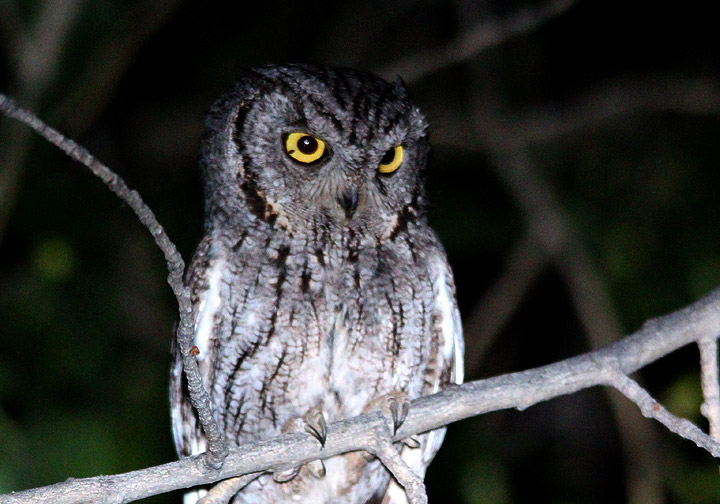
As we wove along SR-9 making stops we weren't hearing much, and our whistling for poorwills and pygmy-owls wasn't turning up any birds.  We did have a Gray Fox sprint across the road which was a cool sighting.  Eventually we stopped near a small creek tumbling down the hillside and a WESTERN SCREECH-OWL came in providing us great looks--this would be an early bonus if we could snag it in about an hour so we wouldn't have to try later.  At our next stop in the quiet of the night a CANYON WREN burst into song--we again hoped for a little luck when we came back a while later.  We hadn't heard any other owls and decided on one last stop at 11:45pm--if we didn't get lucky here we would head back and start our night where we had the wren.  It was fortuitous though--as we stood in the moonlight admiring the spires and red rock towering above us, a faint cough of a SPOTTED OWL echoed its way towards us.  3 minutes later we heard it again, and then again, and then we thought we heard from a different location.  11:56pm and it bellowed out again... 11:59pm and we sat anticipating, would it call again before midnight or hold off... 11:59 and 50 seconds "ha ha ho ho ho"... silence.... midnight.  The big day had begun and the owl was silent.

We stayed eerily still holding our breath as 12:01 passed, and then 12:02 came and we were able to relax--the SPOTTED OWL staccato echoed quietly in the distance, our 1st bird of the day--and we were off to the races.

Down the canyon we drove--the Canyon Wren didn't respond to playback where it was the previous hour so we moved on, snagging COMMON POORWILL singing in the canyon while we called in the WESTERN SCREECH-OWL we had seen a little earlier. We made our way out of the park and through Springdale in the dark.  We made a quick stop to try for Rufous-crowned Sparrow where we got one in the dark in 2012 but missed out.  Our next stop was Grafton, which seemed to take forever to get to on the back roads.  We tried for VERMILION FLYCATCHER at our first stop with no luck.  At our second stop however a male burst into song in the dead of the night, while a YELLOW-BREASTED CHAT sang somewhere along the river and a KILLDEER called from a nearby field.

We continued on our route stopping again to try for Rufous-crowned Sparrow without luck.  We did however pickup audibles of GREAT HORNED OWL, LONG-EARED OWL and heard a few more poorwills. Making good time we eventually ended up in Hurricane at Stratton Pond with our spotlight on the water.  The first birds we saw were a couple AMERICAN WIGEON, followed by CANADA GOOSE, WESTERN GREBE, and a hard to get RED-BREASTED MERGANSER. We must have flushed a BLACK-NECKED STILT from the shore as it circled calling overhead. Wasting no time we headed across the highway to Sand Hollow where I thought we might be able to spotlight the shore from the south end--it was a pretty hair-brained idea as we weren't able to see anything.  A quick stop to try for roadrunner only turned up a singing COMMON POORWILL so we raced on to the Washington Fields. A last minute decision to take a different route to our next stop ended up getting us our only LESSER NIGHTHAWKS of the day, with 4 birds sitting on the road under the streetlamps.

At 2:29am we entered Seegmiller Marsh after receiving permission from Tom Seegmiller to do so--in our 44 minutes here we had our only COMMON GALLINULE, BARN OWL, CATTLE EGRET, and GREAT EGRET of the day.  In all we tallied 16 species (+ Mute Swan which we didn't count for the day) including our first SORA, YELLOW WARBLER, MOURNING DOVE, EARED GREBE, and that wing-tagged AMERICAN WHITE PELICAN mentioned in my previous post.  We missed several Virginia Rail which we knew we could get later, but struck out on Green Heron, and Least Bittern, which are  believed to possibly nest here.

Dashing across St. George we skipped several planned stops from our route because there was no point given the birds we planned to see were not present as of scouting time.  We skipped out on spotlighting Ivin's Reservoir to save time, knowing we would stop back after daylight--later we realized we had time to make that stop but in the moment it didn't seem worth it.  At 3:47am we arrived near the inlet to Gunlock Reservoir and found the rocks Kenny and I set up to spot the black-hawk nest.  In under 3 minutes we setup the scope spotlighted the nest, got everyone their COMMON BLACK-HAWK for the day and were back on our way. Between Gunlock and Lytle Ranch we added no new birds and arrived about 20 minutes ahead of schedule--it was still pitch black outside as the moon had set and we took advantage by napping in the car for about 25 minutes--outside the car a GREAT HORNED OWL hooted, COMMON POORWILLS sang, and a probable LONG-EARED OWL grunted once from the the trees.

Just before sunrise at Lytle Ranch

At 5:36am we parked at the ranch and walked in--all was quiet and barely light as we made our way through the housing area, past the orchard, and the main pond without a single bird.  It wasn't until almost 20 minutes in when we heard our first ASH-THROATED FLYCATCHER of the day singing from the river. Slowly the wash came to life with the expected YELLOW and LUCY'S WARBLERS, and BEWICK'S WRENS. We made it to the end of the ranch property spending a few minutes waiting to see if things throttled up. Things didn't.  We headed to the creek to follow it back to the pond area.  We slowly started to add birds with CORDILLERAN FLYCATCHER, BELL'S VIREO, MACGILLIVRAY'S WARBLER, BULLOCK'S ORIOLE, and WESTERN KINGBIRD. We spread out about 50' apart to comb the wash, hollering if anyone got anything new so the others could come see it. I caught glimpse of a thrush flyby but couldn't relocate it.  We kept heading down stream and eventually I heard Colby and Kenny holler at me to come over--they had a dark backed thrush that looked like a Veery or Swainson's Thrush.  As we stood watching the bush it popped to the top--it was a VEERY!!! A completely unexpected bird for any outing in Utah and a huge add for the day.  The stop turned out to be very fruitful as HAMMOND'S FLYCATCHER and WILLOW FLYCATCHER both called from above, while a PLUMBEOUS VIREO and YELLOW-BREASTED CHAT made their way through as well.

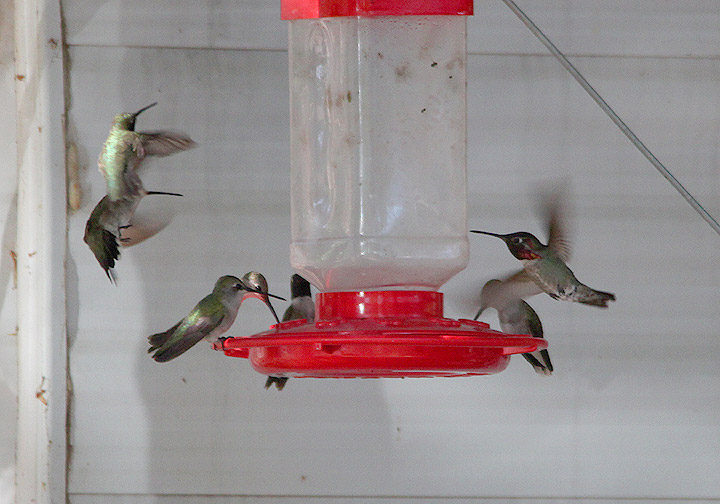
We started adding the expected species with SUMMER TANAGER and WESTERN TANAGER, BLACK-HEADED GROSBEAK, DUSKY FLYCATCHER, WARBLING VIREO, and AMERICAN KESTREL.  Finally back at the pond we added PHAINOPEPLA and both BLUE-GRAY and BLACK-TAILED GNATCATCHERS.  On the road back to the orchard a BLUE GROSBEAK started calling from the treeline, saving us a stop later in the morning.  An audible WESTERN WOOD-PEWEE was a nice addition and the only of the day.  In the orchard the Mulberry tree was the center of activity--grosbeaks, orioles, and tanagers filled the limbs, while CEDAR WAXWING, LAZULI BUNTING, and LESSER GOLDFINCH were new additions for the day. SAY'S PHOEBE and BLACK PHOEBE were added between the orchard and the parking lot  A quick stop at the hummingbird feeders turned up the expected BLACK-CHINNED, and with some scanning and patience we added COSTA'S and ANNA'S HUMMINGBIRDS before heading to the truck.  We added a singing CACTUS WREN here, but still didn't have Brown-crested Flycatcher and tried there, but had no luck--this would be a huge miss.  We headed back towards the river, stopping at the corrals where we added GRAY FLYCATCHER--our 5th and final empid species all before 8:00am--invaluable to us, saving precious time and luck later in the day.  We pulled up to the river and after a short playback heard the familiar song of a BROWN-CRESTED FLYCATCHER in the trees.

Cactus Wren singing on a Joshua Tree

With 57 species at the ranch we were at 79 total species for the day. Although this was 3 short of our expected tally at this point, it was a good start with some  great birds.  Interestingly we had 57 estimated species here on our planning sheet so we were right on target #'s wise--but we had missed some huge needs including Hooded Oriole, White-winged Dove, and Greater Roadrunner--these could be costly later in the day.  Leaving the ranch we raced across the Beaver Dam Slope adding NORTHERN MOCKINGBIRD and LOGGERHEAD SHRIKE along the way.  A stop at a staked out CRISSAL THRASHER was a welcome addition, before making our way back to paved roads and up to Utah Hill.

Gray Vireo at Utah Hill

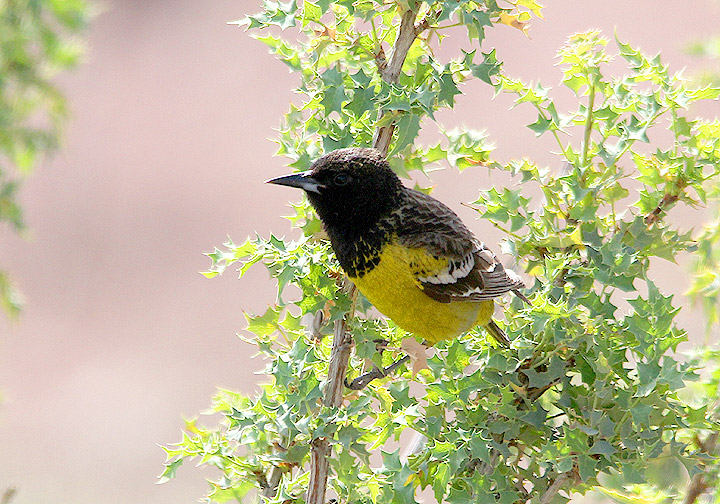
At Utah Hill the expected GRAY VIREO and BLACK-CHINNED SPARROWS were present.  Up a side road we had the audible from a SCOTT'S ORIOLE, several BUSHTITS, both SPOTTED and GREEN-TAILED TOWHEES, and both BREWER'S and LARK SPARROWS. Somehow we missed scrub-jay, but pressed on.  Near the town of Shivwits along old Highway 91 we got a surprise PEREGRINE FALCON attacking a NORTHERN HARRIER, both were added bonuses early in the day.  We rolled into Ivin's Reservoir, quickly netting our NEOTROPIC CORMORANTS perched in the trees on the north end of the reservoir.  In a matter of minutes we had all 6 TYPICAL SWALLOWS out over the water, along with REDHEAD, RUDDY DUCK, SPOTTED SANDPIPER, and an unexpected BLACK-CROWNED NIGHT-HERON.

We were only about 15 minutes behind our schedule, but every minute counts, so we trekked on stopping at Tonaquint Nature Center for a quick ABERT'S TOWHEE, and our only WILSON'S WARBLER of the day. In less than 4 minutes we were on the road, and soon thereafter on I-15 headed north to SR-9.  We booked it to Sand Hollow State Park and the dam where we quickly added COMMON LOON, FORSTER'S TERN, and RING-NECKED DUCK.  We had to rush around the reservoir to the south side to see if any of the gulls and terns form yesterday were still there--most weren't--we had CALIFORNIA, RING-BILLED, and FRANKLIN'S GULL along with CASPIAN TERN. No Bonaparte's or Herring Gulls, and the only shorebird was a BLACK-NECKED STILT.  As we raced back towards the entrance I saw a distant truck so slowed to the 25mph limit--as it got closer I could see it was a wildlife cops vehicle and he pulled over as we approached--I thought for sure he was going to nail us--I won't say how fast we were going down the desolate road, but fast enough for a ticket.  But as we passed he waved and we kept going.  It was our only close call with law enforcement all day.

Sand Hollow State Park

Over 100 species for the day and nearing 10:00am we raced on towards our staked our RUFOUS-CROWNED SPARROW and CANYON WREN which both were picked up with ease.  At this point we entered the make-it-or-break-it section of the day on Kolob Terrace.  The biggest issue with going here is the time in and out.  On paper it should be 90 minutes roundtrip, leaving less than 90 minutes for upwards of 10 stops for birds.  We had 42 target species to get here, and if we didn't have time to get them, or missed them out right, the big day would be over before we even left southern Utah--much like our 2012 experience.

Under the gun we birded fast and efficient.  2 stops lower on Kolob Reservoir Road in the Pinyon-Juniper habitat added JUNIPER TITMOUSE, VIRGINIA'S WARBLER, BLACK-THROATED GRAY-WARBLER, ORANGE-CROWNED WARBLER, and CHIPPING SPARROW.  Driving along we skipped one planned stop having snagged the birds needed at the previous stops.  Finally we added WESTERN SCRUB-JAY and had nice looks a COOPER'S HAWK as we passed through the Gambel's Oak. At Big Bend we added the expected PYGMY NUTHATCH, and at our next stop further up the road in the Ponderosa forest we got the needed GRACE'S WARBLER, and our first STELLER'S JAY, and MOUNTAIN CHICKADEES.

Grace's Warbler on Kolob Terrace

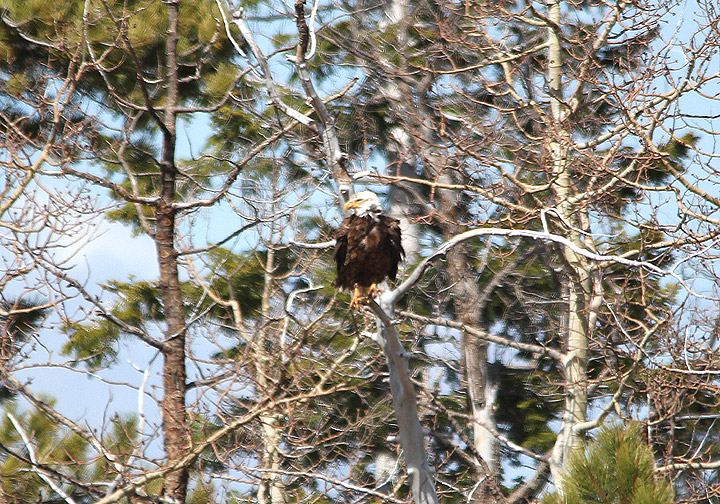
Before we knew it, we were back ahead of schedule and hitting our targets as we stopped.  VESPER SPARROW, NORTHERN FLICKER, and LEWIS'S WOODPECKER at our next stop.  CASSIN'S FINCH along the road--and finally there it was--the snow and wind.  Although it was sunny, it was a bit cold, and there were still snow drifts on the road.  The wind made a couple of stops pointless, and we were soon at Blue Springs Reservoir headed to Lava Point.  I checked the tree where the BALD EAGLE had been the day before and it wasn't there--so I moved to the tree where I saw it a couple times last year, and sure enough in the enormous Ponderosa it was sitting.  Species #132 for the day.

Along the muddy and snow-drifted road here a Prius was snowed in  from the previous day. As we drove on the road became increasingly slick so we parked and opted to walk in.  As it turned out just ahead the road became a lot less muddy, but parking the car turned out to be the right decision.  On the short walk we picked up a lot of species including the expected RED-BREASTED NUTHATCH, DARK-EYED JUNCO, YELLOW-RUMPED WARBLER, RUBY-CROWND KINGLET, and RED-NAPED SAPSUCKER.  However, it was the fringe species that really made it worth while.  Kenny and Colby found a FOX SPARROW, while Kenny and I had a HERMIT THRUSH.  Colby tracked down both WHITE-BREASTED NUTHATCH and more importantly a WILLIAMSON'S SAPSUCKER.  Each and every species was clutch. Trying to stay ahead of our schedule we raced back to the truck and headed passed Blue Springs to Whispering Pines sub-division where we spent a good deal of time trying for birds we thought might be there without any luck.  On the drive out however we snagged our ACORN WOODPECKER, and both WESTERN and MOUNTAIN BLUEBIRDS.

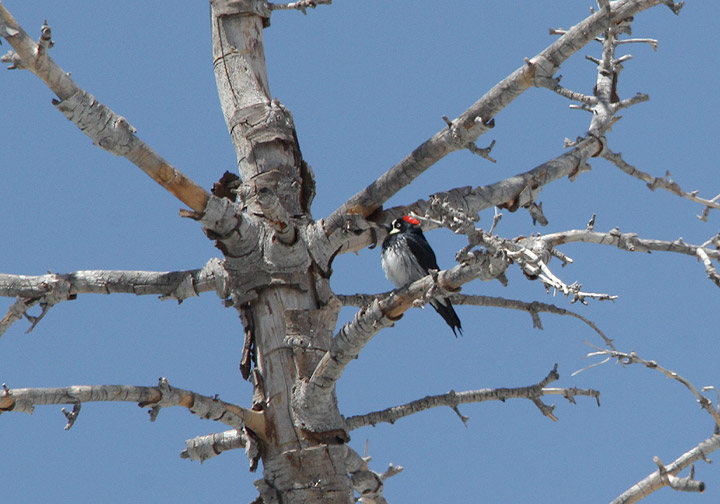
Acorn Woodpecker on Kolob Terrace

We decided to make a quick stop at Kolob Falls and joked about finding Dipper here. I stayed at the car to work on tallying and seeing what we missed and still needed when I heard Kenny yell, "AMERICAN DIPPER!!!".  Sure enough in the stream below there was a dipper--and added bonus meaning we wouldn't have to possibly wade in freezing water late at night in northern Utah to try for one at a nest site. Up the road we continued to a patch of trees that has usually been good for woodpeckers.  We got skunked--frustrating as there had been 4 Downy Woodpeckers here just 40 hours earlier. We did however add a WILSON'S SNIPE calling from the wet fields nearby--and while we were stopped had the flyover of the day when a "prairie" MERLIN sped past.  At the tail end of their spring migration north this was a huge addition.  We eventually had a Hairy/Downy Woodpecker flush and fl directly away from us.  And per big day rules we could count it as 1 species, unless we eventually saw one of the others which would take precedence.

Our last stop heading up was at Kolob Reservoir where Colby picked out RED-NECKED PHALAROPE on the water among the throngs of swallows.  BREWER'S BLACKBIRDS along the shore were new for the day, and finally we picked up 2 soaring OSPREY literally getting every expected species on Kolob Terrace, with the exception of the 2 woodpeckers, rare finches, and California Condor.  Going back down the mountain we made numerous stops to try for woodpeckers, eventually getting lucky and finding a HAIRY WOODPECKER after exhausting every good looking piece of habitat. We would not get Downy Woodpecker for the day--a bird we thought was 100% given the staked out individuals.

Out of the mountains and back on highway we were done birding in southern Utah just after 1:00pm.  We were ahead of schedule, and had 4 stops between here and Farmington Bay where we expected to arrive around 7:00pm. We had somewhere around 160 species, a couple ahead of what we had expected at this time, and still a good number of species ahead of us...  We made one stop in Iron County along I-15 where after a few minutes of searching we picked up 2 SAGEBURSH SPARROWS a little ways from where we had them the previous week. A quick stop in Beaver for gas and we were back on the interstate fling north.  BLACK-BILLED MAGPIE, EUROPEAN STARLING, and SWAINSON'S HAWKS all were new additions as we drove.  Colby and Kenny scanned the skies while taking turns napping.  Eventually it paid off and we added GOLDEN EAGLE.  I missed one bird that they were able to get as they spotted PINYON JAY flying along their side of the car.

About 10 minutes ahead of schedule we pulled in to Chicken Creek Reservoir where we had a laundry list of waterfowl and waterbirds to pick up.  This stop would tell us if we realistically could make it to 200 or not.  As soon as we started looking the birds started popping up.  COMMON GOLDENEYE, BLUE-WINGED TEAL, LESSER SCAUP, GADWALL, CINNAMON TEAL, GREEN-WINGED TEAL, NORTHERN PINTAIL NORTHERN SHOVELER, and BUFFLEHEAD filled our waterfowl quota.  We couldn't pick out any rare waterfowl, but Colby eventually relocated the HORNED GREBE we had on Friday.  HORNED LARK rounded things out, while the wind came up strong and kept us from adding Sage Thrasher at our previous stake out. We had fallen slightly back behind schedule taking the extra time to keep trying for thrasher.

The wind and rain was raging for a good portion of our drive but calmed as we headed further north.  In the back seat Colby began tallying species to give us an official count... He finally told us we were at 180 species for the day--we had broke our 2012 campaigns tally!  He handed the list to Kenny to double check and we found we were actually 2 birds short--the tally was actually 182 ad Colby had forgotten Crissal Thrasher and one other species from the list.  We were 20 species from tying the previous record with a decent list of should gets, and can gets left.  We stopped in Provo and picked up our staked out COMMON GRACKLE.  We also tried for Black-capped Chickadee without luck before getting back on the highway ahead of schedule again by a few minutes.

From Provo north I think we all felt nervous--we had been tracking traffic online and there had been some slowing for pretty good portions of our main route and alternate path.  But as we sped north in the diamond lane things cleared up allowing us to fly through Salt Lake county at the tail end of rush hour only having to touch the breaks once to avoid a psychotic road raging driver who was having it out with another car--he cut us off so close that had I not hit my breaks he would have clipped us.  Before we knew it we rolled into Farmington almost 30 minutes ahead of schedule--the extra time built into for poor traffic was a non-factor and we could press things here and at the causeway if needed. Right off the off ramp, Colby and Kenny thought they hear a chickadee, so we went back so I could get it.  There was no chickadees, just starlings, but there along the fence were 2 CALIFORNIA QUAIL! Thank goodness we turned back.  Onto Glover Lane heading west we added SANDHILL CRANE in the fields along the way.

As we pulled onto the lane leading into the entrance the gate was closed--we were here after the typical 5:00pm closing time, but never before had I actually seen the gate closed  when I've come after 5:00pm this time of year.  We exited the vehicle and scrambled down the road.  A RING-NECKED PHEASANT flushed nearby but we couldn't get Marsh Wren, Yellowthroat, or Virginia Rail to respond to playback.  The dowitchers from the week before were all gone, and shorebirds were non-existent.  As we went to leave I made one last scan on the shore and spotted a MARBLED GODWIT with its head tucked--the only of the day and an almost missed!

We headed down to the end of Glover Lane where we finally added MARSH WREN but were short the other species.  We made one last stop on the east edge of the nature trail at the nature center and hiked south along the trees.  We quickly picked up VIRGINIA'S RAIL and COMMON YELLOWTHROAT.  We still hadn't found Wood Ducks, and tried a few other calls for birds that might be around but left without any of them.  I don't think it registered with any of us the rest of the night, but the following day I realized we never even tried for Savannah Sparrow here--an easy get usually and a HUGE oversight on our part that could have been disastrous.

As we hoped back on I-15 we talked about what to do--we had built in a stop to try for Bobolink, but wondered if they had arrived yet with no reports (we later found out they hadn't).  We still didn't have chickadee or crow and both were possible on the way to the bobolink spot.  We kept going back and forth and as we got to the exit planning to get off, we decided last minute not to for fear of missing crow on Antelope Drive--but not 100 yards further there was an AMERICAN CROW flying onto a cell tower next to the interstate!  We decided to get off and go back at the next exit, but then again changed our mind at the exit and decided to go all in on the causeway where we would either get to 203 or we wouldn't before dark... the crow was species #191 for the day.
Down Antelope Drive we went, I'm sure we were all running over the numbers in our heads... 4 species of plover, 4 species of sandpiper, Turnstone, Dunlin, Sanderling, Curlew, Dowitcher... Those were just the shorebirds--we also had a shot at Burrowing Owl, Chukar, and Sage Thrasher once on the island. You could taste 203.  On the causeway we made our way west towards the first bridge.  I stopped at a pile of rocks amid protest from my cohorts--I insisted this was the best place for Snowy and Semipalmated Plovers, while they wanted to check further west.  None-the-less it took only 1 minute to get both SNOWY and SEMIPALMATED PLOVER, numbers 192 and 193.

A few Red Knots with Black-bellied Plovers

We continued past the bridge to where the shorebirds covered the beaches.  Immediately we added  BLACK-BELLIED PLOVER, SANDERLING, and RED KNOT.  I spotted a BAIRD'S SANDPIPER but neither Colby or Kenny managed to get on it--that one wouldn't count.

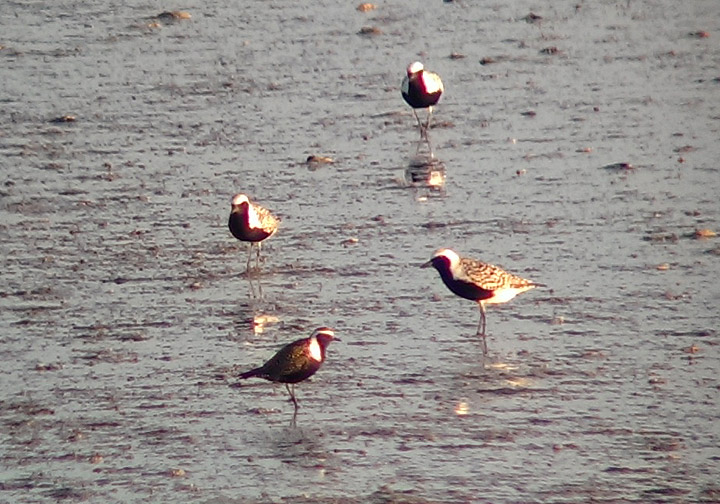
American Golden-Plover with Black-bellied Plovers

196 species and counting we headed further west.  While Colby and Kenny scanned north, I scanned south finding first an AMERICAN GOLDEN PLOVER followed quickly by our first of 3 RUDDY TURNSTONES.  197 and 198...

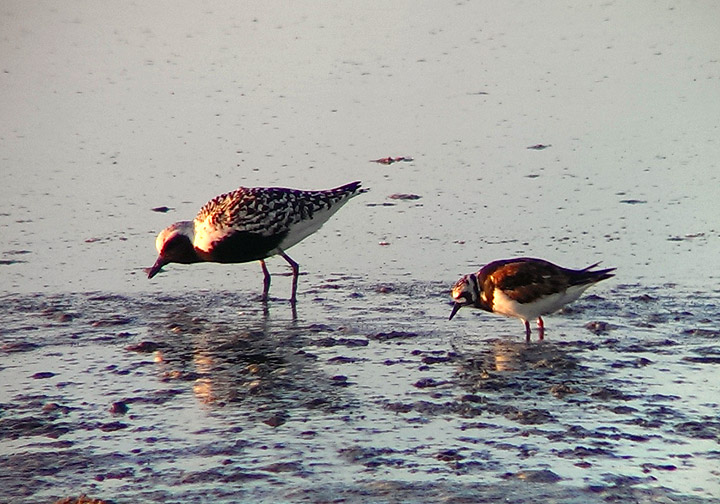
Ruddy Turnstone with Black-bellied Plover

We still needed sandpipers.  Colby scanning hard found 199 with a LEAST SANDPIPER followed a few minutes later with WESTERN SANDPIPER for #200.  We had hit 200 species with daylight left and a few birds to go.  We kept moving west checking more shorebirds--the peep flocks that had been reported were nowhere to be found--yet 1,000's of Sanderlings, and 140 Red Knots were an incredible sight.  At our next stop Colby said he heard a DUNLIN give it's flight call, which I wouldn't have recognized--it didn't matter a few moments later we spotted it along the shoreline for #201.

Dunlin with a Sanderling

We reached the end of the flocks and turned back--we had to find some peeps, dowitchers or a curlew.  I tried my hardest to turn distant WHITE-FACED IBIS into dowitchers, but it wasn't happening. We were running out of daylight.  Knowing we needed to get a few more before twilight we continued down the causeway westward as the sun set over the Great Salt Lake officially at 8:35pm.  We would have 31 minutes till it was dark and needed 2 more birds.


Sunset at the end of a long day...

We knew there was a Burrowing Owl near the last bridge on the causeway thanks to some scouting the previous week from Jeff Bilsky who was unable to make the trip--sure enough as we walked towards the area, the bird flew from the beach up to the sagebrush--#202, we had tied the previous Utah Big Day record!!! We didn't celebrate with more than a few high fives and "hell yeahs" before getting in the car again--we still needed one more to break the record.  Onto the island we went, knowing we might stumble across a Chukar on the visitor center loop.  Colby was the first to hear one outside the car, while I spotted one sitting on the rocks near the visitor center.  CHUKAR was bird #203 for the day, it was unofficially a new record.  But we weren't done--we continued on the island trying unsuccessfully for Long-billed Curlew and Sage Thrasher again.  It was dark by the time we left the island and headed towards Ogden to try for Wood Duck at Beus pond after dark.

So about this time, 21.5 hours into the day time kind of just passes and you float along.  It never occurred to me that we wouldn't get Wood Ducks here in the dark, after all during the day they were common.  On paper good idea--in practice, miserable failure.  After the long drive here and searching the entire pond not a single Wood Duck was to be seen. I am sure some were in the nest boxes on the water, but the rest were roosting, probably in trees, but where we did not know. Oops.  I will admit that I didn't really think through the after dark section of our big day too much--honestly we threw some ideas around but really figured it would depend on where were were at that point.  We didn't want to settle on 203 with 2 hours left in the day but our options were limited.  I think had we planned things a little better at this point we still could have eked out 3 to 4 more birds.  But we stuck to the original plan I laid out and headed to East Canyon Reservoir where I had Common Mergansers the previous week--spotlighting there proved hard and we only saw Mallards and Canada Geese.  We were down to playing our final card in upper East Canyon and the prospect of being stuck at 203 looked like it might be reality with the temperature hovering at 30...

We drove quietly up the canyon, narrowly missing 2 Porcupines crossing the road.  Soon we pulled into the predetermined stop for owls and grouse and exited the vehicle.  To all of our surprise there were multiple FLAMMULATED OWLS calling in the trees around us--what a relief.  And as we sat there getting ready to go up the road for RUFFED GROUSE, we could hear/feel the booming coming from the nearby forest.  Species #204 and #205 for the night, with just under an hour remaining.  We could still possibly get two more species of owls so we trudged on making a stop for Northern Saw-whet Owl.  I swore I heard one respond twice to my whistling, but no one else heard it and the bird didn't respond on my third an forth volleys. As much as it would have been a nice addition we left without it.  Stops for Pygmy-Owl were also unsuccessful and about 30 minutes before midnight we saw our last bird of the day--not a new species, but another LONG-EARED OWL cruising across the road.  Two more stops to try for the small owls and we heard more FLAMMULATED OWLS, but that was it.  Somewhere in Emigration Canyon the clock struck midnight and just like that, the day was over.

Me, Colby, and Kenny sometime after midnight

We hopped back on I-80 and made our way into Salt Lake City, dropping Kenny off, then Colby.  Finally, I parked my truck in my garage sometime around 1:00am.  I had been awake for 28 hours with nothing more than a quick nap at Lytle almost 23 hours earlier. We had driven 715 miles during the day, and 1,393 during the weekend... I needed a hot shower to warm back up and then crashed, and didn't wake up till after 9:00am that morning.  I could have slept all day but had to get back to the real world and work.  It was an absolutely incredible day--the best day of birding I have ever had.  I've birded in some of the most amazing places on earth, but never seen 200 species in a day until now--and it was right in my own backyard.

And that's that.  205 species on May 12, 2014 in Utah. Here is something to chew on... we missed the following birds that we saw while scouting, or had been reported in the 24 hours leading up to the day:

WOOD DUCK, COMMON MERGANSER, Canvasback, Greater Scaup, Eurasian Wigeon, Surf Scoter, Long-tailed Duck, Green Heron, Glossy Ibis, Sharp-shinned Hawk, Ferruginous Hawk, BAIRD'S SANDPIPER, Semipalmated Sandpiper, both Yellowlegs, Whimbrel, LONG-BILLED CURLEW, LONG-BILLED DOWTICHER, Herring Gull, Black Tern, Dusky Grouse, WHITE-WINGED DOVE, Greater Roadrunner, Northern Pygmy-Owl, Northern Saw-whet Owl, DOWNY WOODPECKER, Praririe Falcon, Cassin's Kingbird, Eastern Kingbird, Cassin's Vireo, Clark's Nutcracker, BLACK-CAPPED CHICKADEE, Brown Creeper, Golden-crowned Kinglet, Townsend's Solitaire, Swainson's Thrush, SAGE THRASHER, Lincoln's Sparrow, SAVANNAH SPARROW, HOODED ORIOLE, Red Crossbill, AMERICAN GOLDFINCH, and Evening Grosbeak.

The 12 birds in bold were all expected for the route.  It's hard to say how much the weather played into some of the things we missed.  A number of birds simply weren't present where they had been previously.  And on some of them, like Sage Thrasher, the wind was probably the cause for missing out. The fact is you can't get every bird, but seeing what we did and what we missed it makes 210 or 215 seem in the realm of possibility if the stars aligned, the weather cooperated, migration was perfect, and everything goes as planned.

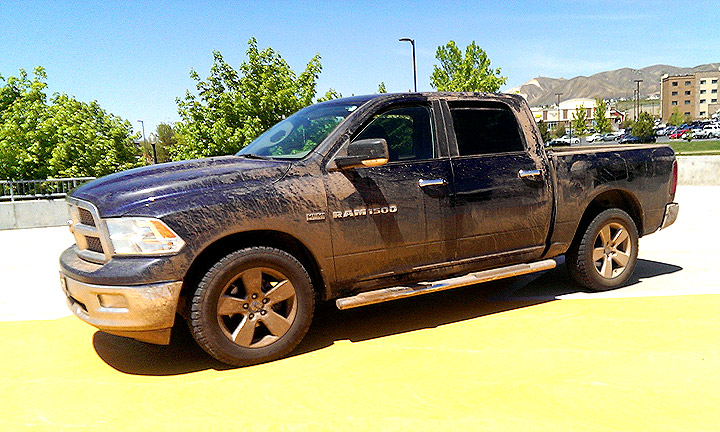
My mud-covered truck the next day...

I guess we'll just have to wait and see if we'll do it again, I guess that may depend on if Mark and David come out of retirement to try and win back their prize ;)

Labels: , , , ,

Utah Big Day Record pt. 1 - Scout the Route

posted by Tim Avery at
on Wednesday, May 28, 2014 

Alternatively titled:  Oh "snow", what are we going to do?

On the morning of May 15, 2012 after traversing the state of Utah and seeing 179 species of birds on our first Utah Birders Big Day attempt, I felt like it might be impossible to reach 203 species for a new Utah record.  I knew that we needed to look at things differently, come up with a new route, and if we were going to do it again, plan better.  In May 2013 we opted not to do a big day, but instead spend the time birding in Washington County at a relaxed pace.  During the course of the weekend it became apparent that it was possible to see around 160 species of birds in the area in a 12 hour span--possible, but was it actually realistic in real time and under the clock on a big day?

On our first go around we left St. George with 30-40 birds fewer than we knew we needed.  We fought hard till the end, all along knowing it was not going to end with the number we hoped for. Flash forward to March 2014, and with the previous Mays birding on the top of my mind, I sat down and started drafting out a new, more complex, higher mileage, and a tad riskier route.  With some tinkering, on paper it looked possible with around 250 species that are typically seen/reported from the locations we would be going in the general time frame. In an email to my cohorts during the planning I estimated 212 being a realistic high count if conditions and luck were in our favor. So now it was just a matter of putting the plan into action.

We looked at ideal dates and weekends and the 4 of us who were talking about the attempt couldn't all make it at the same time.  It looked like the weekend of May 3-4th, with Monday the 5th being the only date that would work--but as we got closer we moved everything back a week and planned on Mondya, May 12th as the day that would work best, put us close to a full moon for good nocturnal birding, and put us right int he sweet spot for spring migration.  Our schedules were still off but it looked like all 4 of us could at least be in St. George by the 11th at noon.  Our 4th in the group being Colby Neuman who now lives in Portland, Oregon, booked his flight in to St. George, so just like that, we were all in.  Unfortunately the week before we lost 1/4 of the team to work--so for the big day it would just be Colby, Kenny, and I.

The week leading up to event it was hard to focus on anything but the Big Day.  Questions abound in my mind... Was 20 really possible with this route?  Were we being too ambitious?  Should we spend another year scouting? How would traffic be? How would the weather be?  My mind was spinning as I kept checking weather outlooks, evening traffic on the route, and trying to dig up locations for a few birds that would make them easier to get on the day.  Emails back and forth trading information, sharing locations, and trying to get the last minute details in place kept us busy. Rarities popping up all over along our route were tantalizing us--would they be there on the 12th?  Was this going to work?

Blue-winged Teal at Chicken Creek Reservoir

Finally, it was Friday May 9th, and Kenny and I headed out--our trip was off to a rough start with Kenny losing his vehicle to transmission problems, a down pour in Salt Lake unlike any I've seen before, construction, and lots of bad drivers.  After the rough 1st hour we were on the highway headed south--it was time to scout the route.  We made a quick stop in Provo to check a known COMMON GRACKLE roost that hadn't been reported this year--as our luck had it the birds were there.  A good start in terms of birds.  Our next scouting stop was one of the most crucial, at Chicken Creek Reservoir in Juab County.  This would be where we had to get most of our species of waterfowl, and anything else associated with shrubsteppe and open reservoir habitat. Things were looking good with almost all of our target birds--a few ducks listed for us as not likely but possible weren't to be found, but plenty of BLUE-WINGED TEAL, a couple BUFFLEHEAD, and COMMON GOLDENEYE were all present--and supplemented with a stunning HORNED GREBE in breeding plumage.

Horend & Eared Grebe at Chicken Creek Reservoir

If things went bad at Chicken Creek, the whole day could be a wash, so we were pleased with what we found.  Continuing south we decided to look for SAGEBRUSH SPARROWS in prime habitat along the interstate; this was a bird we thought was damn near impossible to get on this day and route--until Kenny and I picked a spot at random pulled onto a frontage road and did a little searching--we had found our Sagebrush Sparrow spot in Iron County, less than 5 minutes round trip form the interstate.

Sagebrush Sparrow in Iron County

By the time we arrived in St. George it was starting to get late, so we decided to check a few spots for birds in town.  After that being a bust we continued our now annual ritual with birding trips to St. George, by enjoying a warm Mexican meal at Irmita's on St. George Boulevard.  As usual it was delicious.  By the time dinner was over it was starting to get dark so we made a quick stop at the grocery tore to supply-up and then we headed into the desert.  As we passed through the town of Shivwits we were ecstatic to see numerous LESSER NIGHTHAWK soaring under the lights on the playground next to the highway.  We counted around 12 birds and spent a good 30 minutes trying to take photos--which is always a chore with these guy in flight.

Lesser Nighthawk in Shivwits

After getting our fill, we checked a couple alternate spots for Screech-Owls and other birds before hitting the Beaver Dam slope and making our way to the wash to set up camp.  We soon called in a couple WESTERN SCREECH-OWLS which provided great looks--all the while COMMON POORWILL called in the surrounding wash. It was after midnight and we planned on being up at first light to bird the ranch.  All night long the songs of Poorwills filled the camp, while the Screech-Owl sat in the trees right above our tents, letting  us know we were in his territory--not knowing that was exactly what we wanted to know for the big day.

Western Screech-Owl at Beaver Dam Wash

As morning broke on the 10th, we awoke to the sounds of singing BROWN-CRESTED FLYCATCHER. We checked one of our usual spots for COMMON BLACK-HAWK but the birds weren't there--instead we ended up flushing one out of some trees along the creek--this would not be a good sign for the big day.  After packing camp we headed across the wash to Lytle Ranch.  Trying to imitate what we would do on the morning of the 12th we hiked up to the north end of the ranch, albeit at a slower pace than planned and then walked our way back with the first rays of sun spilling into cottonwood lined creek.

Awesome transitioning Summer Tanager at Lytle Ranch

Bird life was slow to emerge, but we filled our list with the birds we needed at the ranch, minus 3 major targets: Hooded Oriole, White-winged Dove, and Greater Roadrunner.  There were no shortage of my favorite WESTERN and SUMMER TANAGERS--and we snagged GRAY, HAMMOND'S, DUSKY, and WILLOW FLYCATCHER for the day.

Hammond's Flycatcher at Lytle Ranch

Back near the housing area we watched the hummingbird feeders, where we had ANNA'S, COSTA'S, and BLACK-CHINNED HUMMINBGIRD, to go along with a BROAD-TAILED we had earlier-a 4 hummingbird morning was a blessing.

Anna's Hummingbird with Black-chinned's at Lytle Ranch

A Great Salt Lake Audubon trip arrived about this time, and as we left, we left them a parting gift of Utah Birders 2014 Tanager Edition stickers...

UBRID'ed Car at Lytle Ranch

Kenny and I made stops on the slope for our target CRISSAL THRASHER which was a success.  This followed up with both GRAY VIREO and BLACK-CHINNED SPARROW at Utah Hill.  Checking out a side route for some other species we found GRAY FLYCATCHER on territory, and more importantly a gorgeous male SCOTT'S ORIOLE.

Scott's Oriole at Utah Hill

After failing to find a new black-hawk nest we checked the other reliable nest site above Gunlock Reservoir which has been present for years--there were two COMMON BLACK-HAWKS tending to the nest which was a good sign.  I guessed we could probably find it in the dark with our spotlight, so we lined up some rocks to line up with the nest if we decided to try for it here.

Digiscoped Common Black-Hawk at Gunlock

We headed towards St. George checking Ivins Reservoir where the NEOTROPIC CORMORANTS have been hanging around a few weeks--they were there which was a good sign.  In town we checked Tawa Ponds at Entrada where we had heard the Ross's Goose from the past few years had finally disappeared--it was true the goose was gone, but so were the majority of the waterfowl that usually are found here which led us to wonder if the city was behind the removal.  We drove out to Sand Hollow Reservoir which was as crowded as I've ever seen--there was a good size flock of FORSTER'S TERN present which was a miracle given the number of boats, jet skis and beach goers... This mess would have been a disaster on a big day, but on a Monday it should be good.

Neotropic Cormoran and Great-tailed Grackle at Ivins

We scouted a few other lowland spots tying up some loose ends in the needs department including VERMILION FLYCATCHER in Grafton.  Next it was off to Kolob Terrace for some serious scouting.  All the while as we headed up the mountain the wind started to pick up while the temperatures dropped. We picked up birds we needed along the way, doing a pretty good job finding all our targets, minus a few probably-wouldn't-gets.  We found a BALD EAGLE perched in the same tree where I found one last summer.  Looking at reports from this year, someone had 2, making us wonder/hope that these beauties setup shop and nest here.
Bald Eagle at Kolob Terrace for the 2nd summer in a row

We spent some good time scouting habitat trying to find some birds that we didn't have much hope for, which ended up being a good thing because we found ACORN WOODPECKERS which a week before had been about 2 miles away--meanwhile we had none at the expected location. During the foray I had a great chance to photograph a more than obliging VESPER SPARROW.

Vesper Sparrow at Kolob Terrace

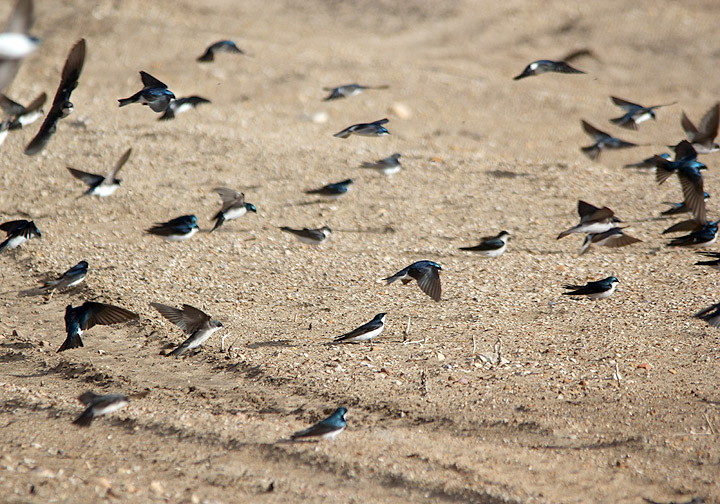
Eventually we ended up at Kolob Reservoir where there were no loons, shorebirds, and scan waterfowl.  We did however have at least 1,500 TREE SWALLOW, of which a flock of 500 or so were using the road and beaches to sit out of the wind in between hunting along the insect-filled bushes along the hillsides.  It was great for trying to get photos.

Tree Swallows at Kolob Reservoir

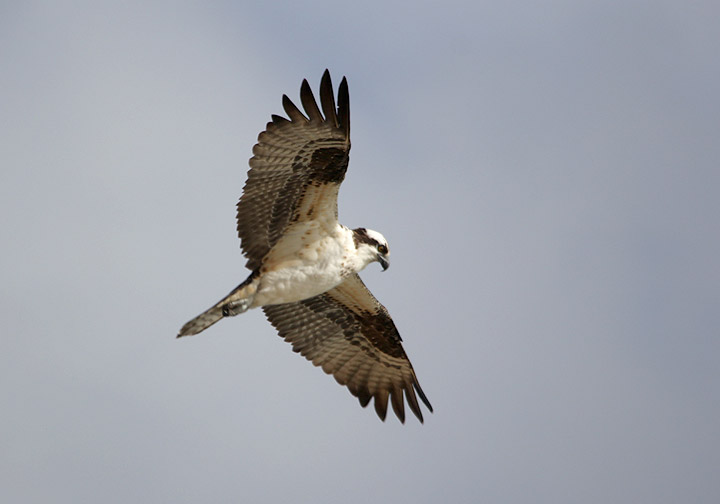
While we spent a good half hour enjoying he spectacle a pair of OSPREY appeared overhead.  This species was expected here on our Big Day but could easily be a miss if we didn't just get lucky and have them in the air while we were there.

Osprey at Kolob Reservoir

We headed back to Lava Point in Zion National Park to camp for the night--at 7,890' above sea level it would be a bit more chilly than camping in the desert, but it would let us go owling up here where we never had before--which was what we planned on doing to start our Big Day.  As it started to get dark storm clouds built to the north and appeared to be headed our way--Kenny had forgot his rain fly and as I got into m ten for the night I heard him exclaiming that it was snowing--SNOWING!  He packed up and headed to my truck for the night.  Meanwhile it started to rain hard, which quickly turned into hail and poured down a midst lightning and thunder.  I took this video from inside my tent.


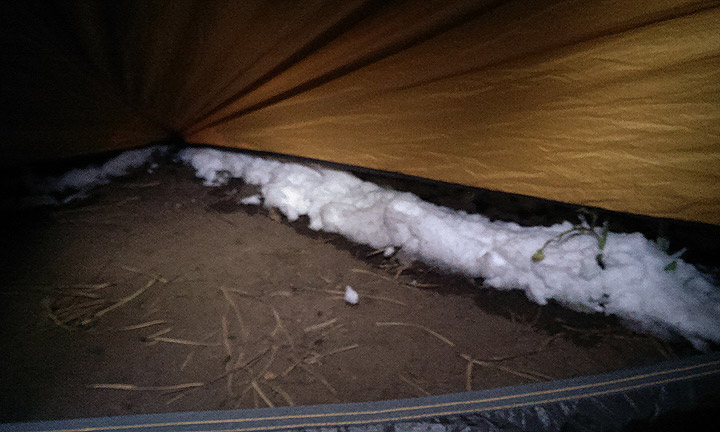
I eventually fell asleep to the sound of rain pelting my rain-fly.   It was a few hours when I awoke in the middle of the night to a noticeably colder tent.  I turned on my headlamp and saw snow piling up at the bottom of my rain-fly--what a disaster...

Snow creeping under my tent's rain-fly at Lava Point

My alarm went off a couple hours later around 3:00am, but I made no attempt to get up--owling was not going to happen.  Around 5:00am I was wide awake and finally convinced myself to pack up.  I got everything in the tent into my bag and then opened the rain fly--it was a winter wonderland.  Did I mention I was wearing shorts and flip-flops?  Yeah I was not prepared for this.

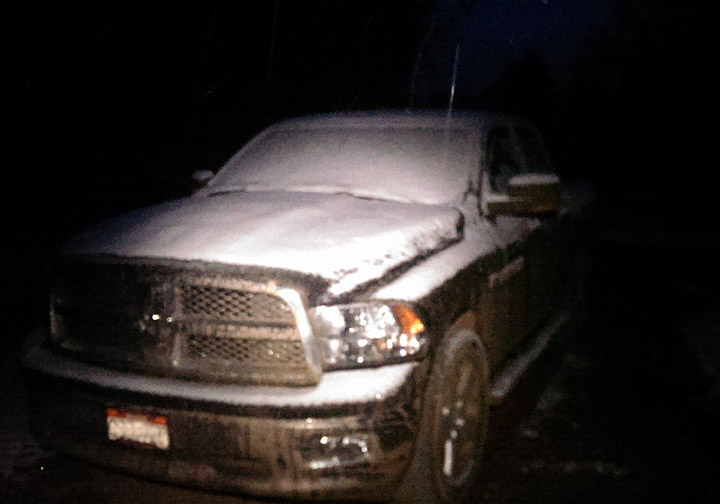
Snow-covered Truck at Lava Point

I ran to the truck which was caked in ice and snow and opened the door, which scared Kenny wide awake.  I threw my bag in and returned to my tent to take it down as fast as possible. I left the rain-fly on and removed the spikes form the ground.  I carefully unhooked the poles form the fabric, and slipped them out, breaking them down.  I quickly folded the tent into thirds and rolled it tarp and all into a ball which I threw into the bed of the truck under my cargo net.  In to the truck I hopped all in less than 60 seconds--just long enough to lose feeling in my hands and toes.  What a disaster...

We let the truck warm up enough to use the windshield wipers. After that we headed across Lava Point and Blue Springs Meadows which were covered in snow.  The wind was blowing sideways across the road creating small drifts--outside it was a balmy 26... with the windchill I imagine it was probably closer to 0.

26 degree at Lava Point

I took a picture back across the meadows as we left.  Never had I seen it in the middle of a storm, the landscape was transformed into a freezing wasteland--no birds were to be found here today.

Kolob... a.k.a. Snowlob on May 11th around 6:00am

We headed to the lowlands out of the storm. It seemed like our plan for the big day might be in trouble--this storm was supposed to dump  up to 6" according to the weather.  What a disaster...  But we didn't let it stop us--Kenny being optimistic said, it would be better tomorrow, so we charged on checking a stake out spot for RUFOUS-CROWNED SPARROW, which showed up as we hoped.

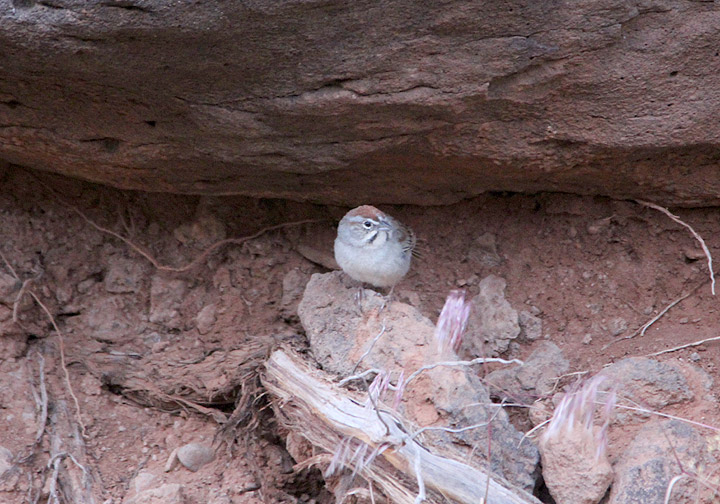
Rufous-crowned Sparrow at Dalton Wash

Making our way back towards St. George we decided to check Sand Hollow, imaging the storm probably had the lake free of watercraft and beach-goers, and possibly holding a few bird highlights.  We guessed correct and were treated to SANDERLING, BLACK-BELLIED PLOVER, and MARBLED GODWIT.  We also found a good sized flock of gulls and terns which held a BONAPARTE'S GULL.

Our last set of stops for the morning were in the Washington Fields we found a flock of WHITE-FACED IBIS that happened to contain one GLOSSY IBIS.

Glossy Ibis in the Washington Fields

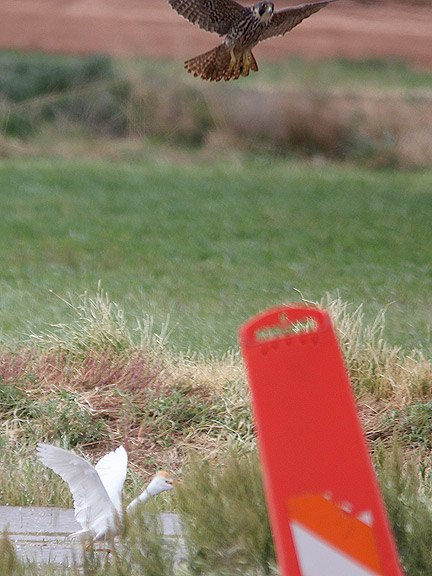
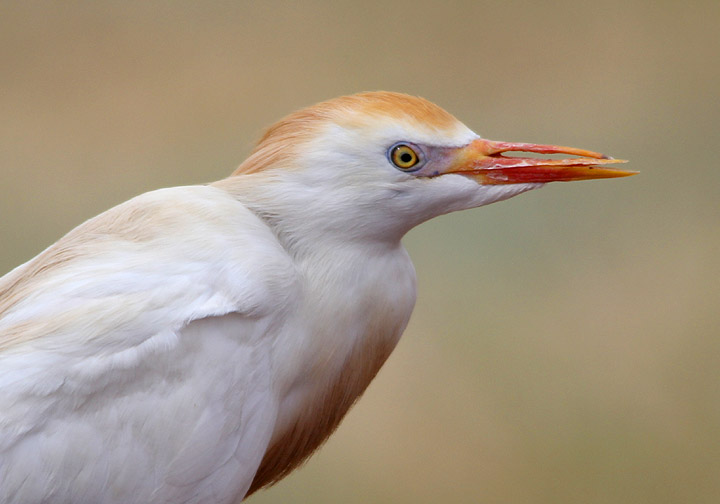
The flock also had 2 CATTLE EGRETS which were a species we didn't expect to get.  As we watched the birds everything was thrown into commotion as a PEREGRINE FALCON dove into the scene and knocked one of the egrets from the sky as it flew--we watched in horror as the egret fell to the water and the GRIN tried to stomp it.

Peregrine Falcon attacking a Cattle Egret in the Washington Fields

I feel we probably saved the egrets life because we drove up closer to see the action and the falcon drifted out into the field about 40 yards while the egret escaped into the reeds.

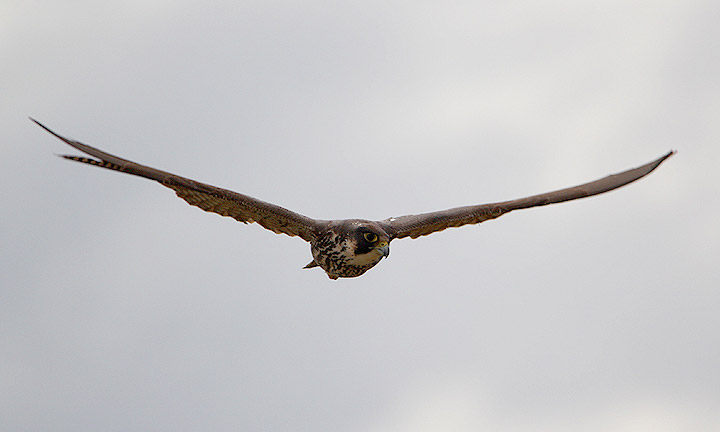
Peregrine Falcon in the Washington Fields

Cattle Egret in the Washington Fields

After a few minutes passed he egret took flight passed within an arms length of the car and was joined by its partner.  Together they landed on some farm equipment on he opposite side of the road, and the falcon disappeared.  For now the egret were safe.  We drove a little ways down the road to try and scan some different fields.  As soon as we parked I caught what looked like a Great Egret fling in the distance--as soon as I put my binoculars on it I could see almost entirely black wings and tails, and the long legs of a stork as it dropped into Seegmiller Marsh--I was slack-jawed and told Kenny I thought I had just seen a Wood Stork.  A quick set of texts with Rick Fridell and he asked if it could been a pelican which has been hanging out there. In the past I have seen reports of Wood Storks and White Ibis in Utah and almost always immediately thought PELICAN as well.  If you had to ask me, I would say I was 98% sure that it was a Wood Stork--I've seen this species before and its very unique and obvious.  I also see thousands of pelicans each year and again--they are quite obvious and different.   Did I have a pelican moment and think I saw something I didn't.  I played it over and over in my head, and every time I closed my eyes I saw that stork coming in to land.  It had to be a stork...  didn't it?
Well I am going to jump forward 15 hours into the middle of the night when we had permission to enter the marsh precisely where the bird landed.  We did indeed find an AMERICAN WHITE PELICAN there via spotlight.  This just seemed to obvious, there is no way I could have seen what I thought I saw and had it end up in the same pond where this bird was--just no way--it was impossible.  So despite what I thought I saw--I digress that I must have been wrong and will admit that this bird had to be the pelican, and that a combination of the rough night, wind, and distance to the bird had me seeing things that weren't there.  And that's that--unless of course someone finds a Wood Stork in the area in the next few weeks--then I will change my tune.

We made one more stop at Springs Estate Pond where the local Snow Goose had also departed as of late--another easy waterfowl that would not make our day list.  While Kenny did some searching around the pond, I took a few moments to photography swallows in flight--always a freaking challenge and really fun.

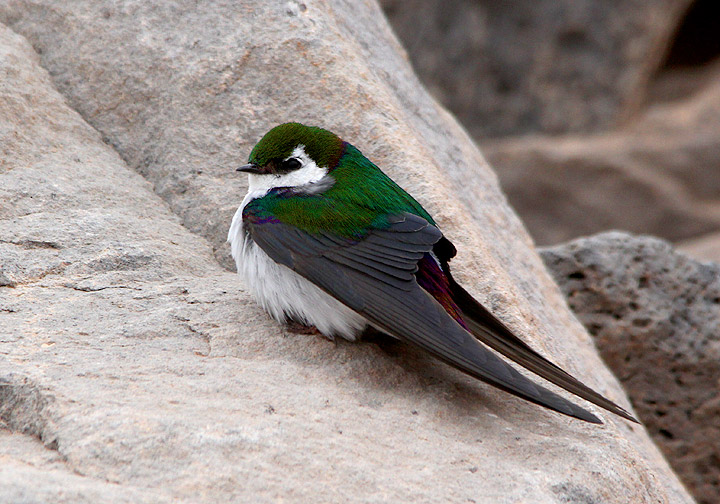
Eventually we had to head to the airport to get Colby so we made our way out.  He arrived and we headed back to the Washington Fields where no of the birds from the morning were present.  We jumped on the new highway over to Sand Hollow again, when Colby spotted a GREATER ROADRUNNER.  It was a stretch but we figured we might be able to stop here at night and try for it.  We ended up back at Sand Hollow where we added HERRING GULL to the day list (a bird that would be a bonus if present the next day), and also took advantage of the photo ops of more VIOLET-GREEN SWALLOWS that were sitting on the rocks of the dam to get out of the wind.

Violet-green Swallow at Sand Hollow State Park

It was already into the afternoon and we needed to get some rest before the night.  We grabbed lunch in town and checked into a hotel to try and grab a few hours of rest before we had to be up again.  We tallied 163 species while scouting in 36 hours--a far cry short of our expected list.  But we also had skipped over certain things we knew we would get, and we hadn't been north the marshes and Great Salt Lake.  It was around 4:00pm and in 5 hours we had to be up to get the car packed and head out for the night--no quite sure where we would be starting our big day, and exactly what would be in store for us weather and bird wise...

To be continued...

Labels: , , , ,


UTAH BIRDERS FLICKR POOL


    SEE MORE AND SHARE ON FLICKR