Utah Birds, Utah Birding, and Utah Birders. Promoting the sharing of information, and the conservation of habitat for birds in Utah and elsewhere. We are a group of people who want to share what we know, and create a positive birding experience in Utah.

BIRDERS BLOG

a blog by and for Utah Birders

2015 Marathon Birding Recap

posted by Tim Avery at
on Tuesday, May 19, 2015 

As I left my house at 5:00am it was in a down pour... Things were not looking good.  As I picked up my cohort Jeff in downtown Salt Lake, it was a torrential down pour... things could only get better.  The drive into Davis County was wet wet wet.  And as we got breakfast it seemed to get even wetter. Finally arriving at the Legacy Events Center to meet out group the rain was still coming down; but it seemed to have lightened a little--and to the west there was a shimmer of hope that the clouds would part and the weather might turn for the better. We kept our expectations reasonable--the rain could definitely damper our efforts--it was probably snowing above 8,000' so our mountain birding could definitely be rough.  This was going to be a wet and wild Marathon Birding Trip.

Everyone that ended up going on the trip was on time and in the vehicles; but 2 participants didn't show up, and we wasted 15 minutes waiting and trying to get a hold of them--in the end we left late, and without the 2 no-shows.  In the parking lot the first birds of the day were a flyover flock of WHITE-FACED IBIS; and singing AMERICAN ROBIN, HOUSE FINCH, and RED-WINGED BLACKBIRD. We wasted no time making our way to Glover Lane, where birds were singing as if it were sunny and warm. COMMON YELLOWTHROAT and YELLOW WARBLER were heard quickly. Sitting in the middle of a wet field was an easy to watch BLACK-CROWNED NIGHT-HERON, while the ponds at the end of the lane provided the usual share of waterfowl and waterbirds--we were underway and I personally didn't mind the rain since the birding was off to a good start.

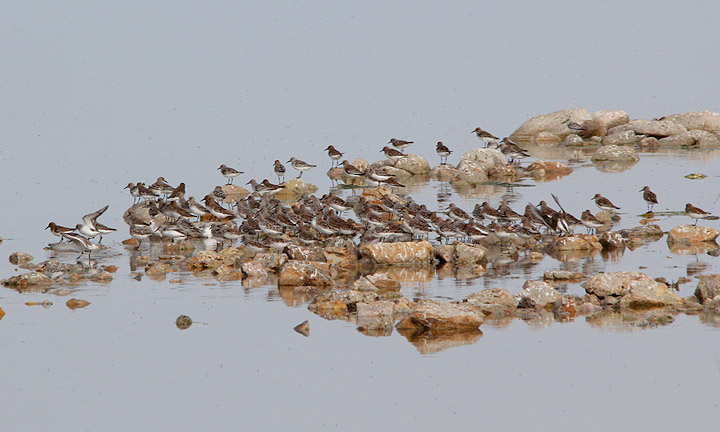
At Farmington Bay the gates were locked as usual and it took a few minutes to get in.  We were greeted by a GREAT EGRET in the pond to the east, as well as COMMON GOLDENEYE, and 100's of VIOLET-GREEN SWALLOWS.  Behind the restrooms 2 WOOD DUCKS were nice to get out of the way.  We snagged both SORA and VIRGINIA RAIL calling from the reeds, and CASPIAN and FORSTER's TERNS overhead. At Egg Island Overlook a very wet SWAINSON'S HAWK posed  for the group int he small trees. Scoping form here we picked out a small group of 7 RED KNOTS to the southwest--a fortuitous find as we would have none at the causeway later.  We quickly nabbed our waterfowl needs and got a bonus PEREGRINE FALCON before turning around and heading out.  Along the way we added LONG-BILLED DOWITCHER, WILSON'S PHALAROPE, and SANDHILL CRANE. We were glad to get both NORTHERN SHOVELER and AMERICAN WIGEON which have been surprisingly difficult in the past. As we left a singing LINCOLN'S SPARROW at the restrooms was a bonus that eventually gave everyone great looks--and for the first year in many we struck out on Blue-winged Teal.
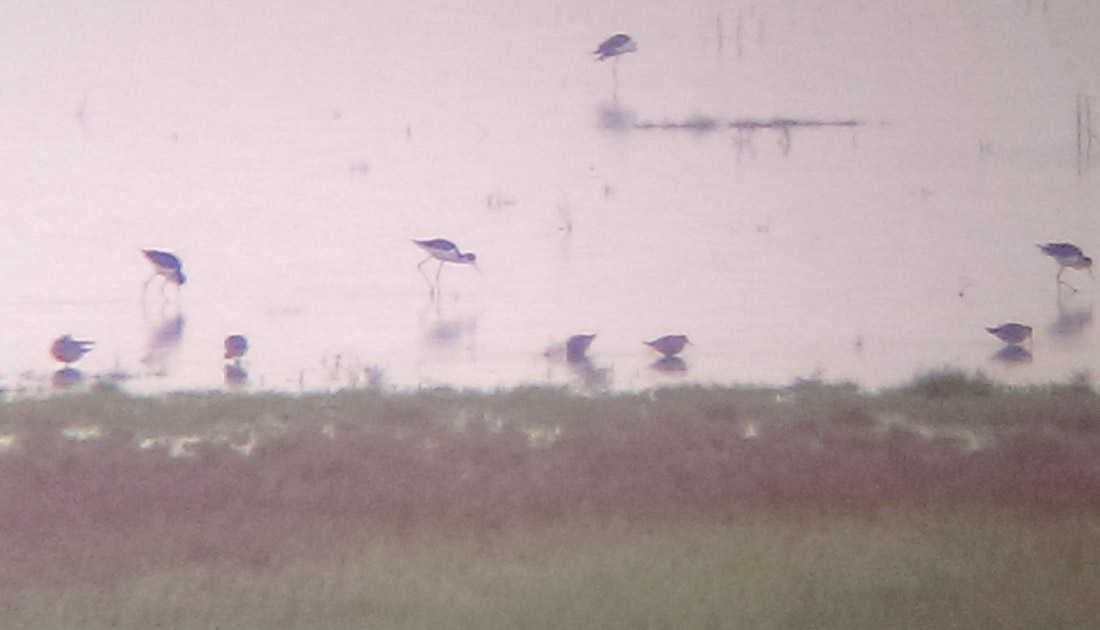
Red Knots at Farmington Bay

Heading towards the freeway we snagged CALIFORNIA QUAIL, which is never a sure thing so was technically a bonus bird for the day.  Like every year adjusting our route, this year we threw in a loop the opposite direction of our trip--heading to Bountiful Pond, we hoped to maximize our migrant lists by hitting 2 migrant traps instead of just.  It was rewarding as we were able to also add CATTLE EGRETS along Legacy Parkway--where 1,000's of WHITE-FACED IBIS filled every field. The group only had to scan one flock to get lucky enough to pick out a GLOSSY IBIS for the day.

Glossy Ibis photo by Rachel LeBlanc

At Bountiful Pond we waded in ankle deep water through the flooded orchard hoping for migrants. There wasn't as much as expected but we did star to pick things out slowly. YELLOW-RUMPED WARBLER, BULLOCK'S ORIOLE, WILSON's, & MACGILLIVRAY'S WARBLERS were found. Several GREEN-TAILED TOWHEES were seen along the path around the west side of the pond. A BARN OWL flushed from the trees, while overhead swallows twittered about.  On the water we snagged COMMON MERGANSER and CLARK'S GREBE.  Feeling we'd exhausted the trees we left 15 minutes behind schedule for the day--but on time given we left 15 minutes late at the onset.
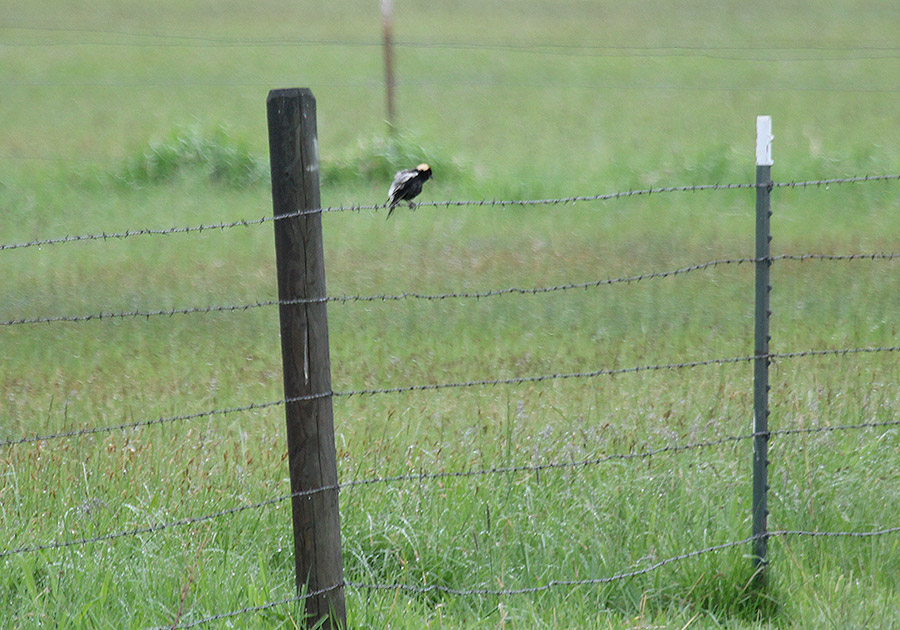
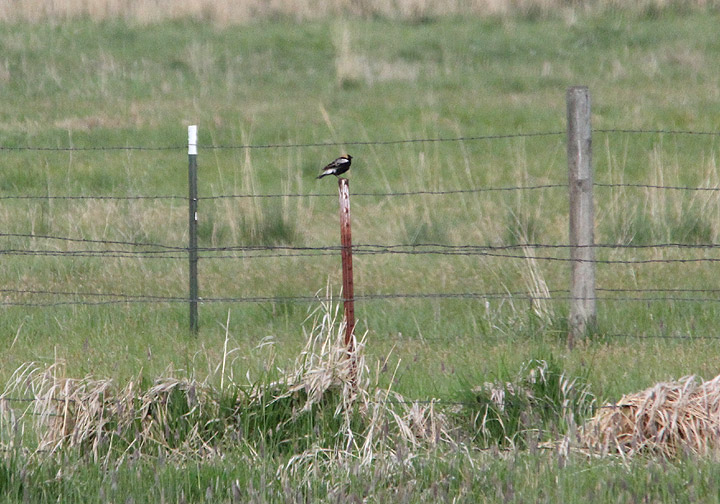
Bobolink at Shick Lane

The drive to Kaysville went quick, and we netted 2 BOBOLINK and WILSON'S SNIPE at Schick Lane, before adding GREAT-TAILED GRACKLE at Jensen Nature Park. And just like that the rain subsided--the clouds parted and the sun graced us with its presence. The rest of the morning would be spent at Antelope Island, birding in ideal conditions.  On the causeway we quickly pinned down 2 AMERICAN GOLDEN-PLOVER, 4 WHIMBREL and a SNOWY PLOVER amongst the 1,000's of BLACK-BELLIED PLOVER and SANDERLINGS. 10's of 1,000's of RED-NECKED PHALAROPE dotted the water. We couldn't find any turnstones or dunlins; and not a peep in the whole bunch. But a 3rd cycle LESSER BLACK-BACKED GULL was a bonus--as was an AMERICAN PIPIT along the beach. We plowed through our needs and headed to the end of the causeway where 2 PURPLE MARTIN were drifting over the last bridge.  At the marina we had 5 more including several gorgeous males that flew past at eye level.
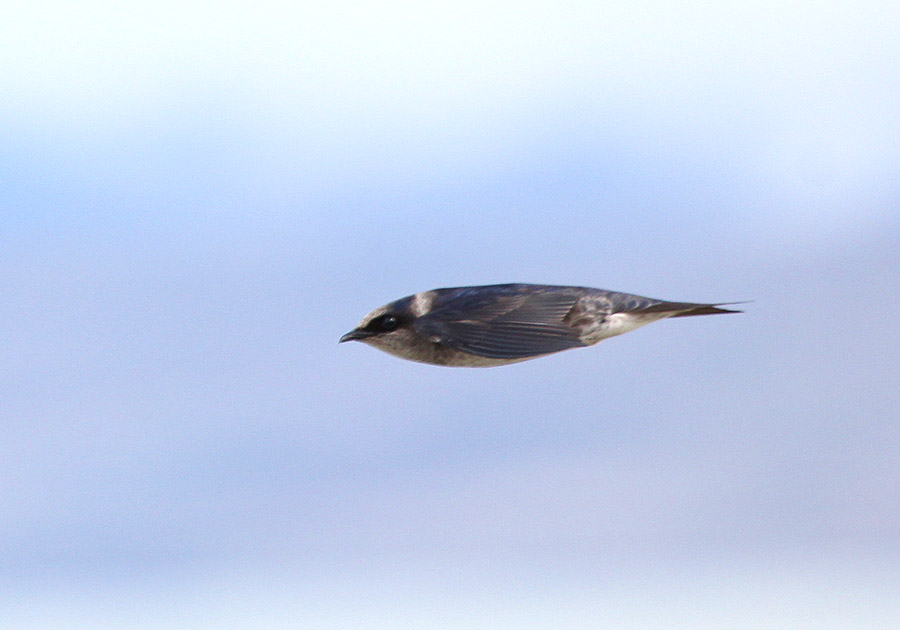
Female Purple Martin at AIC

Tim's Car photo by Rachel LeBlanc
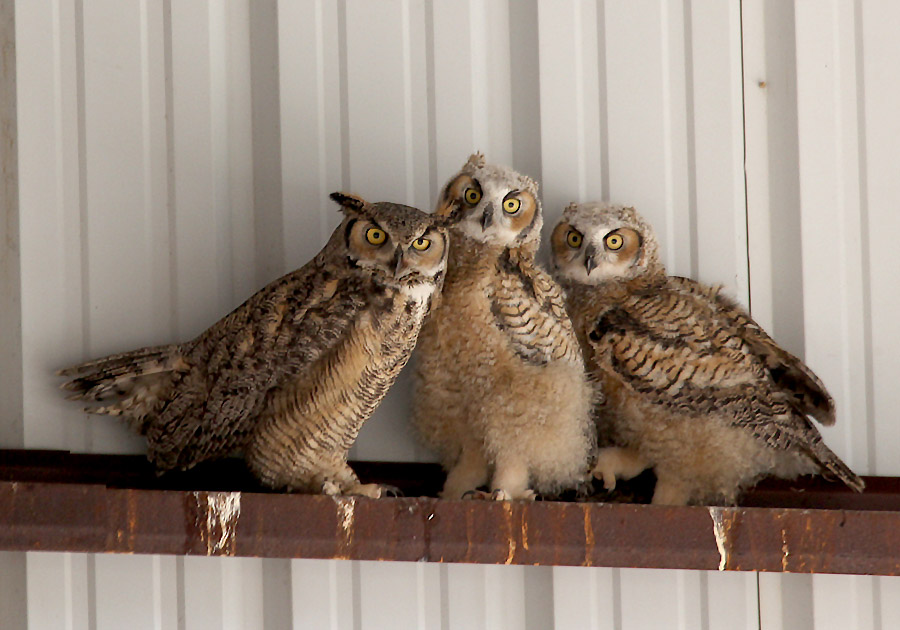
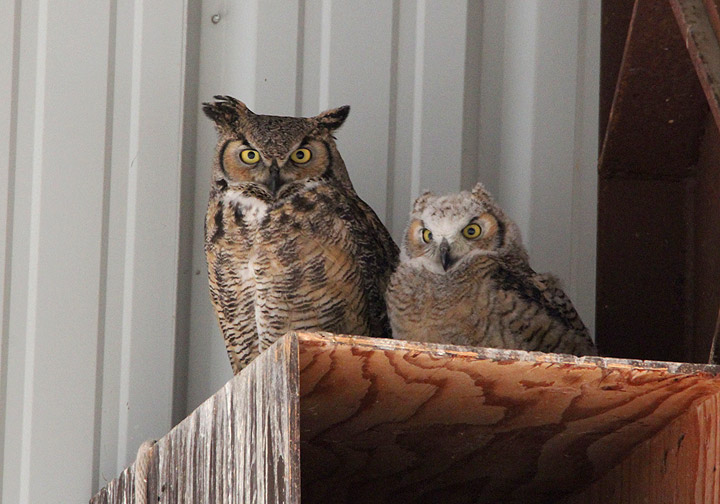
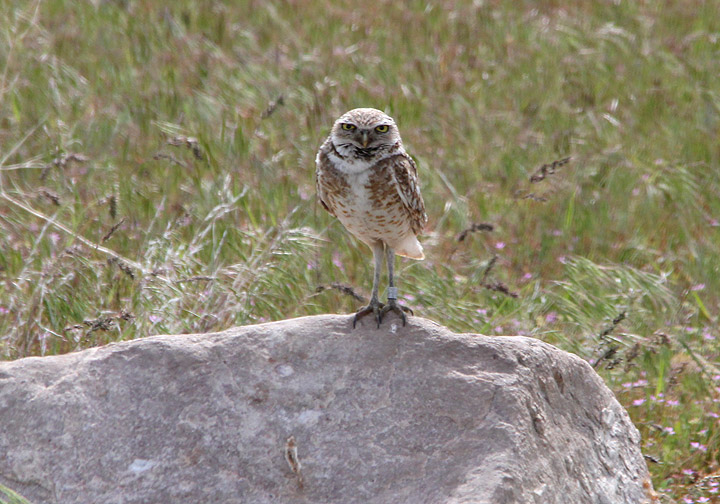
On the island CHUKAR, ROCK WREN, and LOGGERHEAD SHRIKE came quickly. At Lady Finger Point we flushed a CANYON WREN from the rocks, and a singing NORTHERN MOCKINGBIRD were nice additions. Another flyby PURPLE MARTIN made 8 for the day. Along the loop road we added SAGE THRASHER, GRAY FLYCATCHER, and a surprise BLACK-THROATED SPARROW. That was followed by BURROWING OWL and BLUE-GRAY GNATCATCHER as well as the usual LARK and BREWER'S SPARROW. And yet another flyby PURPLE MARTIN made 9 for the day.  We finished up the north arm of the island with HORNED LARK and SAY'S PHOEBE, as well as the usual GREAT HORNED and BARN OWLS at the corrals.

Great Horned Owls at Antelope Island

The drive to Garr Ranch was punctuated with a quick stop for GRASSHOPPER SPARROW which was perched up and singing on arrival. At Garr Ranch we ran into a fallout--kicked off with PURPLE MARTIN number 10 for the day. WILSON'S WARBLERS were dripping form the understory.
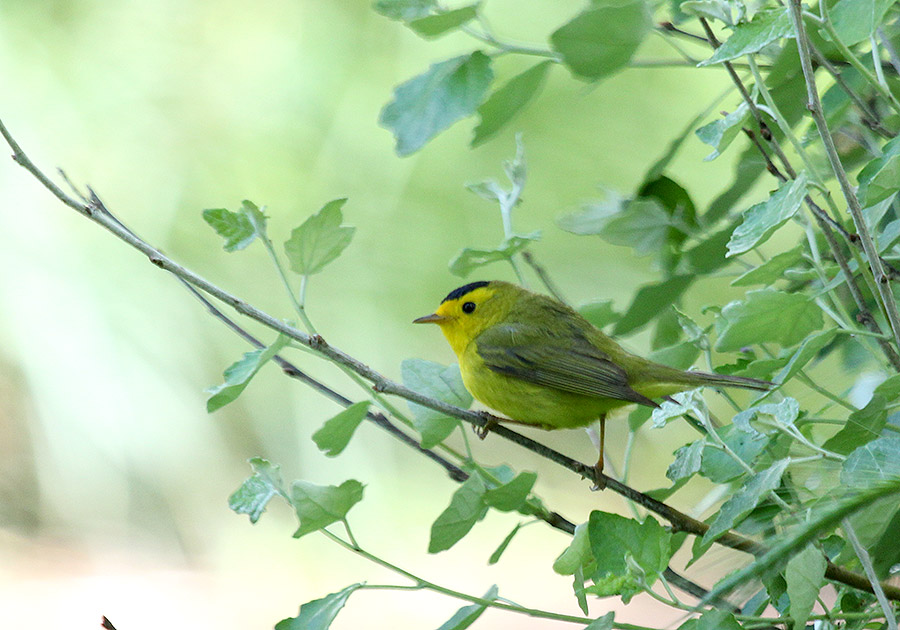
Wilson's Warbler at Garr Ranch
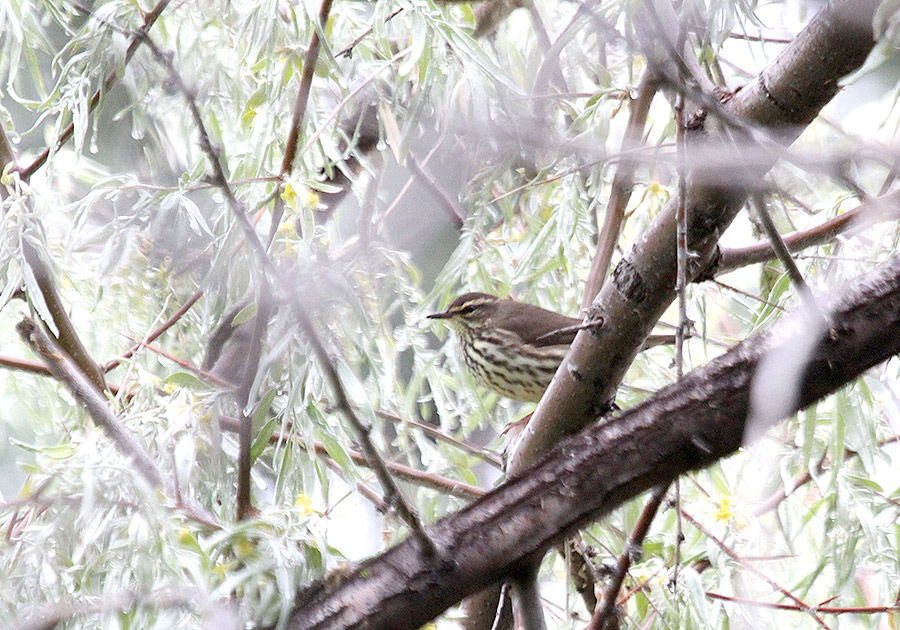
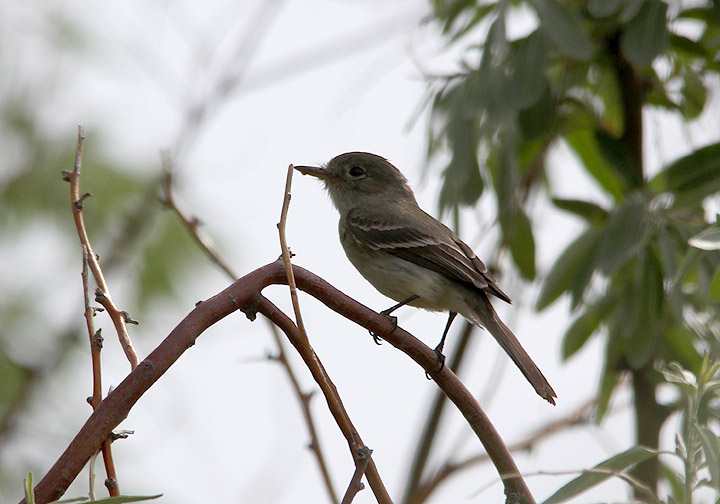
Various other warblers flitted about, and we were fortunate to find the NORTHERN WATERTHRUSH along the fence line at the east end of the spring. Our only RED-BREASTED NUTHATCH of the day would be here--PINE SISKIN, WESTERN TANAGER, LAZULI BUNTING and WARBLING VIREO were also nice additions. We did a clean sweep of the Utah empids with all 5 regularly occurring species found around the ranch grounds. After making the rounds we opted to head out knowing we'd done very well at the ranch and were already past 130 species for the day. The drive out netted our NORTHERN HARRIER for the day, and in Layton we saw plenty of AMERICAN CROWS.

Northern Waterthrush at Garr Ranch

On our way to get lunch in Ogden we added a pair of WESTERN SCRUB-JAY which is usually a miss for us--and after a short lunch stop we headed to Birdsong Trail at the mouth of Ogden Canyon.  Here with a little coaxing we picked up YELLOW-BREASTED CHAT and FOX SPARROW for the day as well as BLACK-HEADED GROSBEAK and BLACK-CHINNED HUMMINGBIRD. Overhead our first TURKEY VULTURES were a pleasant sight. Heading into the canyon, Mike suggested stopping at "The Oaks" to see if we could get a catbird and Calliope Hummingbird at their feeders. We had no such luck with those birds, but as we were getting ready to leave a small buteo emerged form the trees across the road and circled.  Everyone looked and someone quickly yelled out Swainson's Hawk! But that wasn't right, the dark bird was very "broad-winged", and the pattern was just off.  I fumbled to grab my camera as I stuttered that I thought it looked like a BROAD-WINGED HAWK.  All eyes were back on the bird as it circled overhead.  After getting my camera and finally focusing the bird made its way up up up eventually being dive bombed by a SHARP-SHINNED HAWK, as they both circled amongst the WHITE-THROATED SWIFTS overhead. A quick check of the field guide and it sunk in that we really did have a dark-morph Broad-winged Hawk.  To gloat just a little (and for comfort confirmation) I sent the picture to Jerry Liguori with no text--his response was to excitedly ask WHERE??? This was definitely the bird of the day for me.
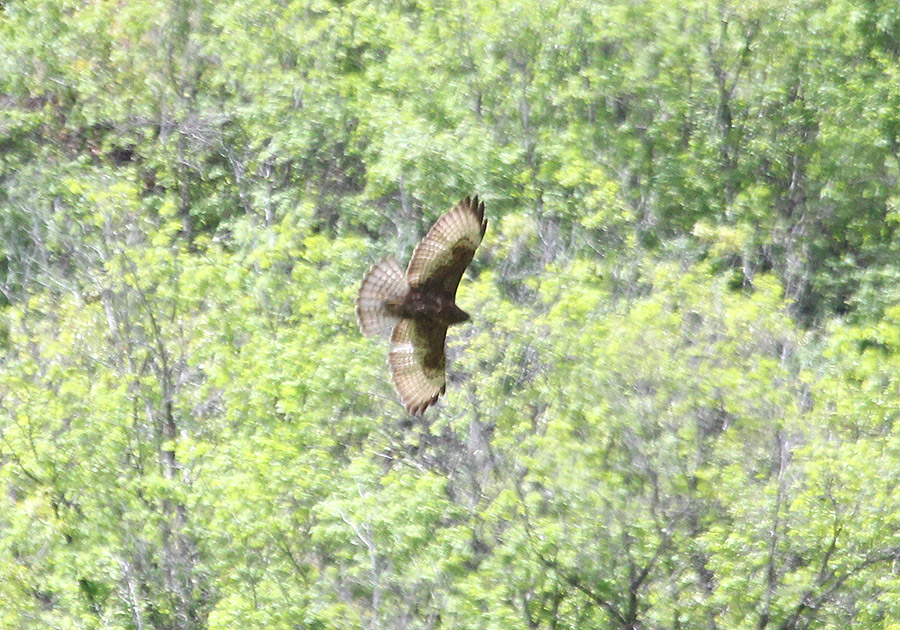
Dark morph Broad-winged Hawk in Ogden Canyon

Getting our wits about us we continued. At Pineview we added a BLACK-THROATED GRAY WARBLER before hitting Jefferson Hunt Campground. Here CEDAR WAXWING were added and finally OSPREY as we headed eastward towards Monte Cristo.  This was the first year SR-39 had been open so we took advantage of a new route through the mountains. As I tallied the birds from the day we sat at 149.  The car started guessing what 150 would be.  Mike was confident that it would Mountain Bluebird, while a few of us ventured that Northern Flicker would be next.  The radio from Jeff's car crackled, "NORTHERN FLICKER". We cheered and eventually saw one ourselves. The next bird to follow--MOUNTAIN BLUEBIRD.
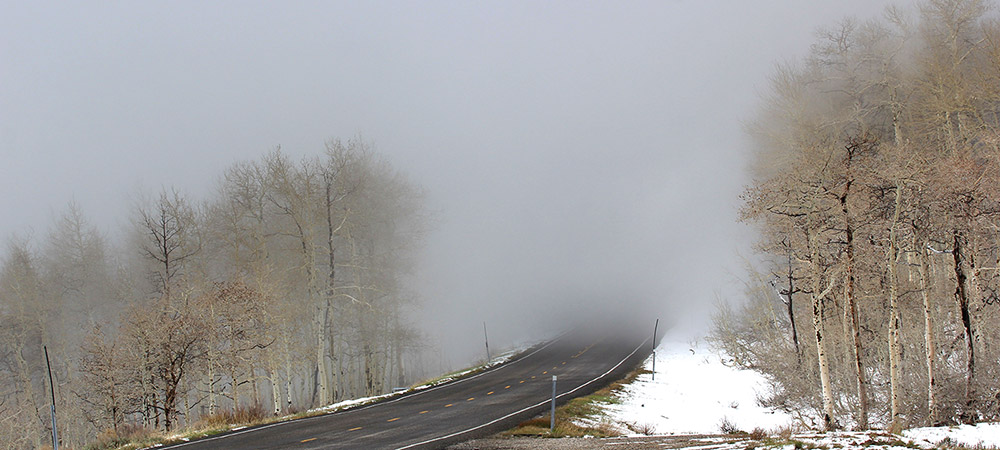
The road to Monte Cristo

Making our was up the mountains we eventually hit gray skies, then thicker clouds. We picked up DARK-EYED JUNCO, followed by DOWNY WOODPECKER and RED-NAPED SAPSUCKER in the same tree!  Then we hit the clouds--literally, we drove into the fog and were greeted with snow and hail as we continued on.  This could make things difficult. We had a small but reliable list of birds we needed to get up here--and with this weather it would be difficult. As we parked across from the entrance to Monte Cristo Campground the fog lifted enough to see around us--but all was quiet.  I reluctantly ditched my flip-flops for hikers as it was even cold for my taste.  We did pick up a calling MOUNTAIN CHICKADEE, but not much else.  I heard what sounded like a chortling Pine Grosbeak; and a couple times it sounded like American Three-toed Woodpeckers called.  But we couldn't pin anything down.  Eventually a few people did hear CLARK'S NUTCRACKER (and we'd all see one 10 minutes later as we drove off the mountain); but the birding left a lot to be desired.

Jeff's Car 12 hours in to the day

Back in the cars we descended to the east and out of the clouds. We added CASSIN'S FINCH on the way down, but no other montane species.  Monte Cristo was a bust and cost us a few species.  Had the weather been different it probably would have been a great addition to the trip. We stopped in Woodruff briefly to look for Common Grackle to no avail.  Driving along SR-16 south towards the Wyoming border through Deseret Ranch we picked up CANVASBACK for the day. We decided to cross the border and check out Woodruff Narrows Reservoir. VESPER SPARROW was picked up along the road in and at the lake we had RING-NECKED DUCK. Our other targets in the sage and on the water were missed, and we slowly made our way back towards Utah, stopping briefly in Evanston to pick up food for our last few hours on the move. Back in Utah we checked an old Ferruginous Hawk nest but there were none present.  All in all our big loop to the east had been a waste.  A few years ago we changed the route to leave the long drive up Logan Canyon, and down through Wyoming out.  It was too much driving--too little birding--and in the end we could get more species spending more time int eh field closer to home. I think that holds true with this years experiment; its hard to say how much different things would have been on a sunny day; but on this day it was a miss.
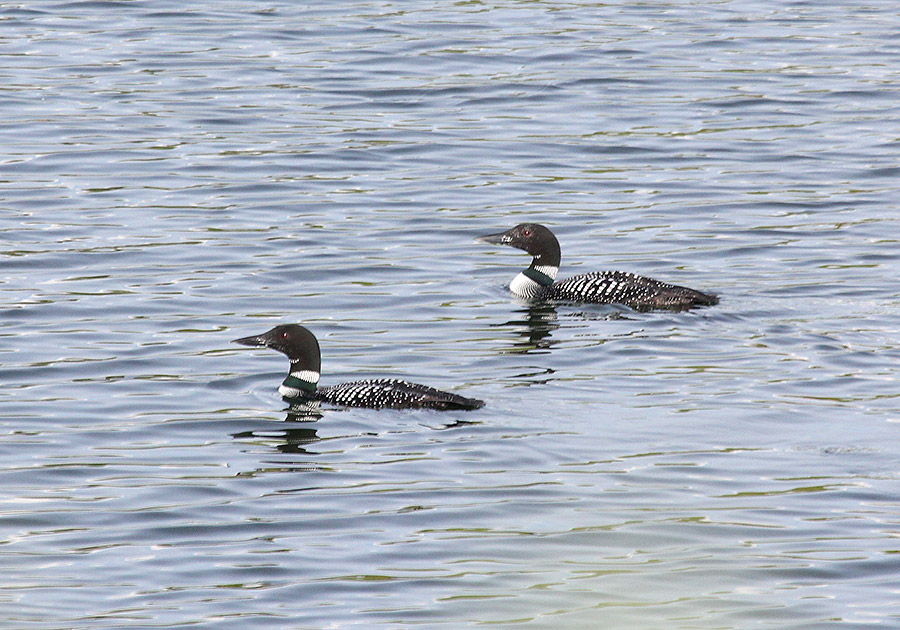
Common Loon at Echo Reservoir

Down Echo Canyon we decided to stop at Echo Reservoir. Here we picked up COMMON LOON and PLUMBEOUS VIREO for the day, before making our way towards Henefer adding both GOLDEN and BALD EAGLES along I-84. We were getting short on daylight and I knew we could add at least one more songbird for the day with AMERICAN DIPPER at Jeremy Ranch Road.  That was it though--we exhausted our last spot for Gray Catbird for the day without seeing one--and Swainson's Thrush really aren't back yet so that was another miss. Looking at our list we sat comfortably at 165 species for the day--we would have no problem at least tying our previous best.

Heading up East Canyon to look for nocturnal birds several in the group had a BLACK-CAPPED CHICKADEE for the day. I was a little worried when Ruffed Grouse wasn't on its usually booming log--it took a short hike but eventually we flushed a RUFFED GROUSE from some high grass making it 167 for the day, what we ended with last year.  A few minutes later we called in a FLAMMULATED OWL for 168 and a new Marathon Birding record.  Try as we might we couldn't get another Flammy to come in nearby; and no poorwills were heard calling.  We might end up stalling with +1.  At our next stop there were flammy's calling but we tried for other owls which we needed for the day.  I heard a couple of screeches from the woods after doing a NORTHERN SAW-WHET OWL whistle for a bit--and it was a couple minutes later when one finally whistled back making it 169.
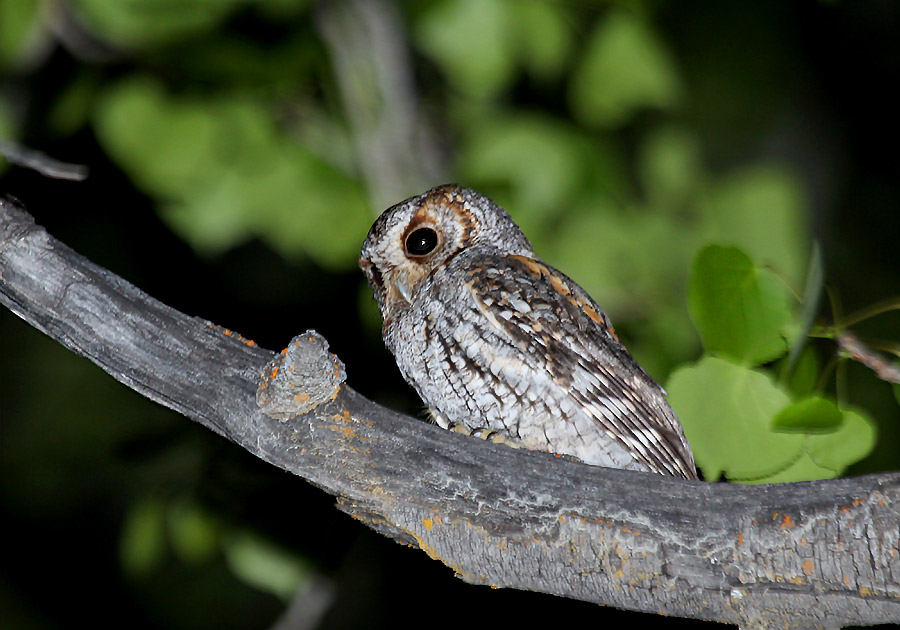
Flammulated Owl from East Canyon

At Big Mountain Pass it took a little coaxing to get a COMMON POORWILL to respond making it 170 species on the day--and we still had time to burn.  But given the long day, and great numbers we opted not to stop and try for screech-owl and instead head back to Farmington.  We forgot to check the odometer, but the trip should have covered 305 miles or there abouts for the day. We got back right at 11:00pm for 16 hours and 45 minutes of Marathon Birding through 7 counties (+1 in Wyoming). I was honestly shocked what we were able to see given the weather--it actually helped keep a lot of birds down probably which made picking up migrants easier than in the past.

It always amazes me how this trip transforms every year.  After 10 years looking back its crazy to think that in the past we struggled to get 130 species on this trip. Each of the last 3 years we have topped 160 and as we keep refining 175 or 180 doesn't seem that far off.  We never know how the trip will go, or what we really will see ad the unpredictability of migration, due to the rising and falling water levels of the GSL, the hit or miss nature of passerine migration in mid-May, and what routes will be open to drive. Every year we talk about adjusting the route a little bit and making subtle changes to get the most out of the day. So we'll have to wait and see what next year brings.  As always thanks to Jeff for co-leading this trip; and Mike and Taylor for driving--the 2 extra sets of eyes has really mad ea difference.  And especially thanks to the 6 hardy birders who showed up despite the horrendous conditions--it paid off!

Labels: , , , , , , , , , ,

2014 Marathon Birding Recap

posted by Tim Avery at
on Tuesday, May 20, 2014 

At this past weekends Great Salt Lake Bird Festival, for just the 2nd time there were 2 "Marathon Birding" Field Trips--one led by Mark Stackhouse and David Wheeler while the other was run by Jeff Bilsky and myself.  In the weeks leading up to the festival Mark and I had a little fun jawing back and forth about who would win their respective marathon.  Some sort of wager was needed, but Mark wanted to take things a little further and turn our challenge into a 2 part endeavor--which I will share more about later.  For now let's talk about the marathons that happened.  On Friday the 16th, Team Mexico (Mark and David) led their group to an astounding 162 species during their 18 hour jaunt across northern Utah, trickling past our best of 160 set last May.  The bar was set high--especially after all the trash talking from my end.  Right from the onset I felt that I may have sealed our fate by lighting the fire under Mark that set things ablaze.

On Sunday the 18th, Jeff and I did our usual thing, grabbing some coffee and breakfast and driving the 35 minutes up to Farmington to start the day.  We decided not to change anything form our previous marathon trip which had netted so many great birds.  The route was short, kept us birding most of the day, and provided a hell of variety of birds.  The only variables that ever worried me were weather, traffic, and how migration was going.  As usual we had the cars packed and ready to go a few minutes behind schedule but were out the gates of the Legacy Events Center, nabbing WESTERN KINGBIRD, BULLOCK'S ORIOLE, LESSER GOLDFINCH, and EURASIAN-COLLARED DOVE before we left.

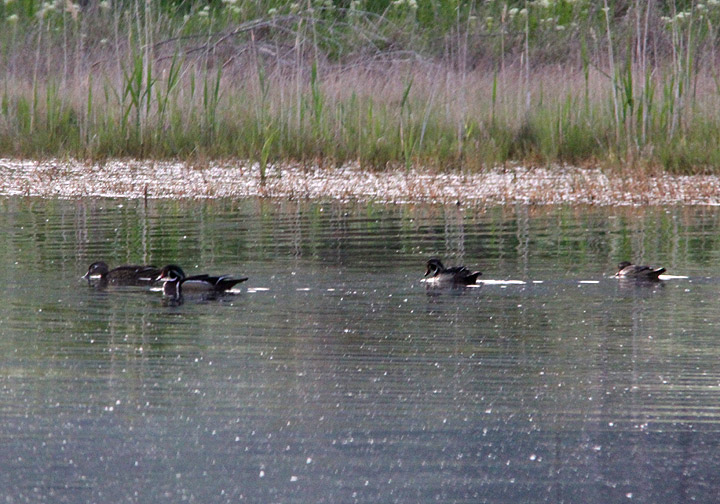
Wood Ducks at Farmington Bay WMA

Heading towards Glower Lane we snared a CALIFORNIA QUAIL--always a relief to get this one out of the way early.  Glover Ponds were much slower than usual--we only had a handful of ducks, 2 grebes, and a major shortage of waterbirds in general.  Our first of many SANDHILL CRANES of the day bellowed from nearby and we kept on our way right on schedule.  Stop #2 was Farmington Bay WMA where things were looking up.  WOOD DUCKS, BLUE-WINGED TEAL, and LONG-BILLED DOWITCHER just inside the gates.

Blue-winged and Cinnamon Teal at Farmington Bay WMA

We grabbed the usual waterfowl species form a top Egg Island, but had missed a wide variety of expected species.  Shorebirds were light, as were songbirds.  Along the main road we had BLACK-CROWNED NIGHT-HERON, SORA, VIRGINA RAIL, and an abundance of the expected COMMON YELLOWTHROATS--they were singing wildly and at least in the double digits. A quick stop as we left picked up both FORSTER'S and CASPIAN TERN, as well as a great find in a COMMON TERN perched on a nest platform with a Forster's.  The bird was quite diminutive, and for a minute we got excited that it may be a Least.  Alas it was slightly to big, and lacked the necessary features.  We left the bay with the expected number of species but were short on our hit list--we could easily make those bird sup later though.

Bobolink in West Kaysville

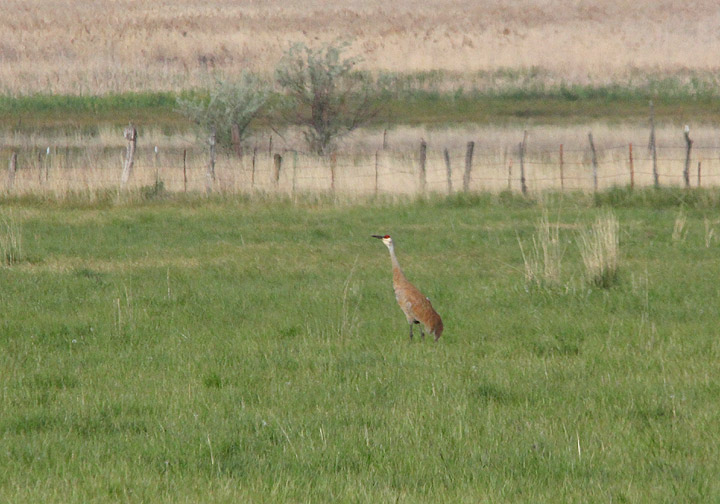
Through the back roads of Farmington and Kaysville we headed to Schick Lane.  Upon arrival we were greeted by DUSKY FLYCATCHER and GREEN-TAILED TOWHEE.  Walking the tree line we soon found our target BOBOLINK in the field to the west, while we snagged both BREWER'S and CHIPPING SPARROWS, and shockingly both HAMMOND'S and WILLOW FLYCATCHER!  3 species of empid before 8:00am given our route was quite unexpected. We also added BELTED KINGFISHER and has more great looks at SANDHILL CRANES.

Sandhill Crane in West Kaysville

Not wasting time we sped towards Antelope Island Causeway arriving right on schedule--glassing a flock of ibis at the entrance we were unable to pick out a Glossy--and we couldn't find a Whimbrel despite our best effort--those two were big misses.  About a mile in we scanned the mud flats for plovers finding over a dozen SNOWY PLOVERS, but no Semipalmated. We also got our only SAVANNAH SPARROW of the day singing here.  Jeff managed to pick out a distant BONAPARTE'S GULL while the expected gulls and shorebirds also filled our lists quickly.

Sanderling Flock on the Causeway

Another mile or so down the road we pulled over to scan the throngs of shorebirds to the north. 1,000's upon 1,000's of SANDERLINGS filled the mudflats, while 100's of BLACK-BELLIED PLOVERS were a bit closer and easier to pick through.  We managed to pull out a couple of AMERICAN GOLDEN-PLOVERS in the distance and 6 RED KNOTS a little closer.  The biggest miss of the day here was our ZERO peep find.  Not a single one of the typically 4 species were found while we scanned--that could be catastrophic.  WE also missed a couple other noteworthy and recently reported shorebird like Dunlin and turnstone--the odds were starting to stack against us a bit.

Chukar on Antelope Island

We raced around the island quickly nabbing the expected SAGE THRASHER, LOGGERHEAD SHRIKE, CHUKAR, and ROCK WREN.  NORTHERN MOCKINGBIRD has also become somewhat expected as of recent years and we had a couple.  At the corrals we easily saw BARN and GREAT HORNED OWL, as well as SAY'S PHOEBE--at least the island was being forgiving for us.

Great Horned Owl on Antelope Island

On the road to Garr Ranch we enjoyed a great show from a BURROWING OWL, who coughed up a pellet while half the group watched.  Our car missed the spectacle as we turned around!  We also easily picked up our GRASSHOPPER SPARROW with multiple singing and one individual posing on top of a stalk of grass near the road.

Burrowing Owl on Antelope Island

At Garr Ranch the luck swayed a little in our favor.  Migration had done well the night before and our 60 minutes scouring the trees turned up just about every expected migrant.  YELLOW, YELLOW-RUMPED, WILSON'S, ORANGE-CROWNED, and MACGILLIVRAY'S WARBLERS joined BLACK-HEADED GROSBEAKS, WESTERN TANAGERS, HOUSE WRENS, and PLUMBEOUS and WARBLING VIREOS.

Warbling Vireo at Garr Ranch

We completed our 5 species empid sweep with GRAY FLYCATCHER and CORDILLERAN (we actually got all 5 species here as well). There was also one empid I saw for about 3 seconds, and snapped an out of focus shot of that looks like a LEAST FLYCATCHER.  We didn't count it since I was the only one to see it and it was so brief, but here's a crappy shot.

Possible Least Flycatcher at Garr Ranch

 The only miss here that surprised me was Western Wood-Pewee.  ON the other side of things, a calling NORTHERN WATERTHRUSH from the main spring, and a BLUE-GRAY GNATCATCHER were welcome additions.

Gray Flycatcher at Garr Ranch

We took a quick detour after the ranch to try for an Ash-throated Flycatcher Jeff had the previous day, but couldn't turn the bird up.  The 30 minute side trip cost us some time that we could have used later in the day, and added no new birds to our list.  On the way out the causeway we made a last ditch effort for Glossy Ibis to no avail, but Jeff picked the WHIMBREL out of the fields to the north. We rounded out our list in Syracuse with an AMERICAN CROW.

As we headed towards lunch in Ogden, we made a last minute decision to add a stop to our route a little out of the way at Fort Buenaventura for the Black Phoebe that had been present the past few weeks.  We spent about 30 minutes there and didn't find the bird, only adding NORTHERN ROUGH-WINGED SWALLOW to our list.  Despite arriving for lunch at Jimmy Johns and leaving right on schedule, we had put ourselves behind by almost an hour we had gotten ahead--due to our stops.  But hey, you have to throw in some risks--because the rewards for those birds would have well been worth it.  Some days the cards just don't fall in your favor though. Plus Jeff got a cool shot of a "spirit" Robin...

The Spirit Robin by Jeff Bilsky

Up Ogden Canyon we stopped briefly for WHITE-THROATED SWIFTS, and added both PINE SISKIN and CASSIN'S FINCH.  Flyover GOLDEN EAGLE was our only of the day and sometime around 1:30 we finally saw our only SHARP-SHINNED HAWK of the day, and our first RED-TAILED HAWK--what a miss that would have been.  On Pineview Reservoir we added COMMON LOON and COMMON MERGANSER, while 100's of Western and Clark's Grebes rested on the water near the dam.  At the marina there were close to 40 CASPIAN TERNS on the tires used as a break wall.  A GRAY CATBIRD gave a brief showing and sang nearby, while a distant COOPER'S HAWK soared above.

Cooper's Hawk high above the group

At North Arm Nature Area we struggled through but netted the needed CALLIOPE HUMMINBGIRD.  YELLOW-BREATED CHAT played coy with us, but we got a few notes out of one near the bridge.  DOWNY WOODPECKER and WESTERN WOOD-PEWEE were also found, while SORA provided an audible along with many others in the riparian stretch that is a bird magnet.

Falling further behind schedule things got a little messy in the Powder Mountain Area.  Before we knew it the 2nd car was nowhere to be found while we scoured through CASSIN'S FINCHES looking for anything different.  Apparently they had stopped a curve or two below us and the radios weren't communicating that they were watching a NORTHERN GOSHAWK!!! 

Northern Goshawk by Jeff Bilsky

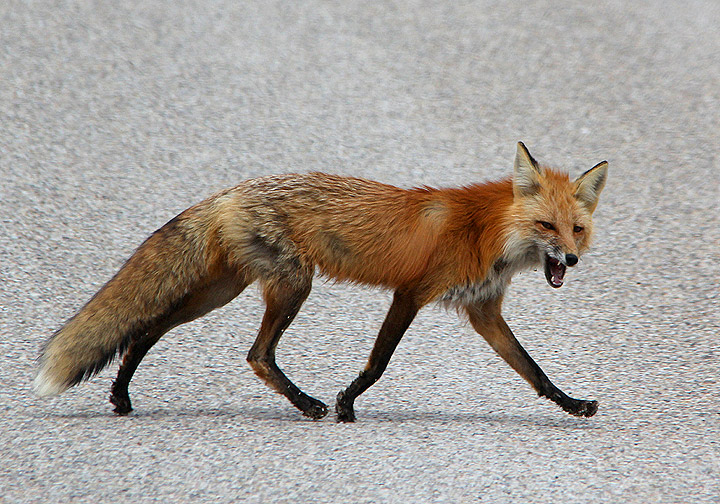
Our radio woes continued after the finally caught up and then fell behind again while our car ended up on top of the mountain they ended up at the feeders at the condos below.  Due to this our car had VESPER SPARROW while they added CLARK'S NUTCRACKER. We managed to work through the radio issues and didn't lose them the rest of the day, but as cloud cover built overhead and the winds picked up we struggled, barely adding MOUNTAIN CHICKADEE, DARK-EYED JUNCO, and RED-BREASTED NUTHATCH on the ways down the mountain.  We stopped to watch a RED FOX along the road and heard a HAIRY WOODPECKER calling from a nesting site nearby.  We had missed quite a few birds but trudged on.

Red Fox at Powder Mountain

For the better part of the 4 o'clock hour we added no new birds, drove a long ways, and got turned around a couple times.  We missed a couple staked out birds, and couldn't turn anything into a new day birds.  We stopped to refuel both the vehicles and ourselves in Coalville, hopefully resetting things.  Jeff and I looked at our laundry list of misses and needs and tried to figure out what was our best plan of attack.  What we came up with was this: Change Nothing.  We just kept going as if we were right on track.

The Wasatch Back from Powder Mountain


At Rockport Reservoir I had a list of waterfowl we HAD to get.  As if the birding gods were listening, they rewarded us with all: COMMON GOLDENEYE, RED-BREASTED MERGANSER, RING-NECKED DUCK, and believe it or not... NORTHERN SHOVELER.  We decided to try our luck in the junipers along the highway and managed to call in a BLACK-THROATED GRAY WARBLER which provided incredible looks for the entire group--while almost landing on Jeff's head.

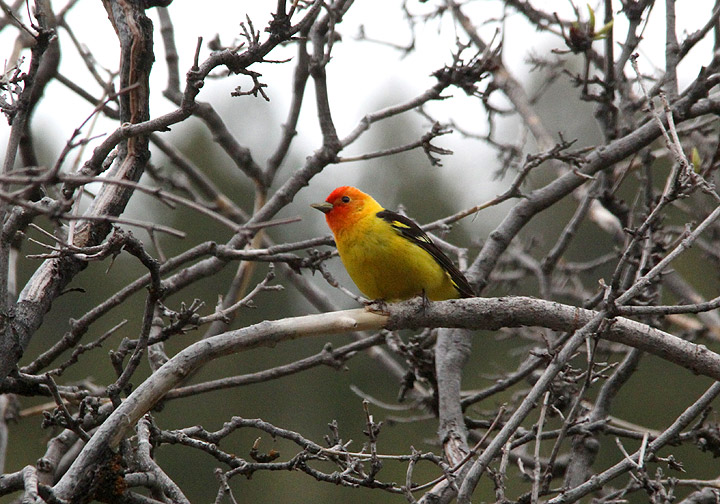
As the clouds thickened and it slowly got darker we stopped into Summit Park where an awesome showing of birds at the feeders on Matterhorn netted us STELLER'S JAY and RUBY-CROWNED KINGLET for the day.  I mostly enjoyed watching my favorite bird the WESTERN TANAGER set against the cold grays of the sky and surrounding dead trees. No matter how we ended the day that bird was always a bright spot.

Western Tanager at Summit Park

We continued on to Mountain Dell and Little Dell Reservoirs.  Between the two locations we managed to add just WESTERN SCRUB-JAY for the day, and despite our best efforts couldn't pull out a Lazuli Bunting.  We headed to Big Mountain Pass where a RED-NAPED SAPSUCKER gave its obligatory call from the aspen near the parking area.  Heading down into upper East Canyon we finally snagged a LAZULI BUNTING singing just above Drouby Canyon in the oaks.  Our last stop before dark was Jeremy Ranch Road where there were just a couple birds we needed for the day.  We easily got AMERICAN DIPPER in the river, and with a little work finally turned up a FOX SPARROW skulking in the willows. A distant SWAINSON'S THRUSH sang up canyon, while no less than 16 WILSON'S SNIPE displayed overhead  along the farm land here.  I had never seen so man snipe in the sky at once--it was pretty incredible.

Me taking pictures of hummers. Photo by Norm Jenson

Broad-tailed Hummingbird taken with a Smart Phone

As darkness fell we headed back up East Canyon to try for owls and other night birds.We had put in a solid effort for the day and had some major holes in our list.  We also had some major things to be grateful for.  As it was getting darker we watched the last hummingbirds of the day visit feeders near where we looked for owls.  Just before it got to light to see without flashlights we added RUFFED GROUSE for the day.  A few minutes later the group had killer looks a FLAMMULATED OWL.  Our first try and the bird came in perfectly for everyone to see.

Flammulated Owl by Mike Hearell

Before we left the area a NORTHERN SAW-WHET OWL grace us with its lovely repetitious hoot-hoot-hoot-hoot...  Up mountain a ways a NORTHERN PYGMY-OWL sang a few notes and gave an alarm trill just before out of the darkness a big white van driven by Mark Stackhouse with a owl tour pulled up to our vehicles to ask how the day went.  We lamented to our troubles and were quickly on our way--not before Mark kindly shared that he had a singing poorwill at our expected location and last stop on Big Mountain Pass.  Sure enough the COMMON POORWILL responded immediately to our calls.

We made two more stops for the night, missing two more species of owl we had hoped to tack on to our haul--instead we settled for 6 species--not a bad days work. And back to Farmington we headed parting ways with an excellent group of people who provided a great day of birding.

Now I would be lying if I wasn't dying to know what Mark's group had gotten when Saturday rolled around the morning after his trip.  He tortured me via email, and his trip participants by making them keep their lips sealed.  It wasn't until after Mark and I talked for an hour about how my buddies Kenny, Colby, and I finally stripped him of the Utah Big day Crown the previous week, that Mark finally spilled the beans that they had 161 species on their Marathon Trip.  It gave us a target--but at the same time I wasn't quite sure it was the real number--and I was right. It was 162 which he let on as we left during our brief meeting in East Canyon. Although this could have been an honest mistake--every single bird counts when you are going for a ridiculous number of birds in a day, so keeping 1 extra bird in our back pocket ain't a bad strategy.

So what did I tell Mark on the mountain?  Well we had had a rough day which was true. And we weren't done yet, which was true.  So I told him I hadn't tallied the list yet. Well that was a lie--and he of course knew that, I could have told you by the minute where we were at for the day.  Then after the trip I said I lost the checklist, and would have to figure things out today... Yeah that was a lie as well.  Then via email he asked and asked and asked, what was the number??? I kept putting it off. Was it so bad that I didn't want to share it with him? Did he take Team Utah (Bilsky and Avery) to task on their home field (which to be fair was his for 25 years)--they talked a big game but when the time came did we fold under pressure?  I'll be honest, it was a tough day... And there were some big misses... And the weather wasn't super cooperative... And in the end we had a great time and we just did what we could... 167 (one-hundred sixty-seven) species :)

See you in Mexico Mark!

Labels: , , , ,

2012 Marathon Birding Recap - A Month Late

posted by Tim Avery at
on Monday, June 25, 2012 

It seemed like we just finished our big day when Jeff and I were back at it again with the Marathon Birding Trip for the Great Salt Lake Bird Festival on Sunday May 20th.  Take away a few miles, and a couple hours, throw in 14 other people, and you've got yourself a logistics nightmare trying to get 14 eyes on every bird.  Add in a car breaking down, and an eclipse that darkened the skies 2 hours early and the odds were not in our favor.  Yet, everything turned out alright in the end. In fact some how despite falling behind schedule almost from the start we ended up with our 2nd biggest Marathon total to date--only 6 short of a new record with 136 species recorded.  And something this year that really stood out wasn't just the number of species, but the quality of some of those species we got.  As usual some of the misses make me cringe just thinking about them--and how 150 species should have been a cinch!

But that's neither here nor there so lets talk about the trip.  Just after 6:00am we rolled out of Farmington with 3 mini vans, 2 guides, 3 drivers, 10 participants, and special guest Greg Miller (The Big Year).  Greg was a fun guy to go birding with and provided a ton of interesting information, plenty of funny comments, and made the experience memorable for everyone.  Our first stop was the ponds at the end of Glover Lane which were pretty dead in comparison to past year--very few waterfowl and shorebirds.  Plenty of FORSTER'S TERNS provided great looks for all.  We made our way into Farmington Bay where right inside the entrance we snagged a couple of great birds for the day.  A drake BLUE-WINGED TEAL and a SPOTTED SANDPIPER accompanied the various other waterfowl and shorebirds.  Both SNOWY and GREAT EGRET were picked up along the road to Egg Island.  At the raised parking area we got stellar looks at a WHIMBREL, a number of Long-billed Curlews, and 1 MARBLED GODWIT in the grass to the west.  A lone BLACK-BELLIED PLOVER, and a handful of Dowitchers were in the distance.

Common Yellowthroat at Antelope Island Causeway

Anyways, we left Farmington and headed to Antelope Island picking up AMERICAN CROW on Antelope Drive.  At the entrance station to the park a COMMON YELLOWTHROAT was in the bushes just singin' away.  On the causeway was a shorebirders delight.  Plovers, sandpipers, sanderlings, curlews, willets, whimbrel, phalarope, killdeer, knots, turnstones--it was a Thanksgiving Dinner and there was something for everyone to eat.  We started getting the easy stuff then the really good stuff, then the okay stuff.  People were getting new Utah birds, new life birds, and new year birds.  After a while I got down to business and started scoping the plovers--around 1,200 BLACK-BELLIED PLOVERS were there and mixed in were a few treats.  I found an AMERICAN GOLDEN-PLOVER still in basic plumage and everyone got great looks.  Then it was about 30 minutes of checking bird by bird looking for a reported PACIFIC GOLDEN-PLOVER from the previous day. GOT IT! Feeding on a mudflat about 150 yards out with a handful of Black-bellied.  The bird was still molting and seemed to have all the right features.  Front heavy, long slender bill, short primaries, thick white patch on the neck, and a beautiful golden back.

Possible Pacific Golden-Plover
at the Antelope Island Causeway

After having spent way too long on the causeway, we headed towards the island.  On the way we picked up another GREAT EGRET--funny to see one sitting along the edge of the briney water.  As we entered the island we added a surprise LARK BUNTING--an exceptional new day bird.  Everyone got to see the bird before it disappeared over the hill and we moved on.  We snagged the island regulars on the loop to the corrals and back before hitting the road north to Willard Bay.

Lark Bunting at Antelope Island

At Willard the GRAY CATBIRDS were out in force as well as the orioles, Yellow Warblers, Western Kingbirds, and grosbeaks.  Surprising was that we had ZERO empids here.  As we went to leave the van Jeff was riding in wouldn't start.  After a few minutes they got it started and we decided to head to the Flying J in Willard to decide what to do.  We found out we could get another vehicle delivered but it would be 45 minutes.  We took a break, had lunch then got everyone back in the cars and headed to Bear River Road.  The broken van made it up there, but not before they got the check engine light. We drove a short ways out the road just enough to find 4 EASTERN KINGBIRDS along the fence line. As we headed back towards the freeway the backup car arrived and we switched out vehicles--then headed towards Cache County.

Eastern Kingbird at Bear River MBR

A quick stop at Mantua didn't turn up anything new for the day except a TREE SWALLOW.  We skipped ALL of our usual Cache Valley stops to try and catch up on lost time--plus the potential for new birds was limited.  Our next stop was along the Logan River to scan the cliffs for swifts.  We managed to pick up VIOLET-GREEN SWALLOW--which were flying over the ridges in the hundreds.  Greg spotted a WHITE-THROATED SWIFT amongst the throngs, while a couple high flying birds that looked to be swifts were just specks in the distance.  We also managed to see our only WESTERN TANAGER of the day here--as well as a singing FOX SPARROW, and LAZULI BUNTING.  At a second stop we added AMERICAN DIPPER but nothing else.  Next we decided to try something different.  In the past the road to Tony Grove has always been closed for this trip--this year it was open.  The long drive in and out takes a lot of time, but we added a bunch of species, including a couple birds we haven't had on the trip before.  Most notably were a pair of WHITE-WINGED CROSSBILL that were foraging on the side of the road, and a HAMMOND'S FLYCATCHER in the same area.

American Dipper in Logan Canyon

We picked up most of our high mountain species here, and what we didn't get on the road, we tracked down at Franklin Basin Road.  Big misses were all the mountain woodpeckers minus Flicker.  No sapsuckers, no Hairy, and no Three-toed--and we didn't get any of them later.  In fact the only woodpecker we got all day was NORTHERN FLICKER.  We skipped Beaver Mountain then cruised out of the high country to Bear Lake where we picked up COMMON LOON on the southwest shore. This was a first for this trip route.  It was fun to watch the loons chase and harass one another on the vibrant blue water.  Heading east towards the Wyoming border hoping to pick up some raptors we were missing on a portion of the route that normally produces.  It didn't let down as we added GOLDEN EAGLE and PRAIRIE FALCON along the way.

Common Loon at Bear Lake

Continuing to adjust our route, we skipped out on the majority of the Deseret Ranch Lowlands and instead only drove the first couple miles of Home Ranch Road where we added AMERICAN WIGEON and VESPER SPARROW.  Several WILSON'S PHALAROPE provided great looks just off the road which allowed for a nice photo opportunity.

Jumping the border we made our way to Woodruff Narrows Reservoir in Wyoming and added RING-NECKED DUCK on the water, NORTHERN ROUGH-WINGED and BANK SWALLOWS rounding out the swallows for the trip, and BREWER'S SPARROW which had been scant throughout earlier stops.  As we were leaving the last car with Jeff spotted 3 GREATER SAGE-GROUSE just off the road.  We were a 1/4 mile up the road and had to flip a u-turn to get back.  Our car saw the birds as they disappeared over the hill, and the 3rd car barely got looks--far from satisfying.  But all as not lost--as we turned to leave Mike spotted another grouse further up the road.  We saw one and it disappeared into the sage--so I walked with Greg out to see if he could get a photo.  Little did we know that one bird was with 5 others that waited till we were right on top of them before taking flight.  This time everyone saw the birds as they circled and dropped deeper into the sage flat. By now we were more than 2 hours behind schedule and rolled into Evanston around 7:00pm.  We took a quick dinner break as the sky started to dim as the sun and moon met in the sky to the west.  


"The Eclipse" - Lens Flare 

We had to chop out a couple of huge stops that could add 5 to 10 more species just to make it back into the mountains to try for a few more birds we needed.  We raced down I-80 towards Echo then cut over to Henefer and up East Canyon above the reservoir.  At Jeremy Ranch Road we missed Swainson;s Thrush, it may just be a tad early--but further up the canyon we added HERMIT THRUSH before dark.  A staked out RUFFED GROUSE site had been disturbed by people placing a power generator and gas can 5 feet away form the log the bird was using.  The grouse was there but left the log when I went to see if it was there.  Several in the group did get to hear it drum before it wandered off.  Unfortunately, I imagine this site will probably end up failing due to the generator and people in the area.

Ruffed Grouse in East Canyon

As darkness settled a breeze picked up and the forest grew quiet--Jeff and I both heard a FLAMMULATED OWL hooting but it quickly faded.  As we tried for the birds after we had no responses.  Jeff wandered down the road a few hundred feet and found another owl so the group followed--by the time we got there, silence.  And for 15-20 minutes nothing--well nothing but cars. It became frustrating--but even more so when an Owl out of nowhere would start hooting right as the cars were coming, then stop when the cars were gone. I was beginning to worry that we would miss looks at this tiny owl that was always a special end to the trip.  Then as a car headed up the road and one of the tiny birds started to hoot again I headed towards the sound.  The bird sounded close, and the car passed giving me a clear direction to the bird.  I didn't hesitate, putting my flashlight on what seemed like too small a tree for any owl, but as I scanned up the trunk of the tiny tree, there on the tiny limb was the tiny owl.  Everyone came towards me getting looks at the owl before the bird finally sick of the attention retreated into the woods.

For a number of attendees this was a highlight and a life bird.  For Greg Miller it was a visual lifer, one of very few birds of North America he had heard--but not seen.  Impressive for someone with a life list approaching 800.  While we were trying for the owl at one point Jeff called out a COMMON POORWILL but no one else heard it.  About 5 minutes later I heard the bird, but then it went quiet again.  And that's it.

We made another stop to try for Saw-whet and/or Pygmy-Owl, but nothing responded to my persistent whistling.  We headed back towards Salt Lake, then Farmington getting everyone back around 11pm.  17 hours, 136 species, and more than 300 miles later, another Marathon Birding Trip was over.  At the end of these days it is always crazy to look back and see what you missed.

It's crazy for instance to think that we saw RUDDY TURNSTONES, but not Ruddy Ducks.  Or that we saw WHITE-WINGED CROSSBILLS, but not Red Crossbills.  Or how about the fact we had TWO species of GOLDEN-PLOVERS, but not a single Snowy or Semipalmated Plover.  

Ruddy Turnstone at the Antelope Island Causeway

We had no Scrub or Steller's Jay, no wodpeckers besides flicker, no empids besides Hammond's, and not a single Black-chinned Hummingbird.  This year might have had the most surprise misses.  Over the past 5 years the thing that has seemed consistent was a later than normal spring--this year we were weeks ahead and in the past where birds were clumped together in the mountains in search of food, now they were spread out on territories.  It made for an interesting time--but as always a great marathon trip!

On the drive home Jeff and I talked about the trip and the biggest dislike we have is the amount of driving time between stops.  Too much time is spent in the car trying to get to new patches of habitat to pick up 2 or 3 birds to keep building the number up--so next year we might switch things up a little and change the route to allow more time for birding--and maybe even more birds.  I guess we will have to wait another year to find out!

Labels: , , , , , ,


UTAH BIRDERS FLICKR POOL


    SEE MORE AND SHARE ON FLICKR