Utah Birds, Utah Birding, and Utah Birders. Promoting the sharing of information, and the conservation of habitat for birds in Utah and elsewhere. We are a group of people who want to share what we know, and create a positive birding experience in Utah.

BIRDERS BLOG

a blog by and for Utah Birders

Bridgerland Audubon Society Field Trip: Antelope Island

posted by Ryan O'Donnell at
on Sunday, November 11, 2012 

Yesterday I led a group of seven birders on a field trip to Antelope Island for the Bridgerland Audubon Society.  This was a good turnout considering the weather: our first big snowstorm of the season had arrived the day before, and there were several inches of fresh snow on the ground and more was predicted for the rest of the morning.  Temperatures were predicted to reach highs just below freezing.  Even while meeting in the parking lot, though, our efforts were already being rewarded: a flock of about 8 EVENING GROSBEAKS flew overhead while we were waiting to depart.

The roads were not too bad, and before not too long we arrived at the Antelope Island Causeway and saw the first effects of the shifting weather on the birds: the storm had pushed hundreds of LEAST SANDPIPERS to the causeway.  By counting a small group and estimating how many groups that size we saw along the causeway, we estimated 500-700 Least Sandpipers.  According to eBird, this is the highest single checklist count of this species in Utah since a 1974 count at Fish Springs National Wildlife Refuge. Among the Least Sandpipers we were able to pick out one WESTERN SANDPIPER, three GREATER YELLOWLEGS, and several hundred KILLDEER. We learned to identify the common GULLS of the area, and saw four species: RING-BILLED, CALIFORNIA, BONAPARTE'S, and HERRING. One GREAT HORNED OWL perched on the snow near the causeway was a highlight for the group.

A Great Horned Owl perched on the snow along the Antelope Island Causeway.  Ryan O'Donnell photo.

One of the big draws of Antelope Island is the chance of spotting rare vagrant ducks, and as usual, the famous second bridge didn't disappoint.  A HARLEQUIN DUCK was first found along the causeway about three weeks ago, and continued for us.  We were also able to find three SURF SCOTERS at the same location.

A Harlequin Duck continued to oblige along the Antelope Island Causeway.  Ryan O'Donnell photo.

Three Surf Scoters pose together nicely for a photo, with a Lesser Scaup in the background. Ryan O'Donnell photo.

On the island itself, we started by driving up to the visitor's center for a bathroom break, but before we could make it there we found another rare bird for this time of year, a SAGE SPARROW.  We had brief looks at this bird up on top of a shrub before it dropped back down into the vegetation.

A late Sage Sparrow that should be migrating south soon.  Ryan O'Donnell photo.

At the visitor's center, the feeders gave us close looks at a DARK-EYED JUNCO, a CALIFORNIA QUAIL, and several CHUKAR.

A California Quail and a Chukar wait for their turn at the bird feeder at the Antelope Island Visitor's Center.  Ryan O'Donnell photo.

As we drove down the island towards historic Garr Ranch, we saw several more raptors, including ROUGH-LEGGED HAWKS and RED-TAILED HAWKS, and had a brief look at an unidentified SHRIKE.  We also added to our mammal list, with a COYOTE, many BISON, and very close looks at a herd of PRONGHORN.

A Pronghorn, part of a herd that blocked the road for a little while on our way out to Garr Ranch.  Ryan O'Donnell photo.

At Garr Ranch itself, we worked the trees around the spring and another pond to the south pretty thoroughly.  One of the first good birds here was a NORTHERN GOSHAWK right around the spring.  This species is very rare at Antelope Island - according to eBird this is only the second record for the park.  

An immature Northern Goshawk at Garr Ranch.  Mike Fish photo, used with permission.

Other raptors in the area included a RED-TAILED HAWK, an adult COOPER'S HAWK, a NORTHERN HARRIER, and this GREAT HORNED OWL, our second of the day.

Great Horned Owl at Garr Ranch.  Ryan O'Donnell photo.

The park ranger led us down to another small clump of Russian Olive trees where a very large MULE DEER buck had been hanging out.

A very large Mule Deer buck guards his harem at Garr Ranch.  Ryan O'Donnell photo.

Garr Ranch is famous as a migrant trap, a place where lost birds tend to show up when they get blown or wander off course.  We didn't find any great vagrants when we were there, but we did get some great looks at some common species, including this HERMIT THRUSH, and one out-of-season BROWN-HEADED COWBIRD.

One of two Hermit Thrushes at Garr Ranch.  This individual is pretty red, and I wonder if it might be in the eastern/northern subspecies group, rather than one of our local breeders.  Ryan O'Donnell photo.

A late Brown-headed Cowbird, or should I say "Brown-headed Horsebird?," 
found a warm place to perch in the snow at Garr Ranch.  Ryan O'Donnell photo.

Finally, before leaving the ranch, we checked the silo for BARN OWLS and came up with one.  Or, the wingtips and tail of one, at least!

"It counts."  These weren't the best looks one could hope for at a Barn Owl, but the wingtips
and tail are distinctive enough to identify the bird.  Ryan O'Donnell photo.

We ended the trip at Garr Ranch, but had a few more sightings on the way back to Logan, including three or four COYOTES, a couple of PORCUPINES, and a LOGGERHEAD SHRIKE.  

Join us for our next trip, on December 8th, and for the Logan Christmas Bird Count on December 15th.  See our website for details on this and all future trips, and contact Bryan Dixon to sign up for the Christmas Bird Count at bdixon@xmission.com.

Here are links to the complete eBird checklists from our trip, including a few bonus photos:

http://ebird.org/ebird/view/checklist?subID=S12010993
http://ebird.org/ebird/view/checklist?subID=S12011069

Labels: , , , ,

It's Official

posted by Anonymous eBirder at
on Thursday, August 16, 2012 

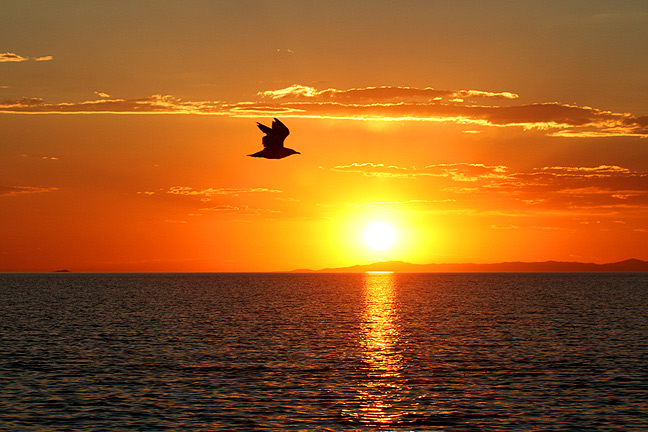
Sunset from the Causeway, where a new 200 yard
hunting buffer was approved by the state today.

The 2012-2013 Waterfowl Guidebook recommendations, which included the 200 yard buffer along Antelope Island, were passed unanimously this morning.

 I guess we can all celebrate now, and what better way to do so than taking a trip to the Antelope Island causeway.  I'll be leading a field trip with the Great Salt Lake Audubon to the causeway this Sunday; talk about good timing.  More details about the field trip can be found here.

Labels: , , , ,

Tonight's RAC meeting.

posted by Anonymous eBirder at
on Wednesday, August 8, 2012 

The RAC meeting this evening went very well, and I didn't have to do that much speaking.

Brittany Badger, Shyloh Robinson and I arrived at 6 PM.  When we got there, we found that Kris Purdy and Paul Higgins were already there waiting for the meeting to start (Thanks for coming, everyone!).  I filled out a comment card, we did some minor catching up with Kris and Paul, and we patiently waited for the meeting to begin. 

The Antelope Island Buffer was discussed when the RAC discussed the new 2012/2013 waterfowl guidebook.  Our proposal for a no-shooting buffer was a new rule that was introduced into the new guidebook.  After the changes to the guidebook were introduced, the RAC asked for public comment concerning the issue.  I stood up to the microphone and stated that the Utah Birders were in support of the new guidelines proposed, and most notably we agreed with the 600 foot buffer proposed along the Antelope Island Causeway. 

After the guidelines were introduced, and comments were made by the public and by the RAC, and the issue was then voted on by the RAC; they voted unanimously to approve the guidelines, which included our proposed 200 yard buffer along the causeway.  Members of the RAC were then asked to comment on the vote, and one member stated that he was very happy that hunters and birders worked together to solve a complex issue concerning both parties. 

I am still in shock.  I'm overjoyed that we worked together to come to a compromise that will work out for all parties concerned.  I'm happy with the help and support I received from the birding community, and the hunting community as well.  This really wouldn't have been accomplished without teamwork and compromise. 

It's a humbling experience to feel like you've made a difference in the world, and that you've done something positive for conservation.  This has been a great learning experience and I'm glad that I had the chance to experience it. 

I forgot to thank many of those that have worked with me.  In addition to those I thanked on the previous post, I'd like to thank:  Jeff Richards and the Utah Waterfowl association, the Utah Airboat Association, Jay Banta and the Backcountry Hunters and Anglers, Kris Purdy, Paul Higgins, Don Paul, and another HUGE thank you to Jeff Gordon and the American Birding Association.

Labels: , , , ,

Causeway Shooting Buffer: An 8 Month Process

posted by Anonymous eBirder at
 

Tonight the DWR's RAC will be voting on rules to be added to the 2012/13 Waterfowl Guidebook. One of those rules is a rule that we proposed last December, which would place a 200 yard no-shooting buffer along the Antelope Island Causeway.

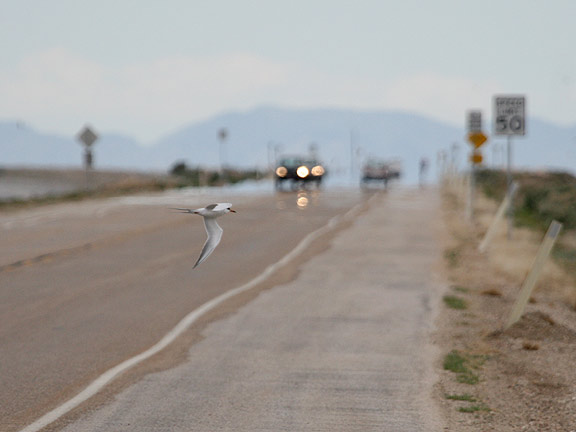
Forster's Tern flying over the Cuaseway.

I will be in attendence at the RAC meeting, and also at the Utah Wildlife Board meeting next Thursday discussing this rule, and why we are in support of it. I'm a little nervous. I know that there is a great amount of support for this proposed rule, and hunters seem to be mostly on board, but I can't say how the vote will go. I hope that the buffer rule will be enforced along the causeway to preserve the integrity of one of Utah's most beautiful state parks, and to protect the wintering waterfowl that so desperately need the causeway for their survival.

I'll keep everyone posted on how the vote goes. No matter what happens tonight, I'd like to thank Jeff Gordon of the ABA, Corey and Jessica Stokes, Jeff Bilsky, Tim Avery, Shyloh Robinson, and Kenn Kaufmann, and all the Utah Birders for all the help they gave me along the way. I couldn't have done this without your help and support.

Here is a link to the blog post from last December that states why we feel that this is a concern.

Labels: , , , ,

RAC Meetings

posted by Anonymous eBirder at
on Thursday, December 15, 2011 

As many of you know, last night I attended the Utah wildlife Regional Advisory Council (RAC) meeting to discuss the future of shooting from the Antelope Island Causeway. The RAC discusses and sets hunting rules in the state of Utah, and has the authority to write such hunting rules concerning the causeway.

Yesterday I was a nervous wreck, as I had never presented something like this before, and I was a little bit intimidated (okay, I was REALLY intimidated) by the comments on various news stories covering the issue. Yesterday I was envisioning walking into a hornet's nest, a room full of angry hunters, angry because we were trying to take away one of their hunting areas.

I approached the subject from 3 angles. 1) Antelope Island is visited by 280,000+ tourists a year, all of which use the causeway to get to the island. There are runners, bikers, birders, etc. that use the causeway outside of the comforts of a vehicle, and we feel that they are the most at risk. Hunting right along the causeway poses a serious safety threat to all those using the causeway. 2) Antelope Island is a popular tourist destination for those wanting to experience the world famous Great Salt Lake; the park gets visitors from all over the world. We feel that shooting along the causeway (which is the first thing visitors see upon entry) isn't representative of what our state parks are all about, and first impressions do matter. 3) The causeway provides a unique bird habitat because at times, this is some of the only open water on the lake. The two bridges also create a connection between the north and south side, and nutrients cycle between the two sides; this redistribution of nutrients provides valuable feeding opportunities for wintering birds. We feel that the causeway provides absolutely critical wintering bird habitat, and because of that, shooting should not take place along the causeway.

I also stated that this is not a hunting issue. We are all for hunting, and we want to work with hunters to come to a resolution that works well for all sides. I want hunters to have plenty of opportunities to enjoy their passion along the Great Salt Lake, but I just don't feel the causeway is the best spot to do so. Hunters are very passionate, and work very hard towards conservation (their goals are the same as ours!); I understand that and truly appreciate their dedication and hard work. Many of the refuges that we all enjoy exist due to generous contributions from the hunting community. I am in no way trying to limit hunting, I just feel that shooting along the causeway doesn't make sense.

I was so nervous when giving my presentation because I had no idea how it would be received. When the audio transcript of the RAC meeting becomes available on the RAC website, you are all more than welcome to listen to the scared shitless voice of the proposal to end shooting on the Antelope Island Causeway.

During the process, one member of the board was under the impression that Utah state law prohibited shooting near a roadway. At that time, another member looked up state law on his smart phone and the board figured out that there was absolutely nothing illegal about shooting from the roadside on the causeway. It took most of the members by surprise.

A retired long-term DWR employee, avian biologist, and expert on the Great Salt Lake ecosystem, also spoke on behalf of this issue. He was largely in favor of shooting restrictions along the causeway. He felt that this isn't, and shouldn't be a popular hunting area, and he also feels that this is a one of a kind birding location that shouldn't be disturbed by shooting. This gentleman was widely respected by the board, and everyone payed great attention to what he was saying. His testimony really helped our cause, and I am truly grateful for it.

They asked a few questions, and then voted on whether or not to make this an ACTION item in upcoming meetings. If this proposal were an action item, they would actually vote on whether or not to limit shooting on/around the causeway. The board voted nearly unanimously to make this an ACTION item (1 member abstained), and voted to have the Wildlife Board further investigate the matter.

After presenting to the board, they thanked me for coming and voicing my opinion, and they were all very polite. Every member on the board seemed grateful of the public commentary.

This will now go to the next wildlife board meeting taking place in January, and then it will be an action item in the July/August RAC meetings when they discuss the new Utah waterfowl hunting guidebook. I'll be doing everything I can to be present at those meetings so we can make sure our concerns are heard, and we can make sure that this issue gets some air time.

Following the meeting I spoke with many of the board members, members of the DWR, and other various individuals present. Many folks seemed to be in favor of this proposal, and they all gave me some great advice on how to move forward with http://www.blogger.com/img/blank.gifthis issue.

Presenting to the RAC was definitely a learning experience for me, and I'm thankful for the opportunity to do so. I learned so much, and had so much fun doing this, and look forward to working more on this issue.

I want to thank the RAC for hearing me out last night. I'd like to thank the various members of the local birding community that helped out with this, and to Cory and Jessica for riding up and supporting. A huge special thanks goes to Jeff Gordon (President of the ABA) who helped me from start to finish; Jeff really helped me polish our message, and without his help, I don't think it would have been as well received last night. Thank you all very much, and I look forward to working with you in the future.

Labels: , , , ,

AIC Buffer Zone Update

posted by Utah Birders at
on Monday, December 12, 2011 

Forster's Tern flying across the Antelope Island Causeway

We want to start out by saying THANK YOU to everyone who has chimed in with an opinion/information on the matter of the Antelope Island Causeway proposed “buffer zone”. It is clear that there is a wellspring of interest in the uses of the Causeway and a lot of passion for figuring out what should be the “right” answer on this discussion.

There seems to have been some lack of clarity about our proposed buffer zone as well as our stance on hunters and hunting. We’d like to take this opportunity to try to clear some of this up.
Unequivocally, we support hunters and hunting. There is much overlap in our goals and ideals and we 100% respect the rights of hunters and their right to the enjoyment of hunting. We can’t be clear enough that we mean no disrespect to hunters and consider your contributions to conservation an integral part of the big picture when it comes to keeping our state filled with wilderness. Thank you for all that you do!


Sunset from the Antelope Island Causeway

It has definitely been clear that there is a great deal of confusion about what exactly the existing regulation is in terms of what can and can’t be done from a hunting standpoint along the causeway. We have verified that the causeway is NOT considered part of the Antelope Island State Park and therefore is not subject to the rules that apply to state parks. While many seemed to have assumed it was, there is no rule stating as such (that we’ve been able to identify) and therefore hunting has occurred and can continue from a close distance to the causeway road with no violation. This is what prompted our initial concern for a number of reasons which are summarized below.

We can all agree that the Antelope Island causeway is a heavily used area. Being one of the more heavily trafficked state parks in Northern Utah there are constantly cars and people moving up and down its 6 miles of pavement. This can raise some safety concerns when it comes to the close proximity of hunting activity. We have no doubt that hunters are very very careful but why take chances in such a heavily populated area?

Secondly, a large number of the people that visit Antelope Island State Park are from out of state - both domestic and international tourists - many who come just for bird watching. The close proximity of hunting activity along the causeway could serve as a potential deterrent to the birds and subsequently tourism. I think we’d all like to see a continued influx of people visiting our state and state parks because of what it does for the local economies.

Finally, this area right along the causeway really is a critical bird habitat and has in the past been used by so many birds passing through our state. If you ask any birder where the best place to view wintering ducks in the past several years you’d almost unanimously hear “Antelope Island Causeway”. Due to the way currents move under the bridges, these specific areas are packed with nutrients and stay predominantly unfrozen during the cold winter months. This lends itself to being a haven for the birds. As hunting activities have increased in this area, it has become less and less available for the birds for any length of time.

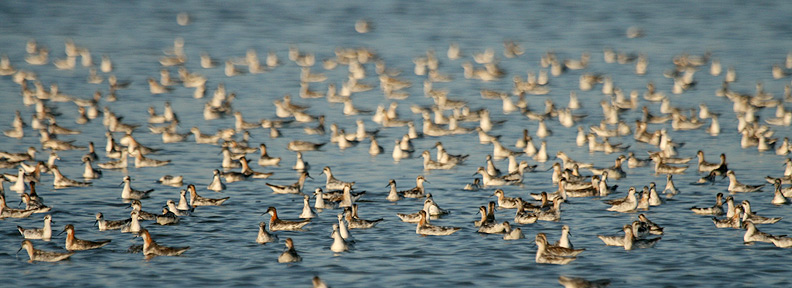
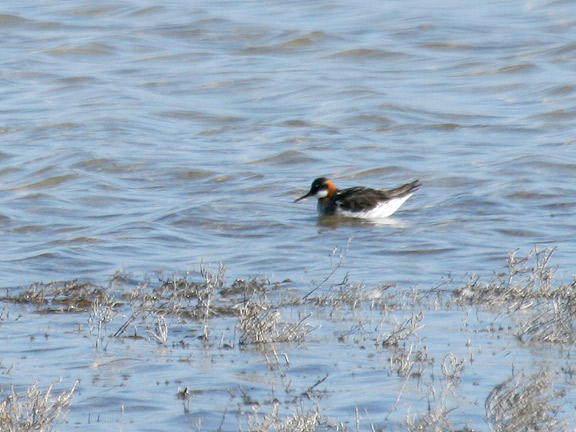
Red-necked Phalarope feeding along the Causeway

When looking at all of the above stated reasons, we conclude that it would be a wise move to extend the protections that exist for Antelope Island State Park to the 6 mile causeway as well. We feel this is a win/win solution and one that hunters and birders can come together on and agree is the right thing to do.

We are actively working on reaching all the right people/agencies to address the topic so that we can have an informed and reasonable discussion. We are well on our way and will definitely keep everyone updated on our progress.

Thank you for considering what we have to say. Feel free to leave any comments or questions and we will get back to you. In addition to the comment section below, you can contact us direct at utah.birders@gmail.com

Sincerely,
The Utah Birders
Jeff Bilsky, Tim Avery, Carl Ingwell

Labels: , , , ,

Time to Take Action: AIC Buffer Zone

posted by Utah Birders at
on Friday, December 9, 2011 

As recently as 2 weeks ago, 3 Harlequin Ducks were being consistently seen along the Antelope Island Causeway road, usually near the first bridge. For nearly 2 months these birds found shelter where they normally would not be found. Then one day, they vanished and their whereabouts remained a mystery.

2 of the 3 now presumed killed Harlequin Ducks
at Antelope Island Causeway

Unfortunately, we now have it on good authority that these ducks (and others) were taken as trophies by some very unsportsmanlike “hunters” who took advantage of some easy targets and a loophole in the law (and in their personal ethics). Presumably your initial reaction is outrage and sadness followed by an assumption that surely some law must have been broken.

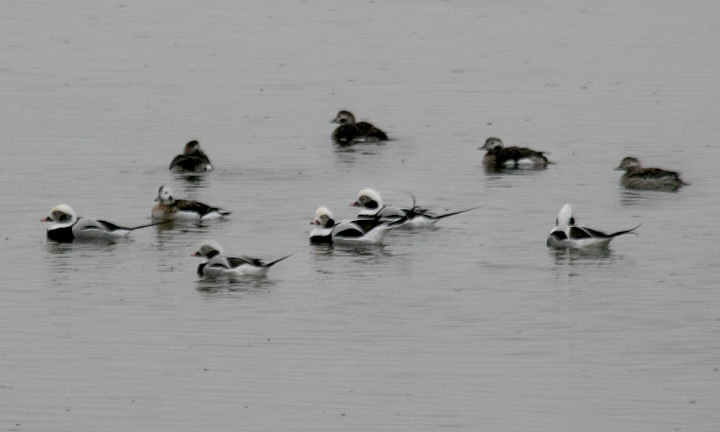
 Long-tailed Ducks are another target species for
hunters along the causeway.

However, in researching this, we’ve determined that according to the laws, hunters are within legal shooting range along the causeway as long as they are not shooting across the road and are off the road and shoulder. They currently cannot be cited for any violation as long as they follow this. Despite whatever feelings law enforcement officials have about the ethics of a person who would hunt in this manner, NO LEGAL ACTION CAN BE TAKEN. There is no protection for Harlequin Ducks, Scoters or most of the other incredible birds we’ve all been enjoying at Antelope Island regardless of how rare they are to our state.

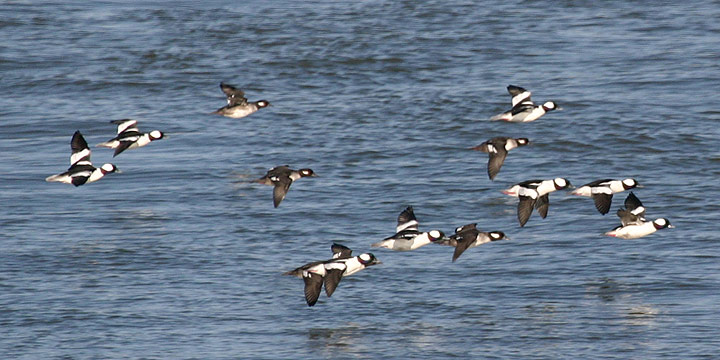
  Beautiful tiny Buffleheads are another prize, although
common they are merely hunted as trophies.

As the causeway is managed and owned by Davis County, it is not subject to the rules and restrictions that govern the state park itself. As the causeway is one of the greatest assets of the state park, this is a seemingly self-defeating measure for a county and state that would value the INTERNATIONAL TOURISM that Antelope Island attracts for its BIRD WATCHING.

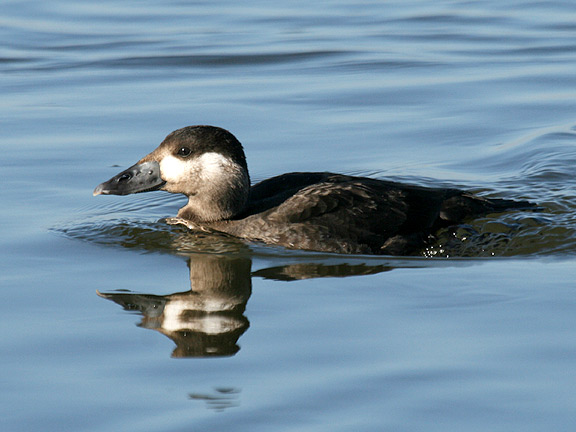
Surf Scoters are taken annually in Utah during the duck hunt;
the causeway is one of the best places to see them.

It is widely considered that no ethical hunter would hunt in this manner and we fully support hunting in an ethical and sportsman way. We are only taking issue with those who would hunt in the manner we’ve described and more specifically the current law that allows it.

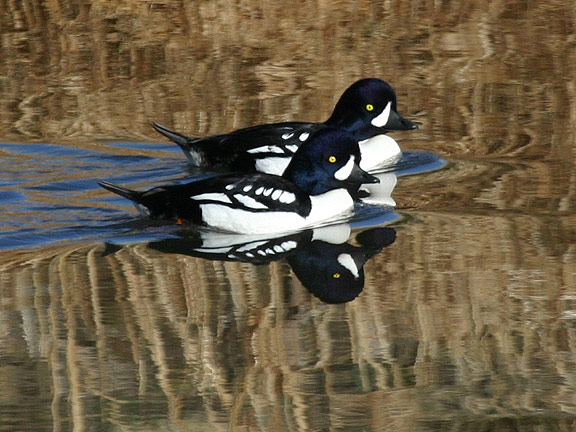
The gorgeous Barrow's Goldeneye are another trophy
that can fall victim at the causeway.

So what can WE do?

We can speak up and try to make a difference. Our collective voices can be heard by educating the Davis County authorities about why we visit Antelope Island. We do care about the money we spend on state park passes and have an expectation that reasonable laws should exist to protect people, birds, and animals from unethical “sportsmen”. For those of you outside Utah (and we know there are many of you reading this) you can talk about the reasons you have or would want to visit Utah and Antelope Island State Park.

We propose that we encourage a “buffer” along both sides of the entire causeway from entrance gate to island of no less than 100 yards and that the buffer be STRICTLY ENFORCED. 
  
Further, we want a special additional consideration and buffer added at the two bridges as these are the most important locations for resting birds.

We’ve identified below some of the people who can be contacted and we have all sent letters to them that sum up our stance. We encourage you to send your own letters as you see fit. We should be able to make a difference if we show them how many of us care about this issue.

Jeremy Shaw, Antelope Island State Park Manager - jeremyjshaw@utah.gov
Jolene Rose, Antelope Island State Park Wildlife Biologist - jolenehatch@utah.gov
Neka Roundy, Davis County Community Director/Great Salt Lake Bird Festival Chair - neka@co.davis.ut.us
Barbara Riddle, Davis Area Convention and Visitor’s Bureau - barbara@davisareacvb.com
Louenda H. Downs, Davis County Commission Chair - commissioners@daviscountyutah.gov
John Petroff Jr., Davis County Commissioner - commissioners@daviscountyutah.gov
P. Bret Millburn, Davis County Commission Vice-Chair - bret@daviscountyutah.gov

Here is an easy to copy list for you to drop into your email client:

jeremyjshaw@utah.gov, jolenehatch@utah.gov, neka@co.davis.ut.us, barbara@davisareacvb.com, commissioners@daviscountyutah.gov, bret@daviscountyutah.gov


Feel free to draw inspiration from the letter below as you write your own words and if you so wish, copy and paste the last paragraph with the specific request for a buffer.

Thank you for being a Utah Birder!


Dear Davis County Community Leaders and Antelope Island State Park Management:

It has recently come to my attention that very little law exists protecting the waters and shoreline adjacent to the causeway that leads to Antelope Island State Park from hunting activities. I urge you to re-examine this carefully. This area is heavily visited by people from all over the state as well as the country and world - as it is well documented for the variety of bird species that can be found there. The causeway can be a true treasure for birders looking to see something amazing passing through our beautiful state and the Great Salt Lake. It is a detriment and deterrent to the tourists as well as the wildlife that visit this area to allow the continued presence of hunting activities right along the edge of the road.

As recently as 2 weeks ago, birders were coming out in droves to see 3 extremely rare Harlequin Ducks. Those ducks were consistently residing near the first bridge on the causeway. These bridges along the causeway, with their high flow of nutrients, are especially vital for resting birds. These Harlequins are now gone, and from our understanding were taken as trophies from hunting at close range along the causeway. In one fell swoop these hunters took from you an excellent and proven tourism draw. It is self-defeating to the interests of Antelope Island State Park and Davis County to allow this sort of unsportsmanlike behavior right in the shadow of a place that markets itself so eloquently as a wildlife refuge. Please reconsider.

My request is not to disallow hunting around Antelope Island. I fully support hunting and believe it it can be a fun and sportsmanlike activity but shooting from the side of the causeway is not in that tradition. I wish for you to extend further protections to the causeway, recognizing it for the refuge it is for both wildlife and those who wish to watch it. Please institute a buffer that protects the shoreline and waters immediately near it. I hope for a minimum buffer line of 100 yards to be enforced from the entry gate to the island with additional buffering at the more sensitive areas of the bridges.

The people and the birds will thank you and continue to visit in great numbers.

Thank You for considering my request.

Sincerely,

YOUR NAME 
A Utah Birder

Labels: , , , ,

Antelope Island Field Trip 10/29/11

posted by Jeff Bilsky at
on Tuesday, October 25, 2011 


ANTELOPE ISLAND CAUSEWAY and GARR RANCH
Saturday, October 29th, 8am
Leader: Carl Ingwell

One of the premier birding locations in Utah, there is never a bad time to visit Antelope Island. Join Carl Ingwell as he leads us across its varied habitats in search of the many, diverse inhabitants. We'll check the causeway flats for shorebirds, followed by a pleasant, meandering drive across the rolling fields, hills, and tree patches to the storied 'hotspot' of Garr Ranch. We'll be looking for late fall migrants as well as early winter residents throughout our travels. There will no doubt be many surprises along the way. Won't you join us for what is bound to be a memorable trip? Meet in the south-east corner of the Shopko Parking Lot in Sugarhouse by 8am. Bring snacks, water and lunch. Call Carl (801-688-5017) for more information.

Labels: ,

The Sabine's Gull

posted by Jeff Bilsky at
on Saturday, October 8, 2011 

Sabine's Gull at Antelope Island State Park: 10/8/11


According to the Cornell Lab of Ornithology, the Sabine’s Gull is "An unusual and distinctive arctic gull that breeds at high latitudes but winters near the tropics."

Today at Antelope Island State Park, Tim Avery and I located one. One of the first thoughts I had when I saw this amazing bird was it must’ve gone on one hell of a journey to get here. Just take a look at where they breed.


This bird likely came from somewhere off the northern coast of Alaska or Canada. The Gull showed the characteristic look of a juvenile bird, meaning it hatched just a few months ago. What an incredible journey to make. A flight of presumably 3,000 or so miles just to get to Utah with likely at least that left to go in order to reach it’s wintering grounds in the tropics. Stunning. Remarkable. I am in awe of the Sabine’s Gull. More of Tim's photos of the bird can be seen here.

Labels: ,

Wintering Shorebirds in Northern Utah

posted by Tim Avery at
on Tuesday, January 11, 2011 

When most Utah birders think of shorebirds, they think of spring and fall migration. Late April and Early May when thousands of Sandpipers pass thorough accompanied by Sanderling, a few Dunlin, Phalarope, Plovers, etc. July also comes to mind when ½ a million Wilson’s Phalarope converge on the Antelope Island Causeway. And of course August, September, and October when upwards of 30 species of shorebirds pass through the state heading back south for the winter. Simply put I don’t think most of us think of winter as a time for shorebirds.

That is not to say that shorebirds don’t overwinter around and on the Greats Salt Lake. Killdeer can be found year round on the lake, or in surrounding areas. This was all brought to mind by tow recent sightings that got me thinking about wintering shorebirds up north. About 2 weeks ago there was an American Avocet seen at Saltair, and then this week a Dunlin was reported. I think most winters Avocets are reported, but the Dunlin was surely a great sighting. I decided to do a little digging and see what I could find.

There have been at least 19 species of shorebirds recorded on or around the Great Salt Lake between the months of December and February. Not bad huh? Of course some of these are few or single records; however there are quite a few regularly occurring species.

Red Phalarope. Copyright Tim Avery

Red Phalarope is the rarest of the recorded winter species. They are a late passage migrant usually coming through Utah between late October and early December. Most records falling November, but there is one report from the causeway on December 3, 1994. The causeway is the ideal location to find this species—either on the rocks or out in the water by the bridge nearest the island. Great Salt Lake State Park is also a great place to look due to the jetties and open water. There have also been overwintering records of Wilson’s Phalarope along the causeway, and a Red-necked Phalarope on the south shore from late November which curiously was a female in full breeding plumage. There is also a single record for Willet from late December at Farmington Bay, although I am not sure it was documented.

Red-necked Phalarope. Copyright Tim Avery

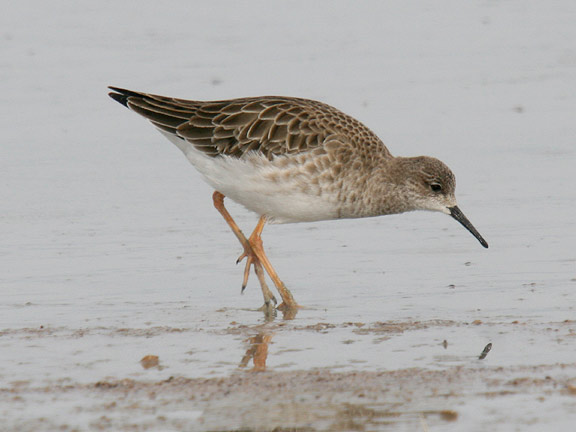
Ruff might actually be more common than a number of the migrants that end up overwintering on the lake. There are at least 3 different winter records for the species along the lake, with 2 coming from the causeway and the other form Farmington Bay. This species prefers tidal flats with shallow pools, so it usually will be along sandy shores or in shallow pools. Overall it is one of the rarest shorebirds recorded in Utah.


From time to time Sanderling show up on the causeway in the middle of January. This one is quite odd, and ranks up there with Baird’s Sandpiper which has several random sightings along the causeway from each winter month over the years. There have also been a report or two of Western Sandpiper—again from the causeway that are just as mind boggling.

Both Snowy and Black-bellied Plover have been reported in mid winter—from the causeway again. Along with some of the above sightings, these birds bring up the point of sick and injured individuals that may not be able to head south leaving them to deal with the freezing temps and predators. It’s neat to see these birds in mid-winter, but the sad reality may be they are only here because they couldn’t leave.

We have covered most of the one-offs, leaving those birds that are reported more often. Dunlin is probably the rarest, but like the Red Phalarope it also has a migration that extends into November, lending to a couple of December records. Marbled Godwit are a bit of an oddity in that despite migrating heavily in September and October, some linger into November with a few stragglers still being seen in December from time to time. Most of these reports come from Bear River MBR on the north shore of the lake—the outlier from the causeway reports.

This leaves both species of Yellowlegs, Least Sandpiper, Wilson’s Snipe, American Avocet, and Killdeer. All of these species are usually recorded annually either at the lake or in nearby marshes or lakes. Aside from Killdeer which is the most common, and Wilson’s Snipe which is always reported from locations with open water and some type of cover, Avocet is the least likely to be seen. The yellowlegs are usually reported form freshwater marshes, and other open bodies of water on a pretty regular basis making them one of the most likely to be seen candidates. Last but not least is the Least Sandpiper which overwinters at a number of locations in small numbers. Seen singularly or in small groups, this tiny yellow-legged wader will be found anywhere that open-water and food persists—mainly along the causeway.

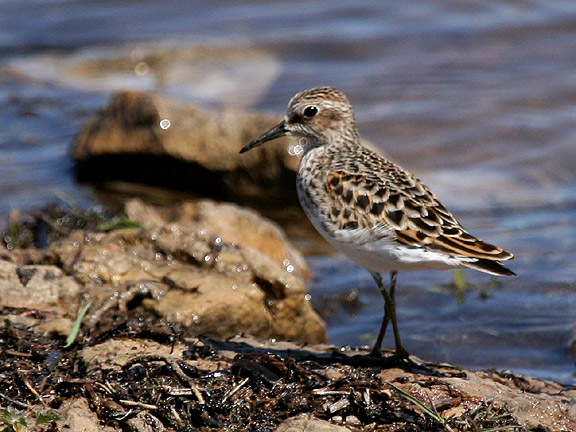
Least Sandpiper. Copyright Tim Avery

This is not a scientific analysis of the wintering shorebirds, just an overview. Now it’s up to you to go out and find some!

Labels: , , ,

False Spring at Antelope Island

posted by Jeff Bilsky at
on Saturday, December 11, 2010 


A couple of weeks ago, as winter's wrath pounded Northern Utah, Antelope Island was besieged by cold and wind and ice. There was a feeling of desperation as birds fed with frenzy and determination. Today, as I pulled up to the island around noon, there was little wind, no gray clouds, and the sun was shining; the sky was blue and the ice had significantly receded. It was in the 40's and had I not known my calendar, I would've thought spring was closer than it is.

As I slowly drove the roughly 6 mile causeway I spotted a couple of Northern Harriers harassing another, larger raptor that turned out to be a Rough-legged Hawk. This was actually the first one I've seen this season and after escaping the Harriers it briefly hovered in place over the marsh, looking for a meal below. Further down the road I happened upon a flock of 30 or so Killdeer. In years past, Killdeer flocks in the winter at Antelope Island have produced some pretty interesting tag-along birds such as Ruff and American Golden Plover. However, not today.

During these winter months, the last bridge on the causeway prior to reaching the island is usually the place to go birding. This is because the water resists freezing here, providing a feeding station. During one of those recent frozen days I mentioned earlier, I counted 100's of Goldeneyes, 9 Long-tailed Ducks, and a host of other ducks, grebes and Gulls. With the ice having pushed further out, there was less of a concentration today but, of interest, I did see a lone Long-tailed Duck and a dozen or so Bonaparte's Gulls amongst the groups of Eared Grebes, Common Goldeneyes, and Ruddy Ducks. Per my previous post today, I spotted a probable Thayer's Gull here as well.

After the causeway, I headed over to Lady-finger Point. It was relatively quiet, save fly-over Ravens and a familiar sound over the rocks that led me to a group of 20 or so Chukars.


As I drove around the island, I stopped briefly at a patch of Russian Olive Trees. The birds were scarce, but the Porcupines, plentiful.


My final stop was Garr Ranch. A Cooper's Hawk hunted Quail. The Virginia Rails laughed. As the day moved on, the clouds began to cover the sun, and the temperature dropped. I was reminded that this false spring was merely an illusion, but hopefully the birds were able to enjoy it as much as I was; a brief reprieve from winter's chill.

Labels: ,

Antelope Island Gull

posted by Jeff Bilsky at
 

Today, near the last bridge on Antelope Island's Causeway, I photographed an interesting Gull. I believe it is a Thayer's Gull but would love to hear some other opinions. Best pics below.

Labels: ,


UTAH BIRDERS FLICKR POOL


    SEE MORE AND SHARE ON FLICKR