Utah Birds, Utah Birding, and Utah Birders. Promoting the sharing of information, and the conservation of habitat for birds in Utah and elsewhere. We are a group of people who want to share what we know, and create a positive birding experience in Utah.

BIRDERS BLOG

a blog by and for Utah Birders

When Subspecies Matter in eBird or in general

posted by Tim Avery at
on Friday, February 27, 2015 

So I've grappled with this for some time. When do subspecies matter in eBird?  You're going to hear a lot of people say that being as specific as possible is always going to be better than generalizing.  There are numerous users whose lists are filled with subspecies--even when the subspecies is the only form present of a species at the given location. Team eBirds official stance is this:

At eBird we believe it is important to allow birders to collect as much information as specifically as possible. 

Pretty vague, but they also say this a few lines later in their help document about subspecies:

For this reason, we try to allow this possibility for those that feel comfortable making these identifications. If you are not comfortable, or do not understand what the subspecies group refers to, please enter your sightings at the species level.

This is going to be the average eBird user; and in 99% of subspecies cases, the species level is going to be enough information to cover the local taxa. But Team eBird does end with this:

A final benefit for entering subspecies groups is that if they are ever split, we will automatically update your lists as appropriate... We encourage you to try to learn more about the eBird subspecies groups in your area and identify them when possible.

So their stance does actually appear to be use them if you feel comfortable, it will benefit you and us.  But I think they are overselling it a bit.  There are a few species here in Utah I have a bad habit of "subspecielizing" (yeah I just made that up) birds when I create a checklist.  Namely these are "Audubon's" Yellow-rumped Warbler, and "Red-shafted" Northern Flicker.  These are 2 cases where I got in the habit of doing it a long time ago, but I am going to stop.  The reason is simple--in both these cases the subspecies I am naming is the default species found here.  This is common knowledge and from a database perspective if this species ever does spilt they will be able to generalize in the east and the west which form was being reported.  There are several states where this will be problematic, but in those states the solution should be to note either subspecies.  In Utah it really only would matter to note the "Myrtle" subpsecies of Yellow-rumped Warbler as it is going to have far fewer reports and since its not the nominate subspecies it is worth noting.  Same for Yellow-shafted Flicker--reports on a yearly basis can be counted on our hands.  This can be taken into account if a split occurs.
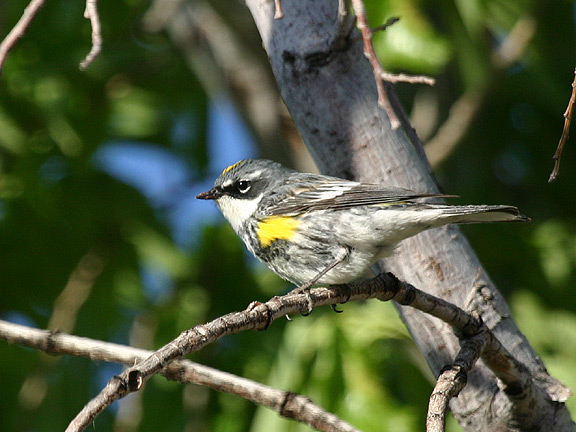
"Myrtle" Yellow-rumped Warbler is not the expected species in Utah

I also have stopped noting "Western" Red-tailed Hawk. I do always make note of "Harlan's", and if any others ever showed up here, I would note them as well.
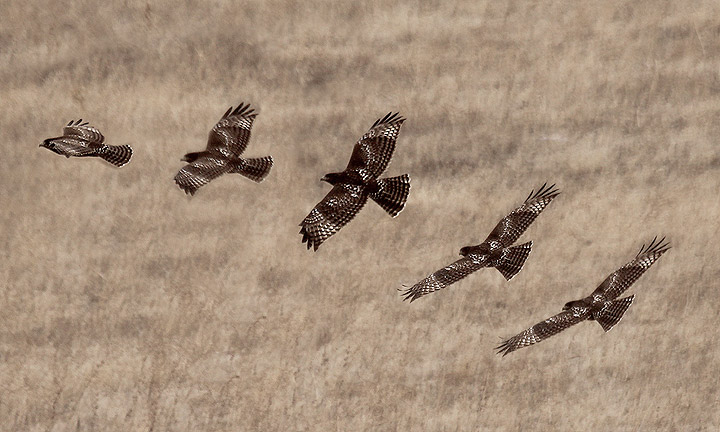
Composite shot of a "Harlan's" Red-tailed Hawk in Lehi, Utah

There are also a number of subspecies that I would never take the time to report.  "Northern" Mallard, "Blue form" Great Blue Heron--I mean come on these are redundant.  These are again the default subspecies here, and the average birder isn't looking to identify forms of Great Blue Heron.  Obviously, if a "White form" GBHE shows up I think most birders would take the time to note it... but in general this seems ridiculous.  Mallards even more so--99.99% of Mallards in Utah are "Northern".  Taking the time to note this in a checklist isn't adding value at the subspecies level.  The .01% of times you see a "Mexican" taxa it is well worth noting.
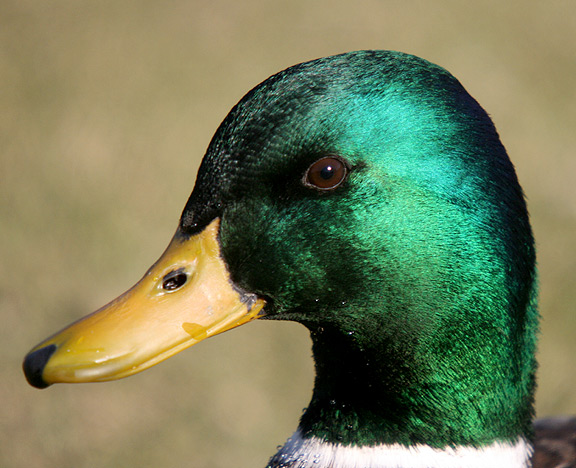
The not rare or notable "Northern" Mallard--it's just a Mallard, come on.

Green-winged Teal is another one I don't note--obviously "American" is going to be the typical one here--if I ever saw a "Eurasian" I would take note immediately--that happens quite rarely here in Utah. Western Scrub-Jay is another one folks--if by some miracle a "Coastal" or "Sumichrast's" showed up here definitely worth noting.  But the "Woodhouse's" form is the only species known to occur here--so we probably don't need to note it. Let's not even talk about the subspecies within these subspecies.  The list goes on, Steller's Jay, Marsh Wren, and Spotted Towhee.
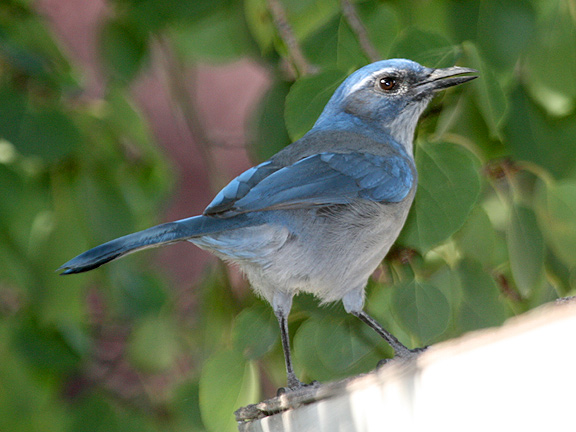
It is indeed a "Woodhouse's" Western Scrub-Jay--but it's the only subspecies in Utah.

But then there are birds I "subspecielize" (I really like this term) that I see the real value in.  These are one where multiple subspecies occur in the same area at certain times of year and worth noting.  Dark-eyed Juncos anyone?  This is the obvious case where noting a subspecies has a value.  It is not uncommon to have 4 subspecies at once during migration, when the local and migrant populations are both found--or even during the winter months.  This is one of the rare cases where a common species really does need it.  I also note subspecies within "Merlin" as we seem to get a good mix of "Taiga" and "Prairie"--obviously "Pacific/Black" is well worth noting.
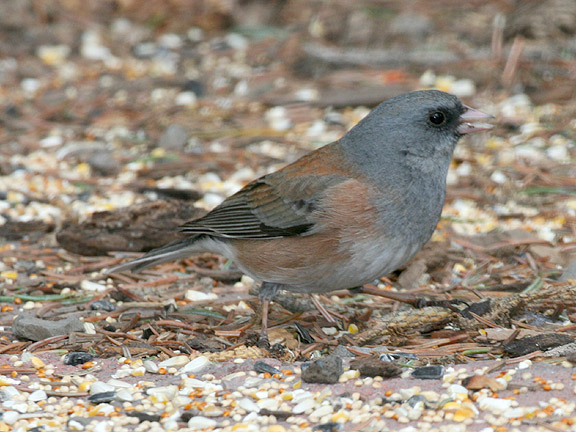
It is worth noting your "Pink-sided" Dark-eyed Junco... or any subspecies for that matter

On the flip side we leave A LOT of these subspecies that are generally the expected subspecies off the checklists.  This is the way I like it and the way I am going to do my listing going forward to keep things clean, succinct, and obvious.  As a birder I challenge you to know subspecies and recognize them--that is something well worth doing.  But for checklists in eBird I don't much see the point of noting the obvious ones.  If splits ever do occur on most of these, the team at eBird will probably write an algorithm (if they haven't already) to correctly filter the split subspecies into their categorically correct species bucket in a given region, time of year etc.

But to each their own right?  Thsi post is not to tell you NOT to use subspecies.  It is one persons opinion on the need for it i ncertai cases.  Do what you feel comfortable doing and what you want to do to track your sightings.  I'm just one dude doing things one way! What are your thoughts on subspecies in eBird.

Labels: ,

Harlan's traits

posted by Jerry Liguori at
on Sunday, November 24, 2013 

A recent discussion spurred this post on jerryliguori.com, but I wanted to post it here as well.

Yes, it true that light-morph Harlan's are snow-white below, but some can and do have buffy or rufous tones on the underside, especially the leggings. Brian Sullivan and I show examples in a 2009 Birding magazine article, but here are some more examples. Remember Harlan's overlaps in plumage, and interbreeds with other races of Red-tailed Hawk, so they can show traits that are normally associated with other races (as do all Red-tails -- i.e. a dark or light throat can be shown on both Eastern and Western). Consider that juvenile Harlan's (especially light-morphs) can have tails that look identical to other races, that is telling in itself. I tend to call Harlan's that show traits associated with other races, or lack all the classic Harlan's traits "Harlan's variants" instead of "intergrades." I also refer them to them as "Harlan's-types" -- essentially, it is a Harlan's of some sort. Since we really don't know the extent of natural variation any more than we know the extent they interbreed (but we do know variation and intergrading does occur), identifying a definite intergrade is very tricky. If a bird shows classic traits of more than one race, then the intergrade argument may have more validity. Or, another good example could be a Harlan's-type with a fully red tail. However, many "pure" Harlan's have varying amounts of red in the tail, or rufous breasts, so a Harlan's that fits the mold in every way but has a degree of red in the tail is simply a "Harlan's", and to call such a bird an "intergrade" is a huge leap.

It is hard to draw a line between what is normal variation and what is an intergrade, and there are many birds out there that are just too difficult to classify. Anyway, here are some examples of Harlan's with atypical traits such as colored leggings or mostly red tails…enjoy.


Labels: , ,

Identifying White-crowned Sparrow Subspecies in Utah

posted by Ryan O'Donnell at
on Sunday, January 15, 2012 

One of the things that I love about birding is that the challenges never stop coming; there's always more to learn.  Once a birder has a pretty good handle on the species found in his or her area, they often move on to trying to tell subspecies apart.  This might sound quite intimidating at first, but for some subspecies, it can be pretty easy.

There are two subspecies of White-crowned Sparrow that regularly occur in Utah.  Mountain White-crowned Sparrows (Zonotrichia leucophrys oriantha; also called "Interior West White-crowned Sparrows") breed here, as you might expect, mostly in the mountains.  Gambel's White-crowned Sparrows (Z. l. gambelii) winter here, having migrated down from their breeding range in the western taiga of northern Canada.  Around the same time Gambel's are arriving from the north, the Mountains are heading south, leaving the state to winter in southern Arizona and northern Mexico.  There are a few eBird records of Mountain subspecies wintering in Utah, but I've never actually seen one documented here in Utah: I suspect it is very rare if it occurs at all in Utah in winter, but please comment below if you've documented Z. l. oriantha in Utah in winter.

Telling these two subspecies apart is relatively easy.  Gambel's have a yellowish bill and pale lores; Mountains have a pinkish bill and dark lores.  (The lores are the area between the eye and the bill.  Look to see whether the dark line that both subspecies have behind the eye continues in front of the eye to connect with the stripe on the side of the crown.)  Bill color is a little less reliable in young birds, but even the young ones usually have the appropriate color lores.

It is always possible that one of the other three subspecies of White-crowned Sparrows could show up in Utah, but this would be very unlikely.  Start by practicing telling these two subspecies apart, and you'll be more prepared for a vagrant of another subspecies.  For more on distinguishing subspecies of White-crowned Sparrows apart, see this and this post from David Sibley; for the VERY interested, see this extensive treatment, also by Sibley.

Adult Mountain White-crowned Sparrow, Z. l. oriantha,  Logan, Cache County, Utah.  11 May 2011.

Adult Mountain White-crowned Sparrow, Z. l. oriantha, Antelope Island, Davis County, Utah.  7 May 2011.

Adult Gambel's White-crowned Sparrow, Z. l. gambelii, Washington County, Utah.  19 Mar 2011.

Immature Gambel's White-crowned Sparrow, Z. l. gambelii, Cache County, Utah.  20 Feb 2011.
Immature Gambel's White-crowned Sparrow, Z. l. gambelii.  Gunlock Reservoir, Washington County, Utah.  16 Mar 2007.


Probably an adult Gambel's White-crowned Sparrow, Z. l. gambelii, Beaver Dam Wash, Washington County, Utah.  28 Nov 2009.  This individual appears to have an unusually dark bill relative to most Gambel's.  Are those brownish sides?  Are the white stripes dingier than expected for Gambel's?  This might be worth looking at again when I get more experience: is this possibly a vagrant of a Pacific Northwest subspecies?


(All photos copyright Ryan O'Donnell)

Labels: , ,

Evening Grosbeak Call Types

posted by Ryan O'Donnell at
on Wednesday, May 11, 2011 


Like Red Crossbills and Pine Grosbeaks, Evening Grosbeaks (Coccothraustes vespertinus) have been described as having distinct call types that vary geographically (Sewall et al. 2004). These distinct call types also correspond approximately with subspecies that have been described based on morphology. Because of these distinct call types which correlate to geography and morphology, it has been suggested that Evening Grosbeaks may be in need of further taxonomic work, that is, that they may be candidates for future splitting. In that Sewall et al. paper, they leave northern Utah as a question mark in their map, an unsampled area between the ranges of (morphologically-defined) subspecies C. v. brooksi and C. v. warreni, where no birds were examined and no calls recorded.

Yesterday I recorded a small flock of 4-6 Evening Grosbeaks calling in the treetops above my yard in Logan, Utah. Evening Grosbeak call types are distinct enough that they can be told apart by ear, but I don't have any practice at this so I imported recordings into the software RavenLite to examine the sonograms.

Most of the calls were of Type 1. This is the call type that is given by C. v. brooksi, the subspecies which ranges from Oregon, Idaho, and Wyoming north to northern British Columbia. Here is a sonogram of a Type 1 call I recorded yesterday:

And here is a recording of Type 1 calls from Washington you can listen to:


In my recording yesterday, I was also able to pick out a few examples of Type 4 calls in my recordings, which is typical of C. v. warreni and mapped by Sewell et al. as occurring from about the Uintah Mountains, through Colorado, to northern Arizona and northern New Mexico. Here is a sonogram of one of the Type 4 calls from my yard:


And here are some Type 4 calls from Colorado you can listen to:


Sewall et al. documented both call types 1 and 4 from northwestern Wyoming and southern Colorado. It appears that both call types also occur in northern Utah. More work will have to be done to tell whether this is the result of movement of individuals, intergradation between subspecies, or overlap between reproductively isolated cryptic species.

Sewall, K., R. Kelsey, and T. P. Hahn. 2004. Discrete variants of Evening Grosbeak flight calls. Condor 106:161-165.

Labels: , , , ,

Lesser Sandhill Crane?

posted by Ryan O'Donnell at
on Sunday, March 27, 2011 


While out this afternoon, I photographed a Sandhill Crane in Benson, Cache County, Utah that was significantly smaller than its 20 or so companions. I've been under the impression that the only subspecies of Sandhill Crane expected in Utah is Greater (Grus canadensis tabida). This one looked to me like a Lesser Sandhill Crane (G. c. canadensis). However, I don't know whether I've ever seen the third migratory subspecies, Canadian Sandhill Cranes (G. c. rowani), which are intermediate in size between Greaters and Lessers. eBird is of little help here because apparently no Sandhill Crane records from Utah in eBird have been identified to subspecies. Does anyone know anything about subspecies of Sandhill Crane in Utah? Does this (left-most bird) look like a Lesser to you?

Labels: ,


UTAH BIRDERS FLICKR POOL


    SEE MORE AND SHARE ON FLICKR