Utah Birds, Utah Birding, and Utah Birders. Promoting the sharing of information, and the conservation of habitat for birds in Utah and elsewhere. We are a group of people who want to share what we know, and create a positive birding experience in Utah.

BIRDERS BLOG

a blog by and for Utah Birders

eBirding Your Home Town

posted by Tim Avery at
on Friday, February 20, 2015 

I've been tied a lot closer to home the past 6 months with the addition of a son to our family.  It's meant I don't manage to go birding for as long, or as far from home as usual.  I've still managed to do a lot of birding, but really changed my pattern.  One thing I have decided to work on is building out locations in and around Sandy, Utah creating a patchwork of personal birding location in eBird to micro list as I go about my day to day.  It's actually really simple and ends up keeping me in tune with what birds are where around my current home town.

My personal locations in blue--hotspots in red.

It started rather simply a couple years ago.  I had my house as a personal location, my neighborhood as another, and then I created a spot for a woodlot along my drive home from work.  There are two hot spots along my routes to and from work--the Sandy City Cemetery and Dimple Dell Park. I also created a location a few years ago at La Caille for the trail down to Quail Hollow Park, that is now listed as Little Cottonwood Canyon -- Mouth (incl. La Caille). Larkin Sunset Gardens also has a hotspot but I rarely make it up the road to this location.  East of I-15 and in Sandy City these are the only hot spots.  There are a couple spots long the Jordan River, and of Course the Sandy Urban Fishery.  But you get the idea, there just aren't a ton of birding spots on the map.  So I changed that.

Sandy -- Porter Rockwell Trail at 10600 South

I started by creating two spots along the Rail Trail (Trax)--one at 9000 South and another at 10600 South.  The locations were named accordingly Sandy -- Porter Rockwell Trail and Sandy -- Expo Station @ 9000 S 146 E. I decided to use the eBird naming schema for locations in a given area.  Since these were all personal I used Sandy as the location with each sub location following dashes.  Next I added Lake Hills Cemetery on State Street, and then another location along 10600 south at about 1050 East just past the Dimple Dell Rec Center.  I also had a location that I rarely used listed at the Sandy Amphitheatre, which I adjusted to Sandy -- Quarry Bend and Amphitheatre.  From here I branched out and while out and about in the past week I created 3 location along the I-15 corridor just east of the freeway.  One near 9000 south at the old Classic Fun Center where a small ditch has a marsh habitat.  I also created two locations around the Southe Town Mall.  One north of the mall along Centennial Parkway  where a tiny pond is surrounded by marsh.  And another along the freeway the length of the west side of the mall where these is an expansive marsh.

Sandy -- South Towne Center Marsh

Deciding I needed to break Sandy down even more I decided to create locations at a number of local parks: Storm Mountain Park, Lone Peak Park, Bell Canyon Park, Pebble Brook GC, Falcon Park, Flat Iron Mesa Park, and Quail Hollow Park.

Sandy -- Flat Iron Mesa Park

I didn't create spots for every park, but ones I pass or spend some amount of time at on a monthly basis.  My goal going forward is to submit at least 1 list per month at each location in Sandy, and eventually work on getting a list for every week of the year to create a full data set for these locations.  It won't be comprehensive but will give me a good overlay of the entire city!

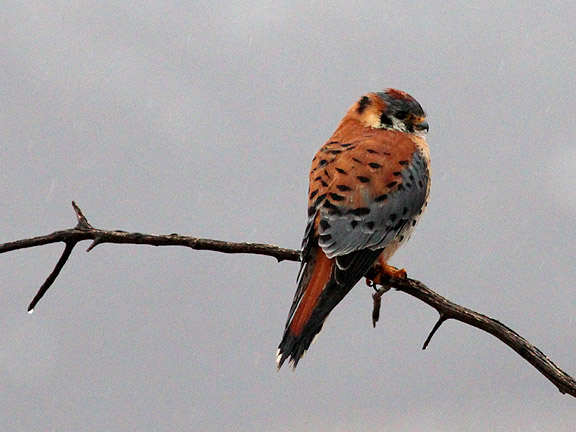
Generally the lists contain a lot of Rock Pigeons and European Starlings--a realistic look at what most urban birding looks like.  But the lists get sprinkled with Mourning and Eurasian Collared-Doves, Americn Robins, Western Scrub-Jays, Black-billed Magpie, American Kestrel, House Finches and Sparrows, California Gulls, etc.  Just for laughs I have submitted 61 Checklists for the Sandy Ciy Cemetery--comprising exactly 14 species! With this micro birding there are far more checklists than species generally.

American Kestrel

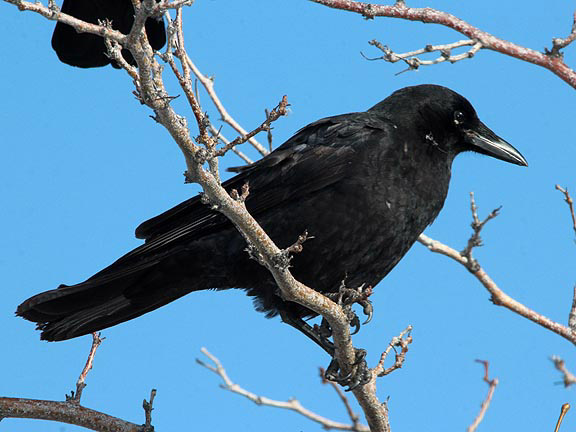
On a daily basis I try to enter lists when I stop at lights or keep an eye out for birds while driving.  I also usually stop at one or two locations on the way home for a just a couple minutes to listen to what's calling. It gives me the opportunity to fit in a little birding every day away from my home and office.  It has also made me really aware of specific birds that have set up territories along the route. I have 2 spots where I know American Kestrel are on territory; 1 Red-tailed Hawk that frequents a certain woodlot; and of course the specific locations where you almost always find American Crow in the city.

American Crow

So if you can't get away from home as much as you'd like, or you prefer birding locally, without a car, on foot, bike, or scooter I suggest creating your own patchwork of local birding locations and working on micro listing your area. Not only will you provide valuable data for citizen science, but you'll really get to know the birds around you.

If you'd like me to share any of my personal locations with you just let me know--I don't suspect a lot of folks go birding at many of these places, but if more than one were interested I would certainly love to add more data from more birders!

Labels: , , , ,

Making Your eBird Data More Valuable PART DEUX

posted by Tim Avery at
on Thursday, September 4, 2014 

Here is my reply to ALL the replies form yesterday post...


Wow, what a great batch of comments, first I must commend Shyloh, Mike, and Kenny for publicly sharing their views.

The 11 anonymous posters had a varied mix of feelings and thoughts, and some obviously didn't want to share their names despite such strong convictions.  I want to respond to every comment so bare with me while I go through them...


Anonymous 1:

This seems like pretty blatant trolling--you say you don't care, but the time you took to post this with your feelings shows otherwise.  You say, "I know what I saw", which is fine, but if your sightings seem questionable, and have little details, their addition to the public data poll is a bit careless.  Like I mentioned, I am okay with people using eBird to just track their personal sightings for themselves--its a great tool for that.  However, for anyone that feels this way, I highly recommend going into preferences and checking the "hide my data" checkboxes for eBird Alerts, and Top 100 under the data privacy section.  If your sightings are just for your personal use as you say they are, there is no need to have them included in these very "gamified" areas of eBird as one other commenter noted.  My last criticism of your response was not having the time to enter a bunch of lists.  You have time to go birding, you have time to enter at least one list, and you have time to comment on this blog.  So time is on your side I would argue, and the little amount of time it takes to break 1 list into 3 or 4 seems well worth it this day in age.


Anonymous 2:

Great comment.  As I mentioned to Anonymous 1 this is the logical thing to do for others, and for yourself for a multitude of reasons.

Anonymous 3:

I see the first comment got you riled.  I have to say I disagree with your first point--eBird has many uses, and personal lists are a valid reason to use the program--its unfair to tell someone to use a notebook because they don't give a shit about science when the software is available for free and their data can be invalidated from the pool.  As to your second point, I do tend to agree, but if someone doesn't use it to help with the scientific effort, their data is so minuscule in the bigger picture, that in 150 years it really won't matter.  Those "Rare" birds they report, probably were mis-identifications, so their exclusion from the data pool is probably for the better.  And as to your 3rd point--haha, spot on my friend.


Anonymous 4:

I think in general in our local area--Utah, or even just northern Utah, the majority of eBird users are aware of what sightings are legitimate, and which are questionable.  I would be lying if I said I didn't brush off a number of alert species based of the observer.  In our community there are a handful of eBirders who don't so their sightings justice by taking photos of rarities they reports, or providing any meaningful information on the sightings for both eBird and their peers.  Before eBird it was much the same with the "RBA" or just on the listserv's. In birding credibility is earned not through documentation.  If a supposed great birder never documents his/her sightings, but constantly reports rarities, it begs to question the legitimacy of the sightings.  IF other give chase and can't track down the reports, it also leaves you to wonder.  But a photo, and re-chaseable birds create reputations and credibility amongst the community.  I expect every level of birder from beginner to expert to provide the same level of documentation in eBird for the sighting to really resonate with me.  This is completely aside of the scientific aspect of eBird, but more on the who is full of shit front.


Anonymous 5:

As I mentioned before, this is an opinion, and someone who just uses it for themselves is not breaking rules or being selfish---eBird has many uses.  I do believe people who use the applications should contribute more, but by no means do they have to, and by no means are they "doing it wrong".  But they should take care to remove themselves from alerts and listing.


Anonymous 6:

This is true--however an X can denote a count that is too high for a decent estimate.  Many birders don't feel comfortable, or can't estimate high counts of birds.  It sounds crazy but I have done this exercise with people to see how they estimate, and counts are wildly off sometimes.  If it wasn't an easy to count exact count, it may be best to leave it as X--this data is still important and useful.  I always try to put a number in, and in 99.9999999% of my individual sightings there is a count, whether exact or an estimate.   It definitely adds value even with estimations though!


Mike:

Woot an name and a face!  You are nuts, a nutty nut job, blah blah blah.  Just kidding of course, I just figured a name made it easy to call you out!  In general it seems like you feel how I feel.  I'm okay with people using the program how they see fit--I love when there are more details, and it lends credibility, and its better for the data pool.

Kenny:

You really are crazy... Crazy in a good way.  I think a lot of people miss the communal aspect of eBird--whether or not you want to be part of that community, you are if you report rare birds, and take part in the Top 100.  These things are far less important that high value checklists, but they have become a big part of eBird.  You said it best though, "We should all strive to be a better part of the birding community since who can understand the highs and lows and adventures of birding best than other birders?"  Providing better data inherently makes you a better part of the community--and our growing community here is proof of that!


Shyloh:

Where do I even start with you man... You're the dude.  You make the point right off the bat, "THERE IS NOTHING WRONG WITH SELFISHLY USING EBIRD!!!"  And Like I said, I agree--use it as you see fit, its there for many different reasons, so to each their own.

At the end of the day it really doesn't matter--like I told you, they're just birds man.  But I like to think that striving for a strong community, with birders that respect one another includes some great self checking, as well as community checking--which helps build a great data pool.  If someone reports rarities often, or even not so often, but rarely produces chase-able birds, or documents their sightings it effects not only the data pool, but chasers and listers--the community.  Regardless of how people use eBird, if you report a rarity on a checklist, you should expect some level of scrutiny from others, that's just human nature, and a big part of birding--and quality documentation and information helps eliminate some of that.

I would never tell anyone "this is how you should use eBird", but I sure as hell think there are ways we can all make our checklists more valuable not only for the community but for ourselves!  And I think that is a lot of what others are getting at too--just a tad more forceful.


Anonymous #7:

Shyloh, wanted to tell you "LOL"...

Anonymous #8:

Holy moly.  I will just say this, well played sir.  You hit the nail on the head.

Anonymous #9:

This is a great point with all others aside--as volunteers, having to wade through the muck, it sucks.  Whether a user cares about listing, or conservation, or whatever, a sighting that lacks documentation makes their lives harder.  I have talked to several moderators who routinely throw out specific users sightings because they are so riddled with mistakes, and absolutely no documentation that it's better for the data pool to just remove them.  I can see eBird eventually coming up with a way to block certain users from the data pool based of reviewer recommendations because of just that.

AND NOW MY FINAL THOUGHTS...

Let's just be real about our sightings for a second--on a personal level.  In the end on either side (community/data pool versus selfishness), it comes down to do you care about being right, or thinking your right?

I personally would rather be able to look at my sighting, have documentation, and be able to say I am 100% sure of that--and so is everyone else that sees it, than have a sighting with no documentation that begs the question, is this reliable data.  Simply putting a tick mark on a checklist for a rare birds shows a lack of understanding why that bird is rare/flagged, and the importance of documentation for data quality, especially when its not just a checklist for keeping a life list, but one used for building a data set for a location.  In the end the reviewer can simply invalidate the sighting, but then it seems counter intuitive to the whole process.  I don't think its asking to much for even a crappy photo--almost everyone carries a digital camera with them, and rarely are birds so flighty that even a distant, blurry, out of focus, or partially hidden bird can't be photo'd.  It seems so simple, and useful to the whole idea of building the data pool.

One solution to this is creating user groups in eBird for different types of players in the "game".  For the selfish, I use it to keep my life list, there could be a user type where all data is separate from the community pool.  Then there could be scientific users, and typical users, so on and so forth.  You could even go to a pay model which is a whole other blog post...

No matter what reason you watch birds, if you are using eBird you have made yourself part of that community, and we're glad to have, and I hope we all can work to make the community stronger in the long run! At the end of the day every birder is different, and uses eBird for many different reasons--I just hope that everyone realizes that we can all strive to make things better!

Labels: , , , ,

Making Your eBird Data More Valuable

posted by Tim Avery at
on Wednesday, September 3, 2014 

I recently posted a response to a thread on UBIRD about historical checklists and incidental counts in eBird.  There were 3 main topics I talked about.

  1. Adding valuable sighting information to historical vagrants/rarities
  2. Splitting larger generic checklists into smaller location specific checklists
  3. Removing possibly bad data or in particular mis-identifications
The email didn't go in to a ton of detail on these topics, just my brief overview of why I felt it was important.  But I wanted to expand on that, and give a few real world examples of the issues, and what I've been doing to try and practice what I preach.  I've had a few interesting conversations about the subject, and gotten different perspectives and personal opinions on the matter.  It brought up a couple things that I thought were also worth talking about.

I talked to several people who mentioned their #1 reason for using eBird was to keep track of their sightings for themselves above all else.  The data after all was being provided free of charge by the birders/observers, and that in itself was valuable despite the quality of the data.  It would be a lie if I didn't say that was also WHY I initially started using eBird back in 2004. It was an easy way to track my own sightings, I was after all filling up several notebooks a year with lists and this was an easier way to keep those lists, and manage them.  For this reason I was quite cavalier with my locations.  I often did counts for entire days for a county, or along 100 mile section of road.  My lists were less for science than my personal needs.

There are in fact a lot of eBird users who ONLY use eBird for this very reason, and that's perfectly acceptable--it's a great tool for that--but it's also so much more.

Now I also talked to one person who mentioned that sometimes they just put in a list for a whole weekend because they wanted to keep track of the birds they'd seen, but they'd visited 10 places, seen 150 birds, and didn't want to take the time to go enter individual checklists for every place they went.  That's another one I could relate to--I've done exactly the same.  Creating and submitting checklists can be time consuming, and for some they just don't have the time to get granular. Some data is better than no data after all.

Cape May Warbler from Lytle Ranch... Less than 5 ever reported in Utah.

And yet one other person who kept very detailed lists of species seen never added details, photos, or any information to their lists.  In their opinion they were already providing high quality data, and felt that the need to add more details was benign.  In the long run there will be so much data that these details won't matter--the pictures, notes, etc. And again, I have done the same, I get it, and in some cases I whole-heartedly agree.  I have heard the argument that in 150 years someone might be looking back at some data and see a report of a Cape May Warbler in Utah with no associated data.  The report was validated but without any supporting data because I was experienced with that species.  But how would those people know who I am?  Honestly, I hope I leave some type of impact on birding in Utah in my life time, whether small or big--I would hope with a little digging someone can figure out who I was--especially in this digital age.  But I digress, I also see the flip side, and that's where this whole blog post got started.  Let's talk about those bullet points.

Adding valuable sighting information to historical vagrants/rarities.

Over the years I have slowly become more and more methodical with my checklists.  This means being more granular with locations, and more detailed with subspecies, and adding specific details about flagged sightings.  This is a personal choice, to try and make my checklists not only more valuable to researches, and those using the data for scientific purposes; but also, for other birders to be able to glean them for data, and for me personally to be able to look back and see details about a sighting all in one place.  As of the writing of this I have submitted 3226 eBird checklists for Utah.  As that number grows it becomes harder and harder to look at specific checklists with flagged sightings and remember all the details. So thus started the drawn out process of going back and adding those details.

Utah's 1st documented Bay-breasted Warbler

I started with my taxonomic life list for Utah and started working my way down.  I specifically wanted to concentrate on adding details to species with less than 25 reports ever for Utah--with more details being added to the rarest species--those typically with less than 5 reports ever.

Utah's 1st Yellow-bellied Flycatcher 

In cases where I had photos, videos, or recordings I embedded those in.  Photos linked to my website, videos from Youtube, and recordings from Xeno-canto if available.  If I felt the photos were sufficient for the report I often kept the notes short.  On some species I added a small blurb, and on others complete paragraphs of texts that I cut out of emails I pulled from the original reports, or from Records Committee Reports from some of my oldest sightings.  I didn't remember all the details from many of these reports so going back and searching in UBIRD, and other listserv archives for my original posts was really helpful.  It also saved me from writing in details that might not be as accurate otherwise.

Utah's 1st Pine Warbler

I soon realized I had hundreds of such checklists, so it was somewhat tedious--but the end results were lots of photos added into the data pool, and some detailed (and not so detailed) write-ups of species that otherwise were originally note-less.   In all so far I've added details for 36 species, on 52 checklists.  Some of the more notable were details for eBird Utah's first Western Gull, Pine Warbler, Eastern Meadowlark, Sharp-tailed Sandpiper, Cape May Warbler, Yellow-bellied Flycatcher, Gilded Flicker, Bay-breasted Warbler, Black-billed Cuckoo, and Little Gull..  Despite the time that went into it, it was fairly easy to do, and well worth it.

Splitting larger generic checklists into smaller location specific checklists

I recently flipped through a field notebook from one of my summers working in Wyoming during college.  I had 1 or 2 checklists for most days.  One list was the survey I ran that morning, and the other was the rest of the birding that day.  In some cases I drove over 100 miles on these days and went through every typical habitat type found in western Wyoming.  In eBird these lists would look ridiculous--but none-the-less I have a few.  Luckily most of my college years checklists from Wyoming are not in eBird yet. But I have dozens form the early years of eBird that I did enter like this.  Some are an entire day count for 16 hours at a lake in the Uinta's.  The checklist covers shrubsteppe, aspen, conifer, and mountain reservoir habitats though.  I probably traveled 10 miles during the day and the list could be broken down more.  These are hard though, because some of the birds cross habitats, and I don't remember what was in which necessarily.  For these it's really best to just leave as is--its 1 checklist out of 1,000's, in the bigger picture that data is "close enough" that it won't look too out of place--and if it is the reviewer can invalidate the list.

Blue Grosbeak from 12,000' in the Uintas??? I think not.

But what about a 40 mile drive from Vernal to Hacking Lake in the Uinta's?  It looks odd when a checklist has both Blue Grosbeak and Pine Grosbeak together.  Or Red Crossbill and Lesser Goldfinch.  Or Dark-eyed Junco and Marsh Wren (in August).  During the early years I did this often--one checklist for the entire length of a road.  The best recommendation is going through and removing the species that don't fit the greater picture, and breaking them out into a separate list at a better location for them.  Or break it down in to as many lists as you feel comfortable doing.  In this case I broke 1 list into 5.  Vernal, the lower section of Sagebrush, Aspen Forests, Conifer Forests, and finally Hacking Lake.  It's still not perfect, but it fixes one bad list.

Pine Grosbeak should never be on the same list as Blue Grosbeak in Utah...

One of the most common offenders of this is the "Antelope Island State Park" checklist submission.  There are numerous hot spot points for the park, but many folks do one list for 5 or 6 visited spots.  This means you have Snowy Plovers and Godwits on the island.   Others mistake the causeway spot for the whole park and then you end up with Warblers, Tanagers, and Orioles on the causeway.  I tend to do a list for the causeway and each major location I go to on the island.  Sometimes I leave with 7 checklists--but its super granular and useful.  This is one thing I have made a better effort at in recent years and try to be as specific as makes sense for the places I'm going.  With apps like BirdLog it now makes it easier to avoid this, allowing you to quickly create a new list on the fly while in the field as you go from habitat to habitat, or location to location.

Removing possibly bad data or in particular mis-identifications

This is one of the hardest for most people to do--myself included.  Going back and looking at lists and saying, that's not right, or I'm just not sure anymore, can be difficult for most birders.  I went back and removed a number of my old Short-billed Dowitcher reports and changed them to Dowitcher sp.  I did leave ones that had photo evidence, but ones without were mostly changed.  I went back and took Least Bittern off an Ouray list I had form my younger years.  At the time others were reporting them, and I thought I saw one.  But looking back and having seen that species since it was a no brainer to remove it.  In some cases if it doesn't seem right, its safer to just change it outright.  Leave a note, change it to a spuh, with details about why you changed it.  But if you aren't sure this is a good way to clean up old lists.

Dowitcher sp? Or one of each?

There are some that I probably should change, but I can't bring myself to do it.  Sometimes you believe so much in a sighting you had, despite lack of evidence, experience, etc, you just stick with it.  You very likely are correct with your belief, and in many cases the data has already been invalidated in eBird, so for your personal use what does it matter?  It's all about finding the right balance for how you use eBird.

Whether your a hard-core eBirder, a casual user, or just someone who keeps basic lists via the awesome resource, there are things we can all do to make our lists more useful--for everyone.  And I'm sure there will be more ways in the future, and things will change, and improve.  eBird has come along way in the last 10 years, and so has the quality and amount of data.

How do you personally make your checklists more useful?  Share below, and help others improve the data they're submitting!

Labels: , , , ,

10 Species of Birds You Didn’t Know Existed

posted by Tim Avery at
on Monday, March 3, 2014 

Or perhaps 10 species of birds I didn't know existed...

On this tiny planet spinning around in our enormous galaxy there are around 10,000 species of birds.  Most readers of this blog are familiar with the 400-500 species of birds in Utah, and perhaps the 700 or so found in the western United States.  Many probably have a pretty good understanding of the 900 or so birds of the United States as well.  From there most American birders head south to Central then South America for the expanding of their ornithological knowledge.  Let's face it, most of us have a pretty narrow view of the birds of the world.  It's only been the last 4 years that my personal views of world birding have opened up.  It's enlightening.

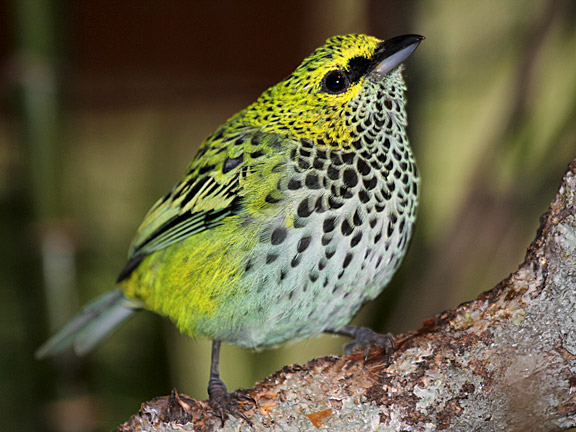
Prior to 2011 I didn't know the Speckled Tanager existed--now its my favorite new world species.

Before 2011 I had never been birding outside of the lower 48 states.  In 17 years of birding I had just over 550 species on my life list--in the last 3 I've seen well over 1,000 species, adding almost 900 new birds to my life list.  The worlds a pretty big place despite our insignificance in the big picture, and when you go birding outside of North America new birds come quickly--and some of them will change your view of birds forever.

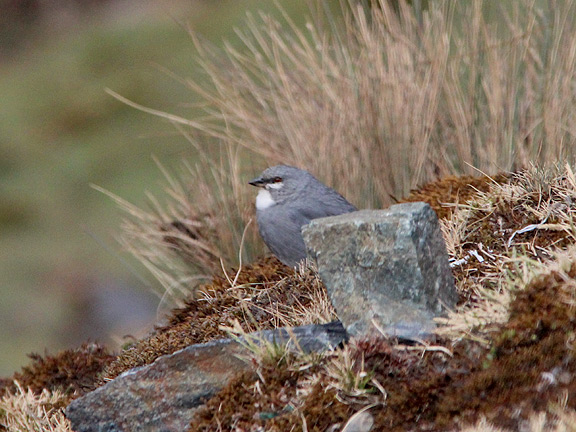
What exactly is a White-winged Diuca-Finch? Pictured above you'll only find this bird high in the Andes.

The first time you hear about or read about a bird you never knew existed you might think, okay that's pretty cool, and then move one.  If you are reading about it because you might be going to an area where you might see it, then things get serious.  In my case I often think about those birds and how amazing of an experience it will be to finally see one--maybe.  Then comes the day when you are out there in the field and you actually lay eyes on it.  In my case I get filled with joy, and for a second think about nothing else in the world but that bird. It's a rush.

When I learned about the Crested Barbet, I had a new favorite bird in the world.

Whether or not you actually have heard of any of the birds I'm about to talk about, I think you'll appreciate this list.  Most of these species were only named or discovered in the past 20 years--some are very rare--some are split form other species--some are in remote locations--but all 10 are birds that before I wrote this, I didn't know existed.

• • •

#10 - Rubeho Akalat,  Sheppardia aurantiithorax
illustration by Tomasz Cofta

The Rubeho Akalat is an endangered member of the Old World flycatcher family from the Tanzania.First discovered in 1989 it was  assumed to be an isolated population of Iringa Akalat, but further research in 2000 led to the bird being described as a new species. It's English name relates to where it is found, Rubeho, Morogoro; the scientific name to the ochre color on its throat and breast.

Described officially to science in 2004

• • •

#9 - Antioquia Brush-finch, Atlapetes blancae
illustration from Wildlife Extra

The Antioquia Brush Finch is a poorly known and critically endangered species first described in 2007 from three museum specimens from Antioquia, Colombia, that had been mislabeled as other species.  All three museum skins were collected in the 1900's, but only one label had a date from 1971. Since 2007 fieldwork  in Antioquia has failed to find this species again, and it is now believed to be extinct.

Described officially to science in 2007

• • •

#8 - Sierra Madre Ground Warbler, Robsonius thompsoni

The Sierra Madre Ground Warbler was discovered on Luzon Island in the Philippines where it inhabits dense forest understory. A ground-walking songbird, they have strong legs and weak wings and it appears that they can barely fly. Their song is extremely high in pitch and it's almost impossible to locate the source of the sound in the forest--often sounding far away even when they are almost at your feet.

Described officially to science in 2013

• • •

#7 - Gray-crested Cacholote, Pseudoseisura unirufa
photo by Robert Lewis

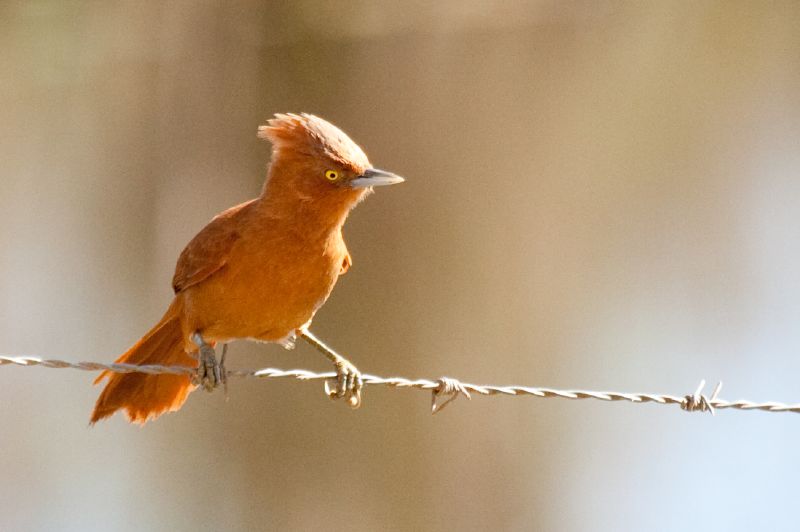
The Grey-crested Cacholote is a species of bird in the Furnariidae family. It is sometimes called the Rufous Cacholote, which is confusing, as this name was used for the parent species before the Gray-chested was split. It is mainly found in semi-open habitats in the Pantanal-region in Brazil, Paraguay and Bolivia.

Described officially to science in 2000

• • •

#6 - Nonggang Babbler, Stachyris nonggangensis
photo by GrrlScientist

The Nonggang Babbler was discovered in Nonggang Natural Reserve in the Guangxi, China, the only location it is known to exist at this time, in February 2005. A specimen was taken the following year, and it was formally described as a species in 2008. It prefers running to flying, and seems to spend most of its time on the ground foraging for insects between rocks and under fallen leaves.

Described officially to science in 2008

• • •

#5 - Solomons Frogmouth, Rigidipenna inexpectata
photo by Brian R. Field

The Solomons Frogmouth, a.k.a. the Cinnamon Frogmouth or Solomon Islands Frogmouth, the only known member of the genus Rigidipenna, was first described in 1901, but not recognized as its own species until 2007. It is endemic to the islands of Isabel, Bougainville and Guadalcanal in the Solomon Islands. Despite their being other frogmouth species, Solomons, differs with only 8 tail feathers instead of the typical 10 or 12; it has coarser feathers, barred primary and tail feathers, as well as white spots and large speckles.

Described officially to science in 2007


• • •

#4 - Chestnut-eared Laughingthrush, Garrulax konkakinhensis
photo by Hanno

The Chestnut-eared Laughingthrush is a species of bird in the Leiothrichidae family found in tropical moist montane forests of Vietnam and perhaps Laos.  It is threatened due to habitat loss.

Described officially to science in 2001

• • •

#3 - Cambodian Tailorbird, Orthotomus chaktomuk

The Cambodian Tailorbird was discovered in Phnom Penh, the capital of Cambodia in 2009 during bird-flu checks. In 2013 it was formally described as a new species--it is endemic to Cambodia, and likely confined to a dense shrub forest in the Mekong River floodplain. This very small bird is just under 4" in length, and sports an orange-red crest.

Described officially to science in 2013

• • •

#2 - Sira Barbet, Capito fitzpatricki

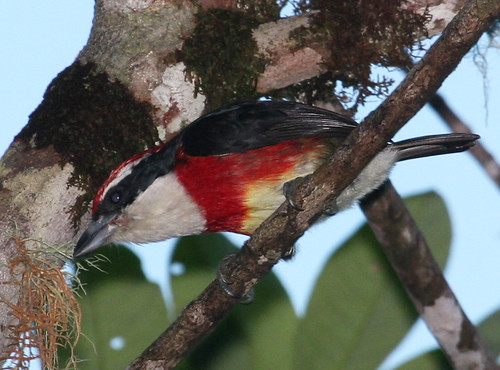
The Sira Barbet is found in the eastern Andes in the Ucayali Department, Peru, and was discovered in 2008. It is genetically isolated due to the geography of its home range along a ridge of montane cloud forest in the Cerros del Sira. DNA sequencing was also used to confirm the Sira Barbet's status as a distinct species
Its scientific name comes from John W. Fitzpatrick, director of the Cornell Lab of Ornithology.

Described officially to science in 2012

• • •

#1 - Bald Parrot, Pyrilia aurantiocephala
photo by Arthur Grosset

The monotypic Bald Parrot or Orange-headed Parrot is a species of parrot in the family Psittacidae, endemic to the east-central Amazon of Brazil.  It is found in tropical moist lowland forests and is considered near threatened due to the widespread deforestation of the Amazon. When discovered, it was initially believed to be a juvenile of the Vulturine Parrot due to the orange color of its bald head as opposed to the black of the Vulturine. However, the individuals discovered were sexually mature, and therefore were described as a new species. In reality, juveniles of both species have feathered, greenish heads quite unlike those of the adults.

Described officially to science in 2002

Are there any species of birds you recently learned about that you never knew existed?  Share your findings in the comments section below!


----------
All species information extracted from Wikipedia.com

Labels: , , ,

5 Places You Should Go Birding In Utah This Year

posted by Tim Avery at
on Friday, February 28, 2014 

Chances are this weekend you are going to hop in your car and go birding--if you are of course a birder.  And if you live here in Utah you’re likely going to head out to one of the familiar places you go birding week in and week out.  Along the Wasatch front it’s probably the Causeway, or Farmington Bay--maybe Bear River, Lee Kay, or even Willard Bay.  In Utah County it could be Utah Lake State Park, River and Swede Lane, or anywhere around the south end of Utah Lake.  In St. George it could be Tonaquint Park, Springs Pond, Sand Hollow, or if you’re up for a little drive--Lytle Ranch.

This is how most days of birding go for us--the usual places to look for the usual suspects.  It also lends to the the Patagonia Effect happening--if more and more people go to said spots, the likelihood of a rarity being found increase.  It’s a science ;)

But I have a challenge for you in 2014, don’t just spend a great deal of time at the regular hotspots--this spring, summer, and fall take some time to explore some of Utah’s less popular, more out of the way, and what I would call most amazing birding locales.  Some you may have never heard of, others are just a bit out of your normal range--but they all are 5 places you should go birding in Utah this year.

• • •

Lucin
41.3482° N, -113.9050° W

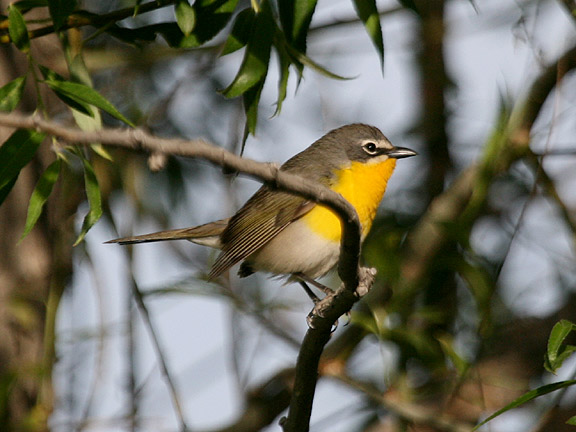
Great Photo ops for birds like Yellow-breasted Chat 

Lucin is and abandoned railroad watering station, located about 40 miles north of East Wendover, Utah, just inside the Utah/Nevada line.  A large spring surrounded by tall cottonwoods, willows, and other trees and shrubs provides a great migrant trap in the middle of the barren desert.  Lucin has a number of remarkable bird sightings, notably eastern vagrant warblers, thrushes, other songbirds.  As a migrant trap, it means birding at Lucin can be hit or miss--and if you go a couple times in a year you are likely to have hits and misses.  The misses can be painful--a half dozen birds--not species, in a few hours scouring every inch of habitat.  But the hits can be unbelievable.  Birds dripping from trees--constant movement, and colors, grabbing your attention and making you want to keep walking around the small pond in hopes of picking out something that’s been hiding amongst the throngs of birds.  The best times to go are from Mid May through early June and again from early September into October.

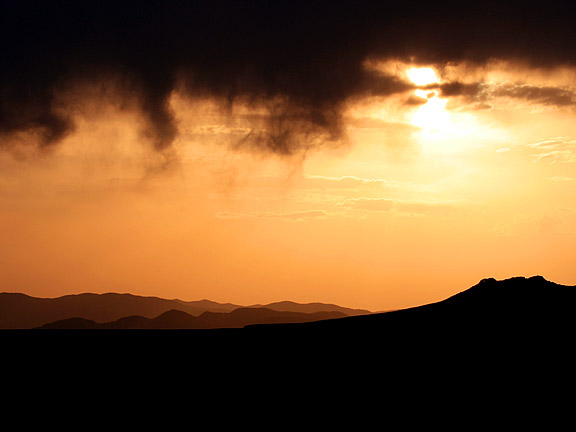
Sunset over the west desert from Lucin

You can camp just about anywhere in the desert out here, or stay in Wendover and make the 40 mile drive north on the days you go.  I like to spend a couple days hitting other migrant traps in the desert and giving yourself a chance at some turnover each day.  Lucin can be reached from the north via highway 30, or as mentioned earlier from Wendover to the south.  It takes about 3.5 hours to get there from Salt Lake.  At night the road from Wendover can turn up good number of Common Poorwills, Burrowing Owls, and Short-eared Owls.  During the day look for warblers, wrens, thrushes, sparrows, orioles, tanagers, and almost anything that migrates.  Lucin has the potential to turn up something really rare!

• • •

Dolores River/Rio Mesa Center
38.8119° N, -109.3023° W

Great Camping along the river

This place falls in the you’ve probably never heard of it column.  The Dolores River flows into the Colorado about 35 miles upstream from Moab.  By Utah standards it’s a pretty big river, and during the runoff it can be a real beast.  If you take the road to the south off Route 126 that follows the Colorado, you start off along the Delores and then drive off into the hills, only to drop back into the river bottoms, lines with thick willow patches, and plenty of Fremont Cottonwoods to attract a variety of birds.  This river is a natural migrant route, and provides lots of food, and obviously water for migrating songbirds.

Blue Grosbeak along the rive rand super cooperative

Slightly further up River is the Rio Mesa Center which conducts bird banding and in recent years have banded a number of mega-rarities for Utah here.  Spring and fall are both fantastic here--from late April to early June and mid-august to October you could turn up just about anything here.  Yellow-billed Cuckoo, Eastern Wood-Pewee, Pacific-slope Flycatcher, and Yellow-bellied Sapsucker have all been reported from along the river here.  There are plenty of places to camp, which can mean lots of people on busy weekends.  It can also be a ghost town great for birding!

• • •

Capitol Reef National Park
38.2000° N, -111.1667° W

"Southwest" Willow Flycatcher along the Fremont River in 2007

I had mixed feelings about including Capitol Reef, but the fact is few northern Utah Birders ever venture to this lesser known park in south central Utah.  Admission is free, unlike other national parks, and the Fremont River trail, along with the Fruita Orchards provide excellent migrant trap birding.  The picnic area near the park headquarters is a great place to start birding here, with huge Cottonwoods and ample habitat for songbirds.  From May into early June and August through October this migrant hotspot could turn up just about anything as well.

Philadelphia Vireo found here in 2007 was a state 2nd for Utah

Pick a patch of trees anywhere in the park and you will find birds.  Chats, Catbirds, Flycatchers, Buntings, Orioles, and Warblers are all abound.  Rarities here are expected--including some big ones like Black-billed Cuckoo, Philadelphia Vireo, Orchard Oriole, and an impressive list of eastern warblers.  You can camp at the campground here, making it easy to access all the birding sites over a number of days!

• • •

Leidy Peak
40.7680° N, -109.8330° W


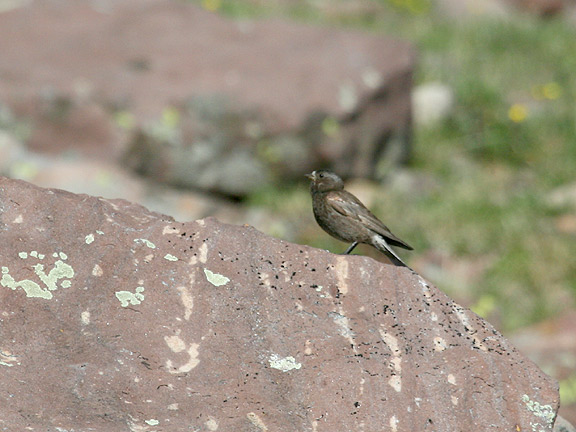
You’ve probably heard of this one, you may have even been. It’s one of the most reliable locations for White-tailed Ptarmigan in Utah--it also happens to be an epic birding location, not to be overlooked for the wide variety of species that can be seen in the vicinity.  Aside from the talus slopes where ptarmigan, American Pipits, and Black Rosy-Finches forage, the forests below leading all the way back to Vernal provide habitat for nearly 100 species of birds.  The high elevation conifer boasts Northern Goshawks, Three-toed Woodpeckers, crossbills, finches, sparrows, warblers, Gray Jay, and Pine Grosbeaks.  Through each habitat zone leading down to Vernal you can find more and more--in the mid-elevation conifer, mixed conifer and aspen, aspen, and finally shrubsteppe.

Black Rosy-Finch are fairly common here

A couple days here can provide you with some excellent birding, and camping away from crowds of people.  Hacking Lake is a good spot to camp, is is just about anywhere off the road.  It gets chilly here at night and the weather can be unpredictable.  Snow in mid August, temperatures routinely in the low 30’s at night in the summer--lightning storms that are mighty impressive--and rain and wind for hours sometimes.  But it makes for an adventure!  About an hours drive north from Vernal into the Uinta’s the peak stand just over 12,000’--the birding is best in late summer into the fall--until snow sets in and that’s it for the year!

• • •

Powell Lake (not Lake Powell)
40.3828° N, -111.9029° W


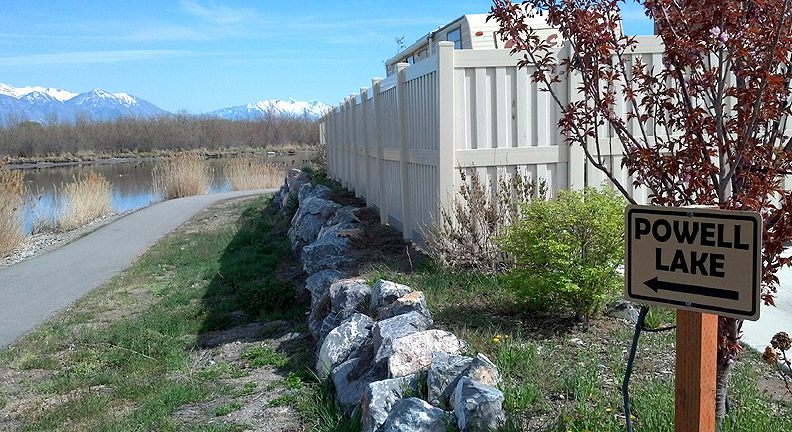
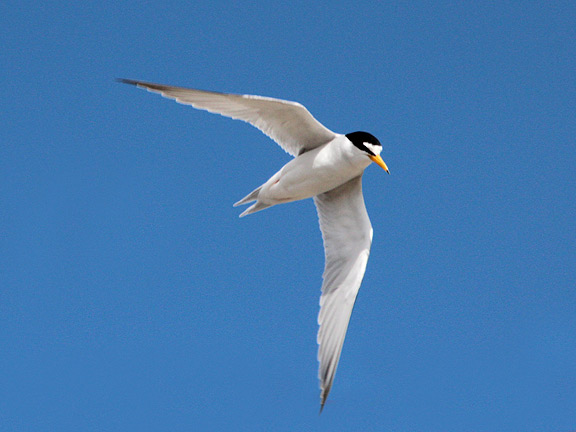
During the spring of 2013 a little known “lake” in northern Utah County proved to be one of the hottest birding locations of the year.  In the middle of a subdivision in Lehi, Powell Lake, is actually a pair of ponds split by a road.  The location along the Jordan River makes it a natural migration route and last year the birds seemed to pour in here.  24 species of shorebirds in 5 weeks, Glossy Ibis, a overly cooperative Least Tern, gulls, ducks, waders--you name it waterbird wise and it was probably found here in 2013.  It isn’t known if this is the way things have always been here, or if 2013 was a fluke--but I know that in 2014 this will again be part of my regular spring birding stops, fro the chances that something good might turn up.

Vagrant Least Tern at Powell Lak ein 2013

The photo ops are also amazing here--great light early and late in the day, and paths along much of the lakes shore.  If you didn’t check it out in 2013, I would suggest stopping by between April and mid-May to see what’s using the waterway--my hopes are lots of birds, and lots of birders!

If you're not quite sure where these places are check out this link to see them on the map.

Labels: , , , ,


UTAH BIRDERS FLICKR POOL


    SEE MORE AND SHARE ON FLICKR