Labels: morgan county, mountains, Owls, summer, video
Utah Birds, Utah Birding, and Utah Birders. Promoting the sharing of information, and the conservation of habitat for birds in Utah and elsewhere. We are a group of people who want to share what we know, and create a positive birding experience in Utah.
BIRDERS BLOG
a blog by and for Utah Birders
Flammulated Owl Video
posted by Tim Avery at
12:09 PM
on Friday, July 17, 2015
There aren't a lot of videos of Flammulated Owls out there, and despite having seen 100's and photographed dozens, I have never tried to shoot video... until this week. I shot several short videos, the first of which I am posting here. The bird in question was less than 20' away and super cooperative. Check it out below:
Posts from My Other Blog
posted by Tim Avery at
11:04 AM
on Monday, June 23, 2014

I've been posting a little bit more to my personal blog at mwbirdco.com lately, but wanted to share a few of those posts here. I will be trying to cross post as much as I can as well...
Hummingbirding and Mammaling in Utah
Last night I guided a gentleman from Florida along with his son to look for Flammulated Owls outside Salt Lake City. As with all of our other trips this summer, we had great success with the owls, seeing 3 individuals and hearing 6 others for a total 9 FLAMMY'S on the night...
Virginia's Warbler Recording
I recorded this one today while out scouting locations for a few specialty species--VIRGINIA'S WARBLER included. This species is typically found in Gambel's Oak Woodland in Utah, or mixed Pinyon Juniper and Oak Woodland. This bird was singing for 5 minutes a few feet from the road, without the use of playback. Heard far more often than seen, learning the songs of birds like this make them far easier to locate...
This is what a Flammulated Owl sounds like...
Last Night we guided 2 locals, as well as 2 folks from California with Jeff Bilsky to just outside Salt Lake City to look for FLAMMULATED OWLS. Starting before light as usual we birded through riparian, oak woodland, Aspen and mixed conifer woodland before heading into the woods at dark to see if we could turn up a Flammy...
Labels: guiding, mountains, mwbirdco, Owls, recording, summer, video
Flammulated Owling Trip Report
posted by Tim Avery at
8:29 AM
on Thursday, June 12, 2014
Last night, 13 Utah Birders headed into the hills outside Salt Lake City to look for Flammulated Owls. What has become an annual trip was nothing short of great this year. With a 98% full moon and wonderful summer weather we started the evening off at Mountain Dell Reservoir and Parley's Creek, picking up the common montane species expected in the area with great looks a GREEN-TAILED TOWHEE and LAZULI BUNTING. A COOPER'S HAWK being mobbed by a flock of cowbirds, blackbirds, and alone Western Kingbird was a good show, while a BREWER'S BLACKBIRD dive-bombed a fly-over TURKEY VULTURE as well.
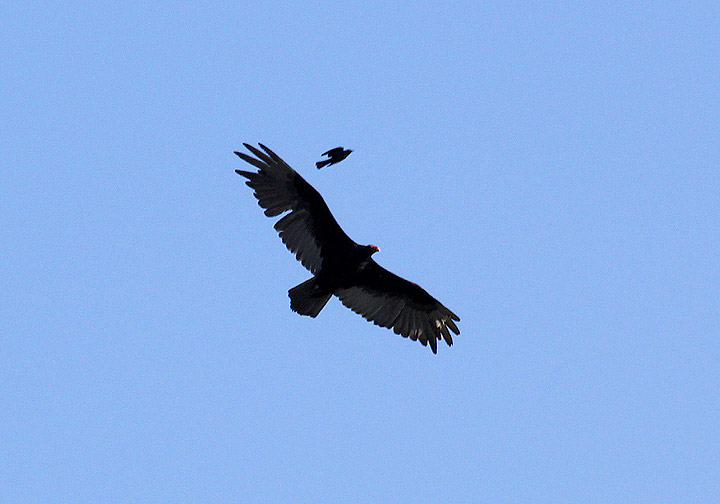
On the actual reservoir a pair of AMERICAN WIGEON accompanied the throngs of Canada Geese and Mallards. Nearby an active RED-TAILED HAWK nest held several young birds, while an OSPREY stood watch from its nest platform. The warm air made things a little slow but we picked up the expected birds for the area.
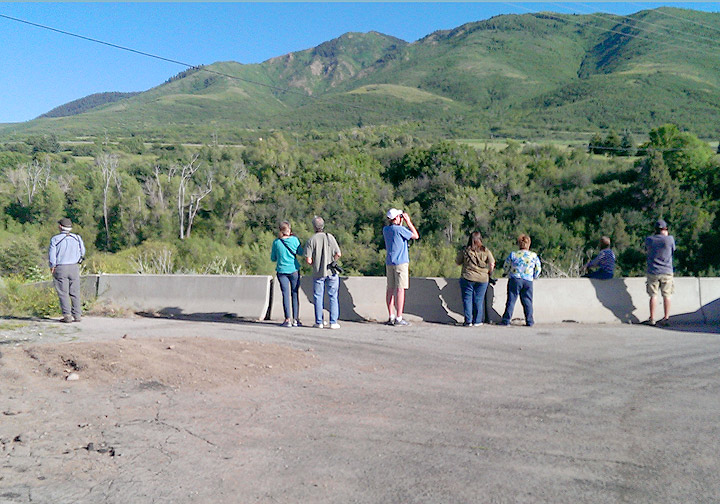
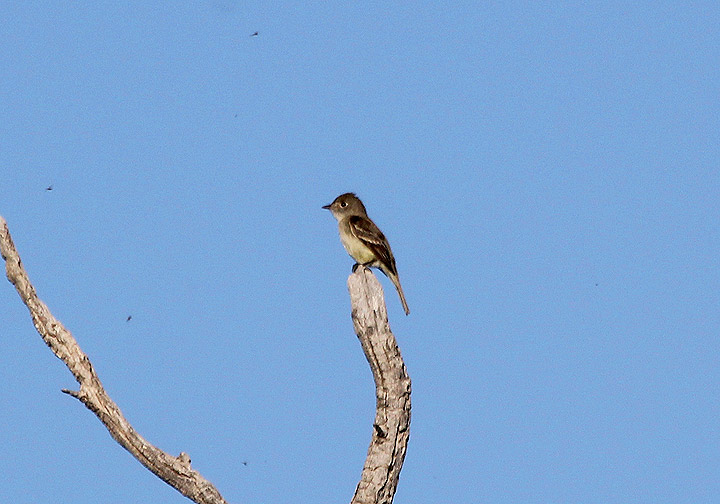
A quick stop at Little Dell Reservoir turned up the out of range LEAST FLYCATCHER that appears to be on a territory. Poor thing won't find a mate this year!
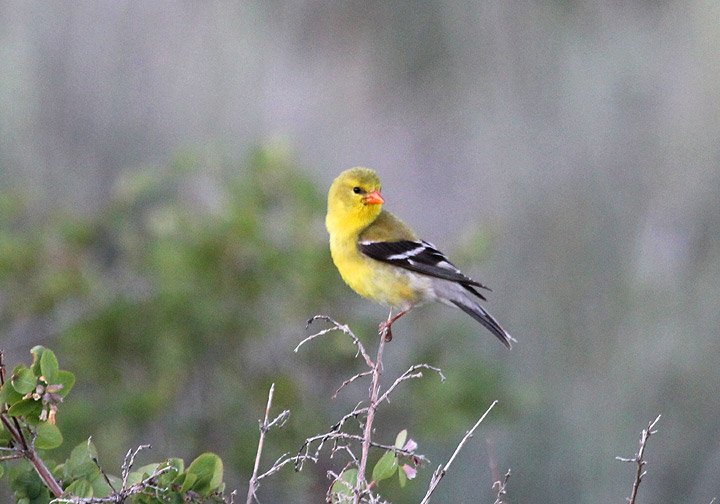
Flocks of LESSER GOLDFINCH, HOUSE FINCHES, and several BULLOCK'S ORIOLES brightened up the sagebrush hillsides with there bright colors creating some stunning photo opportunities.
As it started to get a little darker we headed to Big Mountain Pass where things were considerably less birdy than usual. We did get both HERMIT and SWAINSON'S THRUSHES at the pass as well as a WESTERN TANAGER, DUSKY FLYCATCHER, HOUSE WREN, and the expected VIOLET-GREEN SWALLOWS. But there wasn't a lot of activity in the usually bustling forest.

Not wasting time we headed to Jeremy Ranch Road. A WESTERN WOOD-PEWEE greeted us at the parking area and we quickly located one of targets in a local nesting AMERICAN DIPPER. Along the creek we had several singing FOX SPARROWS as well as a BULLOCK'S ORIOLE, and a singing YELLOW-BREASTED CHAT keeping hidden in the willows.
As it got dark 4 COMMON NIGHTHAWKS appeared over the road providing great looks for the entire group.
We headed back up the canyon picking up a GREAT HORNED OWL perched alongside the road. When we reached our owling stop we headed into the forest. Almost simultaneously we had a drumming RUFFED GROUSE, a distant calling COMMON POORWILL and a nearby FLAMMULATED OWL. Concentrating on the owl we called the bird in and the whole group got great looks at the little bird. Several others sang from nearby and after a little work we had one individual perch in the open singing without us using playback for a good 15 minutes.
As we were set to leave Jeff heard the drumming of the grouse again and in an attempt to find the bird I stumbled across it squatting on a log about 10' from where we were looking. It quickly scampered into the underbrush and out of view unfortunately. We headed back to the cars and went up canon to our next stop where several more Flammulated Owls were singing. While we tried to bring one in, a NORTHERN SAW-WHET OWL burst into song back down the road from us. There was some confusion as others in the group were off to the west and had apparently played a Pygmy-Owl tape around the same time. However after asking what call they played and how many times, it was apparent that they had not played an alarm call and we had indeed heard a Saw-whet in a different direction.
We tried hard to get another look at a Flammy, but only had a flyover while trying to find a bird hidden in the big pines. We made one last stop at Big Mountain Pass which was quiet. The group departed while a couple of us stayed behind. It wasn't even 5 minutes and a COMMON POORWILL started singing like crazy in the canyon below. Timing is everything! We headed into the forest and after a couple minutes had multiple singing FLAMMULATED OWL. With a little work we had a great photo opportunity with one of the birds, before we called it a night!
We tallied 62 species for the evening, but more importantly had great luck with tiny owls on a wonderfully lit almost full moon night with a great group of Utah Birders!
Brewer's Blackbird mobbing a Turkey Vulture
On the actual reservoir a pair of AMERICAN WIGEON accompanied the throngs of Canada Geese and Mallards. Nearby an active RED-TAILED HAWK nest held several young birds, while an OSPREY stood watch from its nest platform. The warm air made things a little slow but we picked up the expected birds for the area.
Utah Birders at Parley's Creek
A quick stop at Little Dell Reservoir turned up the out of range LEAST FLYCATCHER that appears to be on a territory. Poor thing won't find a mate this year!
Least Flycatcher on a perch at Litte Dell
Flocks of LESSER GOLDFINCH, HOUSE FINCHES, and several BULLOCK'S ORIOLES brightened up the sagebrush hillsides with there bright colors creating some stunning photo opportunities.
American Goldfinch at Little Dell
Utah Birders at Jeremy Ranch Road
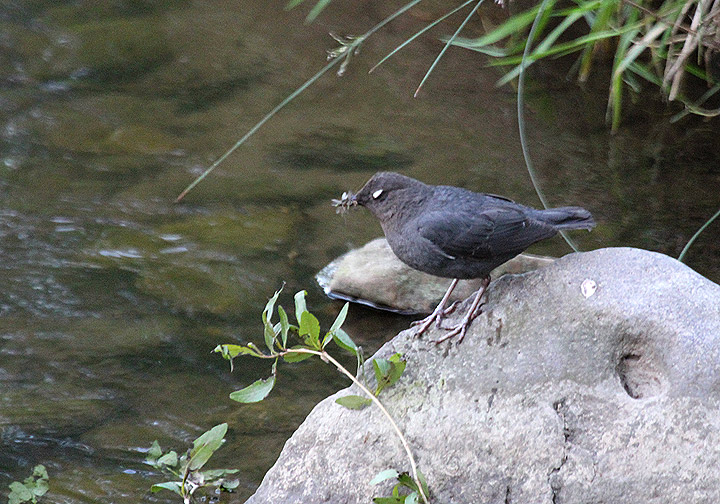
Not wasting time we headed to Jeremy Ranch Road. A WESTERN WOOD-PEWEE greeted us at the parking area and we quickly located one of targets in a local nesting AMERICAN DIPPER. Along the creek we had several singing FOX SPARROWS as well as a BULLOCK'S ORIOLE, and a singing YELLOW-BREASTED CHAT keeping hidden in the willows.
American Dipper bringing food to the nest
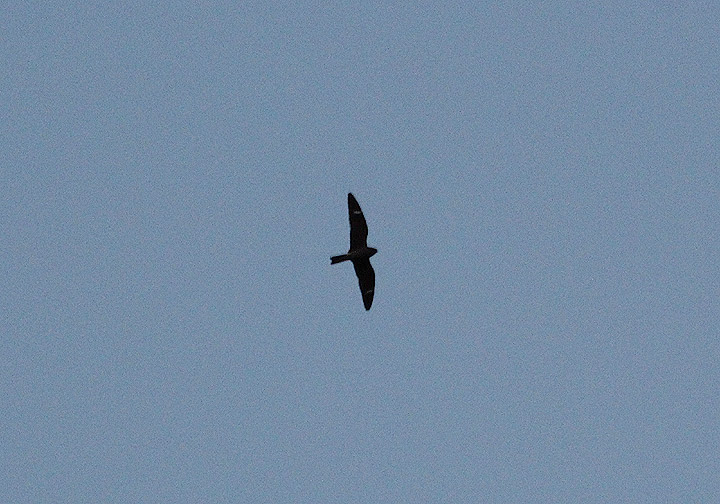
As it got dark 4 COMMON NIGHTHAWKS appeared over the road providing great looks for the entire group.
Common Nighthawk on Jeremy Ranch Road
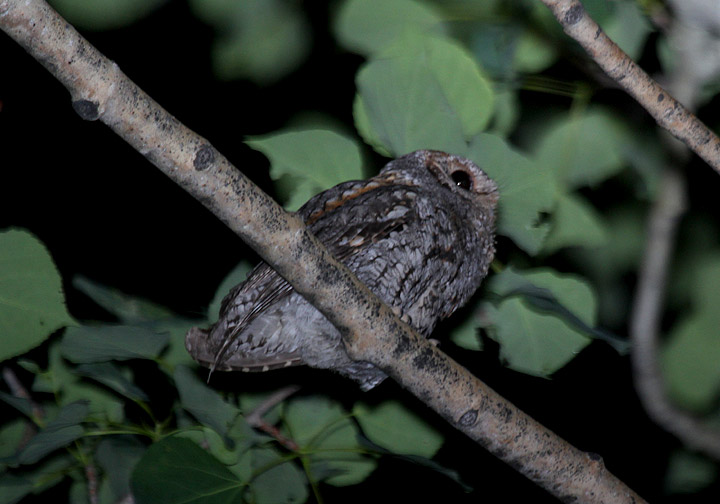
We headed back up the canyon picking up a GREAT HORNED OWL perched alongside the road. When we reached our owling stop we headed into the forest. Almost simultaneously we had a drumming RUFFED GROUSE, a distant calling COMMON POORWILL and a nearby FLAMMULATED OWL. Concentrating on the owl we called the bird in and the whole group got great looks at the little bird. Several others sang from nearby and after a little work we had one individual perch in the open singing without us using playback for a good 15 minutes.
Flammulated Owl in East Canyon
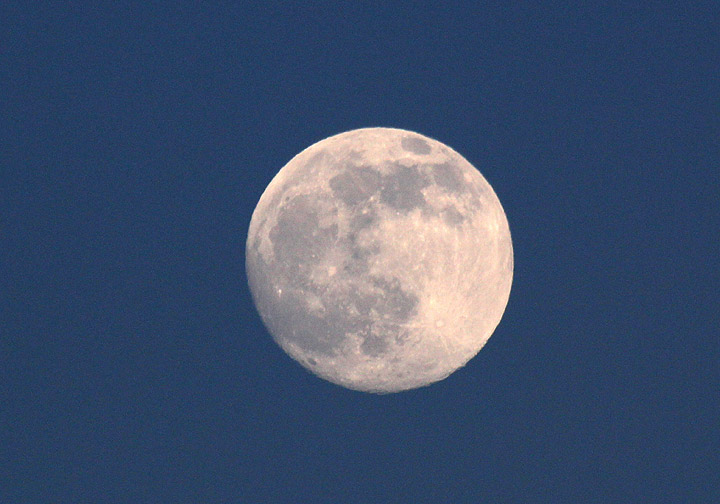
As we were set to leave Jeff heard the drumming of the grouse again and in an attempt to find the bird I stumbled across it squatting on a log about 10' from where we were looking. It quickly scampered into the underbrush and out of view unfortunately. We headed back to the cars and went up canon to our next stop where several more Flammulated Owls were singing. While we tried to bring one in, a NORTHERN SAW-WHET OWL burst into song back down the road from us. There was some confusion as others in the group were off to the west and had apparently played a Pygmy-Owl tape around the same time. However after asking what call they played and how many times, it was apparent that they had not played an alarm call and we had indeed heard a Saw-whet in a different direction.
The almost Full Moon
We tried hard to get another look at a Flammy, but only had a flyover while trying to find a bird hidden in the big pines. We made one last stop at Big Mountain Pass which was quiet. The group departed while a couple of us stayed behind. It wasn't even 5 minutes and a COMMON POORWILL started singing like crazy in the canyon below. Timing is everything! We headed into the forest and after a couple minutes had multiple singing FLAMMULATED OWL. With a little work we had a great photo opportunity with one of the birds, before we called it a night!
Last bird of the night, a Flammulated Owl in Mountain Dell Canyon
We tallied 62 species for the evening, but more importantly had great luck with tiny owls on a wonderfully lit almost full moon night with a great group of Utah Birders!
Labels: fieldtrip, morgan county, Owls, salt lake county, summer, trip reports
5 Places You Should Go Birding In Utah This Year
posted by Tim Avery at
7:00 AM
on Friday, February 28, 2014
Chances are this weekend you are going to hop in your car and go birding--if you are of course a birder. And if you live here in Utah you’re likely going to head out to one of the familiar places you go birding week in and week out. Along the Wasatch front it’s probably the Causeway, or Farmington Bay--maybe Bear River, Lee Kay, or even Willard Bay. In Utah County it could be Utah Lake State Park, River and Swede Lane, or anywhere around the south end of Utah Lake. In St. George it could be Tonaquint Park, Springs Pond, Sand Hollow, or if you’re up for a little drive--Lytle Ranch.
This is how most days of birding go for us--the usual places to look for the usual suspects. It also lends to the the Patagonia Effect happening--if more and more people go to said spots, the likelihood of a rarity being found increase. It’s a science ;)
But I have a challenge for you in 2014, don’t just spend a great deal of time at the regular hotspots--this spring, summer, and fall take some time to explore some of Utah’s less popular, more out of the way, and what I would call most amazing birding locales. Some you may have never heard of, others are just a bit out of your normal range--but they all are 5 places you should go birding in Utah this year.
Lucin is and abandoned railroad watering station, located about 40 miles north of East Wendover, Utah, just inside the Utah/Nevada line. A large spring surrounded by tall cottonwoods, willows, and other trees and shrubs provides a great migrant trap in the middle of the barren desert. Lucin has a number of remarkable bird sightings, notably eastern vagrant warblers, thrushes, other songbirds. As a migrant trap, it means birding at Lucin can be hit or miss--and if you go a couple times in a year you are likely to have hits and misses. The misses can be painful--a half dozen birds--not species, in a few hours scouring every inch of habitat. But the hits can be unbelievable. Birds dripping from trees--constant movement, and colors, grabbing your attention and making you want to keep walking around the small pond in hopes of picking out something that’s been hiding amongst the throngs of birds. The best times to go are from Mid May through early June and again from early September into October.
You can camp just about anywhere in the desert out here, or stay in Wendover and make the 40 mile drive north on the days you go. I like to spend a couple days hitting other migrant traps in the desert and giving yourself a chance at some turnover each day. Lucin can be reached from the north via highway 30, or as mentioned earlier from Wendover to the south. It takes about 3.5 hours to get there from Salt Lake. At night the road from Wendover can turn up good number of Common Poorwills, Burrowing Owls, and Short-eared Owls. During the day look for warblers, wrens, thrushes, sparrows, orioles, tanagers, and almost anything that migrates. Lucin has the potential to turn up something really rare!
This place falls in the you’ve probably never heard of it column. The Dolores River flows into the Colorado about 35 miles upstream from Moab. By Utah standards it’s a pretty big river, and during the runoff it can be a real beast. If you take the road to the south off Route 126 that follows the Colorado, you start off along the Delores and then drive off into the hills, only to drop back into the river bottoms, lines with thick willow patches, and plenty of Fremont Cottonwoods to attract a variety of birds. This river is a natural migrant route, and provides lots of food, and obviously water for migrating songbirds.
Slightly further up River is the Rio Mesa Center which conducts bird banding and in recent years have banded a number of mega-rarities for Utah here. Spring and fall are both fantastic here--from late April to early June and mid-august to October you could turn up just about anything here. Yellow-billed Cuckoo, Eastern Wood-Pewee, Pacific-slope Flycatcher, and Yellow-bellied Sapsucker have all been reported from along the river here. There are plenty of places to camp, which can mean lots of people on busy weekends. It can also be a ghost town great for birding!
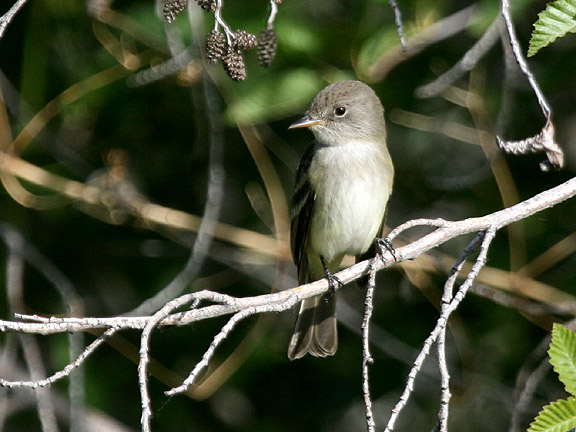
I had mixed feelings about including Capitol Reef, but the fact is few northern Utah Birders ever venture to this lesser known park in south central Utah. Admission is free, unlike other national parks, and the Fremont River trail, along with the Fruita Orchards provide excellent migrant trap birding. The picnic area near the park headquarters is a great place to start birding here, with huge Cottonwoods and ample habitat for songbirds. From May into early June and August through October this migrant hotspot could turn up just about anything as well.
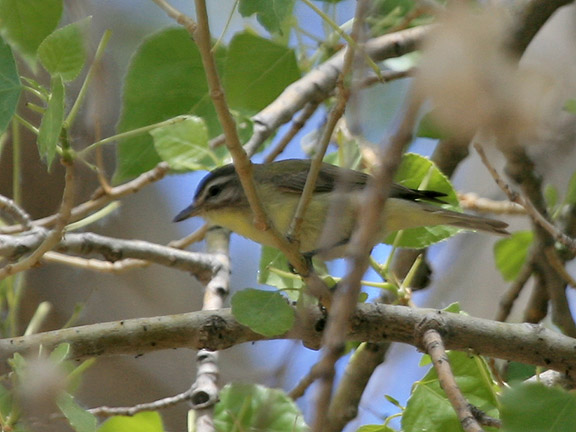
Pick a patch of trees anywhere in the park and you will find birds. Chats, Catbirds, Flycatchers, Buntings, Orioles, and Warblers are all abound. Rarities here are expected--including some big ones like Black-billed Cuckoo, Philadelphia Vireo, Orchard Oriole, and an impressive list of eastern warblers. You can camp at the campground here, making it easy to access all the birding sites over a number of days!
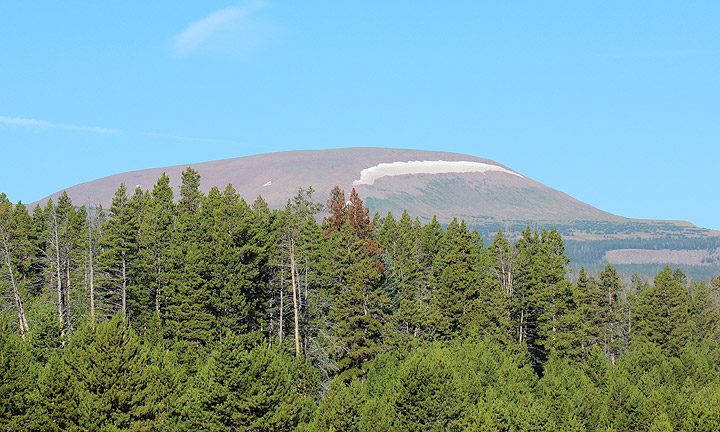
You’ve probably heard of this one, you may have even been. It’s one of the most reliable locations for White-tailed Ptarmigan in Utah--it also happens to be an epic birding location, not to be overlooked for the wide variety of species that can be seen in the vicinity. Aside from the talus slopes where ptarmigan, American Pipits, and Black Rosy-Finches forage, the forests below leading all the way back to Vernal provide habitat for nearly 100 species of birds. The high elevation conifer boasts Northern Goshawks, Three-toed Woodpeckers, crossbills, finches, sparrows, warblers, Gray Jay, and Pine Grosbeaks. Through each habitat zone leading down to Vernal you can find more and more--in the mid-elevation conifer, mixed conifer and aspen, aspen, and finally shrubsteppe.
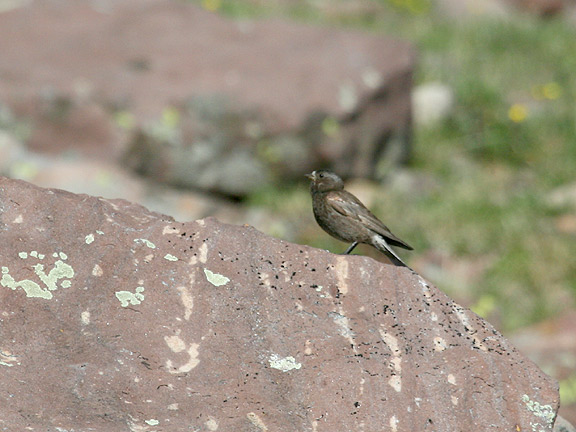
A couple days here can provide you with some excellent birding, and camping away from crowds of people. Hacking Lake is a good spot to camp, is is just about anywhere off the road. It gets chilly here at night and the weather can be unpredictable. Snow in mid August, temperatures routinely in the low 30’s at night in the summer--lightning storms that are mighty impressive--and rain and wind for hours sometimes. But it makes for an adventure! About an hours drive north from Vernal into the Uinta’s the peak stand just over 12,000’--the birding is best in late summer into the fall--until snow sets in and that’s it for the year!
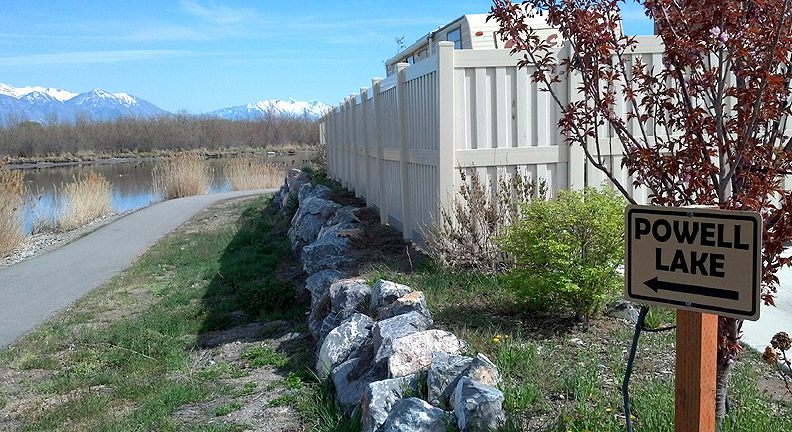
During the spring of 2013 a little known “lake” in northern Utah County proved to be one of the hottest birding locations of the year. In the middle of a subdivision in Lehi, Powell Lake, is actually a pair of ponds split by a road. The location along the Jordan River makes it a natural migration route and last year the birds seemed to pour in here. 24 species of shorebirds in 5 weeks, Glossy Ibis, a overly cooperative Least Tern, gulls, ducks, waders--you name it waterbird wise and it was probably found here in 2013. It isn’t known if this is the way things have always been here, or if 2013 was a fluke--but I know that in 2014 this will again be part of my regular spring birding stops, fro the chances that something good might turn up.
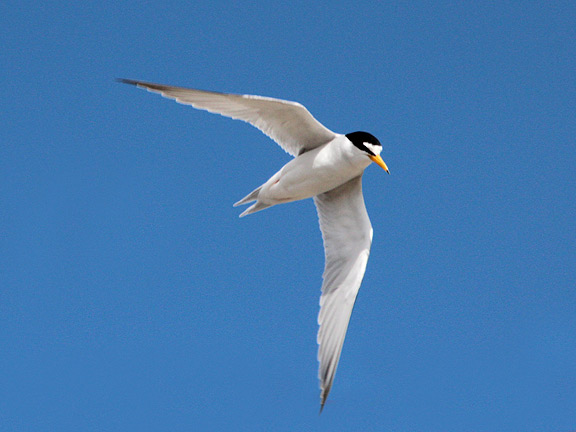
The photo ops are also amazing here--great light early and late in the day, and paths along much of the lakes shore. If you didn’t check it out in 2013, I would suggest stopping by between April and mid-May to see what’s using the waterway--my hopes are lots of birds, and lots of birders!
If you're not quite sure where these places are check out this link to see them on the map.
This is how most days of birding go for us--the usual places to look for the usual suspects. It also lends to the the Patagonia Effect happening--if more and more people go to said spots, the likelihood of a rarity being found increase. It’s a science ;)
But I have a challenge for you in 2014, don’t just spend a great deal of time at the regular hotspots--this spring, summer, and fall take some time to explore some of Utah’s less popular, more out of the way, and what I would call most amazing birding locales. Some you may have never heard of, others are just a bit out of your normal range--but they all are 5 places you should go birding in Utah this year.
• • •
Lucin
41.3482° N, -113.9050° W
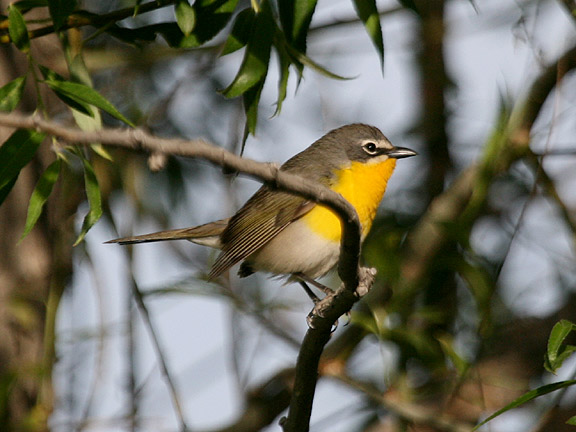
Great Photo ops for birds like Yellow-breasted Chat
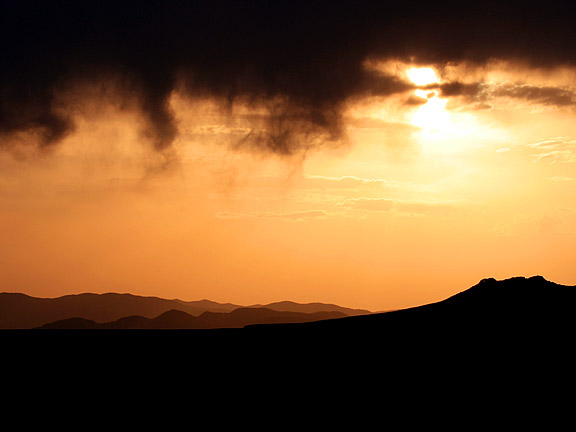
Sunset over the west desert from Lucin
You can camp just about anywhere in the desert out here, or stay in Wendover and make the 40 mile drive north on the days you go. I like to spend a couple days hitting other migrant traps in the desert and giving yourself a chance at some turnover each day. Lucin can be reached from the north via highway 30, or as mentioned earlier from Wendover to the south. It takes about 3.5 hours to get there from Salt Lake. At night the road from Wendover can turn up good number of Common Poorwills, Burrowing Owls, and Short-eared Owls. During the day look for warblers, wrens, thrushes, sparrows, orioles, tanagers, and almost anything that migrates. Lucin has the potential to turn up something really rare!
• • •
Dolores River/Rio Mesa Center
38.8119° N, -109.3023° W
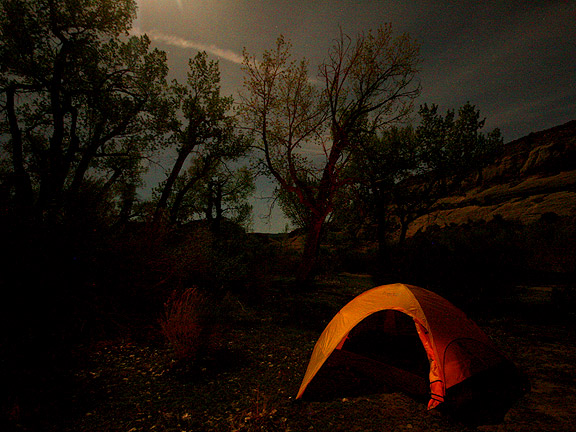
Great Camping along the river
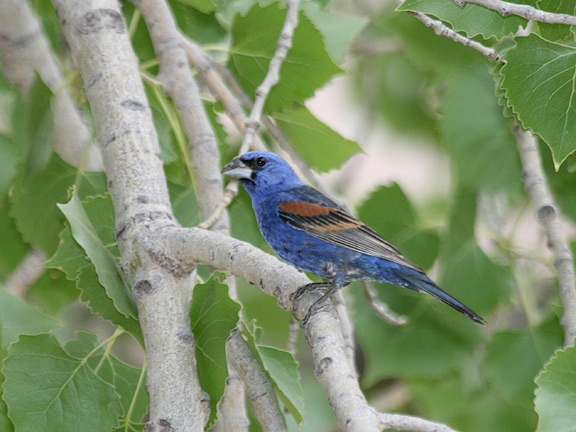
Blue Grosbeak along the rive rand super cooperative
Slightly further up River is the Rio Mesa Center which conducts bird banding and in recent years have banded a number of mega-rarities for Utah here. Spring and fall are both fantastic here--from late April to early June and mid-august to October you could turn up just about anything here. Yellow-billed Cuckoo, Eastern Wood-Pewee, Pacific-slope Flycatcher, and Yellow-bellied Sapsucker have all been reported from along the river here. There are plenty of places to camp, which can mean lots of people on busy weekends. It can also be a ghost town great for birding!
• • •
Capitol Reef National Park
38.2000° N, -111.1667° W
"Southwest" Willow Flycatcher along the Fremont River in 2007
Philadelphia Vireo found here in 2007 was a state 2nd for Utah
• • •
Leidy Peak
40.7680° N, -109.8330° W
You’ve probably heard of this one, you may have even been. It’s one of the most reliable locations for White-tailed Ptarmigan in Utah--it also happens to be an epic birding location, not to be overlooked for the wide variety of species that can be seen in the vicinity. Aside from the talus slopes where ptarmigan, American Pipits, and Black Rosy-Finches forage, the forests below leading all the way back to Vernal provide habitat for nearly 100 species of birds. The high elevation conifer boasts Northern Goshawks, Three-toed Woodpeckers, crossbills, finches, sparrows, warblers, Gray Jay, and Pine Grosbeaks. Through each habitat zone leading down to Vernal you can find more and more--in the mid-elevation conifer, mixed conifer and aspen, aspen, and finally shrubsteppe.
Black Rosy-Finch are fairly common here
A couple days here can provide you with some excellent birding, and camping away from crowds of people. Hacking Lake is a good spot to camp, is is just about anywhere off the road. It gets chilly here at night and the weather can be unpredictable. Snow in mid August, temperatures routinely in the low 30’s at night in the summer--lightning storms that are mighty impressive--and rain and wind for hours sometimes. But it makes for an adventure! About an hours drive north from Vernal into the Uinta’s the peak stand just over 12,000’--the birding is best in late summer into the fall--until snow sets in and that’s it for the year!
• • •
Powell Lake (not Lake Powell)
40.3828° N, -111.9029° W
During the spring of 2013 a little known “lake” in northern Utah County proved to be one of the hottest birding locations of the year. In the middle of a subdivision in Lehi, Powell Lake, is actually a pair of ponds split by a road. The location along the Jordan River makes it a natural migration route and last year the birds seemed to pour in here. 24 species of shorebirds in 5 weeks, Glossy Ibis, a overly cooperative Least Tern, gulls, ducks, waders--you name it waterbird wise and it was probably found here in 2013. It isn’t known if this is the way things have always been here, or if 2013 was a fluke--but I know that in 2014 this will again be part of my regular spring birding stops, fro the chances that something good might turn up.
Vagrant Least Tern at Powell Lak ein 2013
If you're not quite sure where these places are check out this link to see them on the map.
Exploring Utah
posted by Kenny Frisch at
9:33 PM
on Wednesday, July 10, 2013
Just as I was getting a case of post-spring migration blues last month, I started to feel better remembering that the mountains were starting to open up and I had whole new areas of Utah to explore again. With only one summer in Utah under my belt, I still have many parts of the state to explore and many mountains to climb. Last summer I focused mainly on the Salt Lake City area with a lot of hiking in the Wasatch Front area and only found time to make it up the the Uintas once and late in the year at that. This summer I am hoping to make it up to the Uintas more often, visit new parts of Utah and to hike some new peaks.
Last month, with a rare free weekend and my girlfriend busy working, I had some time for a weekend full of birding. That Saturday I met Jeff Bilsky up at Silver Lake in Brighton and we hiked a loop from Silver Lake to Twin Lakes Reservoir to Solitude Lake and back to Silver Lake. Despite the crowds, this spot is one of my favorite places to bird in Utah since it is full of birds and other wildlife. My first trip of the year up there once again did not disappoint. Stepping out of the car we could hear Broad-tailed Hummingbirds whizzing by. Just after the bridge over the creek we were greeted by a MacGillivray's Warbler which was unusually cooperative and gave us some great views.


 Bear River Meadows


Last month, with a rare free weekend and my girlfriend busy working, I had some time for a weekend full of birding. That Saturday I met Jeff Bilsky up at Silver Lake in Brighton and we hiked a loop from Silver Lake to Twin Lakes Reservoir to Solitude Lake and back to Silver Lake. Despite the crowds, this spot is one of my favorite places to bird in Utah since it is full of birds and other wildlife. My first trip of the year up there once again did not disappoint. Stepping out of the car we could hear Broad-tailed Hummingbirds whizzing by. Just after the bridge over the creek we were greeted by a MacGillivray's Warbler which was unusually cooperative and gave us some great views.
A surprising viewable MacGillivray's Warbler
The typical montane species put in their appearances. A pair of Cassin's Finches looking like they were copulating with the female being dominant over the male. An Olive-sided Flycatcher did what they do best and was seen perched on a dead snag. Pine Siskins were seen gathering nesting material. A very photogenic Western Tanager gave close views as it ate a wasp in front of us then continued foraging. Yellow-rumped Warblers also put in close views, apparently with their attentions more on food and females. Chipping Sparrows were in abundance as well lending their trills to the sounds of the forest. Another normally skulky bird, a Lincoln's Sparrow gave us killer looks from close. Near Silver Lake itself we thought we had a new birder when Jeff told him we had a Creeper and he came up to us for better views. He grew confused when Jeff kept pointing to the base of a nearby tree. Finally he said that be thought we said "Beaver" and walked away when he found out he was searching for a small brown bird with a curved bill.
Cassin's Finches showing off some yoga poses
This female was the dominant bird that day
An Olive-sided Flycatcher wouldn't be complete without a dead snag
This Pine Siskin was working on its nest
Western Tanager Wasp Lunch
This Western Tanager gave us extended good looks
A Western Tanager forages while calling
Audubon's Yellow-rumped Warblers are starting to win me over
Not a beaver but a creeper.
An unusual view of a Lincoln's Sparrow
Chipping Sparrows were all over
After our hike was over and Jeff had left, I had a funny moment at a hummingbird feeder near the Brighton resort. As I was walking over to the feeders, a Hairy Woodpecker flew in to the area and then made its way onto the hummingbird feeder much to the distress of the Broad-tailed Hummingbirds and the woodpecker itself. For the next five minutes, the hummingbirds kept trying to feed and to drive off the woodpecker but the woodpecker would also do his best to keep the feeder his and keep the hummingbirds at bay. Eventually he got fed up with the constant buzzing around here and took off, much to the delight of the hummingbirds who wanted to feed.
Hairy vs Broad-tailed
The Hairy keeps the hummer at bay
Finally with the Hairy gone, the Broad-taileds were able to feed
The next day I my plan was to make a solo trip to three places in Utah that I have never visited before: Bear River Meadows, Monte Cristo Campground and North Arm Natural Area at Pineview Reservoir. This route would make a nice loop around northern Utah and promised many interesting birds. Bear River Meadows near Randolph was my first destination for the day. It turns out that I have driven by this great birding location many times driving to and from the Tetons, but I never realized it was here. In the future, I will make sure to stop by whenever I am heading up there. My target birds were Black Tern, American Bittern and Eastern Kingbird. While I missed out on the bittern, I did see many Black Terns and Eastern Kingbirds. The habitat here was one that I haven't seen too much with both wet and flooded fields to go along with some more typical marsh habitat.
The birding started out great as soon as I turned onto Crawford Mountain Rd as I noticed a Red-tailed Hawk nest near the intersection and at least one fuzzy chick visible as well.
A good start to the day

Driving down Crawford Mountain Road I noticed all the duck species present that I hadn't seen in a month or two. Species that I saw included Gadwall, American Wigeon, Northern Pintail, Canvasback and Redhead. All but the Gadwall and Pintail were seen in pairs.
These were the first wigeon I had seen in a few months
This photo helps show the differences between Canvasback (front right) and Redhead
This male pintail was starting to molt into eclipse plumage
Other birds I had only seen as migrants in the spring were also here. I had a large flock of White-faced Ibis, but given the recent report of a Glossy Ibis, I should have scoped the flock more thoroughly. There were also a decent number of Franklin's Gulls giving their whiny calls. Two Sandhill Cranes gave a flyby. A Willow Flycatcher called away in some shrubs but I could never get a view of it. More typical marsh birds were present as well. A Marsh Wren was doing anything but be typical singing out in the open at the top of a dead tree. Common Yellowthroats were among the more musical of birds I heard that morning. Yellow-headed Blackbirds also lended their color to the landscape.
This Marsh Wren was all about breaking stereotypes
A photogenic 1st year male Yellow-headed Blackbird
Shorebirds were well represented for June and I had 6 different species: Killdeer, Black-necked Stilt, American Avocet, Spotted Sandpiper, Willet and Wilson's Phalarope. I was particularly excited to see the Willets and the phalaropes since I haven't had too much experience with these species in their breeding grounds (well I assume they breed around here). One of the phalaropes gave me the best views in my life so far as it preened and did its silly spinning feeding move which makes it look like something is wrong with it about 15 yards away from me.
This Wilson's Phalarope gave me great views
The phalarope in the middle of its unique surface tension feeding technique
A video of the phalarope showing off its unique feeding techniques
I was hoping to just get to see one Black Tern and Eastern Kingbird, but I ended up seeing several individuals of both species. Right before I got to a bridge over the Bear River I saw my first or three pairs of Eastern Kingbirds. They put on their typical show that I would see at my family's house with them being very vocal and flying all over the place. I only saw one Eastern Kingbird last year in Utah and I am glad that I am seeing many more of them this year.
Eastern Kingbirds have always been one of my favorite flycatchers
A typical vocal Eastern Kingbird
Once I got to the bridge I saw my main target bird, Black Terns, my 319th Utah species!. They were flying up and down the river hunting often in pairs, It was fun seeing this oddball of a tern since it is the opposite color of most of the terns one would see in the US. After getting to watch the terns for a while I decided that I should get moving on since I still had two cool destinations to visit, but I definitely will be coming back to bird this area- I still need American Bittern! Next stop, Monte Cristo Campground.


I hopped on Route 39 towards Monte Cristo, but just before I got there, I stopped at Curtis Creek Road. Despite all of the ATV traffic and noise, I managed to first hear, then see my first Utah Purple Martins. It is always a treat to see the largest swallow we have in the United States and it is interested to have to go up in the mountains to see them since they are found all over the place back east. The martins got especially active and vocal when a Cooper's Hawk made the mistake to fly through their territory and they soon mobbed it away.


My first Utah Black Tern
A hunting Black Tern
My first Utah Purple Martin
I was excited to try out the Monte Cristo Campground given all the reports I have read about it.and all the high elevation species that I could see there Upon getting out of my car, I heard a singing Cordilleran Flycatcher and made my way to where it was singing. I didn't have too much trouble finding it due to its vocal nature and got to observe it for about ten minutes as it flew back and forth flycatching and singing.
This Cordilleran Flycatcher was quite vocal
The campground loops themselves we not open yet which left me alone to explore them. The area turned out to be quite birdy with most of the typical mountain birds being present including Hermit Thrushes, Yellow-rumped Warblers and 'Mountain' White-crowned Sparrows and 'Gray-headed' Juncos- the subspecies that we only see in the summer. Two more species gave me great extended looks, Western Wood-Pewees and Cassin's Finches, the pewee being especially helpful to study for future identifications.
A gorgeous male Cassin's Finch
Our breeding subspecies of Dark-eyed Junco, the Gray-headed
Although Monte Cristo was productive, I did miss two of the more sought after species present- Williamson's Sapsucker and American Three-toed Woodpecker. I may have looked in the wrong areas but I will have to come back again and try for these species since they are always great to find. I had one more stop for the day and continued down Route 39 towards the North Arm Natural Area at Pineview Reservoir.

View south of Monte Cristo Campgrounds
I have birded in the Pineview Reservoir area before, but never in the North Arm Natural area. This area tended to have a riparian and marshy feel to it and had many nice walking trails to thoroughly explore all the habitats. I first started out heading down south to the marshy areas and soon found myself hearing the alarm calls of Ospreys in stereo with a nest both to my left and right. Not wanting to disturb the birds, I headed back to the main trail.
Nesting Ospreys aren't a bird to disturb
I later had one of the Ospreys soaring overhead
The next part of my birding involved lots of sounds and some sights. Two of the birds I wanted to see here the most were Gray Catbirds and Yellow-breasted Chat. Both of these birds are very vocal, mimicking other bird's calls but both have a desire not to be seen. This caused me great frustrations while trying to see them, but made it that much sweeter when I was able to eventually get some great albeit brief views of these two skulkers. I am surprised how habitat limited Gray Catbirds are out west since they can be found in most habitats out east.
You have to take the views chats are going to give you
The same applies to catbirds
The North Arm was probably my most productive spot for the day with many different birds on land, in the water and in the air. Warm temperatures had many birds soaring overhead included the nesting Ospreys, a Swainson's Hawk and a Turkey Vulture that was molting and let me apply what I have read about molt in the field.
Note the primary (p7) molting in on this Turkey Vulture
In Pineview Reservoir, there were many Western Grebes hanging out despite the presence of all the boats on the water while there were Caspian Terns hunting over the reservoir. There were several swallow species taking advantage of the water- Barn, Violet-Green and one of the big surprises of the area, Bank Swallows attending to a colony. It was fun watching these small swallows zoom all around their nesting holes.
A Bank Swallow at its nesting hole
I was hoping to see a Calliope Hummingbird here and thought I may have seen one at the southern part of the area but didn't have good enough looks to count it. I did have many Broad-tailed Hummingbirds though both feeding at the abundant wildflowers when not aggressively defending them from other hummingbirds.
This Broad-tailed Hummingbird's throat was as bright as any wildflower
The birds here were not only numerous but many allowed close views that really gave me an opportunity to study them. I felt lucky that some of the best looks I had were of some of the more colorful species of Utah.
A looker and a great singer, the Lazuli Bunting
While Yellow Warblers are common, views like this are not
The subtly beautiful Cedar Waxwing
What Fox Sparrows lack in color they make up for in song
With it getting pretty hot, I decided to call in a day and head home to Salt Lake City. But what a day it was! I started in wetlands, then went up to mountain forests at 9000 feet and ended in riparian habitat. I finished with 88 species while only birding three different spots. It just shows you all the unique birding habitats Utah has to offer. Since I birded these areas, I have also gone to Zion National Park and Nebo Loop, two more awesome birds spots in Utah that I hadn't previously explored. Look for future blog posts detailing my adventures there along with adventures yet to come. I think I hear the Uintas calling my name...
Labels: photography, summer
SEARCH THE BLOG
Loading
TWITTERING
Tweets about "#utahbirders" FOLLOW US ON TWITTERPrevious Posts
- Gullstravaganza 2017 Recap
- Gullstravaganza 2016 Recap
- Birding Mexico: Back to the Yucatan
- Flammulated Owl Video
- 2015 Gunnison Sage-Grouse Days Recap
- eBird Mobile iOS Beta Release First Look
- 2015 Marathon Birding Recap
- An Eastern Test
- When Subspecies Matter in eBird or in general
- Gullstravaganza 2015 Recap
Archives
- December 2010
- January 2011
- February 2011
- March 2011
- April 2011
- May 2011
- June 2011
- July 2011
- August 2011
- September 2011
- October 2011
- November 2011
- December 2011
- January 2012
- February 2012
- March 2012
- April 2012
- May 2012
- June 2012
- July 2012
- August 2012
- September 2012
- October 2012
- November 2012
- December 2012
- January 2013
- February 2013
- March 2013
- April 2013
- May 2013
- June 2013
- July 2013
- September 2013
- October 2013
- November 2013
- December 2013
- January 2014
- February 2014
- March 2014
- April 2014
- May 2014
- June 2014
- July 2014
- August 2014
- September 2014
- December 2014
- January 2015
- February 2015
- April 2015
- May 2015
- July 2015
- December 2015
- February 2016
- February 2017
Subscribe to
Posts [Atom]