Utah Birds, Utah Birding, and Utah Birders. Promoting the sharing of information, and the conservation of habitat for birds in Utah and elsewhere. We are a group of people who want to share what we know, and create a positive birding experience in Utah.

BIRDERS BLOG

a blog by and for Utah Birders

Birding Peru part 4 - Protests in Puno

posted by Tim Avery at
on Sunday, September 9, 2012 

August 21, 2012 - Flight to Juliaca and afternoon in Puno

It seemed like we had barely arrived in Lima when we were already on our way back to the airport.  It had only been about 48 hours since we arrived but we were already hopping on a plane to head to the southern edge of the county to visit Lake Titicaca. The early Tuesday drive through Lima was quick--it was before "rush hour" so it made for a less hectic drive.  We got our tickets, checked our bags, then promptly found breakfast at none other than Dunkin Donuts.  Even in Peru touches of America were difficult to avoid.  The flight left on time and soon we emerged above the cloud cover heading southeast over the Andes.  The mountains simply put are impressive.  Growing up in Utah I always felt lucky to be buttressed up against 10 and 11,000' peaks visible from my parents yard.  But the Andes dwarfed our mountains--peaks reaching over 20,000' in elevation with year round snow gracing their tips.  Away from the coast the interior of the country was cloudless making for wonderful views as we flew.  The flight seemed to go by quickly as we were soon on the ground in Juliaca rolling down the one lane runway towards the tiny baggage claim and "administration" building.  It was the smallest airport I have ever been too.
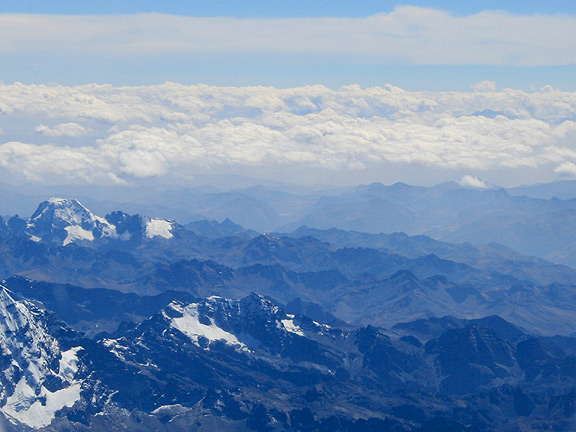
The Andes from the the plane.

When the doors to the plane open and the pressure hit me it was only a few minutes before my head started to ache and I began to feel the 13,000' elevation getting to me.  I didn't think I would be effected by it, but I was wrong--the rest of the day would be rather rough.  We snagged a taxi to take us on the 45 minute drive to Puno where our hotel was located.  Shortly after leaving  Juliaca and hitting the open road an ANDEAN FLICKER swooped across the road.  Despite seeing 2 or 3 during the week I never managed to get a photograph.  Every time I saw one I was in a  fast moving car or bus that couldn't or wouldn't be able to stop for.  Our driver was cruising well over the posted 55/kph signs--he topped out around 130/kph which is roughly 80/mph here in the states.  As we were getting closer to Puno we passed a ditch filled with water and vegetation--but more importantly with PUNA TEAL, PUNA IBIS, and ANDEAN GULLS. Hopefully I would get better looks than these.  Coming around the next curve through a tiny canyon a "Puna" VARIABLE HAWK was perched on a tree next to the road providing an excellent 3 seconds of birding.  One of the toughest things in Peru was not being able to drive at our speed and stop when we wanted--but from what I have read and saw while there, renting a car is a bad idea in Peru.
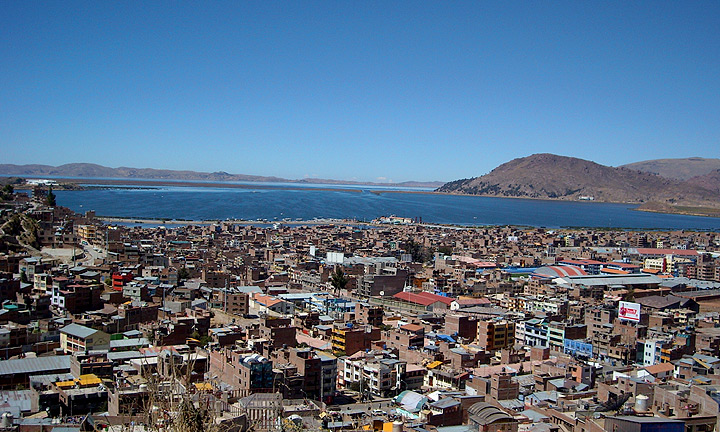
Puno and Lake Titicaca from the highway.

As we climbed over one last ridge we rolled out onto a cliff face with our first great view of Lake Titicaca and the city of Puno on its banks.  While we stopped to take a photos of the city, a COMMON MINER burst into trill on the slope on the opposite site of the road.  This bird along with a handful of ROCK PIGEON and several EARED DOVES here, would be the extent of my birding for the day. From here the road dropped into the valley and it appeared as if there had been a number of small landslides onto the road.
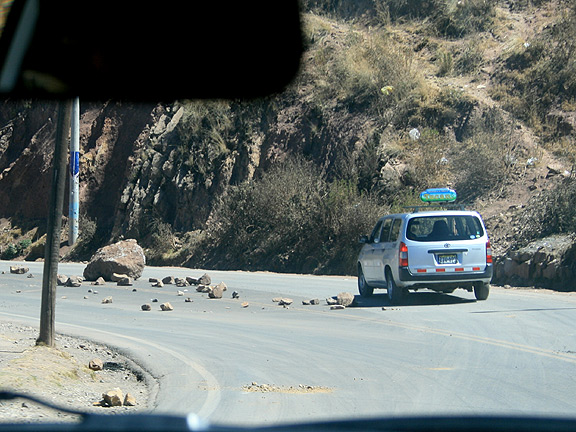
Rocks on the road...

There were rocks and boulders strewn in to the lanes at various points.  The driver maneuvered around them like a pro that was accustomed to the chaos.  It seemed odd to me that something like this wouldn't have been cleaned up--but even stranger is that there was no news of landslides, earthquakes, or anything that would explain the mess.  Maybe Puno just didn't care about keeping the roads clean?
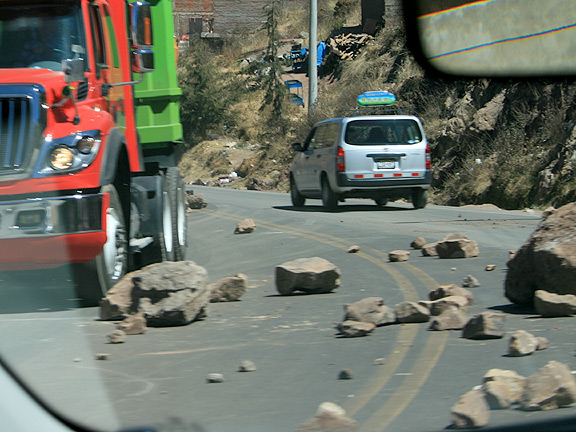
Maneuvering through the rocks on the road.

In any event we made our way into town when the drive asked for the hotel name.  We told him it was the Punuypampa Inn in "Puno centro".  He nodded and turned onto a street barely wider than the car.  As we approached the Plaza de Armas he stopped and mumbled to himself.  Ahead the road was gridlocked with people all wearing blue and carrying what looked like helmets.  As we approached we could see they looked like mining helmets.  The driver told us he couldn't get to our hotel this way because there were protests going on.  I then asked if the protesters were miners to which he replied, "Si".  He turned down another alley and made a couple more quick turns, before backing down a street and pointing to the left--we had arrived at the hotel. It was only a 1/2 block from the plaza and the swarms of protesting miners.
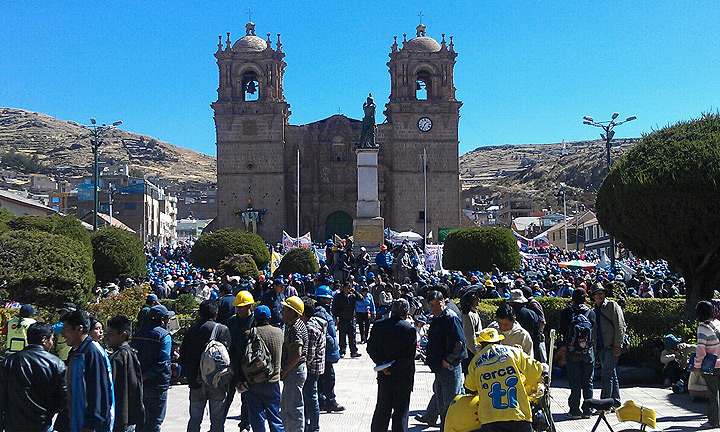
Protesting Miners in Central Puno.

We went right into the hotel where no one at the front desk spoke English--still checking in was easy--that hard part was hiking up to the 3rd floor where our rooms were.  I can't remember a time when I have been so out of breath from simple stair climbing.
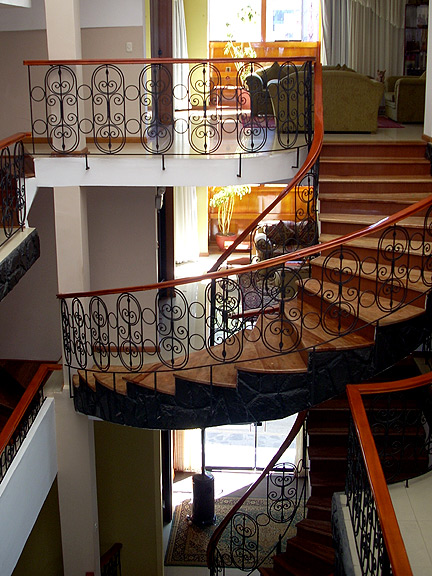
Stairs up to the 3rd floor in the hotel.

Once settled into our room we went down to the front desk where I asked if it was safe to go out.  They told us yes so we walked right to the plaza to check out the protests and slip into the highest rated restaurant in Puno on Trip Advisor, Mojsa Restaurant.  The place was nearly empty, only 3 other tables had guests, and we were the only Americans.  The food was great and I enjoyed Chicken Soup while Sam had a chicken and pasta dish.  I will give it to Puno for this restaurant and another just a block away--they were some of the best food of the trip.  After lunch we headed back to the room where Sam took a nap and I set out to enter some checklists into eBird from the previous 2 days.  I regretted waiting till months after returning from Costa Rica to enter my lists there as I had forgotten specifics, #'s of individuals, and only entered basic lists for a few locations instead of day by or outing by outing.  It only took about 40 minutes and I realized I was extremely thirsty. With Sam asleep I slipped out of the room and back to the front desk to ask where I could buy water bottles.  They drew me a map which basically said walk through all the protesters to here--where I will find several small bodegas. Sweet, I get to go into the thick of it.

As I walked I noticed the miners pointing, and laughing at me.  I was wearing flip flops, shorts, and a t-shirt.  The only such liberally dressed person in the town--and being a 6' 4" gringo only added to me sticking out.  At one point I passed a group of miners that were screaming at police, at this point I just wanted to turn back, but really needed water.  I made it to the small store and stocked up with 4 one-liter bottles before heading back to much of the same shenanigans as the walk there produced.  Back at the hotel I finally relaxed.  The remainder of the day we could hear shouting, yelling, chanting, and what sounded like gun shots every so often.  I was never sure if these were very loud firecrackers, or actual guns firing--all I knew is I was glad not to be in the middle of it.  By 8pm we headed out again for dinner--the miners were still at it in the square--we both hoped this didn't go on into the night or the next day. We made our way back past the protesters to the #2 rated restaurant in the city, Pizzeria Andina (it currently sits at #3, but was ranked #2 while we were there).
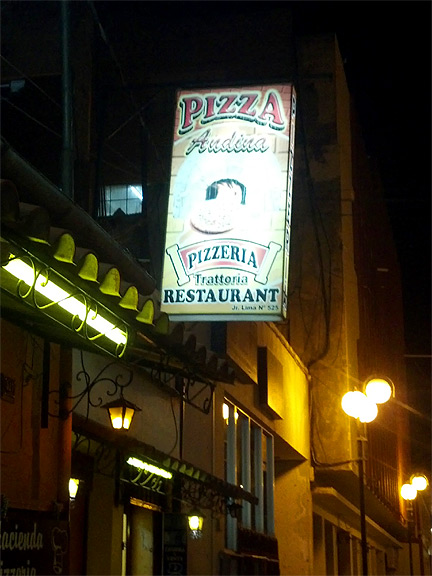
Pizzeria Andina in Puno

Who would have thought that pizza in Peru would have been a good idea--but I can honestly say the pizza here was some of the best I have ever eaten.  We ended up dining here both nights in Puno, and at each meal we were able to get an appetizer, pizza, and 2 drinks for about $12 in US dollars.  Not only cheap, but great food and well worth checking out if you ever find yourself in Puno.

Margherita Pizza at Pizzeria Andina.

When we left dinner the main square was deserted--what a relief.  We walked across the plaza noticing the piles of garbage, the spilled food and drinks, and the general mess the protesters left behind.  It seemed so peaceful and quiet now that they were gone--a different place than just an hour earlier.  We decided to do our sightseeing here right now, in fear that tomorrow it would be overrun with the miners again.

As a side note, we decided to look into protests in Puno and found that the miners and farmers regularly protest here throughout the year.  The protesters are believed to have cost the country more than $100 million last year in losses to the tourism industry in the region.  Interestingly we also discovered that the rocks in the road were not natural by any means, but were put there by the protesters to disrupt traffic between Puno and Juliaca as this is the main route tourists take.  Somehow we managed to miss that in 2011 protests lasted for 7 weeks and only came to an end once the government gave into a rash of demands form the miners.  It got so bad at one point that miners lit the Juliaca airport terminal on fire and police were forced to open fire with live ammunition killing 6 protesters.  The miners seem to have issues with the practices of the mines and the pollution caused by their activities.  In the end last year the Peruvian government canceled the mining contract with a Canadian firm--which finally ended the protests.  I found it ironic that the miners were protesting against the very companies that would employee them and pay their wages.  Instead they spent nearly 1/6 of the last year not working or getting paid to keep an employer from starting operations that would potentially provide a livelihood for them for years to come.  I am all for the environment, and mining practices that minimize the damage to the land and the pollution from the processes--but I am also not someone who would be employed by such companies.  It's something I just don't understand, and it is a stain on the area around Lake Titicaca.

We aren't sure exactly what the protests were about when we were there, more than a year later, but it seems that the miners are running things in the area, and overall left a bad taste in my mouth about this portion of our journey. The way the miners acted towards me as a tourist gave the impression that they didn't like Americans--and possibly associated the mining company with tourists in general. Ironically, I was providing a boost to their economy and likely helping their families who own shops and restaurants in the area.  In the end all I could do was shake my head and realize how ridiculous it was.

Our first day in Puno was largely wasted, and birds were far and few between--the next day we would get to set foot on the floating islands of Lake Titicaca and visit the funerary towers of Sillustani at Lago Umayo.  Hopefully, things would take a turn for the better.

4 life birds today / 40 total trip life birds / 72 total trip birds
Photos from Lima to Peru on TimAveryBirding.com

Labels: , ,

Birding Peru part 3 - Pucusana Fishing Village

posted by Tim Avery at
on Friday, September 7, 2012 

August 20, 2012 - Afternoon at Pucusana and in downtown Lima

From the marshes at Pantanos de Villa it was only a short drive to Pacachamac.  As we pulled up to the gate an armed guard waved for us to stop and promptly told our driver the ruins were closed today.  We had read in tour books that quite a few places were closed on Mondays at random, but according to the book we had, Pacachamac was not one of them and was open Monday to Friday from 9:00am to 5:00pm.  We explained this to our driver who talked to the guard to no avail.  Was this how Peru was going to be?  It was our first real tourist stop and the guide book that was printed within the last year was wrong.  This site was popular due to its proximity to Lima so it was surprising that there was no mention of the closure online.  It would have been nice to have known.  Several hours here would have given me access to low elevation grasslands and drier coastal lomas.  Maybe 5 species of birds that I could have picked up for the trip wasn't the major loss, it was getting to see the history that now we would only glimpse from afar as we drove past.

Barren Desert South of Lima

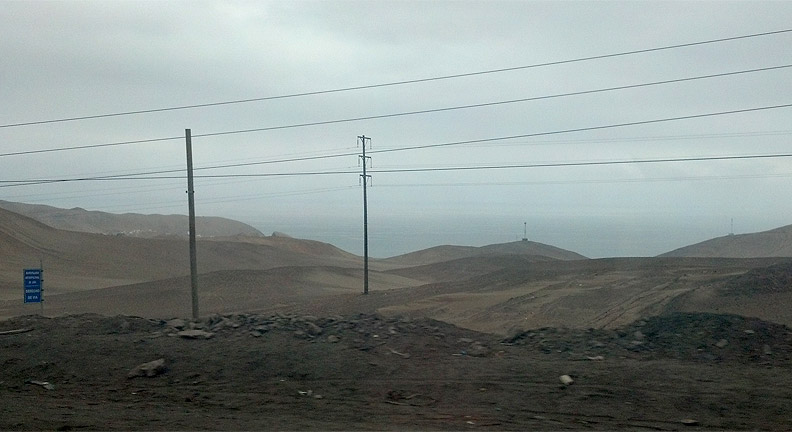
There was no point in fretting as there was nothing we can do but adapt and move on.  So back on the highway we continued south to the fishing village of Pucusana.  As we drove there wasn't a great deal to see along the roads.  Shortly after leaving Pacahcamac the highway entered rolling hills and dunes.  To both sides of the road was little else besides dirt.  Trees were scarce, plants and bushes were non existent, and birds were nowhere to be found.  The drive went rather quick and we were soon headed towards the coast into the tiny village.

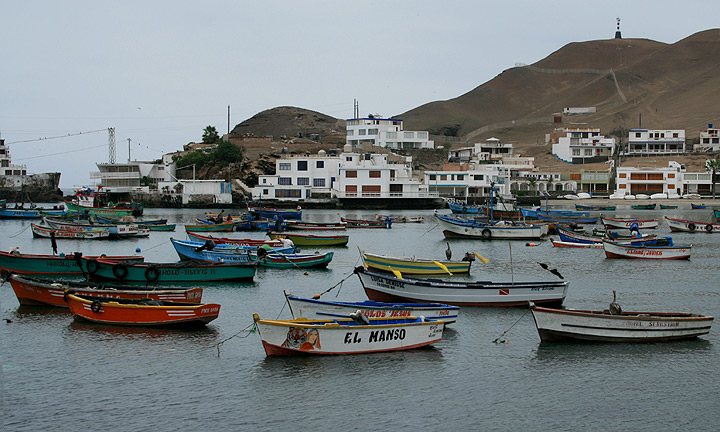
Boats at the Village of Pucusana.  Photo by Samantha Avery

Once there Mr. Fernandez found a place to park and spoke to some fisherman--letting them know we were interested in seeing "penguinos".  One man motioned for use to follow him, as he would take us out in his boat. As we left the car several LONG-TAILED MOCKINGBIRDS could be heard chattering from the tree tops in the main square.  Along the beach in the bay were numerous RUDDY TURNSTONE and a few pelicans, cormorants, and gulls.  Further out on the water I got my first good look at INCA TERNS, which were here by the hundreds. 

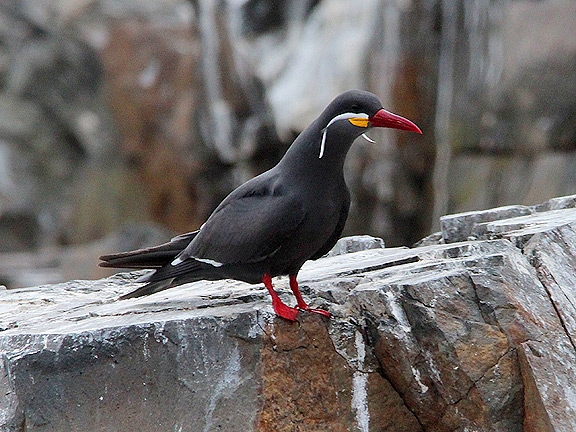
The coolest tern in the world--the Inca Tern.

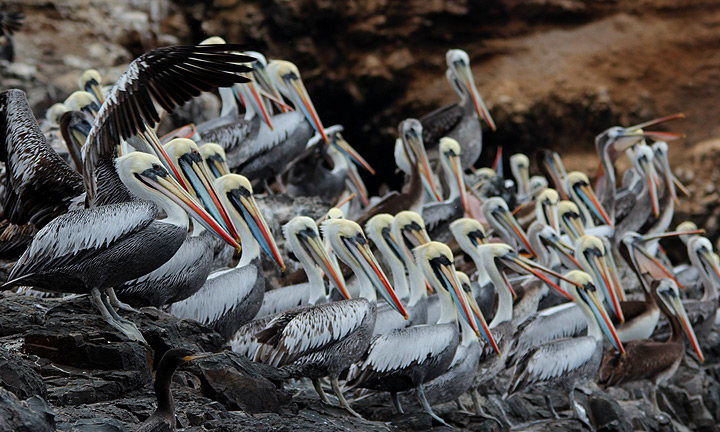
The older man from the village led us around to a dock and his orange boat where we climbed down and took our seats near the bow.  Mr. Fernandez told us it would be about 40 minutes, and to meet him back at the cat which e was going to go keep an eye on.  We pushed off and made our way to the main peninsula which juts out into the sea.  Along the way INCA TERNS made close passes by the boat.  As we approached the peninsula and got into rougher waters the bird show picked up with hundreds of PERUVIAN PELICANS joining the smaller numbers of terns. The terns were spectacular--they were the most interesting looking birds on the coast.  I would go as far to say they are one of if not the most impressive members of the gull and tern family. 

Peruvian Pelicans packed onto the cliffs.

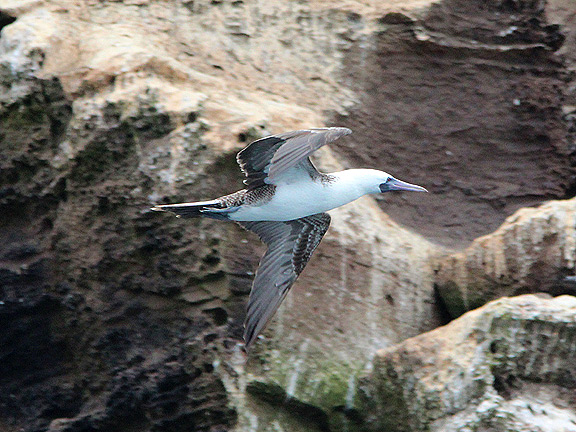
Clambering along the rocks were several BLACKISH OYSTERCATCHERS.  From time to time a RED-LEGGED CORMORANT would fly past.  A couple GUANAY CORMORANTS made a pass and were quickly gone--the only of the trip.  Above the pelicans and the terns on the cliffs were numerous PERUVIAN BOOBIES.  Every once and a while a booby would come skimming past the boat then sail upwards towards the cliffs where they would land.  My eyes strained the surf for penguins--where were these creatures that we had hopped on this boat to see?  Mixed in with the seabirds on the cliffs were a number of sea lions that were lazily relaxing on the flatter portions of rock.  The boat passed within yards of much of the wildlife providing the kind of looks you wish you could have at every bird.  A few BELCHER'S, KELP, and GRAY GULLS could be found on the rocks as well, but nowhere near the numbers of the morning.  They were the minority here.

Peruvian Booby cruising by the boat.

When the boat reached the end of the point the boatsman turned the boat back towards where we had come from.  I asked him where the penguins were, to which he replied, "no aqui, no comida"... Which roughly means, they aren't here because there is no food.  Hmmm... That's an interesting piece of information that he failed to tell us back on land.  Why would you take us to look for penguins when you know damn well they aren't there?  In ebird there had been reports just over a month earlier of 4 birds and more impressively 18.  I ventured a guess that our "guide" at the moment was no more than a local boat owner who didn't really know where to look for penguins, and just wanted to make a quick buck by taking us for a ride around the marina.  This was the first time on the trip I was actually pissed off--I kept it to myself but was extremely bothered.  All I wanted was to see a penguin in the wild, and I knew the birds had been seen here with regularity.  Why couldn't the people at the marina be honest and find us someone that did know where to look? If the thick-knee miss earlier in the day was disappointing, no penguins was almost heart breaking.

An endemic Surf Cinclodes on the shore.

As we headed back in I spotted several of the endemic SURF CINCLODES in the rocks--my pictures are what we would call terrible.  Heading back across the bay and into the marina I just wanted out of the water.  We had picked up the rest of the expected birds on the ride and there was nothing that would make more time on the boat worthwhile except a Humboldt Penguin.  Even a couple weeks later as I write this, I am still bothered by the penguin fiasco.  I had spent considerable time trying to talk to people who had photographed or reported penguins from Pucusans to find out exaclty where they had seen them from.  The common response was that no one could tell me exactly where.  It was form some overlook on some cliff here or there.  But not one person had taken the time to know, or care exactly where.  This mind boggled me.  But then again most of the people I spoke with were people who had paid someone a great deal of money to take them birding in Peru--finding the birds was the job of the guide and not a worry of theirs.  So I guess this was a fault of my own.  Pucusana isn't the home run location for penguins in Peru, but is much closer than Paracas further south along the coast--it was the best we could do with our time there.

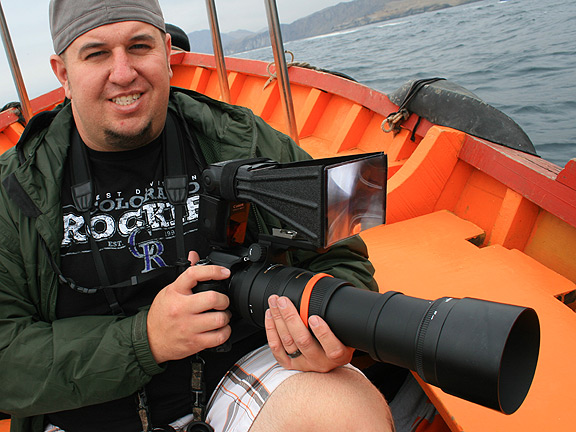
Me making the best out of our "no penguin" situation.

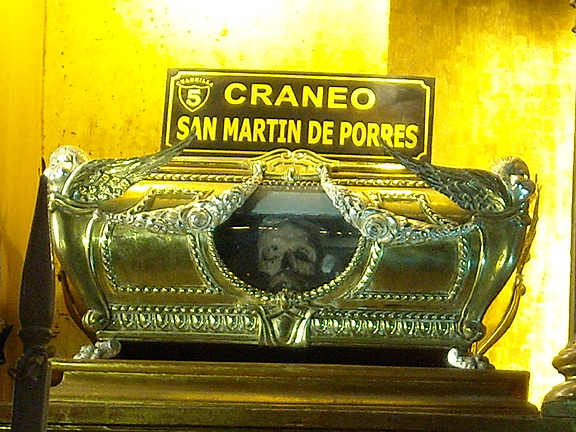
Penguin-less and slightly chilled form the ocean air we headed back to Lima, spotting a lone BLACK-CHESTED BUZZRD-EAGLE soaring over the highway just north of Pucusana.  We made a quick stop at the B&B before heading into Lima to visit the Plaza de Armas or "Weapon's Square".  Every city had one and in Lima you could see the Presidential Palace and visit several nearby churches and historical sites from here.  We spent the afternoon visiting the Santo Domingo Convent where we were able to climb to the top of a bell tower for an outstanding view of all of Lima.  Perhaps the most interesting thing about the convent is the fact that Saint Rosa of Lima, and Saint Martin de Porres have both of their skulls on display in the church--somewhat creepy but also quite interesting. 


The skull of Saint Martin de Porres in Lima...

BLACK VULTURES and ROCK PIGEONS made up the bird life on the roof tops.  In the gardens were plenty of RUFOUS-COLLARED SPARROWS and a few TROPICAL KINGBIRDS.  As we made our way back out to Miraflores darkness fell across the coast, and our time as tourists in Lima came to an end.

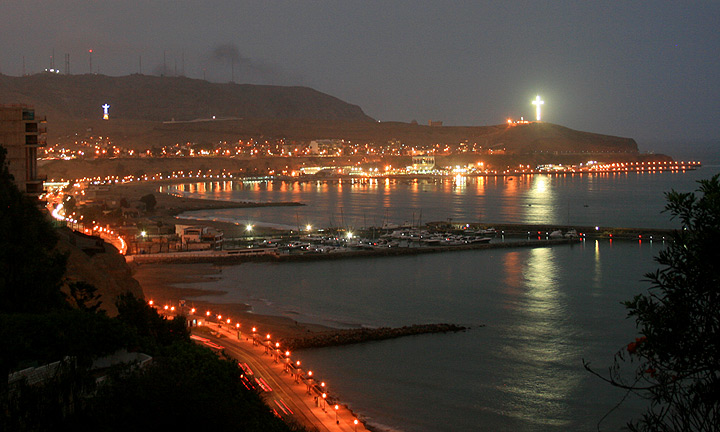
Miraflores and the coast at dusk.

The next morning we would fly to Juliaca to visit Puno and Lake Titicaca as our adventure in Peru continued.

5 life birds this afternoon / 36 total trip life birds / 68 total trip birds
Photos from Pucusana Fishing Village  Birding on TimAveryBirding.com

Labels: , ,

Wings Across the West Fundraiser

posted by Jerry Liguori at
on Thursday, September 6, 2012 

Mike Shaw from HWI asked me to post this:

HawkWatch International will be holding their annual "Wings Across the West" fundraiser on Thursday, September 20th. The featured speaker is Brian Sullivan from the Cornell Lab of Ornithology, and a frequent collaborator with Jerry Liguori on scientific raptor publications. He'll be presenting "The Evolution of Birders", his personal story of birding and eBird: Citizen Science. The $50.00 tax deductible ticket covers food and drink, and there will also be a silent auction.

About Brian Sullivan:

Brian Sullivan has conducted fieldwork on birds throughout North America for the past 20 years, much of which has been focused on raptor identification. Birding travels, photography, and field projects have taken him to Central and South America, Antarctica, the Arctic, and across North America. He has written and consulted on various books and both popular and scientific literature on North American birds, and is a co-author on the forthcoming Princeton Guide to North American Birds. Research interests include migration, raptor biology, and closing the gap between science and birding. Brian is currently the Cornell Lab of Ornithology project leader for eBird, photographic editor of the Birds of North America Online, and photographic editor for the American Birding Association’s journal North American Birds.


Labels: ,

Birding Peru part 2 - Pantanos de Villa

posted by Tim Avery at
 

August 20, 2012 - Morning at Pantanos de Villa Marshes

On our second morning in Peru the plan was to leave Lima by 8:00am to head south along the coast to the Pacachamac Ruins, then continue further south to the Pucusana Fishing Village to look for penguins, and finally stop by the Pantanos de Villa marshes just south of Lima on our way back.  The only hiccup was that we couldn't figure out where breakfast was, as no one told us the day before.  It wasn't until almost 8 when we finally located one of the staff who led us to the kitchen to eat.  The breakfast was fresh fruit, juices, eggs, and toast and was delicious.  While we ate a couple of Americans who now lived in France joined us, as well as a younger couple from New York City.  both groups were just ending their stays in country and shared what they could with us before we left for the day.  Just before 9 we were on the road with our driver Mr. Fernandez who we hired for the day to make sure we got around without any issues.

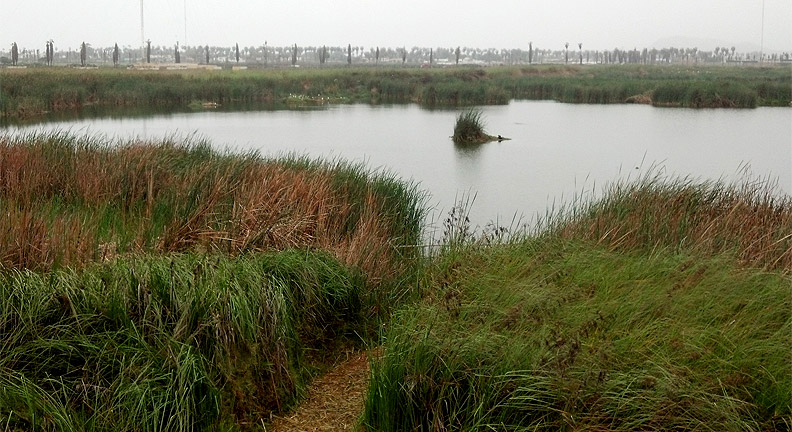
The marshes at Pantanos de Villa

As we headed out of Lima it wasn't long before I saw the marshes coming up on the west side of the highway.  I asked the driver if this was Pantanos de Villa and he said it was.  I asked Sam if she was okay to stop here now since it was on our side of the road and she agreed.  We had read that in the past this area had been a dangerous place to stop as muggings were rather frequent, and cars had been broken in to on multiple occasions.  But in the last year or so some major strides had been taken with several security check points.  We pulled into the headquarters to pay an entrance fee and hired a guide to walk around with us.  Our first stop was at a small pond surrounded by reeds.  The first birds were BLACK VULTURES perched on palm trees, fences, and any other structure they could find.  I spotted some movement along a fence over a small pond and found a SPOTTED SANDPIPER in my view--a bird that a month ago was probably in the mountains somewhere in the western United States.

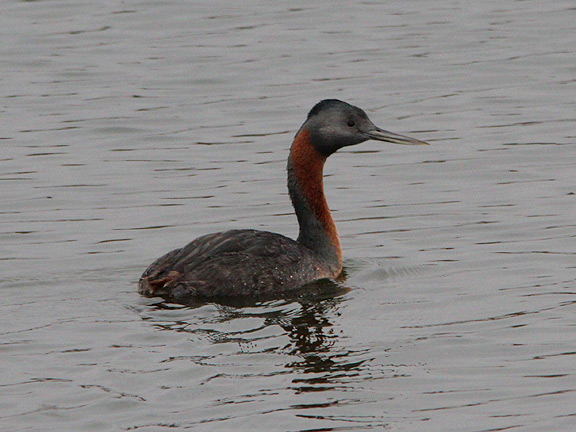
Great Grebe at Pantanos de Villa

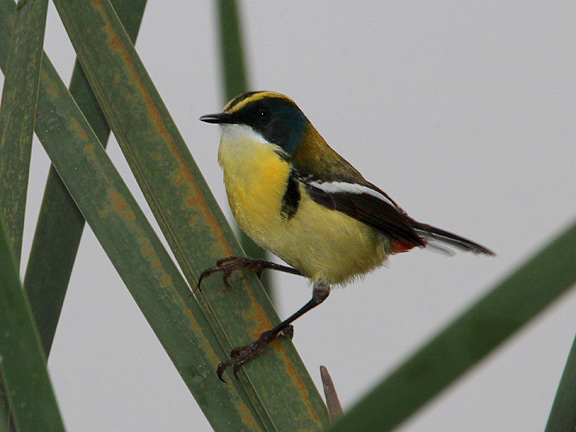
At the pond the lifers began to pile up.  First was a GREAT GREBE sleeping just offshore.  Several GRAY-HOODED GULLS were circling out over the water, while a SLATE-COLORED COOT swam by as we watched.  On the far shore were hoards of egrets and herons.  LITTLE BLUE HERONS and BLACK-CROWNED NIGHT-HERONS were mixed in among the hundreds of CATTLE EGRETS.  Several SNOWY and GREAT EGRETS could also be picked out among the mix.  A BELCHER'S GULL made a pass and in the field behind me a BLUE-BLACK GRASSQUIT could be heard buzzing--but this pond would hold a couple birds I had a bigger interest in.  Not to waste time, and being just a tad early for the breeding season I broke down and pulled my iPod from my bag.  I spun the dial to the flycatchers section and queued up the most colorful bird in the marshes of Peru, the MANY-COLORED RUSH-TYRANT.  Almost instantly 2 birds came flying out of the reeds and overhead--one bird perched long enough to should a couple shots before disappearing into the thick.

#15 on my Top 25 list for Peru--Many-colored Rush-Tyrant

I switched playlists and found my second target song.  As I played the chattering, a WREN-LIKE RUSHBIRD came zipping past us low over the water.  The biggest surprise from this dull streaked black and brown marsh birds was that is had bright reddish-pink wing bars that really stood out in flight.  The rushbirds wasn't going to pose and quickly flew back past us and around the reeds out of view.  It was okay though, I had quickly picked up two birds I had wanted to see very much.  We headed back to the visitor center with our guide, and had the driver take us to the beach and another pond adjacent to it.  As we drove down the road BLUE-AND-WHITE and CHESTNUT-COLLARED SWALLOWS could be seen swarming low over the road ahead of us.  A couple of SCRUB BLACKBIRDS could be heard singing just out of sight in a nearby field, and an AMERICAN KESTREL made a pass overhead.  We pulled to the end of the road at the beach and got out of the car, the guide motioned for us to follow her south towards a large pond.

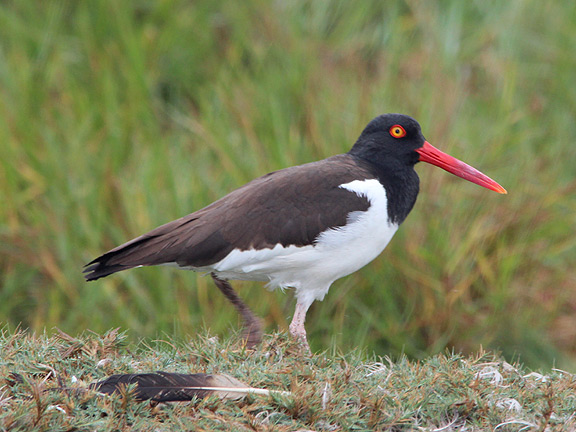
My lifer American Oystercatcher

Several PERUVIAN PELICANS shared a small islet with a number of NEOTROPIC CORMORANTSLATE-COLORED COOTS and COMMON GALLINULE were swimming on the open water.  GREAT and PIED-BILLED GREBE were present as were a number of the "black-headed" form of the RUDDY DUCK.  As we walked along the shore we flushed a number of shorebirds that I hadn't expected to be in Peru yet.  SEMIPALMATED PLOVERS, BAIRD'S and LEAST SANDPIPERS, and more SPOTTED SANDPIPERS were present--while a small flock of SANDERLING flew past through the surf.  More birds I would expect in Utah at this time of year.  Next were the RUDDY TURNSTONES, followed by my lifer AMERICAN OYSTERCATCHERS which were numerous here.  Across the pond in the tall grasses were more coots and herons with a several PUNA IBIS mixed in.  I found several pairs of WHITE-CHEEKED PINTAIL bedded down amongst the larger birds.  A lone ROSEATE SPOONBILL stood out among the masses of other darker birds, adding some nice color to the gray sand and dark skies.

The 4 common coastal gulls in Peru (clockwise from top left):
Kelp, Belcher's, Gray, and Gray-hooded Gulls

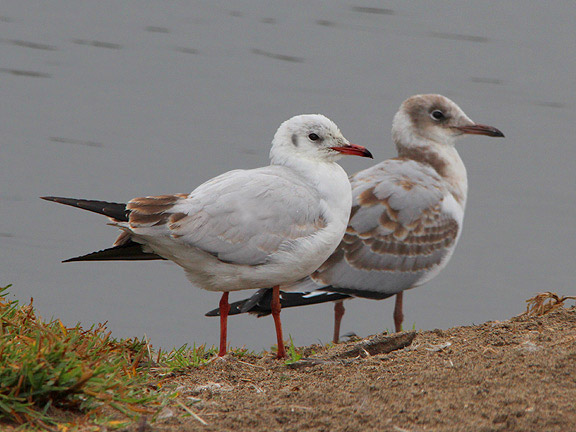
As we neared the end of the pond the gulls took over as the majority of the birds.  BELCHER'S and KELP GULLS numbered in the 100's here, while 50-60 GRAY GULLS roosted on the beach.  Several ANDEAN GULLS were present among the more prevalent GRAY-HOODED GULLS.  I was surprised when I spotted a lone FRANKLIN'S GULL sitting on the water--surely this birds should have been several 1,000 miles north right now.  Perhaps the rarest birds of the trip was found here in a BROWN-HOODED GULL, typically found further south on the continent.

Apparent Brown-hooded Gull (left) with a more common Gray-hooded Gull

In a matter of minutes I had exhausted all the possible gulls for the trip--that was a nice feeling.  It was quite an experience gulling on another continent and actually seeing a bird form back home mixed into the fray.  On the walk back to the car we only added one new trip bird when a small flock of BLACK SKIMMERS came flying past.  I asked the guide where we could find Thick-Knees.  She told us it was very "dificil" to see them as they blended in, but she would take us to a spot they are normally found.  We drove up the road a ways before pulling over next to what we would call a dry playa on the south shore here in Utah.  It was a large dirt basin with plants that looked similar to greasewood.  The guide and I got out and crossed a small creek onto a dirt road that entered the basin.  I started scanning--no birds.  We walked out through the brush and came upon hundred of shorebird tracks--it appeared the thick-knees spent a considerable amount of time here, but we had absolutely zero luck finding any.  In the distance a pair of KILLDEER could be heard whining, while a HARRIS'S HAWK squealed form a palm tree nearby.

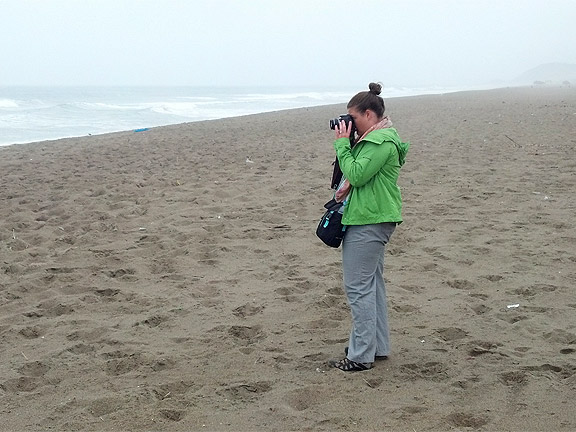
Sam photographing the ocean... Although I think she may have actually been
taking pictures of the gulls :)

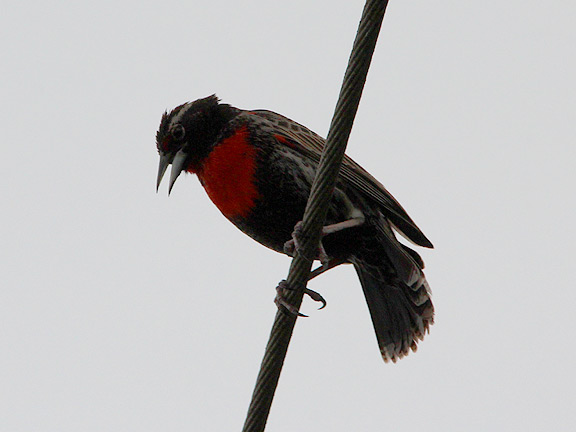
The Peruvian Thick-Knee seemed like a sure thing here--from the reports I had read, this was the place and it was an easy get--just not for me.  My first big miss of the trip.  Back in the car we headed down the road until the driver stopped and pointed to a bird on a wire above the road.  Perched high above the road was the one and only PERUVIAN MEADOWLARK of the trip--thank goodness Mr. Fernandez was paying attention.  A VERMILION FLYCATCHER perched across the road while a pair of CROAKING GROUND-DOVE could be heard from a nearby neighborhood.  I scanned the fields as we drove by hoping to pick up a thick-knee as we left--but it wasn't mean to be. Back at the visitors center I tipped the guide and thanked her for her time.  It had been a very successful stop and we picked up all but a couple of birds I had hoped to find.  The endemic Raimondi's Yellow-Finch, and the spectacular Parrot-billed Seedeater were elusive along with the thick-knee--but that's birding.

The only Peruvian Meadowlark of the trip.

As we left the marsh I thought about what a different place it must have been a year or two before--being mugged or robbed never even crossed my mind while we were there.  Back on the highway we continued south towards our next stop a the Pacachamac Ruins.

17 life birds here / 31 total trip life birds / 62 total trip birds
Photos from Pantanos de Villa  Birding on TimAveryBirding.com

Labels: , ,

Birding Peru part 1 - Lima & Miraflores

posted by Tim Avery at
on Wednesday, September 5, 2012 

August 19, 2012 - Arrival in Lima...

My first view of South America... In the Clouds.

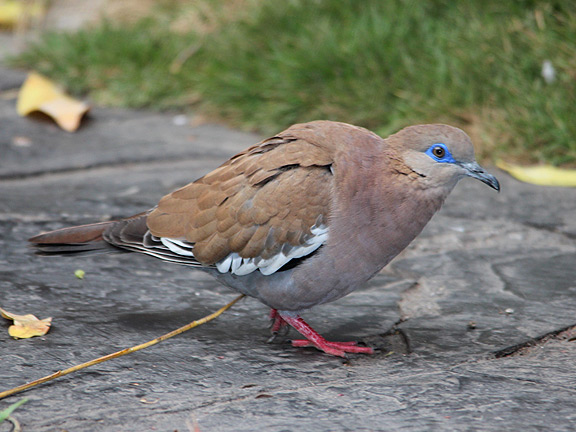
From 35,000' all you could see of Peru was clouds--well clouds and peaks of the highest points in the Andes rising above.  This was our introduction to South America as our plane neared Lima.  We descended through the clouds into fog and then finally could see the Pacific Ocean below, the dunes along the Peruvian coast to the east, and finally that shacks and shanties as we approached the airport.  It was a gloomy morning on the coast, I guess it is like this most of the winter making the place seem quite inhospitable.  Once on the ground it was about an hour from deplaning to get through customs, grab our bags, and find our driver.  In the car we sped through the streets of Lima towards a suburb called Miraflores.  Lima was a dirty city, at least from the parts we visited--not the kind of place I would want to spend too much time in.  The first birds I spied from the car were ROCK PIGEONS, followed by WEST PERUVIAN DOVES and then finally EARED DOVES. The 3 were abundant throughout the city. 

The West Peruvian Dove is superficially similar to our White-winged Dove

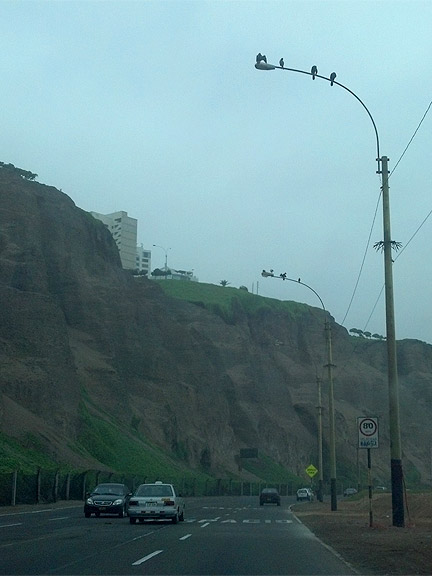
We dropped from the dirty side streets down tot eh coast along a highway, here the power lines and light poles were lined with NEOTROPIC CORMORANTS.  It seems like 3 or 4 birds to a light pole was the rule.  I saw my first BELCHER'S and KELP GULLS here flying alongside the roadway.  BLACK VULTURES could be seen soaring and occasionally mixed in with the cormorants.  Aside from these common birds there wasn't much else along the road.  Finally we headed up a side road back onto the bluffs above the coast, we had arrived in Miraflores where we would be staying.

Light Posts lines with Cormorants in Lima.

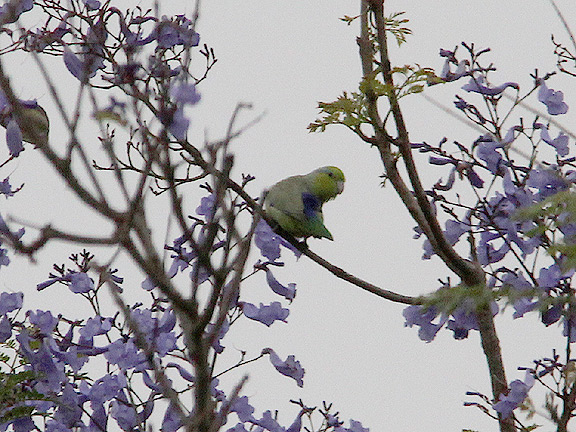
In Miraflores you could tell you had entered a nicer area of the city.  It was cleaner, there were some nicer cars, and people walking dogs--most of which were wearing doggy-coats.  WE finally pulled into an alley that came to a dead end--to the left was an apartment building that rose 5 or 6 floors above the street, and to the right was a 12' cement wall surrounded by trees, and flowering bushes.  As I emerged from the car I could hear the chattering of parrots or parakeets.  It took a couple seconds to find several PACIFIC PARROTLETS at the top of trees a block or so away, but a welcome sight.  This species isn't native to Lima but is well established in many areas.  Inside the gates we flushed several WEST PERUVIAN DOVES and BANANAQUITS could be heard calling in the trees above.  I could hear other birds calling but wanted to get checked in and put my bags down.

The best shot I managed of a Pacific Parrotlet high in a tree.

We were staying at a bed and breakfast called Second Home Peru.  It was located on the cliffs overlooking the Pacific and was highly touted on Trip Advisor--more importantly it wasn't a major chain.  One unexpected "ah ha" moment of the trip happened at the airport when we met our driver for our time in Lima Mr. Fernandez.  I had fully expected most of the people we came into contact to speak some English--being that we would mostly be dealing with people in the travel, and tourism industry who relied on Americans and Europeans for much of their livelihood.  This assumption couldn't have been more wrong.  Mr. Fernandez who was a great driver didn't speak any English, but we were able to make due with my limited Spanish--over the following two weeks I probably doubled my vocabulary and became way more comfortable with most of the everyday talk needed.  In any event at the B&B the woman at the front desk also spoke no English, so it a took a couple minutes to get everything taken care of.  Finally we were led upstairs to our room, where Sam promptly dove into bed and took a nap.  I on the other hand got my camera put together, grabbed my binoculars and headed out on the balcony--there were birds to be seen.

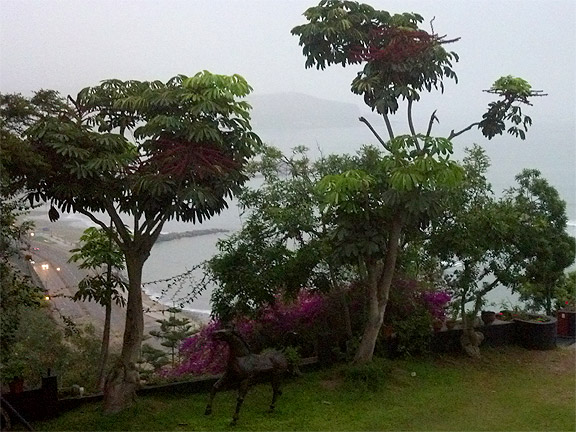
View from the Patio towards the Pacific Ocean.

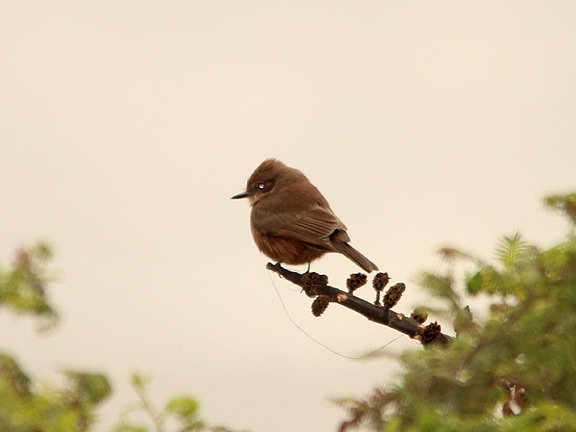
The view from the balcony was amazing--too bad the fog made for a misty and somewhat limited view of what you could actually see.  BLACK VULTURES were perched on many of the buildings and trees from where I could see.  They were the most abundant bird of the high cliffs.  Below on the highway along the coast I could make out NEOTROPIC CORMORANTS, BELCHER'S GULLS, KELP GULLS, and in the distance on the water were  INCA TERNS and PERUVIAN BOOBIES.  A pair of PERUVIAN PELICANS coasted by at one point, and even further out on the water I could make out specks of 100's of birds I couldn't ID.  I turned my attention to the trees where a VERMILION FLYCATCHER popped out against the gray sky.  I had hoped to see the "sooty" morph found here--birds that are a smoky gray-brown from head to toe, and was surprised that my Vermilion here was a typical male.  It was only a couple of minutes before one of the "sooty" birds popped up on a dead limb--a cool bird, but it can't shake a stick at a typical males beautiful and striking plumage.

"Sooty" morph Vermilion Flycatcher in Miraflores.

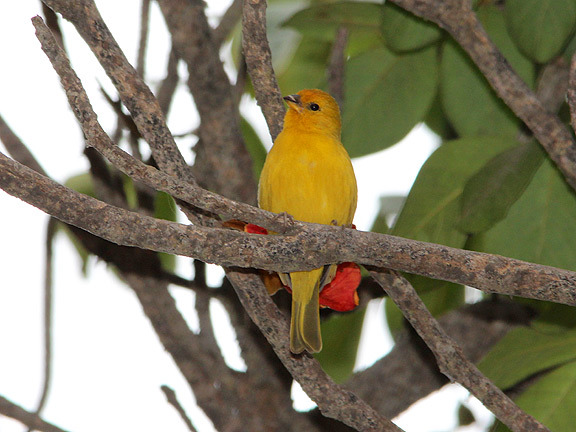
A TROPICAL KINGBIRD flew in to the picture followed by a BLUE-GRAY TANAGER--both birds I was familiar with from my last trip to Costa Rica.  I decided to head to the courtyard to see what I could find there, as the trees along the cliffs weren't turning up anything new.  In the courtyard I was greeted by a LONG-TAILED MOCKINGBIRD that had no intentions of allowing me to take a photograph.  Above me I caught a glimpse of an AMAZILIA HUMMINGBIRD flying from flower to flower--it never got close for good pictures and was the only hummer I saw on the coast.  A pair of bright yellow finches landed in the trees, when I got my binoculars on them I thought they looked like SAFFRON FINCHES even though that species only occurred in the north.  A quick check of the field guide revealed they had a feral population in Lima.

Saffron Finch posing in the garden of our bed and breakfast.

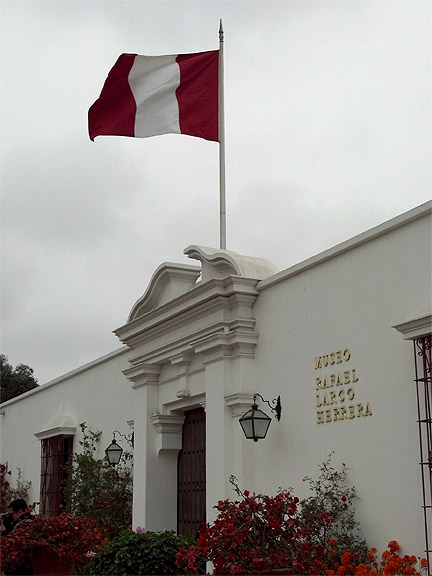
A few RED-MASKED PARAKEETS made a pass and a HOUSE WREN popped up on the wall singing like crazy.  A pair of HOODED SISKIN flew over landing in the trees for a moment before departing. I headed back to the lawn overlooking the coast and spotted a pair of HARRIS'S HAWKS circling over the bluffs.  A few BLUE-AND-WHITE SWALLOWS were now flying along the apartments to the north of us, and a couple RUFOUS-COLLARED SPARROWS appeared on the edges of the lawn.  It was early in the afternoon and I had pretty much exhausted the birding on the property. I woke Sam up and we caught a cab into the city to the Museo Larco where they have a treasure trove of Incan relics.  The gardens on the grounds provided most of the same birds from the morning.  We decided to eat at the museum since it was safe and we were there already.  As we sat in the  open air portion of the restaurant a small COLLARED WARBLING-FINCH appeared on the patio, the only of the trip--too bad my camera was back in our room!

The Museo Larco in Lima is a must visit for tourists.

Our first day in Lima came to an end as we relaxed in our room, and caught up on some much needed sleep from our overnight flight.  The following day we would head down the coast to visit the Pacachamac Ruins, Pucusana Fishing Village, and the Pantanos de Villa marshes--I fell asleep thinking about the possibility of seeing my first ever wild penguins the next day.

14 life birds today / 14 total trip life birds / 26 total trip birds
Photos from Lima and Miraflores Birding on TimAveryBirding.com

Labels: , ,


UTAH BIRDERS FLICKR POOL


    SEE MORE AND SHARE ON FLICKR