Utah Birds, Utah Birding, and Utah Birders. Promoting the sharing of information, and the conservation of habitat for birds in Utah and elsewhere. We are a group of people who want to share what we know, and create a positive birding experience in Utah.

BIRDERS BLOG

a blog by and for Utah Birders

Snagging Year Birds--Southern Utah Style

posted by Tim Avery at
on Monday, February 25, 2013 

Jeff Bilsky and I headed to southern Utah this past weekend hoping to miss the snow, have some warmer temps, pick up some new year birds, and find a few good ones as well.  On the way to my house Jeff spotted a MERLIN on 2000 East and Bengal Blvd (appx 8200 south).  After leaving Salt Lake we headed to Grove Creek Canyon in Pleasant Grove to try for the Winter Wren. Along the way we noted a DOUBLE-CRESTED CORMORANT at Mill Pond in American Fork.  When we got to Grove Creek Canyon we heard the previously reported WINTER WREN calling from the brush south of the parking area.  It took a couple minutes to find the bird and about 20 minutes before we got decent looks.  I was able to make a pretty good recording of it chattering, but only managed a mediocre photo.

1st state record Winter Wren in Grove Creek Canyon

This bird was unofficially my 402nd species for Utah, and strangely it didn't leave me in wonderment like so many others have.  I was more excited about birds that are way more common in the following days.

After the wren we hopped back on the highway and sped south arriving in St. George for the night.  We made our way in the dark onto the Beaver Dam slope, setting up camp on a flat patch of dirt I refer to as the middle of nowhere.  It was around 36 degrees when we arrived and instead of tents, just threw our bags out next to the truck, the way birding and camping in February in Utah should be.

Camping in the middle of no where!

It did get cold but the night passed quickly, with a GREAT HORNED OWL piping up around 5:00am.  After that I passed back out only to be awakened just after 7:00am by Jeff screaming, "Tim Get Up!  Get Up!"  Startled and half asleep I came to as Jeff pointed skyward and yelled, "SNOW GEESE!"  As we watched and listened, 3 flocks totaling almost 500 birds passed over the Mojave Desert, barren and void of places for the birds to stop--it was surreal seeing these white geese in this place.

Sunrise on the East Mormon Mountains in Nevada

After getting fully composed it was easy to sit back and listen to the desert come alive.  House Finches flew over calling, while a CACTUS WREN chattered off in the distance.  A LOGGERHEAD SHRIKE called over and over again--these hardy bird were the voice the morning.

We got rolling and headed across the slope.  A pair of BREWER'S SPARROW crossed the road at our first stop, followed by a ROCK WREN.  Few other birds were active in the shadows and cold. A flock of PINYON JAYS working through the Joshua Trees was a nice sight.

Pinyon Jay perched on a Joshua Tree

As we came to the edge of the wash the ever powerful view of the ranch got me excited for the birding to come--way more than that Wren the day before--it was the desert in February and it was coming alive.  At the ranch we picked up our first WESTERN BLUEBIRDS and VERDIN.  White-crowned Sparrow were chattering.  A sapsucker could be heard drumming from nearby.  BEWICK'S WREN were hastily scolding from the creosotes. The sun was now warming things up and I could sense we were in for some good birds.

Always love the first look at Lytle Ranch Preserve

As we approached the camping area and small orchard a HARRIS'S SPARROW popped up right in front of us.  A moment later we had 2 and were elated at how easy they came into view.  They provided excellent photo ops in great light as well.

1 of 3 Harris's Sparrows seen on the trip

Heading into the trees towards the main orchard Jeff found the YELLOW-BELLIED SAPSUCKER which also provided excellent looks.

Yellow-bellied Sapsucker at Lytle Ranch

Onward into the orchard there were dozens of sparrows, mostly White-crowned, Savannah, Lincoln's, and Song.  We also turned up one VESPER and a alternate plumaged CHIPPING SPARROW that must have recently arrived.  We walked up through the ranch to the pond and back down to the orchard again where a male ANNA'S HUMMINGBIRD posed for photos.

This male Anna's Hummingbird came back twice to pose

Back near the houses we got short looks at an early female COSTA'S HUMMINGBIRD.  We split up for a little and I came across the WHITE-THROATED SPARROW previously reported in the small orchard.  The birds were in a cooperative mood today.

1 of 2 White-throated Sparrows at Lytle Ranch

We crossed Beaver Dam Creek to check the trees south of the river where a nice flock of warblers was moving through the trees.  2 ORANGE-CROWNED WARBLERS were mixed in with the more common Yellow-rumped.  We headed back to St. George stopping at Ivins where there was a smattering of waterfowl, and where the wind had picked up making it difficult to want to scope the water.  We tried for the Vermilion Flycatchers in Santa Clara but came up empty handed. WILSON'S SNIPE and KILLDEER were a consolation, along with 2  arriving NORTHERN ROUGH-WINGED SWALLOWS.  A MUTE SWAN could be seen down river, and Jeff picked up Marsh Wren as well.

Mute Swan hiding along the Santa Clara River

Tonaquint Park produced the usual ABERT'S TOWHEES and had a more than cooperative CANVASBACK and several RING-NECKED DUCKS for photography.

Super photogenic Canvasback at Tonaquint Park

St. George Golf Club had it's usual mix of Mallards, Wigeon, and Coots, and Springs Estate Pond had its continuing SNOW GOOSE (a.k.a. Big Day cannon fodder).  The Washington Fields were as busy as I have seen them with traffic. I t was a little disheartening seeing so many people criss-crossing the tiny roads here.  We tried for the Lark Bunting to no avail, but in just 4 minutes snagged all 4 common Utah Falcon species within a mile of each other--a highlight on its own.


This Peregrine Falcon was 1 of 4 falcon species seen in 4 minutes! 

As we passed over the Virgin River into Washington City I noticed what looked like some Hooded Mergansers on the public fishing pond there, but wasn't able to stop.  So instead we pulled into the turn around at the tiny pond I have always called Washington Fields Pond to the southwest side of Washington Fields Road at 840 south.  As we turned around Jeff spotted a Cormorant so we hopped out to see what else was there.  As we walked towards the bird and I got a good look I hollered to him that it was a NEOTROPIC CORMORANT!

First reported Neotropic Cormorant of the year in Utah

Several GREATER SCAUP were also here--while we watched the cormorant took flight and disappeared to the southeast towards Springs Pond/Seegmiller Marsh. Back across the river at the fishing pond there were indeed 8 HOODED MERGANSER.

Hooded Mergansers in the Washington Fields

Wanting to maximize the daylight we had, we headed back through St. Goeorge towards Santa Clara.  Along the way we saw about 50 GREAT-TAILED GRACKLE eating out a In-n-Out Burger.  We headed to Stonebridge Golf Course where a tip on a GREATER WHITE-FRONTED GOOSE led to great looks.

Greater White-fronted Goose at Stonebridge Golf Course

We finished off the birding for the day at Entrada Golf Course where the continuing ROSS'S GOOSE (potential cannon fodder for a big day again too) was--as well as a few HOODED MERGANSER and a GREAT EGRET.  Before heading back out to the slope we stopped at IRMITA's on St. George Boulevard for some delicious, greasy, and most importantly hot Mexican food.  The Carne Asada was warmed my soul, before the the icy winter night would take it out of me.  Back on the slope the wind made the already cold temps feel even colder.  We camped out again, and the 2nd night definitely felt colder than the first!

Sunrise over the Beaver Dam Mountains

Sunday morning started in the same fashion as Saturday--minus the yelling and the geese, and the jays.  This time we added MOUNTAIN BLUEBIRD going across the slope.  The ranch was in a similar state of affair from the previous day.  We only snagged one Harris's this go around but did find 2 different WHITE-THROATED SPARROWS.  We picked up GAMBEL'S QUAIL which evaded us the previous day, and I found a lone HERMIT THRUSH in the small orchard.

A Hermit Thrush in the small orchard at Lytle Ranch

The wind made the birding brutal and most of our stops were more frustrating than enjoyable.  We put almost an hour in looking for the Vermilion Flycatchers again--and again had no luck.  We did find a FOY CINNAMON TEAL mixed with a flock of Green-winged.  We again spent some time in the Washington Fields, and drove Washington Dam Road over to Sand Hollow.  The birds were sparse but the view was amazing.

Blue, White, Red, Orange, Green, Purple--Washington County...

Sand Hollow was riddled with white caps--and few birds.  The SR-9 Sewage Ponds have a nice flock of 35 DOUBLE-CRESTED CORMORANT, and we couldn't turn up anything in Zion'ss Gate or the surrounding neighborhoods that resembled an Inca Dove.  And aside from the flock of Ring-billed Gull at Stratton Pond, the most interesting sighting there were the polygamists in full garb--gotta love Utah!

We made one last ditch stop at Quail Creek to add WESTERN GREBE for the weekend before hopping on I-15 and heading north.  The drive back was raptor filled.  We had a ROUGH-LEGGED HAWK at mile marked 40 just inside Washington County.  I think this was only the 2nd Roughie I have had in Washignton County, although there appear to be dozen of reports in eBird.  By drives end I think we had about 40 Red-tailed Hawk 5 BALD EAGLE, a GREAT HORNED OWL form Fillmore, and a couple Northern Harriers.  The last bird of the trip was one of the continuing dark MERLIN at 1300 East and 9400 south in Sandy.

We recorded 101 species  from Salt Lake, Utah, Juab, Millard, Beaver, Iron, and Washington County--not a bad weekend in February!  A link to my gallery with more shots is here:

http://www.timaverybirding.com/photos/thumbnails.php?album=lastup&cat=0

A complete list of birds seen follows:

#################################

ALL CAPS BOLD - notable
* - occasional
** - accidental

#################################

GREATER WHITE-FRONTED GOOSE
SNOW GOOSE
ROSS'S GOOSE
Canada Goose
Mute Swan
Gadwall
American Wigeon
Mallard
CINNAMON TEAL
Northern Shoveler
Green-winged Teal
Canvasback
Ring-necked Duck
GREATER SCAUP
Lesser Scaup
Bufflehead
Common Goldeneye
HOODED MERGANSER
Common Merganser
Ruddy Duck
Gambel's Quail
Ring-necked Pheasant
Pied-billed Grebe
Western Grebe
NEOTROPIC CORMORANT*
Double-crested Cormorant
Great Blue Heron
Great Egret
Golden Eagle
Northern Harrier
Cooper's Hawk
Bald Eagle
Red-tailed Hawk
Ferruginous Hawk
Rough-legged Hawk
American Coot
Killdeer
Wilson's Snipe
Ring-billed Gull
Rock Pigeon
Eurasian Collared-Dove
Mourning Dove
Great Horned Owl
ANNA'S HUMMINGBIRD
COSTA'S HUMMINGBIRD
YELLOW-BELLIED SAPSUCKER*
Red-naped Sapsucker
Ladder-backed Woodpecker
Northern Flicker
American Kestrel
Merlin
Peregrine Falcon
Prairie Falcon
Black Phoebe
Say's Phoebe
Loggerhead Shrike
PINYON JAY
Black-billed Magpie
Common Raven
NORTHERN ROUGH-WINGED SWALLOW
Black-capped Chickadee
Verdin
Bushtit
Rock Wren
WINTER WREN**
Bewick's Wren
Cactus Wren
BLACK-TAILED GNATCATCHER
Ruby-crowned Kinglet
Western Bluebird
Mountain Bluebird
Townsend's Solitaire
HERMIT THRUSH
American Robin
Northern Mockingbird
European Starling
American Pipit
Phainopepla
Orange-crowned Warbler
Yellow-rumped Warbler
Spotted Towhee
Abert's Towhee
CHIPPING SPARROW
BREWER'S SPARROW
Vesper Sparrow
Black-throated Sparrow
Savannah Sparrow
Song Sparrow
Lincoln's Sparrow
WHITE-THROATED SPARROW
HARRIS'S SPARROW
White-crowned Sparrow
Dark-eyed Junco
Red-winged Blackbird
Western Meadowlark
Brewer's Blackbird
Great-tailed Grackle
Brown-headed Cowbird
House Finch
Lesser Goldfinch
House Sparrow

Labels: , ,

The Dream of a Lifetime: Birding in Southern Arizona - Part 2

posted by Kenny Frisch at
on Friday, February 15, 2013 

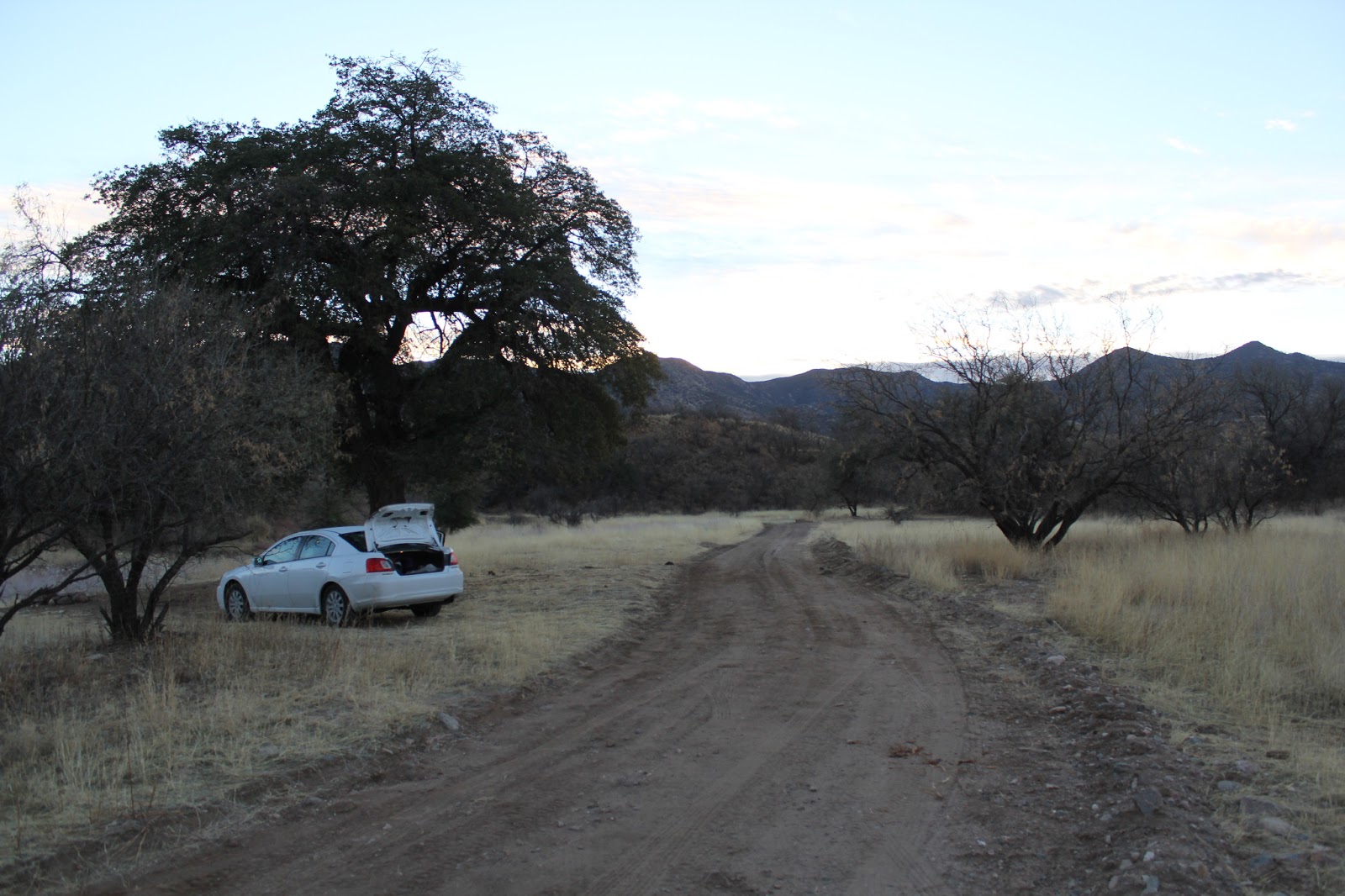
Friday morning I woke up at sunrise, excited for the possibilities that the day could present.  There had been some great birds seen in Patagonia Lake State Park the past few weeks like Black-capped Gnatcatcher, Elegant Trogon and Ruddy Ground-Doves and one could find additional rarities as well.   Another bonus would be getting to spend the day with my younger brother Jeff who had gotten permission to have the day off from school to come visit me.  He had driven down from Prescott, Arizona Thursday night and was supposed to meet us but couldn't find the road to ultimately turn onto to get to where we were sleeping, so we would meet up this morning.  He is a big fan of nature and has been getting into birds lately, even accompanying me on birding trips to Maine, Massachusetts and Michigan.  John and I got our car packed and made the short drive to Patagonia Lake State Park.

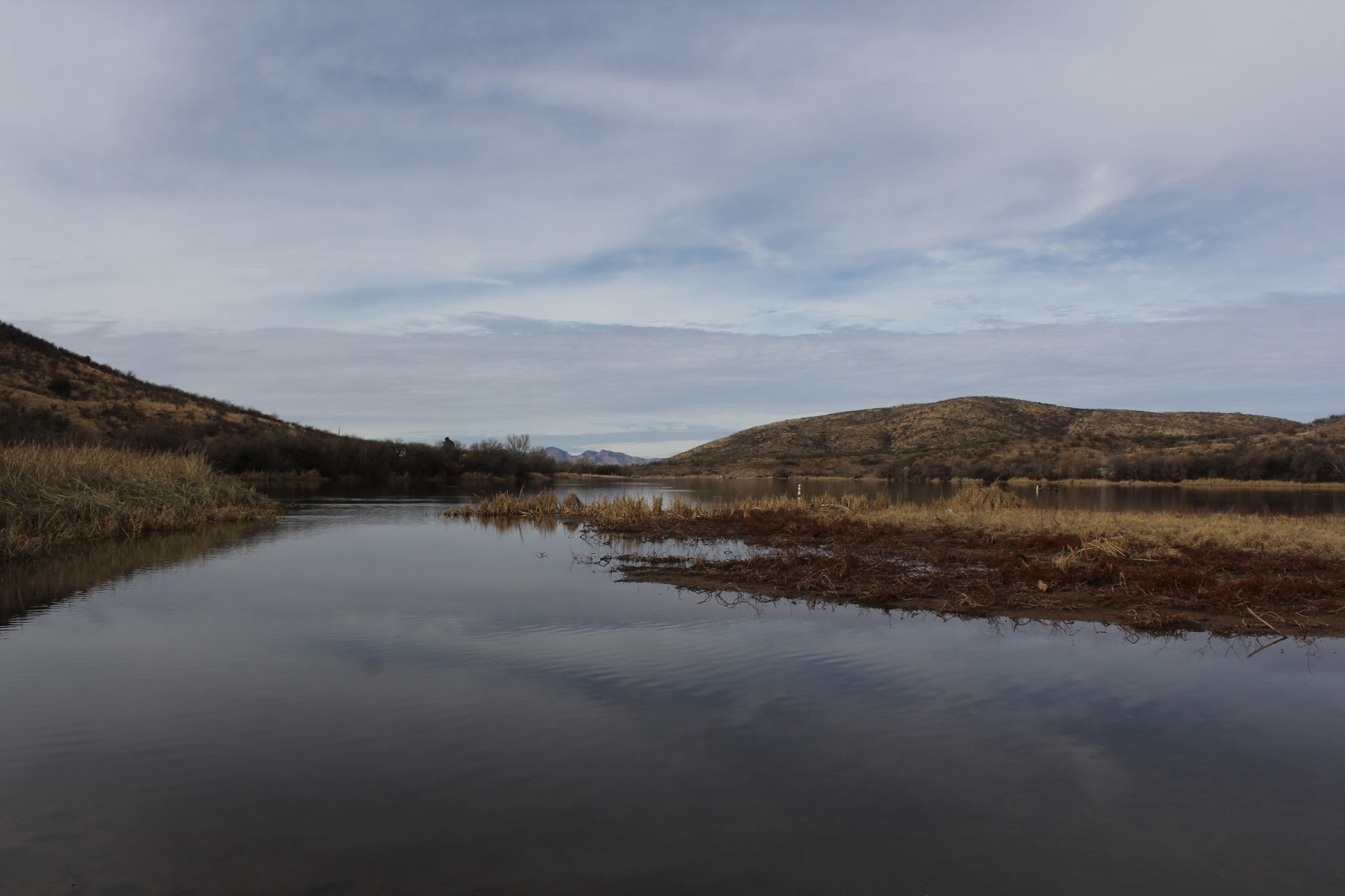
I didn't mind waking up to this scenic view

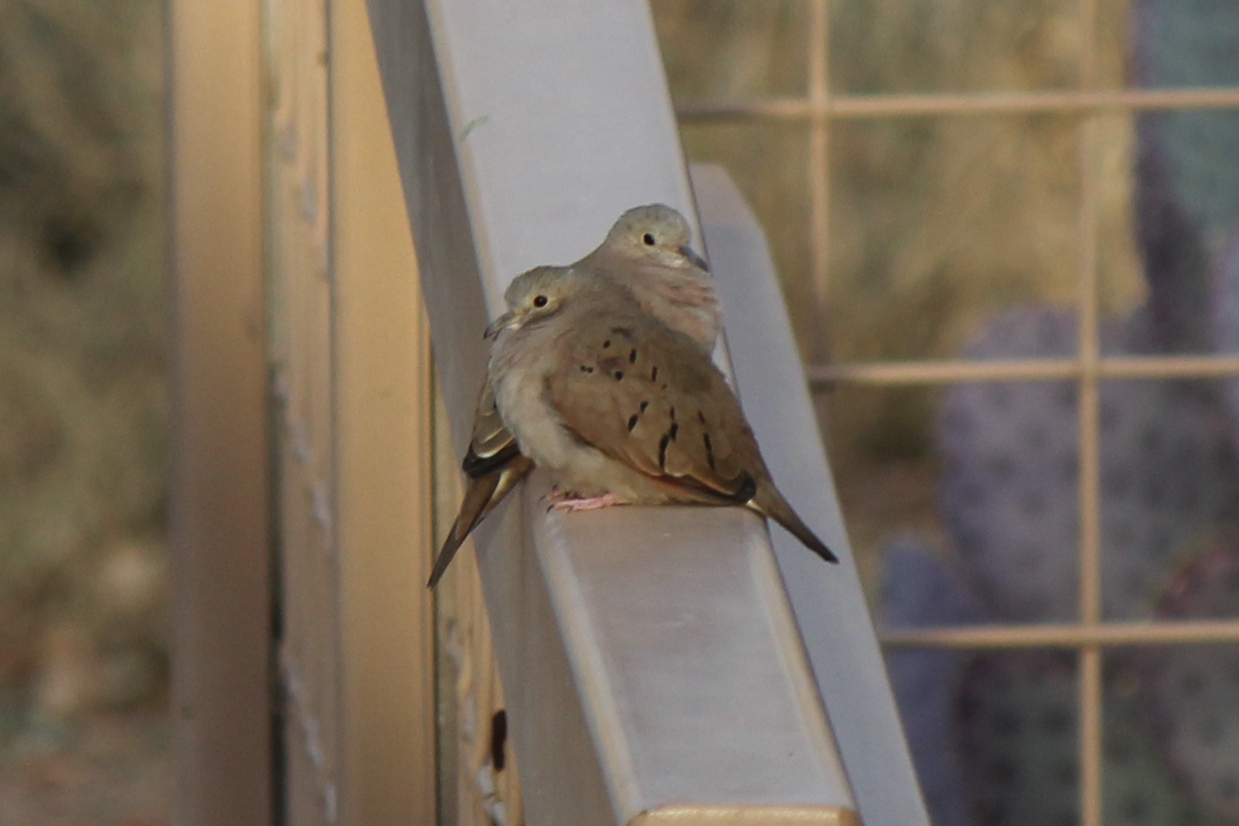
We found my brother at the Patagonia Lake Visitor Center.  Amazingly the first birds we saw at the visitor center were a lifer for me; two Ruddy Ground-Doves that had been hanging out there for the past few months.  They were with a pair of Inca Doves, but the Common Ground-Doves that were supposed to be at there were not to be found.  I am pretty sure that I am the only person with Ruddy Ground-Dove on their life list and not Common Ground-Dove.  Also at the visitor center was a nice male Anna's Hummingbird that even "sang" for us while we were there.

It's nice to get lifer Ruddy Ground-Doves first thing in the morning

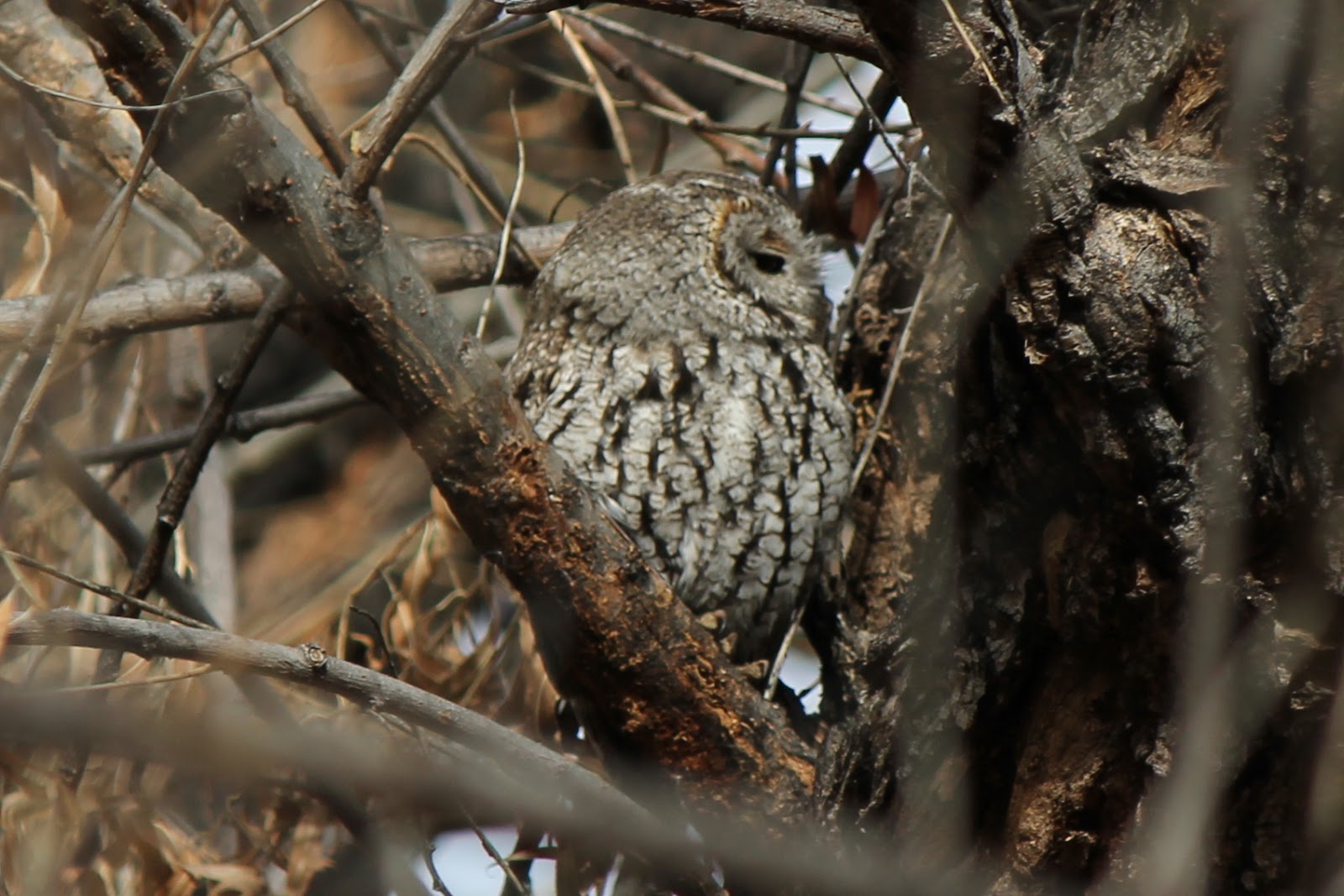
At the visitor center, we ran into a man from Maine who was birding the winter across the southern US and living out of his car while doing so.  Needless to say I was very jealous of him, but even more so when he told me that he had a roosting Western Screech-Owl and an Elegant Trogon the day before.  He kindly led us to the owl and gave us directions to the spot where the trogon was being seen.  I was very excited at this point since Elegant Trogon was the bird I had wanted to see the most down in Arizona.

I can never say no to seeing a roosting Western Screech-Owl

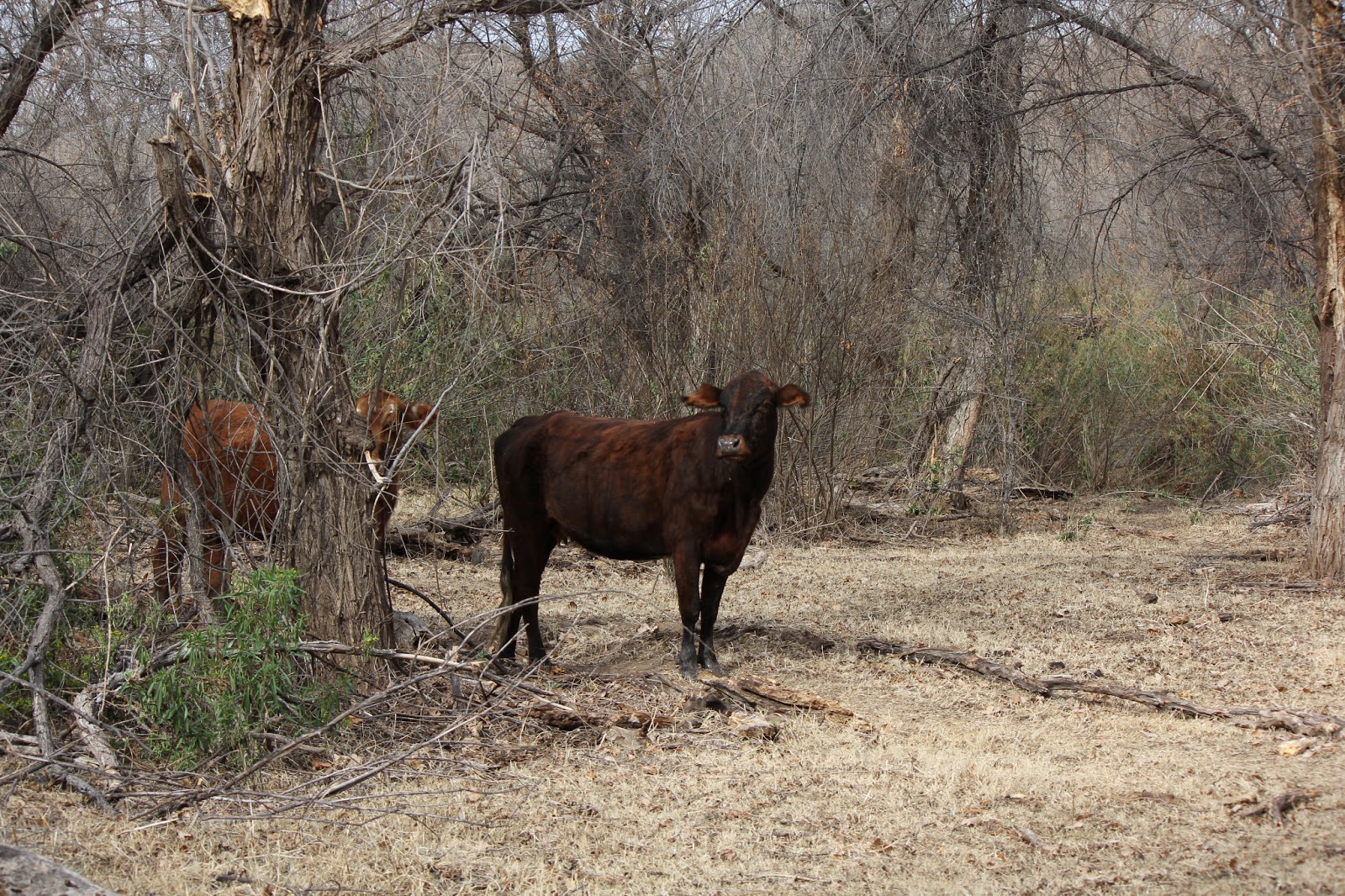
We continued on , seeing many nice birds like Bridled Titmice, Ladder-backed Woodpeckers, Swamp Sparrows, and Northern Cardinals and eventually made it to the spot where the trogon had been seen the day earlier.  We started walking along Sonoita Creek, being careful not to bother any of the cows that ranged freely in this part of the park.  After a few minutes, we heard a single "Co-ah" call behind us and we all stopped in our tracks.  We had just heard the trogon!  We backtracked to around the area where the call had come from but no trogon.  I figured the hard part was behind us since we had heard the trogon and knew it was around.  I was wrong.  We spent the next hour searching for the bird, even splitting up to cover more ground.  I feel like I now know that section of Patagonia Lake State Park like the back of my hand but it was all for not; we never found the trogon.

 We got to see cows at Patagonia Lake, but no trogons

Later on, I thought how it was funny how I could be so excited to hear Whiskered Screech-Owls the night before despite not not getting to see them, but with the Elegant Trogon I was pretty upset to only hear it and not see it.  It all involves expectations of the birds you are trying to get.  I really wanted to see an Elegant Trogon, whereas I wanted to just hear Whiskered Screech-Owls.  I will now have a species to really target the next time I go down to Southern Arizona.  OK, I'll stop whining now and show you some more pictures of the rest of our time in Patagonia Lake State Park.

Beautiful Patagonia Lake in the morning

A cooperative Ash-throated Flycatcher was a nice find

A panorama of Patagonia Lake State Park area with the park on the right side

After Patagonia Lake State Park, we headed to another southeastern Arizona hotspot: the Patagonia Roadside Rest Area.  It may not seem like much, just a picnic table and some grass and trees, but it has been the site for several US 1st records including Black-capped Gnatcatcher and Yellow Grosbeak.  The highlights here including another male Hepatic Tanager, a lifer for my brother and a Hutton's Vireo.  I am sure I saw more of these vireos while down there, but their close appearance to Ruby-crowned Kinglets (perhaps the most common bird down there) probably left them overlooked.

Patagonia Roadside Rest Area, an unassuming hotspot

From there we continued down Highway 82 to the town of Patagonia and quite possibly the most famous yard in the United States, the Paton's.  For dozens of years, they have allowed visitors to view their feeders and yard, even erecting a pavilion with seats for shade.  There have also been several US 1sts here and it is a rarity magnet.  However when we arrived there were no birds to be seen.  We were confused until a Sharp-shinned Hawk flushed from a tree.  We decided to come back and hoped that there would be more birds when we came back after our next stop, the Patagonia-Sonoita Creek Preserve.

 Patagonia-Sonoita Creek Preserve and its riparian woodlands

The Patagonia-Sonoita Creek Preserve is a Nature Conservancy property boasting a great riparian woodland with towering Fremont Cottonwood among other trees.  Unfortunately the birding was hit or miss, but at least we got a great hike out of it.  At the end of the Railroad Trail, we had both Say's and Black Phoebes in view at the same time.  I had been hearing Eastern Bluebirds calling while hiking the Railroad Trail and finally got to see them as we were hiking back along the Creek Trail.  The best bird we saw though was another eastern species that I had seen when I was back at home.

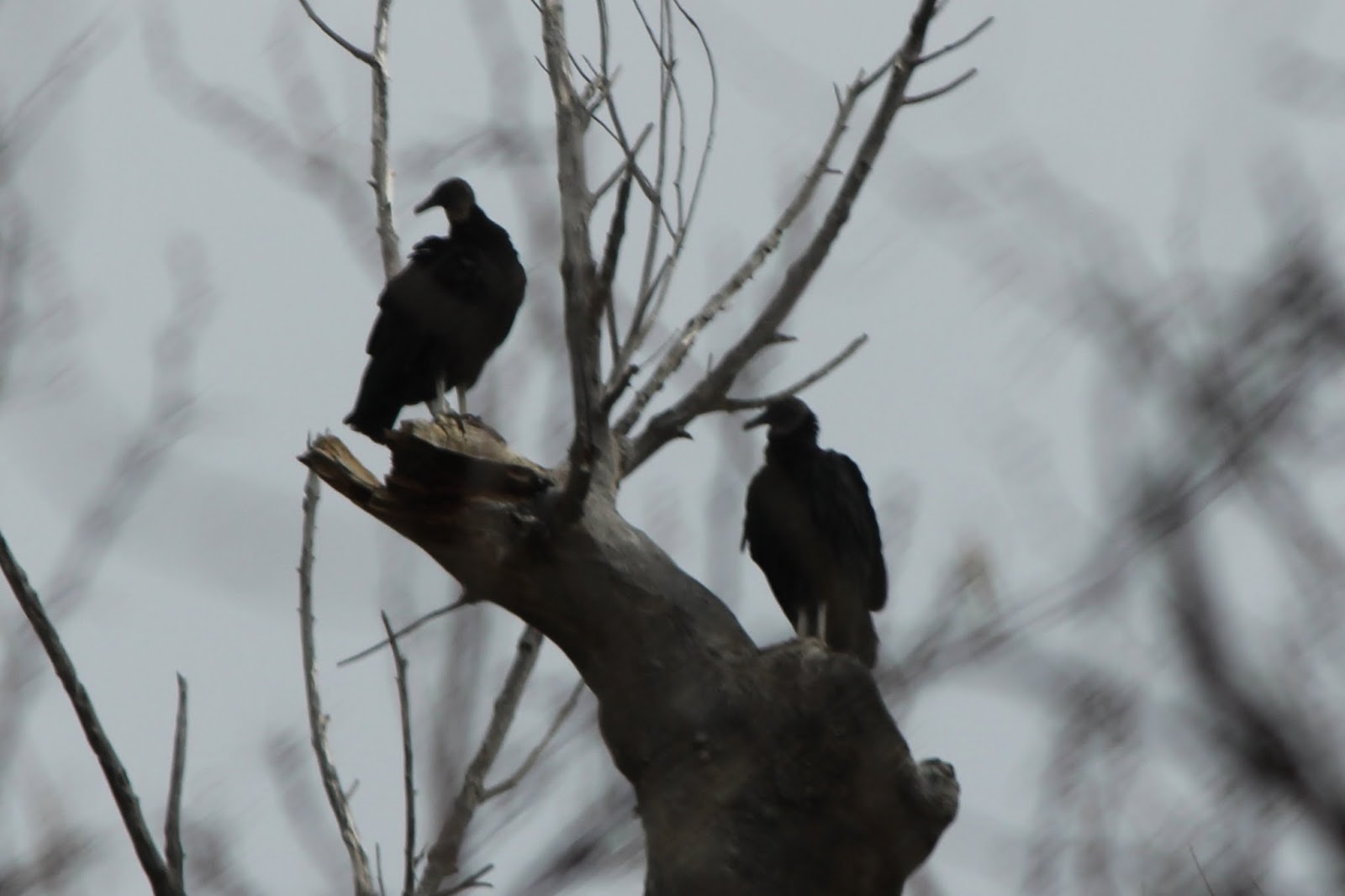
We came across a blackbird while on the Creek Trail and the most striking feature of the bird was a rusty triangle on its back and it didn't look quite right structurally for a Brewers.  I wasn't sure if Brewer's Blackbirds were able to show that color on their back but Rusty Blackbirds weren't supposed to be there.  When I finally got back to my Sibley's guide, I checked out the two species and realized we had seen actually seen a Rusty Blackbird!  Eastern birds again kept showing up for me.  The rest of the hike was good for species and I was excited to see Abert's Towhee and a pair of Black Vultures.

A pair of Black Vultures were a nice site at Patagonia-Sonoita Creek Preserve

Arriving back to the car, we found a decent flock of sparrows feeding in some weeds.  Checking out the flock, we found it mostly to be mostly White-crowned Sparrows but mixed in were a few Lark Sparrows and a nice Rufous-winged Sparrow.

The second Rufous-winged Sparrow of the trip was a lifer for my brother

We headed back to the Paton's house and what a change it was from earlier.  The feeders were full of many birds and 26 species total  This is what I had been expecting this place to be like.  There was bird activity all around us.  Anna's Hummingbirds came to the various hummingbird feeders.  Gambel's Quail sat on the same feeder as a Lazuli Bunting and Pyrrhuloxia.  A Green-tailed and Abert's Towhee fed on the ground with a Lincoln's and White-crowned Sparrows.  A suet feeder attracted Gila Woodpeckers, Yellow-rumped Warblers and White-breasted Nuthatches.  There were Pine Siskins in the trees and a Curve-billed Thrasher gave its "whit-wheet" call nearby.  I don't think I put down my binoculars for the thirty minutes we were there.

 A pair of Gila Woodpeckers at the Paton's yard

 This Lincoln's Sparrow was just one of the six species of sparrows present

 Thanks to the Lazuli Bunting and White-winged and Mourning Doves for posing for me

 A Gambel's Quail fed close to us

On a related note, the Paton's home is for sale.  If I had the money, I would buy it just to have the best yard list in the United States.  This place was a gem.

From their we headed out to the San Rafael Grasslands.  The Lane guide told of a vista point there after driving out of Harshaw Canyon that "is one of the most satisfying visual experiences available to birders in all Southeastern Arizona".  I was skeptical about how great this view could really be, but when we drove out of the canyon, my breath was taken away.  The sweeping views were gorgeous.


 Two views of the San Rafael Grasslands

The San Rafael Grasslands were a treat to bird as well.  Raptors were well represented with multiple Northern Harriers and American Kestrels, a Red-tailed Hawk, a Merlin and even a Rough-legged Hawk which are considered rare in Southern Arizona.  Songbirds were also in abundance with many Vesper and Savannah Sparrows and the Lillian's subspecies of  Eastern Meadowlark.  With both Western and Eastern Meadowlarks in Southeastern Arizona, I got to work on the best ways to separate them.  I found the best way to tell them apart involved looking at their tails which is pretty easy to do as it always seems like meadowlarks are flying away from me.  Eastern Meadowlarks have extensive white in their tails, where as only the outer 2 or 3 tail feathers in Westerns are white.

Even with bad views, the extensive white in Eastern Meadowlark tails is obvious.

There were also some Pronghorn Antelope to complete the whole grasslands feel.  Despite missing two target species, Baird's Sparrow and Chestnut-collared Longspur, we had a great time soaking in the views and enjoying the birding.  

 The road through Harshaw Canyon

We took the road back through Harshaw Canyon to Patagonia to pick up my brother's car and had our final great birding moment of the day.  His car was parked in a tiny town park that has barely any trees.  Despite this we heard and found an Acorn Woodpecker on top of a light pole across the parking lot.  Then in a tree right next to our cars we had our second Hepatic Tanager of the day giving us much better views than the first one and a Red-naped Sapsucker was in the same tree.  Great birds are everywhere down there!  Even the last bird of the day was great sight.  As we were approaching a Border Patrol checkpoint, John and I saw a large bird perched on a 20 foot yucca stalk on our right.  As we got even with the bird we saw two big horns and the immense silhouette of a Great-Horned Owl.

Some of the Pronghorn Antelope we saw in the San Rafael Grasslands

 The Santa Rita mountains at sunset

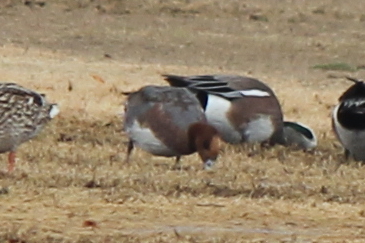
I thought that was the end of my birding in Arizona, but I was wrong.  The ultimate frisbee tournament got cancelled due to rain (who would ever expect that?) and I was disappointed for about 5 seconds before I realized that 1) I'm in Arizona 2) Have all my birding equipment with me and 3) Have a rental car.  With about 8 hours to kill before heading to the airport, John and I went out birding joined by our friend Rich.  Getting online, I found that there was a Eurasian Wigeon hanging out at a nearby elementary school with some American Wigeon.  Fifteen minutes later we were viewing the bird and also had a few funny encounters with people including two kids who offered to catch the bird for me after I told them that I was looking at a rare duck from Eurasia and also running into a couple who we had originally seen in Florida Canyon on the first day we were down here.  What of the odds of running into them in the fifteen minutes we were viewing the duck?

This Eurasian Wigeon was memorable for the human encounters we had while viewing it

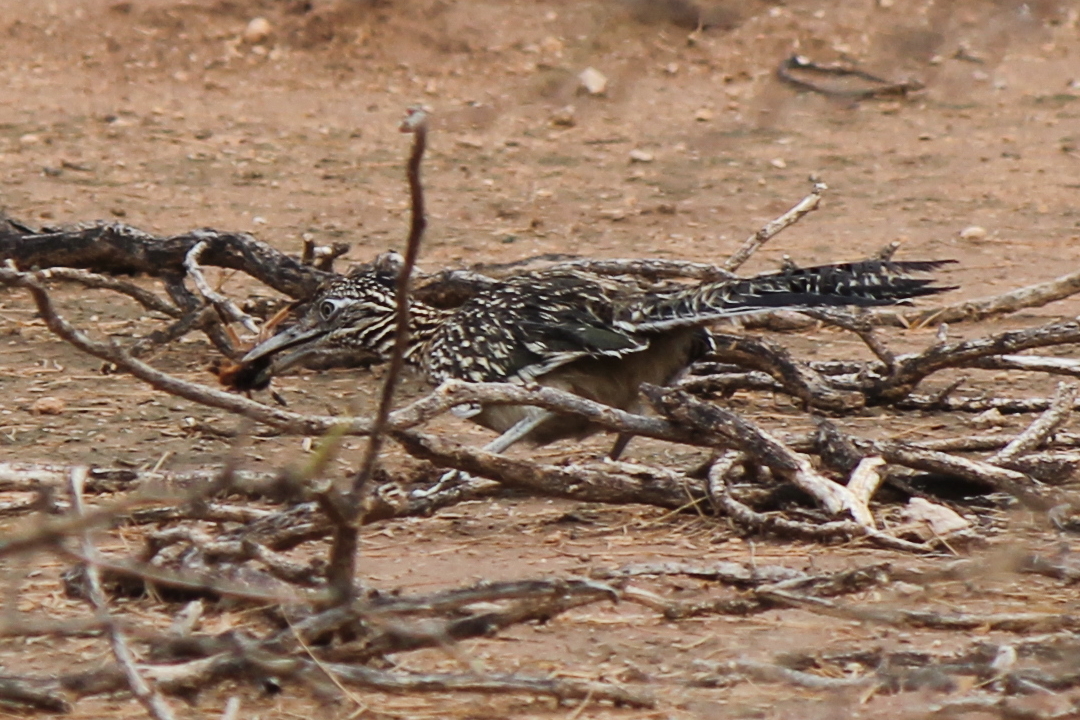
We headed out to the desert west of Phoenix famous for thrashers where last year I had both LeConte's and Bendire's Thrashers.  This year we weren't as lucky, seeing no thrashers but Black-tailed Gnatcatcher, Black-throated Sparrow and Brewer's Sparrows were a nice find.  We tried to find a wetland driving back to Phoenix but despite not finding it still had good species like a Ferruginous Hawk and a Greater Roadrunner we watched catch a tarantula!

Tarantulas aren't safe with Roadrunners around

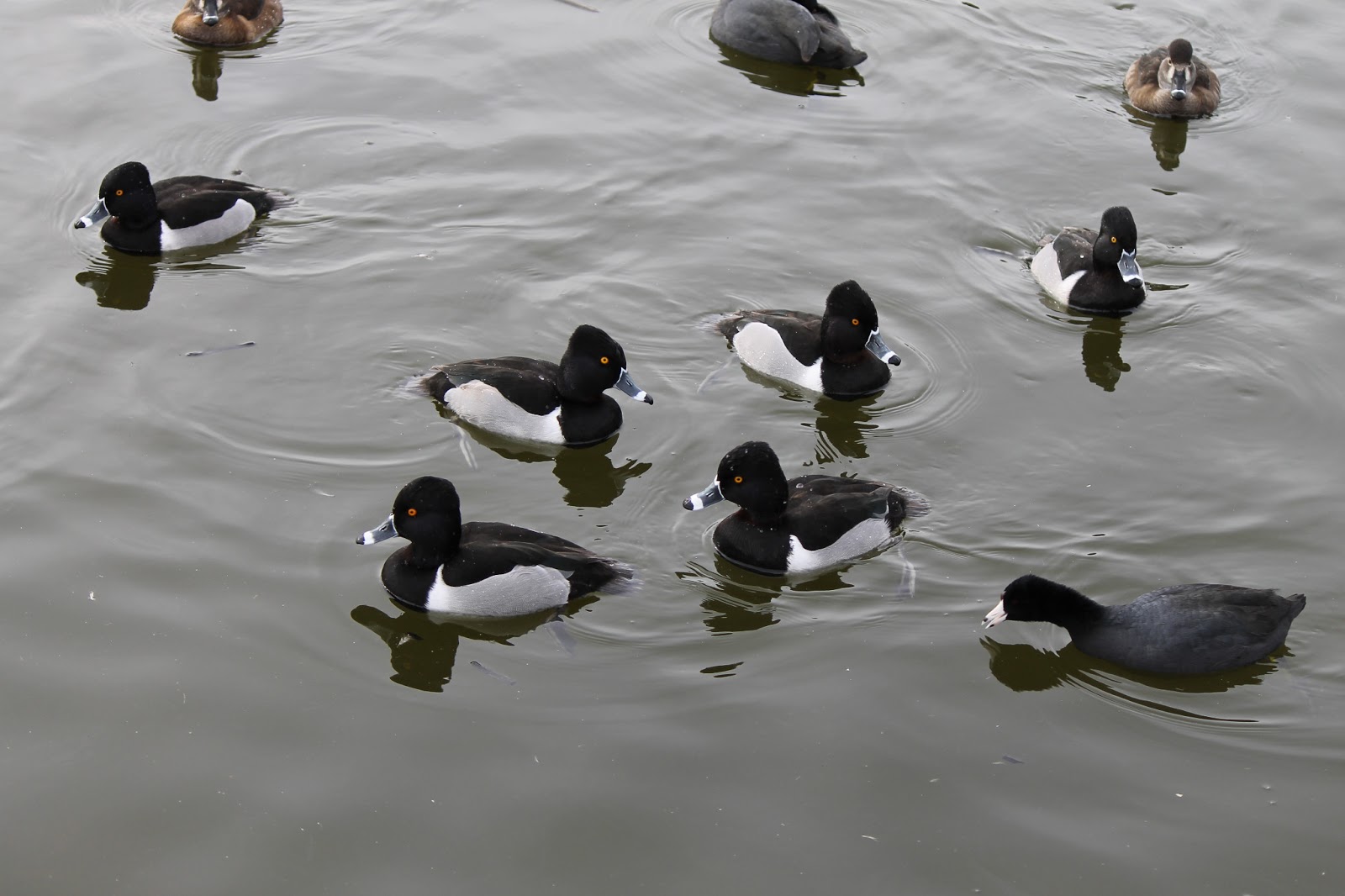
Our final destination is a personal favorite of mine, the Gilbert Water Ranch, which with its many ponds attracts birds of all kinds.  We ended up having 55 species with Anna's Hummingbirds being among the most common birds.  There was not many places there that we didn't hear Anna's singing or have one buzzing by us.  This is the also the only park I know of where Ring-necked Ducks will approach you begging for food.  It makes seeing the ring on their neck easier.

Ring-necked Ducks looking for a handout

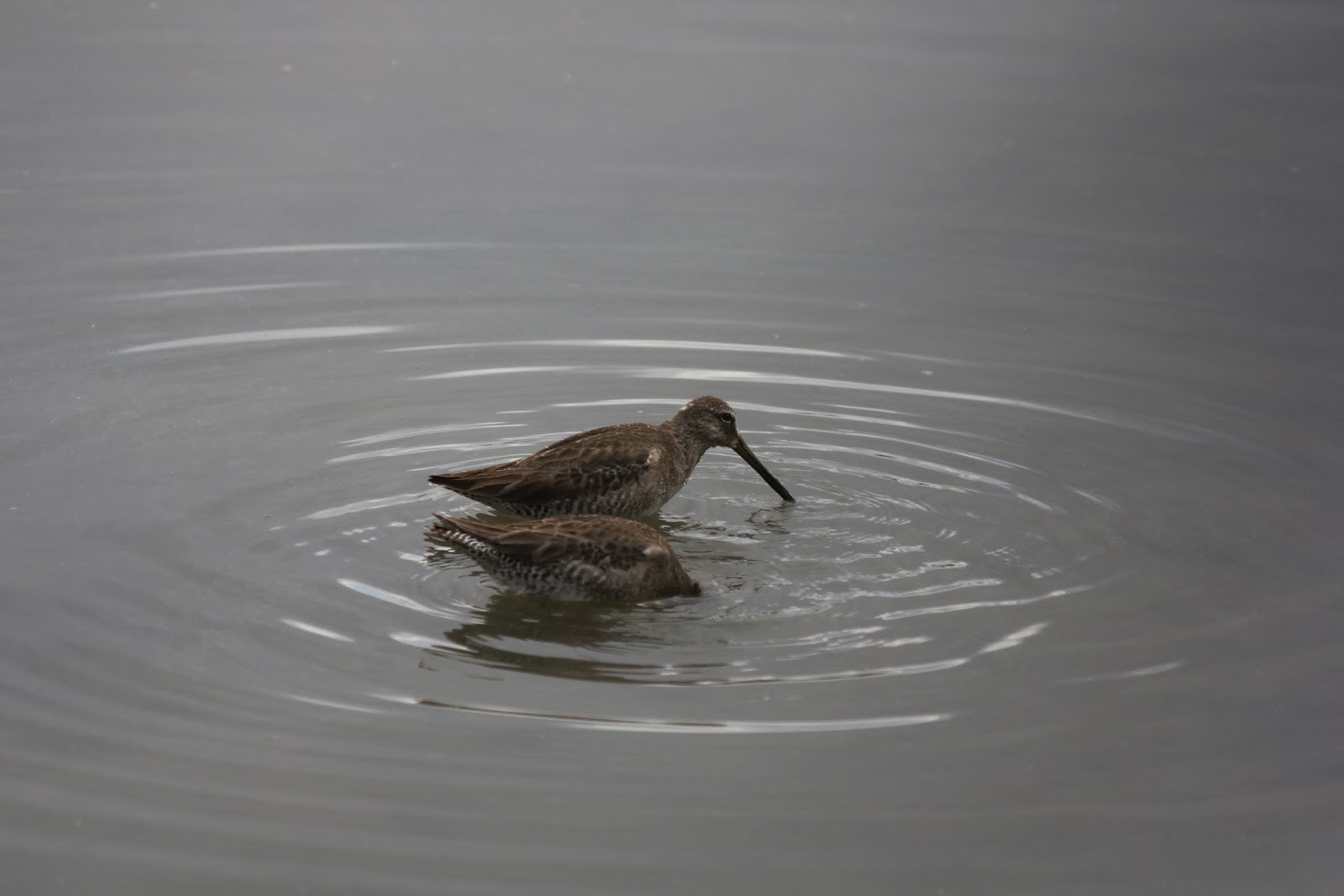
We had 9 species of shorebirds there including Western Sandpiper, Wilson's Snipe and Long-billed Dowitchers.  Other species of note included a hunting Osprey, more Inca Doves, American Pipits, Green Herons, Abert's Towhees and Curve-billed Thrasher.  Here are some of additional pictures from there.

 A pair of Long-billed Dowitchers probing for food

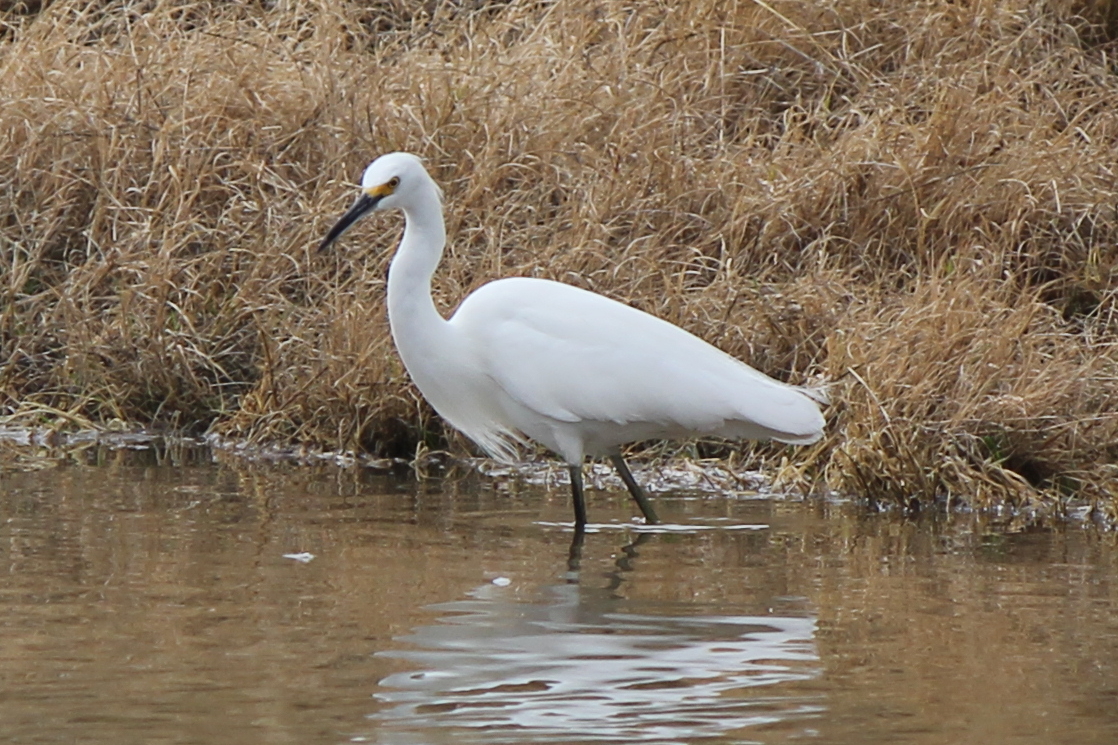
 There were many Snowy Egrets at the Gilbert Water Ranch

 John picked out this Wilson's Snipe

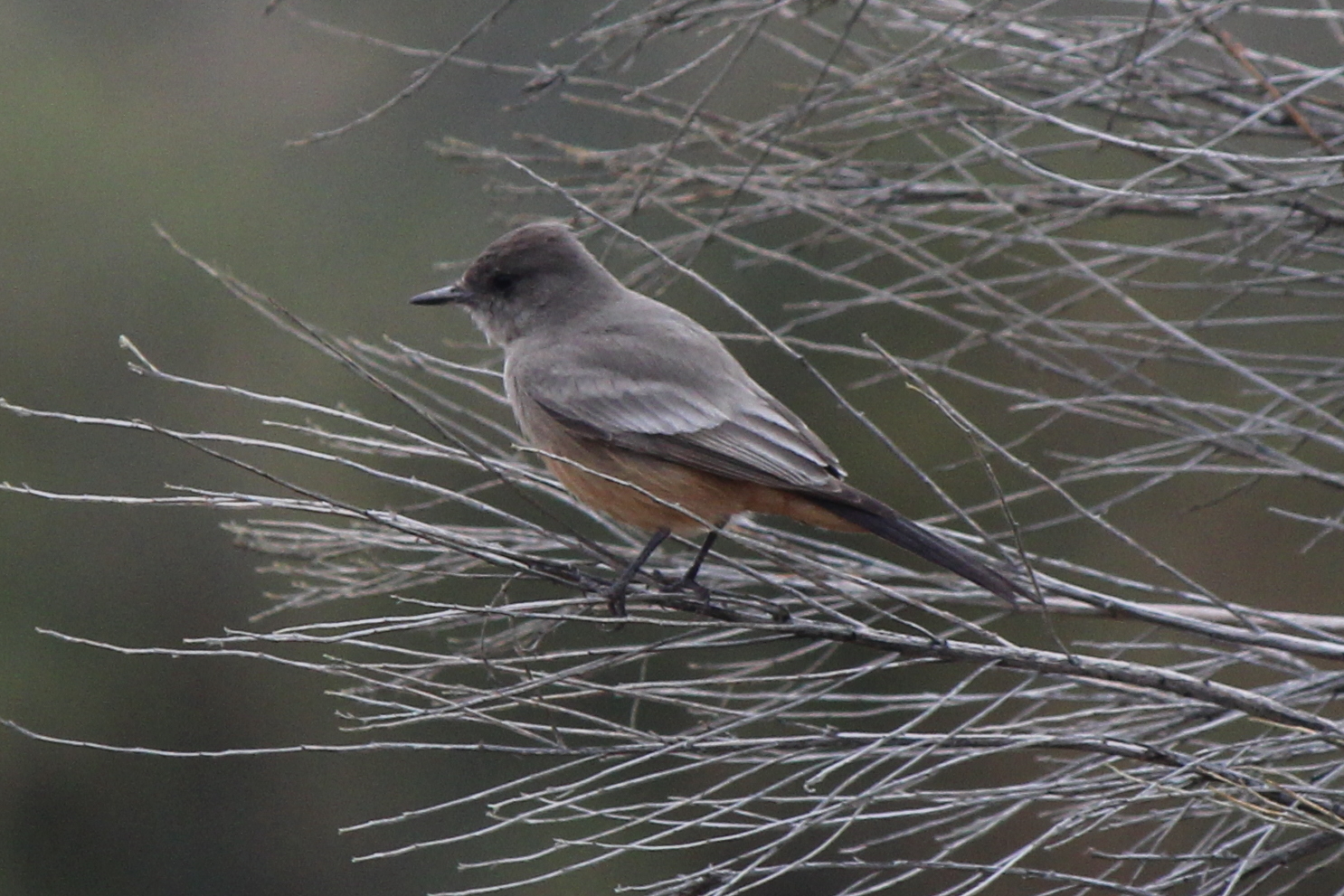
 A cooperative Say's Phoebe

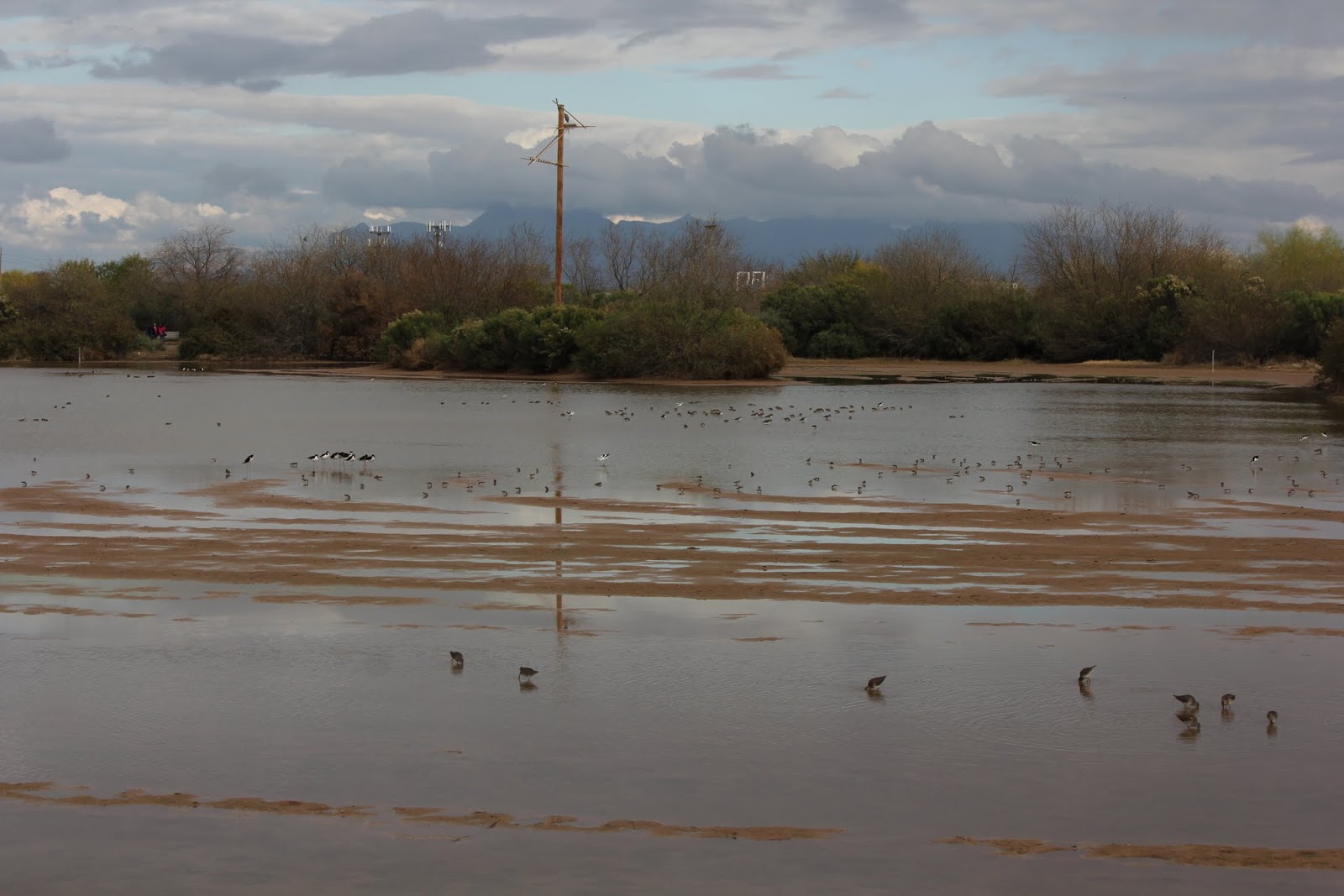
Shorebirds at the Gilbert Water Ranch

We headed to the airport where our flight would be delayed due to a blizzard in the Salt Lake area. Our flight that was supposed to get in at 8 pm ended up getting in at 11:45 pm. Despite this, my trip down to Southern Arizona for my 30th birthday was one of the most rewarding birding experiences of my life if not the very best.  I had fun birding with friends and family and exploring interesting areas of the United States different from anywhere else I have visited before.  I have figured out that with summer visit down to the area, I could add over 30 lifers which leads me only one question: 

How soon before I visit again?


Labels: , ,

Birding Utah Canyons in Winter

posted by Oliver Hansen at
on Wednesday, February 13, 2013 


Stansbury Mountain Range - Tooele County, Utah

Winter can be a spectacular time for birding. First, there aren’t any leaves on the trees, making finding birds a little bit easier than during the foliage filled spring, summer, and fall seasons. Second, the amount of open water is greatly reduced making looking for waterfowl quite easy at times. Third, there are birds that come visit us in Utah that if you want to find in the Summer, you’d have to travel up to Northern Canada or Alaska. Last is the solitude. You can get out your cross country skis or some snowshoes and travel for hours without seeing another person.


Me looking at some Rosy Finches

The last week of December I found a small flock of Gray-crowned Rosy-finches a few miles up South Willow Canyon. A great find for me. Last winter birding in Utah County I saw a few flocks of several thousand rosy-finches on the West benches of Timpanogos, but they were too far away for me to identify to species so I didn’t count them for my personal list. This was my first up-close and personal encounter with this species – a new County bird, State bird, and Life bird! Another bonus was that this species has only 2 other records in ebird for Tooele County – and one of those was from 1975!


Gray crowned Rosy-finches

As the New Year rolled around I returned over and over again to the same location to try and locate the flock with no luck. I really want to get this species for my 2013 list. No luck so far. The road is paved about 3 miles up the canyon and is regularly plowed to a winter forest service gate. On a few Saturdays and occasionally after work I’ve actually hiked past the gate a few miles. Snowshoers and Cross-country skiers had left a good packed snow trail on the road past the gate which made for semi-easy hiking. There are miles and miles of exposed cliffs and steep rocky/muddy hills were rosy-finches love to hang out in winter. Unfortunately, there are dozens of other canyons close by that might only take a flock 2 minutes to get to, but for me would take hours. Maybe I’ll get lucky one of these trips.


Miles and miles of solitude

One trip did reward me with a small flock of mountain chickadees and red-breasted nuthatches. Another trip I saw a downy woodpecker excavating a hole in a willow tree and several Townsend's solitaire. The birds are very few and far between. I’ve been amazed at the feeling of solitude while hiking for hours up a snow-filled canyon and not seeing or hearing a single other animal for miles.


Creek in South Willow Canyon

Another bird I’ve had difficulty finding this year is American Dipper. Living in Provo, I could drive 4 miles from my house to the mouth of Provo Canyon and pick one of 4 or 5 parking lots, walk 20 feet to a bridge, and almost be guaranteed a dipper. Tooele County is a little different. There are almost no paved and plowed roads that go up any of the nearby canyons. South Willow is paved for about 3 miles, but the creek is pretty far from the road near the mouth of the canyon and is mostly underground or frozen.


Snowshoes makes winter birding much more enjoyable

After acquiring some fancy new snowshoes yesterday, I had to take them on a test drive. I hiked about a mile past the gate in South Willow Canyon to what is normally a nice picnic area in the summer to find several feet of snowpack. I was able to get a lot closer to the creek with my snowshoes (I was still sinking in a good foot because of how much powder there was!). The moment I got to the creek I could hear the familiar song of an American Dipper and spotted him singing away on a rock in the creek. So much more rewarding to find a dipper after a nice hike than peaking over a bridge at a parking lot. Unfortunately, I only had my little point and shoot camera so no great pics.

Can you spot the Dipper?

Little Cottonwood Picnic Area - South Willow Canyon


Have you had any great winter birding experiences this year?

Labels: , , , , , ,


UTAH BIRDERS FLICKR POOL


    SEE MORE AND SHARE ON FLICKR