Utah Birds, Utah Birding, and Utah Birders. Promoting the sharing of information, and the conservation of habitat for birds in Utah and elsewhere. We are a group of people who want to share what we know, and create a positive birding experience in Utah.

BIRDERS BLOG

a blog by and for Utah Birders

Nocturnal Migration April 19, 2012

posted by Tim Avery at
on Thursday, April 19, 2012 

Last night and the night before we were again treated to light migrant movement.  Storms came in across the lake both nights keeping the majority of birds either below the radar or completely out of the sky.  Two nights ago there were more birds in teh air than last night.  I put together this animation showing what happened between 8pm and 4am.  You can see migration pick up as the sunsets, but then it comes to a halt as the storm hits the lake.


The other cool thing you can see in this image is the storm coming in from the west form near nothing to completely filling half the screen.

These storms are certainly keeping the majority of migrants out of the sky at night--but that could all change this evening.  According to the Weather Service, the storms are supposed to push through the Wasatch Front today and tonight will be partly cloudy--followed by 3 mostly clear nights (and great nights for night migrant listening with temps in the 50's)... Plus, the next 4 nights also happen to center around the new moon.  There are potential ups and downs to this.  The plus side being that there has been evidence presented that the moon can interfere with with stellar navigation. So no moon may mean that more birds are out--although this is purely speculation and has no real science backing it up.  The major downside is that it makes it harder to find your way through the dark.  It also means that if you were planning on scoping the moon to try and watch for passing migrants, you can't.  No moon won't effect your ability to listen for night flight calls though!

On a side note, with the new moon being this week, that means that May 1st through May 15th will be nights filled with plenty of moon, so if you wanted to test out scoping the moon for passing migrants you could (I personally will be trying to pick up my first Flammulated Owl of the year I think!).

So above I mentioned scoping the moon, and some of you may be left scratching your heads.  I haven't really touched on this before, only because I have never had much luck with it, but many observers back east can attest to the fact that you can see migrants even a couple miles above the Earths surface passing in front of the moon.  I had a friend from Michigan who on multiple occasions shared stories of doing this from his yard.  I may give it a whirl here in a few weeks once the moon is out in full force again.  If any of you try please feel free to share your comments on the blog and let others know form where, what time, and what kinds of numbers you saw.

Anyways, back to the radar.  Last night was a far lighter night of migration than the previous night but still there were a few birds moving.  Something interesting that I noticed was the line of birds apparently over the Wasatch Range on the east side of the Great Salt Lake.


This is something that I have noticed in the past and appears to be pretty common during both the spring and the fall.  One assumption is that these could be sparrows, and other forest birds starting to arrive,  They could be wintering species heading back north.  Something that many wouldn't think of but makes a lot of sense right now would be migrating loons.  Possibly hundreds moving over the mountains right now as they head north to breed.  As you watch the radar the next couple of weeks look over the mountains and see if you notice any patterns.  As migration picks up it may be harder to actually pick this line up as there are going to be hundreds and thousands of birds up there.

Another reason I am pointing this out is that it may be worth your while to listen for night migrants at higher elevations.  A few years ago when Colby Neuman and I would listen for migrants around Salt Lake we tried a number of locations.  Almost always it was higher than the valley floors but not way up in the  mountains.  The hills above the State Capitol Building, and South Mountain were 2 places we tried.  Colby tried a few other high elevation areas, and I did a couple nights over 9000' feet in the Uintas.  The best night I had listening for migrants in Utah was at 9400' in August 2007 in the mountains south of Strawberry Reservoir.  Overall however it's always a mixed bag, or like Forrest Gumps mama always told him, "you never know what you're gonna get".

I will leave it at that for now, good luck listening for night migrants--let us know if you're hearing anything!

Labels: , , ,

Nocturnal Migration April 17, 2012

posted by Tim Avery at
on Tuesday, April 17, 2012 

This year I've decided to try and post about spring migration in Utah at least a couple times per week.  Most of what I am going to talk about is nocturnal migration by radar--with some followups of actual day time migration birding.  I will try to keep up with this until the end of May.  I decided to start in mid April because March and early April migration is so light.  Plus at this point we are getting in to heavier passerine migration.  So let's get started.

I have been periodically checking the radar the last couple weeks.  There hasn't been much in terms of birds moving, but there has been plenty of weather.  Last night was the first night over the last couple weeks where there were actually birds visible on the radar.  Below is a compilation of the previous 5 nights (April 12-16th):


The large masses are storm systems moving through late last week.  The two images with smaller masses are also weather, but much just small storm bands moving through the past few nights.

I was beginning to think I wasn't going to seen any migrants on the radar anytime soon--but last night that changed:


I added labels pointing out the birds on the radar and the weather.  If you want to learn more there are some links at the end of this post that go to past posts where I explain how to read the radar.

Migrants were light last night, but at least they appeared on the screen.  This image is from just before midnight--to be consistent over the next few weeks I will try to be consistent and use images from this same time frame.  However, if something cools shows up I will definitely show images for other times.

I also took a shot of the velocity screen to show something:


You can see that the birds in the center of the radar are headed due north at more than 10 knots, while the storm appears to be moving north east at about 5 to 10 knots (1 knot = 1.15077945 mph).

We can assume based off the radar that a few birds were trying to move north as the storm approached.  By 3am migration was all but over for the night as the storm hit the lake.  It's hard to say what types of birds these were, though given the timing shorebirds are likely.  Hopefully, in the coming days as the storms move out and better weather greets us, we can get a few nights with some heavier migration.  In a couple weeks it will be full on passerine migration and the radar images should be chock full of birds.

As I mentioned above here are some more resources for Nocturnal Migration and Birding by Radar:

Utah Birders Blog: Nocturnal Migration Part 1 - Introduction

Utah Birders Blog: Nocturnal Migration Part 2

Utah Birders Blog: Nocturnal Migration Part 3 - Base Reflectivity

And if you are interested in looking at the radar at night you can check it out here:

NEXRAD images from WSR-88D radars

and also here:

National Weather Service Radar

Labels: , , ,

Cooper's Hawk on OR birds

posted by Jerry Liguori at
on Sunday, April 15, 2012 


Several people have asked me about this accipiter on the Oregon bird list, so I thought I'd just comment on the blog. And, if there are raptors being debated on local bird lines in the future, I may just do the same instead of giving my ID behind the scenes. This bird was photographed by Jack Williamson, a beautiful photo and great documentation. Here is the link to the photo, made public, so I'm assuming it is OK to post it here...but if not, I'll take the blame:

Click here to view the photo

This bird in question is absolutely an adult Cooper's Hawk for the following reasons:

- Very long tail with a broad, white tip.

- 'Large' head with blackish cap and contrasting pale nape (also smallish eye appearance). Sharp-shinned have blackish heads and napes that blend in with the upperback.

- Paler bluish upperside (as opposed to slaty) and grayish cheek make it a male (the reason it is more difficult to ID than if it were a female Coop). Many males in their first adult plumage have rufous cheeks...and this bird has hints of rufous and a pale eye (so, likely it is a bird in its first adult plumage, but not definite).

I am working on an article on this very subject, but too busy to get it together at the moment

Labels: ,

Nikon, Always Top Notch

posted by Tim Avery at
on Thursday, April 12, 2012 

It all ended with a smash!

What was left of my Nikon Sky & Earth after the fall

But let's rewind to May 2005 where it all began.  I had just graduated from college and was headed to Wyoming for my 3rd summer of field work with Rocky Mountain Bird Observatory.  For the previous 4 years I had fumbled around Wisconsin, Utah, Wyoming, Oregon, New Hampshire, Colorado, and various other states with a spotting scope that left a lot to be desired.  I don't remember the brand, but I remember the 20-40X50 power scope was a piece of junk--but a piece of junk a kid in college working part time on minimum wage could afford.  And that scope saw lots of birds.

Great Gray, Northern Hawk, and Snowy Owl had been viewed through that scope. Scarlet Tanagers, Blackburnian Warblers, and Veery had graced me with views through the glass.  For the $100 or so dollars I paid for that scope I got my moneys worth--but every opportunity I had to look through better scopes left me envious of what I didn't have.  So with college behind me, and an entire summer to spend hoofing around Wyoming I decided I needed to drop a little bit of money on a better scope.  I actually spent about a month trying to decide what to do.  I could afford something in the $300-500 range.  I wanted something in the $2000 range.  What I found at the time is there wasn't a whole lot in between those two that I saw value in--and there was no way I was going $2000 in to debt for a spotting scope.

So after going to Sportsman's Warehouse a 1/2 dozen times and looking through every scope under a grand, I chose a reliable brand that I had been using since I started birding a decade earlier--Nikon.  The 20-60x80 Nikon Sky & Earth was a beefy scope.  It came in a $549 and although a little bit out of my price range, it was well worth the price to move up from the scopes around $200.  When I got it into the field it made all the difference in the world.  Shorebirds, Gulls, Lark flocks, distant Waterfowl, Grebes, and Loons all were brought in much closer and clearer than previously.  It still wasn't anywhere near top of the line, but man was it an improvement, and it got some serious usage.

The Old Faithful Sky & Earth looking at Gulls

Fast Forward to the winter of 2011-2012 and you would still find me lugging the same Nikon Sky & Earth with me along the dikes at Farmington, across the landfill in Salt Lake looking at Gulls at Lee Kay, at the south shore hoping to turn up a Snowy Owl, and various other places.  This scope had like my previous scope seen a lot of birds.  During the Park City CBC the mounting bracket came off.  I "fixed" it with Super Glue, but it wasn't long before it came loose again--this time in the middle of a country road in Lehi, Utah.  I had turned my back to grab my camera when I heard the crash.  Turning back around I already knew what lay in wait.  The scope on the ground, obviously misshapen inside the scope case.  Picking it up I could tell it was in 3 or 4 pieces--The Sky & Earth had met it's maker.

But it wasn't the end of the road for my scope.  See Nikon has this wonderful 25 Year No Fault Warranty.  That is, Nikon will repair or replace any binocular or scope regardless of how it became damaged and all you have to do is cover shipping and handling plus a $10 fee.  It's a philosophy that has won over many customers, and one that many other optics companies have followed suit with.  Most of the top end companies already had a similar warranty, but Nikon was the first with affordable optics that I had heard of with such a deal.

In any event, I packed my scope back in it's original box, paid the $26 for shipping with insurance, and sent the scope back to Nikon.  10 days later, and $13 for shipping plus the $10 fee and I arrived home to a brand new spotting scope on my porch.  But there is a twist.  As with most optics, and a variety of other products on the planet, most years companies come out with new and better versions of the previous models.  The Sky & Earth had been abandoned just about the time I picked mine up--and Nikon was now into their 2nd version of the new line called the Prostaff.  They didn't send me the newest, but I did pick up the first version of a the Prostaff, a 20-60x82 scope with superior optics to the Sky & Earth, a more rugged build, and a very nice case.

New Nikon Prostaff 20-60x82

And just like that I should be set for another 7 or 8 years hopefully.  I gave the scope a quick test in my yard, scoping out the mountains about 2 miles to the east.

Looking east to the mountains

The view was amazing.  Clear, bright, and crisp.  I snapped a shot with my phone at 20x to show how nice the 2 mile distant peak looked through the scope.

Not a bad view at all

Today I plan on getting out in the field and actually trying it on some birds.  I can't praise Nikon enough for their customer service.  The level of quality provided, along with the coverage of products has made me a Nikon user for life.  The fact that $49 eight years later got me a new $549 scope seems unbelievable.  There just aren't that many business like that anymore

I would still love to go out and pick up a $4000 Nikon Edg Scope, but I don't see the benefit in it for me when I've got a great scope that gets the job done.  In birding it's not about having the best optics and the most expensive equipment.  It's about having the best optics that you can afford and make sense for you.  If you can afford the top of the line stuff, then absolutely go for it.  IF you can't there are a plethora of brands with great warranties that will get the job done and keep you happy for a long time.

So thank you Nikon for always being Top Notch.

Labels: , , ,

My Next Big Adventure: 3.5 Months in the Pribilof Islands

posted by Ryan O'Donnell at
on Saturday, April 7, 2012 

I recently accepted a summer job working as a tour guide, mostly for birders, on St. Paul Island in the Pribilofs!  This will be an amazing experience, and a nice paid "vacation" (although I'll be working a lot of hours), before I start a real career in the fall.


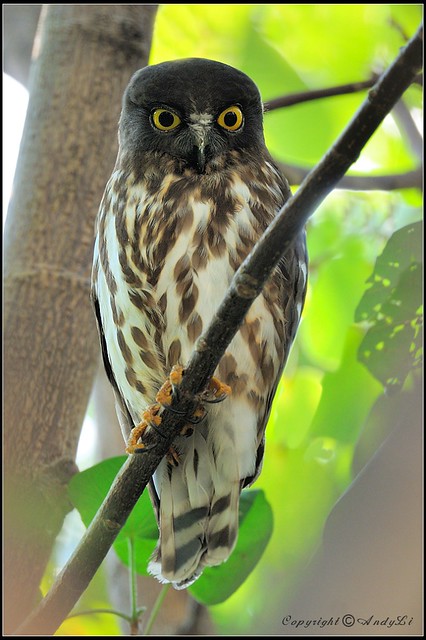
The Pribilofs are a small cluster of islands in the Bering Sea, between Alaska and Russia.  They are less than 200 miles from Russian waters and about as close to Russia as they are to Anchorage.  The Pribilofs are a popular destination for birders, for two reasons.  First, there are a lot of north Pacific/Bering Sea species that can only be seen in this area.  For example, Red-faced Cormorants, Steller's Eiders, Least Auklets, Crested Auklets, Parakeet Auklets, Thick-billed Murres, Tufted Puffins, Horned Puffins, Red-legged Kittiwakes, and McCay's Buntings all breed here.  Second, because the islands are so remote and so close to Asia, they are a likely spot to find lost Asian birds.  This is a big deal for North American birders who are trying to build their life lists, especially for those who are concerned with their American Birding Association (ABA), North American, or United States lists.  Some of the more regular Asian vagrants on these islands include Gray-tailed Tattler, Wood Sandpiper, Red-necked Stint, Sharp-tailed Sandpiper, Slaty-backed Gull, and Eastern Yellow Wagtail.  But perhaps the biggest draw are the rarest birds: tours in previous years have found Brown Hawk-Owl, Gray Heron, Chinese Pond-Heron, Eurasian Hobby, Spotted Redshank, Great Knot, Solitary Snipe, Oriental Cuckoo, Great Spotted Woodpecker, Rufous-tailed Robin, Oriental Greenfinch, Hawfinch, and many more very rare species for North America, and you never know what might turn up here next.  To see the complete list, click here.

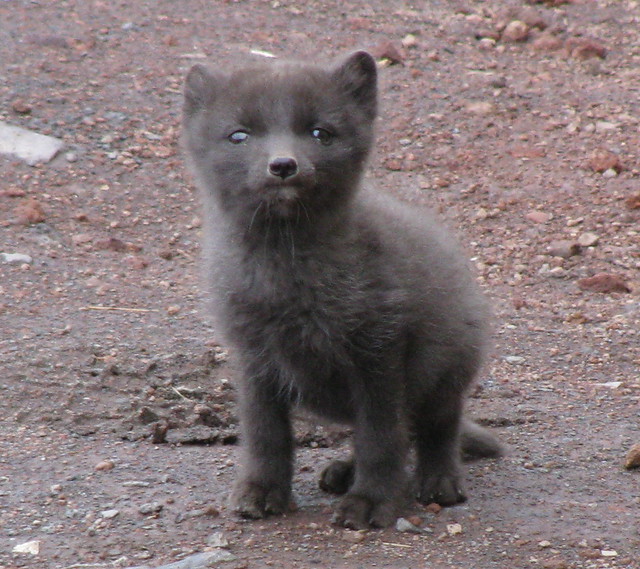
If birds aren't your thing, there's still plenty to see on the island.  The Pribilofs were once known as the "Seal Islands" because of the large colonies of Northern Fur Seals that breed there.  Walruses can be seen here, more rarely.  A feral herd of reindeer now roam the island.  The Pribilof Island Shrew lives only on St. Paul Island, where I'll be, and nowhere else in the world.  There is an island subspecies of Arctic Fox that is very common there.

If you are interested in visiting the island, you can go with any of several tour companies, but I'll be working for St. Paul Island Tours.  I hope to see you there!

Parakeet Auklets on St. Paul Island, in the Pribilofs.  Parakeet Auklets are one of the specialty species of the Bering Sea and they can be seen breeding on the cliffs around the island.  Photo by Francesco Veronesi and available through Creative Commons license.
Arctic Fox pup on St. Paul Island.  These adorable canids are common throughout the island.  Photo by "im me" and available through Creative Commons license.
Brown Hawk-Owl, photographed somewhere in Asia.  A Brown Hawk-Owl found on St. Paul Island in 2007 was the first record for North America.  Photo by Andy Li and available through Creative Commons license.

Because my posts for the summer will be consistently off-topic for a Utah blog, I'll probably be posting at my own personal blog and not here for that period.  If you're interested in reading about my adventures in the Bering Sea, watch my other blog: 200Birds.

Labels: , , ,


UTAH BIRDERS FLICKR POOL


    SEE MORE AND SHARE ON FLICKR