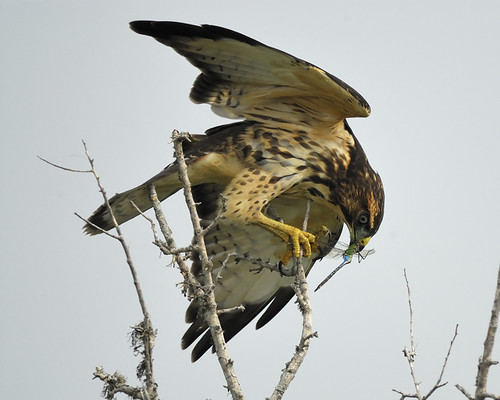
Mt. Nebo still covered in Snow in Northern Utah.
We traded snow capped peaks for desert river bottoms this weekend.
Sam and I decided to escape the rains in northern Utah this past weekend and head to Washington County. We left Friday after work stopping at Chicken Creek Reservoir in Juab County along the way. If you've never been I highly suggest this as a stop point on the way south on I-15 at Exit 207. In the spring and fall (if there is water) shorebirds and waterfowl can usually be found in decent numbers, and Friday night was no exception. Several thousand ducks were on the water, most notably
5 GREATER SCAUP. A number of other winter species were lingering as well. A first of year (FOY)
CATTLE EGRET was on the north end where the mudflats are. Also here were numerous
AMERICAN AVOCET and a handful or
BLACK-NECKED STILTS.
First Cattle Egret of the year at Chicken Creek Reservoir
Back near the outflow a
GREAT-TAILED GRACKLE cruised over the road, and around
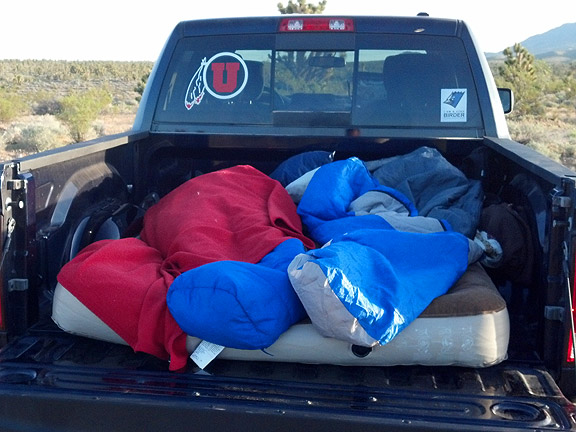
200 CLIFF SWALLOWS were circling. We hopped back on the interstate and sped south to St. George. We ended up on the slope around 11pm. It was calm, dusty, dark, and silent. No poorwills were seen on the drive out, and none heard all night. The less than 1/2 moon didn't crest until around 4:00am keeping it very dark out all night. We slept in the back of the truck, watching the stars in the crystal clear sky. It was dead quiet, no birds sang or called till almost 6:00am.
Sleeping arrangements on our first night on the slope
The morning started with the usual
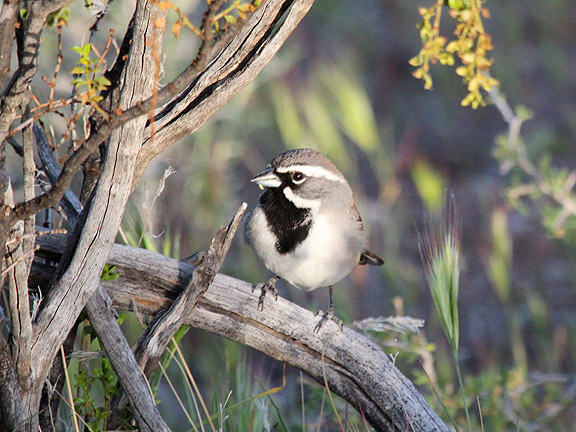
BLACK-THROATED SPARROWS singing out int eh desert. An occasional
HOUSE FINCH flew over calling, and several
MOURNING DOVES were cooing in the distance. I left Sam sleeping and hiked down into one of the draws where the sparrows were going nuts. The cacaphony of
WHITE-CROWNED, BLACK-THROATED, and BREWER'S SPARROWS was unbelievable. The whistles, buzzes and musical notes were filling the draw. The sound was incredible so I had to get a recording. I pulled out my camera and set it to video and started recording.
It would be an awesome recording--except for the fact that I didn't realize until 36 hours later when I got home and realized that the hour of video--comprising of 20 different species songs, was only recording video--and not sound. What a rookie mistake--I had set the camera to no audio earlier in the week recording some ducks, and never switched it back on. So the
Rufous-crowned Sparrow, Black-chinned Sparrow, Painted Redstart, House Wren, Cactus Wren, Lucy's Warbler, Black-throated Sparrow, and a slew of others will have to hopefully be captured again... Instead I was left with photos of the birds I was able to get good looks at, and blurry fuzzy videos of leafs with no singing birds to be heard.
Skulking Black-throated Sparrow on the Beaver Dam Slope
After breakfast and packing the truck, we drove across slope towards the ranch. Birds were few and far between. A small group of
LADDER-BACKED WOODPECKER moved passed the car, while
CACTUS WREN, LOGGERHEAD SHRIKE, and HOUSE FINCHES were seen occasionally passing in front. One
NORTHERN MOCKINGBIRD flew by in the distance, and a
TURKEY VULTURE posed nicely in a dead Joshua Tree alongside the road.
Turkey Vulture posing along the road across the Beaver Dam Slope
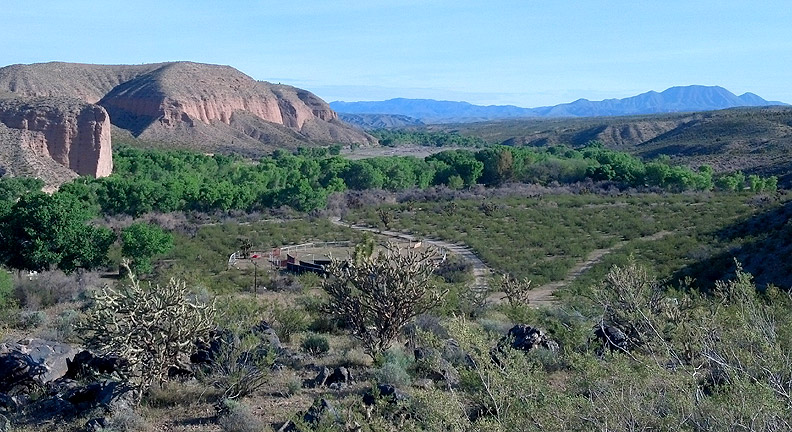
As we came into the wash, I got my first look at the ranch in full bloom glory. From mid-March till October this green swath in the middle of the northern tip of the Mojave is a welcome site for visitors and birds alike.
The oasis in the desert, Lytle Ranch Preserve
At the Ranch I pulled in to find Steve and Cindy Sommerfeld talking with the caretaker. We chatted for a few then headed off up the ranch. It was rather quiet for a nice spring day.
LUCY'S WARBLERS were singing throughout the walk, and several FOY
BELL'S VIREOS could be heard whistling as well. An occasional
ASH-THROATED FLYCATCHER chirped from the trees, and multiple
GREATER ROADRUNNER could be heard singing from the brush.
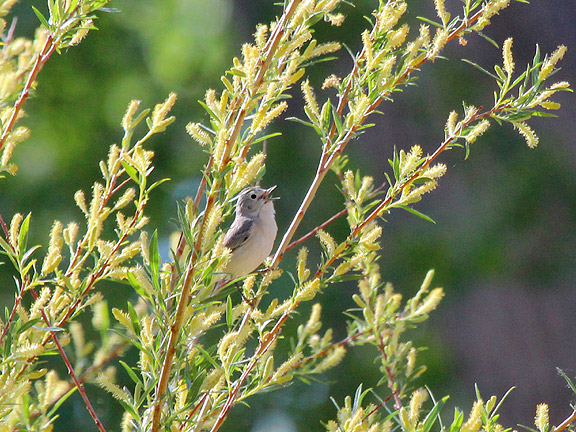
Singling Lucy's Warbler at Lytle Ranch
Near the end of the ranch property just past the monument a
SUMMER TANAGER called from the trees. We spotted a single and early
HAMMOND'S FLYCATCHER, as well as a
COOPER'S HAWK at a nest.
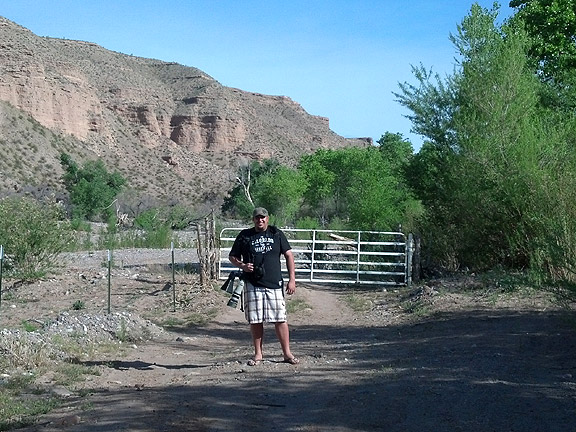
Me at the end of the road at Lytle, 1.25 miles from the main parking lot.
Walking back down the ranch I had both Yellow-rumped and Orange-crowned Warblers, and a FOY singing
YELLOW WARBLER. And although not a bird, I got a decent photo of a "Desert" Black Swallowtail in one of the fields.
Not a bird, but a "Desert" Black Swallowtail at Lytle Ranch
We met up wit the Sommerfeld's on the walk back down and shared the few sightings we had. We headed over to the hummingbird feeders by the trailers which were inundated with
BLACK-CHINNED HUMMINGBIRDS, and at lease one male
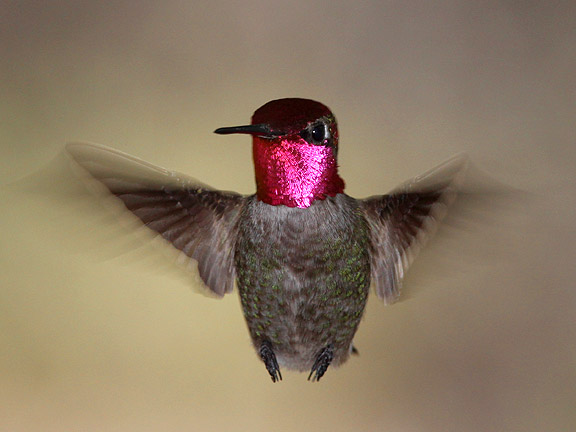
ANNA'S HUMMINGBIRD. I only saw one
COSTA'S which was displaying near the parking area when we left.
Male Anna's Hummingbird at the Lytle Ranch feeders
At the parking lot as we chatted before taking off, the best birds of the day flew over. 3 Fighter Jets from Nellis AFB came flying over the wash about 150' off the ground. They came out of nowhere, almost silent until they were right on top of us, at which point the ground shook as they passed, and were gone as fast as they came. I wondered if these were F-22s because of how fast and quiet their approach was. It was crazy having them pass so close over, and a first for me at the ranch. I have had helicopters, crop dusters, sight seeing planes, a UFO (ask me about it sometime), and even an ultralight flyover, but these were the first fighter jets.
After the jets, we checked for black-hawks further down the wash but missed out. We headed back across the slope, stopping at Utah Hill where a FOY
GRAY VIREO was singing in the Junipers. From there we headed back through town, and then out to Zion to do some hiking. We planned on just walking the river walk Saturday night, then Angel's Landing Sunday morning, so we took the bus to the Temple of Sinawava stop and did the short hike to the end and back. Birds were scarce. A handful of
SONG SPARROWS, and a flyover
TURKEY VULTURE and
GOLDEN EAGLE were it.
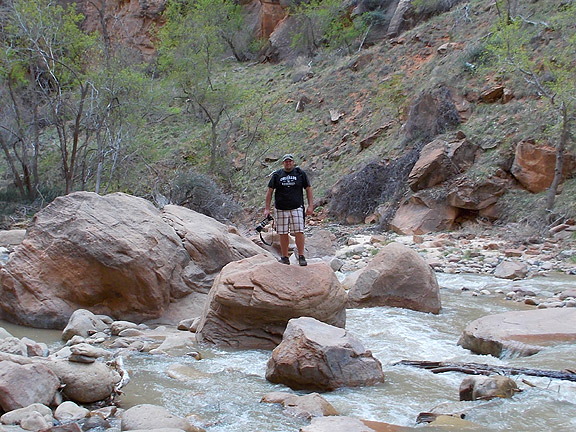
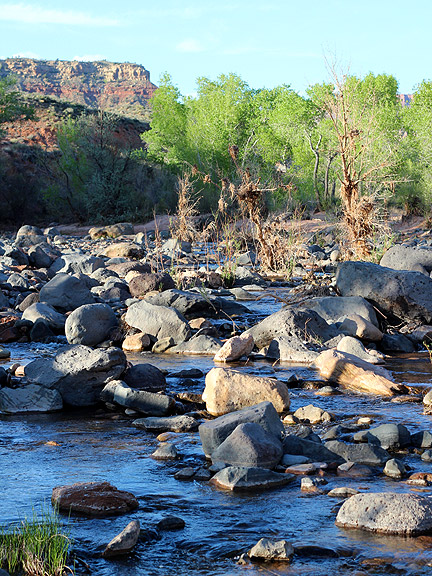
Me standing on a rock in the Virgin River
Back at the bust stop we walked down the road where
HOUSE WRENS were busy singing up a storm. A
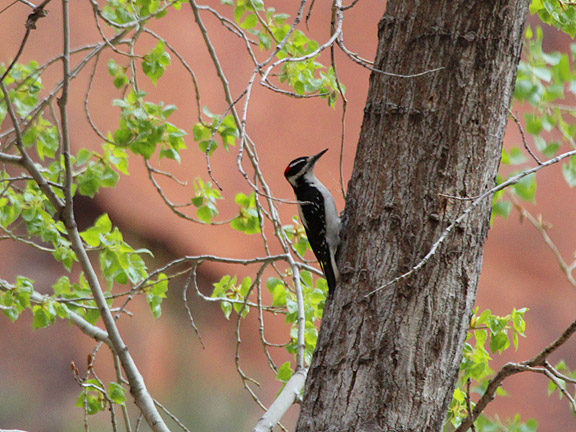
HAIRY WOODPECKER could be heard chattering and later seen drilling on a dead snag. UP on the hillside a little ways down the road I heard the repetitive whistling of a
PAINTED REDSTART. This song really stands out when there are no other warblers around in early April, which was one of the reasons I wanted to hike around here and look. Later on in the spring, I have a hard time picking it out form the chorus and constant whistling of Yellow Warblers everywhere along the river. I captured the song--but alas got nothing since my sound recording was turned off--brilliant move Avery.
Hairy Woodpecker in Zion National Park
I text Rick Fridell a little later asking when the last time he had one in the canyon was. I had a couple in 2010 at the Temple and Emerald Pools, but couldn't recall and reports form 2011 or 2012. Rick confirmed that there hadn't been any the previous two years, but shared that he had also had one singing just 2 days earlier nearby along the river walk--hopefully a good sign for this breeding season! We hopped on the next bus down canyon and took it back to the Visitor's Center. We took off to look for a place to camp, and as we drove through Springdale there were
6 TURKEY VULTURES circling over the Virgin River. There were also numerous swallows including my FOY
VIOLET-GREEN SWALLOW, and several first
WHITE-THROATED SWIFTS.
We checked a camp site that friends recommended but due to the proximity to the road and how dusty things were we set out to find some place else. My favorite spot along the Virgin River at Mosquito Cove has been closed for 3 years now due to flooding, and I don't think its ever going to get reopened. So I remembered somewhere off the beaten path where I had seen people camping before and checked it out. Sure enough we found a great spot by a creek and made camp for the night.
Lower Kolob Creek
Sunday I woke to singing
JUNIPER TITMOUSE, LUCY'S WARBLERS, and BEWICK'S WRENS. After breaking camp we headed towards Zion for the days hikes, but Sam wasn't feeling great so after looking at our options we scrapped the park. It wasn't a complete loss, as an exceptionally early
WESTERN WOOD-PEWEE was singing from the trees here. Just wanting to take it easy we drove towards St. George, stopping to try for some sparrows in Dalton Wash. It was a smorgasbord of sparrowy-goodness, with great looks at
BLACK-CHINNED, Black-throated,
LINCOLN'S, plenty of White-crowned, and a very chatty, but not so abiding
RUFOUS-CROWNED SPARROW. I recorded it calling--but again--nice one with that volume switch Avery.
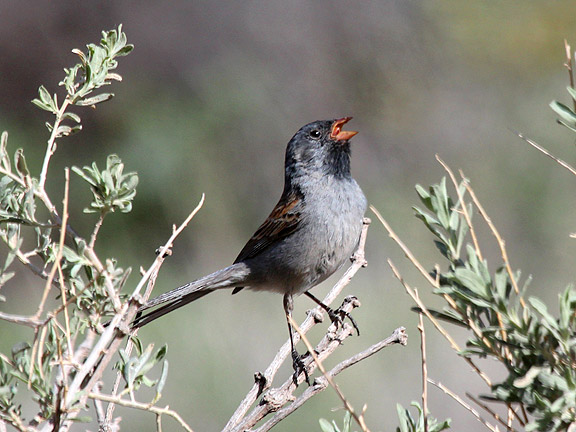
Singing Black-chinned Sparrow in Dalton Wash
We stopped at Tonaquint Park for the obligatory
ABERT'S TOWHEES, and not much else. From there we checked out Gunlock State Park. Along the way we almost saw a
GREATER ROADRUNNER meet its maker flying across the road (ironic I know). The car in font of us came within inches of making the awkward creature roadkill. I needed a photo for the photo big year so snapped a crappy shot of it running up the hill not knowing when I'll see one again this year (they seem to come in waves--none last trip plenty heard and one seen this trip).
Greater Roadrunner near Shivwits
At Gunlock were numerous
EARED GREBE, and a flock of
AMERICAN AVOCETS on the water. Again we check fro Black-Hawks, and despite others reporting them already this week, we missed out. From here we drove north to Beryl Junction where a lingering
ROUGH-LEGGED HAWK was perched along the road. After that the trip back was uneventful--oh except for the flat tire near Cove Fort that couldn't be fixed. That was a fun hour wasted--that along with the rush hour like traffic coming back to Salt Lake made for one of the less fun drives back from St. George. But overall the weekend was great and I can't wait to hopefully get back down there real soon.
By end of trip
we tallied 100 species for the weekend. A respectable number of birds given where we went and how un-birdy two of our major stops were. Now to double that number plus a couple more--in one day here in about a month and we'll really have something good going on.
Labels: migration, trip reports, washington county