Utah Birds, Utah Birding, and Utah Birders. Promoting the sharing of information, and the conservation of habitat for birds in Utah and elsewhere. We are a group of people who want to share what we know, and create a positive birding experience in Utah.

BIRDERS BLOG

a blog by and for Utah Birders

Yard Birding

posted by Tim Avery at
on Monday, July 16, 2012 

Growing up in the city (as much as you can call Salt Lake a city) I was always accustomed to having just a handful of regular bird visiting the feeders. Maybe 5-10 birds that I saw everyday, the most common yard birds. Of course over the course of a decade turning up another 60 or 70 species is not surprising. But depending on what time of year there were always those few birds. The European Starlings, House Sparrows, House Finches, American Robins, and Mourning Doves. Those were the birds. In the winter there were occasionally goldfinches, juncos, and woodpeckers. In the spring there might be warblers and waxwings. In the summer there were hummingbirds and hawks. And in the fall you might get a falcon--but were more likely to get a few finches.

Pine Siskin
   
When we bought our home in Sandy I knew it was a great location for birds. It was in an ancient river bottom, a natural kind of funnel from the mountains into the valley. There is a stream a few blocks away--the trees in the neighborhood are mature. Oaks line hillsides at the top of the street, and less less than 2 miles away are those mountains. It's a pretty good location for yard birding. I expect between 10-15 species most days--and have had a handful of 20+ days. I don't think I ever had a 20 species day growing up at my parents house. The quality of birds has been amazing as well--especially the hummingbirds.

The 2nd Ruby-throated Hummingbird 
we had at the feeders.

But not just the hummingbirds--the finches, the hawks, warblers, and woodpeckers too. In just a couple years we have had as many species as I had in 10+ years in Sugarhouse. I know of better yards, and way better places to live for yard birding--but for the "city" it ain't bad. Some days I just enjoy sitting in my office with my windows open watching the feeders, and listening to the activity outside. Yesterday was one of those mornings, and the pictures below are a handful of the birds that joined the party.

Black-headed Grosbeak

Black-capped Chickadee

Black-chinned Hummingbird

Bullock's Oriole

Mourning Dove

Some days you don't even have to leave the house for some real good birding. Feel free to share some of your great yard birding memories or stories in the comments section below.

Labels: , , , ,

Survival of an Eagle

posted by Tim Avery at
on Saturday, July 7, 2012 

This was on CNN's home page tonight, "The resilience of a burned baby golden eagle that survived a Utah wildfire is astounding wildlife rehabilitators nursing him back to health."

Check out the story about a Golden Eagle chick that survived the dump fire in Utah County and is being nursed back to health at the Wildlife Rehabilitation Center in Ogden.


This young Golden Eagle, nicknamed Phoenix, 
is being cared for after suffering burns from a wildfire
south of Salt Lake City in late June.

It's amazing to hear such a great story come from such a tragic event.  Given the 1,000's of creatures that didn't survive, this bird is lucky to be alive, and at least in my opinion shows there is some hope despite the numerous people that just don't seem to care about how what they do effects the world around them.

And kudos to Kent Keller and Wildlife Rehabilitation Center!

Labels: , ,

Other Things With Wings

posted by Tim Avery at
on Monday, July 2, 2012 

I remember some years back out birding with Colby Neuman and a group of birders from Cornell.  It was during the AOU convention at the University of Wyoming in Laramie during the onset of fall migration.  We had driven out into the middle of nowhere to a spot that the day before was loaded with migrant Calliope Hummingbirds visiting the flowers along the road--it was the last place you would expect to see a hummingbird.  But there they were, zipping left and right from flower to flower and sitting on the barbed wire fence.  While I was amused with the hummingbirds I noticed the Cornell guys staring at the ground through their binoculars and wondered what in the hell they were doing.  I could have swore they were looking at dragonflies--no that couldn't be possible, there were Calliope Hummingbirds in the middle of the prairie--why would they be looking at dragonflies?

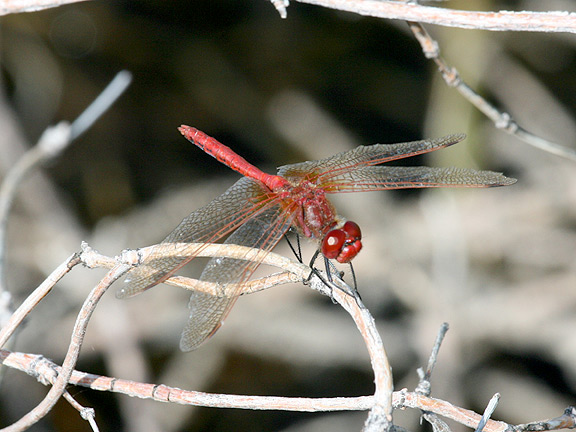
Red-veined Meadowhawk near Laramie, Wyoming

As it turns out, they were looking at dragonflies and the reason was simple, this species of "meadowhawk" was not found in New York!  A meadow huh? Meadowhawk? That's right they were dragonfly watching, and they knew the names of the dragonflies.  Now, I have always considered myself very aware of everything natural around me.  I knew there were different species of bees, butterflies, and dragonflies, but it had never occurred to me to look at them closely before.  I would take a photo if it were interesting, but aside form that, they were just sort of a side note to my time outdoors--like the flowers, trees, and rocks.  So now my interest was piqued, and for the remainder of the day as we made stops for birds the "dragonflying" (if we can call it that) continued.  I didn't think much of it at the time--I was in the midst of my Utah Big Year and when I got home it was the start of one of the best fall migrations I remember--dragonflies were cool but not as cool as the birds.  It was almost a year later when I was at Antelope Island watching a warbler along a creek when all of the sudden I really started noticing the dragonflies.  They were everywhere, and they were easy as hell to photograph.

Clockwise from top left: Lance-tailed Darner, Twelve-spotted Skimmer,
Western Pondhawk, & Saffron-winged Meadowhawk

This was all about the same time that I started to notice butterlfies a little more.  I used to give Colby a hard time because he would get caught up looking at a butterfly while we were birding--and now I was doing the same--damnit another field guide I have to pick up.  By the end of 2008 I had guides to both dragonflies and butterflies and while birding you were just as likely to catch me trying to figure out what kind of Fritillary I was looking at as you were to find me admiring the subtle plumage of a Brewer's Sparrow.

Clockwise from top left: Common Buckeye, American Snout,
Great Purple Hairstreak, and Queen

I now think about all the years spent in the midwest where I didn't pay much attention at all to the insects.  What did I miss?  What will I likely never have the chance to see again?  Why didn't I notice these things at the time?  Was it because I was so focused on bird?  More importantly, how did it take me so long to connect the dots, and realize that I wasn't just interested in birds, I also had an interest in other things with wings?  It is frustrating to think about, but I like to think that the last few years I have made the most out of it.  I am no master of ID when it comes to the non-avian flying creatures, but I give it a shot--just this weekend I spent a couple hours photographing butterflies while the birding was slow.

Clockwise from top left: Relict Fritillary, Western Sulphur,
Common Sootywing, and Greenish Blue

I can't imagine being able to identify every butterfly, dragonfly, or any other flying insect--there are just too many and some of the complexes make the empids look like a cake walk.  IF insects aren't your thing though, you can take another route--how about flying mammals?  I have always found bats fascinating--but harder than hell to photograph.  A couple years ago my wife's parents had dozens of these winged creatures flying over their neighborhood during the summer.  I took the opportunity to learn to shoot photos of moving targets in the dark.

Big Brown Bat

I definitely wouldn't say I am hooked on bats, but they are interesting and equally tough to learn.  So next time you find yourself out and about, and maybe the birding ain't so great, take a minute and see what other flying creatures might be nearby--you never know what you might find!

Is it a Fly is it a Bee? Strange weird things with wings!

You can check out all my other non bird related wildlife photos on my website through this link! If you notice anything not identified correctly, don't hesitate to let me know!

Labels: , , , ,

Practice Photography

posted by Tim Avery at
on Thursday, June 28, 2012 

Every now and again I get an itchy trigger finger for some good shooting--we're talking photos here, not guns.  Usually it happens when I haven't been out birding much, or haven't taken my camera out for a spin in some time.  This summer I haven't been too ardent of a birder, it has been hot, and I have been lazy.  So tonight Sam and I decided to remedy that just a little.  We ended up at Sugarhouse Park so she could feed the ducks--and I could get a little "practice photography" in.

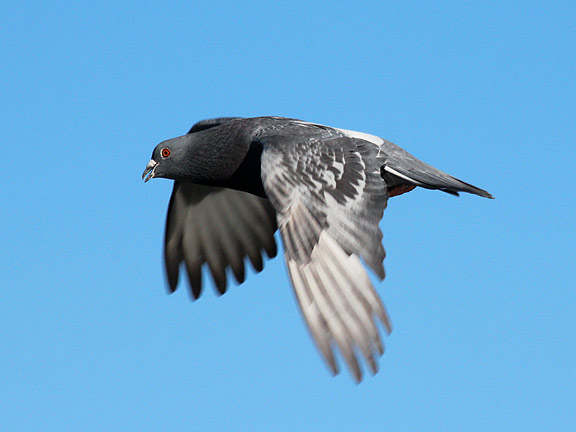
Rock Pigeon in Flight at Sugarhouse Park

Even though I have been photographing birds for over a decade I still enjoy going to the park where I learned to photograph ducks, geese, and gulls and get some easy shooting in.  It's like shooting fish in a barrel--or birds on a pond in this case.  There is no better place to practice taking pictures, or to learn the settings of your camera, than at a local park.  For starters the birds are fairly tame and easy to approach. They are used to people so you don't have to work to hard to setup decent shots.  Aside from being accustomed to people, ducks, geese, pigeons, sparrows, and blackbirds all tend to be pretty easy to photograph even in wild places--we'll call them easy targets.

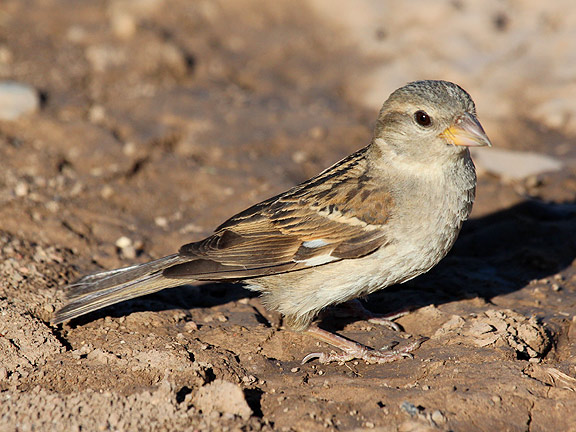
 House Sparrow at Sugarhouse Park

If you live in the city, there is probably a park nearby, maybe one with a pond where you can practice shooting these easy targets.  If it's close you can time it to be there when the light is just right.  I prefer evenings any time of the year at Sugarhouse.  It puts the sun to the west of the pond, and gives you some really powerful lighting to work with.  Every time I have gotten a new camera body, one of the first things I would do would be to head over to Sugarhouse late in the day and photograph the waterfowl and gulls.  I have gotten some killer shots this way over the years.

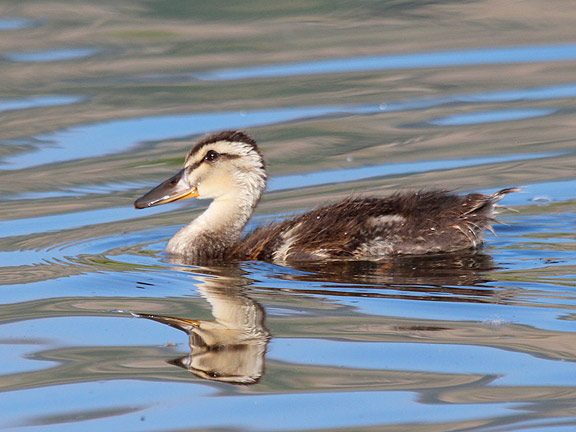
Young Mallard at Sugarhouse Park

Here in Utah one of the cool things is that you can spend a great deal of time studying California Gulls in all states of plumage most of the fall, winter, and spring.  In the summer there are usually a few around, but the real spectacle is in the spring.  The best way to find rare gulls when looking through a flock is to learn the most common ones--if you can nail down the California Gull at any age or state of wear that's a good start.  Plus the photo ops are pretty amazing.

California Gull face detail at Sugarhouse Park, April 21, 2008

So next time you just want to get some good photos, and practice working on your skills, take a trip to a nearby park and do some "practice photography".

Labels: , ,

Did he say Tremulous Tanager?

posted by Tim Avery at
on Tuesday, June 26, 2012 

So over time I have seen numerous posts talking about bird names and some of the historic names that were a better fit, or some of the current names that don't make sense, or names that just plain suck.  I often wonder why specific nomenclature was used in the first place, or changes later on aside from a species split or lump.  Even then names like Dark-eyed Junco for instance seem like an odd choice for a species that could be defined by numerous other characteristics, aside from that "dark eye".  What about the Varied Junco or the Chattering Junco--I would even be partial to a new grouping, how about the Chattering or Varied Wanderer?  Perhaps speaking to complex mixed breeding of the subspecies we call it the Promiscuous Junco? That might be my favorite for this species.

Dark-eyed Junco or Promiscuous Junco?

How about Rose-breasted and Black-headed Grosbeak--those are great descriptive names for the two birds, but in terms of interesting they seem rather plain.  Gray Jay is one that really stings me--honestly something like Alpine Jay, or Tundra Jay is so much more fitting.  But hey, the "color" gray is descriptive enough right?  And it matches up to the Green, Brown, and Blue Jay--never mind the Scrub or Steller's Jay though, they were after all already blue.

Gray Jay or Alpine Jay?

Birds named after cardinal directions also leave me feeling uneasy.  The Northern Flicker for instance is found far and wide east to west--not to mention across the entire south.  What about the Northern Rough-winged Swallow--are we talking north of the Equator?  Because the Southern Rough-winged Swallow and it's northern cousin meet in up Central America.  Lest we forget the Eastern Towhee and the Western Grebe and the split across this great continent.  Don't get me wrong I understand why some of these birds have the generalized descriptors used for their names--but it just seems like far too many have been done a disservice because of it.

Northern Rough-winged Swallow

Of course there is one bird above all others that bothers me--the Western Tanager.  It's my favorite bird with a breathtaking pattern and color set.  I can think of a couple name more apt--how about the Aspen Tanager (yes this species spends a great deal of time in Aspen as well as Conifers), or Tremulous Tanager (another take to Aspen, or Populus tremuloides its the scientific name).

Western Tanager or Tremulous Tanager?

I mean saying I saw 500 Tremulous Tanagers in a day sounds way more epic than saying I saw 500 Western Tanagers in a day.  Just the name adds a bit of mystique and interest.  I also wouldn't feign at names like Flammulated Tanager, Fire-faced Tanager, or the simple yet all encompassing Incredible Tanager.  How many times have you heard a birder or non-birder alike say, "Wow that's Incredible!" upon seeing a Western Tanager?

So now that I've told you a couple bird names I would change, if you could change 1, 2,  or a few bird names, what ones would you choose, and why?  Comment below anonymously or using just your name, or a Google account, etc.  I'm interested to see what others have to say!

Labels: , ,


UTAH BIRDERS FLICKR POOL


    SEE MORE AND SHARE ON FLICKR