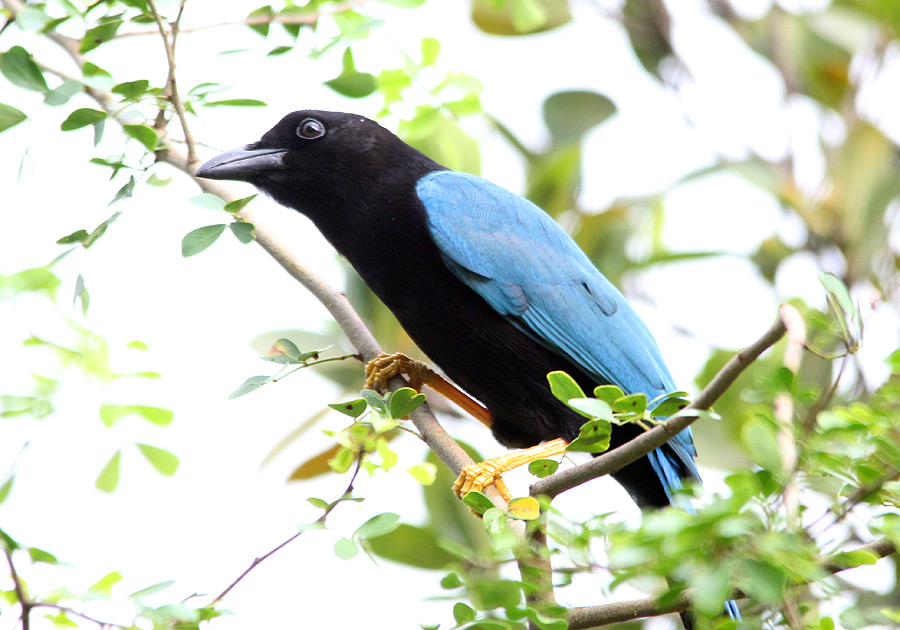
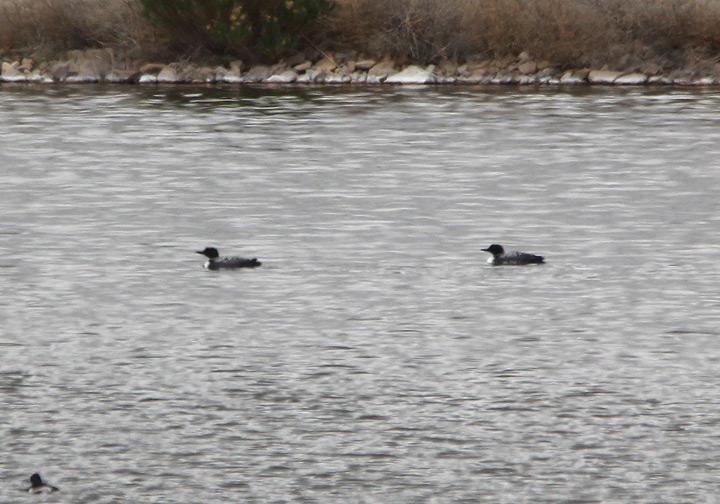
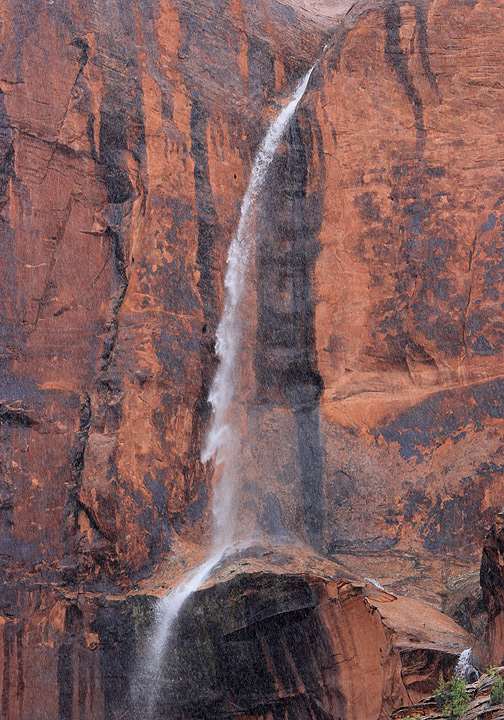
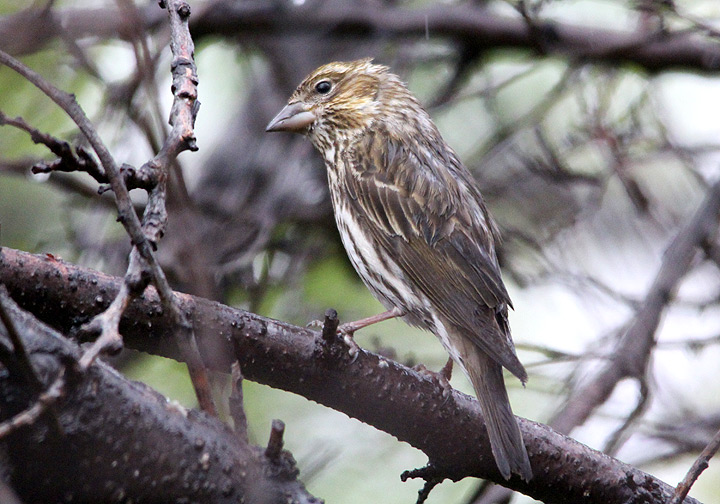
Utah Birds, Utah Birding, and Utah Birders. Promoting the sharing of information, and the conservation of habitat for birds in Utah and elsewhere. We are a group of people who want to share what we know, and create a positive birding experience in Utah.

BIRDERS BLOG

a blog by and for Utah Birders

Birding Mexico: Back to the Yucatan

posted by Tim Avery at
on Tuesday, December 1, 2015 

Early in 2014 I had the good fortune to secure a short trip to the Yucatan Peninsula in Mexico at basically no cost to me.  With a little quick planning and a few bucks out of my own pocket I turned the trip into 3 packed days of birding at 3 awesome locations (Coba, Cozumel, Rio Lagartos).  I ended up seeing 170 species including 51 life birds, picking up the majority of the endemics and a few personal favorites along the way.  It was a great trip and I left with a deep appreciation for the area and its birds.  Shortly after that trip my wife Sam and I took a trip to Panama, our last foreign adventure for nearly 18 months.  Since then we had our first child, watched his first year of life fly by, and I birded quite a bit less than usual with the changes around the house.  We were both itching to get out of the country for a few days, and decided this summer that we would take a November trip someplace warm, fairly close, and that we could do without breaking the bank.  The Yucatan immediately jumped to the top of my list of places that met this criteria.

After spending a couple weeks looking at other options and pricing things out, I kept coming back to the Yucatan, and decided to just go for it.  I booked a 5 night trip that would put us in the Playacar area I was familiar with, with day trips to Cozumel and Chichen Itza. This would mostly be a beach trip to relax in the sun--but if I played my cards right there were a few lifers I could pickup.

About 3 weeks before our trip I got a call that the resort we were staying at had a fire the previous day and they had to move us to another location--at first I was a little worried but it ended up being an upgrade and put us 1/2 way between Cancun and Playacar in the Playa Paraiso area which is surrounded by lush lowland jungle.


DAY 1

6 Days in the Yucatan!

We left Salt Lake on November 5th with an evening flight to Denver, then caught the red-eye for a short 3.5 hour flight to Cancun overnight.  We arrived before sunrise to buckets of rain that slowly cleared as the sun came out and we arrived in Playa Paraiso.  First bird of the trip as expected--GREAT-TAILED GRACKLE.

We were checking in early so our room wasn't ready--while we waited we walked the ground where the birds started popping out of the wood works.  First was a small flock of YUCATAN JAYS visiting a tree where they were enjoying some type of food.  While we watched out of nowhere a GREEN JAY flew in just 10' away providing the best looks I've had before disappearing into the Mangroves.  SOCIAL FLYCATCHER and GREAT KISKADEE along with TROPICAL KINGBIRD and TROPICAL MOCKINGBIRD were all quick to appear and remained constants at the resort throughout the trip.  After getting our room keys a surprise NORTHERN JACANA was a nice sight before we headed to the pools to enjoy a little relaxation.  My eyes kept wandering to the skies where OSPREY, TURKEY and BLACK VULTURES, and MAGNIFICENT FRIGATEBIRDS appeared from time to time.  It was easy birding and a nice change from the doldrums of the day to day around my home and office where I have spent most of the past few months.
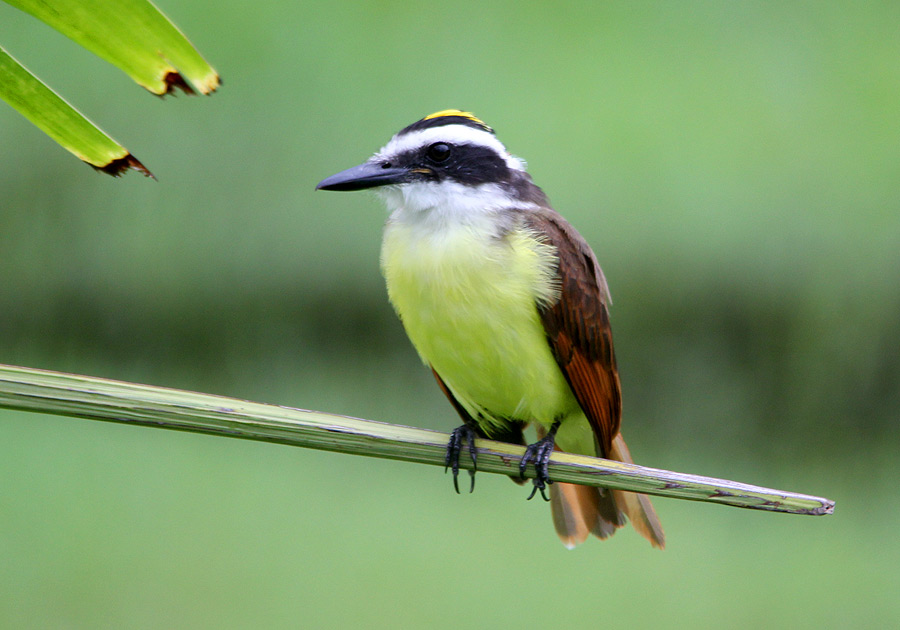
Great Kiskadee showing its gorgeous cap

The afternoon brought a flyover ROADSIDE HAWK and a pair of PLAIN CHACHALACAS near one of the pools.  Flyover OLIVE-THROATED PARAKEET were seen through the trip, why MELODIOUS BLACKBIRDS were heard winging all day every day. The beach wasn't much for birds--too many people. LAUGHING GULLS were omnipresent, while both ROYAL and CASPIAN TERN made flybys constantly.  The occasional NEOTROPIC and DOUBLE-CRESTED CORMORANT as well as BROWN PELICAN would fly past, but nothing in great numbers.

Todays eBird Checklists:
Playa Paraiso - Morning
Playa Paraiso - Mid Day
Playa Paraiso - Afternoon


DAY 2
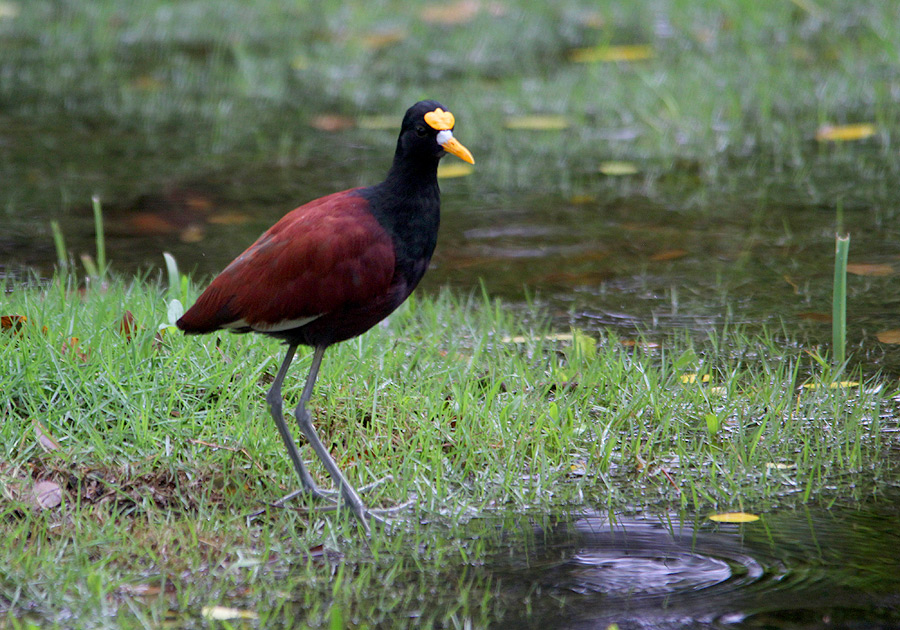

Northern Jacana on a flooded lawn
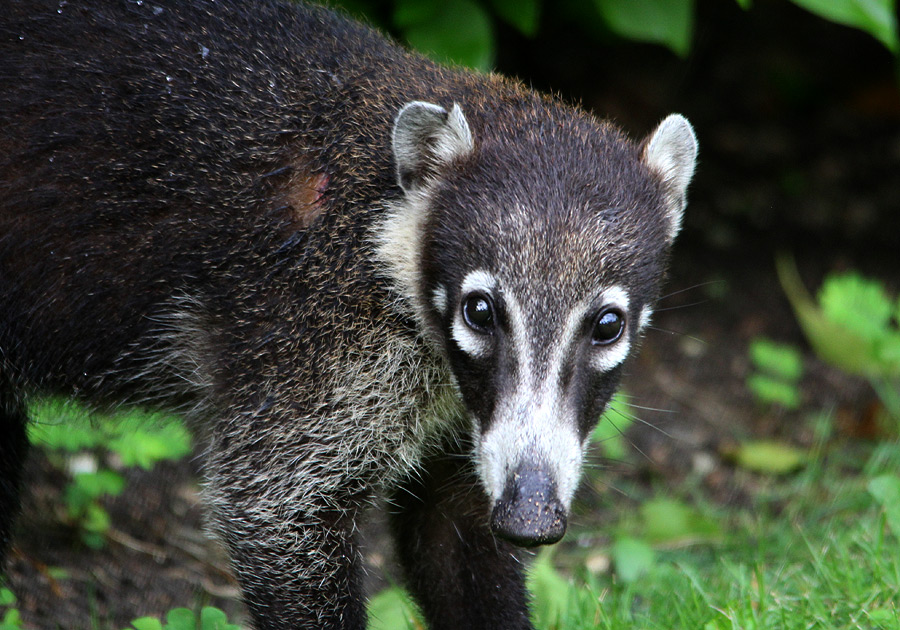
On our 2nd morning I took an early walk while the wife and kid slept.  Bird life was scant as thunderheads were on the move and rain came and went.  I managed to track down the NORTHERN JACANA from the previous day for horribly lit photos. I think one of the things I was most excited about was a White-nosed Coati hanging out by itself that let me get a pretty good shot...

White-nosed Coati on a lawn edge

I also turned up a pair of YUCATAN JAYS that allowed for better photos than my previous trip, but nothing worth writing home about.  The only other new bird of the morning was a GROOVE-BILLED ANI hunting from a shrub patch along a side road.

Yucatan Jay posing briefly

The rest of the day was spent relaxing which was the point of the 1st couple days. The most interesting thing I saw today and a couple other times was a YELLOW-THROATED WARBLER eating table scraps in the out door eating areas on the grounds.  One was picking bread crumbs while the other was eating ice cream cone leftovers.  It was odd but allowed really close looks!

Todays eBird Checklists:
Playa Paraiso - Morning
Playa Paraiso - Afternoon

DAY 3

Today the plan was to hit Cozumel and pick up our rental car to drive to Chichen Itza on Monday--but Sam didn't feel well and we decided the boat ride wasn't the best way to spend a morning.  I again decided to hit the grounds and see what I turned up--today the sun was out and that made all the difference in the world. I headed to the mangroves along the beach first thing where a few birds were already active.  YELLOW WARBLER, YELLOW-THROATED WARBLER, and AMERICAN REDSTART were all feeding in the open.  My favorite find were a pair of CINNAMON HUMMINGBIRDS that sat on exposed limbs allowing photos--a species I hadn't taken picture of on my last trip.
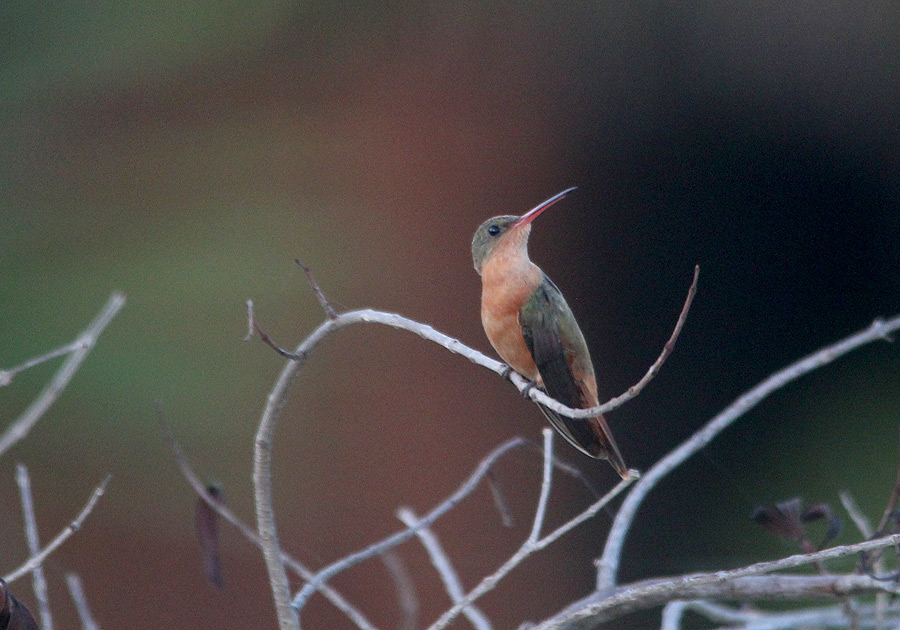
Cinnamon Hummingbird before sunrise

After exhausting the mangroves and beach I moved inland until I eventually came across a cooperative HOODED ORIOLE that allowed me to take photos and watch it for about 20 minutes.
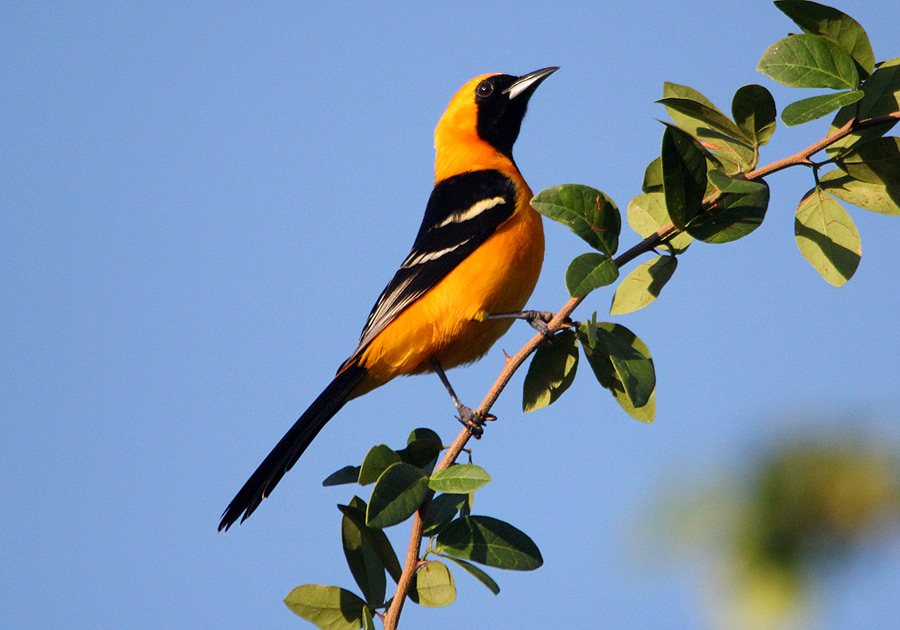
Stunning Hooded Oriole 
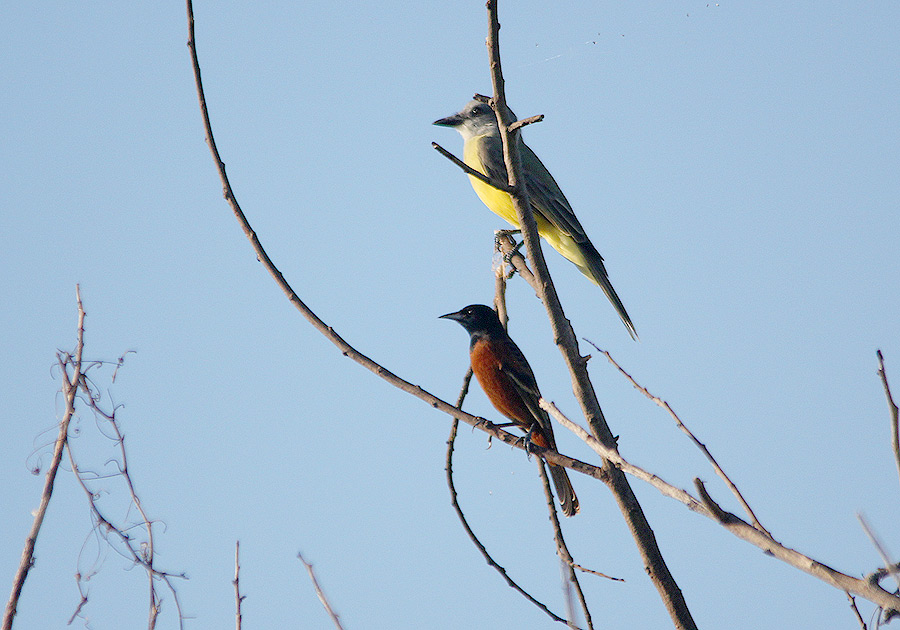
I headed to a stretch of road along the resort golf course where I had birded the previous morning--this area seemed the most active and this morning it was action packed.  I tallied 9 species of warbler including HOODED, PRAIRIE, BAY-BREASTED, and MAGNOLIA.  The orioles were out in force with the highlight being 5 different species visiting the flowering bushes along the golf course. BALTIMORE, ORCHARD, HOODED, ORANGE, and ALTAMIRA ORIOLE made for a colorful morning.

Orchard Oriole accompanied by a Tropical Kingbird

As I made my way around a patch of tree there stood a PLAIN CHACHALACA standing on the lawn nearby.  I was ecstatic as the lighting was perfect--pretty soon I noticed 2 more in the trees and the 3 birds eventually walked right at me, passing within an arms length and making their way to better cover.
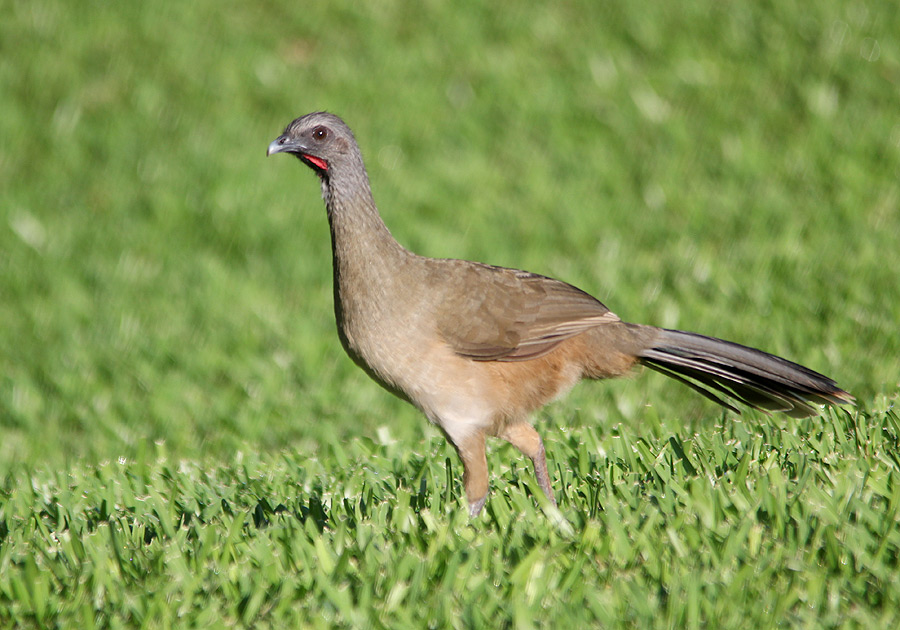
Why did the Plain Chachalaca cross the lawn?

While I watched the goofy groundbirds pass out the corner of my eye a GREEN HERON moved through a nearby pond.  The bird was quite accomodating and let me watch it closely for 15 or 20 minutes.  
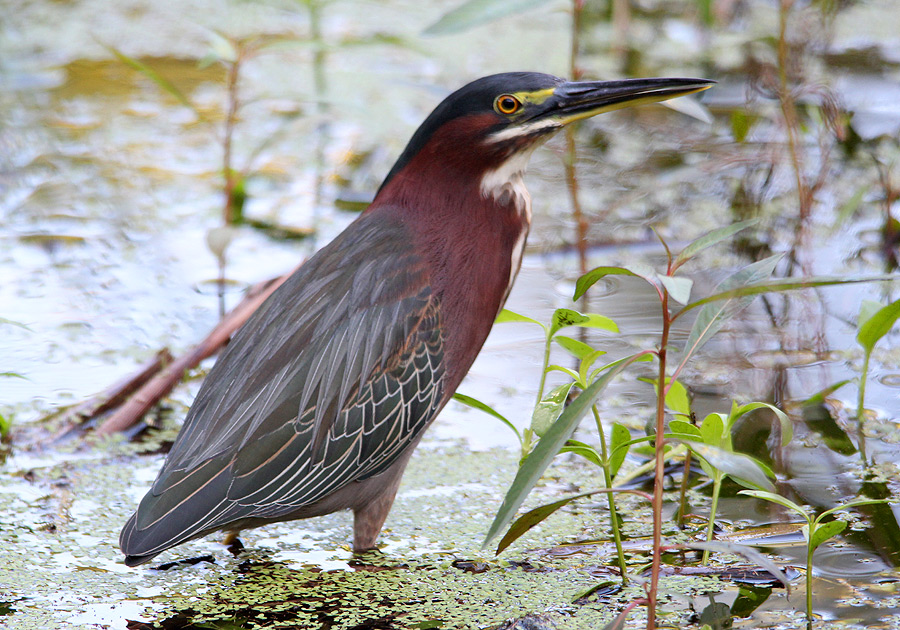
Green Heron pretending to be a plant

After I felt like I'd exhausted the trees, I made my way back towards our room when a flock of OLIVE-THROATED PARAKEET flew by and landed in a tree long enough for me to fire off one shot.  A truck drove by and scared all the birds into the air. I was a little peeved as there hadn't been a vehicle anywhere near for about 20 minutes--such is life.
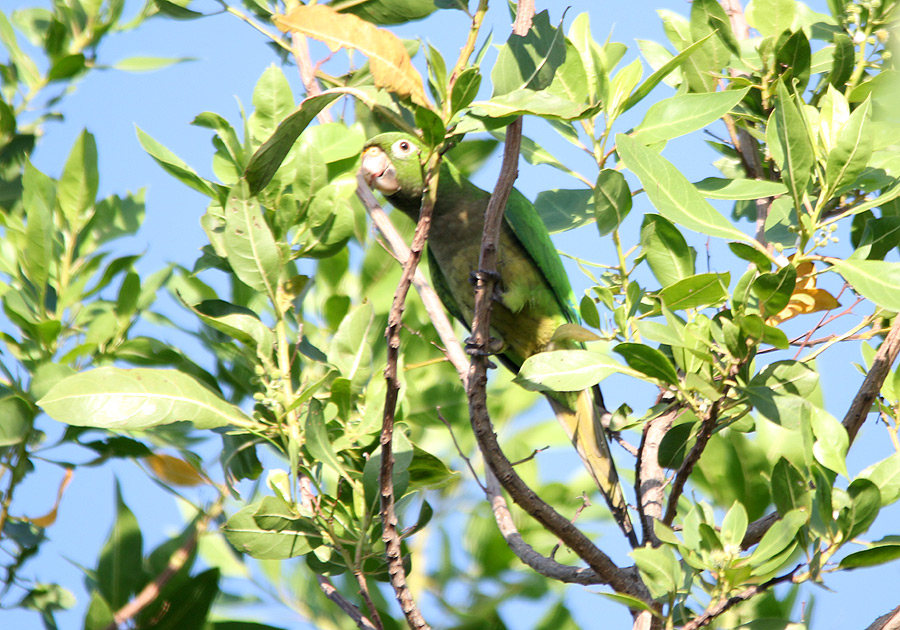
Olive-throated Parakeet

It wasn't a bad morning with almost 40 species seen within a mile of my room.  The rest of the day was spent at the pool, beach, and a quick trip to Playa del Carmen to pick up the rental for the rest of our trip.

Todays eBird Checklists:
Playa Paraiso - Morning
Playa Paraiso - Late Morning

DAY 4

We finally made our way out of the city and away from the coast as we headed inland to Coba. I'd only been able to spend about 90 minutes here previously, and wouldn't get much more time today.  In the future I wouldn't mind spending a couple days in the area, and really checking things out.  The birding is great and you can get amazing looks and photo ops with some patience.  But with a 15 month old in tow we kept to a pretty steady pace to see the ruins, and get back to the car before nap time.  It didn't help that it was extremely hot and very humid making for a sticky time in the jungle--I personally love it!

The family at Coba

We arrived a couple hours after sunrise so activity had peaked and things were waning.  In the first big clearing with ruins where last time the bird activity was plentiful, the birds were sticking to the edges and there weren't nearly as many out in the open. I did spot a SUMMER TANAGER, and a few GREAT KISKADEES which were visiting an ant line. RUDDY GROUND-DOVE and RED-EYED VIREO were two of the only birds out in the open, while I could hear YELLOW-WNIGED TANAGER and GARTERED TROGON calling from the forest.
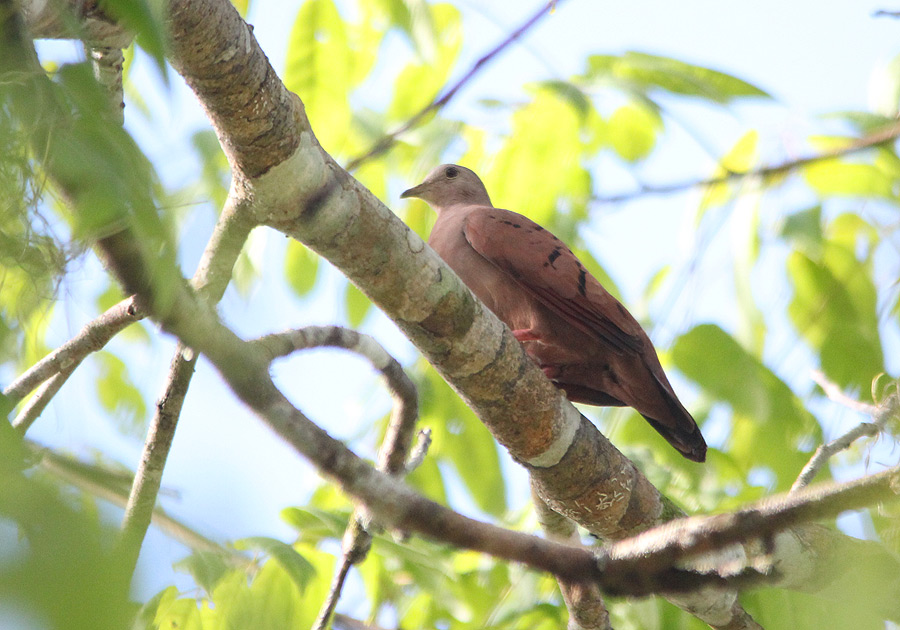
Ruddy Ground-Dove... Not on the ground.

Walking the main trail through the jungle we came across a pair of RED-THROATED ANT-TANAGER hopping around near the trail. The lighting was abysmal and I wasn't able to get a photo of this species yet again.  The forest was mostly quiet-accept for the seemingly abundant WHITE-EYED VIREO that kept appearing overhead. These visitors form up north were only outnumbered by BLACK-THROATED GREEN-WARBLER and MELODIOUS BLACKBIRD.  And to dull things out I did spy a pair of TENNESSEE WARBLERS reminding me that not every warbler comes in bright and yellow!

Near one out of the way ruin I could hear the BLACK-HEADED TROGON calling from the forest--as I approached I could make out at least 3 different birds calling--then when I got to the edge and saw a few the birds started moving--5 trogons all within about 60' of one another.  This species is all but guaranteed at Coba.
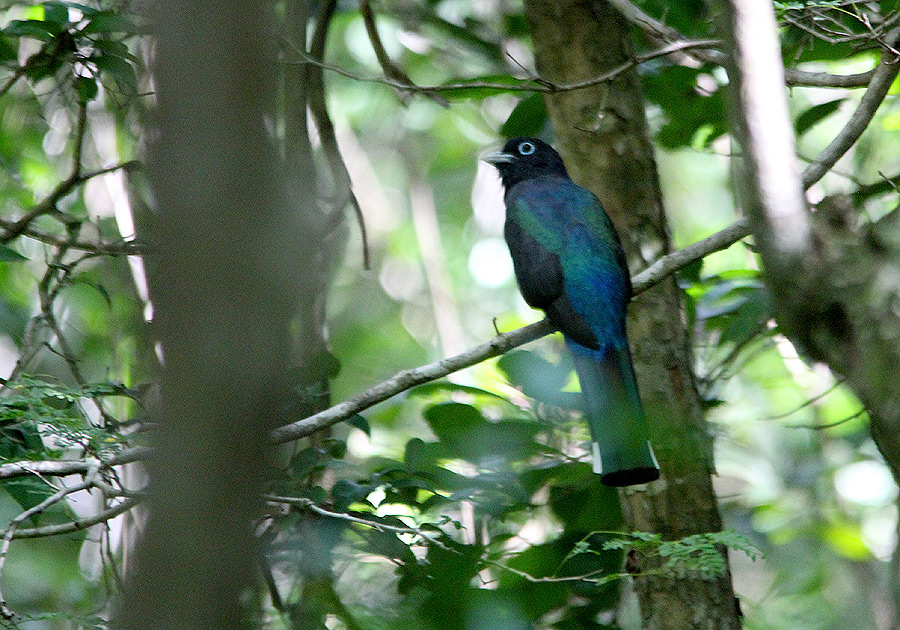
Bad shot of a Black-headed Trogon in the Jungle

We eventually made our way to the The Ixmoja Pyramid--the tallest such structure in the Yucatan at 137'.  The Coba complex was apparently home to some 50,000 Mayans at one point--incredible given its remote location in the jungle today.  As we walked up the path towards the pyramid, we came across a thick ant line crossing the road--about 3" to 10" wide in various places--it was a swarm and nearby in the trees I could see more RED-THROATED ANT-TANAGERS on the ground--but there were other birds including my lifer RUDDY WOODCREEPER of which several zipped form snag, to limb, to root, and branch. Despite the crappy lighting, I managed to make one pretty good shot!
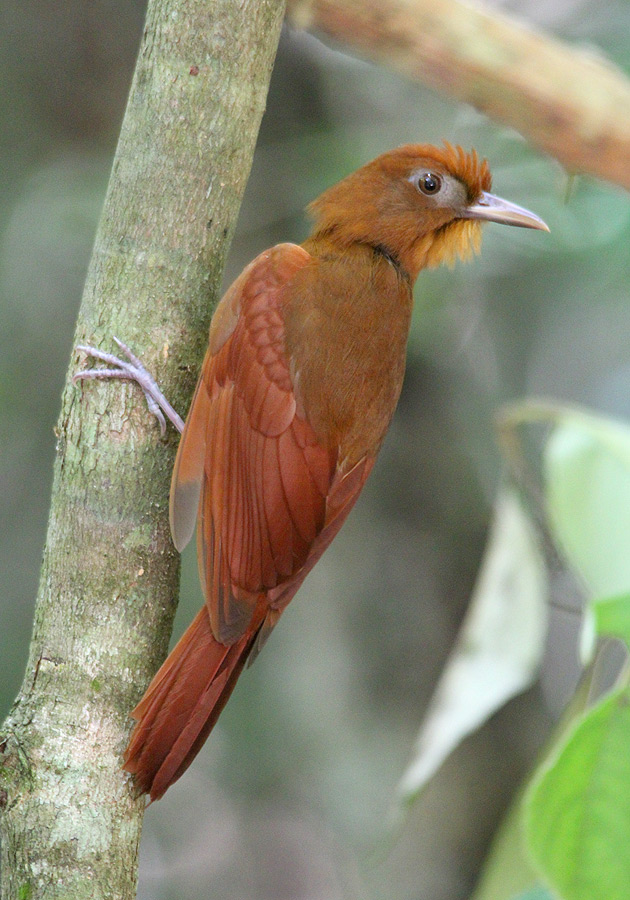
Lifer Ruddy Woodcreeper

GRAY-HEADED TANAGER accompanied the other birds, as well as YUCATAN JAYS.  I spent some time scanning the understory trying to find other birds, but there wasn't much else--I caught up to the rest of the family at the pyramid which we took in as the sun beat down upon the opening in the jungle.
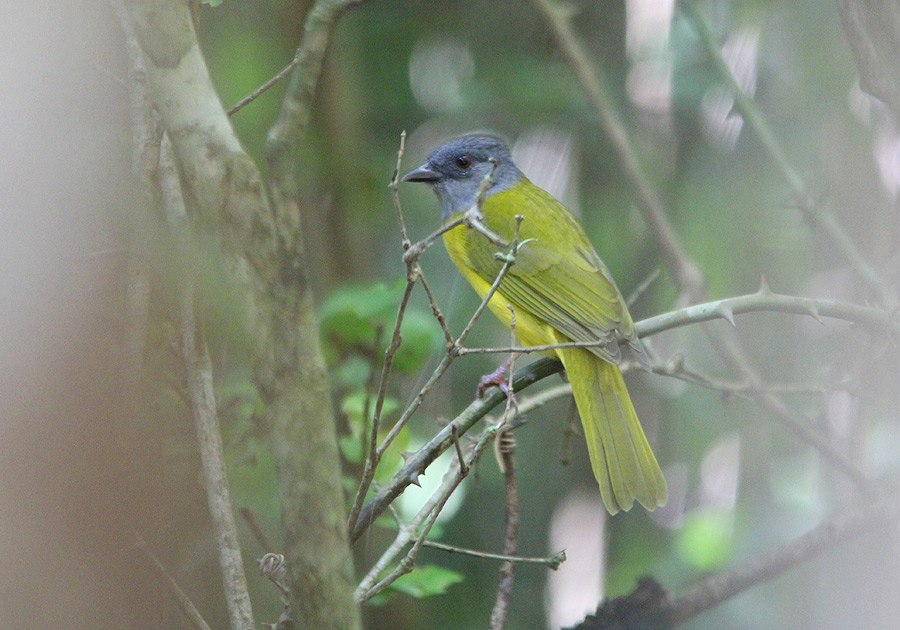
Gray-headed Tanager following an ant line

It was hot--and the kiddo was getting grumpy, so we turned around an made our way back towards the entrance.  I was able to snag one more lifer in a WEDGE-TAILED SABREWING--a rather plain species of hummingbird easily identified by its unique tail shape!  We bought a few trinkets and snacks then hit the road and made our way back to the coast and our resort in time for lunch--Delicious tacos made fresh while we watched.  The rest of the day was spent soaking in the sun, and enjoying the beautiful beach!

Todays eBird Checklists:
Zona Arqueológica Cobá
Playa Paraiso

DAY 5

With our last full day in Mexico, I started early and headed just a few miles up the coast to Yaax Che Jardín Botánico del Dr. Alfredo Barrera Marín--a botanical garden.  I had found this place on my last visit but didn't manage to make it there to look for birds--big mistake as this might be the best birding location along the coast between Cancun and Playa...  I had a few hours, but when I got there the gate was shut--I was a couple minutes early and there was no where to park outside the gate which was right off the highway.  So I did a loop and came back a few minutes later--STILL CLOSED!  But there was a guy behind the gate.  I hollered and asked why the gate was closed--he responded that it didn't open for another 30 minutes!  This is always an issue when you bird in other countries--gardens, parks, and various places you may find yourself birding often go by their own schedule.  If online it says 8am somewhere, they may open at 8--or 8:30, or whenever they decide to.  After pleading with the guy, he let me in to park and I spent the next 20 minutes birding around the parking area.  A flock of  YUCATAN JAYS came through accompanied with my first stellar look at a BROWN JAY.
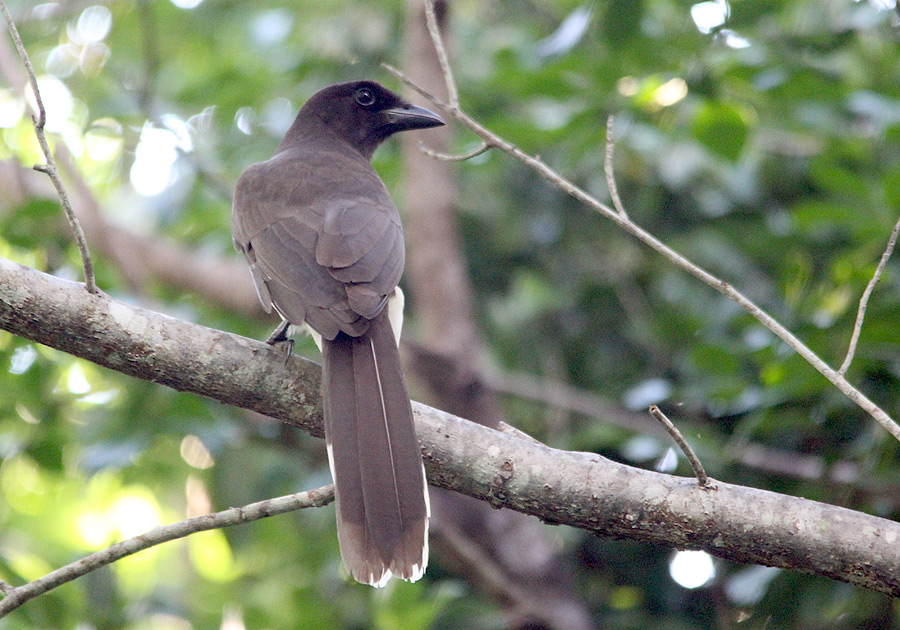
Brown Jay pausing before disappearing in the jungle

The park "manager" soon arrived and after talking for a few minutes he told me I was free to walk the grounds and as I only had about 75 minutes now I busted my tail down the trail.  It was quiet but at the first pull out into an "exhibit" I whipped out my best pygmy-owl imitation and the birds came a flying.  Various warblers from the states came in followed by a surprise GRAY CATBIRD, and finally a lifer--a WHITE-BELLIED WREN, who provided excellent looks.
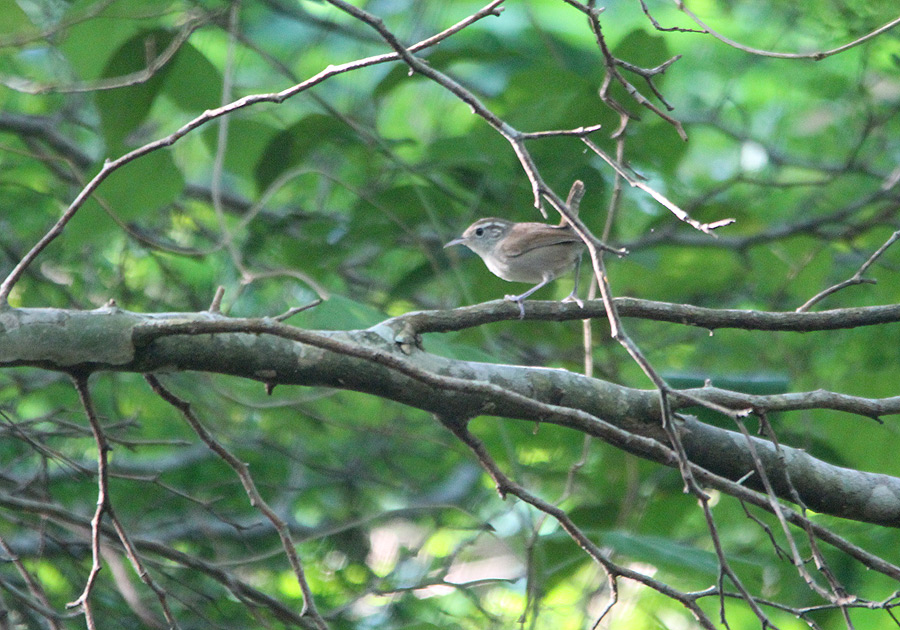
Lifer White-bellied Wren

I kept on down the trail where a NORTHERN WATERTHRUSH bobbed up and down in the middle of the road.  Then form just off trail came the bellowing of a THICKET TINAMOU.  It sounded like there may have been two and I made my way closer to the noise where eventually I had to be within 25'. But despite the scanning the undergrowth, I could never pick out the beast.  My Tinamou list continues to grow, without having ever actually seen one...

At the next exhibit--a medicinal plants exhibit I spent a couple minutes unsuccessfully trying to coax birds form the forest.  I made my way back to the trail passing a cactus garden and eventually coming around a corner and flushing a GREAT BLACK HAWK from the edge of the road.  I saw where it landed and started sneaking towards it, when I heard a squeal form above--another one was perched staring down at me!
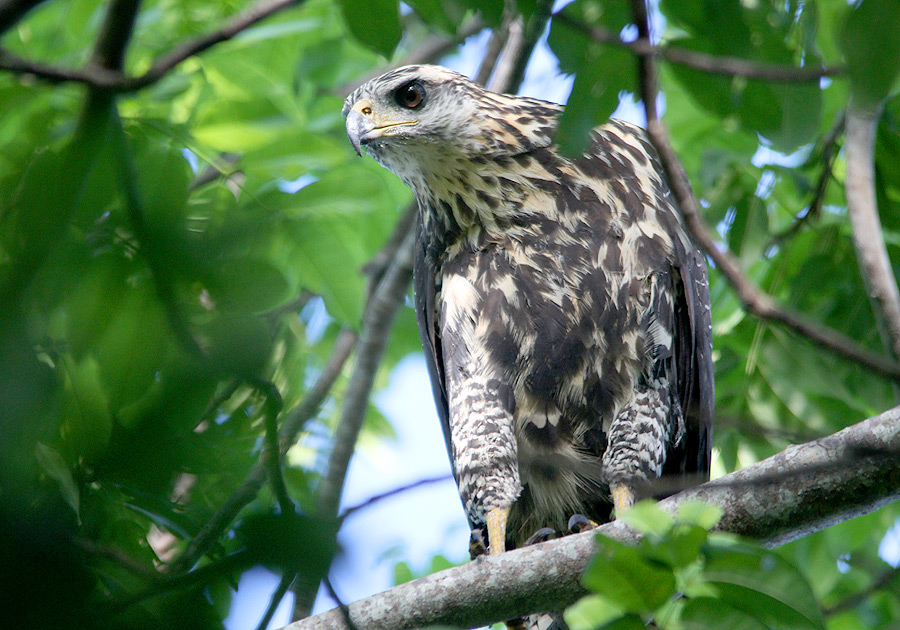
Great Black Hawk staring me down

It was an amazing look and I basked in the opportunity.  All the while I could hear birds calling nearby and there was one call could never figure out.  Looking into the forest I soon found a pair of RUDDY WOODCREEPERS, as well as a flock of YUCATAN JAYS.  A MANGROVE VIREO passed by along with several warblers, and a GROOVE-BILLED ANI.  As I walked up the path I noticed a few ants streaming across the road--I guess that explained the birds!  I came around a bend to where I saw the other hawk land, and it flew as soon as it saw me--then out of the forest a voice hollered at me asking what I was seeing--it was another birder--from Canada.
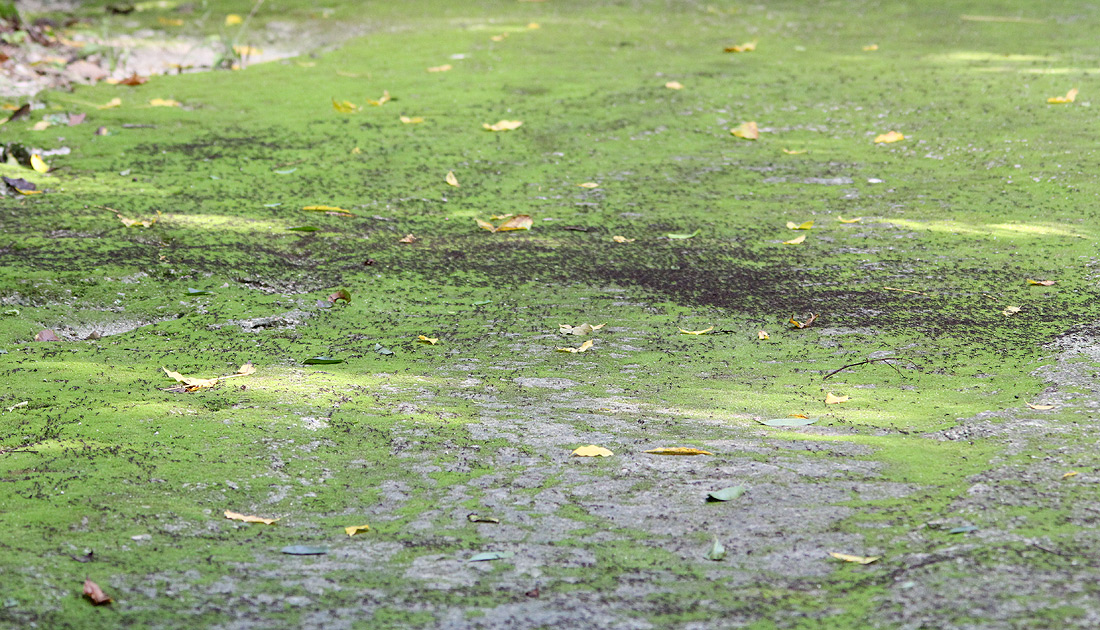
Ant Swarm crossing the road

We started talking and I found out it was his first trip here--and he was with his non-birding wife.  We started walking and talking birds when all the sudden we noticed the ant swarm had literally taken over the road--our path was blocked by 30' wide swath of ants rolling across the road--it was my first real ant swarm--and the birds were following.  RUDDY WOODCREEPER, the jays, anis, and a few RED-THROATED ANT-TANAGERS.  I finally managed a picture of the tanager, as there weren't many birds in tow to look at besides the above mentioned.
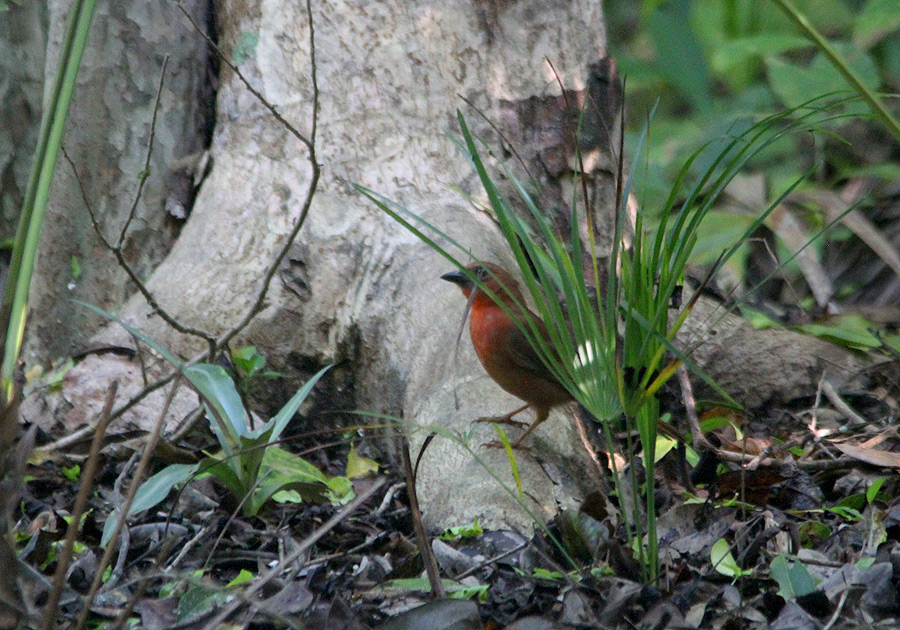
Red-throated Ant-Tanager following an ant swarm

It was great to see, but the number of birds following were a tad disappointing.  We walked back aways to look for the hawk which had moved by now, but quickly found a small family of SPIDER MONKEYS! A great treat!  We followed the troupe for a few minutes until they moved out of sight into the forest!
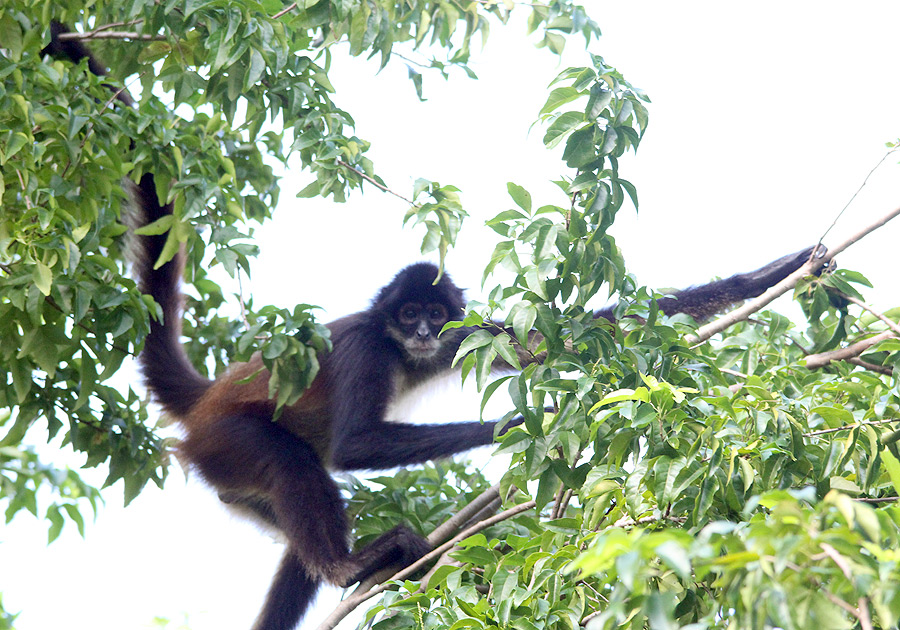
Spider Monkey swinging through the trees
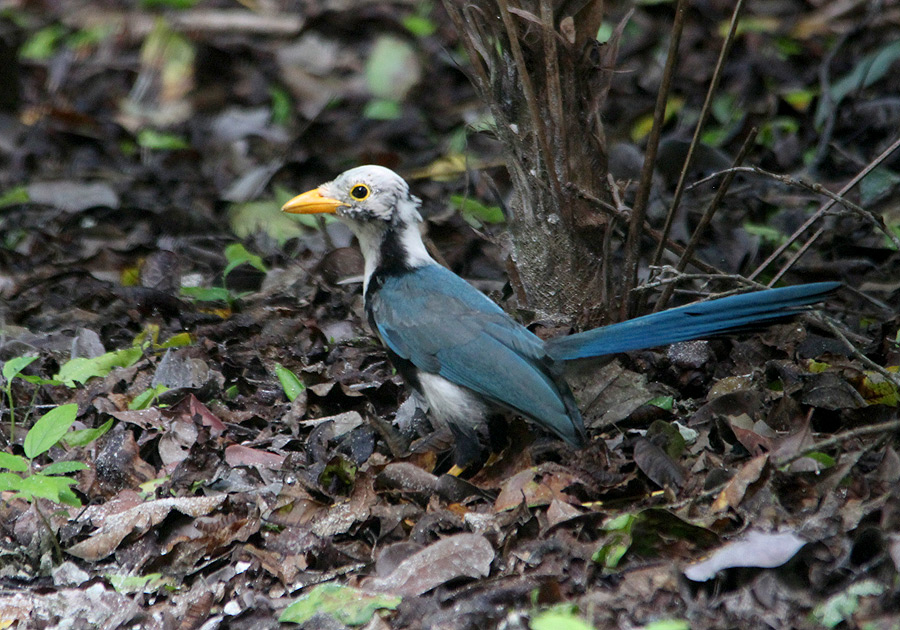
My time had wound down and I needed to run, so we bid adieu and I headed back toward the entrance--but not before I heard a squeaking of tanagers above me--ROSE-THROATED TANAGERS--a small flock moving through the tree tops! Ah, one of my top wants from the area previously, and just fleeting glimpses before they were gone and the forest was quiet again.  I made my way to the entrance and talked briefly with the manager and paid my entrance fee--I think it was like 150 pesos--or about $10.

Stunning young Yucatan Jay

One thing I learned from a post on eBird that I will likely try to use in the future is swing by the afternoon before and talk to the manager to see if you can come in early and bird before the gates open.  It's light just after 6:00am and that means 2.5 hours of light before the park opens.  I read several reports from others who tried this and got permission.  I may very well try this in the future--as it would have given me almost 4 hours here which would have been awesome.  I ticked just over 40 species in my brief stop and made my way back to my hotel.  I had to take the rental back and the rest of the day was spent on the beach and pool enjoying my last moments of the tropics before heading back north.

Todays eBird Checklists:
Botanical Garden
Playa Paraiso

DAY 6
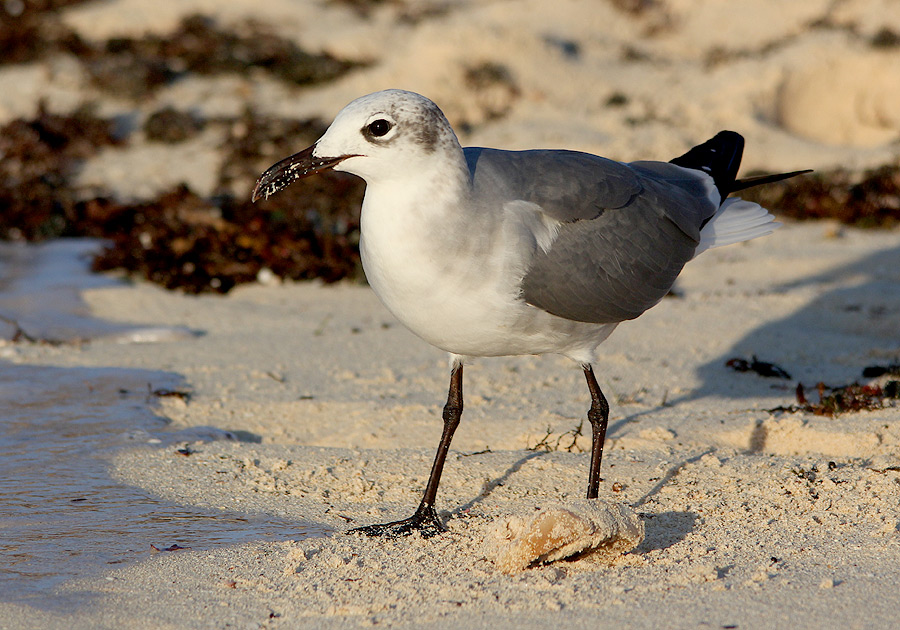
We made a quick loop to the beach first thing in the morning--I hoped there might be a few birds on the sand.  There wasn't much--just a few grackles and LAUGHING GULLS.

Laughing Gull on the beach

We packed our bags grabbed breakfast, then headed to the airport.  Before we knew it we were on the ground in Salt Lake--50 degrees cooler than it had been 12 hours earlier... And the ever yearning for the tropics already coursing through my veins again.

Todays eBird Checklists:
Playa Paraiso

I'd be lying if I said, I killed it birding this trip--just 89 total species tallied over the week.  Of those 5 were lifers, while 21 were new for my Mexico list.  Most of the birding was down from a lazy river, on the beach, or walking to and from meals.  A departure from my usual trips, but a nice easing back into international travel with an infant.  I still have a handful of endemics I need, and I have only grown fonder of this area with my 2nd installment.

PHOTOS FROM THIS TRIP

Photos from Playa Paraiso
Photos from Coba
Photos from Yaax Che Jardín Botánico del Dr. Alfredo Barrera Marín


Labels: , , , , ,

Flammulated Owl Video

posted by Tim Avery at
on Friday, July 17, 2015 

There aren't a lot of videos of Flammulated Owls out there, and despite having seen 100's and photographed dozens, I have never tried to shoot video... until this week.  I shot several short videos, the first of which I am posting here.  The bird in question was less than 20' away and super cooperative.  Check it out below:

Labels: , , , ,

2015 Gunnison Sage-Grouse Days Recap

posted by Tim Avery at
on Friday, May 22, 2015 

Sometimes nothing works out in your favor :)  This years Gunnison Sage-Grouse Days looked like it was going to be a stellar weekend.  The weather report a week out showed good weather with highs in the 70's--and with a lot of early migrants we could have a big weekend in San Juan County.  But as the week progressed the weather changed, and by Friday it looked like Monticello was going to get slammed with wet and cold weather that may linger into Saturday.  But we decided to give it a go regardless; after all the weather might miss, and we didn't have a backup plan.

On Friday the 17th, Chris Monahan, Kenny Frisch, and I left Salt Lake to bird our way down to Monticello taking in numerous stops at out of the way and underbirded locations in Carbon, Emery, and Grand Counties. Our first stop at Soldier Summit wasn't too promising with no birds... Hopefully, not a sign of things to come.  As we headed down Price Canyon near the Castle Gate we saw an OSPREY--the first of 4 for the day and my first of the year.
A stop in Bear Canyon at the mouth of the canyon and we heard the first singing LAZULI BUNTING of the year, while in Helper on 1000 North east of US-6 we had 2 VESPER SPARROW. In the parking lot at the Carbon Country Club an early COMMON YELLOWTHROAT was a nice surprise. Driving through Wellington we snagged the 2nd OSPREY of the day.  At the Wellington Cemetery we were treated to a TOWNSEND'S SOLITAIRE, a LARK SPARROW, and an ORANGE-CROWNED WARBLER. The cemetery sits on a high spot north of town and might be a really good check in May and September when migration is in full swing.

We checked out the East Carbon WTP where 2 COMMON LOON, 16 FRANKLIN'S GULL, 6 WHITE-FACED IBIS, 1 LONG-BILLED CURLEW, and Yellow-headed Blackbird provided some good desert birds.  WE had passed through some great shrubsteppe on the way out where we snagged SAGE THRASHER for the trip.  The habitat looked good for Sagebrush Sparrow and I figured on Sunday coming home we might try for it on a side road.

Common Loons at East Carbon WTP

We drove along the base of the Book Cliffs going south--at Water Canyon a WESTERN KINGBIRD was one of just a few birds present. Further south at the mouth of Horse Canyon a huge mixed flock of mostly Gray-headed Juncos with a few Pink-sided provided good looks. A BLACK-THROATED SPARROW here gave some great looks.  Horse Canyon looks like it could be an awesome locations to visit later in the year when warmer.  The Book Cliffs in general may be one of the most underbirded areas in the state.

In Woodside at the Price River, several SAY'S PHOEBE and a flock of BREWER'S SPARROW were the bulk of the birds present. Our next stop at the Green River WTP had a lot of good waterbirds including: 2 BLUE-WINGED TEAL, 4 LESSER YELLOWLEGS, WHITE-FACED IBIS, a hybrid GADWALL x MALLARD, and around 100 FRANKLIN'S GULLS. At Green River State Park a SNOWY EGRET was hanging out near the boat launch. After Green River we hit rain and the birding was pretty slow to Moab--the rain was coming down hard, and we mad ea side trip up the Colorado River to watch the water cascading off the cliffs. There were waterfalls everywhere.

When Red Rocks become Waterfalls

In Moab we did have 7 CASSIN'S FINCH at Gail Lea's feeders where we had hoped to pick up Blue Jay, Brown Thrasher, or White-winged Dove (but didn't); and the wettest COOPER'S HAWK I've ever seen waiting out the rain.

Female-type Cassin's Finch in the rain

Our last birding stop of the day was at Ken's Lake where we had 2 more OSPREY for the day, as well as 13 WHITE-FACED IBIS, a MARBLED GODWIT, and lots of FRANKLIN'S GULLS. Near the dam there were quite a few SAVANNAH SPARROW in the grass. As we drove into Monticello the temps dropped and it started to snow. We met up with the rest of the group for dinner at Wagon Wheel Pizza and had a good time talking birds, the weather, and the area.  We cancelled the owling for the night given the weather--and in a rare moment opted to get a hotel instead of set up and then take down camp in the snow in just a few hours.  I think we were all glad to do this and get a comfortable and warm nights sleep before going for grouse.

In the morning we woke to apparently clear skies, and temps hovering in the low 30's.  The group met and we headed off towards the lek.  Once on the dirt roads it became apparent things might turn south quickly--and they did on the first patch of clay we hit, with my truck sinking several inches into the road.  We stopped and backed the group up--there was no way we would reach the lek today.  I realized I had never been down here after a torrential down pour and despite having driven on the road when wet before, I had never seen it like this.  It would likely need a warm day with lots of wind--or several days to dry out.  This was a total bummer and threw us into recovery mode.  Heading back to town and trying to clean some of the mud off our boots and vehicles, we formulated a different plan.  Head south to Bluff, then spend the day birding back to Monticello. It wasn't grouse, but it was birding.

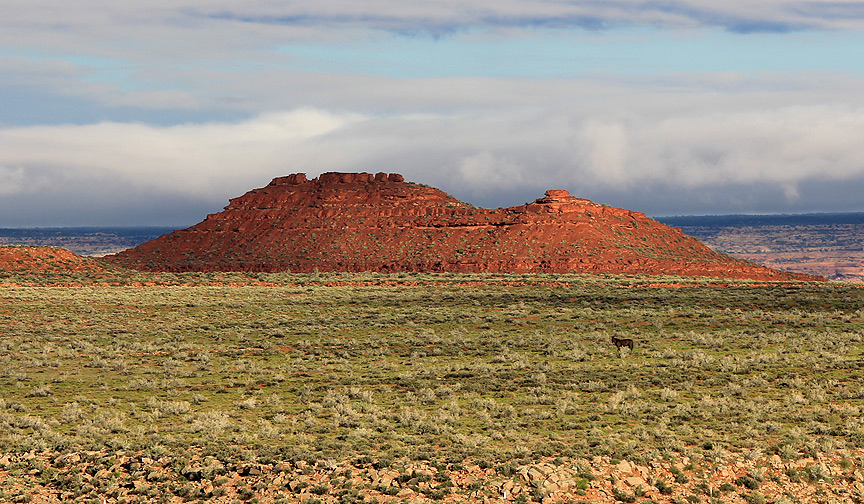
Heading south through Blanding we hit thick fog, before descending lower into the desert, and 50 degree weather and sun in Bluff.  We headed west to Comb Wash to bird on the Lime Ridge where the open shrubby desert was green from the recent weather.  Against the red rocks and distant Blue Mountains it was a gorgeous scene.  A WILD HORSE provided a nice surprise, while the birding was slow and limited to just a few species.  BLACK-THROATED SPARROW and HORNED LARK dominated the habitat--while SAGE THRASHER and BREWER'S SPARROW were also present in small numbers.

Lime Ridge and a Wild Horse

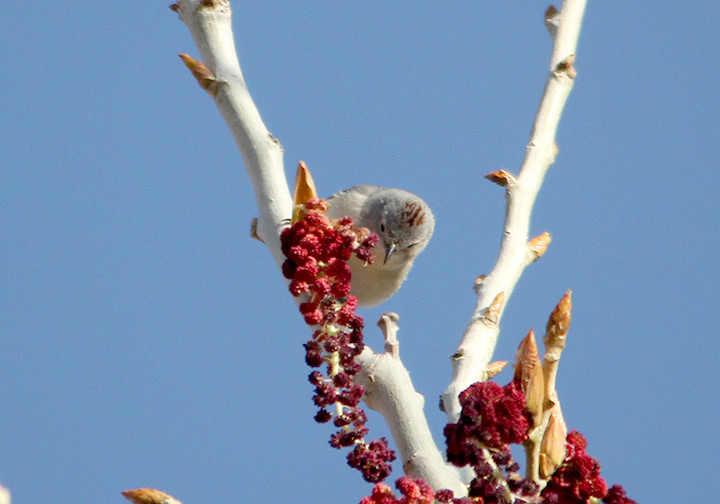
Back towards Bluff we stopped to check out Sand Island Campground, and the riparian habitat west of US-191 along the San Juan River.  Here we were treated to our first LUCY'S WARBLERS of the trip as well as gobbling WILD TURKEY, a LINCOLN'S SPARROW along the river, and a surprise WHITE-THROATED SPARROW singing from across the river in the same patch of trees where we had one 2 years ago on this same trip.

Lucy's Warbler showing its crown

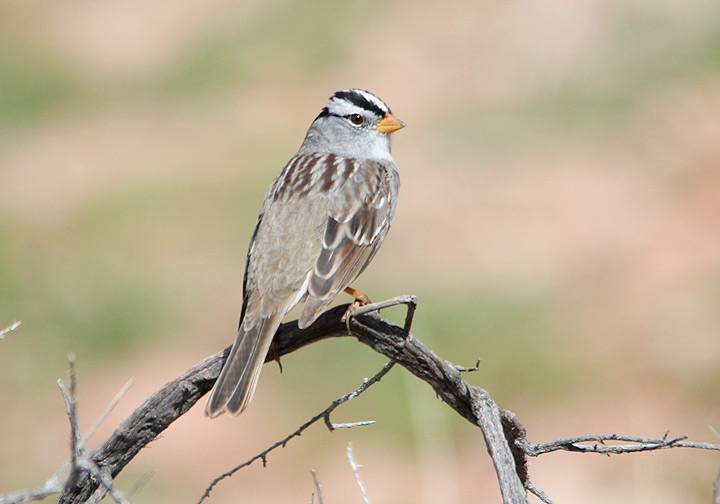
At the campground we had great looks at CANYON WREN and relaxed enjoying the morning sun.  A quick stop at Navajo Twins Ponds in Cottonwood Wash was a little disappointing as the ponds were almost completely empty.  There were a few birds but most of the usual suspects were missed.  No waterbirds of any kind--but Mike Hearell and Taylor Abbott flushed a WHITE-WINGED DOVE from the west side of the ponds where one has been seen in the past. We stopped along Mission Road heading east out of town where we had Chihuahuan Raven last year.  There were no ravens, but a large flock of WHITE-FACED IBIS, were accompanied by 3 MARBLED GODWIT, and a few FRANKLIN'S GULLS in a flooded field. Very cooperative WHITE-CROWNED SPARROWS allowed for a nice photo op as well.

Posing White-crowned Sparrow in Bluff

Making our way back north and up in elevation we headed to Blanding to check out the waste water treatment ponds south of town--always one of the best stops of the trip. And things were no different this year. 13 species of waterfowl graced the glassy water. 6 BLUE-WINGED TEAL highlighted the mix which had a whopping 61 CINNAMON TEAL as well.  LONG-BILLED CURLEW, WHITE-FACED IBIS, FRANKLIN'S GULL, and EARED GREBE rounded out the notable waterbirds, while 2 GOLDEN EAGLES circle overhead.  These ponds have been a stable source for GREAT-TAILED GRACKLE in San Juan County, with 3 present on our visit.

Keeping with the northward pattern we stopped at Recapture Reservoir, which seems to be lower and lower every year.  This year it was only maybe 3 football fields long.  That didn't stop the birds from using it--as usual a good assortment of waterfowl, grebes, ibis, gulls, and shorebirds were present.  Of note were MARBLED GODWIT, WILSON'S PHALAROPE, and FRANKLIN'S GULL.  Along the surrounding hillsides we added RED-NAPED SAPSUCKER,  all 6 swallow species, BLACK-THROATED GRAY-WARBLER, and CASSIN'S FINCH.

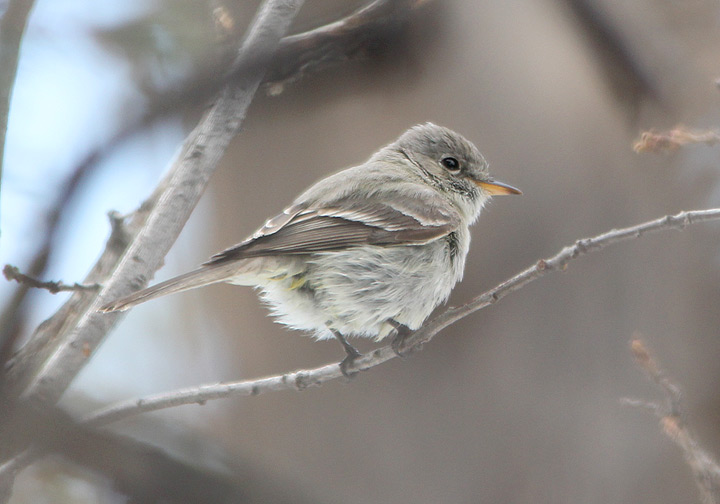
Gray Flycatcher at Devils Canyon

Just a few miles up the road is Devil's Canyon Campground which is usually very birdy--but on this trip it was mostly quiet.  We only tallied 12 species in almost an hour--but most were new for the trip like GRAY FLYCATCHER, PYGMY NUTHATCH, WESTERN BLUEBIRD, and MOUNTAIN CHICKADEE.  Notably absent this year were finches and woodpeckers that usually keep us busy here.

Super cooperative Osprey

We made our way into Monticello and to Lloyd's Lake on the west side of town. The lake wasn't uber-birdy, but we had great looks at an OSPREY that was perched low in a tree over the road--a local alerted us to the cooperative "Red-tailed Hawk" as he put it--and we quickly enjoyed a calling all Ospreys for the remainder of the trip Red-tails! We also picked up WHITE-BREASTED NUTHATCH for the day with great looks before continuing into the Abajo's for some mountain birding.

White-breasted Nuthatch on the move

It was windy on the east slope and at Dalton Springs Campground there were few birds--6 species might have been the smallest checklist we've put together here. Driving around the north slope we had decent looks at WILD TURKEY, WESTERN BLUEBIRDS, and great views of Canyonlands below to the north. We ended up at Foy Lake where we had never birded before, and had a REDHEAD and PIED-BILLED GREBE on the water. Nearby in the trees we added STELLER'S JAY, WESTERN SCRUB-JAY, and TOWNSEND'S SOLITAIRE.

We jetted back across the mountains to town and eventually Clay Hill Road and the Monticello Waste Water Treatment Ponds.  Again, the waterfowl numbers were impressive, with 13 species including COMMON MERGANSER, BUFFLEHEAD, and 2 BLUE-WINGED TEAL.  We added PEREGRINE FALCON to the trip list as well as VESPER SPARROW before bring an official end to what was one of the strangest grouse days trips we've had.  First and foremost, we had no grouse--and the weather had made for odd choices in how we birded.  We saw some great birds but it was a little disappointing none-the-less.  While most of the group headed northwards, we decided to see if we could make it to the lek, to possibly try again in the morning. The road out was still a muddy mess and a no go; but we tried another route in and made it fairly easy. It could be done. Then came the rains... It poured, and poured, and continued to pour. We headed south to Devils Canyon to camp the night and the rain only got worse.  Eventually it broke long enough to set up camp, and turn in for the night--but the rains returned after dark for a couple hours.

Sunset at Devils Canyon

Luckily, by midnight it waned and was calm the remainder of the night. Early Sunday we headed to town and picked up Craig and Dale Provost who opted to stay behind and try again.  We made our way back towards the lek on the back up road but the rain overnight must have come down in buckets as it was a muddy mess in places.  I decided not to risk getting us stuck and called a stop to things. A Sunday morning in Monticello was not an ideal place to get stuck, especially when we can come back next year and so on.

Church Rock at Sunrise

We split with the Provost's and started making our way north, stopping to admire Churh Rock along 191 in the early morning light. Next at Ken's Lake we added RED-BREASTED MERGANSER for the trip and had great looks at flyover OSPREY. We made it into Moab and back to Gail Lea's yard where we were greeted upon arrival by a singing BROWN THRASHER, and then shortly after a calling BLUE JAY, and WHITE-WINGED DOVE. The hat trick in less than 15 minutes!  The thrasher provided some great looks, and being only my second in Utah, I enjoyed taking some time to soak it in.

Only my 2nd Utah Brown Thrasher

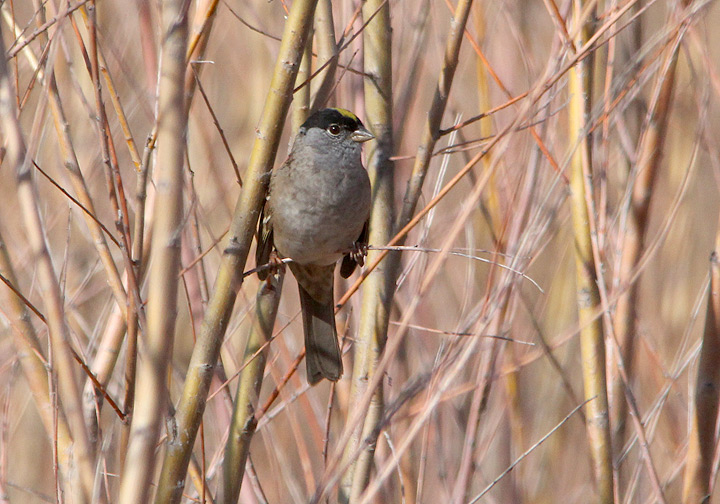
We ventured across town to the Matheson Wetlands Preserve, which in all honesty, I had never birded despite the amount of time I have spent in this area of the state. Mistake on my part. We walked the boardwalk along the south end at the "main entrance" where there weren't a ton of birds. We seemingly eked out every species there, getting LUCY'S WARBLER here, then a BLUE-GRAY GNATCATCHER there, followed by a singing ROCK WREN in the distance, and a NORTHERN MOCKINGBIRD from a nearby shrub. We decided to take a jaunt out towards the river and came into a small flock of WHITE-CROWNED SPARROWS. We started pishing, and 20 feet in front of us a GOLDEN-CROWNED SPARROW popped up and posed for several minutes.  I had never had such good long looks at one--and a alternate plumage adult to boot.

Golden-crowned Sparrow in Moab

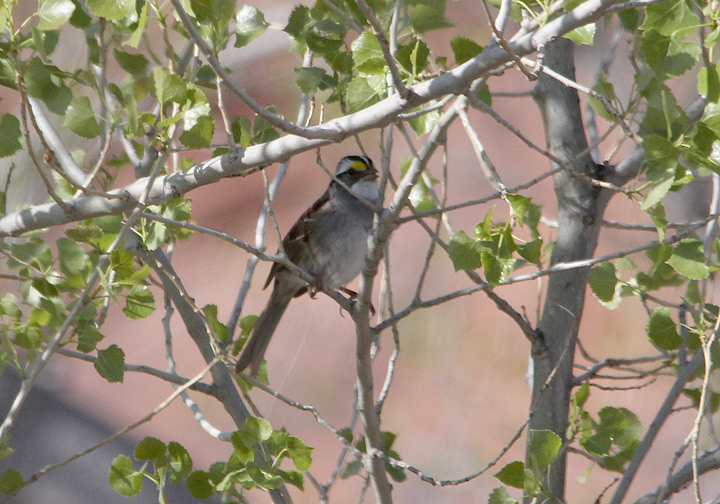
While we watched the sparrow the unmistakable song of a WHITE-THROATED SPARROW came from trees directly behind the Golden-crowned.  We about lost it--the only thing that could have made it a better day was if a Harrid's Sparrow had popped up for a 4 Zonatrichia day--that didn't happen. The White-throated provided great looks as well, and we enjoyed the great birds before moving on.

White-throated Sparrow in Moab

We made a few more stops heading north eventually making it to Green River for lunch, and birding Silliman Lane and the Waste Water Treatment Ponds again. MARBLED GODWIT, and BONAPARTE'S GULL highlighted the waterbirds, while 350 FRANKLIN'S GULLS were a big count for here. We ended up driving the Woodside Lower Price River Road towards the Book Cliffs, and had a nice variety of desert birds including BREWER'S, VESPER, and BLACK-THROATED SPARROW along with SAYS PHOEBE and ROCK WREN. This is one location I would like to visit later in the spring for migrants and breeders.

Sagebrush Sparrow near East Carbon

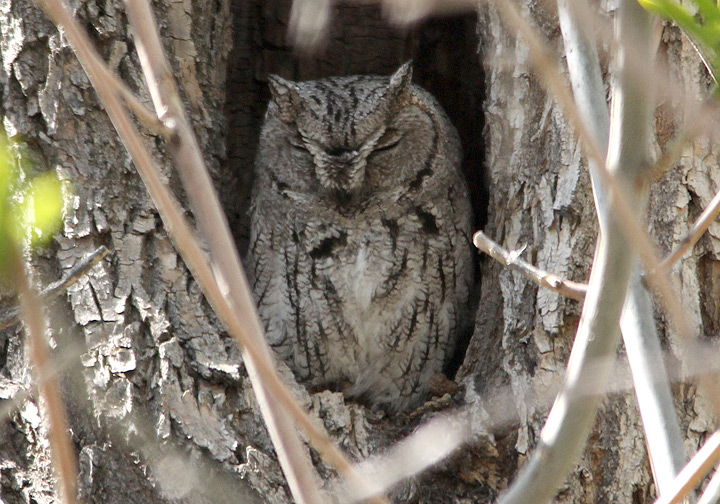
We checked the East Carbon WTP again, but there weren't any real treats this time around.  We did find a couple SAGEBRUSH SPARROWS a little to the west and got great looks before speeding through Price, and back to Utah County. We made one last stop to show our buddy Chris a WESTERN SCREECH-OWL for a life bird.

Western Screech-Owl in Pleasant Grove

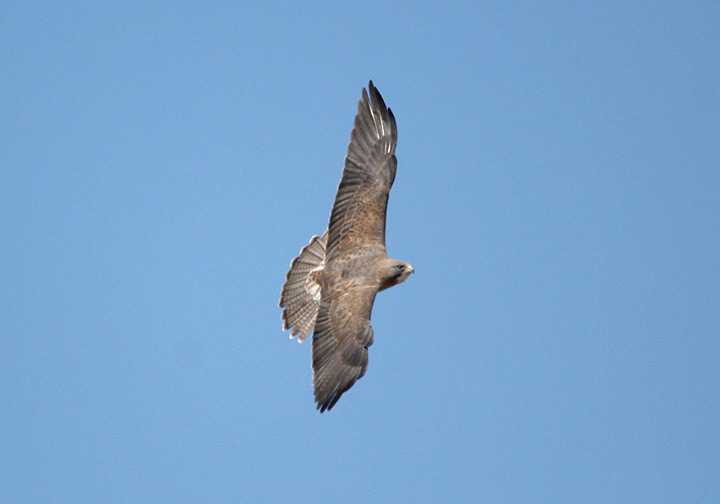
On our way back to the freeway we added one last lifer for his trip list with a gorgeous pair of SWAINSON'S HAWKS at a nest site.

Swainson's Hawk top-side view

And just like that our 3rd Gunnison Sage-Grouse Days trip came to an end back in Salt Lake almost 900 miles later. Our group of 3 tallied 123 species for the weekend, while the field trip on Saturday netted about 100 just for the day.  Not a bad weekend, and despite things not working out for us several times the overall weekend was a success--and next year will only be better!

Labels: , , , , , , , , ,

eBird Mobile iOS Beta Release First Look

posted by Tim Avery at
on Wednesday, May 20, 2015 

For those who don't have an iOs device, or just want to see what it looks like without downloading, here are the first looks at eBirds new mobile app called, "eBird Mobile" from the beta release going on right now.  The following is in the release from Team eBird:

Regular users of BirdLog will find that this app works much the same, with a few key improvements. The goal of the eBird app is to make a single, global data entry app for eBird. Using the former BirdLog code as a base, we transferred the existing functionality into the Lab’s development environment, solidified and consolidated the code, rebranded the app, performed some basic bug fixes, and made it free. Subsequent iterations of the app will focus on reworking the user interface, translations, and improving data out functionality. We have also begun development work for Android, and eBird Mobile should be available on that platform in the coming months.

What’s new with eBird Mobile?

  • Free – eBird Mobile is free.
  • Single global version – The eBird mobile app is available in a single consolidated version that works anywhere on earth.
  • Expanded languages – Offers species common names in many local language options, in parallel with the eBird web site. Four-letter quick entry based on common name and scientific name for all taxa globally, as on eBird.
  • Show rarities – Rare species are now indicated on the checklist view, prompting observers to provide more detail.
  • Refined start up screen – The ‘home page’ of the app has been reworked from a usability standpoint, making it clear how to get started entering data.
  • Continuity – App updates don’t cause you to lose existing unsubmitted lists or personal locations and startup is not delayed by taxonomic updates.
  • Data quality improvements – The app more closely matches functionality of eBird web for protocols, and prompts users to be more precise about location plotting.
  • Trip summary – Improved trip summary functionality makes keeping track of your trip list and day list fast and simple.
So here are the screenshots--I'll post a review of the app after I've tinkered with it a bit... The only thing I will say is I expected a better UI and experience right off the bat, hopefully performance is there to make up for the above...


Labels: , , , ,

2015 Marathon Birding Recap

posted by Tim Avery at
on Tuesday, May 19, 2015 

As I left my house at 5:00am it was in a down pour... Things were not looking good.  As I picked up my cohort Jeff in downtown Salt Lake, it was a torrential down pour... things could only get better.  The drive into Davis County was wet wet wet.  And as we got breakfast it seemed to get even wetter. Finally arriving at the Legacy Events Center to meet out group the rain was still coming down; but it seemed to have lightened a little--and to the west there was a shimmer of hope that the clouds would part and the weather might turn for the better. We kept our expectations reasonable--the rain could definitely damper our efforts--it was probably snowing above 8,000' so our mountain birding could definitely be rough.  This was going to be a wet and wild Marathon Birding Trip.

Everyone that ended up going on the trip was on time and in the vehicles; but 2 participants didn't show up, and we wasted 15 minutes waiting and trying to get a hold of them--in the end we left late, and without the 2 no-shows.  In the parking lot the first birds of the day were a flyover flock of WHITE-FACED IBIS; and singing AMERICAN ROBIN, HOUSE FINCH, and RED-WINGED BLACKBIRD. We wasted no time making our way to Glover Lane, where birds were singing as if it were sunny and warm. COMMON YELLOWTHROAT and YELLOW WARBLER were heard quickly. Sitting in the middle of a wet field was an easy to watch BLACK-CROWNED NIGHT-HERON, while the ponds at the end of the lane provided the usual share of waterfowl and waterbirds--we were underway and I personally didn't mind the rain since the birding was off to a good start.

At Farmington Bay the gates were locked as usual and it took a few minutes to get in.  We were greeted by a GREAT EGRET in the pond to the east, as well as COMMON GOLDENEYE, and 100's of VIOLET-GREEN SWALLOWS.  Behind the restrooms 2 WOOD DUCKS were nice to get out of the way.  We snagged both SORA and VIRGINIA RAIL calling from the reeds, and CASPIAN and FORSTER's TERNS overhead. At Egg Island Overlook a very wet SWAINSON'S HAWK posed  for the group int he small trees. Scoping form here we picked out a small group of 7 RED KNOTS to the southwest--a fortuitous find as we would have none at the causeway later.  We quickly nabbed our waterfowl needs and got a bonus PEREGRINE FALCON before turning around and heading out.  Along the way we added LONG-BILLED DOWITCHER, WILSON'S PHALAROPE, and SANDHILL CRANE. We were glad to get both NORTHERN SHOVELER and AMERICAN WIGEON which have been surprisingly difficult in the past. As we left a singing LINCOLN'S SPARROW at the restrooms was a bonus that eventually gave everyone great looks--and for the first year in many we struck out on Blue-winged Teal.

Red Knots at Farmington Bay

Heading towards the freeway we snagged CALIFORNIA QUAIL, which is never a sure thing so was technically a bonus bird for the day.  Like every year adjusting our route, this year we threw in a loop the opposite direction of our trip--heading to Bountiful Pond, we hoped to maximize our migrant lists by hitting 2 migrant traps instead of just.  It was rewarding as we were able to also add CATTLE EGRETS along Legacy Parkway--where 1,000's of WHITE-FACED IBIS filled every field. The group only had to scan one flock to get lucky enough to pick out a GLOSSY IBIS for the day.

Glossy Ibis photo by Rachel LeBlanc

At Bountiful Pond we waded in ankle deep water through the flooded orchard hoping for migrants. There wasn't as much as expected but we did star to pick things out slowly. YELLOW-RUMPED WARBLER, BULLOCK'S ORIOLE, WILSON's, & MACGILLIVRAY'S WARBLERS were found. Several GREEN-TAILED TOWHEES were seen along the path around the west side of the pond. A BARN OWL flushed from the trees, while overhead swallows twittered about.  On the water we snagged COMMON MERGANSER and CLARK'S GREBE.  Feeling we'd exhausted the trees we left 15 minutes behind schedule for the day--but on time given we left 15 minutes late at the onset.

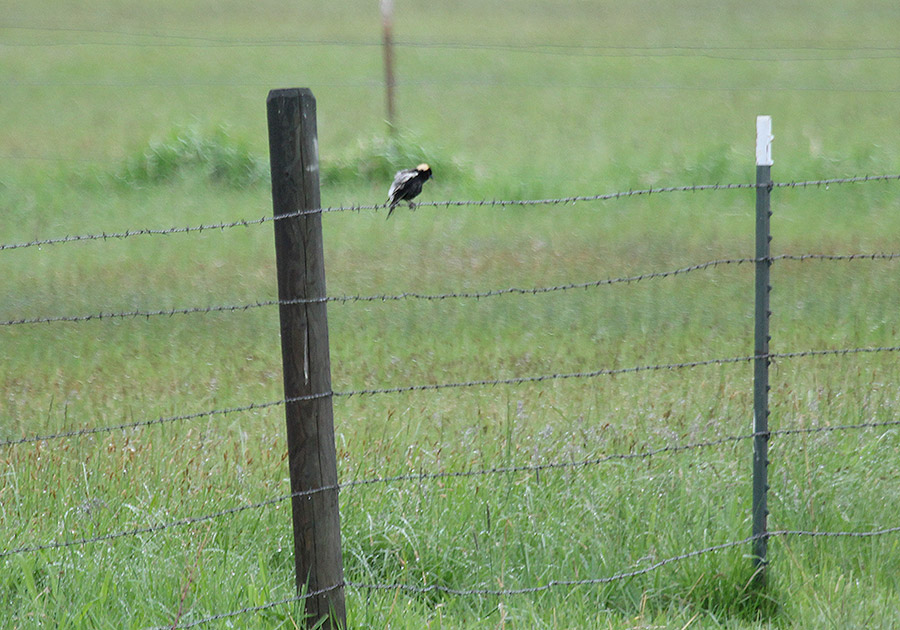
Bobolink at Shick Lane

The drive to Kaysville went quick, and we netted 2 BOBOLINK and WILSON'S SNIPE at Schick Lane, before adding GREAT-TAILED GRACKLE at Jensen Nature Park. And just like that the rain subsided--the clouds parted and the sun graced us with its presence. The rest of the morning would be spent at Antelope Island, birding in ideal conditions.  On the causeway we quickly pinned down 2 AMERICAN GOLDEN-PLOVER, 4 WHIMBREL and a SNOWY PLOVER amongst the 1,000's of BLACK-BELLIED PLOVER and SANDERLINGS. 10's of 1,000's of RED-NECKED PHALAROPE dotted the water. We couldn't find any turnstones or dunlins; and not a peep in the whole bunch. But a 3rd cycle LESSER BLACK-BACKED GULL was a bonus--as was an AMERICAN PIPIT along the beach. We plowed through our needs and headed to the end of the causeway where 2 PURPLE MARTIN were drifting over the last bridge.  At the marina we had 5 more including several gorgeous males that flew past at eye level.

Female Purple Martin at AIC

Tim's Car photo by Rachel LeBlanc

On the island CHUKAR, ROCK WREN, and LOGGERHEAD SHRIKE came quickly. At Lady Finger Point we flushed a CANYON WREN from the rocks, and a singing NORTHERN MOCKINGBIRD were nice additions. Another flyby PURPLE MARTIN made 8 for the day. Along the loop road we added SAGE THRASHER, GRAY FLYCATCHER, and a surprise BLACK-THROATED SPARROW. That was followed by BURROWING OWL and BLUE-GRAY GNATCATCHER as well as the usual LARK and BREWER'S SPARROW. And yet another flyby PURPLE MARTIN made 9 for the day.  We finished up the north arm of the island with HORNED LARK and SAY'S PHOEBE, as well as the usual GREAT HORNED and BARN OWLS at the corrals.

Great Horned Owls at Antelope Island

The drive to Garr Ranch was punctuated with a quick stop for GRASSHOPPER SPARROW which was perched up and singing on arrival. At Garr Ranch we ran into a fallout--kicked off with PURPLE MARTIN number 10 for the day. WILSON'S WARBLERS were dripping form the understory.

Wilson's Warbler at Garr Ranch

Various other warblers flitted about, and we were fortunate to find the NORTHERN WATERTHRUSH along the fence line at the east end of the spring. Our only RED-BREASTED NUTHATCH of the day would be here--PINE SISKIN, WESTERN TANAGER, LAZULI BUNTING and WARBLING VIREO were also nice additions. We did a clean sweep of the Utah empids with all 5 regularly occurring species found around the ranch grounds. After making the rounds we opted to head out knowing we'd done very well at the ranch and were already past 130 species for the day. The drive out netted our NORTHERN HARRIER for the day, and in Layton we saw plenty of AMERICAN CROWS.

Northern Waterthrush at Garr Ranch

On our way to get lunch in Ogden we added a pair of WESTERN SCRUB-JAY which is usually a miss for us--and after a short lunch stop we headed to Birdsong Trail at the mouth of Ogden Canyon.  Here with a little coaxing we picked up YELLOW-BREASTED CHAT and FOX SPARROW for the day as well as BLACK-HEADED GROSBEAK and BLACK-CHINNED HUMMINGBIRD. Overhead our first TURKEY VULTURES were a pleasant sight. Heading into the canyon, Mike suggested stopping at "The Oaks" to see if we could get a catbird and Calliope Hummingbird at their feeders. We had no such luck with those birds, but as we were getting ready to leave a small buteo emerged form the trees across the road and circled.  Everyone looked and someone quickly yelled out Swainson's Hawk! But that wasn't right, the dark bird was very "broad-winged", and the pattern was just off.  I fumbled to grab my camera as I stuttered that I thought it looked like a BROAD-WINGED HAWK.  All eyes were back on the bird as it circled overhead.  After getting my camera and finally focusing the bird made its way up up up eventually being dive bombed by a SHARP-SHINNED HAWK, as they both circled amongst the WHITE-THROATED SWIFTS overhead. A quick check of the field guide and it sunk in that we really did have a dark-morph Broad-winged Hawk.  To gloat just a little (and for comfort confirmation) I sent the picture to Jerry Liguori with no text--his response was to excitedly ask WHERE??? This was definitely the bird of the day for me.

Dark morph Broad-winged Hawk in Ogden Canyon

Getting our wits about us we continued. At Pineview we added a BLACK-THROATED GRAY WARBLER before hitting Jefferson Hunt Campground. Here CEDAR WAXWING were added and finally OSPREY as we headed eastward towards Monte Cristo.  This was the first year SR-39 had been open so we took advantage of a new route through the mountains. As I tallied the birds from the day we sat at 149.  The car started guessing what 150 would be.  Mike was confident that it would Mountain Bluebird, while a few of us ventured that Northern Flicker would be next.  The radio from Jeff's car crackled, "NORTHERN FLICKER". We cheered and eventually saw one ourselves. The next bird to follow--MOUNTAIN BLUEBIRD.

The road to Monte Cristo

Making our was up the mountains we eventually hit gray skies, then thicker clouds. We picked up DARK-EYED JUNCO, followed by DOWNY WOODPECKER and RED-NAPED SAPSUCKER in the same tree!  Then we hit the clouds--literally, we drove into the fog and were greeted with snow and hail as we continued on.  This could make things difficult. We had a small but reliable list of birds we needed to get up here--and with this weather it would be difficult. As we parked across from the entrance to Monte Cristo Campground the fog lifted enough to see around us--but all was quiet.  I reluctantly ditched my flip-flops for hikers as it was even cold for my taste.  We did pick up a calling MOUNTAIN CHICKADEE, but not much else.  I heard what sounded like a chortling Pine Grosbeak; and a couple times it sounded like American Three-toed Woodpeckers called.  But we couldn't pin anything down.  Eventually a few people did hear CLARK'S NUTCRACKER (and we'd all see one 10 minutes later as we drove off the mountain); but the birding left a lot to be desired.

Jeff's Car 12 hours in to the day

Back in the cars we descended to the east and out of the clouds. We added CASSIN'S FINCH on the way down, but no other montane species.  Monte Cristo was a bust and cost us a few species.  Had the weather been different it probably would have been a great addition to the trip. We stopped in Woodruff briefly to look for Common Grackle to no avail.  Driving along SR-16 south towards the Wyoming border through Deseret Ranch we picked up CANVASBACK for the day. We decided to cross the border and check out Woodruff Narrows Reservoir. VESPER SPARROW was picked up along the road in and at the lake we had RING-NECKED DUCK. Our other targets in the sage and on the water were missed, and we slowly made our way back towards Utah, stopping briefly in Evanston to pick up food for our last few hours on the move. Back in Utah we checked an old Ferruginous Hawk nest but there were none present.  All in all our big loop to the east had been a waste.  A few years ago we changed the route to leave the long drive up Logan Canyon, and down through Wyoming out.  It was too much driving--too little birding--and in the end we could get more species spending more time int eh field closer to home. I think that holds true with this years experiment; its hard to say how much different things would have been on a sunny day; but on this day it was a miss.

Common Loon at Echo Reservoir

Down Echo Canyon we decided to stop at Echo Reservoir. Here we picked up COMMON LOON and PLUMBEOUS VIREO for the day, before making our way towards Henefer adding both GOLDEN and BALD EAGLES along I-84. We were getting short on daylight and I knew we could add at least one more songbird for the day with AMERICAN DIPPER at Jeremy Ranch Road.  That was it though--we exhausted our last spot for Gray Catbird for the day without seeing one--and Swainson's Thrush really aren't back yet so that was another miss. Looking at our list we sat comfortably at 165 species for the day--we would have no problem at least tying our previous best.

Heading up East Canyon to look for nocturnal birds several in the group had a BLACK-CAPPED CHICKADEE for the day. I was a little worried when Ruffed Grouse wasn't on its usually booming log--it took a short hike but eventually we flushed a RUFFED GROUSE from some high grass making it 167 for the day, what we ended with last year.  A few minutes later we called in a FLAMMULATED OWL for 168 and a new Marathon Birding record.  Try as we might we couldn't get another Flammy to come in nearby; and no poorwills were heard calling.  We might end up stalling with +1.  At our next stop there were flammy's calling but we tried for other owls which we needed for the day.  I heard a couple of screeches from the woods after doing a NORTHERN SAW-WHET OWL whistle for a bit--and it was a couple minutes later when one finally whistled back making it 169.

Flammulated Owl from East Canyon

At Big Mountain Pass it took a little coaxing to get a COMMON POORWILL to respond making it 170 species on the day--and we still had time to burn.  But given the long day, and great numbers we opted not to stop and try for screech-owl and instead head back to Farmington.  We forgot to check the odometer, but the trip should have covered 305 miles or there abouts for the day. We got back right at 11:00pm for 16 hours and 45 minutes of Marathon Birding through 7 counties (+1 in Wyoming). I was honestly shocked what we were able to see given the weather--it actually helped keep a lot of birds down probably which made picking up migrants easier than in the past.

It always amazes me how this trip transforms every year.  After 10 years looking back its crazy to think that in the past we struggled to get 130 species on this trip. Each of the last 3 years we have topped 160 and as we keep refining 175 or 180 doesn't seem that far off.  We never know how the trip will go, or what we really will see ad the unpredictability of migration, due to the rising and falling water levels of the GSL, the hit or miss nature of passerine migration in mid-May, and what routes will be open to drive. Every year we talk about adjusting the route a little bit and making subtle changes to get the most out of the day. So we'll have to wait and see what next year brings.  As always thanks to Jeff for co-leading this trip; and Mike and Taylor for driving--the 2 extra sets of eyes has really mad ea difference.  And especially thanks to the 6 hardy birders who showed up despite the horrendous conditions--it paid off!

Labels: , , , , , , , , , ,


UTAH BIRDERS FLICKR POOL


    SEE MORE AND SHARE ON FLICKR